

|
시장보고서
상품코드
1871116
해양시설 해체 시장 : 기회, 성장 요인, 업계 동향 분석, 예측(2025-2034년)Offshore Decommissioning Market Opportunity, Growth Drivers, Industry Trend Analysis, and Forecast 2025 - 2034 |
||||||

세계의 해양시설 해체 시장은 2024년 105억 달러 이상 규모로 평가되었으며, 2034년까지 연평균 복합 성장률(CAGR) 6.5%로 성장하여 197억 달러에 이를 것으로 예측됩니다.
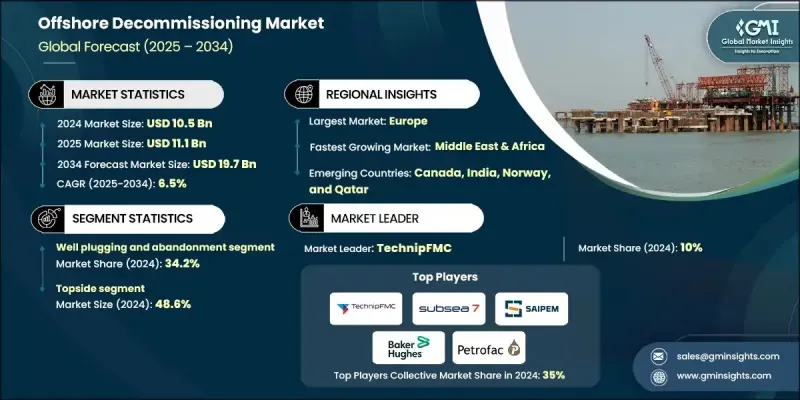
시장의 성장은 규제, 환경, 경제, 기술적 요인의 복합적인 영향에 의해 형성됩니다. 플랫폼, 파이프라인, 해저 갱정, 관련 시설을 포함한 노후화된 해양 석유 및 가스 인프라는 안전하고 효율적인 폐지 조치의 필요성을 높이고 있습니다. 정부와 국제기구는 안전, 환경 및 운영 기준을 준수하기 위해 엄격한 규제를 실시하고 있으며 규제 준수가 중요한 시장 성장 촉진요인이 되었습니다. 환경 의식 증가와 해양 생물 다양성에 대한 우려로 오염과 서식지 파괴, 기타 생태계 위험을 최소화하는 책임있는 폐지 조치의 실시가 강하게 요구되고 있습니다. 인프라 노후화, 원유가격, 정부정책 등 경제적 요인도 시장 역학에 영향을 미치고 있습니다. 기업은 규제 요건과 운영 효율성의 균형을 맞추는 비용 효율적인 솔루션을 점점 더 모색하고 있으며, 전 세계적으로 혁신적인 폐지 조치 서비스 및 기술 채택이 진행되고 있습니다.
| 시장 범위 | |
|---|---|
| 시작 연도 | 2024년 |
| 예측 연도 | 2025-2034년 |
| 시작 금액 | 105억 달러 |
| 예측 금액 | 197억 달러 |
| CAGR | 6.5% |
갱정 봉쇄 및 폐기 부문은 2024년 34.2%의 점유율을 차지했고, 2034년까지 연평균 복합 성장률(CAGR) 7%를 보일 것으로 예측됩니다. 갱정 봉쇄 및 폐기는 생산 수명 종료 시 갱정의 안전한 폐쇄를 의무화하는 규제 요건에 의해 추진되어 환경 리스크의 방지와 조업 안전의 확보를 도모하기 위해 해양 설비의 폐지 조치에 있어서 여전히 중요한 역할을 담당하고 있습니다.
톱사이드 해체 부문은 2024년에 48.6%의 점유율을 차지했고, 2025년과 2034년 사이에 7.1%의 연평균 복합 성장률(CAGR)을 나타낼 전망입니다. 해양 플랫폼이 가동 수명의 끝을 맞이함에 따라 처리 유닛, 거처, 크레인과 같은 지상 수준 구조물의 철거가 필요합니다. 규제 준수, 노후화된 인프라, 안전면에 대한 우려가 함께 세계적으로 상부 구조물 해체 서비스 수요를 견인하고 있습니다.
아시아태평양의 해양시설 해체 시장은 2034년까지 연평균 복합 성장률(CAGR) 6%로 확대될 전망입니다. 말레이시아, 태국, 인도네시아, 호주 등의 국가에서의 활발한 해양 사업, 노후화된 자산, 규제의 진화, 높아지는 환경 의식이 적극적인 해체 이니셔티브를 촉진하고 있습니다. 가동 수명의 끝에 가까워지고 있는 많은 해양 시설이 사업자나 정부에 보다 체계적인 해체 대응을 다가오고 있습니다.
세계 해양시설 해체 시장의 주요 기업은 Aker Solutions ASA, Allseas Group SA, AF Gruppen Norge AS, Able UK Ltd, Baker Hughes, Boskalis, DeepOcean Group Holding BV, DNV Group AS, Halliburton, Heerema International Group, John Wood Group PLC, Oceaneering International Inc, Perenco, Petrofac Ltd., Ramboll Group AS, Saipem S.p.A., Subsea 7 SA, TechnipFMC plc, Weatherford International Plc, Well-Safe Solutions 등을 들 수 있습니다. 주요 해양시설 해체 기업은 해저설비 및 상부 구조물의 안전하고 비용 효율적인 해체를 위한 혁신적 기술의 개발에 주력하여 사업기반의 강화를 도모하고 있습니다. 기업은 장기 계약 확보 및 서비스 신뢰성 향상을 목표로 운영자 및 규제 당국과의 전략적 제휴를 구축 중입니다. R&D 투자는 고급 프로젝트 계획, 리스크 관리 및 환경 지속 가능한 기술을 추진하고 있습니다.
자주 묻는 질문
목차
제1장 조사 방법과 범위
제2장 주요 요약
제3장 업계 인사이트
- 업계의 생태계
- 규제 상황
- 업계에 미치는 영향요인
- 성장 촉진요인
- 업계의 잠재적 위험 및 과제
- 성장 가능성 분석
- Porter's Five Forces 분석
- PESTEL 분석
- 새로운 기회와 동향
- 디지털화 및 IoT 통합
- 신흥 시장 진출
- 투자분석과 전망
제4장 경쟁 구도
- 소개
- 기업의 시장 점유율 분석 : 지역별
- 북미
- 유럽
- 아시아태평양
- 중동 및 아프리카
- 라틴아메리카
- 전략적 대시보드
- 전략적 이니셔티브
- 기업 벤치마킹
- 혁신과 기술의 정세
제5장 시장 규모와 예측 : 서비스 유형별, 2021-2034년
- 주요 동향
- 허가 취득 및 규제 준수
- 프로젝트 관리, 엔지니어링 및 계획
- 데릭 바지선 동원 및 철수
- 플랫폼 준비
- 갱정 봉쇄 및 폐기
- 도선 철거
- 파이프라인 및 전력 케이블 폐쇄 조치
- 자재 처분
- 현장 정리
제6장 시장 규모와 예측 : 구조별, 2021-2034년
- 주요 동향
- 상부 구조
- 하부 구조
- 하부 인프라
제7장 시장 규모와 예측 : 수심별, 2021-2034년
- 주요 동향
- 얕은 해역
- 심해역
제8장 시장 규모와 예측 : 용도별, 2021-2034년
- 주요 동향
- 석유 및 가스
- 풍력
- 기타
제9장 시장 규모와 예측 : 지역별, 2021-2034년
- 주요 동향
- 북미
- 미국
- 캐나다
- 유럽
- 영국
- 노르웨이
- 덴마크
- 독일
- 네덜란드
- 아시아태평양
- 중국
- 인도
- 호주
- 말레이시아
- 태국
- 중동 및 아프리카
- 사우디아라비아
- 카타르
- 아랍에미리트(UAE)
- 라틴아메리카
- 브라질
- 멕시코
제10장 기업 프로파일
- Able UK Ltd
- AF Gruppen Norge AS
- Aker Solutions ASA
- Allseas Group SA
- Baker Hughes
- Boskalis
- DeepOcean Group Holding BV
- DNV Group AS
- Halliburton
- Heerema International Group
- John Wood Group PLC
- Oceaneering International Inc
- Perenco
- Petrofac Ltd.
- Ramboll Group AS
- Saipem SpA
- Subsea 7 SA
- TechnipFMC plc
- Weatherford International Plc.
- Well safe solution
The Global Offshore Decommissioning Market was valued at over USD 10.5 Billion in 2024 and is estimated to grow at a CAGR of 6.5% to reach USD 19.7 Billion by 2034.
Market growth is shaped by a combination of regulatory, environmental, economic, and technological factors. Aging offshore oil and gas infrastructure, including platforms, pipelines, subsea wells, and related facilities, is driving the need for safe and efficient decommissioning. Governments and international bodies enforce stringent regulations to ensure compliance with safety, environmental, and operational standards, making regulatory adherence a critical market driver. Rising environmental awareness and concerns about marine biodiversity are increasing pressure for responsible decommissioning practices to minimize pollution, habitat disruption, and other ecological risks. Economic considerations such as the age of infrastructure, crude oil prices, and government policies also influence market dynamics. Companies are increasingly seeking cost-effective solutions that balance regulatory requirements with operational efficiency, fueling the adoption of innovative decommissioning services and technologies worldwide.
| Market Scope | |
|---|---|
| Start Year | 2024 |
| Forecast Year | 2025-2034 |
| Start Value | $10.5 Billion |
| Forecast Value | $19.7 Billion |
| CAGR | 6.5% |
The well plugging and abandonment segment held a 34.2% share in 2024 and is expected to grow at a CAGR of 7% through 2034. Well plugging and abandonment remains a vital part of offshore decommissioning, driven by regulatory mandates requiring the safe closure of wells at the end of their productive life to prevent environmental hazards and ensure operational safety.
The topside decommissioning segment held a 48.6% share in 2024 and is projected to grow at a CAGR of 7.1% between 2025 and 2034. The removal of surface-level structures such as processing units, living quarters, and cranes is necessary as offshore platforms reach the end of their operational life. Regulatory compliance, aging infrastructure, and safety concerns collectively drive demand for topside dismantling services across the globe.
Asia Pacific Offshore Decommissioning Market will grow at a 6% CAGR through 2034. Strong offshore operations, aging assets, evolving regulations, and heightened environmental awareness in countries such as Malaysia, Thailand, Indonesia, and Australia are encouraging proactive decommissioning initiatives. Many offshore facilities nearing the end of their operational life are pushing operators and governments to address decommissioning more systematically.
Major companies in the Global Offshore Decommissioning Market include Aker Solutions ASA, Allseas Group SA, AF Gruppen Norge AS, Able UK Ltd, Baker Hughes, Boskalis, DeepOcean Group Holding BV, DNV Group AS, Halliburton, Heerema International Group, John Wood Group PLC, Oceaneering International Inc, Perenco, Petrofac Ltd., Ramboll Group AS, Saipem S.p.A., Subsea 7 SA, TechnipFMC plc, Weatherford International Plc, and Well-Safe Solutions. To strengthen their presence, leading offshore decommissioning companies focus on developing innovative technologies for safe and cost-effective dismantling of subsea and topside assets. Firms are forming strategic alliances with operators and regulators to secure long-term contracts and improve service reliability. R&D investments are driving advanced project planning, risk management, and environmentally sustainable techniques.
Table of Contents
Chapter 1 Methodology & Scope
- 1.1 Research design
- 1.1.1 Research approach
- 1.1.2 Data collection methods
- 1.1.3 Base estimates and calculations
- 1.1.4 Base year calculation
- 1.1.5 Key trends for market estimates
- 1.2 Forecast model
- 1.3 Primary research & validation
- 1.3.1 Primary sources
- 1.4 Data mining sources
- 1.5 Market definitions
Chapter 2 Executive Summary
- 2.1 Industry synopsis, 2021 - 2034
- 2.2 Business trends
- 2.3 Service type trends
- 2.4 Structure trends
- 2.5 Depth trends
- 2.6 Application trends
- 2.7 Regional trends
Chapter 3 Industry Insights
- 3.1 Industry ecosystem
- 3.2 Regulatory landscape
- 3.3 Industry impact forces
- 3.3.1 Growth drivers
- 3.3.2 Industry pitfalls & challenges
- 3.4 Growth potential analysis
- 3.5 Porter's analysis
- 3.5.1 Bargaining power of suppliers
- 3.5.2 Bargaining power of buyers
- 3.5.3 Threat of new entrants
- 3.5.4 Threat of substitutes
- 3.6 PESTEL analysis
- 3.6.1 Political factors
- 3.6.2 Economic factors
- 3.6.3 Social factors
- 3.6.4 Technological factors
- 3.6.5 Legal factors
- 3.6.6 Environmental factors
- 3.7 Emerging opportunities & trends
- 3.7.1 Digitalization & IoT integration
- 3.7.2 Emerging market penetration
- 3.8 Investment analysis and future outlook
Chapter 4 Competitive landscape, 2025
- 4.1 Introduction
- 4.2 Company market share analysis, by region, 2024
- 4.2.1 North America
- 4.2.2 Europe
- 4.2.3 Asia Pacific
- 4.2.4 Middle East & Africa
- 4.2.5 Latin America
- 4.3 Strategic dashboard
- 4.4 Strategic initiatives
- 4.5 Company benchmarking
- 4.6 Innovation & technology landscape
Chapter 5 Market Size and Forecast, By Service Type, 2021 - 2034 (USD Billion)
- 5.1 Key trends
- 5.2 Permitting & regulatory compliance
- 5.3 Project management, engineering, & planning
- 5.4 Mobilization & demobilization of derrick barges
- 5.5 Platform preparation
- 5.6 Well plugging and abandonment
- 5.7 Conductor removal
- 5.8 Pipeline and power cable decommissioning
- 5.9 Material disposal
- 5.10 Site clearance
Chapter 6 Market Size and Forecast, By Structure, 2021 - 2034 (USD Billion)
- 6.1 Key trends
- 6.2 Topside
- 6.3 Substructure
- 6.4 Sub infrastructure
Chapter 7 Market Size and Forecast, By Depth, 2021 - 2034 (USD Billion)
- 7.1 Key trends
- 7.2 Shallow water
- 7.3 Deepwater
Chapter 8 Market Size and Forecast, By Application, 2021 - 2034 (USD Billion)
- 8.1 Key trends
- 8.2 Oil & gas
- 8.3 Wind
- 8.4 Others
Chapter 9 Market Size and Forecast, By Region, 2021 - 2034 (USD Billion)
- 9.1 Key trends
- 9.2 North America
- 9.2.1 U.S.
- 9.2.2 Canada
- 9.3 Europe
- 9.3.1 UK
- 9.3.2 Norway
- 9.3.3 Denmark
- 9.3.4 Germany
- 9.3.5 Netherlands
- 9.4 Asia Pacific
- 9.4.1 China
- 9.4.2 India
- 9.4.3 Australia
- 9.4.4 Malaysia
- 9.4.5 Thailand
- 9.5 Middle East & Africa
- 9.5.1 Saudi Arabia
- 9.5.2 Qatar
- 9.5.3 UAE
- 9.6 Latin America
- 9.6.1 Brazil
- 9.6.2 Mexico
Chapter 10 Company Profiles
- 10.1 Able UK Ltd
- 10.2 AF Gruppen Norge AS
- 10.3 Aker Solutions ASA
- 10.4 Allseas Group SA
- 10.5 Baker Hughes
- 10.6 Boskalis
- 10.7 DeepOcean Group Holding BV
- 10.8 DNV Group AS
- 10.9 Halliburton
- 10.10 Heerema International Group
- 10.11 John Wood Group PLC
- 10.12 Oceaneering International Inc
- 10.13 Perenco
- 10.14 Petrofac Ltd.
- 10.15 Ramboll Group AS
- 10.16 Saipem S.p.A.
- 10.17 Subsea 7 SA
- 10.18 TechnipFMC plc
- 10.19 Weatherford International Plc.
- 10.20 Well safe solution


