|
시장보고서
상품코드
1871117
그린 케미스트리 시장 : 기회, 성장 요인, 업계 동향 분석 및 예측(2025-2034년)Green Chemistry Market Opportunity, Growth Drivers, Industry Trend Analysis, and Forecast 2025 - 2034 |
||||||

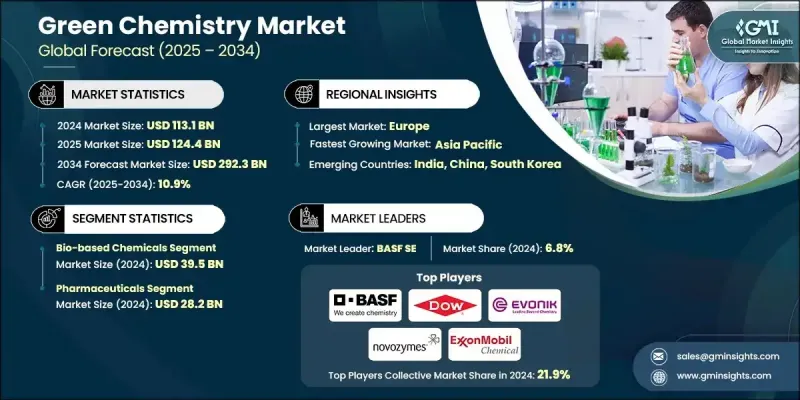
세계의 그린 케미스트리 시장은 2024년에 1,131억 달러로 평가되었고, 2034년까지 연평균 복합 성장률(CAGR)은 10.9%를 나타낼 것으로 예측되며 2,923억 달러에 달할 전망입니다.
지속 가능한 화학이라고도 불리는 그린 케미스트리는 유해 물질의 사용과 발생을 최소화하거나 제거하는 화학 제품 및 공정 설계에 중점을 둡니다. 이는 화학 합성, 폐기물 감소, 재생 가능 원료, 에너지 효율적 제조 부문의 발전을 주도합니다. 이 산업은 환경 피해 감소와 글로벌 지속가능성 목표에 부합하는 청정 생산 촉진에 핵심적인 역할을 수행합니다. 강화되는 환경 규제 시행, 친환경 제품에 대한 소비자 선호도 증가, 기업 지속가능성에 대한 강조 확대가 이 시장 확장을 촉진하고 있습니다. 탈탄소화를 지원하는 국제적 노력은 더 친환경적인 생산 관행으로의 전환을 가속화하고 있습니다. 동시에 바이오 기반 소재와 친환경 용매의 급속한 발전은 다양한 산업 부문의 운영 방식을 변화시키고 있습니다. 그린 케미스트리의 영향력은 제약 산업을 넘어 농업, 자동차, 포장, 개인 위생용품 등 다양한 산업으로 확대되고 있으며, 기업들은 친환경 촉매제, 재생 가능 소재, 용매 대체재를 도입하고 있습니다. 주요 경제권 정부들은 책임 있는 제조와 지속 가능한 산업 성장을 촉진하기 위해 고안된 인센티브 및 규정 준수 체계를 통해 이러한 전환을 강화하고 있습니다.
| 시장 범위 | |
|---|---|
| 시작 연도 | 2024년 |
| 예측 연도 | 2025-2034년 |
| 시작 금액 | 1,131억 달러 |
| 예측 금액 | 2,923억 달러 |
| CAGR | 10.9% |
바이오 기반 케미스트리 부문은 2024년 395억 달러를 창출했습니다. 바이오 기반 케미스트리의 채택 증가에는 석유 유래 화합물을 재생 가능하고 지속 가능한 대안으로 대체해야 하는 글로벌 수요가 원동력이 되고 있습니다. 바이오매스로 생산되는 이 화학물질들은 탄소 발자국이 현저히 작으며, 의약품, 소비재, 농산물에 점점 더 많이 사용되고 있습니다. 저독성과 환경 영향 감소로 인해 친환경 용매도 인기를 얻고 있어, 더 안전한 제형과 생산 공정을 추구하는 산업에 매력적입니다. 폐기물 최소화와 재활용성 개선에서 그들의 역할이 커지면서 다양한 응용 부문에서 시장 입지를 지속적으로 강화하고 있습니다.
의약품 부문는 2024년 282억 달러 규모에 달했습니다. 의약품 부문의 그린 케미스트리는 더 깨끗하고 안전한 제조 공정을 가능하게 하며, 생분해성 및 바이오 기반 포장재가 기존 플라스틱을 대체하는 사례가 증가하고 있습니다. 자동차 및 건설 산업 역시 공급망 전반에 걸쳐 배출량 저감, 폐기물 감소, 에너지 효율 향상을 위해 지속가능한 소재와 친환경 생산 방식을 도입하고 있습니다. 해당 부문들은 규제 요건과 소비자의 지속가능성 기대를 모두 충족하는 환경 친화적 제조 모델로 전환 중입니다.
미국의 그린 케미스트리 시장은 2024년 270억 달러로 평가되었습니다. 북미 지역의 성장은 강력한 규제 체계, 풍부한 재생 가능 자원, 다양한 산업 전반에 걸친 지속 가능한 대안에 대한 강력한 수요에 의해 주도되고 있습니다. 유해 물질 대체 및 제조 시스템에 친환경 원료 통합을 위한 적극적인 정책 지원으로 인해 이 지역의 그린 케미스트리 전환은 더욱 가속화되고 있습니다. 캐나다의 임업 및 농업 자원은 바이오 기반 케미스트리 생산에 기여하고 있으며, 멕시코의 산업 환경은 글로벌 지속가능성 기준과 점점 더 부합하고 있습니다. 이러한 발전은 국제 ESG 목표에 부합하는 환경 친화적 생산으로의 북미 지역 전반적 움직임을 반영합니다.
세계의 그린 케미스트리 시장에서 활동하는 주요 기업으로는 BASF SE, Dow Inc., DuPont de Nemours, Cargill Inc., Mitsubishi Chemical Group, Air Liquide, ExxonMobil Chemical, Corbion N.V., Evonik Industries, Novozymes A/S, Braskem S.A., Genomatica Inc., Solugen Inc., Gevo Inc., Amyris Inc., Modern Meadow 등이 있습니다. 글로벌 그린 케미스트리 시장에서의 입지를 강화하기 위해 선도 기업들은 바이오 기반 제품 포트폴리오 확대, 저탄소 제조 공정 개발, 기술 혁신 기업과의 전략적 협력 구축에 주력하고 있습니다. 많은 기업들이 지속가능한 소재의 수율 효율성 향상과 생산 비용 절감을 위해 연구 개발에 막대한 투자를 하고 있습니다. 농업 생산자 및 재생 에너지 공급업체와의 파트너십은 환경 규정 준수를 보장하면서 안정적인 원료 공급원을 확보하는 데 도움이 됩니다.
자주 묻는 질문
목차
제1장 조사 방법과 범위
제2장 주요 요약
제3장 업계 인사이트
- 생태계 분석
- 공급자의 상황
- 이익률
- 각 단계에서의 부가가치
- 밸류체인에 영향을 주는 요인
- 혁신
- 업계에 미치는 영향요인
- 성장 촉진요인
- 바이오 기반 및 재생 가능 원료로의 이행
- 그린 프로세스 설계에서 디지털 툴의 통합
- 비전통적 부문로 확대
- 성장 촉진요인
- 업계의 잠재적 억제요인 및 과제
- 높은 전환 비용과 생산 비용
- 재생 가능 원료공급량과 품질의 변동
- 시장 기회
- 순환 경제 및 폐기물 가치화
- 스마트하고 반응형 소재 개발
- 탄소 포집 및 활용(CCU) 기술 통합
- 성장 가능성 분석
- 규제 상황
- 북미
- 유럽
- 아시아태평양
- 라틴아메리카
- 중동 및 아프리카
- Porter's Five Forces 분석
- PESTEL 분석
- 기술과 혁신의 상황
- 현재의 기술 동향
- 신흥기술
- 가격 동향
- 지역별
- 제품 유형별
- 장래 시장 동향
- 특허 상황
- 무역 통계(HS코드 참고 : 무역 통계는 주요 국가에서만 제공됨)
- 주요 수입국
- 주요 수출국
- 지속가능성과 환경면
- 지속가능한 대처
- 폐기물 감축 전략
- 생산에서의 에너지 효율
- 환경에 배려한 대처
- 탄소발자국 고려 사항
제4장 경쟁 구도
- 소개
- 기업의 시장 점유율 분석
- 지역별
- 북미
- 유럽
- 아시아태평양
- 라틴아메리카
- 중동 및 아프리카
- 지역별
- 기업 매트릭스 분석
- 주요 시장 기업의 경쟁 분석
- 경쟁 포지셔닝 매트릭스
- 주요 발전
- 합병 및 인수
- 제휴 및 협업
- 신제품 발매
- 확대 계획
제5장 시장 추계 및 예측 : 제품 유형별(2021-2034년)
- 주요 동향
- 바이오 기반 케미스트리
- 그린 용매
- 재생 가능 원료
- 그린 폴리머
- 그린 계면활성제
제6장 시장 추계 및 예측 : 용도별(2021-2034년)
- 주요 동향
- 의약품
- 포장
- 자동차
- 건설
- 식품 및 음료
- 산업용 화학제품
제7장 시장 추계 및 예측 : 지역별(2021-2034년)
- 주요 동향
- 북미
- 미국
- 캐나다
- 멕시코
- 유럽
- 독일
- 영국
- 프랑스
- 스페인
- 이탈리아
- 기타 유럽
- 아시아태평양
- 중국
- 인도
- 일본
- 호주
- 한국
- 기타 아시아태평양
- 라틴아메리카
- 브라질
- 멕시코
- 아르헨티나
- 기타 라틴아메리카
- 중동 및 아프리카
- 사우디아라비아
- 남아프리카
- 아랍에미리트(UAE)
- 기타 중동 및 아프리카
제8장 기업 프로파일
- BASF SE
- Dow Inc.
- DuPont de Nemours
- Air Liquide
- ExxonMobil Chemical
- Mitsubishi Chemical Group
- Cargill Inc.
- Corbion NV
- Novozymes A/S
- Evonik Industries
- Braskem SA
- Solugen Inc.
- Genomatica Inc.
- Gevo Inc.
- Amyris Inc.
- Modern Meadow
The Global Green Chemistry Market was valued at USD 113.1 Billion in 2024 and is estimated to grow at a CAGR of 10.9% to reach USD 292.3 Billion by 2034.
Green chemistry, often called sustainable chemistry, focuses on designing chemical products and processes that minimize or eliminate the use and generation of hazardous substances. It drives advancements in chemical synthesis, waste reduction, renewable feedstocks, and energy-efficient manufacturing. The industry plays a vital role in reducing environmental harm and promoting cleaner production aligned with global sustainability goals. The increasing enforcement of environmental regulations, heightened consumer preference for eco-friendly products, and a growing emphasis on corporate sustainability are fueling this market's expansion. International initiatives supporting decarbonization are accelerating the transition toward greener production practices. At the same time, rapid developments in bio-based materials and green solvents are transforming industrial operations across sectors. The reach of green chemistry extends well beyond pharmaceuticals to industries such as agriculture, automotive, packaging, and personal care, where companies are adopting eco-friendly catalysts, renewable materials, solvent alternatives. Governments across major economies are reinforcing this shift through incentives and compliance frameworks designed to promote responsible manufacturing and sustainable industrial growth.
| Market Scope | |
|---|---|
| Start Year | 2024 |
| Forecast Year | 2025-2034 |
| Start Value | $113.1 Billion |
| Forecast Value | $292.3 Billion |
| CAGR | 10.9% |
The bio-based chemicals segment generated USD 39.5 Billion in 2024. The rising adoption of bio-based chemicals is driven by the global need to replace petroleum-derived compounds with renewable and sustainable alternatives. Produced from biomass, these chemicals carry a significantly smaller carbon footprint and are increasingly used in pharmaceuticals, consumer goods, and agricultural products. Green solvents are also becoming more popular for their low toxicity and reduced environmental impact, making them attractive to industries seeking safer formulations and production processes. Their growing role in minimizing waste and improving recyclability continues to strengthen their market presence across applications.
The pharmaceutical segment reached USD 28.2 Billion in 2024. Green chemistry in pharmaceuticals enables cleaner and safer manufacturing processes, while biodegradable and bio-based packaging materials are increasingly replacing traditional plastics. Automotive and construction industries are also embracing sustainable materials and greener production practices to lower emissions, reduce waste, and enhance energy efficiency throughout their supply chains. These sectors are transitioning toward environmentally responsible manufacturing models that meet both regulatory requirements and consumer expectations for sustainability.
U.S. Green Chemistry Market was valued at USD 27 Billion in 2024. Growth across North America is being driven by robust regulatory frameworks, abundant renewable resources, and strong demand for sustainable alternatives across various industries. The region's green transition is further accelerated by active policy support for the replacement of hazardous substances and the integration of eco-friendly inputs into manufacturing systems. Canada's forestry and agricultural resources are contributing to bio-based chemical production, while Mexico's industrial landscape is increasingly aligned with global sustainability standards. These developments reflect North America's broader movement toward environmentally conscious production aligned with international ESG objectives.
Prominent companies operating in the Global Green Chemistry Market include BASF SE, Dow Inc., DuPont de Nemours, Cargill Inc., Mitsubishi Chemical Group, Air Liquide, ExxonMobil Chemical, Corbion N.V., Evonik Industries, Novozymes A/S, Braskem S.A., Genomatica Inc., Solugen Inc., Gevo Inc., Amyris Inc., and Modern Meadow. To strengthen their position in the global green chemistry market, leading companies are focusing on expanding their bio-based product portfolios, developing low-carbon manufacturing processes, and forming strategic collaborations with technology innovators. Many firms are investing heavily in research and development to improve yield efficiency and reduce production costs of sustainable materials. Partnerships with agricultural producers and renewable energy suppliers help secure reliable feedstock sources while ensuring environmental compliance.
Table of Contents
Chapter 1 Methodology & Scope
- 1.1 Market scope and definition
- 1.2 Research design
- 1.2.1 Research approach
- 1.2.2 Data collection methods
- 1.3 Data mining sources
- 1.3.1 Global
- 1.3.2 Regional/Country
- 1.4 Base estimates and calculations
- 1.4.1 Base year calculation
- 1.4.2 Key trends for market estimation
- 1.5 Primary research and validation
- 1.5.1 Primary sources
- 1.6 Forecast model
- 1.7 Research assumptions and limitations
Chapter 2 Executive Summary
- 2.1 Industry 360° synopsis
- 2.2 Key market trends
- 2.2.1 Product Type
- 2.2.2 Application
- 2.2.3 Regional
- 2.3 TAM Analysis, 2025-2034
- 2.4 CXO perspectives: Strategic imperatives
- 2.4.1 Executive decision points
- 2.4.2 Critical success factors
- 2.5 Future outlook and strategic recommendations
Chapter 3 Industry Insights
- 3.1 Industry ecosystem analysis
- 3.1.1 Supplier landscape
- 3.1.2 Profit margin
- 3.1.3 Value addition at each stage
- 3.1.4 Factor affecting the value chain
- 3.1.5 Disruptions
- 3.2 Industry impact forces
- 3.2.1 Growth drivers
- 3.2.1.1 Shift toward bio-based and renewable inputs
- 3.2.1.2 Integration of digital tools in green process design
- 3.2.1.3 Expansion into non-traditional sectors
- 3.2.1 Growth drivers
- 3.3 Industry pitfalls and challenges
- 3.3.1 High transition and production costs
- 3.3.2 Inconsistent supply and quality of renewable feedstock
- 3.4 Market opportunities
- 3.4.1 Circular economy and waste valorisation
- 3.4.2 Development of smart, responsive materials
- 3.4.3 Integration of carbon capture and utilization (CCU) technologies
- 3.5 Growth potential analysis
- 3.6 Regulatory landscape
- 3.6.1 North America
- 3.6.2 Europe
- 3.6.3 Asia Pacific
- 3.6.4 Latin America
- 3.6.5 Middle East & Africa
- 3.7 Porter's analysis
- 3.8 PESTEL analysis
- 3.9 Technology and innovation landscape
- 3.9.1 Current technological trends
- 3.9.2 Emerging technologies
- 3.10 Price trends
- 3.10.1 By region
- 3.10.2 By product type
- 3.11 Future market trends
- 3.12 Patent landscape
- 3.13 Trade statistics (HS code Note: the trade statistics will be provided for key countries only)
- 3.13.1 Major importing countries
- 3.13.2 Major exporting countries
- 3.14 Sustainability and environmental aspects
- 3.14.1 Sustainable practices
- 3.14.2 Waste reduction strategies
- 3.14.3 Energy efficiency in production
- 3.14.4 Eco-friendly initiatives
- 3.15 Carbon footprint consideration
Chapter 4 Competitive Landscape, 2024
- 4.1 Introduction
- 4.2 Company market share analysis
- 4.2.1 By region
- 4.2.1.1 North America
- 4.2.1.2 Europe
- 4.2.1.3 Asia Pacific
- 4.2.1.4 LATAM
- 4.2.1.5 MEA
- 4.2.1 By region
- 4.3 Company matrix analysis
- 4.4 Competitive analysis of major market players
- 4.5 Competitive positioning matrix
- 4.6 Key developments
- 4.6.1 Mergers & acquisitions
- 4.6.2 Partnerships & collaborations
- 4.6.3 New product launches
- 4.6.4 Expansion plans
Chapter 5 Market Estimates and Forecast, By Product Type, 2021-2034 (USD Billion) (Kilo Tons)
- 5.1 Key trends
- 5.2 Bio-based chemicals
- 5.3 Green solvents
- 5.4 Renewable feedstocks
- 5.5 Green polymers
- 5.6 Green surfactants
Chapter 6 Market Estimates and Forecast, By Application, 2021-2034 (USD Billion) (Kilo Tons)
- 6.1 Key trends
- 6.2 Pharmaceuticals
- 6.3 Packaging
- 6.4 Automotive
- 6.5 Construction
- 6.6 Food & beverages
- 6.7 Industrial chemicals
Chapter 7 Market Estimates and Forecast, By Region, 2021-2034 (USD Billion) (Kilo Tons)
- 7.1 Key trends
- 7.2 North America
- 7.2.1 U.S.
- 7.2.2 Canada
- 7.2.3 Mexico
- 7.3 Europe
- 7.3.1 Germany
- 7.3.2 UK
- 7.3.3 France
- 7.3.4 Spain
- 7.3.5 Italy
- 7.3.6 Rest of Europe
- 7.4 Asia Pacific
- 7.4.1 China
- 7.4.2 India
- 7.4.3 Japan
- 7.4.4 Australia
- 7.4.5 South Korea
- 7.4.6 Rest of Asia Pacific
- 7.5 Latin America
- 7.5.1 Brazil
- 7.5.2 Mexico
- 7.5.3 Argentina
- 7.5.4 Rest of Latin America
- 7.6 Middle East and Africa
- 7.6.1 Saudi Arabia
- 7.6.2 South Africa
- 7.6.3 UAE
- 7.6.4 Rest of Middle East and Africa
Chapter 8 Company Profiles
- 8.1 BASF SE
- 8.2 Dow Inc.
- 8.3 DuPont de Nemours
- 8.4 Air Liquide
- 8.5 ExxonMobil Chemical
- 8.6 Mitsubishi Chemical Group
- 8.7 Cargill Inc.
- 8.8 Corbion N.V.
- 8.9 Novozymes A/S
- 8.10 Evonik Industries
- 8.11 Braskem S.A.
- 8.12 Solugen Inc.
- 8.13 Genomatica Inc.
- 8.14 Gevo Inc.
- 8.15 Amyris Inc.
- 8.16 Modern Meadow