

|
시장보고서
상품코드
1871246
유기농 식품 시장 : 기회, 성장 요인, 업계 동향 분석 및 예측(2025-2034년)Organic Food Market Opportunity, Growth Drivers, Industry Trend Analysis, and Forecast 2025 - 2034 |
||||||

세계의 유기농 식품 시장은 2024년 1,543억 달러로 평가되었으며, 2034년까지 연평균 복합 성장률(CAGR) 9%로 성장하여 3,644억 달러에 이를 것으로 예측됩니다.

환경 의식 증가와 소비 습관의 변화는 유기농 식품과 지속 가능한 방식으로 조달 된 식품 수요에 강하게 영향을 미칩니다. 토양의 건강 상태 악화, 기후 변화, 이산화탄소 배출량에 대한 인식은 생물다양성을 촉진하고, 물을 절약하고, 오염을 최소화하는 유기 농업법을 사람들이 선호하도록 유도하고 있습니다. 이 전환은 지속 가능한 농업 기법의 채택을 농부들에게 촉구하는 동시에 시장의 일관된 확대를 뒷받침합니다. 정부 정책과 인증 프레임워크는 제품의 진정성을 보장하고 소비자의 신뢰를 구축함으로써 이러한 동향을 더욱 가속화하고 있습니다. 업계 성장의 거의 절반은 환경 친화적인 생산을 지원하는 공공 프로그램과 인증에 의해 견인되고 있습니다. 식물 유래와 비건 지향 동향과 유기 제품의 융합은 음료, 기능성 식품, 고단백 제품의 소비자층을 확대하고, 건강 지향 현대인이 유기농 식품을 소비하는 방법을 재정의하고 있습니다.
| 시장 범위 | |
|---|---|
| 시작 연도 | 2024년 |
| 예측 연도 | 2025-2034년 |
| 시작 금액 | 1,543억 달러 |
| 예측 금액 | 3,644억 달러 |
| CAGR | 9% |
신선식품 부문은 2024년 37%의 점유율을 차지했습니다. 이 부문은 구매 빈도가 높고 소비자가 건강 효과에 친숙하다는 점에서 혜택을 받습니다. 포장된 유기농 식품은 편의성, 보존 기간, 조달 과정의 투명성으로 인해 구매자의 관심을 지속적으로 모으고 있습니다. 음료 부문은 가장 혁신적인 분야이며 기능성 성분과 천연 향료를 특징으로 한 신제품의 급속한 투입이 계속되고 있습니다. 확립된 브랜드는 품질, 추적성, 감각적 소구력을 중시하고 브랜드 충성도를 유지하기 위해 노력하고 있습니다. 한편, 프라이빗 브랜드 제품은 소매 체인 전체로 존재감을 확대하고 있습니다.
고도 가공 유기농 식품은 2024년 4.7%의 점유율을 차지했고, 보충제, 단백질 파우더, 기타 기능성 제품이 틈새 건강 채널에서 인기를 끌고 있는 것을 배경으로 2034년까지 연평균 복합 성장률(CAGR) 9.3%를 보일 것으로 예측됩니다. 이러한 카테고리의 소비자들은 제품의 무결성, 산지, 최소한의 가공이 명확한 경우 프리미엄 가격을 지불할 의지가 높아 전문점 및 전자상거래 플랫폼 전체에 대한 수요를 강화하고 있습니다.
유럽의 유기농 식품 시장은 2024년에 40.2%의 점유율을 차지했고 2034년까지 연평균 복합 성장률(CAGR) 7.8%를 유지할 것으로 예측됩니다. 성장은 주로 독일, 프랑스, 영국에서 강력한 유기 정책과 소비자 신뢰에 의해 견인되고 있습니다. EU의 '3차 유기농업행동계획'에 따른 지원은 생산능력 향상과 인증 라벨의 신뢰성 강화를 지속적으로 추진하고 있습니다. 독일은 확립된 소매 인프라에 지지되어 지역 소비를 선도하고 영국과 프랑스에서는 유기농 식품 카테고리 전체의 다양화가 진행되고 있습니다.
세계 유기농 식품 시장에서 주요 역할을 담당하는 기업으로는 Nestle, Unilever, Amy's Kitchen, Clif Bar & Company, Organic Valley, Whole Foods Market, General Mills, Danone, The Kroger, Stonyfield Farm, Earthbound Farm, Eden Foods, Nature's Path Foods 등이 있습니다. 유기농 식품업계의 기업은 시장에서의 지위를 강화하기 위해 혁신성, 지속가능성, 투명성을 중심으로 한 전략을 추진하고 있습니다. 식음료 라인 전체에서 식물 유래 제품이나 클린 라벨 제품을 도입하여 유기 제품 포트폴리오의 확충을 도모하고 있습니다. 주요 브랜드는 추적 가능성과 환경 친화적인 공급망을 확보하기 위해 인증 된 조달 프로그램 및 지역 파트너십에 대한 투자를 추진하고 있습니다. 특히 기능성 식품이나 즉식 제품에 있어서의 지속적인 제품 혁신은 젊은층이나 건강 지향의 소비자층에의 소구력 향상에 기여하고 있습니다.
자주 묻는 질문
목차
제1장 조사 방법과 범위
제2장 주요 요약
제3장 업계 인사이트
- 생태계 분석
- 공급자의 상황
- 이익률
- 각 단계에서의 부가가치
- 밸류체인에 영향을 주는 요인
- 혁신
- 업계에 미치는 영향요인
- 성장 촉진요인
- 업계의 잠재적 위험 및 과제
- 시장 기회
- 성장 가능성 분석
- 규제 상황
- Porter's Five Forces 분석
- PESTEL 분석
- 가격 동향
- 지역별
- 장래 시장 동향
- 기술과 혁신의 상황
- 현재의 기술 동향
- 신흥기술
- 특허 상황
- 무역 통계(HS코드)(참고: 무역 통계는 주요 국가에서만 제공됨)
- 주요 수입국
- 주요 수출국
- 지속가능성과 환경면
- 지속가능한 대처
- 폐기물 감축 전략
- 생산에 있어서의 에너지 효율
- 환경에 배려한 대처
- 탄소발자국에 관한 고려 사항
제4장 경쟁 구도
- 소개
- 기업의 시장 점유율 분석
- 지역별
- 기업 매트릭스 분석
- 주요 시장 기업의 경쟁 분석
- 경쟁 포지셔닝 매트릭스
- 주요 발전
- 인수합병
- 제휴 및 협력관계
- 신제품 발매
- 확대 계획
제5장 시장 규모와 예측 : 제품 카테고리별, 2021-2034년
- 주요 동향
- 신선식품
- 유기 과일
- 유기농 야채
- 유기농 허브 및 향신료
- 유제품 및 계란
- 유기농 유제품
- 유기농 치즈 및 발효유 제품
- 유기농 계란 제품
- 대체 유제품
- 육류, 닭고기, 해산물
- 유기농 소고기 및 돼지고기
- 유기농 닭고기
- 유기 수산물 및 양식품
- 포장 식품 및 식료품
- 유기 통조림 및 보존 식품
- 유기 건물류 및 상비식품
- 유기 스낵 및 간편 식품
- 유기 오일 및 식초
- 음료
- 유기농 주스 및 스무디
- 유기 커피 및 홍차
- 유기 알코올 음료
- 기능성 및 건강음료
- 냉동식품
- 유기농 냉동 야채 및 과일
- 유기농 냉동 식사 및 메인 접시
- 유기농 냉동 디저트
- 베이커리 및 과자류
- 유기농 구운 과자
- 유기농 과자류 및 과자
- 아티산 기술 및 특산품
제6장 시장 규모와 예측 : 가공 레벨별, 2021-2034년
- 주요 동향
- 신선식품 및 최소 가공품
- 가공식품
- 고도 가공 식품
제7장 시장 규모와 예측 : 유통채널별, 2021-2034년
- 주요 동향
- 슈퍼마켓 및 식료품점
- 전문 식품점
- 외식산업용 유통채널
- 소비자용 직접 판매 채널
- 도매 유통
제8장 시장 규모와 예측 : 최종 용도 산업별, 2021-2034년
- 식품소매 업계
- 외식산업
- 식품가공업계
- 기관부문
- 기타
제9장 시장 규모와 예측 : 지역별, 2021-2034년
- 주요 동향
- 북미
- 미국
- 캐나다
- 유럽
- 영국
- 독일
- 프랑스
- 이탈리아
- 스페인
- 기타 유럽
- 아시아태평양
- 중국
- 인도
- 일본
- 한국
- 호주
- 기타 아시아태평양
- 라틴아메리카
- 브라질
- 멕시코
- 아르헨티나
- 기타 라틴아메리카
- 중동 및 아프리카
- 남아프리카
- 사우디아라비아
- 아랍에미리트(UAE)
- 기타 중동 및 아프리카
제10장 기업 프로파일
- Whole Foods Market
- General Mills
- The Kroger
- Danone
- Unilever
- Nestle
- Organic Valley
- Amy's Kitchen
- Clif Bar & Company
- Eden Foods
- Nature's Path Foods
- Stonyfield Farm
- Earthbound Farm
The Global Organic Food Market was valued at USD 154.3 Billion in 2024 and is estimated to grow at a CAGR of 9% to reach USD 364.4 Billion by 2034.
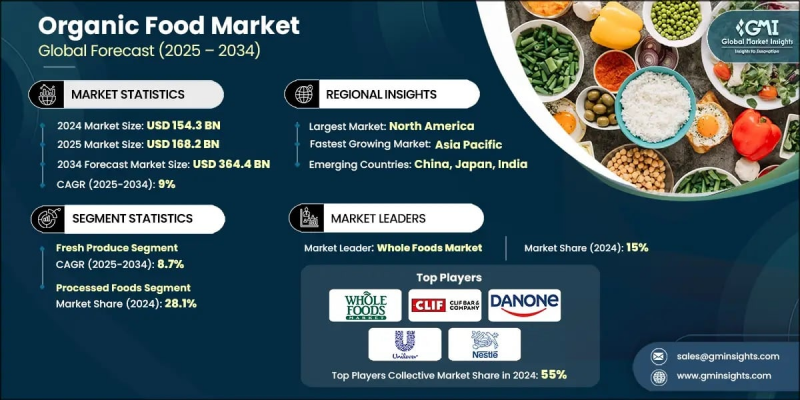
Growing environmental consciousness and changing consumer habits are strongly influencing the demand for organic and sustainably sourced food. Awareness about soil health degradation, climate change, and carbon emissions is leading people to prefer organic farming practices that promote biodiversity, conserve water, and minimize pollution. This transition is motivating farmers to adopt sustainable agricultural methods while fueling consistent market expansion. Government policies and certification frameworks have further accelerated this trend by ensuring product authenticity and building consumer confidence. Nearly half of the industry's growth is driven by public programs and certifications that support environmentally friendly production. The blending of plant-based and vegan trends with organic offerings is expanding the consumer base for beverages, functional foods, and protein-rich products, redefining how the modern health-conscious population consumes organic foods.
| Market Scope | |
|---|---|
| Start Year | 2024 |
| Forecast Year | 2025-2034 |
| Start Value | $154.3 Billion |
| Forecast Value | $364.4 Billion |
| CAGR | 9% |
The fresh produce segment held 37% share in 2024. This segment benefits from high purchase frequency and consumer familiarity with its health benefits. Packaged organic foods continue to attract buyers for their convenience, shelf life, and transparency in sourcing. Beverages remain the most innovative segment, witnessing fast-paced product launches featuring functional ingredients and natural flavors. Established brands emphasize quality, traceability, and sensory appeal to maintain brand loyalty, while private-label products expand their footprint across retail chains.
The highly processed organic formats held a 4.7% share in 2024 and are projected to grow at a CAGR of 9.3% through 2034, propelled by the rising popularity of supplements, protein powders, and other functional products in niche health channels. Consumers in these categories demonstrate a higher willingness to pay premiums when product integrity, provenance, and minimal processing are evident, which strengthens demand across specialty stores and e-commerce platforms.
Europe Organic Food Market held a 40.2% share in 2024 and is expected to maintain a CAGR of 7.8% through 2034. Growth is primarily driven by strong organic policies and consumer trust within Germany, France, and the United Kingdom. EU support under the Third Action Plan for Organic Farming continues to enhance production capabilities and reinforce credibility in certified labeling. Germany leads regional consumption, supported by a well-established retail infrastructure, while the UK and France are experiencing diversification across organic categories.
Prominent players operating in the Global Organic Food Market include Nestle, Unilever, Amy's Kitchen, Clif Bar & Company, Organic Valley, Whole Foods Market, General Mills, Danone, The Kroger, Stonyfield Farm, Earthbound Farm, Eden Foods, and Nature's Path Foods. To strengthen their foothold, companies in the organic food industry are pursuing strategies centered on innovation, sustainability, and transparency. They are expanding their organic product portfolios by introducing plant-based and clean-label variants across food and beverage lines. Major brands are investing in certified sourcing programs and local partnerships to ensure traceable and eco-friendly supply chains. Continuous product innovation, especially in functional foods and ready-to-eat options, is helping companies appeal to younger and health-conscious consumers.
Table of Contents
Chapter 1 Methodology & Scope
- 1.1 Market scope and definition
- 1.2 Research design
- 1.2.1 Research approach
- 1.2.2 Data collection methods
- 1.3 Data mining sources
- 1.3.1 Global
- 1.3.2 Regional/Country
- 1.4 Base estimates and calculations
- 1.4.1 Base year calculation
- 1.4.2 Key trends for market estimation
- 1.5 Primary research and validation
- 1.5.1 Primary sources
- 1.6 Forecast model
- 1.7 Research assumptions and limitations
Chapter 2 Executive Summary
- 2.1 Industry 360° synopsis
- 2.2 Key market trends
- 2.2.1 Product category
- 2.2.2 Processing level
- 2.2.3 Distribution channel
- 2.2.4 End use industry
- 2.3 TAM analysis, 2025-2034
- 2.4 CXO perspectives: Strategic imperatives
- 2.4.1 Executive decision points
- 2.4.2 Critical success factors
- 2.5 Outlook and strategic recommendations
Chapter 3 Industry Insights
- 3.1 Industry ecosystem analysis
- 3.1.1 Supplier landscape
- 3.1.2 Profit margin
- 3.1.3 Value addition at each stage
- 3.1.4 Factor affecting the value chain
- 3.1.5 Disruptions
- 3.2 Industry impact forces
- 3.2.1 Growth drivers
- 3.2.2 Industry pitfalls and challenges
- 3.2.3 Market opportunities
- 3.3 Growth potential analysis
- 3.4 Regulatory landscape
- 3.4.1 North America
- 3.4.2 Europe
- 3.4.3 Asia Pacific
- 3.4.4 Latin America
- 3.4.5 Middle East & Africa
- 3.5 Porter's analysis
- 3.6 PESTEL analysis
- 3.7 Price trends
- 3.7.1 By region
- 3.8 Future market trends
- 3.9 Technology and innovation landscape
- 3.9.1 Current technological trends
- 3.9.2 Emerging technologies
- 3.10 Patent landscape
- 3.11 Trade statistics (HS code) (Note: the trade statistics will be provided for key countries only)
- 3.11.1 Major importing countries
- 3.11.2 Major exporting countries
- 3.12 Sustainability and environmental aspects
- 3.12.1 Sustainable practices
- 3.12.2 Waste reduction strategies
- 3.12.3 Energy efficiency in production
- 3.12.4 Eco-friendly initiatives
- 3.13 Carbon footprint considerations
Chapter 4 Competitive Landscape, 2024
- 4.1 Introduction
- 4.2 Company market share analysis
- 4.2.1 By region
- 4.2.1.1 North America
- 4.2.1.2 Europe
- 4.2.1.3 Asia Pacific
- 4.2.1.4 Latin America
- 4.2.1.5 Middle East & Africa
- 4.2.1 By region
- 4.3 Company matrix analysis
- 4.4 Competitive analysis of major market players
- 4.5 Competitive positioning matrix
- 4.6 Key developments
- 4.6.1 Mergers & acquisitions
- 4.6.2 Partnerships & collaborations
- 4.6.3 New product launches
- 4.6.4 Expansion plans
Chapter 5 Market Size and Forecast, By Product Category, 2021-2034 (USD Billion, Kilo Tons)
- 5.1 Key trends
- 5.2 Fresh produce
- 5.2.1 Organic fruits
- 5.2.2 Organic vegetables
- 5.2.3 Organic herbs & spices
- 5.3 Dairy & eggs
- 5.3.1 Organic milk products
- 5.3.2 Organic cheese & fermented dairy
- 5.3.3 Organic egg products
- 5.3.4 Alternative dairy products
- 5.4 Meat, poultry & seafood
- 5.4.1 Organic beef & pork
- 5.4.2 Organic poultry
- 5.4.3 Organic seafood & aquaculture
- 5.5 Packaged/grocery foods
- 5.5.1 Organic canned & preserved foods
- 5.5.2 Organic dry goods & pantry staples
- 5.5.3 Organic snacks & convenience foods
- 5.5.4 Organic oils & vinegars
- 5.6 Beverages
- 5.6.1 Organic juices & smoothies
- 5.6.2 Organic coffee & tea
- 5.6.3 Organic alcoholic beverages
- 5.6.4 Functional & health beverages
- 5.7 Frozen foods
- 5.7.1 Organic frozen vegetables & fruits
- 5.7.2 Organic frozen meals & entrees
- 5.7.3 Organic frozen desserts
- 5.8 Bakery & confectionery
- 5.8.1 Organic baked goods
- 5.8.2 Organic confectionery & sweets
- 5.8.3 Artisanal & specialty products
Chapter 6 Market Size and Forecast, By Processing Level, 2021-2034 (USD Billion, Kilo Tons)
- 6.1 Key trends
- 6.2 Fresh/minimally processed
- 6.3 Processed foods
- 6.4 Highly processed
Chapter 7 Market Size and Forecast, By Distribution Channel, 2021-2034 (USD Billion, Kilo Tons)
- 7.1 Key trends
- 7.2 Supermarkets & grocery stores
- 7.3 Specialty food stores
- 7.4 Food service channel
- 7.5 Direct-to-consumer channel
- 7.6 Wholesale distribution
Chapter 8 Market Size and Forecast, By End Use Industry, 2021-2034 (USD Billion, Kilo Tons)
- 8.1 Food retail industry
- 8.2 Food service industry
- 8.3 Food processing industry
- 8.4 Institutional sector
- 8.5 Others
Chapter 9 Market Size and Forecast, By Region, 2021-2034 (USD Billion, Kilo Tons)
- 9.1 Key trends
- 9.2 North America
- 9.2.1 U.S.
- 9.2.2 Canada
- 9.3 Europe
- 9.3.1 UK
- 9.3.2 Germany
- 9.3.3 France
- 9.3.4 Italy
- 9.3.5 Spain
- 9.3.6 Rest of Europe
- 9.4 Asia Pacific
- 9.4.1 China
- 9.4.2 India
- 9.4.3 Japan
- 9.4.4 South Korea
- 9.4.5 Australia
- 9.4.6 Rest of Asia Pacific
- 9.5 Latin America
- 9.5.1 Brazil
- 9.5.2 Mexico
- 9.5.3 Argentina
- 9.5.4 Rest of Latin America
- 9.6 Middle East & Africa
- 9.6.1 South Africa
- 9.6.2 Saudi Arabia
- 9.6.3 UAE
- 9.6.4 Rest of Middle East & Africa
Chapter 10 Company Profiles
- 10.1 Whole Foods Market
- 10.2 General Mills
- 10.3 The Kroger
- 10.4 Danone
- 10.5 Unilever
- 10.6 Nestle
- 10.7 Organic Valley
- 10.8 Amy's Kitchen
- 10.9 Clif Bar & Company
- 10.10 Eden Foods
- 10.11 Nature's Path Foods
- 10.12 Stonyfield Farm
- 10.13 Earthbound Farm


