|
시장보고서
상품코드
1876537
자발적 농업 탄소배출권 시장 : 기회, 성장 요인, 업계 동향 분석, 예측(2025-2034년)Voluntary Agriculture Carbon Credit Market Opportunity, Growth Drivers, Industry Trend Analysis, and Forecast 2025 - 2034 |
||||||

세계 자발적 농업 탄소배출권 시장은 2024년 3,610만 달러로 평가되었으며, 2034년까지 연평균 복합 성장률(CAGR) 31.9%로 성장하고 6억 4,830만 달러에 이를 것으로 예측됩니다.
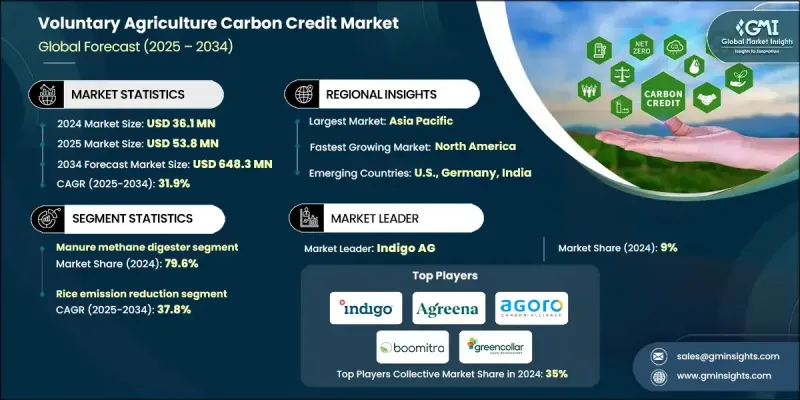
시장 성장은 기업의 넷 제로 목표의 급증에 견인되고 있습니다. 기업은 공급망으로 인한 범위 3 배출량의 상쇄를 점점 더 찾고 있으며, 농업 기반 탄소 크레딧은 환경 책임을 나타내는 측정 가능한 수단을 제공하는 동시에 지속 가능한 농업 관행을 지원합니다. 단일 탄소 오프셋 구매에서 통합 지속가능성 금융으로의 전환으로 탄소 크레딧은 기업 투자 전략에 통합됩니다. 기업이 주도하는 검증된 농업 탄소 프로젝트는 더 큰 기회를 창출하고 있습니다. 민간 부문의 참여가 시장 구조를 변화시키고 있으며, 조직은 크레딧을 구입할 뿐만 아니라 독자적인 프로그램을 설계 및 관리하는 움직임도 퍼지고 있습니다. 고품질의 검증된 크레딧을 중시함으로써 실천이 표준화되고 구매자의 신뢰가 구축됩니다. 디지털 플랫폼과 제3자 검증은 투명성과 추적성을 보장하는 반면, 간소화된 등록 프로세스와 안정적인 수익원은 농민들에게 탄소 신용 프로그램의 매력을 높이고 있습니다.
| 시장 규모 | |
|---|---|
| 시작 연도 | 2024년 |
| 예측 연도 | 2025-2034년 |
| 시작 금액 | 3,610만 달러 |
| 예측 금액 | 6억 4,830만 달러 |
| CAGR | 31.9% |
가축 분뇨 메탄 소화기 부문은 2024년에 79.6%의 점유율을 차지했고 2034년까지 연평균 복합 성장률(CAGR)은 30.6%를 보일 것으로 예측됩니다. 이 성장은 재생가능 천연가스 생산으로의 전환과 영양분 회수·공동소화 프로세스의 통합에 의해 추진되고 있습니다. 메탄 회수와 연료로의 전환에 대한 강력한 시장 인센티브는 이러한 세계 프로젝트의 도입을 더욱 가속화하고 있습니다.
벼농사 배출 감축 이니셔티브는 교호습건법(AWD)의 도입과 검증된 탄소배출권 프로그램의 확대를 배경으로 2034년까지 37.8%의 성장률이 전망되고 있습니다. 생육기에 통제된 배수기간을 마련함으로써, 농가는 논으로부터의 메탄 배출량을 대폭 삭감할 수 있습니다. 이 프로젝트는 효율적인 비료 이용과 지속 가능한 관개 기술과 같은 기술을 통합하는 경우가 많으며 토양 탄소 고정을 촉진하고 아산화질소 배출을 줄이기 때문에 탄소 크레딧 창출의 범위가 확대됩니다.
미국의 자원 봉사 농업 탄소 신용 시장은 2024년에 690만 달러를 창출했습니다. 이 나라의 기업의 기후 변화 대책은 탄소배출권을 임의의 오프셋 수단에서 전략적 금융상품으로 전환시키고 있습니다. 기업은 특히 스코프 3 배출량을 대상으로 농업 기반 크레딧을 자본 배분 및 지속가능성 연동형 금융 메커니즘에 통합하고 있습니다. 이 추세는 미국 시장에서 검증된 고품질 크레딧 수요 증가를 이끌고 있습니다.
세계의 자발적 농업 탄소배출권 시장의 주요 기업은 Agoro Carbon Alliance, AgriCapture, Agreena, Boomitra, Carbon Asset Solutions, CarbonSink, CIBO Technologies, Climate Action Reserve, Cultivo, eAgronom, EverCarbon, Green Carbon Inc., GreenCoam Inc. Bio, Nori, Pachama, South Pole, TerraCarbon, Varaha ClimateAg Private Limited 등이 있습니다. 세계 농업 분야에서 자원 봉사 탄소 신용 시장의 기업은 시장의 존재를 강화하고 발판을 확장하기 위해 몇 가지 전략을 채택하고 있습니다. 고품질의 신뢰할 수 있는 크레딧을 확보하기 위해 프로젝트 개발 및 검증 시스템에 많은 투자를 하고 있습니다. 농부, 기술 공급자, 기업 구매자와의 전략적 파트너십은 프로그램의 채택과 보급을 촉진합니다. 기업은 투명성을 제공하고 참여 절차를 단순화하며 참가자에게 안정적인 수익을 보장하기 위해 디지털 플랫폼과 추적성 도구를 활용합니다.
자주 묻는 질문
목차
제1장 조사 방법과 범위
제2장 주요 요약
제3장 업계 인사이트
- 업계 생태계 분석
- 규제 상황
- 업계에 미치는 영향요인
- 성장 촉진요인
- 업계의 잠재적 리스크 및 과제
- 성장 가능성 분석
- Porter's Five Forces 분석
- PESTEL 분석
- 새로운 기회와 동향
- 디지털화와 IoT 통합
- 신흥 시장 진출
제4장 경쟁 구도
- 소개
- 기업의 시장 점유율 분석
- 전략적 노력
- 경쟁 벤치마킹
- 전략적 대시보드
- 혁신과 기술 동향
제5장 시장 규모와 예측 : 프로젝트 유형별, 2021년-2034년
- 주요 동향
- 가축 분뇨 메탄 소화기
- 벼 재배 온실가스 배출 저감
- 지속 가능한 농업
- 관개 관리 개선
- 기타
제6장 시장 규모와 예측 : 지역별, 2021년-2034년
- 주요 동향
- 북미
- 미국
- 캐나다
- 유럽
- 영국
- 독일
- 스위스
- 네덜란드
- 아시아태평양
- 중국
- 일본
- 인도
- 대만
- 세계 기타 지역
제7장 기업 프로파일
- AgriCapture
- Agoro Carbon Alliance
- Agreena
- Boomitra
- Carbon Asset Solutions
- CarbonSink
- CIBO Technologies
- Climate Action Reserve
- Cultivo
- eAgronom
- EverCarbon
- Green Carbon Inc.
- GreenCollar
- Indigo Ag
- Landbanking Group
- Loam Bio
- Nori
- Pachama
- South Pole
- TerraCarbon
- Varaha ClimateAg Private Limited
The Global Voluntary Agriculture Carbon Credit Market was valued at USD 36.1 million in 2024 and is estimated to grow at a CAGR of 31.9% to reach USD 648.3 million by 2034.
The market's growth is driven by the surge in corporate net-zero commitments, as companies increasingly look to offset their Scope 3 emissions originating from their supply chains. Agriculture-based carbon credits provide a measurable way to showcase environmental responsibility while supporting sustainable farming practices. The transition from occasional carbon offset purchases to integrated sustainability financing has embedded carbon credits into corporate investment strategies. Verified agriculture carbon projects led by companies are further creating significant opportunities. Private sector participation is reshaping the landscape, with organizations not only buying credits but also designing and managing their own programs. Emphasizing high-quality, verified credits standardizes practices and builds buyer confidence. Digital platforms and third-party verification ensure transparency and traceability, while streamlined enrollment and consistent revenue streams make carbon credit programs increasingly attractive to farmers.
| Market Scope | |
|---|---|
| Start Year | 2024 |
| Forecast Year | 2025-2034 |
| Start Value | $36.1 Million |
| Forecast Value | $648.3 Million |
| CAGR | 31.9% |
The manure methane digester segment held 79.6% share in 2024 and is expected to grow at a CAGR of 30.6% through 2034. Growth is driven by the shift toward renewable natural gas production and integration with nutrient recovery and codigestion processes. Strong market incentives for methane capture and conversion into fuel further accelerate the adoption of these projects worldwide.
The rice emission reduction initiatives are anticipated to grow at a rate of 37.8% through 2034, fueled by the adoption of alternate wetting and drying practices combined with the expansion of verified carbon credit programs. By incorporating controlled drainage periods during the growing season, farmers can significantly lower methane emissions from flooded fields. These projects often integrate practices such as efficient fertilizer use and sustainable irrigation techniques, enhancing soil carbon sequestration and reducing nitrous oxide emissions, thereby broadening the scope of carbon credit generation.
U.S. Voluntary Agriculture Carbon Credit Market generated USD 6.9 million in 2024. Corporate climate initiatives in the country are transforming carbon credits from optional offsets into strategic financial instruments. Companies are embedding agriculture-based credits into capital allocation and sustainability-linked financial mechanisms, particularly targeting Scope 3 emissions. This trend is driving heightened demand for verified and high-quality credits in the U.S. market.
Key players in the Global Voluntary Agriculture Carbon Credit Market include Agoro Carbon Alliance, AgriCapture, Agreena, Boomitra, Carbon Asset Solutions, CarbonSink, CIBO Technologies, Climate Action Reserve, Cultivo, eAgronom, EverCarbon, Green Carbon Inc., GreenCollar, Indigo Ag, Landbanking Group, Loam Bio, Nori, Pachama, South Pole, TerraCarbon, and Varaha ClimateAg Private Limited. Companies in the Global Voluntary Agriculture Carbon Credit Market are employing several strategies to strengthen their market presence and expand their foothold. They are investing heavily in project development and verification systems to ensure high-quality, credible credits. Strategic partnerships with farmers, technology providers, and corporate buyers enhance program adoption and reach. Firms are leveraging digital platforms and traceability tools to provide transparency, simplify enrollment, and ensure consistent revenue for participants.
Table of Contents
Chapter 1 Methodology & Scope
- 1.1 Research design
- 1.2 Base estimates & calculations
- 1.3 Forecast calculation
- 1.4 Data sources
- 1.4.1 Primary
- 1.4.2 Secondary
- 1.4.2.1 Paid
- 1.4.2.2 Public
- 1.5 Market definitions
Chapter 2 Executive Summary
- 2.1 Industry synopsis, 2021 - 2034
- 2.1.1 Business trends
- 2.1.2 Project type trends
- 2.1.3 Regional trends
Chapter 3 Industry Insights
- 3.1 Industry ecosystem analysis
- 3.2 Regulatory landscape
- 3.3 Industry impact forces
- 3.3.1 Growth drivers
- 3.3.2 Industry pitfalls & challenges
- 3.4 Growth potential analysis
- 3.5 Porter's analysis
- 3.5.1 Bargaining power of suppliers
- 3.5.2 Bargaining power of buyers
- 3.5.3 Threat of new entrants
- 3.5.4 Threat of substitutes
- 3.6 PESTEL analysis
- 3.6.1 Political factors
- 3.6.2 Economic factors
- 3.6.3 Social factors
- 3.6.4 Technology factors
- 3.6.5 Environmental factors
- 3.6.6 Legal factors
- 3.7 Emerging opportunities & trends
- 3.7.1 Digitalization and IoT integration
- 3.7.2 Emerging market penetration
Chapter 4 Competitive Landscape, 2025
- 4.1 Introduction
- 4.2 Company market share analysis, 2024
- 4.3 Strategic initiatives
- 4.4 Competitive benchmarking
- 4.5 Strategic dashboard
- 4.6 Innovation & technology landscape
Chapter 5 Market Size and Forecast, By Project Type, 2021 - 2034 (USD Million, Million Credit)
- 5.1 Key trends
- 5.2 Manure methane digester
- 5.3 Rice emission reduction
- 5.4 Sustainable agriculture
- 5.5 Improved irrigation management
- 5.6 Others
Chapter 6 Market Size and Forecast, By Region, 2021 - 2034 (USD Million, Million Credit)
- 6.1 Key trends
- 6.2 North America
- 6.2.1 U.S.
- 6.2.2 Canada
- 6.3 Europe
- 6.3.1 UK
- 6.3.2 Germany
- 6.3.3 Switzerland
- 6.3.4 Netherlands
- 6.4 Asia Pacific
- 6.4.1 China
- 6.4.2 Japan
- 6.4.3 India
- 6.4.4 Taiwan
- 6.5 Rest of World
Chapter 7 Company Profiles
- 7.1 AgriCapture
- 7.2 Agoro Carbon Alliance
- 7.3 Agreena
- 7.4 Boomitra
- 7.5 Carbon Asset Solutions
- 7.6 CarbonSink
- 7.7 CIBO Technologies
- 7.8 Climate Action Reserve
- 7.9 Cultivo
- 7.10 eAgronom
- 7.11 EverCarbon
- 7.12 Green Carbon Inc.
- 7.13 GreenCollar
- 7.14 Indigo Ag
- 7.15 Landbanking Group
- 7.16 Loam Bio
- 7.17 Nori
- 7.18 Pachama
- 7.19 South Pole
- 7.20 TerraCarbon
- 7.21 Varaha ClimateAg Private Limited