
|
시장보고서
상품코드
1885845
여성 건강 소비재 시장 : 시장 기회, 성장 요인, 업계 동향 분석 및 예측(2025-2034년)Womens Health Consumer Products Market Opportunity, Growth Drivers, Industry Trend Analysis, and Forecast 2025 - 2034 |
||||||

세계의 여성 건강 소비재 시장은 2024년에 420억 달러로 평가되었고, 2034년까지 연평균 복합 성장률(CAGR) 5%로 성장할 전망이며, 682억 달러에 이를 것으로 예측되고 있습니다.
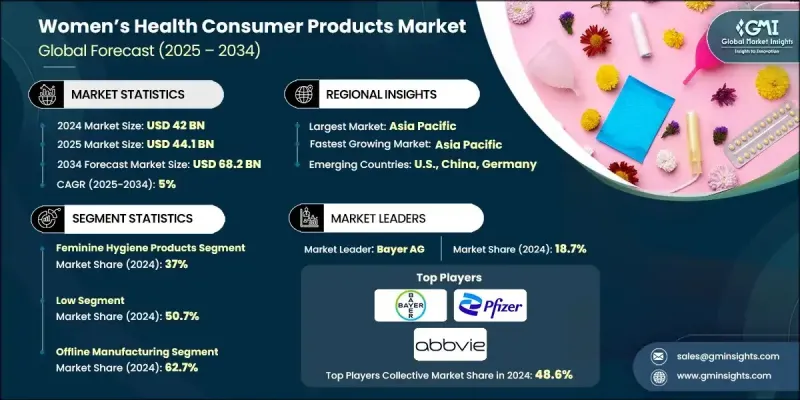
이 평가 금액에는 병원 약국, 독립 약국, 약국, 디지털 소매 플랫폼을 통해 판매되는 처방전 기반 및 상업용 의약품 여성용 건강 제품이 모두 포함됩니다. 시장 성장은 인구 역학의 변화, 예방 의학에 대한 관심 증가, 건강 리터러시의 향상, 제품의 보급을 촉진하는 규제 프레임 워크의 진화에 의해 형성됩니다. 이러한 상승 추세는 신흥 지역, 특히 아시아태평양의 소득 증가 및 도시 개발에 의해 더욱 지원되고 있으며, 이 지역에서는 전문적이고 고품질의 건강 솔루션에 대한 수요가 지속적으로 강화되고 있습니다. 시장 규모는 가격 설정, 의료 접근, 구매 행동의 지역 차이를 반영합니다. 북미와 유럽에서는 높은 인지도 및 확립된 헬스케어 제도에 의해 1인당 지출액이 높아지고 있습니다. 한편 라틴아메리카, 중동, 아프리카, 아시아태평양 시장은 인프라 개선 및 인지도 확대로 급속히 확대되고 있습니다. 이러한 추세가 결합되어 세계적으로 지속적이고 장기적인 성장이 이루어지고 있습니다.
| 시장 범위 | |
|---|---|
| 시작 연도 | 2024년 |
| 예측 기간 | 2025-2034년 |
| 시작 시 가치 | 420억 달러 |
| 예측 금액 | 682억 달러 |
| CAGR | 5% |
여성용 위생용품 부문은 2024년에 37%의 점유율을 차지했으며, 2025-2034년 연평균 복합 성장률(CAGR) 5.2%로 성장할 것으로 예측됩니다. 이 카테고리에는 월경 관리 용품 및 민감한 구역 위생 용품이 포함되어 있으며 지속적인 보충 주기 및 일상적인 위생 용품의 필수성으로 인해 주요 지위를 계속 유지합니다. 소재와 디자인의 발전으로 소비자를 위한 안전, 편안함 및 환경 친화적인 솔루션이 계속 중요해지고 있습니다.
저가 여성용 건강 제품 부문은 2024년 50.75%의 점유율을 차지했으며, 5.2%의 연평균 복합 성장률(CAGR)로 성장할 것으로 예측됩니다. 이 부문에는 널리 사용되는 개인 건강 용품, 비타민, 보충제 및 일상적인 위생 용품이 포함됩니다. 이 제품들 중 상당수는 자주 구매되며, 특히 개발도상국과 비용 의식이 높은 소비자들에게 합리적인 가격이 중요한 요소이기 때문에 주도적인 점유율을 유지하고 있습니다.
북미의 여성 건강 소비재 시장은 2024년에 26.4%의 점유율을 획득했으며, 2034년까지 연평균 복합 성장률(CAGR) 5.2%로 성장할 것으로 예측됩니다. 높은 소비 수준, 견고한 헬스케어 시스템 및 지원 규제 환경이 지역의 주도적 지위에 기여합니다. 이 지역은 여성용 건강 기술 혁신의 거점으로 계속될 전망이며, 2024년 기준에서 세계의 펨텍 벤처의 33% 이상이 이 지역에 거점을 두고 있습니다. 이러한 벤처기업의 약 20%가 임신 및 수유 솔루션에 주력하고 있으며, 이 부문이 지역 성장의 주요 견인역 중 하나가 되고 있습니다.
자주 묻는 질문
목차
제1장 조사 방법 및 범위
제2장 주요 요약
제3장 업계 인사이트
- 생태계 분석
- 공급자의 상황
- 이익률
- 각 단계에서의 부가가치
- 밸류체인에 영향을 주는 요인
- 업계에 미치는 영향요인
- 성장 촉진요인
- 여성의 건강 문제 및 만성 질환의 발생률 증가
- 기술과 디지털 헬스 및 펨텍의 진보
- 높아지는 의식과 지원적인 정책 및 정부의 대처
- 업계의 잠재적 위험 및 과제
- 스티그마, 문화적 요인 및 접근 장벽
- 규제, 조사, 임상시험에 있어서의 과제
- 데이터 프라이버시, 세분화하는 제품 카테고리, 비용 압력
- 기회
- 펨텍 및 디지털 헬스 솔루션 확대
- 예방적이고 종합적인 웰빙 제품에 대한 수요 증가
- 신흥 경제국 및 틈새 부문의 미개척 시장
- 성장 촉진요인
- 성장 가능성 분석
- 장래 시장 동향
- 기술 및 혁신 동향
- 현재의 기술 동향
- 신흥 기술
- 가격 동향
- 지역별
- 제품 유형별
- 규제 상황
- 규격 및 컴플라이언스 요건
- 지역별 규제 프레임워크
- Porter's Five Forces 분석
- PESTEL 분석
- 소비자 행동 분석
- 구매 패턴
- 선호 분석
- 소비 행동의 지역적 차이
- 전자상거래가 구매 결정에 미치는 영향
제4장 경쟁 구도
- 서문
- 기업의 시장 점유율 분석
- 지역별
- 기업 매트릭스 분석
- 주요 시장 기업의 경쟁 분석
- 경쟁 포지셔닝 매트릭스
- 주요 발전
- 합병 및 인수
- 제휴 및 협업
- 신제품 발매
- 사업 확대 계획
제5장 시장 추계 및 예측 : 제품 유형별(2021-2034년)
- 주요 동향
- 여성용 위생 용품
- 생리용 냅킨
- 탐폰
- 생리컵
- 팬티 라이너
- 기타
- 출산 및 임신 케어 제품
- 임산부용 비타민제
- 출산
- 스트레치 마크 크림
- 임신용 보충제
- 성적 건강 제품
- 피임구
- 윤활유
- 여성용 위생 용품
- 영양보조식품 및 건강식품
- 기타 퍼스널케어 제품(스킨 케어, 헤어 케어 및 웰니스 제품)
제6장 시장 추계 및 예측 : 연령층별(2021-2034년)
- 주요 동향
- 10대 및 20대
- 성인
- 중고년 여성
제7장 시장 추계 및 예측 : 가격별(2021-2034년)
- 주요 동향
- 저가격대
- 중가격대
- 고가격대
제8장 시장 추계 및 예측 : 유통 채널별(2021-2034년)
- 주요 동향
- 온라인 플랫폼
- 전자상거래 마켓플레이스(Amazon, Flipkart 등)
- 브랜드 공식 사이트 및 정기 구입 박스
- 여성용 건강 제품의 모바일 앱
- 오프라인 소매
- 슈퍼마켓 및 하이퍼마켓
- 약국 및 약전문점
- 전문 건강 및 웰빙 스토어
제9장 시장 추계 및 예측 : 지역별(2021-2034년)
- 주요 동향
- 북미
- 미국
- 캐나다
- 유럽
- 영국
- 독일
- 프랑스
- 이탈리아
- 스페인
- 러시아
- 아시아태평양
- 중국
- 인도
- 일본
- 호주
- 한국
- 라틴아메리카
- 브라질
- 멕시코
- 아르헨티나
- 중동 및 아프리카
- 아랍에미리트(UAE)
- 남아프리카
- 사우디아라비아
제10장 기업 프로파일
- Abbott Laboratories
- Amgen
- Amway Global
- Bayer
- Blackmores
- Ferring Pharmaceuticals
- GNC Holdings
- Herbalife Nutrition
- Johnson & Johnson
- Merck & Co.
- Nestle
- Pfizer
- Suntory Holdings
- Teva Pharmaceutical Industries
- The Himalaya Drug Company
The Global Womens Health Consumer Products Market was valued at USD 42 billion in 2024 and is estimated to grow at a CAGR of 5% to reach USD 68.2 billion by 2034.
The valuation includes both prescription-based and over-the-counter women's health products sold through hospital pharmacies, independent pharmacies, drug stores, and digital retail platforms. Market growth is shaped by shifting demographics, rising focus on preventive care, increasing health literacy, and evolving regulatory frameworks that encourage wider product availability. The upward trend is further supported by rising incomes and urban development in emerging regions, particularly across the Asia Pacific, where demand for specialized and high-quality health solutions continues to strengthen. Market sizing reflects regional differences in pricing, access to care, and purchasing behaviors. North America and Europe demonstrate higher per-capita spending due to strong awareness levels and well-established healthcare systems, while markets in Latin America, the Middle East & Africa, and Asia Pacific are expanding rapidly as infrastructure improves and awareness broadens. Together, these dynamics contribute to consistent, long-term growth worldwide.
| Market Scope | |
|---|---|
| Start Year | 2024 |
| Forecast Year | 2025-2034 |
| Start Value | $42 Billion |
| Forecast Value | $68.2 Billion |
| CAGR | 5% |
The feminine hygiene products segment held a 37% share in 2024 and is forecast to grow at a CAGR of 5.2% during 2025-2034. This category includes menstrual care and intimate hygiene items and remains dominant due to constant replenishment cycles and the essential nature of routine hygiene products. Advances in materials and design continue to emphasize safety, comfort, and environmentally mindful solutions for consumers.
The low-price women's health products segment accounted for a 50.75% share in 2024 and is expected to grow at a CAGR of 5.2%. This segment encompasses widely used personal health items, vitamins, supplements, and everyday hygiene products. It maintains its leading share because many of these goods are purchased frequently, and affordability remains a critical factor, particularly in developing economies and among cost-conscious consumers.
North America Womens Health Consumer Products Market captured 26.4% share in 2024 and is projected to grow at a CAGR of 5.2% through 2034. High spending levels, strong healthcare systems, and supportive regulatory environments contribute to the region's leadership position. The area remains a hub for women's health technology innovation, with more than 33% of global femtech ventures based there in 2024. Approximately 20% of these ventures focus on pregnancy and nursing solutions, making this segment one of the most significant contributors to regional growth.
Key companies active in the Womens Health Consumer Products Market include Abbott Laboratories, Amgen, Amway Global, Bayer, Blackmores, Ferring Pharmaceuticals, GNC Holdings, Herbalife Nutrition, Johnson & Johnson, Merck & Co., Nestle, Pfizer, Suntory Holdings, Teva Pharmaceutical Industries, and The Himalaya Drug Company. Leading companies are strengthening their Womens Health Consumer Products Market presence by expanding product portfolios across nutritional health, hormonal wellness, reproductive care, and daily hygiene categories. Many firms are investing in R&D to introduce science-backed formulations, clean-label ingredients, and personalized solutions that align with rising consumer interest in preventive health. Digital engagement strategies, including telehealth integration, mobile apps, and targeted online channels, are improving brand visibility and accessibility. Companies are also widening distribution through partnerships with pharmacies, e-commerce platforms, and healthcare providers to reach a broader customer base.
Table of Contents
Chapter 1 Methodology and Scope
- 1.1 Market scope and definition
- 1.2 Research design
- 1.2.1 Research approach
- 1.3 Data collection methods
- 1.4 Data mining sources
- 1.4.1 Global
- 1.4.2 Regional/Country
- 1.5 Base estimates and calculations
- 1.5.1 Base year calculation
- 1.5.2 Key trends for market estimation
- 1.6 Primary research and validation
- 1.6.1 Primary sources
- 1.7 Forecast model
- 1.8 Research assumptions and limitations
Chapter 2 Executive Summary
- 2.1 Industry 360° synopsis
- 2.2 Key market trends
- 2.2.1 Regional
- 2.2.2 Product type
- 2.2.3 Age group
- 2.2.4 Price
- 2.2.5 Distribution channel
- 2.3 CXO perspectives: strategic imperatives
- 2.3.1 Key decision points for industry executives
- 2.3.2 Critical success factors for market players
- 2.4 Future outlook and strategic recommendations
Chapter 3 Industry Insights
- 3.1 Industry ecosystem analysis
- 3.1.1 Supplier landscape
- 3.1.2 Profit margin
- 3.1.3 Value addition at each stage
- 3.1.4 Factors affecting the value chain
- 3.2 Industry impact forces
- 3.2.1 Growth drivers
- 3.2.1.1 Growing incidence of women’s health and chronic conditions
- 3.2.1.2 Advancements in technology & digital health / femtech
- 3.2.1.3 Increasing awareness and supportive policy/government initiatives
- 3.2.2 Industry pitfalls & challenges
- 3.2.2.1 Stigma, cultural & access barriers
- 3.2.2.2 Regulatory, research and clinical trial gaps
- 3.2.2.3 Data privacy, fragmenting product categories, and cost pressures
- 3.2.3 Opportunities
- 3.2.3.1 Expansion of femtech and digital health solutions
- 3.2.3.2 Rising demand for preventive and holistic wellness products
- 3.2.3.3 Untapped markets in emerging economies and niche segments
- 3.2.1 Growth drivers
- 3.3 Growth potential analysis
- 3.4 Future market trends
- 3.5 Technology and innovation landscape
- 3.5.1 Current technological trends
- 3.5.2 Emerging technologies
- 3.6 Price trends
- 3.6.1 By region
- 3.6.2 By Product type
- 3.7 Regulatory landscape
- 3.7.1 standards and compliance requirements
- 3.7.2 Regional regulatory frameworks
- 3.8 Porter's analysis
- 3.9 PESTEL analysis
- 3.10 Consumer behavior analysis
- 3.10.1 Purchasing patterns
- 3.10.2 Preference analysis
- 3.10.3 Regional variations in consumer behavior
- 3.10.4 Impact of e-commerce on buying decisions
Chapter 4 Competitive Landscape, 2024
- 4.1 Introduction
- 4.2 Company market share analysis
- 4.2.1 By region
- 4.2.1.1 North America
- 4.2.1.2 Europe
- 4.2.1.3 Asia Pacific
- 4.2.1.4 Latin America
- 4.2.1.5 Middle East and Africa
- 4.2.1 By region
- 4.3 Company matrix analysis
- 4.4 Competitive analysis of major market players
- 4.5 Competitive positioning matrix
- 4.6 Key developments
- 4.6.1 Mergers & acquisitions
- 4.6.2 Partnerships & collaborations
- 4.6.3 New Product Launches
- 4.6.4 Expansion Plans
Chapter 5 Market Estimates & Forecast, By Product Type, 2021 - 2034 ($Bn, Thousand Units)
- 5.1 Key trends
- 5.2 Feminine hygiene products
- 5.2.1 Sanitary napkins
- 5.2.2 Tampons
- 5.2.3 Menstrual cups
- 5.2.4 Panty liners
- 5.2.5 Others
- 5.3 Maternity & pregnancy care products
- 5.3.1 Prenatal vitamins
- 5.3.2 Maternity wear
- 5.3.3 Stretch mark creams
- 5.3.4 Pregnancy supplements
- 5.4 Sexual wellness products
- 5.4.1 Contraceptives
- 5.4.2 Lubricants
- 5.4.3 Intimate health products
- 5.5 Nutritional & dietary supplements
- 5.6 Other personal care products (skincare, hair care, and wellness products)
Chapter 6 Market Estimates & Forecast, By Age Group 2021 - 2034 ($Bn, Thousand Units)
- 6.1 Key trends
- 6.2 Teenagers & young adults
- 6.3 Adults
- 6.4 Middle-aged & older women
Chapter 7 Market Estimates & Forecast, By Price, 2021 - 2034 ($Bn, Thousand Units)
- 7.1 Key trends
- 7.2 Low
- 7.3 Medium
- 7.4 High
Chapter 8 Market Estimates & Forecast, By Distribution channel, 2021 - 2034 ($Bn, Thousand Units)
- 8.1 Key trends
- 8.2 Online platforms
- 8.2.1 E-commerce marketplaces (Amazon, Flipkart, etc.)
- 8.2.2 Brand websites & subscription boxes
- 8.2.3 Mobile apps for Women’s health products
- 8.3 Offline retail
- 8.3.1 Supermarkets & hypermarkets
- 8.3.2 Pharmacies & drugstores
- 8.3.3 Specialty health & wellness stores
Chapter 9 Market Estimates & Forecast, By Region, 2021 - 2034 ($Bn, Thousand Units)
- 9.1 Key trends
- 9.2 North America
- 9.2.1 U.S.
- 9.2.2 Canada
- 9.3 Europe
- 9.3.1 UK
- 9.3.2 Germany
- 9.3.3 France
- 9.3.4 Italy
- 9.3.5 Spain
- 9.3.6 Russia
- 9.4 Asia Pacific
- 9.4.1 China
- 9.4.2 India
- 9.4.3 Japan
- 9.4.4 Australia
- 9.4.5 South Korea
- 9.5 Latin America
- 9.5.1 Brazil
- 9.5.2 Mexico
- 9.5.3 Argentina
- 9.6 MEA
- 9.6.1 UAE
- 9.6.2 South Africa
- 9.6.3 Saudi Arabia
Chapter 10 Company Profiles
- 10.1 Abbott Laboratories
- 10.2 Amgen
- 10.3 Amway Global
- 10.4 Bayer
- 10.5 Blackmores
- 10.6 Ferring Pharmaceuticals
- 10.7 GNC Holdings
- 10.8 Herbalife Nutrition
- 10.9 Johnson & Johnson
- 10.10 Merck & Co.
- 10.11 Nestle
- 10.12 Pfizer
- 10.13 Suntory Holdings
- 10.14 Teva Pharmaceutical Industries
- 10.15 The Himalaya Drug Company