
|
시장보고서
상품코드
2019078
볼텍스 열량계 시장 기회, 성장요인, 업계 동향 분석 및 예측(2026-2035년)Vortex Heat Meters Market Opportunity, Growth Drivers, Industry Trend Analysis, and Forecast 2026 - 2035 |
||||||

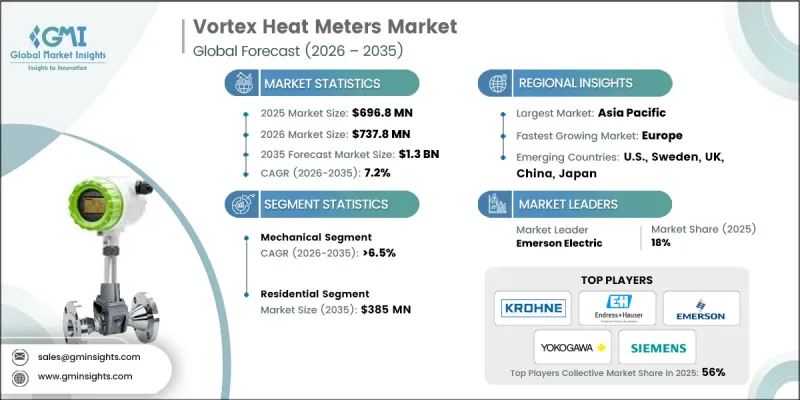
세계의 와류식 열량계 시장은 2025년에 6억 9,680만 달러로 평가되고 CAGR 7.2%로 성장하며, 2035년까지 13억 달러에 달할 것으로 예측됩니다.
이러한 성장은 정확하고 일관된 성능을 제공하는 고급 유량 측정 기술에 대한 수요 증가에 힘입어 성장세를 보이고 있습니다. 이 미터는 와류 원리를 기반으로 작동하며, 다양한 시스템에서 열 에너지 소비를 안정적으로 모니터링할 수 있습니다. 에너지 효율이 높은 솔루션에 대한 수요 증가와 더불어 도시 지역의 현대식 난방 네트워크의 확장은 시장 역학을 크게 형성하고 있습니다. 스마트 미터링 플랫폼 및 빌딩 관리 시스템과의 통합으로 그 기능성과 보급이 더욱 촉진되고 있습니다. 센서 설계, 재료 품질 및 디지털 통합의 지속적인 개선은 정확도 향상과 장기적인 신뢰성을 지원합니다. 또한 에너지 효율과 투명한 과금 관행에 대한 규제 당국의 관심으로 인해 와류식 열량계가 현대 에너지 관리 시스템에서 더욱 광범위하게 도입되고 있으며, 이는 현대 에너지 관리 시스템에서 와류식 열량계의 중요성이 더욱 커지고 있습니다.
| 시장 범위 | |
|---|---|
| 시작연도 | 2025년 |
| 예측 기간 | 2026-2035년 |
| 개시 금액 | 6억 9,680만 달러 |
| 예측액 | 13억 달러 |
| CAGR | 7.2% |
인프라 개발에 대한 투자 증가와 지속가능한 난방 기술의 보급이 진행되면서 시장 수요가 더욱 가속화되고 있습니다. 정확한 에너지 모니터링과 효율적인 열 이용에 대한 관심이 높아짐에 따라 업계 전반에 걸쳐 구매 결정에 영향을 미치고 있습니다. 조직이 첨단 에너지 관리 전략을 채택함에 따라 정확하고 내구성이 뛰어난 측정 솔루션에 대한 요구가 계속 증가하고 있습니다. 기술의 발전으로 다양한 운영 조건에서 성능 향상이 가능해졌고, 환경 친화적인 시스템으로의 전환이 전체 시장의 잠재력을 강화하고 있습니다. 이러한 요인들이 복합적으로 작용하여 와류식 열량계 산업의 꾸준한 확장에 기여하고 있습니다.
기계식 부문은 단순한 설계와 최소한의 유지보수 요구사항에 힘입어 2035년까지 연평균 6.5%의 성장률을 기록할 것으로 예상됩니다. 이 시스템은 비용 효율성과 안정적인 작동으로 널리 평가받고 있으며, 다양한 용도에 적합합니다. 교정 방법과 센싱 기술의 지속적인 개선으로 측정 정확도와 신뢰성이 향상되고 있습니다. 기존 계측 인프라와의 호환성도 도입 확대를 지원하고 있으며, 제조 공정 최적화를 위한 노력은 총 비용 절감에 기여하여 이 부문의 성장을 더욱 촉진하고 있습니다.
주택 부문은 현대식 주택 개발에서 에너지 절약 솔루션의 채택이 확대됨에 따라 2035년까지 3억 8,500만 달러에 달할 것으로 예상됩니다. 주택 소유주 및 개발업체들은 지속가능한 건축 방식과 첨단 에너지 모니터링 시스템을 더욱 중요하게 여기고 있습니다. IoT 지원 장치를 포함한 스마트 기술의 통합으로 에너지 소비를 실시간으로 추적하고 제어할 수 있게 되었습니다. 기능성과 사용 편의성을 겸비한 시스템 설계의 향상도 도입 확대에 기여하고 있습니다. 에너지 효율에 대한 소비자의 인식이 계속 높아지면서 주택 부문은 지속적인 성장이 예상됩니다.
미국 볼텍스 열량계 시장은 에너지 비용 상승과 효율적인 에너지 이용에 대한 관심 증가를 배경으로 2035년까지 1억 3,000만 달러에 달할 것으로 예측됩니다. 자동화의 보급 확대와 엄격한 에너지 규제 준수가 시장 확대에 영향을 미치는 주요 요인으로 작용하고 있습니다. 이 미터는 내구성, 적은 유지보수, 열악한 조건에서도 신뢰할 수 있는 성능 등의 장점을 가지고 있으며, 다양한 용도에 적합합니다. 에너지 최적화 및 환경 친화적 관행에 대한 움직임과 더불어 현대적 인프라 및 지속가능한 건축에 대한 지속적인 투자도 도입을 더욱 촉진하고 있습니다.
자주 묻는 질문
목차
제1장 조사 방법과 범위
제2장 개요
제3장 업계 인사이트
제4장 경쟁 구도
제5장 시장 규모·예측 : 기술별, 2022-2035
제6장 시장 규모·예측 : 용도별, 2022-2035
제7장 시장 규모·예측 : 지역별, 2022-2035
제8장 기업 개요
KSA 26.05.13The Global Vortex Heat Meters Market was valued at USD 696.8 million in 2025 and is estimated to grow at a CAGR of 7.2% to reach USD 1.3 billion by 2035.
Growth is driven by the rising need for advanced flow measurement technologies capable of delivering precise and consistent performance. These meters operate based on vortex flow principles, enabling reliable monitoring of thermal energy consumption in various systems. Increasing demand for energy-efficient solutions, along with the expansion of modern heating networks in urban environments, is significantly shaping market dynamics. Integration with smart metering platforms and building management systems is further enhancing their functionality and adoption. Continuous improvements in sensor design, material quality, and digital integration are supporting higher accuracy and long-term reliability. Additionally, regulatory focus on energy efficiency and transparent billing practices is encouraging wider deployment, reinforcing the importance of vortex heat meters in modern energy management systems.
| Market Scope | |
|---|---|
| Start Year | 2025 |
| Forecast Year | 2026-2035 |
| Start Value | $696.8 Million |
| Forecast Value | $1.3 Billion |
| CAGR | 7.2% |
Rising investments in infrastructure development and the growing adoption of sustainable heating technologies are further accelerating market demand. The increasing emphasis on precise energy monitoring and efficient heat utilization is influencing purchasing decisions across industries. As organizations adopt advanced energy management strategies, the need for accurate and durable metering solutions continues to grow. Technological advancements are enabling better performance under varying operational conditions, while the shift toward environmentally responsible systems is strengthening overall market potential. These factors collectively contribute to the steady expansion of the vortex heat meters industry.
The mechanical segment is expected to grow at a CAGR of 6.5% through 2035, supported by its straightforward design and minimal maintenance requirements. These systems are widely preferred for their cost-effectiveness and dependable operation, making them suitable for a variety of applications. Ongoing enhancements in calibration methods and sensing technologies are improving measurement accuracy and reliability. Their compatibility with existing metering infrastructure also supports continued adoption, while efforts to optimize manufacturing processes are helping reduce overall costs, further strengthening segment growth.
The residential segment is projected to reach USD 385 million by 2035, driven by increasing adoption of energy-efficient solutions in modern housing developments. Homeowners and developers are placing greater emphasis on sustainable construction practices and advanced energy monitoring systems. The integration of smart technologies, including IoT-enabled devices, is enabling real-time tracking and improved control over energy consumption. Enhanced system designs that combine functionality with user-friendly features are also contributing to increased adoption. As consumer awareness around energy efficiency continues to rise, the residential segment is expected to experience sustained growth.
U.S. Vortex Heat Meters Market is anticipated to reach USD 130 million by 2035, supported by rising energy costs and a growing focus on efficient energy utilization. Increased adoption of automation and compliance with stringent energy regulations are key factors influencing market expansion. These meters offer advantages such as durability, low maintenance, and reliable performance under demanding conditions, making them well-suited for a wide range of applications. The push toward energy optimization and environmentally conscious practices is further driving adoption, alongside continued investments in modern infrastructure and sustainable building initiatives.
Major companies operating in the Global Vortex Heat Meters Market include Siemens, ABB, Honeywell International, Schneider Electric, Emerson Electric, Endress+Hauser, Yokogawa Electric Corporation, KROHNE, Badger Meter, Spirax Sarco, TLV, KOBOLD Instruments, Apure, Sino-Inst, Grainger, Arrow Electronics, and WPG Holdings. Companies in the Global Vortex Heat Meters Market are focusing on strengthening their market position through innovation, strategic partnerships, and expanded product offerings. Investments in advanced sensor technologies and digital integration are enabling the development of more accurate and efficient metering solutions. Many players are enhancing their portfolios with smart and connected devices that support real-time monitoring and data analytics. Collaborations with infrastructure developers and energy service providers are helping companies expand their reach and secure long-term contracts. Additionally, firms are prioritizing compliance with global energy efficiency standards while optimizing production processes to reduce costs. Expanding distribution networks and improving after-sales services further support customer retention and long-term growth.
Table of Contents
Chapter 1 Methodology & Scope
- 1.1 Research design
- 1.2 Quality commitment
- 1.2.1 GMI AI policy & data integrity commitment
- 1.2.1.1 Source consistency protocol
- 1.2.1 GMI AI policy & data integrity commitment
- 1.3 Research trail & Confidence Scoring
- 1.3.1 Research trail components
- 1.3.2 Scoring components
- 1.4 Data Collection
- 1.4.1 Partial list of primary sources
- 1.5 Data mining sources
- 1.5.1 Paid sources
- 1.5.1.1 Sources, by region
- 1.5.1 Paid sources
- 1.6 Base estimates and calculations
- 1.6.1 Base year calculation for any one approach
- 1.7 Forecast model
- 1.8 Research transparency addendum
- 1.8.1 Source attribution framework
- 1.8.2 Quality assurance metrics
- 1.8.3 Our commitment to trust
- 1.9 Market definitions
Chapter 2 Executive Summary
- 2.1 Industry 3600 synopsis, 2022 - 2035
- 2.2 Business trends
- 2.3 Technology trends
- 2.4 Application trends
- 2.5 Regional trends
Chapter 3 Industry Insights
- 3.1 Industry ecosystem
- 3.2 Regulatory landscape
- 3.3 Industry impact forces
- 3.3.1 Growth drivers
- 3.3.2 Industry pitfalls & challenges
- 3.4 Growth potential analysis
- 3.5 Porter's analysis
- 3.5.1 Bargaining power of suppliers
- 3.5.2 Bargaining power of buyers
- 3.5.3 Threat of new entrants
- 3.5.4 Threat of substitutes
- 3.6 PESTEL analysis
- 3.6.1 Political factors
- 3.6.2 Economic factors
- 3.6.3 Social factors
- 3.6.4 Technological factors
- 3.6.5 Legal factors
- 3.6.6 Environmental factors
- 3.7 Cost structure analysis
- 3.8 Price trend analysis, 2022-2035
- 3.8.1 By Application
- 3.8.2 By Region
- 3.9 Emerging opportunities & trends
- 3.9.1 Digitalization & IoT integration
- 3.10 Investment analysis & future outlook
Chapter 4 Competitive landscape, 2026
- 4.1 Introduction
- 4.2 Company market share analysis, by region, 2025
- 4.2.1 North America
- 4.2.2 Europe
- 4.2.3 Asia Pacific
- 4.3 Competitive positioning matrix
- 4.4 Key developments
- 4.4.1 Mergers & acquisitions
- 4.4.2 Partnerships & collaborations
- 4.4.3 New product launches
- 4.4.4 Expansion plans & funding
Chapter 5 Market Size and Forecast, By Technology, 2022 - 2035 (USD Million & ‘000 Units)
- 5.1 Key trends
- 5.2 Mechanical
- 5.3 Static
Chapter 6 Market Size and Forecast, By Application, 2022 - 2035 (USD Million & ‘000 Units)
- 6.1 Key trends
- 6.2 Residential
- 6.3 Commercial
- 6.3.1 College/University
- 6.3.2 Office Building
- 6.3.3 Government Building
- 6.3.4 Others
- 6.4 Industrial
Chapter 7 Market Size and Forecast, By Region, 2022 - 2035 (USD Million & ‘000 Units)
- 7.1 Key trends
- 7.2 North America
- 7.2.1 U.S.
- 7.2.2 Canada
- 7.3 Europe
- 7.3.1 Germany
- 7.3.2 Poland
- 7.3.3 Sweden
- 7.3.4 Denmark
- 7.3.5 Finland
- 7.3.6 Italy
- 7.3.7 UK
- 7.4 Asia Pacific
- 7.4.1 China
- 7.4.2 Japan
- 7.4.3 South Korea
Chapter 8 Company Profiles
- 8.1 ABB
- 8.2 Apure
- 8.3 Arrow Electronics
- 8.4 Badger Meter
- 8.5 Emerson Electric
- 8.6 Endress+Hauser
- 8.7 Grainger
- 8.8 Honeywell International
- 8.9 KROHNE
- 8.10 KOBOLD Instruments, Inc.
- 8.11 Schneider Electric
- 8.12 Siemens
- 8.13 Spirax Sarco
- 8.14 Sino-Inst
- 8.15 TLV Co., Ltd.
- 8.16 WPG Holdings
- 8.17 Yokogawa Electric Corporation