|
시장보고서
상품코드
1763266
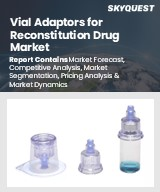
재구성 약용 바이알 어댑터 시장Vial Adaptors for Reconstitution Drug |
||||||
 Market Glass, Inc. (Formerly Global Industry Analysts, Inc.)
세계의 재구성 약용 바이알 어댑터 시장은 2030년까지 21억 달러에 도달
2024년에 15억 달러로 추정되는 세계의 재구성 약용 바이알 어댑터 시장은 2024-2030년에 CAGR 6.2%로 성장하며, 2030년에는 21억 달러에 달할 것으로 예측됩니다. 이 리포트에서 분석한 부문의 하나인 폴리카보네이트는 CAGR 6.8%를 기록하며, 분석 기간 종료시에는 13억 달러에 달할 것으로 예측됩니다. 실리콘 부문의 성장률은 분석 기간 중 CAGR 3.9%로 추정됩니다.
미국 시장은 4억 130만 달러로 추정, 중국은 CAGR 5.9%로 성장 예측
미국의 재구성 약용 바이알 어댑터 시장은 2024년에 4억 130만 달러로 추정됩니다. 세계 2위의 경제대국인 중국은 2030년까지 3억 2,460만 달러의 시장 규모에 달할 것으로 예측되며, 분석 기간인 2024-2030년의 CAGR은 5.9%입니다. 기타 주목할 만한 지역별 시장으로는 일본과 캐나다가 있으며, 분석 기간 중 CAGR은 각각 5.9%와 4.7%로 예측됩니다. 유럽에서는 독일이 CAGR 5.0%로 성장할 것으로 예측됩니다.
세계 재구성 의약품 바이알 어댑터 시장 - 주요 동향 및 시장 성장 촉진요인 살펴보기
재구성 약물 바이알 어댑터 시스템이 약물전달에 혁명을 가져올 수 있는 이유는 무엇인가?
약물 재구성 바이알 어댑터는 의약품 포장 및 약물전달 시스템에서 동결 건조된 약물을 재구성하여 주사기로 옮기는 효율적이고 안전한 방법을 제공하는 필수적인 구성 요소로 등장했습니다. 그렇다면 이러한 장비가 현대 의료 환경에서 매우 중요한 이유는 무엇인가? 바이알 어댑터는 바이알과 주사기 사이에 바늘이 없는 안전한 인터페이스를 제공하도록 설계된 특수 부착물로, 재구성된 약물의 혼합 및 추출 과정을 단순화합니다. 이 어댑터는 주로 투여 전에 희석제와 혼합해야 하는 동결건조 약물을 재구성하는 데 사용됩니다. 바이알 어댑터는 바늘이 필요하지 않아 바늘에 찔리는 부상의 위험을 줄이고 약액의 무균 이송을 보장합니다. 오염을 방지하는 폐쇄형 시스템을 제공하여 의료진과 환자의 안전을 강화하는 동시에 약물 재구성 및 이동 과정을 통해 약물의 무결성을 유지하도록 보장합니다.
바이알 어댑터에 대한 수요는 시장에 진입하는 생물제제 및 동결건조 약물 증가에 의해 주도되고 있습니다. 백신, 호르몬, 단클론 항체 등의 생물제제는 사용 전에 재구성을 필요로 하는 경우가 많습니다. 바이알 어댑터는 약물 조제의 복잡성을 줄이고, 투여 오류의 위험을 최소화하며, 정확한 약물전달을 보장하는 사용자 친화적이고 신뢰할 수 있는 솔루션을 제공함으로써 이 과정을 단순화합니다. 이러한 어댑터의 사용은 병원이나 클리닉에 국한되지 않고, 환자나 간병인이 약물을 관리하는 재택치료 환경에서도 널리 사용되고 있습니다. 당뇨병, 류마티스 관절염, 다발성 경화증과 같은 만성질환 증가로 인해 생물제제를 자가 투여하는 경향이 강화되면서 바이알 어댑터의 채택이 더욱 가속화되고 있습니다. 자가 투여되는 주사제의 수가 계속 증가함에 따라 바이알 어댑터는 약물의 재구성 및 투여의 안전성과 편의성을 높이는 데 있으며, 더욱 중요한 역할을 하게 될 것입니다.
기술의 발전은 어떻게 재구성 약물 바이알 어댑터의 성능을 향상시키고 있는가?
재구성 약물 바이알 어댑터 시장에서는 이러한 장비의 안전성, 효율성 및 사용 편의성을 향상시키는 수많은 기술 발전이 이루어지고 있습니다. 그렇다면 이러한 발전의 원동력이 되는 주요 기술 혁신은 무엇인가? 가장 중요한 발전 중 하나는 바이알과 주사기를 하나의 충전된 유닛에 통합한 듀얼 챔버 재구성 시스템의 개발입니다. 이 시스템을 통해 사용자는 주사기에서 바이알을 제거하지 않고도 약품과 희석제를 혼합할 수 있으며, 재구성 단계가 줄어들어 오염 위험을 최소화할 수 있습니다. 듀얼 챔버 시스템은 안정성과 효능을 유지하기 위해 정확한 혼합이 필요한 생물제제 및 기타 섬세한 제제에 특히 유용합니다. 자가 밀봉 엘라스토머 및 일체형 필터와 같은 고급 밀봉 기술의 도입으로 바이알 어댑터의 성능이 더욱 향상되어 공기의 침입을 방지하고 재구성하는 동안 밀폐된 무균 환경을 유지할 수 있게 되었습니다.
또 다른 중요한 혁신은 바늘이 없는 커넥터가 내장된 바이알 어댑터의 설계입니다. 이 어댑터는 루어 잠금 장비를 사용하여 주사기나 수액 세트에 안전하게 부착되어 주사바늘이 필요 없이 재구성된 약물을 쉽게 이송할 수 있습니다. 바늘이 없는 디자인은 바늘에 찔리는 부상의 위험을 줄일 뿐만 아니라 의료진의 워크플로우를 단순화하여 약품의 준비와 투여를 보다 빠르고 효율적으로 할 수 있도록 합니다. 또한 명확한 시각적 표시기와 딸깍 소리가 나는 어댑터의 개발로 사용자는 안전한 연결을 즉시 확인할 수 있으며, 사용 편의성이 향상되었습니다. 또한 재료 과학의 발전으로 다양한 약물 및 용매에 적합한 생체 적합성, 내화학성이 우수한 재료로 바이알 어댑터를 제조할 수 있게 되었습니다. 이러한 재료는 어댑터가 제제와 반응하지 않고 제제의 안정성과 무결성을 유지하도록 보장합니다. 이러한 기술의 통합으로 보다 안전하고 신뢰할 수 있으며 사용하기 쉬운 바이알 어댑터가 탄생하여 다양한 환경에서 의료 프로바이더와 환자의 다양한 요구를 충족시킬 수 있습니다.
헬스케어 환경 전반에서 재구성 약물 바이알 어댑터의 채택을 촉진하는 시장 동향은 무엇인가?
의료진, 환자 및 제약사의 진화하는 요구와 선호도를 반영하여 몇 가지 주요 시장 동향이 의료 환경 전반에 걸쳐 재구성 약물 바이알 어댑터의 채택을 형성하고 있습니다. 가장 두드러진 동향 중 하나는 투여 전에 재조합이 필요한 생물제제 및 특수 약품의 사용이 증가하고 있다는 점입니다. 단클론 항체, 백신, 세포 및 유전자 치료제와 같은 생물제제는 일반적으로 보존 기간과 안정성을 연장하기 위해 동결 건조됩니다. 생물제제 시장이 계속 확대됨에 따라 안전성과 무균성을 보장하면서 약품 제조를 간소화하는 재구성 솔루션에 대한 필요성이 증가하고 있습니다. 바이알 어댑터는 의료진과 환자를 잠재적인 오염이나 바늘에 찔리는 손상 없이 안전하고 쉽게 재구성할 수 있는 이상적인 솔루션을 제공합니다. 이러한 추세는 복잡한 치료제를 자주 준비하고 투여하는 병원 및 전문 약국 분야에서 특히 두드러지게 나타나고 있습니다.
바이알 어댑터의 채택을 촉진하는 또 다른 중요한 추세는 재택치료 및 주사 요법의 자가 투여 증가입니다. 당뇨병, 다발성 경화증, 자가면역질환과 같은 만성질환의 확산에 따라 집에서 자가 투여 가능한 생물제제를 투여받는 환자가 증가하고 있습니다. 바이알 어댑터는 약물을 재구성하여 주사기에 주입할 수 있는 간단하고 직관적인 인터페이스를 제공함으로써 이 과정을 용이하게 합니다. 이를 통해 복잡한 약물 준비 단계의 필요성을 줄이고, 환자에게 보다 안전하고 편리한 자가 투약을 가능하게 합니다. 환자 중심 치료로의 전환과 병원 방문 횟수 감소에 대한 강조는 재택치료 현장에서 바이알 어댑터의 채택을 더욱 촉진하고 있습니다. 이러한 추세는 수작업 조립의 필요성을 없애고 취급 실수의 위험을 줄여주는 사전 충전 및 사전 부착형 바이알 어댑터 시스템의 개발에도 반영되어 있습니다. 이러한 추세는 보다 사용자 친화적이고 환자 중심의 약물전달 솔루션으로의 광범위한 변화를 강조하며, 바이알 어댑터를 약물 투여의 미래에서 중요한 구성 요소로 자리매김하고 있습니다.
세계 재구성 의약품 바이알 어댑터 시장의 성장을 가속하는 요인은 무엇인가?
세계 재구성 의약품 바이알 어댑터 시장의 성장은 생물제제에 대한 수요 증가, 환자 안전에 대한 관심 증가, 자가 투약 및 재택치료 이용 확대 등 여러 요인에 기인합니다. 주요 성장 요인 중 하나는 사용 전에 재조합이 필요한 생물제제 및 백신의 수가 증가하고 있다는 점입니다. 제약 산업이 복잡한 질병을 치료하기 위해 생물제제 및 특수 약물로 전환함에 따라 신뢰할 수 있는 재구성 솔루션에 대한 수요가 증가하고 있습니다. 바이알 어댑터는 이러한 약물을 재구성하는 안전하고 효율적인 방법을 제공하여 정확한 투여를 보장하고 오염의 위험을 줄입니다. 바이알 어댑터는 미생물 오염의 위험을 최소화하고 조제 및 투여 중 의약품의 무균성을 보장하는 데 도움이 되므로 의료 환경에서 감염 예방 및 관리에 대한 중요성이 높아지는 것도 주요 촉진요인입니다.
또 다른 중요한 성장 요인은 보다 안전한 의약품 취급에 대한 필요성에 따라 무침 및 폐쇄형 이송 장비(CSTD)의 채택이 증가하고 있다는 점입니다. 무침 바이알 어댑터는 약물을 재구성하거나 이송할 때 바늘을 사용하지 않도록 설계되어 바늘에 찔리는 손상이나 우발적 노출의 위험을 줄여줍니다. 바이알 어댑터를 포함한 CSTD는 안전이 최우선인 화학요법제와 같은 위험한 약물을 취급할 때 널리 사용되고 있습니다. 바늘에 찔리는 부상과 잠재적인 건강 위험에 대한 인식이 높아지면서 바늘 없는 시스템에 대한 규제 당국의 지지가 높아져 병원과 외래 환자 환경 모두에서 바이알 어댑터의 채택이 더욱 촉진되고 있습니다. 또한 아시아태평양 및 라틴아메리카와 같은 신흥 시장의 의료 인프라 확대와 의료비 증가는 바이알 어댑터 시장 성장에 새로운 기회를 제공합니다. 이들 지역에서는 첨단 헬스케어 솔루션에 대한 접근성 향상과 의약품 제조 능력 확대에 투자하고 있으며, 바이알 어댑터에 대한 수요가 크게 증가할 것으로 예측됩니다.
세계 바이알 어댑터 시장은 약물 재구성 및 투여 과정의 표준화 및 자동화 추세의 혜택을 받고 있습니다. 제약사들은 일관된 제품 품질을 보장하고 최종사용자의 재구성 과정을 간소화하기 위해 약물전달 시스템에 바이알 어댑터를 통합하는 사례가 증가하고 있습니다. 이러한 추세는 특히 프리필드 시린지 및 펜형 주사기와 같은 제제 개발에서 두드러지며, 바이알 어댑터는 혼합 및 이송을 용이하게 하기 위해 사용되고 있습니다. 기술 발전이 계속되고 생물제제에 대한 수요가 증가함에 따라 세계 시장 역학은 기술 혁신, 규제 당국의 지원, 진화하는 의료 관행의 역동적인 상호 작용을 통해 지속적인 성장을 이룰 준비가 되어 있습니다.
부문
소재(폴리카보네이트, 실리콘, 폴리에틸렌 테레프탈레이트 글리콜, 폴리에틸렌, 기타 소재), 치료 영역(자가면역질환, 감염증, 대사질환, 생식 의료, 기타 치료 영역)
조사 대상 기업의 예
- Baxter International, Inc.
- Becton, Dickinson and Company
- Cardinal Health, Inc.
- Sensile Medical AG
- Unilife Corporation
- West Pharmaceutical Services, Inc.
AI 통합
Global Industry Analysts는 유효한 전문가 컨텐츠와 AI 툴에 의해 시장 정보와 경쟁 정보를 변혁하고 있습니다.
Global Industry Analysts는 LLM나 업계 고유 SLM를 조회하는 일반적인 규범에 따르는 대신에, 비디오 기록, 블로그, 검색 엔진 조사, 방대한 양 기업, 제품/서비스, 시장 데이터 등, 전 세계 전문가로부터 수집한 컨텐츠 리포지토리를 구축했습니다.
관세 영향 계수
Global Industry Analysts는 본사의 국가, 제조거점, 수출입(완제품 및 OEM)을 기반으로 기업의 경쟁력 변화를 예측했습니다. 이러한 복잡하고 다면적인 시장 역학은 수입원가(COGS) 증가, 수익성 감소, 공급망 재편 등 미시적 및 거시적 시장 역학 중에서도 특히 경쟁사들에게 영향을 미칠 것으로 예측됩니다.
목차
제1장 조사 방법
제2장 개요
- 시장 개요
- 주요 기업
- 시장 동향과 촉진요인
- 세계 시장 전망
제3장 시장 분석
- 미국
- 캐나다
- 일본
- 중국
- 유럽
- 프랑스
- 독일
- 이탈리아
- 영국
- 기타 유럽
- 아시아태평양
- 기타 지역
제4장 경쟁
KSA 25.07.14Global Vial Adaptors for Reconstitution Drug Market to Reach US$2.1 Billion by 2030
The global market for Vial Adaptors for Reconstitution Drug estimated at US$1.5 Billion in the year 2024, is expected to reach US$2.1 Billion by 2030, growing at a CAGR of 6.2% over the analysis period 2024-2030. Polycarbonate, one of the segments analyzed in the report, is expected to record a 6.8% CAGR and reach US$1.3 Billion by the end of the analysis period. Growth in the Silicon segment is estimated at 3.9% CAGR over the analysis period.
The U.S. Market is Estimated at US$401.3 Million While China is Forecast to Grow at 5.9% CAGR
The Vial Adaptors for Reconstitution Drug market in the U.S. is estimated at US$401.3 Million in the year 2024. China, the world's second largest economy, is forecast to reach a projected market size of US$324.6 Million by the year 2030 trailing a CAGR of 5.9% over the analysis period 2024-2030. Among the other noteworthy geographic markets are Japan and Canada, each forecast to grow at a CAGR of 5.9% and 4.7% respectively over the analysis period. Within Europe, Germany is forecast to grow at approximately 5.0% CAGR.
Global Vial Adaptors for Reconstitution Drug Market - Key Trends & Growth Drivers Explored
Why Are Vial Adaptors for Reconstitution Drug Systems Revolutionizing Drug Delivery?
Vial adaptors for reconstitution drugs have emerged as essential components in pharmaceutical packaging and drug delivery systems, offering an efficient and safer method for reconstituting lyophilized drugs and transferring them into syringes. But what makes these devices so critical in modern healthcare settings? Vial adaptors are specialized attachments designed to provide a secure, needle-free interface between a vial and a syringe, simplifying the process of mixing and drawing reconstituted drugs. These adaptors are primarily used for reconstituting lyophilized (freeze-dried) drugs that must be mixed with a diluent before administration. Vial adaptors eliminate the need for needles, reducing the risk of needlestick injuries and ensuring aseptic transfer of the drug solution. By providing a closed system that prevents contamination, they enhance safety for healthcare providers and patients while ensuring that the drug maintains its integrity throughout the reconstitution and transfer process.
The demand for vial adaptors is being driven by the increasing number of biologics and lyophilized drugs entering the market. Biologics, which include vaccines, hormones, and monoclonal antibodies, often require reconstitution before use. Vial adaptors simplify this process by providing a user-friendly and reliable solution that reduces the complexity of drug preparation, minimizes the risk of dosing errors, and ensures accurate drug delivery. The use of these adaptors is not limited to hospitals and clinics; they are also becoming more prevalent in home healthcare settings, where patients or caregivers administer medications. The growing trend towards self-administration of biologic therapies, driven by the rise of chronic conditions such as diabetes, rheumatoid arthritis, and multiple sclerosis, has further accelerated the adoption of vial adaptors. As the number of self-administered injectable drugs continues to increase, vial adaptors are poised to play an even more significant role in enhancing the safety and convenience of drug reconstitution and administration.
How Are Technological Advancements Elevating the Performance of Vial Adaptors for Reconstitution Drugs?
The vial adaptors for reconstitution drug market have witnessed numerous technological advancements that have enhanced the safety, efficiency, and usability of these devices. But what are the key innovations driving these developments? One of the most significant advancements is the development of dual-chamber reconstitution systems that integrate a vial and syringe into a single, pre-filled unit. These systems enable users to mix the drug and diluent without removing the vial from the syringe, reducing the number of steps required for reconstitution and minimizing the risk of contamination. Dual-chamber systems are particularly beneficial for biologics and other sensitive formulations that require precise mixing to maintain stability and efficacy. The incorporation of advanced sealing technologies, such as self-sealing elastomers and integrated filters, has further improved the performance of vial adaptors by preventing air ingress and maintaining a closed, sterile environment during reconstitution.
Another critical innovation is the design of vial adaptors with integrated needle-free connectors. These adaptors use a luer-lock mechanism to securely attach to syringes and IV sets, facilitating the transfer of reconstituted drugs without the need for needles. This needle-free design not only reduces the risk of needlestick injuries but also simplifies the workflow for healthcare providers, making drug preparation and administration faster and more efficient. The development of adaptors with clear visual indicators and audible clicks has also enhanced their usability, providing users with immediate confirmation of a secure connection. Furthermore, advancements in materials science have led to the production of vial adaptors made from biocompatible, chemical-resistant materials that are compatible with a wide range of drugs and solvents. These materials ensure that the adaptors do not react with the drug formulation, preserving its stability and integrity. The integration of these technologies has resulted in safer, more reliable, and user-friendly vial adaptors that cater to the diverse needs of healthcare providers and patients in various settings.
What Market Trends Are Driving the Adoption of Vial Adaptors for Reconstitution Drugs Across Healthcare Settings?
Several key market trends are shaping the adoption of vial adaptors for reconstitution drugs across healthcare settings, reflecting the evolving needs and preferences of healthcare providers, patients, and pharmaceutical manufacturers. One of the most prominent trends is the increasing use of biologic therapies and specialty drugs, which often require reconstitution before administration. Biologic drugs, such as monoclonal antibodies, vaccines, and cell and gene therapies, are typically lyophilized to extend their shelf life and stability. As the market for biologics continues to expand, there is a growing need for reconstitution solutions that simplify drug preparation while ensuring safety and sterility. Vial adaptors provide an ideal solution by enabling safe and easy reconstitution without exposing healthcare providers or patients to potential contamination or needlestick injuries. This trend is particularly strong in the hospital and specialty pharmacy sectors, where complex therapies are frequently prepared and administered.
Another significant trend driving the adoption of vial adaptors is the rise of home-based healthcare and self-administration of injectable therapies. With the growing prevalence of chronic diseases like diabetes, multiple sclerosis, and autoimmune disorders, more patients are receiving biologic therapies that can be self-administered at home. Vial adaptors facilitate this process by providing a simple and intuitive interface for reconstituting and drawing medications into syringes. This reduces the need for complex drug preparation steps and makes self-administration safer and more convenient for patients. The shift towards patient-centric care and the emphasis on reducing hospital visits have further supported the adoption of vial adaptors in home healthcare settings. The trend is also reflected in the development of pre-filled and pre-attached vial adaptor systems, which eliminate the need for manual assembly and reduce the risk of handling errors. These trends highlight a broader shift towards more user-friendly and patient-centric drug delivery solutions, positioning vial adaptors as a key component in the future of drug administration.
What Factors Are Driving the Growth of the Global Vial Adaptors for Reconstitution Drug Market?
The growth in the global vial adaptors for reconstitution drug market is driven by several factors, including the rising demand for biologic therapies, the increasing focus on patient safety, and the expanding use of self-administration and home healthcare. One of the primary growth drivers is the growing number of biologic drugs and vaccines that require reconstitution before use. As the pharmaceutical industry shifts towards biologics and specialty drugs for treating complex diseases, the demand for reliable reconstitution solutions has increased. Vial adaptors provide a safe and efficient method for reconstituting these drugs, ensuring accurate dosing and reducing the risk of contamination. The growing emphasis on infection prevention and control in healthcare settings is another key growth driver, as vial adaptors help minimize the risk of microbial contamination and ensure the sterility of drug products during preparation and administration.
Another significant growth driver is the increasing adoption of needle-free and closed-system transfer devices (CSTDs) in response to the need for safer drug handling practices. Needle-free vial adaptors are designed to eliminate the use of needles during drug reconstitution and transfer, reducing the risk of needlestick injuries and accidental exposures. CSTDs, which include vial adaptors, are widely used in the handling of hazardous drugs such as chemotherapy agents, where safety is paramount. The growing awareness of needlestick injuries and their potential health risks has led to increased regulatory support for needle-free systems, further driving the adoption of vial adaptors in both hospital and outpatient settings. Additionally, the expansion of healthcare infrastructure and the rising healthcare expenditure in emerging markets, such as Asia-Pacific and Latin America, are creating new opportunities for the growth of the vial adaptor market. As these regions invest in improving access to advanced healthcare solutions and expanding their pharmaceutical manufacturing capabilities, the demand for vial adaptors is expected to increase significantly.
The global vial adaptors market is also benefiting from the trend towards standardization and automation in drug reconstitution and administration processes. Pharmaceutical companies are increasingly incorporating vial adaptors into their drug delivery systems to ensure consistent product quality and simplify the reconstitution process for end-users. This trend is particularly strong in the development of combination products, such as pre-filled syringes and pen injectors, where vial adaptors are used to facilitate mixing and transfer. As technology continues to advance and the demand for biologic therapies grows, the global vial adaptors for reconstitution drug market is poised for sustained growth, driven by a dynamic interplay of innovation, regulatory support, and evolving healthcare practices.
SCOPE OF STUDY:
The report analyzes the Vial Adaptors for Reconstitution Drug market in terms of units by the following Segments, and Geographic Regions/Countries:
Segments:
Material (Polycarbonate, Silicon, Polyethylene Teraphthalate Glycol, Polyethylene, Other Materials); Therapeutic Area (Autoimmune Diseases, Infectious Diseases, Metabolic Conditions, Reproductive Health, Other Therapeutic Areas)
Geographic Regions/Countries:
World; United States; Canada; Japan; China; Europe (France; Germany; Italy; United Kingdom; and Rest of Europe); Asia-Pacific; Rest of World.
Select Competitors (Total 46 Featured) -
- Baxter International, Inc.
- Becton, Dickinson and Company
- Cardinal Health, Inc.
- Sensile Medical AG
- Unilife Corporation
- West Pharmaceutical Services, Inc.
AI INTEGRATIONS
We're transforming market and competitive intelligence with validated expert content and AI tools.
Instead of following the general norm of querying LLMs and Industry-specific SLMs, we built repositories of content curated from domain experts worldwide including video transcripts, blogs, search engines research, and massive amounts of enterprise, product/service, and market data.
TARIFF IMPACT FACTOR
Our new release incorporates impact of tariffs on geographical markets as we predict a shift in competitiveness of companies based on HQ country, manufacturing base, exports and imports (finished goods and OEM). This intricate and multifaceted market reality will impact competitors by increasing the Cost of Goods Sold (COGS), reducing profitability, reconfiguring supply chains, amongst other micro and macro market dynamics.
TABLE OF CONTENTS
I. METHODOLOGY
II. EXECUTIVE SUMMARY
- 1. MARKET OVERVIEW
- Influencer Market Insights
- Tariff Impact on Global Supply Chain Patterns
- Vial Adaptors for Reconstitution Drug - Global Key Competitors Percentage Market Share in 2025 (E)
- Competitive Market Presence - Strong/Active/Niche/Trivial for Players Worldwide in 2025 (E)
- 2. FOCUS ON SELECT PLAYERS
- 3. MARKET TRENDS & DRIVERS
- Rising Demand for Efficient Drug Reconstitution Solutions Drives Growth of Vial Adaptors Market
- Increased Adoption of Vial Adaptors in Biopharmaceutical and Injectable Drug Administration Expands Addressable Market
- Surge in Demand for Vial Adaptors in Home Healthcare and Self-Administration Applications Fuels Market Growth
- Growing Focus on Reducing Medication Errors and Contamination Strengthens Business Case for Vial Adaptors
- Rising Use of Vial Adaptors in Single-Dose and Multi-Dose Vials Sets the Stage for Market Growth
- Technological Innovations in Needle-Free and Ventilated Vial Adaptors Propel Market Growth
- Increased Utilization of Vial Adaptors in Critical Care and Emergency Medicine Expands Market Opportunities
- Surge in Adoption of Vial Adaptors in Chemotherapy and Oncology Drug Administration Fuels Market Growth
- Technological Advancements in Tamper-Proof and Locking Vial Adaptor Systems Propel Market Expansion
- Growing Use of Vial Adaptors in Reconstitution of Vaccines and Biologics Strengthens Business Case
- Increased Focus on Reducing Drug Waste and Optimizing Dosing Accuracy Drives Adoption of Vial Adaptors
- Surge in Demand for Vial Adaptors in Closed System Drug Transfer Devices (CSTDs) Expands Market Opportunities
- Rising Adoption of Vial Adaptors in Hormone and Hormone Replacement Therapies Fuels Market Demand
- Technological Innovations in Luer-Lock and Swabbable Vial Adaptors Propel Market Growth
- 4. GLOBAL MARKET PERSPECTIVE
- TABLE 1: World Vial Adaptors for Reconstitution Drug Market Analysis of Annual Sales in US$ Thousand for Years 2015 through 2030
- TABLE 2: World Recent Past, Current & Future Analysis for Vial Adaptors for Reconstitution Drug by Geographic Region - USA, Canada, Japan, China, Europe, Asia-Pacific and Rest of World Markets - Independent Analysis of Annual Sales in US$ Thousand for Years 2024 through 2030 and % CAGR
- TABLE 3: World Historic Review for Vial Adaptors for Reconstitution Drug by Geographic Region - USA, Canada, Japan, China, Europe, Asia-Pacific and Rest of World Markets - Independent Analysis of Annual Sales in US$ Thousand for Years 2015 through 2023 and % CAGR
- TABLE 4: World 15-Year Perspective for Vial Adaptors for Reconstitution Drug by Geographic Region - Percentage Breakdown of Value Sales for USA, Canada, Japan, China, Europe, Asia-Pacific and Rest of World Markets for Years 2015, 2025 & 2030
- TABLE 5: World Recent Past, Current & Future Analysis for Polycarbonate by Geographic Region - USA, Canada, Japan, China, Europe, Asia-Pacific and Rest of World Markets - Independent Analysis of Annual Sales in US$ Thousand for Years 2024 through 2030 and % CAGR
- TABLE 6: World Historic Review for Polycarbonate by Geographic Region - USA, Canada, Japan, China, Europe, Asia-Pacific and Rest of World Markets - Independent Analysis of Annual Sales in US$ Thousand for Years 2015 through 2023 and % CAGR
- TABLE 7: World 15-Year Perspective for Polycarbonate by Geographic Region - Percentage Breakdown of Value Sales for USA, Canada, Japan, China, Europe, Asia-Pacific and Rest of World for Years 2015, 2025 & 2030
- TABLE 8: World Recent Past, Current & Future Analysis for Silicon by Geographic Region - USA, Canada, Japan, China, Europe, Asia-Pacific and Rest of World Markets - Independent Analysis of Annual Sales in US$ Thousand for Years 2024 through 2030 and % CAGR
- TABLE 9: World Historic Review for Silicon by Geographic Region - USA, Canada, Japan, China, Europe, Asia-Pacific and Rest of World Markets - Independent Analysis of Annual Sales in US$ Thousand for Years 2015 through 2023 and % CAGR
- TABLE 10: World 15-Year Perspective for Silicon by Geographic Region - Percentage Breakdown of Value Sales for USA, Canada, Japan, China, Europe, Asia-Pacific and Rest of World for Years 2015, 2025 & 2030
- TABLE 11: World Recent Past, Current & Future Analysis for Polyethylene Teraphthalate Glycol by Geographic Region - USA, Canada, Japan, China, Europe, Asia-Pacific and Rest of World Markets - Independent Analysis of Annual Sales in US$ Thousand for Years 2024 through 2030 and % CAGR
- TABLE 12: World Historic Review for Polyethylene Teraphthalate Glycol by Geographic Region - USA, Canada, Japan, China, Europe, Asia-Pacific and Rest of World Markets - Independent Analysis of Annual Sales in US$ Thousand for Years 2015 through 2023 and % CAGR
- TABLE 13: World 15-Year Perspective for Polyethylene Teraphthalate Glycol by Geographic Region - Percentage Breakdown of Value Sales for USA, Canada, Japan, China, Europe, Asia-Pacific and Rest of World for Years 2015, 2025 & 2030
- TABLE 14: World Recent Past, Current & Future Analysis for Polyethylene by Geographic Region - USA, Canada, Japan, China, Europe, Asia-Pacific and Rest of World Markets - Independent Analysis of Annual Sales in US$ Thousand for Years 2024 through 2030 and % CAGR
- TABLE 15: World Historic Review for Polyethylene by Geographic Region - USA, Canada, Japan, China, Europe, Asia-Pacific and Rest of World Markets - Independent Analysis of Annual Sales in US$ Thousand for Years 2015 through 2023 and % CAGR
- TABLE 16: World 15-Year Perspective for Polyethylene by Geographic Region - Percentage Breakdown of Value Sales for USA, Canada, Japan, China, Europe, Asia-Pacific and Rest of World for Years 2015, 2025 & 2030
- TABLE 17: World Recent Past, Current & Future Analysis for Other Materials by Geographic Region - USA, Canada, Japan, China, Europe, Asia-Pacific and Rest of World Markets - Independent Analysis of Annual Sales in US$ Thousand for Years 2024 through 2030 and % CAGR
- TABLE 18: World Historic Review for Other Materials by Geographic Region - USA, Canada, Japan, China, Europe, Asia-Pacific and Rest of World Markets - Independent Analysis of Annual Sales in US$ Thousand for Years 2015 through 2023 and % CAGR
- TABLE 19: World 15-Year Perspective for Other Materials by Geographic Region - Percentage Breakdown of Value Sales for USA, Canada, Japan, China, Europe, Asia-Pacific and Rest of World for Years 2015, 2025 & 2030
- TABLE 20: World Recent Past, Current & Future Analysis for Autoimmune Diseases by Geographic Region - USA, Canada, Japan, China, Europe, Asia-Pacific and Rest of World Markets - Independent Analysis of Annual Sales in US$ Thousand for Years 2024 through 2030 and % CAGR
- TABLE 21: World Historic Review for Autoimmune Diseases by Geographic Region - USA, Canada, Japan, China, Europe, Asia-Pacific and Rest of World Markets - Independent Analysis of Annual Sales in US$ Thousand for Years 2015 through 2023 and % CAGR
- TABLE 22: World 15-Year Perspective for Autoimmune Diseases by Geographic Region - Percentage Breakdown of Value Sales for USA, Canada, Japan, China, Europe, Asia-Pacific and Rest of World for Years 2015, 2025 & 2030
- TABLE 23: World Recent Past, Current & Future Analysis for Infectious Diseases by Geographic Region - USA, Canada, Japan, China, Europe, Asia-Pacific and Rest of World Markets - Independent Analysis of Annual Sales in US$ Thousand for Years 2024 through 2030 and % CAGR
- TABLE 24: World Historic Review for Infectious Diseases by Geographic Region - USA, Canada, Japan, China, Europe, Asia-Pacific and Rest of World Markets - Independent Analysis of Annual Sales in US$ Thousand for Years 2015 through 2023 and % CAGR
- TABLE 25: World 15-Year Perspective for Infectious Diseases by Geographic Region - Percentage Breakdown of Value Sales for USA, Canada, Japan, China, Europe, Asia-Pacific and Rest of World for Years 2015, 2025 & 2030
- TABLE 26: World Recent Past, Current & Future Analysis for Metabolic Conditions by Geographic Region - USA, Canada, Japan, China, Europe, Asia-Pacific and Rest of World Markets - Independent Analysis of Annual Sales in US$ Thousand for Years 2024 through 2030 and % CAGR
- TABLE 27: World Historic Review for Metabolic Conditions by Geographic Region - USA, Canada, Japan, China, Europe, Asia-Pacific and Rest of World Markets - Independent Analysis of Annual Sales in US$ Thousand for Years 2015 through 2023 and % CAGR
- TABLE 28: World 15-Year Perspective for Metabolic Conditions by Geographic Region - Percentage Breakdown of Value Sales for USA, Canada, Japan, China, Europe, Asia-Pacific and Rest of World for Years 2015, 2025 & 2030
- TABLE 29: World Recent Past, Current & Future Analysis for Reproductive Health by Geographic Region - USA, Canada, Japan, China, Europe, Asia-Pacific and Rest of World Markets - Independent Analysis of Annual Sales in US$ Thousand for Years 2024 through 2030 and % CAGR
- TABLE 30: World Historic Review for Reproductive Health by Geographic Region - USA, Canada, Japan, China, Europe, Asia-Pacific and Rest of World Markets - Independent Analysis of Annual Sales in US$ Thousand for Years 2015 through 2023 and % CAGR
- TABLE 31: World 15-Year Perspective for Reproductive Health by Geographic Region - Percentage Breakdown of Value Sales for USA, Canada, Japan, China, Europe, Asia-Pacific and Rest of World for Years 2015, 2025 & 2030
- TABLE 32: World Recent Past, Current & Future Analysis for Other Therapeutic Areas by Geographic Region - USA, Canada, Japan, China, Europe, Asia-Pacific and Rest of World Markets - Independent Analysis of Annual Sales in US$ Thousand for Years 2024 through 2030 and % CAGR
- TABLE 33: World Historic Review for Other Therapeutic Areas by Geographic Region - USA, Canada, Japan, China, Europe, Asia-Pacific and Rest of World Markets - Independent Analysis of Annual Sales in US$ Thousand for Years 2015 through 2023 and % CAGR
- TABLE 34: World 15-Year Perspective for Other Therapeutic Areas by Geographic Region - Percentage Breakdown of Value Sales for USA, Canada, Japan, China, Europe, Asia-Pacific and Rest of World for Years 2015, 2025 & 2030
III. MARKET ANALYSIS
- UNITED STATES
- Vial Adaptors for Reconstitution Drug Market Presence - Strong/Active/Niche/Trivial - Key Competitors in the United States for 2025 (E)
- TABLE 35: USA Recent Past, Current & Future Analysis for Vial Adaptors for Reconstitution Drug by Material - Polycarbonate, Silicon, Polyethylene Teraphthalate Glycol, Polyethylene and Other Materials - Independent Analysis of Annual Sales in US$ Thousand for the Years 2024 through 2030 and % CAGR
- TABLE 36: USA Historic Review for Vial Adaptors for Reconstitution Drug by Material - Polycarbonate, Silicon, Polyethylene Teraphthalate Glycol, Polyethylene and Other Materials Markets - Independent Analysis of Annual Sales in US$ Thousand for Years 2015 through 2023 and % CAGR
- TABLE 37: USA 15-Year Perspective for Vial Adaptors for Reconstitution Drug by Material - Percentage Breakdown of Value Sales for Polycarbonate, Silicon, Polyethylene Teraphthalate Glycol, Polyethylene and Other Materials for the Years 2015, 2025 & 2030
- TABLE 38: USA Recent Past, Current & Future Analysis for Vial Adaptors for Reconstitution Drug by Therapeutic Area - Autoimmune Diseases, Infectious Diseases, Metabolic Conditions, Reproductive Health and Other Therapeutic Areas - Independent Analysis of Annual Sales in US$ Thousand for the Years 2024 through 2030 and % CAGR
- TABLE 39: USA Historic Review for Vial Adaptors for Reconstitution Drug by Therapeutic Area - Autoimmune Diseases, Infectious Diseases, Metabolic Conditions, Reproductive Health and Other Therapeutic Areas Markets - Independent Analysis of Annual Sales in US$ Thousand for Years 2015 through 2023 and % CAGR
- TABLE 40: USA 15-Year Perspective for Vial Adaptors for Reconstitution Drug by Therapeutic Area - Percentage Breakdown of Value Sales for Autoimmune Diseases, Infectious Diseases, Metabolic Conditions, Reproductive Health and Other Therapeutic Areas for the Years 2015, 2025 & 2030
- CANADA
- TABLE 41: Canada Recent Past, Current & Future Analysis for Vial Adaptors for Reconstitution Drug by Material - Polycarbonate, Silicon, Polyethylene Teraphthalate Glycol, Polyethylene and Other Materials - Independent Analysis of Annual Sales in US$ Thousand for the Years 2024 through 2030 and % CAGR
- TABLE 42: Canada Historic Review for Vial Adaptors for Reconstitution Drug by Material - Polycarbonate, Silicon, Polyethylene Teraphthalate Glycol, Polyethylene and Other Materials Markets - Independent Analysis of Annual Sales in US$ Thousand for Years 2015 through 2023 and % CAGR
- TABLE 43: Canada 15-Year Perspective for Vial Adaptors for Reconstitution Drug by Material - Percentage Breakdown of Value Sales for Polycarbonate, Silicon, Polyethylene Teraphthalate Glycol, Polyethylene and Other Materials for the Years 2015, 2025 & 2030
- TABLE 44: Canada Recent Past, Current & Future Analysis for Vial Adaptors for Reconstitution Drug by Therapeutic Area - Autoimmune Diseases, Infectious Diseases, Metabolic Conditions, Reproductive Health and Other Therapeutic Areas - Independent Analysis of Annual Sales in US$ Thousand for the Years 2024 through 2030 and % CAGR
- TABLE 45: Canada Historic Review for Vial Adaptors for Reconstitution Drug by Therapeutic Area - Autoimmune Diseases, Infectious Diseases, Metabolic Conditions, Reproductive Health and Other Therapeutic Areas Markets - Independent Analysis of Annual Sales in US$ Thousand for Years 2015 through 2023 and % CAGR
- TABLE 46: Canada 15-Year Perspective for Vial Adaptors for Reconstitution Drug by Therapeutic Area - Percentage Breakdown of Value Sales for Autoimmune Diseases, Infectious Diseases, Metabolic Conditions, Reproductive Health and Other Therapeutic Areas for the Years 2015, 2025 & 2030
- JAPAN
- Vial Adaptors for Reconstitution Drug Market Presence - Strong/Active/Niche/Trivial - Key Competitors in Japan for 2025 (E)
- TABLE 47: Japan Recent Past, Current & Future Analysis for Vial Adaptors for Reconstitution Drug by Material - Polycarbonate, Silicon, Polyethylene Teraphthalate Glycol, Polyethylene and Other Materials - Independent Analysis of Annual Sales in US$ Thousand for the Years 2024 through 2030 and % CAGR
- TABLE 48: Japan Historic Review for Vial Adaptors for Reconstitution Drug by Material - Polycarbonate, Silicon, Polyethylene Teraphthalate Glycol, Polyethylene and Other Materials Markets - Independent Analysis of Annual Sales in US$ Thousand for Years 2015 through 2023 and % CAGR
- TABLE 49: Japan 15-Year Perspective for Vial Adaptors for Reconstitution Drug by Material - Percentage Breakdown of Value Sales for Polycarbonate, Silicon, Polyethylene Teraphthalate Glycol, Polyethylene and Other Materials for the Years 2015, 2025 & 2030
- TABLE 50: Japan Recent Past, Current & Future Analysis for Vial Adaptors for Reconstitution Drug by Therapeutic Area - Autoimmune Diseases, Infectious Diseases, Metabolic Conditions, Reproductive Health and Other Therapeutic Areas - Independent Analysis of Annual Sales in US$ Thousand for the Years 2024 through 2030 and % CAGR
- TABLE 51: Japan Historic Review for Vial Adaptors for Reconstitution Drug by Therapeutic Area - Autoimmune Diseases, Infectious Diseases, Metabolic Conditions, Reproductive Health and Other Therapeutic Areas Markets - Independent Analysis of Annual Sales in US$ Thousand for Years 2015 through 2023 and % CAGR
- TABLE 52: Japan 15-Year Perspective for Vial Adaptors for Reconstitution Drug by Therapeutic Area - Percentage Breakdown of Value Sales for Autoimmune Diseases, Infectious Diseases, Metabolic Conditions, Reproductive Health and Other Therapeutic Areas for the Years 2015, 2025 & 2030
- CHINA
- Vial Adaptors for Reconstitution Drug Market Presence - Strong/Active/Niche/Trivial - Key Competitors in China for 2025 (E)
- TABLE 53: China Recent Past, Current & Future Analysis for Vial Adaptors for Reconstitution Drug by Material - Polycarbonate, Silicon, Polyethylene Teraphthalate Glycol, Polyethylene and Other Materials - Independent Analysis of Annual Sales in US$ Thousand for the Years 2024 through 2030 and % CAGR
- TABLE 54: China Historic Review for Vial Adaptors for Reconstitution Drug by Material - Polycarbonate, Silicon, Polyethylene Teraphthalate Glycol, Polyethylene and Other Materials Markets - Independent Analysis of Annual Sales in US$ Thousand for Years 2015 through 2023 and % CAGR
- TABLE 55: China 15-Year Perspective for Vial Adaptors for Reconstitution Drug by Material - Percentage Breakdown of Value Sales for Polycarbonate, Silicon, Polyethylene Teraphthalate Glycol, Polyethylene and Other Materials for the Years 2015, 2025 & 2030
- TABLE 56: China Recent Past, Current & Future Analysis for Vial Adaptors for Reconstitution Drug by Therapeutic Area - Autoimmune Diseases, Infectious Diseases, Metabolic Conditions, Reproductive Health and Other Therapeutic Areas - Independent Analysis of Annual Sales in US$ Thousand for the Years 2024 through 2030 and % CAGR
- TABLE 57: China Historic Review for Vial Adaptors for Reconstitution Drug by Therapeutic Area - Autoimmune Diseases, Infectious Diseases, Metabolic Conditions, Reproductive Health and Other Therapeutic Areas Markets - Independent Analysis of Annual Sales in US$ Thousand for Years 2015 through 2023 and % CAGR
- TABLE 58: China 15-Year Perspective for Vial Adaptors for Reconstitution Drug by Therapeutic Area - Percentage Breakdown of Value Sales for Autoimmune Diseases, Infectious Diseases, Metabolic Conditions, Reproductive Health and Other Therapeutic Areas for the Years 2015, 2025 & 2030
- EUROPE
- Vial Adaptors for Reconstitution Drug Market Presence - Strong/Active/Niche/Trivial - Key Competitors in Europe for 2025 (E)
- TABLE 59: Europe Recent Past, Current & Future Analysis for Vial Adaptors for Reconstitution Drug by Geographic Region - France, Germany, Italy, UK and Rest of Europe Markets - Independent Analysis of Annual Sales in US$ Thousand for Years 2024 through 2030 and % CAGR
- TABLE 60: Europe Historic Review for Vial Adaptors for Reconstitution Drug by Geographic Region - France, Germany, Italy, UK and Rest of Europe Markets - Independent Analysis of Annual Sales in US$ Thousand for Years 2015 through 2023 and % CAGR
- TABLE 61: Europe 15-Year Perspective for Vial Adaptors for Reconstitution Drug by Geographic Region - Percentage Breakdown of Value Sales for France, Germany, Italy, UK and Rest of Europe Markets for Years 2015, 2025 & 2030
- TABLE 62: Europe Recent Past, Current & Future Analysis for Vial Adaptors for Reconstitution Drug by Material - Polycarbonate, Silicon, Polyethylene Teraphthalate Glycol, Polyethylene and Other Materials - Independent Analysis of Annual Sales in US$ Thousand for the Years 2024 through 2030 and % CAGR
- TABLE 63: Europe Historic Review for Vial Adaptors for Reconstitution Drug by Material - Polycarbonate, Silicon, Polyethylene Teraphthalate Glycol, Polyethylene and Other Materials Markets - Independent Analysis of Annual Sales in US$ Thousand for Years 2015 through 2023 and % CAGR
- TABLE 64: Europe 15-Year Perspective for Vial Adaptors for Reconstitution Drug by Material - Percentage Breakdown of Value Sales for Polycarbonate, Silicon, Polyethylene Teraphthalate Glycol, Polyethylene and Other Materials for the Years 2015, 2025 & 2030
- TABLE 65: Europe Recent Past, Current & Future Analysis for Vial Adaptors for Reconstitution Drug by Therapeutic Area - Autoimmune Diseases, Infectious Diseases, Metabolic Conditions, Reproductive Health and Other Therapeutic Areas - Independent Analysis of Annual Sales in US$ Thousand for the Years 2024 through 2030 and % CAGR
- TABLE 66: Europe Historic Review for Vial Adaptors for Reconstitution Drug by Therapeutic Area - Autoimmune Diseases, Infectious Diseases, Metabolic Conditions, Reproductive Health and Other Therapeutic Areas Markets - Independent Analysis of Annual Sales in US$ Thousand for Years 2015 through 2023 and % CAGR
- TABLE 67: Europe 15-Year Perspective for Vial Adaptors for Reconstitution Drug by Therapeutic Area - Percentage Breakdown of Value Sales for Autoimmune Diseases, Infectious Diseases, Metabolic Conditions, Reproductive Health and Other Therapeutic Areas for the Years 2015, 2025 & 2030
- FRANCE
- Vial Adaptors for Reconstitution Drug Market Presence - Strong/Active/Niche/Trivial - Key Competitors in France for 2025 (E)
- TABLE 68: France Recent Past, Current & Future Analysis for Vial Adaptors for Reconstitution Drug by Material - Polycarbonate, Silicon, Polyethylene Teraphthalate Glycol, Polyethylene and Other Materials - Independent Analysis of Annual Sales in US$ Thousand for the Years 2024 through 2030 and % CAGR
- TABLE 69: France Historic Review for Vial Adaptors for Reconstitution Drug by Material - Polycarbonate, Silicon, Polyethylene Teraphthalate Glycol, Polyethylene and Other Materials Markets - Independent Analysis of Annual Sales in US$ Thousand for Years 2015 through 2023 and % CAGR
- TABLE 70: France 15-Year Perspective for Vial Adaptors for Reconstitution Drug by Material - Percentage Breakdown of Value Sales for Polycarbonate, Silicon, Polyethylene Teraphthalate Glycol, Polyethylene and Other Materials for the Years 2015, 2025 & 2030
- TABLE 71: France Recent Past, Current & Future Analysis for Vial Adaptors for Reconstitution Drug by Therapeutic Area - Autoimmune Diseases, Infectious Diseases, Metabolic Conditions, Reproductive Health and Other Therapeutic Areas - Independent Analysis of Annual Sales in US$ Thousand for the Years 2024 through 2030 and % CAGR
- TABLE 72: France Historic Review for Vial Adaptors for Reconstitution Drug by Therapeutic Area - Autoimmune Diseases, Infectious Diseases, Metabolic Conditions, Reproductive Health and Other Therapeutic Areas Markets - Independent Analysis of Annual Sales in US$ Thousand for Years 2015 through 2023 and % CAGR
- TABLE 73: France 15-Year Perspective for Vial Adaptors for Reconstitution Drug by Therapeutic Area - Percentage Breakdown of Value Sales for Autoimmune Diseases, Infectious Diseases, Metabolic Conditions, Reproductive Health and Other Therapeutic Areas for the Years 2015, 2025 & 2030
- GERMANY
- Vial Adaptors for Reconstitution Drug Market Presence - Strong/Active/Niche/Trivial - Key Competitors in Germany for 2025 (E)
- TABLE 74: Germany Recent Past, Current & Future Analysis for Vial Adaptors for Reconstitution Drug by Material - Polycarbonate, Silicon, Polyethylene Teraphthalate Glycol, Polyethylene and Other Materials - Independent Analysis of Annual Sales in US$ Thousand for the Years 2024 through 2030 and % CAGR
- TABLE 75: Germany Historic Review for Vial Adaptors for Reconstitution Drug by Material - Polycarbonate, Silicon, Polyethylene Teraphthalate Glycol, Polyethylene and Other Materials Markets - Independent Analysis of Annual Sales in US$ Thousand for Years 2015 through 2023 and % CAGR
- TABLE 76: Germany 15-Year Perspective for Vial Adaptors for Reconstitution Drug by Material - Percentage Breakdown of Value Sales for Polycarbonate, Silicon, Polyethylene Teraphthalate Glycol, Polyethylene and Other Materials for the Years 2015, 2025 & 2030
- TABLE 77: Germany Recent Past, Current & Future Analysis for Vial Adaptors for Reconstitution Drug by Therapeutic Area - Autoimmune Diseases, Infectious Diseases, Metabolic Conditions, Reproductive Health and Other Therapeutic Areas - Independent Analysis of Annual Sales in US$ Thousand for the Years 2024 through 2030 and % CAGR
- TABLE 78: Germany Historic Review for Vial Adaptors for Reconstitution Drug by Therapeutic Area - Autoimmune Diseases, Infectious Diseases, Metabolic Conditions, Reproductive Health and Other Therapeutic Areas Markets - Independent Analysis of Annual Sales in US$ Thousand for Years 2015 through 2023 and % CAGR
- TABLE 79: Germany 15-Year Perspective for Vial Adaptors for Reconstitution Drug by Therapeutic Area - Percentage Breakdown of Value Sales for Autoimmune Diseases, Infectious Diseases, Metabolic Conditions, Reproductive Health and Other Therapeutic Areas for the Years 2015, 2025 & 2030
- ITALY
- TABLE 80: Italy Recent Past, Current & Future Analysis for Vial Adaptors for Reconstitution Drug by Material - Polycarbonate, Silicon, Polyethylene Teraphthalate Glycol, Polyethylene and Other Materials - Independent Analysis of Annual Sales in US$ Thousand for the Years 2024 through 2030 and % CAGR
- TABLE 81: Italy Historic Review for Vial Adaptors for Reconstitution Drug by Material - Polycarbonate, Silicon, Polyethylene Teraphthalate Glycol, Polyethylene and Other Materials Markets - Independent Analysis of Annual Sales in US$ Thousand for Years 2015 through 2023 and % CAGR
- TABLE 82: Italy 15-Year Perspective for Vial Adaptors for Reconstitution Drug by Material - Percentage Breakdown of Value Sales for Polycarbonate, Silicon, Polyethylene Teraphthalate Glycol, Polyethylene and Other Materials for the Years 2015, 2025 & 2030
- TABLE 83: Italy Recent Past, Current & Future Analysis for Vial Adaptors for Reconstitution Drug by Therapeutic Area - Autoimmune Diseases, Infectious Diseases, Metabolic Conditions, Reproductive Health and Other Therapeutic Areas - Independent Analysis of Annual Sales in US$ Thousand for the Years 2024 through 2030 and % CAGR
- TABLE 84: Italy Historic Review for Vial Adaptors for Reconstitution Drug by Therapeutic Area - Autoimmune Diseases, Infectious Diseases, Metabolic Conditions, Reproductive Health and Other Therapeutic Areas Markets - Independent Analysis of Annual Sales in US$ Thousand for Years 2015 through 2023 and % CAGR
- TABLE 85: Italy 15-Year Perspective for Vial Adaptors for Reconstitution Drug by Therapeutic Area - Percentage Breakdown of Value Sales for Autoimmune Diseases, Infectious Diseases, Metabolic Conditions, Reproductive Health and Other Therapeutic Areas for the Years 2015, 2025 & 2030
- UNITED KINGDOM
- Vial Adaptors for Reconstitution Drug Market Presence - Strong/Active/Niche/Trivial - Key Competitors in the United Kingdom for 2025 (E)
- TABLE 86: UK Recent Past, Current & Future Analysis for Vial Adaptors for Reconstitution Drug by Material - Polycarbonate, Silicon, Polyethylene Teraphthalate Glycol, Polyethylene and Other Materials - Independent Analysis of Annual Sales in US$ Thousand for the Years 2024 through 2030 and % CAGR
- TABLE 87: UK Historic Review for Vial Adaptors for Reconstitution Drug by Material - Polycarbonate, Silicon, Polyethylene Teraphthalate Glycol, Polyethylene and Other Materials Markets - Independent Analysis of Annual Sales in US$ Thousand for Years 2015 through 2023 and % CAGR
- TABLE 88: UK 15-Year Perspective for Vial Adaptors for Reconstitution Drug by Material - Percentage Breakdown of Value Sales for Polycarbonate, Silicon, Polyethylene Teraphthalate Glycol, Polyethylene and Other Materials for the Years 2015, 2025 & 2030
- TABLE 89: UK Recent Past, Current & Future Analysis for Vial Adaptors for Reconstitution Drug by Therapeutic Area - Autoimmune Diseases, Infectious Diseases, Metabolic Conditions, Reproductive Health and Other Therapeutic Areas - Independent Analysis of Annual Sales in US$ Thousand for the Years 2024 through 2030 and % CAGR
- TABLE 90: UK Historic Review for Vial Adaptors for Reconstitution Drug by Therapeutic Area - Autoimmune Diseases, Infectious Diseases, Metabolic Conditions, Reproductive Health and Other Therapeutic Areas Markets - Independent Analysis of Annual Sales in US$ Thousand for Years 2015 through 2023 and % CAGR
- TABLE 91: UK 15-Year Perspective for Vial Adaptors for Reconstitution Drug by Therapeutic Area - Percentage Breakdown of Value Sales for Autoimmune Diseases, Infectious Diseases, Metabolic Conditions, Reproductive Health and Other Therapeutic Areas for the Years 2015, 2025 & 2030
- REST OF EUROPE
- TABLE 92: Rest of Europe Recent Past, Current & Future Analysis for Vial Adaptors for Reconstitution Drug by Material - Polycarbonate, Silicon, Polyethylene Teraphthalate Glycol, Polyethylene and Other Materials - Independent Analysis of Annual Sales in US$ Thousand for the Years 2024 through 2030 and % CAGR
- TABLE 93: Rest of Europe Historic Review for Vial Adaptors for Reconstitution Drug by Material - Polycarbonate, Silicon, Polyethylene Teraphthalate Glycol, Polyethylene and Other Materials Markets - Independent Analysis of Annual Sales in US$ Thousand for Years 2015 through 2023 and % CAGR
- TABLE 94: Rest of Europe 15-Year Perspective for Vial Adaptors for Reconstitution Drug by Material - Percentage Breakdown of Value Sales for Polycarbonate, Silicon, Polyethylene Teraphthalate Glycol, Polyethylene and Other Materials for the Years 2015, 2025 & 2030
- TABLE 95: Rest of Europe Recent Past, Current & Future Analysis for Vial Adaptors for Reconstitution Drug by Therapeutic Area - Autoimmune Diseases, Infectious Diseases, Metabolic Conditions, Reproductive Health and Other Therapeutic Areas - Independent Analysis of Annual Sales in US$ Thousand for the Years 2024 through 2030 and % CAGR
- TABLE 96: Rest of Europe Historic Review for Vial Adaptors for Reconstitution Drug by Therapeutic Area - Autoimmune Diseases, Infectious Diseases, Metabolic Conditions, Reproductive Health and Other Therapeutic Areas Markets - Independent Analysis of Annual Sales in US$ Thousand for Years 2015 through 2023 and % CAGR
- TABLE 97: Rest of Europe 15-Year Perspective for Vial Adaptors for Reconstitution Drug by Therapeutic Area - Percentage Breakdown of Value Sales for Autoimmune Diseases, Infectious Diseases, Metabolic Conditions, Reproductive Health and Other Therapeutic Areas for the Years 2015, 2025 & 2030
- ASIA-PACIFIC
- Vial Adaptors for Reconstitution Drug Market Presence - Strong/Active/Niche/Trivial - Key Competitors in Asia-Pacific for 2025 (E)
- TABLE 98: Asia-Pacific Recent Past, Current & Future Analysis for Vial Adaptors for Reconstitution Drug by Material - Polycarbonate, Silicon, Polyethylene Teraphthalate Glycol, Polyethylene and Other Materials - Independent Analysis of Annual Sales in US$ Thousand for the Years 2024 through 2030 and % CAGR
- TABLE 99: Asia-Pacific Historic Review for Vial Adaptors for Reconstitution Drug by Material - Polycarbonate, Silicon, Polyethylene Teraphthalate Glycol, Polyethylene and Other Materials Markets - Independent Analysis of Annual Sales in US$ Thousand for Years 2015 through 2023 and % CAGR
- TABLE 100: Asia-Pacific 15-Year Perspective for Vial Adaptors for Reconstitution Drug by Material - Percentage Breakdown of Value Sales for Polycarbonate, Silicon, Polyethylene Teraphthalate Glycol, Polyethylene and Other Materials for the Years 2015, 2025 & 2030
- TABLE 101: Asia-Pacific Recent Past, Current & Future Analysis for Vial Adaptors for Reconstitution Drug by Therapeutic Area - Autoimmune Diseases, Infectious Diseases, Metabolic Conditions, Reproductive Health and Other Therapeutic Areas - Independent Analysis of Annual Sales in US$ Thousand for the Years 2024 through 2030 and % CAGR
- TABLE 102: Asia-Pacific Historic Review for Vial Adaptors for Reconstitution Drug by Therapeutic Area - Autoimmune Diseases, Infectious Diseases, Metabolic Conditions, Reproductive Health and Other Therapeutic Areas Markets - Independent Analysis of Annual Sales in US$ Thousand for Years 2015 through 2023 and % CAGR
- TABLE 103: Asia-Pacific 15-Year Perspective for Vial Adaptors for Reconstitution Drug by Therapeutic Area - Percentage Breakdown of Value Sales for Autoimmune Diseases, Infectious Diseases, Metabolic Conditions, Reproductive Health and Other Therapeutic Areas for the Years 2015, 2025 & 2030
- REST OF WORLD
- TABLE 104: Rest of World Recent Past, Current & Future Analysis for Vial Adaptors for Reconstitution Drug by Material - Polycarbonate, Silicon, Polyethylene Teraphthalate Glycol, Polyethylene and Other Materials - Independent Analysis of Annual Sales in US$ Thousand for the Years 2024 through 2030 and % CAGR
- TABLE 105: Rest of World Historic Review for Vial Adaptors for Reconstitution Drug by Material - Polycarbonate, Silicon, Polyethylene Teraphthalate Glycol, Polyethylene and Other Materials Markets - Independent Analysis of Annual Sales in US$ Thousand for Years 2015 through 2023 and % CAGR
- TABLE 106: Rest of World 15-Year Perspective for Vial Adaptors for Reconstitution Drug by Material - Percentage Breakdown of Value Sales for Polycarbonate, Silicon, Polyethylene Teraphthalate Glycol, Polyethylene and Other Materials for the Years 2015, 2025 & 2030
- TABLE 107: Rest of World Recent Past, Current & Future Analysis for Vial Adaptors for Reconstitution Drug by Therapeutic Area - Autoimmune Diseases, Infectious Diseases, Metabolic Conditions, Reproductive Health and Other Therapeutic Areas - Independent Analysis of Annual Sales in US$ Thousand for the Years 2024 through 2030 and % CAGR
- TABLE 108: Rest of World Historic Review for Vial Adaptors for Reconstitution Drug by Therapeutic Area - Autoimmune Diseases, Infectious Diseases, Metabolic Conditions, Reproductive Health and Other Therapeutic Areas Markets - Independent Analysis of Annual Sales in US$ Thousand for Years 2015 through 2023 and % CAGR
- TABLE 109: Rest of World 15-Year Perspective for Vial Adaptors for Reconstitution Drug by Therapeutic Area - Percentage Breakdown of Value Sales for Autoimmune Diseases, Infectious Diseases, Metabolic Conditions, Reproductive Health and Other Therapeutic Areas for the Years 2015, 2025 & 2030