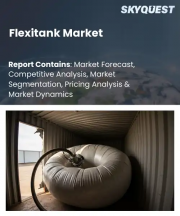
|
시장보고서
상품코드
1987539
플렉시탱크 시장 규모, 점유율, 동향 및 예측 : 제품별, 용도별, 지역별(2026-2034년)Flexitanks Market Size, Share, Trends and Forecast by Product, Application, and Region, 2026-2034 |
||||||

2025년의 세계 플렉시탱크 시장 규모는 14억 4,000만 달러로 평가되었습니다. 향후 이 시장은 2034년까지 46억 6,280만 달러에 달할 것으로 예측되고 있으며, 2026-2034년에 CAGR 13.53%를 보일 것으로 전망되고 있습니다. 현재 아시아태평양이 시장을 주도하고 있으며, 2025년에는 48.7%의 시장 점유율을 차지하고 있습니다. 비용 효율적인 액체 벌크 운송 솔루션에 대한 수요가 증가함에 따라 시장은 꾸준히 성장하고 있습니다. 플렉시탱크는 컨테이너 공간 극대화, 취급 비용 절감, 제품 안전성 확보 등의 장점으로 인해 식품, 화학, 제약 등의 산업에서 선호되고 있습니다. 지속가능하고 효율적인 물류에 대한 관심이 높아지면서 기존 방식을 대체할 수 있는 신뢰할 수 있는 대안으로 자리매김하며 플렉시탱크 시장의 전체 점유율 확대에 기여하고 있습니다.
플렉시탱크 산업은 벌크 액체 운송에서 효과적이고 안전하며 경제적인 솔루션에 대한 수요 증가에 힘입어 성장하고 있습니다. 식품용 액체, 화학제품, 농산물의 세계 무역량 증가는 플렉시탱크가 드럼통이나 IBC(중간 벌크 컨테이너)에 비해 적재 용량이 크고 운송 비용을 절감할 수 있다는 점에서 플렉시탱크의 채택을 촉진하고 있습니다. 예를 들어 2023년 8월 Transolve Global은 플렉시탱크의 제품 라인업을 확장하여 최대 27,000리터의 벌크 액체를 운송할 수 있게 되었습니다. 이 혁신은 물류 최적화, 비용 절감, 지속가능성 향상을 목표로 하고 있습니다. 이 회사의 친환경적이고 재사용 가능한 디자인은 지속가능성 목표에 부합하며, 더 많은 이용을 촉진하는 데 도움이 되고 있습니다. 또한 유연한 물류 솔루션에 대한 선호도 증가와 오염 위험 감소로 인해 시장 침투가 강화되고 있으며, 그 결과 전 세계에서 플렉시탱크 시장 전망은 밝습니다.
미국 플렉시탱크 시장은 특히 식품, 음료, 화학 분야에서 벌크 액체의 효율적이고 안전한 운송에 대한 수요 증가에 힘입어 성장하고 있습니다. 식용유, 와인, 비위험 화학물질의 수출 증가는 기존 방식에 비해 용량이 크고 운송비용이 저렴한 플렉시탱크의 인기에 기여하고 있습니다. 또한 재사용 및 재활용이 가능한 디자인으로 특징지어지는 지속가능성에 대한 관심이 그 보급을 촉진하고 있습니다. 국제 무역 파트너십의 확대와 유연한 물류 솔루션에 대한 수요도 미국 플렉시탱크 시장 확대를 촉진하는 데 중요한 역할을 하고 있습니다.
플렉시탱크 시장 동향 :
비용 효율적이고 효율적인 벌크 액체 운송 솔루션
벌크 액체를 위한 비용 효율적이고 효율적인 운송 솔루션에 대한 수요 증가는 세계 플렉시탱크 산업의 중요한 촉진제가 되고 있습니다. 보고서에 따르면 2024년중반까지 상하이 컨테이너 운임 지수(SCFI)는 2023년말에 비해 두 배 이상 상승했습니다. 플렉시탱크는 ISO 탱크나 드럼통과 같은 전통적 포장 및 운송 방식에 비해 몇 가지 장점이 있습니다. 플렉시탱크는 가볍고 접을 수 있으며 취급이 용이하여 운송 비용을 절감하고 업무 효율성을 향상시킵니다. 또한 적재 용량이 커서 한 번의 운송으로 더 많은 액체를 운반할 수 있습니다. 이러한 비용 및 효율성 측면의 장점으로 인해 식품 및 음료, 화학, 제약 등 다양한 산업에서 액체 수송을 위한 최적의 솔루션으로 플렉시탱크를 채택하고 있습니다.
다양한 액체를 안전하고 확실하게 운송
다양한 액체를 안전하고 확실하게 운송해야 할 필요성이 플렉시탱크 시장의 성장을 촉진하고 있습니다. 플렉시탱크는 운송되는 액체의 무결성과 보호를 보장하도록 설계되었습니다. 천공, 누출, 오염에 강한 견고한 소재를 사용하여 제조되었습니다. 또한 플렉시탱크는 산소, 습기, 자외선에 대한 차단 기능을 갖추고 있으며, 운송되는 액체의 품질과 보존 기간을 유지합니다. 또한 플렉시탱크는 밀폐형 시스템을 채택하여 적재, 운송, 하역 단계에서 액체 누출의 위험을 최소화하고 오염 가능성을 줄입니다. 이러한 특성으로 인해 플렉시탱크는 식품 등급의 액체, 비위험 화학물질 및 기타 민감한 액체를 운송해야 하는 산업에 이상적인 선택이 될 수 있습니다.
확대되는 국제 상품 무역
국제 상품 무역의 확대는 플렉시탱크 시장 수요를 이끄는 주요 요인입니다. 세계화에 따라 와인, 식용유, 산업용 화학물질 등 다양한 액체 상품의 수출입이 증가하고 있습니다. 세계 식용유 시장 규모는 2024년 2,024억 달러로 평가되며 2033년까지 2,963억 달러에 달할 것으로 예측됩니다. 플렉시탱크는 대량의 액체를 장거리로 운송하기 위한 신뢰할 수 있고 비용 효율적인 솔루션을 제공합니다. 여러 번의 취급 과정이 필요하고 비용이 많이 드는 기존 포장 방식과 달리, 플렉시탱크는 표준 운송 인프라를 이용하여 쉽게 하역할 수 있습니다. 액체를 효율적이고 안전하게 운반할 수 있는 이 능력으로 인해 플렉시탱크는 국제 무역에 종사하는 기업에게 선호되는 선택이 되었고, 전 세계 플렉시탱크 산업의 성장을 가속하고 있습니다.
목차
제1장 서문
제2장 조사 범위와 조사 방법
제3장 개요
제4장 서론
제5장 세계의 플렉시탱크 시장
제6장 시장 내역 : 제품별
제7장 시장 내역 : 용도별
제8장 시장 내역 : 지역별
제9장 SWOT 분석
제10장 밸류체인 분석
제11장 Porter's Five Forces 분석
제12장 가격 분석
제13장 경쟁 구도
KSA 26.04.14The global flexitanks market size was valued at USD 1,440.0 Million in 2025. Looking forward, the market is projected to reach USD 4,662.8 Million by 2034, exhibiting a CAGR of 13.53% from 2026-2034. Asia Pacific currently dominates the market, holding a market share of 48.7% in 2025. The market is experiencing steady growth, driven by rising demand for cost-effective bulk liquid transportation solutions. Their ability to maximize container space, reduce handling costs, and ensure product safety makes them a preferred choice across industries like food, chemicals, and pharmaceuticals. Increasing focus on sustainable and efficient logistics further supports adoption, positioning it as a reliable alternative to traditional methods, positively impacting overall flexitanks market share.
The flexitank industry is fueled by an increasing need for effective, safe, and economical solutions for transporting bulk liquids. Rising global trade in food-grade liquids, chemicals, and agricultural products boosts adoption as flexitanks offer higher payload capacity and reduced freight costs compared to drums or IBCs. For instance, in August 2023, Transolve Global enhanced its flexitank offerings enabling the transport of up to 27,000 litres of bulk liquids. This innovation aims to optimize logistics, reduce costs, and improve sustainability. Their eco-friendly and reusable design aligns with sustainability goals further encouraging usage. Additionally, increasing preference for flexible logistics solutions and reduced risk of contamination strengthens market penetration, thereby creating a positive flexitanks market outlook across the world.
The market for lexitanks in the United States is being propelled by the increasing demand for efficient and safe transport of bulk liquids, especially within the food, beverage, and chemical sectors. The rise in exports of edible oils, wine, and non-hazardous chemicals is contributing to the popularity of flexitanks, which offer greater capacity and lower shipping costs compared to conventional methods. Furthermore, the focus on sustainability, characterized by reusable and recyclable designs, is bolstering their acceptance. The growth of international trade partnerships and the requirement for adaptable logistics solutions also play a critical role in enhancing the expansion of the US flexitanks market.
FLEXITANKS MARKET TRENDS:
Cost-effective and efficient bulk liquid transportation solutions
The increasing demand for cost-effective and efficient transportation solutions for bulk liquids is a significant driver of the global flexitanks industry. As reported, by mid-2024, the Shanghai Containerized Freight Index (SCFI) had more than doubled compared to late 2023. Flexitanks offer several advantages over traditional packaging and transportation methods, such as ISO tanks and drums. Flexitanks are lightweight, collapsible, and easy to handle, which reduces transportation costs and increases operational efficiency. They also allow for higher payload capacity, enabling the transportation of larger volumes of liquids in a single shipment. These cost and efficiency benefits are attracting various industries, including food and beverages, chemicals, and pharmaceuticals, to adopt flexitanks as their preferred solution for transporting liquids.
Safe and secure transportation of various liquids
The need for safe and secure transportation of a wide range of liquids is driving the flexitanks market growth. Flexitanks are designed to ensure the integrity and protection of the transported liquids. They are constructed using robust materials that are resistant to punctures, leaks, and contamination. Flexitanks also provide a barrier against oxygen, moisture, and UV rays, preserving the quality and shelf life of the transported liquids. Additionally, flexitanks offer a closed system that minimizes the risk of spillage and reduces the chances of contamination during loading, transit, and unloading. These features make flexitanks an ideal choice for industries that require the transportation of food-grade liquids, non-hazardous chemicals, and other sensitive liquids.
Growing international trade of commodities
The expanding international trade of commodities is a key driver fueling the flexitanks market demand. With globalization, there has been an increase in the import and export of various liquid commodities, such as wine, edible oils, and industrial chemicals. The global cooking oil market size was valued at USD 202.4 Billion in 2024 and expected to reach USD 296.3 Billion by 2033. Flexitanks provide a reliable and cost-effective solution for transporting large volumes of liquids over long distances. Unlike traditional packaging methods that require multiple handling processes and incur higher costs, flexitanks can be easily loaded and unloaded using standard transportation infrastructure. The ability to transport bulk liquids efficiently and securely has made flexitanks a preferred choice for businesses involved in international trade, boosting the growth of the global flexitanks industry.
FLEXITANKS INDUSTRY SEGMENTATION:
Analysis by Product:
- Single-Trip
- Multi-Trip
Single-trip flexitanks are designed for one-time use and are typically made of single-layer polyethylene or polypropylene. They offer a cost-effective solution for transporting liquids in bulk for a single journey. Single-trip flexitanks are easy to install and dispose of after use, eliminating the need for cleaning and maintenance. They are suitable for non-hazardous liquids and provide a convenient and efficient option for industries with sporadic or irregular shipping needs. The rising preference for disposable solutions highlights a key flexitanks market trend, driven by low cost and operational simplicity.
Analysis by Application:
- Food
- Wine & Spirits
- Chemicals
- Oils
- Pharmaceutical Goods
- Others
Food leads the market with 30.8% of market share in 2025. Flexitanks find significant application in the transportation of food products. The food industry often requires the transportation of liquids such as fruit juices, edible oils, sauces, and other food ingredients in large quantities. Flexitanks provide a safe and hygienic solution for the bulk transportation of these food products. They are designed with food-grade materials that comply with stringent quality and safety standards, ensuring that the transported liquids remain uncontaminated and fit for consumption. Flexitanks also offer cost advantages compared to traditional packaging methods, making them a preferred choice for the food industry.
Regional Analysis:
- North America
- United States
- Canada
- Asia Pacific
- China
- Japan
- India
- South Korea
- Australia
- Indonesia
- Others
- Europe
- Germany
- France
- United Kingdom
- Italy
- Spain
- Russia
- Others
- Latin America
- Brazil
- Mexico
- Others
- Middle East and Africa
In 2025, Asia-Pacific accounted for the largest market share of 48.7%. The Asia Pacific region, with its booming manufacturing sector, increasing trade activities, and growing population, presents significant opportunities for the flexitanks industry. The region's economic growth, particularly in countries like China and India, drives the demand for efficient liquid transportation solutions. The expansion of the food and beverage industry, coupled with the rising demand for chemical products, fuels the adoption of flexitanks in Asia Pacific.
KEY REGIONAL TAKEAWAYS:
NORTH AMERICA FLEXITANKS MARKET ANALYSIS
The market for flexitanks in North America is experiencing notable developments due to increasing demand for efficient and cost-effective liquid transport solutions. Companies in various industries are recognizing the advantages of flexitanks, including their ability to maximize storage capacity and minimize leakage risks. As regulations evolve and sustainability becomes a focal point for businesses, flexitanks are emerging as an environmentally friendly alternative to traditional shipping methods. The expansion of international trade is also driving the adoption of flexitanks, which cater to diverse commodities ranging from food products to chemicals. Furthermore, advancements in manufacturing processes and materials are contributing to the enhanced performance and reliability of flexitanks, ensuring they meet the rigorous standards of transportation. Overall, the North American flexitank market is poised for significant growth, driven by innovation and shifting industry preferences.
UNITED STATES FLEXITANKS MARKET ANALYSIS
In 2025, the United States accounted for 87.70% of the flexitanks market in North America. The United States flexitanks market is experiencing notable expansion, driven by a shift toward cost-effective bulk liquid transportation solutions in sectors such as agriculture, industrial chemicals, and non-hazardous liquids. The increasing preference for environmentally sustainable packaging alternatives is further contributing to the market's momentum. As reported by the U.S. Energy Information Administration (EIA), in April, the leading five countries exporting crude oil made up 81% of the United States' imports, whereas the top ten sources represented about 94% of all crude oil imports. This consolidated import structure is stimulating demand for flexible, high-capacity packaging solutions like flexitanks to optimize bulk fluid logistics from key global sources. Innovations in logistics infrastructure, including enhanced storage and intermodal connectivity, have improved operational efficiency, supporting adoption. Additionally, the growing trend of customized liquid packaging for value-added exports is augmenting demand. Technological advancements in flexitank materials are enabling higher payload capacity and reduced risk of contamination, attracting attention from medium- and large-scale exporters. As domestic transportation shifts toward flexible logistics models, the versatility and low handling cost of flexitanks position them as a strategic alternative to traditional ISO tanks or drums.
EUROPE FLEXITANKS MARKET ANALYSIS
In Europe, the flexitanks market is progressing steadily due to increasing intra-regional trade of non-hazardous liquids such as food additives, plant-based oils, and cosmetic ingredients. The market benefits from a well-developed multimodal transport network that facilitates efficient handling and distribution. The European Commission recently announced the selection of 94 transport projects to receive approximately USD 3 Billion in EU grants under the Connecting Europe Facility (CEF), aimed at enhancing sustainable and efficient logistics infrastructure. These developments are likely to further accelerate the adoption of lightweight, flexible transport solutions like flexitanks. Rising consumer demand for traceable and contamination-free packaging is spurring the adoption of single-use variants. Furthermore, ongoing regulations emphasizing carbon reduction are encouraging industries to consider flexitanks for optimized freight efficiency. The expansion of niche markets, including premium beverages and eco-friendly industrial liquids, is also contributing to growing demand. Enhanced recyclability and improved post-use disposal are further aligning flexitanks with Europe's sustainability goals.
ASIA PACIFIC FLEXITANKS MARKET ANALYSIS
The Asia Pacific flexitanks market is witnessing robust growth owing to rapid industrialization and an increasing focus on high-volume liquid exports. Significant investments in port infrastructure and logistics modernization have enhanced the region's export capabilities, making flexitanks a cost-efficient choice for cross-border trade. According to the India Brand Equity Foundation (IBEF), India's cumulative exports during April-June 2025 reached approximately USD 210.31 Billion, marking a 5.94% increase over the same period in 2024. This sustained export momentum is fueling demand for scalable and flexible transport solutions across the region. The rising consumption of plant-based and nutraceutical liquids is generating steady demand from export-oriented manufacturers. Additionally, the region's expanding middle class is encouraging the export of value-added liquid products. The scalability of flexitanks and their compatibility with varied container systems are proving advantageous for enterprises seeking efficient shipment options in dynamic market environments.
LATIN AMERICA FLEXITANKS MARKET ANALYSIS
The Latin American flexitanks market is gaining momentum, largely driven by the expanding demand for efficient liquid transportation in agriculture and bio-based product segments. The region's improving trade corridors and logistical frameworks are allowing for broader adoption of alternative bulk packaging systems. Supporting this trend, Empresa de Pesquisa Energetica (EPE) projects that Brazilian liquid fuel demand will grow by 1.7%, about 2.6 Billion Liters in 2025 and by 1.9%, about 3.1 Billion Liters in 2026. This forecasted increase in liquid fuel movement is encouraging regional exporters to adopt scalable and high-capacity solutions like flexitanks. The need for reduced freight costs and minimal contamination risk is positioning flexitanks as an effective solution for small- to medium-scale exporters. Rising interest in sustainable packaging methods is further bolstering market expansion. Additionally, growing export volumes of seasonal liquid commodities are accelerating the shift toward disposable storage options.
MIDDLE EAST AND AFRICA FLEXITANKS MARKET ANALYSIS
In the Middle East and Africa, the flexitanks market is advancing as regional exporters seek affordable and scalable bulk liquid packaging solutions. According to the International Energy Agency (IEA), the Strait of Hormuz serves as the exit route from the Gulf for approximately 25% of the world's oil supply. This underscores the region's strategic importance in global fluid logistics and supports the increasing need for adaptable packaging options such as flexitanks. Increasing trade of industrial-grade oils and specialty non-hazardous fluids is fostering demand in logistics operations. Advancements in flexible container designs and lightweight transport technologies enhance shipment efficiency. The region's expanding infrastructure projects and improved trade facilitation measures are also contributing to greater flexitank utilization. Moreover, the growing participation of SMEs in cross-border liquid trade is supporting the preference for cost-efficient transport alternatives.
COMPETITIVE LANDSCAPE:
The landscape of the flexitanks market is influenced by factors such as innovation, cost-effectiveness, and the capacity to meet various bulk liquid transport requirements. Manufacturers are prioritizing product longevity, the use of eco-friendly materials, and sophisticated designs that improve loading capacity while reducing the risk of leaks. Customization for sectors like food, beverages, agriculture, and chemicals further enhances differentiation. The rising use of single-use and recyclable flexitanks contributes to a sustainability advantage, creating new growth opportunities. Collaborations with logistics providers and exporters are bolstering market presence. According to flexitanks market forecast, companies that focus on technological advancements, sustainability efforts, and value-added services are likely to strengthen their market positions and meet the growing demand on global trade routes.
The report provides a comprehensive analysis of the competitive landscape in the flexitanks market with detailed profiles of all major companies, including:
- Braid Logistics UK
- Bulk Liquid Solutions (P) Ltd
- Buscherhoff Packaging Solutions GmbH
- Full-Pak
- Hengxin Plastic Co. Ltd.
- JF Hillebrand GROUP AG
- MY FlexiTank Industries Sdn Bhd
- SIA Flexitanks Ltd.
- TRUST Flexitanks SL
- Yunjet Plastic Packaging
KEY QUESTIONS ANSWERED IN THIS REPORT
1. How big is the flexitanks market?
2. What is the future outlook of flexitanks market?
3. What are the key factors driving the flexitanks market?
4. Which region accounts for the largest flexitanks market share?
5. Which are the leading companies in the global flexitanks market?
Table of Contents
1 Preface
2 Scope and Methodology
- 2.1 Objectives of the Study
- 2.2 Stakeholders
- 2.3 Data Sources
- 2.3.1 Primary Sources
- 2.3.2 Secondary Sources
- 2.4 Market Estimation
- 2.4.1 Bottom-Up Approach
- 2.4.2 Top-Down Approach
- 2.5 Forecasting Methodology
3 Executive Summary
4 Introduction
- 4.1 Overview
- 4.2 Key Industry Trends
5 Global Flexitanks Market
- 5.1 Market Overview
- 5.2 Market Performance
- 5.3 Impact of COVID-19
- 5.4 Market Forecast
6 Market Breakup by Product
- 6.1 Single-Trip
- 6.1.1 Market Trends
- 6.1.2 Market Forecast
- 6.2 Multi-Trip
- 6.2.1 Market Trends
- 6.2.2 Market Forecast
7 Market Breakup by Application
- 7.1 Food
- 7.1.1 Market Trends
- 7.1.2 Market Forecast
- 7.2 Wine & Spirits
- 7.2.1 Market Trends
- 7.2.2 Market Forecast
- 7.3 Chemicals
- 7.3.1 Market Trends
- 7.3.2 Market Forecast
- 7.4 Oils
- 7.4.1 Market Trends
- 7.4.2 Market Forecast
- 7.5 Pharmaceutical Goods
- 7.5.1 Market Trends
- 7.5.2 Market Forecast
- 7.6 Others
- 7.6.1 Market Trends
- 7.6.2 Market Forecast
8 Market Breakup by Region
- 8.1 North America
- 8.1.1 United States
- 8.1.1.1 Market Trends
- 8.1.1.2 Market Forecast
- 8.1.2 Canada
- 8.1.2.1 Market Trends
- 8.1.2.2 Market Forecast
- 8.1.1 United States
- 8.2 Asia-Pacific
- 8.2.1 China
- 8.2.1.1 Market Trends
- 8.2.1.2 Market Forecast
- 8.2.2 Japan
- 8.2.2.1 Market Trends
- 8.2.2.2 Market Forecast
- 8.2.3 India
- 8.2.3.1 Market Trends
- 8.2.3.2 Market Forecast
- 8.2.4 South Korea
- 8.2.4.1 Market Trends
- 8.2.4.2 Market Forecast
- 8.2.5 Australia
- 8.2.5.1 Market Trends
- 8.2.5.2 Market Forecast
- 8.2.6 Indonesia
- 8.2.6.1 Market Trends
- 8.2.6.2 Market Forecast
- 8.2.7 Others
- 8.2.7.1 Market Trends
- 8.2.7.2 Market Forecast
- 8.2.1 China
- 8.3 Europe
- 8.3.1 Germany
- 8.3.1.1 Market Trends
- 8.3.1.2 Market Forecast
- 8.3.2 France
- 8.3.2.1 Market Trends
- 8.3.2.2 Market Forecast
- 8.3.3 United Kingdom
- 8.3.3.1 Market Trends
- 8.3.3.2 Market Forecast
- 8.3.4 Italy
- 8.3.4.1 Market Trends
- 8.3.4.2 Market Forecast
- 8.3.5 Spain
- 8.3.5.1 Market Trends
- 8.3.5.2 Market Forecast
- 8.3.6 Russia
- 8.3.6.1 Market Trends
- 8.3.6.2 Market Forecast
- 8.3.7 Others
- 8.3.7.1 Market Trends
- 8.3.7.2 Market Forecast
- 8.3.1 Germany
- 8.4 Latin America
- 8.4.1 Brazil
- 8.4.1.1 Market Trends
- 8.4.1.2 Market Forecast
- 8.4.2 Mexico
- 8.4.2.1 Market Trends
- 8.4.2.2 Market Forecast
- 8.4.3 Others
- 8.4.3.1 Market Trends
- 8.4.3.2 Market Forecast
- 8.4.1 Brazil
- 8.5 Middle East and Africa
- 8.5.1 Market Trends
- 8.5.2 Market Breakup by Country
- 8.5.3 Market Forecast
9 SWOT Analysis
- 9.1 Overview
- 9.2 Strengths
- 9.3 Weaknesses
- 9.4 Opportunities
- 9.5 Threats
10 Value Chain Analysis
11 Porters Five Forces Analysis
- 11.1 Overview
- 11.2 Bargaining Power of Buyers
- 11.3 Bargaining Power of Suppliers
- 11.4 Degree of Competition
- 11.5 Threat of New Entrants
- 11.6 Threat of Substitutes
12 Price Analysis
13 Competitive Landscape
- 13.1 Market Structure
- 13.2 Key Players
- 13.3 Profiles of Key Players
- 13.3.1 Braid Logistics UK
- 13.3.1.1 Company Overview
- 13.3.1.2 Product Portfolio
- 13.3.2 Bulk Liquid Solutions (P) Ltd
- 13.3.2.1 Company Overview
- 13.3.2.2 Product Portfolio
- 13.3.3 Buscherhoff Packaging Solutions GmbH
- 13.3.3.1 Company Overview
- 13.3.3.2 Product Portfolio
- 13.3.4 Full-Pak
- 13.3.4.1 Company Overview
- 13.3.4.2 Product Portfolio
- 13.3.5 Hengxin Plastic Co. Ltd.
- 13.3.5.1 Company Overview
- 13.3.5.2 Product Portfolio
- 13.3.6 JF Hillebrand GROUP AG
- 13.3.6.1 Company Overview
- 13.3.6.2 Product Portfolio
- 13.3.7 MY FlexiTank Industries Sdn Bhd
- 13.3.7.1 Company Overview
- 13.3.7.2 Product Portfolio
- 13.3.8 SIA Flexitanks Ltd.
- 13.3.8.1 Company Overview
- 13.3.8.2 Product Portfolio
- 13.3.9 TRUST Flexitanks SL
- 13.3.9.1 Company Overview
- 13.3.9.2 Product Portfolio
- 13.3.10 Yunjet Plastic Packaging
- 13.3.10.1 Company Overview
- 13.3.10.2 Product Portfolio
- 13.3.1 Braid Logistics UK