|
시장보고서
상품코드
2009402
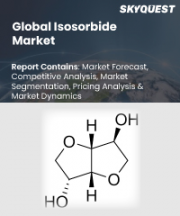
이소소르비드 시장 규모, 점유율, 동향 및 예측 : 제품별, 용도별, 최종 용도별, 지역별(2026-2034년)Isosorbide Market Size, Share, Trends and Forecast by Product, Application, End Use and Region, 2026-2034 |
||||||

2025년의 세계 이소소르비드 시장 규모는 7억 641만 달러로 평가되었습니다. 향후 IMARC Group은 2026년부터 2034년까지 CAGR 6.80%를 기록하며 2034년까지 시장 규모가 12억 7,667만 달러에 달할 것으로 예측하고 있습니다. 현재 아시아태평양이 시장을 주도하고 있으며, 45%의 시장 점유율을 차지하고 있습니다. 의약품, 고분자, 특수 화학제품 등 다양한 용도에 힘입어 시장은 꾸준히 확대되고 있습니다. 지속가능하고 친환경적인 소재에 대한 수요가 증가함에 따라 각 산업계는 혁신적인 제품에 이소소르비드를 채택하고 있습니다. 높은 열 안정성, 내화학성 및 다양한 배합과의 호환성으로 인해 이소소르비드는 다양한 산업 응용 분야에 적합합니다. 연구개발이 활발해짐에 따라 각 분야에서 그 유용성이 더욱 높아지고 있습니다. 산업계가 내구성이 뛰어난 바이오 기반 솔루션을 우선시하는 가운데, 이러한 요인들이 복합적으로 작용하여 이소소르비드 시장의 성장과 경쟁력 향상에 기여하고 있습니다.
세계 이소소르비드 시장은 바이오 기반 소재 및 지속가능한 화학 솔루션으로의 전환이 가속화됨에 따라 강력한 모멘텀을 보이고 있습니다. 선진국의 환경 규제로 인해 석유 유래 화합물 감축이 의무화되면서 이소소르비드와 같은 재생 가능 대체품에 큰 기회가 생기고 있습니다. 폴리머 업계에서는 우수한 열 안정성과 기계적 특성에 힘입어 엔지니어링 플라스틱, 수지, 코팅에 이소소르비드계 모노머의 채택이 확대되고 있습니다. 소식통에 따르면 2024년 12월, 혼다는 미쓰비시 화학의 'DURABIO'(이소소르비드를 원료로 한 바이오 기반 엔지니어링 플라스틱)를 X-ADV 모터사이클의 차체 및 앞 유리에 채택했습니다. 이를 통해 도장이 필요 없는 광택 마감을 실현하는 동시에 석유 사용량을 줄일 수 있게 되었습니다. 또한, 친환경 제품에 대한 소비자의 선호도가 높아지면서 보습제 및 피부 컨디셔닝제 역할을 하는 퍼스널케어 및 화장품 분야에서 이소소르비드의 수요가 증가하고 있습니다. 제약 분야에서는 기존의 심혈관계 질환 치료를 넘어 항당뇨병 작용과 항균 특성 등 치료 용도의 확대가 계속되고 있습니다. 촉매 수소화 공정의 기술 발전으로 생산 효율과 비용 효율성이 향상되어 이소소르비드는 다양한 산업 응용 분야에서 상업적으로 실용화될 수 있게 되었습니다. 화학 제조업체와 최종사용자 산업과의 전략적 제휴가 시장 침투를 촉진하는 한편, 바이오리파이너리 인프라에 대한 투자가 공급망 탄력성을 강화하고 있습니다. 규제적 지원, 기술 혁신, 그리고 변화하는 소비자의 인식이 결합되어 전 세계 여러 응용 분야에서 지속적인 시장 확대에 유리한 환경이 조성되고 있습니다.
미국은 첨단 제약 부문과 혁신적인 재료과학을 통해 세계 수요의 약 68%를 차지하며 시장 역학에서 매우 중요한 역할을 담당하고 있습니다. 미국 제약사들은 이미 구축된 유통망과 의료 인프라를 바탕으로 협심증 치료와 심부전 관리에 이소소르비드디니트레이트를 광범위하게 활용하고 있습니다. 포장 업계는 지속가능한 포장 솔루션에 대한 소비자의 요구에 부응하기 위해 식품 등급 용도에 이소소르비드계 폴리에스테르를 채택하고 있습니다. 세제 혜택과 연구 보조금을 통해 재생 화학제품을 장려하는 연방 정부의 노력은 국내 생산능력을 자극하고 있습니다. 학계는 산업계 파트너와 협력하여 광학 재료 및 전자부품의 차세대 응용 분야 개발에 힘쓰고 있습니다. 화장품 업계에서는 천연 성분의 트렌드를 살려 프리미엄 스킨케어 제품에 이소소르비드 유도체가 함유된 제품을 출시하고 있습니다. 멕시코만 지역의 제조 시설은 통합된 공급망과 원자재 확보의 이점을 누리고 있습니다. 의료진은 유효성과 안전성 프로파일을 뒷받침하는 임상적 증거에 힘입어 이소소르비드 계열 의약품의 처방을 늘리고 있습니다. 미국은 제약 제조, 산업 혁신, 규제 지원으로 구성된 종합적인 생태계를 통해 세계 산업 표준을 선도하는 전략적 시장 리더로 자리매김하고 있습니다.
이소소르비드 시장 동향:
바이오 기반 고분자 기술의 발전
고분자 산업은 특히 엔지니어링 열가소성 수지 및 특수 수지에서 고성능 재료에 이소소르비드를 통합하여 혁신적인 발전을 이루었습니다. 각 제조사들은 기존 대체품에 비해 광학적인 투명성, 우수한 내열성, 뛰어난 기계적 강도를 갖춘 이소소르비드 기반 폴리에스테르 및 폴리카보네이트를 개발하고 있습니다. 자동차 분야에서는 구조적 무결성을 유지하면서 차량 중량을 줄일 수 있는 경량화 부재가 모색되고 있으며, 연비 효율 향상에 기여하고 있습니다. 전자기기 제조업체들은 저복굴절 특성을 활용하여 디스플레이 화면과 광학 렌즈에 투명한 이소소르비드 폴리머를 채택하고 있습니다. 포장 분야의 혁신은 배리어 필름과 경질 용기에 이소소르비드 유도체를 통합하여 성능 표준을 손상시키지 않고 지속가능성을 향상시키고 있습니다. 연구기관에서는 이소소르비드와 다양한 단량체를 조합한 새로운 공중합체 구조를 개발하여 특정 용도에 맞는 특성을 가진 소재를 만들고 있습니다. 실험실 규모의 합성에서 상업적 생산으로 전환하기 위해서는 중합 기술과 품질 관리 프로토콜의 최적화가 필요합니다. 산업계와의 제휴를 통해 연구 환경에서 제조 시설로의 기술 이전을 가속화하는 한편, 지적 재산권 확립을 통해 혁신적인 배합을 보호하고 있습니다. 이러한 발전이 결합되어 적용 범위를 넓히고, 지속가능한 재료 솔루션을 향한 이소소르비드의 추세를 촉진하고 있습니다.
의약품의 혁신과 치료 영역 확대
제약 연구는 기존의 심혈관계 용도를 넘어 이소소르비드 화합물의 치료 범위를 확장하고, 새로운 약리 활성과 약물전달 메커니즘을 조사하고 있습니다. 임상시험에서는 대사 장애 치료를 목적으로 변형된 이소소르비드 유도체를 평가하여 인슐린 감수성 향상 효과와 혈당 조절 능력을 탐색하고 있습니다. 연구진은 기존 투여 요법의 한계를 극복하기 위해 생체 이용률과 환자의 복약 순응도를 높일 수 있는 서방형 제제를 개발하고 있습니다. 병용요법에서는 이소소르비드 화합물을 상호보완적인 유효성분과 통합하여 부작용을 최소화하면서 치료 효과를 극대화하고 있습니다. 제약회사들은 엄격한 규제 요건을 충족하는 고순도 이소소르비드 중간체를 생산하기 위해 첨단 합성 경로에 투자하고 있습니다. 제네릭 제약사들은 브랜드 의약품을 대체할 수 있는 비용 효율적인 대안을 시장에 출시하여 다양한 환자층에 대한 접근성을 개선하고 있습니다. 신약개발 프로그램에서는 이소소르비드를 기반으로 한 분자 라이브러리를 스크리닝하여 다양한 질환 적응증에 대한 선도 화합물을 발굴하고 있습니다. 규제 당국은 치료 적응증 확대를 뒷받침하는 안전성 프로파일과 임상적 유효성 데이터를 평가하고 있습니다. 대학병원에서는 심혈관 보호 효과와 삶의 질 향상을 평가하는 장기 연구를 진행하고 있습니다. 의약품 혁신, 임상적 검증, 규제 당국의 승인을 통해 치료용도 확장을 위한 경로가 만들어졌고, 이소소르비드는 다재다능한 의약품의 구성요소로 자리매김하고 있습니다.
지속가능한 생산과 그린 케미스트리의 통합
제조 공정은 그린 케미스트리 원칙과 지속가능한 생산 방식 채택을 통해 큰 변화를 겪고 있으며, 재생 가능한 원료의 사용과 폐기물 최소화에 중점을 두고 있습니다. 생산자는 불균일 촉매를 이용한 촉매 시스템을 최적화하여 환경 부하를 줄이면서 포도당 유래의 소르비톨을 이소소르비드로 효율적으로 전환할 수 있게 되었습니다. 공정 통합 기술은 반응 단계와 분리 단계를 통합하여 에너지 효율을 향상시키고 설비 투자 요구 사항을 줄입니다. 바이오리파이너리에서는 이소소르비드와 기타 고부가가치 생화학제품을 동시에 생산하는 통합 생산 방식을 도입하여 농업 원료의 자원 활용을 극대화하고 있습니다. 탄소발자국 평가는 운영 개선의 지침이 되고, 수명주기 분석은 석유 유래 대체품에 비해 우수한 환경 프로파일을 보여줍니다. 기업은 재생 가능한 원료의 함량과 환경 관리를 증명하는 지속가능성 인증을 획득하여 시장에서의 지위와 고객의 신뢰를 높이고 있습니다. 첨단 분석 기술에 대한 투자를 통해 생산 파라미터를 실시간으로 모니터링하여 일관된 제품 품질과 규제 준수를 보장할 수 있습니다. 공동 연구 프로그램에서는 용매 사용량을 최소화하고 온화한 조건에서 작동하는 차세대 생촉매 공정을 개발하고 있습니다. 공급망 투명성 향상을 위한 노력으로 농업 원료부터 완제품에 이르기까지 재생 가능한 탄소 함량을 추적하여 기업의 지속가능성 노력과 친환경 소재에 대한 소비자의 기대에 부응하고 있습니다.
목차
제1장 서문
제2장 조사 범위와 조사 방법
제3장 주요 요약
제4장 소개
제5장 세계의 이소소르비드 시장
제6장 시장 내역 : 제품별
제7장 시장 내역 : 용도별
제8장 시장 내역 : 최종사용별
제9장 시장 내역 : 지역별
제10장 SWOT 분석
제11장 밸류체인 분석
제12장 Porter's Five Forces 분석
제13장 가격 지표
제14장 경쟁 구도
KSM 26.05.04The global isosorbide market size was valued at USD 706.41 Million in 2025. Looking forward, IMARC Group estimates the market to reach USD 1,276.67 Million by 2034, exhibiting a CAGR of 6.80% from 2026-2034. Asia Pacific currently dominates the market, holding a market share of 45%. The market is expanding steadily, driven by its versatile applications in pharmaceuticals, polymers, and specialty chemicals. Growing demand for sustainable and eco-friendly materials encourages industries to adopt isosorbide in innovative products. Its high thermal stability, chemical resistance, and compatibility with diverse formulations make it ideal for various industrial applications. Increasing research and development efforts further enhance its utility across sectors. As industries prioritize durable and biobased solutions, these factors collectively contribute to the growth and competitiveness of the isosorbide market share.
The global isosorbide market experiences robust momentum from the accelerating transition toward bio-based materials and sustainable chemical solutions. Environmental regulations across developed economies mandate reduction of petroleum-derived compounds, creating substantial opportunities for renewable alternatives like isosorbide. The polymer industry increasingly adopts isosorbide-based monomers for engineering plastics, resins, and coatings, driven by superior thermal stability and mechanical properties. As per sources, in December 2024, Honda adopted Mitsubishi Chemical's DURABIO, a bio-based engineering plastic made from isosorbide, for X-ADV motorcycle bodywork and windshield, enabling paintless, glossy finishes while reducing petroleum use. Moreover, consumer preference for eco-friendly products amplifies demand across personal care and cosmetic formulations, where isosorbide functions as a humectant and skin conditioning agent. Pharmaceutical research continues expanding therapeutic applications beyond traditional cardiovascular treatments, exploring anti-diabetic and antimicrobial properties. Technological advancements in catalytic hydrogenation processes enhance production efficiency and cost-effectiveness, making isosorbide commercially viable for diverse industrial applications. Strategic collaborations between chemical manufacturers and end-user industries facilitate market penetration, while investment in bio-refinery infrastructure strengthens supply chain resilience. The convergence of regulatory support, technological innovation, and evolving consumer consciousness establishes a favorable environment for sustained market expansion across multiple application segments globally.
The United States emerges as a pivotal contributor to market dynamics, commanding approximately 68% share of global demand through its advanced pharmaceutical sector and innovative material science initiatives. American pharmaceutical enterprises leverage isosorbide dinitrate extensively for angina treatment and heart failure management, supported by well-established distribution networks and healthcare infrastructure. The packaging industry adopts isosorbide-based polyesters for food-grade applications, responding to consumer demand for sustainable packaging solutions. Federal initiatives promoting renewable chemicals through tax incentives and research grants stimulate domestic production capabilities. Academic institutions collaborate with industrial partners to develop next-generation applications in optical materials and electronic components. The cosmetics sector incorporates isosorbide derivatives in premium skincare formulations, capitalizing on natural ingredient trends. Manufacturing facilities along the Gulf Coast benefit from integrated supply chains and feedstock availability. Healthcare providers increasingly prescribe isosorbide-based medications, driven by clinical evidence supporting efficacy and safety profiles. This comprehensive ecosystem of pharmaceutical manufacturing, industrial innovation, and regulatory support positions the United States as a strategic market leader driving global industry standards.
ISOSORBIDE MARKET TRENDS:
Advancement in Bio-Based Polymer Technologies
The polymer industry witnesses transformative developments through isosorbide integration into high-performance materials, particularly in engineering thermoplastics and specialty resins. Manufacturers formulate isosorbide-based polyesters and polycarbonates exhibiting enhanced optical clarity, superior heat resistance, and exceptional mechanical strength compared to conventional alternatives. Automotive applications explore lightweight components reducing vehicle weight while maintaining structural integrity, contributing to fuel efficiency objectives. Electronic device manufacturers utilize transparent isosorbide polymers for display screens and optical lenses, leveraging low birefringence properties. Packaging innovations incorporate isosorbide derivatives in barrier films and rigid containers, offering improved sustainability profiles without compromising performance standards. Research institutions develop novel copolymer architectures combining isosorbide with various monomers, creating materials with tailored properties for specific applications. The transition from laboratory-scale synthesis to commercial production requires optimization of polymerization techniques and quality control protocols. Industry partnerships accelerate technology transfer from research environments to manufacturing facilities, while intellectual property developments protect innovative formulations. These advancements collectively expand the application spectrum, reinforcing Isosorbide market trends toward sustainable material solutions.
Pharmaceutical Innovation and Therapeutic Expansion
Pharmaceutical research expands the therapeutic scope of isosorbide compounds beyond established cardiovascular applications, investigating novel pharmacological activities and drug delivery mechanisms. Clinical trials evaluate modified isosorbide derivatives for treating metabolic disorders, exploring insulin sensitization effects and glucose regulation capabilities. Researchers develop controlled-release formulations enhancing bioavailability and patient compliance, addressing limitations of conventional dosing regimens. Combination therapies integrate isosorbide compounds with complementary active ingredients, maximizing therapeutic outcomes while minimizing adverse effects. Pharmaceutical companies invest in advanced synthesis routes producing high-purity isosorbide intermediates meeting stringent regulatory requirements. Generic manufacturers introduce cost-effective alternatives to branded medications, improving accessibility across diverse patient populations. Drug discovery programs screen isosorbide-based molecular libraries identifying lead compounds for various disease indications. Regulatory agencies evaluate safety profiles and clinical efficacy data supporting expanded therapeutic claims. Academic medical centers conduct long-term studies assessing cardiovascular protection and quality of life improvements. The convergence of pharmaceutical innovation, clinical validation, and regulatory approval creates pathways for broadened therapeutic applications, establishing isosorbide as a versatile pharmaceutical building block.
Sustainable Production and Green Chemistry Integration
Manufacturing processes undergo significant transformation through adoption of green chemistry principles and sustainable production methodologies, emphasizing renewable feedstock utilization and waste minimization. Producers optimize catalytic systems employing heterogeneous catalysts enabling efficient conversion of glucose-derived sorbitol to isosorbide with reduced environmental footprint. Process intensification techniques integrate reaction and separation stages, improving energy efficiency and reducing capital expenditure requirements. Bio-refineries implement integrated production schemes co-generating isosorbide alongside other valuable biochemicals, maximizing resource utilization from agricultural feedstocks. Carbon footprint assessments guide operational improvements, with life cycle analyses demonstrating favorable environmental profiles compared to petroleum-based alternatives. Companies obtain sustainability certifications validating renewable content and environmental stewardship, enhancing market positioning and customer confidence. Investment in advanced analytical technologies enables real-time monitoring of production parameters, ensuring consistent product quality and regulatory compliance. Collaborative research programs develop next generation biocatalytic processes operating under mild conditions with minimal solvent requirements. Supply chain transparency initiatives track renewable carbon content from agricultural sources through finished products, meeting corporate sustainability commitments and consumer expectations for environmentally responsible materials.
ISOSORBIDE INDUSTRY SEGMENTATION:
Analysis by Product:
- Oil-Based Isosorbide
- Water-Based Isosorbide
- Silicone-Based Isosorbide
Oil-based isosorbide, holding a 65% share, continues to lead the market due to its established production processes and versatile applications. Its chemical stability and high thermal resistance make it suitable for pharmaceuticals, polymers, coatings, and specialty chemicals. The segment benefits from mature supply chains and ready availability of raw materials, enabling consistent quality and reliable performance. Industries value oil-based isosorbide for its adaptability, cost efficiency, and compatibility with diverse manufacturing processes. It is widely used in adhesives, packaging, and other industrial applications, where durability and performance are critical. The segment's prominence is reinforced by its role in facilitating innovative formulations and improving the sustainability of products. Growing interest in eco-conscious solutions further strengthens its position, as manufacturers increasingly leverage its properties to replace less sustainable alternatives. Oil-based isosorbide remains a central pillar of the market, driving production and application growth.
Analysis by Application:
- PEIT
- Polycarbonate
- Polyesters Isosorbide Succinate
- Polyurethane
- Isosorbide Diesters
- Others
PEIT, holding a 44% share, is gaining prominence due to its exceptional mechanical strength, thermal stability, and chemical resistance. This segment is favored in high-performance applications across automotive, electronics, and specialty industrial sectors, where reliability and durability are essential. Its lightweight yet robust properties support energy efficiency and enhanced product performance. PEIT's compatibility with isosorbide-based formulations allows for versatile applications in advanced polymers and resins, encouraging innovative product development. Industries increasingly turn to PEIT to meet demand for sustainable, high-performance materials without compromising quality. Its adaptability in composites and engineering materials ensures consistent performance across diverse applications. Continuous research and industrial adoption highlight the segment's growing relevance, supporting the development of efficient, durable, and eco-friendly solutions. PEIT's focus on enhancing functionality and performance positions it as a key material, contributing significantly to overall market dynamics and maintaining a strong share.
Analysis by End Use:
- Polymers and Resins
- Additives
- Others
Polymers and resins, holding a 70% share, dominate the isosorbide market because of their versatility and extensive applications in coatings, adhesives, packaging, and specialty materials. These products improve material properties such as thermal resistance, strength, and flexibility, making them essential in modern manufacturing. The segment benefits from the ability to create tailored formulations for diverse industrial requirements, allowing for innovative solutions in multiple sectors. The demand for biobased polymers and resins is growing as industries focus on sustainability and eco-conscious production. Isosorbide-based polymers provide renewable alternatives without compromising performance, making them highly attractive in the transition toward greener manufacturing. Their adaptability across end-use applications, combined with consistent quality and process efficiency, reinforces the segment's leading position. Polymers and resins remain the backbone of the isosorbide market, driving product innovation, industrial adoption, and long-term growth.
Regional Analysis:
- North America
- United States
- Canada
- Asia Pacific
- China
- Japan
- India
- South Korea
- Australia
- Indonesia
- Others
- Europe
- Germany
- France
- United Kingdom
- Italy
- Spain
- Russia
- Others
- Latin America
- Brazil
- Mexico
- Others
- Middle East and Africa
Asia Pacific, holding a 45% share, is a major driver of the global isosorbide market growth, supported by rapid industrial growth, expanding chemical manufacturing capabilities, and increasing adoption of sustainable materials. The region's strong presence in automotive, electronics, packaging, and specialty chemical industries fuels demand for versatile and eco-friendly chemicals. Asia Pacific benefits from large-scale manufacturing facilities, advanced infrastructure, and efficient supply chains, ensuring reliable production and distribution of isosorbide products. Growing awareness of environmentally conscious alternatives encourages companies to integrate isosorbide into products that meet regulatory and consumer expectations. Continuous research, development, and industrial adoption support the region's leadership in innovative isosorbide applications. Rising investments in green technologies and sustainable solutions further strengthen its position. These factors collectively position Asia Pacific as a crucial hub for market growth, innovation, and adoption, reinforcing its significant share in the global isosorbide market.
KEY REGIONAL TAKEAWAYS:
UNITED STATES ISOSORBIDE MARKET ANALYSIS
The United States demonstrates robust market presence through its sophisticated pharmaceutical infrastructure, innovative material science programs, and strong regulatory framework supporting sustainable chemistry initiatives. American pharmaceutical companies maintain significant production capacity for isosorbide-based medications, supplying domestic healthcare systems and international markets. The FDA approval process ensures rigorous quality standards for therapeutic formulations, maintaining consumer confidence and clinical acceptance. Academic research institutions collaborate with industrial partners developing next-generation applications in advanced materials and specialty chemicals. Federal funding programs support biorefinery development and renewable chemical production, reducing dependence on imported petroleum-based alternatives. The packaging industry transitions toward sustainable materials, adopting isosorbide polyesters for food-contact applications meeting FDA regulations. Automotive manufacturers specify bio-based polymers for interior components, aligning with corporate sustainability commitments. The cosmetics sector incorporates isosorbide derivatives in premium formulations marketed to environmentally conscious consumers. Chemical manufacturers operate integrated production facilities along the Gulf Coast, benefiting from feedstock availability and logistics infrastructure. Market dynamics reflect technological leadership, regulatory support, and diverse end-use applications positioning the United States as a strategic market driver.
NORTH AMERICA ISOSORBIDE MARKET ANALYSIS
North America establishes regional dominance accounting for substantial market share, driven by advanced industrial capabilities, research excellence, and favorable regulatory environments across the United States and Canada. The region benefits from established pharmaceutical manufacturing infrastructure producing both innovator and generic formulations for domestic and export markets. Canadian healthcare systems provide broad access to isosorbide-based cardiovascular medications through provincial drug programs, ensuring patient affordability and treatment compliance. Material science research centers across the region pioneer isosorbide polymer applications, translating laboratory discoveries into commercial products. Automotive sector initiatives promote lightweight materials and sustainable components, creating demand for bio-based alternatives. The packaging industry responds to consumer preferences for environmentally responsible materials, particularly in food and beverage applications. Chemical producers invest in biorefinery capacity, leveraging agricultural feedstock availability from Midwest farming regions. Mexico emerges as a manufacturing hub for pharmaceutical intermediates and finished dosage forms, supporting regional supply chains. Trade agreements facilitate material flows and technology exchange across borders. The region's comprehensive ecosystem encompassing pharmaceutical excellence, industrial innovation, and agricultural resources sustains market leadership and drives global Isosorbide market outlook trends.
ASIA PACIFIC ISOSORBIDE MARKET ANALYSIS
Asia Pacific represents a dynamic growth region characterized by expanding pharmaceutical manufacturing, rapid industrialization, and increasing adoption of sustainable materials across diverse economies. China's pharmaceutical sector develops production capabilities for isosorbide intermediates and finished medications, serving domestic healthcare needs and international markets. Japanese chemical companies pioneer advanced polymer applications, integrating isosorbide into specialty materials for electronics, automotive, and optical industries. India's generic pharmaceutical industry manufactures cost-effective isosorbide formulations, improving treatment accessibility across price-sensitive markets. South Korea's material science research explores high-performance applications in display technologies and engineering plastics. Southeast Asian nations develop packaging industries adopting bio-based alternatives meeting international sustainability standards. The region benefits from agricultural feedstock availability supporting biorefinery operations and renewable chemical production. Government initiatives promote clean technology adoption and environmental protection, creating favorable policy environments. Growing middle-class populations drive healthcare demand and consumer product consumption, expanding end-use markets. Manufacturing cost advantages attract foreign investment in production facilities and research centers. The convergence of demographic growth, industrial expansion, and sustainability awareness positions Asia Pacific as a critical growth engine for market expansion.
EUROPE ISOSORBIDE MARKET ANALYSIS
Europe maintains significant market presence supported by stringent environmental regulations, advanced research capabilities, and strong commitment to circular economy principles. European Union directives mandate reduction of petroleum-based materials, accelerating adoption of bio-based alternatives including isosorbide derivatives. Pharmaceutical companies across Germany, France, and the United Kingdom manufacture therapeutic formulations meeting European Medicines Agency standards for quality and efficacy. The automotive industry incorporates sustainable materials in vehicle production, driven by emissions regulations and corporate responsibility commitments. Packaging manufacturers transition to renewable alternatives complying with single-use plastics directives and recyclability requirements. Chemical producers operate biorefinery facilities converting agricultural feedstocks into isosorbide and related biochemicals. Research institutions receive substantial funding for green chemistry programs developing innovative applications and production processes. The cosmetics sector emphasizes natural ingredients and sustainable sourcing, creating opportunities for isosorbide-based formulations. Healthcare systems provide reimbursement for effective cardiovascular medications, ensuring patient access and treatment adherence. Regional collaboration initiatives facilitate technology sharing and market development across member states. The combination of regulatory drivers, technological excellence, and environmental consciousness establishes Europe as a leading market for sustainable chemical solutions.
LATIN AMERICA ISOSORBIDE MARKET ANALYSIS
Latin America demonstrates emerging market characteristics with growing pharmaceutical production, expanding industrial base, and increasing awareness of sustainable materials. Brazil's pharmaceutical sector develops generic manufacturing capabilities, improving treatment affordability and healthcare access across large populations. The country's abundant agricultural resources support biorefinery development for renewable chemical production. Mexico's proximity to North American markets positions it as a strategic manufacturing location for pharmaceutical intermediates and finished products. Argentina's chemical industry explores bio-based alternatives responding to environmental concerns and regulatory developments. The packaging sector gradually adopts sustainable materials driven by multinational corporations implementing global sustainability policies. Healthcare infrastructure improvements expand access to essential medications including cardiovascular therapies. Economic development initiatives promote industrial diversification and technology adoption. Regional trade agreements facilitate market access and investment flows. Growing middle-class populations increase demand for consumer products and healthcare services. Environmental awareness campaigns influence corporate practices and consumer preferences. The region's combination of natural resources, industrial potential, and market growth creates opportunities for expanded isosorbide applications as economies develop and sustainability priorities strengthen.
MIDDLE EAST AND AFRICA ISOSORBIDE MARKET ANALYSIS
The Middle East and Africa region represents nascent markets with considerable long-term potential as pharmaceutical infrastructure develops and industrial capabilities expand. Healthcare initiatives across Gulf Cooperation Council nations improve medical facility networks and medication access, creating demand for essential cardiovascular therapies. South Africa's pharmaceutical industry serves regional markets through domestic manufacturing and distribution networks. Economic diversification programs in oil-producing nations promote development of downstream chemical industries beyond petroleum refining. Population growth and urbanization increase healthcare needs and consumer product demand. International pharmaceutical companies establish regional operations serving local markets and neighboring territories. The packaging industry gradually modernizes, with multinational corporations introducing sustainable material standards. Agricultural development programs in sub-Saharan Africa create potential feedstock sources for future biorefinery operations. Healthcare access initiatives supported by international organizations expand treatment availability in underserved populations. Industrial zones attract investment in manufacturing facilities and logistics infrastructure. Regional challenges include infrastructure limitations, economic volatility, and regulatory framework development. However, demographic trends, economic development trajectories, and increasing global connectivity position the region for gradual market evolution as fundamental capabilities strengthen over time.
COMPETITIVE LANDSCAPE:
The competitive environment in the isosorbide market outlook includes specialty chemical manufacturers, pharmaceutical companies, and bio-based material producers, all pursuing differentiated strategies across market segments. Competition is intensifying as technological barriers decrease and production capabilities expand globally. Companies focus on vertical integration, technological innovation, and application development to establish a strong market position. Significant investments in research and development drive novel applications and optimized production processes, while intellectual property portfolios protect proprietary technologies and formulations, creating entry barriers for new players. Capacity expansion aligns with rising demand across pharmaceutical and industrial applications, and strategic alliances with end-use industries enhance product development and market penetration. Sustainability credentials are increasingly important as customers prioritize environmentally responsible solutions. Regional production capabilities, including proximity to feedstock and end-use markets, offer logistical advantages, while regulatory compliance expertise ensures market access. These combined factors are critical in shaping the global isosorbide market forecast and competitive dynamics.
The report provides a comprehensive analysis of the competitive landscape in the isosorbide market with detailed profiles of all major companies, including:
- Alfa Aesar
- Archer Daniels Midland
- Cargill
- Ecogreen Oleochemicals
- J&K Scientific
- Jinan Hongbaifeng Industry & Trade
- JP Laboratories
- Meryer
- Mitsubishi Chemical
- Novaphene
- Par Pharmaceutical
- Roquette
- SK Chemicals
- TCI (Shanghai) Development
KEY QUESTIONS ANSWERED IN THIS REPORT
1. How big is the isosorbide market?
2. What is the future outlook of isosorbide market?
3. What are the key factors driving the isosorbide market?
4. Which region accounts for the largest isosorbide market share?
5. Which are the leading companies in the global isosorbide market?
Table of Contents
1 Preface
2 Scope and Methodology
- 2.1 Objectives of the Study
- 2.2 Stakeholders
- 2.3 Data Sources
- 2.3.1 Primary Sources
- 2.3.2 Secondary Sources
- 2.4 Market Estimation
- 2.4.1 Bottom-Up Approach
- 2.4.2 Top-Down Approach
- 2.5 Forecasting Methodology
3 Executive Summary
4 Introduction
- 4.1 Overview
- 4.2 Key Industry Trends
5 Global Isosorbide Market
- 5.1 Market Overview
- 5.2 Market Performance
- 5.3 Impact of COVID-19
- 5.4 Market Forecast
6 Market Breakup by Product
- 6.1 Oil-Based Isosorbide
- 6.1.1 Market Trends
- 6.1.2 Market Forecast
- 6.2 Water-Based Isosorbide
- 6.2.1 Market Trends
- 6.2.2 Market Forecast
- 6.3 Silicone-Based Isosorbide
- 6.3.1 Market Trends
- 6.3.2 Market Forecast
7 Market Breakup by Application
- 7.1 PEIT
- 7.1.1 Market Trends
- 7.1.2 Market Forecast
- 7.2 Polycarbonate
- 7.2.1 Market Trends
- 7.2.2 Market Forecast
- 7.3 Polyesters Isosorbide Succinate
- 7.3.1 Market Trends
- 7.3.2 Market Forecast
- 7.4 Polyurethane
- 7.4.1 Market Trends
- 7.4.2 Market Forecast
- 7.5 Isosorbide Diesters
- 7.5.1 Market Trends
- 7.5.2 Market Forecast
- 7.6 Others
- 7.6.1 Market Trends
- 7.6.2 Market Forecast
8 Market Breakup by End-Use
- 8.1 Polymers and Resins
- 8.1.1 Market Trends
- 8.1.2 Market Forecast
- 8.2 Additives
- 8.2.1 Market Trends
- 8.2.2 Market Forecast
- 8.3 Others
- 8.3.1 Market Trends
- 8.3.2 Market Forecast
9 Market Breakup by Region
- 9.1 North America
- 9.1.1 United States
- 9.1.1.1 Market Trends
- 9.1.1.2 Market Forecast
- 9.1.2 Canada
- 9.1.2.1 Market Trends
- 9.1.2.2 Market Forecast
- 9.1.1 United States
- 9.2 Asia Pacific
- 9.2.1 China
- 9.2.1.1 Market Trends
- 9.2.1.2 Market Forecast
- 9.2.2 Japan
- 9.2.2.1 Market Trends
- 9.2.2.2 Market Forecast
- 9.2.3 India
- 9.2.3.1 Market Trends
- 9.2.3.2 Market Forecast
- 9.2.4 South Korea
- 9.2.4.1 Market Trends
- 9.2.4.2 Market Forecast
- 9.2.5 Australia
- 9.2.5.1 Market Trends
- 9.2.5.2 Market Forecast
- 9.2.6 Indonesia
- 9.2.6.1 Market Trends
- 9.2.6.2 Market Forecast
- 9.2.7 Others
- 9.2.7.1 Market Trends
- 9.2.7.2 Market Forecast
- 9.2.1 China
- 9.3 Europe
- 9.3.1 Germany
- 9.3.1.1 Market Trends
- 9.3.1.2 Market Forecast
- 9.3.2 France
- 9.3.2.1 Market Trends
- 9.3.2.2 Market Forecast
- 9.3.3 United Kingdom
- 9.3.3.1 Market Trends
- 9.3.3.2 Market Forecast
- 9.3.4 Italy
- 9.3.4.1 Market Trends
- 9.3.4.2 Market Forecast
- 9.3.5 Spain
- 9.3.5.1 Market Trends
- 9.3.5.2 Market Forecast
- 9.3.6 Russia
- 9.3.6.1 Market Trends
- 9.3.6.2 Market Forecast
- 9.3.7 Others
- 9.3.7.1 Market Trends
- 9.3.7.2 Market Forecast
- 9.3.1 Germany
- 9.4 Latin America
- 9.4.1 Brazil
- 9.4.1.1 Market Trends
- 9.4.1.2 Market Forecast
- 9.4.2 Mexico
- 9.4.2.1 Market Trends
- 9.4.2.2 Market Forecast
- 9.4.3 Others
- 9.4.3.1 Market Trends
- 9.4.3.2 Market Forecast
- 9.4.1 Brazil
- 9.5 Middle East and Africa
- 9.5.1 Market Trends
- 9.5.2 Market Breakup by Country
- 9.5.3 Market Forecast
10 SWOT Analysis
- 10.1 Overview
- 10.2 Strengths
- 10.3 Weaknesses
- 10.4 Opportunities
- 10.5 Threats
11 Value Chain Analysis
12 Porters Five Forces Analysis
- 12.1 Overview
- 12.2 Bargaining Power of Buyers
- 12.3 Bargaining Power of Suppliers
- 12.4 Degree of Competition
- 12.5 Threat of New Entrants
- 12.6 Threat of Substitutes
13 Price Indicators
14 Competitive Landscape
- 14.1 Market Structure
- 14.2 Key Players
- 14.3 Profiles of Key Players
- 14.3.1 Alfa Aesar
- 14.3.1.1 Company Overview
- 14.3.1.2 Product Portfolio
- 14.3.2 Archer Daniels Midland
- 14.3.2.1 Company Overview
- 14.3.2.2 Product Portfolio
- 14.3.2.3 Financials
- 14.3.3 Cargill
- 14.3.3.1 Company Overview
- 14.3.3.2 Product Portfolio
- 14.3.3.3 SWOT Analysis
- 14.3.4 Ecogreen Oleochemicals
- 14.3.4.1 Company Overview
- 14.3.4.2 Product Portfolio
- 14.3.5 J&K Scientific
- 14.3.5.1 Company Overview
- 14.3.5.2 Product Portfolio
- 14.3.6 Jinan Hongbaifeng Industry & Trade
- 14.3.6.1 Company Overview
- 14.3.6.2 Product Portfolio
- 14.3.7 JP Laboratories
- 14.3.7.1 Company Overview
- 14.3.7.2 Product Portfolio
- 14.3.8 Meryer
- 14.3.8.1 Company Overview
- 14.3.8.2 Product Portfolio
- 14.3.9 Mitsubishi Chemical
- 14.3.9.1 Company Overview
- 14.3.9.2 Product Portfolio
- 14.3.9.3 Financials
- 14.3.9.4 SWOT Analysis
- 14.3.10 Novaphene
- 14.3.10.1 Company Overview
- 14.3.10.2 Product Portfolio
- 14.3.11 Par Pharmaceutical
- 14.3.11.1 Company Overview
- 14.3.11.2 Product Portfolio
- 14.3.12 Roquette
- 14.3.12.1 Company Overview
- 14.3.12.2 Product Portfolio
- 14.3.12.3 Financials
- 14.3.12.4 SWOT Analysis
- 14.3.13 SK Chemicals
- 14.3.13.1 Company Overview
- 14.3.13.2 Product Portfolio
- 14.3.13.3 SWOT Analysis
- 14.3.14 TCI (Shanghai) Development
- 14.3.14.1 Company Overview
- 14.3.14.2 Product Portfolio
- 14.3.1 Alfa Aesar