|
시장보고서
상품코드
2012191
이소소르비드 시장 : 용도별, 순도 등급별, 물리 형태별, 제조 공정별, 최종 이용 산업별 예측(2026-2032년)Isosorbide Market by Application, Purity Grade, Physical Form, Production Process, End Use Industry - Global Forecast 2026-2032 |
||||||
 360iResearch
이소소르비드 시장은 2025년에 9억 6,218만 달러로 평가되었고 2026년에는 18.40%의 연평균 복합 성장률(CAGR)로 성장하고 11억 2,820만 달러로 확대되어 2032년까지 31억 3,850만 달러에 이를 것으로 예측됩니다.
| 주요 시장 통계 | |
|---|---|
| 기준 연도 : 2025년 | 9억 6,218만 달러 |
| 추정 연도 : 2026년 | 11억 2,820만 달러 |
| 예측 연도 : 2032년 | 31억 3,850만 달러 |
| CAGR(%) | 18.40% |
이소소르비드의 분자적 이점, 산업적 매력 및 제조업체의 상업화 결정에 영향을 미치는 공급망 상황에 대한 종합적인 분석
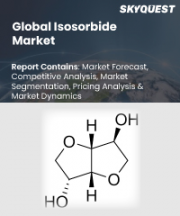
이소소르비드는 재생 가능한 원료에서 추출한 디올로, 강성, 저독성 프로파일, 바이오 플랫폼 분자로서의 가능성으로 인해 특수 화학 및 폴리머 밸류체인 전반에서 주목을 받고 있습니다. 이화학적인 특성, 즉 견고한 이환식 구조, 두 개의 이차 수산기, 열적 안정성으로 인해 가소제에서 반응성 단량체까지 다양한 응용 분야의 빌딩 블록으로 매력적입니다. 제조업계의 논의에서 이소소르비드는 석유에서 추출한 글리콜과 사이클로지방족 디올을 대체할 수 있는 물질로 인식되고 있으며, 배합 설계자들은 이 물질이 성능과 지속가능성 메시지를 결합하는 것을 높이 평가했습니다.
상호 연관된 기술 혁신, 규제 동향 및 공급망 재편으로 인해 이소소르비드의 채택이 가속화되고 경쟁 차별화를 재정의하고 있습니다.
이소소르비드를 둘러싼 환경은 기술, 규제 및 상업적 트렌드에 걸친 몇 가지 변혁적 요인에 의해 재편되고 있습니다. 첫째, 촉매 및 탈수 화학의 발전으로 실험실 규모의 수율과 경제적으로 실행 가능한 생산 경로 사이의 격차가 좁혀져 생산자가 더 큰 규모의 운영을 고려하고 공정 발자국을 다양화할 수 있게 되었습니다. 이러한 기술 발전은 폴리머 및 첨가제 분야의 재료 과학 혁신과 병행하여 이소소르비드의 강성 및 열적 특성을 활용하여 규제 준수에 영향을 주지 않으면서도 성능을 향상시키는 데 활용되고 있습니다.
2025년 미국 관세 정책 조정이 이소소르비드의 가치사슬 전반에 걸쳐 전략적 지역 분산, 공급업체 다각화, 계약상 적응을 유발한 방법
2025년 미국의 관세 도입 및 재조정은 단순한 비용 조정에 그치지 않고 이소소르비드의 가치사슬 전체에 복잡한 파급효과를 가져왔습니다. 관세와 관련된 수입 가격 압력은 즉각적으로 조달 전략을 재검토하고, 공급업체 기반을 다양화하고 가능한 한 근해 또는 국내 생산 옵션을 우선시하는 노력을 가속화했습니다. 국경 간 공급에 의존하는 바이어의 경우, 이에 대한 대응책으로 리드타임 연장, 인코텀즈 재조정, 그리고 추가적인 무역 변동에 대비한 우발상황 조항을 포함하도록 계약조건을 재협상하는 경우가 많았습니다.
부문 중심의 전략적 차별화를 통해 용도 요구, 순도 요건, 물리적 형태, 제조 화학 및 최종 용도 수요의 교차점을 명확히 하여 공급업체의 포지셔닝을 형성합니다.
정교한 세분화 분석을 통해 이소소르비드 생태계에서 상업적 기회와 기술적 기회가 교차하는 지점을 파악할 수 있습니다. 용도의 관점에서 살펴보면, 이 분자는 뚜렷한 궤적을 가지고 있습니다. 화학 중간체로서 다양한 합성을 지원하고, 가소제로서 민감한 배합물에 대한 낮은 전이성 대안을 제공하며, 반응성 희석제로서 수지의 가교 및 네트워크 형성을 가능하게 하고, 용매로서 극성 및 비등점 프로파일이 중요한 틈새 역할을 합니다. 이러한 사용 경로는 각각 다른 순도, 형태, 가공 특성이 필요하기 때문에 제조 경로의 선택과 공급업체의 전문화에 영향을 미칩니다.
이소소르비드에 대한 투자, 규제 준수 및 상업화 노력이 가장 큰 성과를 거둘 수 있는 지역, 지역 간 전략적 차이와 물류적 현실이 결정합니다.
지역별 동향은 이소소르비드 공급 측면 전략과 수요 패턴을 형성하고 있으며, 신중한 지리적 관점을 통해 기회와 제약이 어디에 집중되어 있는지를 명확히 파악할 수 있습니다. 북미와 남미 지역에서는 기존 재생 가능 원료 인프라와의 통합과 플라스틱 및 폴리머 분야의 탄탄한 고객 기반이 집중적인 투자를 뒷받침하고 있습니다. 한편, 소비재 시장에서 보다 안전한 화학물질에 대한 규제가 강화되면서 바이오 유래 디올에 대한 관심이 높아지고 있습니다. 또한, 최근 무역 정책의 변화에 따른 물류 고려사항과 니어쇼어링의 우선순위도 국경을 초월한 의존도를 낮추기 위한 투자를 촉진하고 있습니다.
이소소르비드 분야의 경쟁 우위, 생산자 전략, 협업 파트너십, 역량 기반 차별화에 대한 인사이트를 제공합니다.
이소소르비드 분야의 기업 동향은 공정 효율을 높이기 위해 노력하는 기존 기업과 업스트림 공정의 통합 및 다운스트림 공정의 애플리케이션 개발을 통해 틈새 시장 차별화를 추구하는 신규 진출기업이 혼재되어 있습니다. 주요 화학업체들은 공정 최적화, 저비용 촉매 경로의 스케일업, 고감도 용도를 위한 고품질 제품 공급을 위한 정제 기술 투자에 집중하고 있습니다. 이들 기존 기업들은 대부분 기존 유통망과 기술 서비스 팀을 활용하여 폴리머 배합 제조업체와 첨가제 제조업체의 채택을 가속화하고 있습니다.
업계 리더가 회복탄력성을 강화하고, 채택을 가속화하며, 고부가가치 최종 용도에서의 입지를 확보하기 위해 실행 가능한 전략적 우선순위와 역량에 투자할 수 있습니다.
업계 리더는 단기적인 상업적 대응력과 중기적 역량 구축의 균형을 맞추는 다각적인 전략을 채택해야 합니다. 우선 조달처를 다변화하고, 무역 혼란과 관세 변동에 대한 노출을 줄일 수 있는 위탁생산(tolling), 공동입지(co-location) 등을 검토하여 가치사슬의 탄력성을 우선적으로 고려해야 합니다. 동시에 고순도 등급을 지원하기 위해 정제 및 분석 기술에 선택적으로 투자하여 추적 가능성과 엄격한 품질 문서화를 중시하는 제약 및 퍼스널케어 분야에 진출할 수 있도록 해야 합니다.
1차 인터뷰, 기술 검증, 특허 및 문헌 검토, 시나리오 분석을 결합한 조사 기법을 통해 업계 동향에 대한 다각적인 평가를 수행합니다.
본 분석의 기초가 되는 설문조사는 신뢰성과 타당성을 확보하기 위해 정성적, 정량적 방법을 통합적으로 사용하였습니다. 1차 조사에는 화학 제조업체, 제품 제형 개발자 및 최종 사용 산업 조달 전문가를 대상으로 한 구조화된 인터뷰를 통해 공정 선택 기준, 사양 요구 사항 및 상업적 의사 결정 요인에 대한 인사이트를 얻을 수 있었습니다. 이러한 인터뷰는 가능한 한 현장 시찰 및 기술 설명회와 결합하여 공정 설명을 검증하고, 다양한 물리적 형태의 취급 실태를 관찰했습니다.
이소소르비드의 전략적 잠재력, 용도 및 지역별로 차별화된 도입 현황, 그리고 기회를 성과로 전환하는 데 필요한 역량에 대한 개요
이소소르비드는 성능 중심의 소재 설계와 재생 가능하고 독성이 낮은 화학물질로 산업 전반을 전환하는 전략적 분기점에 위치하고 있습니다. 독특한 분자 특성으로 인해 다양한 응용 분야에서 매력적이지만, 상업화의 성공 여부는 생산 화학, 공급망 설계 및 최종 사용자와의 협력에 따라 달라질 수 있습니다. 개선된 촉매 경로, 바이오 유래 원료에 대한 규제적 인센티브 강화, 고부가가치 최종 사용자 분야 수요 증가가 결합되어, 타겟팅된 투자와 파트너십에 유리한 환경이 조성되고 있습니다.
자주 묻는 질문
목차
제1장 서문
제2장 조사 방법
제3장 주요 요약
제4장 시장 개요
제5장 시장 인사이트
제6장 미국 관세의 누적 영향, 2025년
제7장 AI의 누적 영향, 2025년
제8장 이소소르비드 시장 : 용도별
제9장 이소소르비드 시장 : 순도 등급별
제10장 이소소르비드 시장 : 물리 형태별
제11장 이소소르비드 시장 : 제조 공정별
제12장 이소소르비드 시장 : 최종 이용 산업별
제13장 이소소르비드 시장 : 지역별
제14장 이소소르비드 시장 : 그룹별
제15장 이소소르비드 시장 : 국가별
제16장 미국의 이소소르비드 시장
제17장 중국의 이소소르비드 시장
제18장 경쟁 구도
JHS 26.04.30The Isosorbide Market was valued at USD 962.18 million in 2025 and is projected to grow to USD 1,128.20 million in 2026, with a CAGR of 18.40%, reaching USD 3,138.50 million by 2032.
| KEY MARKET STATISTICS | |
|---|---|
| Base Year [2025] | USD 962.18 million |
| Estimated Year [2026] | USD 1,128.20 million |
| Forecast Year [2032] | USD 3,138.50 million |
| CAGR (%) | 18.40% |
Comprehensive framing of isosorbide's molecular advantages, industrial appeal, and the supply chain conditions that inform commercialization decisions for manufacturers
Isosorbide is an increasingly visible diol derived from renewable feedstocks that has captured attention across specialty chemical and polymer value chains due to its rigidity, low toxicity profile, and potential as a bio-based platform molecule. Its chemical attributes-rigid bicyclic structure, two secondary hydroxyl groups, and thermal stability-make it attractive as a building block for applications ranging from plasticizers to reactive monomers. In manufacturing conversations, isosorbide is frequently positioned as an alternative to petroleum-derived glycols and cycloaliphatic diols, with formulators valuing the combination of performance and sustainability signaling.
Transitioning from lab to commercial scale has required alignment across feedstock availability, catalytic processes, and downstream conversion routes, and this has influenced supply chain configurations and capital investment decisions. As a result, stakeholders from specialty chemical producers to end-use converters are reassessing procurement strategies and product development roadmaps. In parallel, regulatory emphasis on lower-toxicity and renewable content in sectors such as personal care and pharmaceuticals is elevating isosorbide's relevance, prompting cross-functional teams to explore integration into existing formulations and emerging product propositions.
Interconnected technological breakthroughs, regulatory trends, and supply chain realignments that are accelerating isosorbide adoption and redefining competitive differentiation
The landscape for isosorbide is being reshaped by several transformative forces that span technology, regulation, and commercial behavior. First, advances in catalytic and dehydration chemistries have narrowed the gap between bench-scale yields and economically viable production routes, enabling producers to contemplate larger-scale operations and to diversify process footprints. These technical advances are occurring alongside material science innovations in polymers and additives where isosorbide's rigidity and thermal properties are leveraged to enhance performance without compromising regulatory compliance.
At the same time, regulatory signals tied to safer chemistry and circularity are accelerating demand-side interest, particularly in industries where consumer-facing sustainability claims carry weight. Supply chain resilience initiatives and supplier consolidation trends are prompting buyers to rethink sourcing strategies and to favor integrated suppliers capable of offering traceability and consistent quality. Moreover, heightened investor interest in bio-based chemicals is unlocking new financing paths for scale-up projects, while strategic partnerships between chemical producers and specialty formulators are shortening the time from molecule to market. Collectively, these shifts are raising the bar for competitive differentiation through process efficiency, sustainability credentials, and speed of commercialization.
How adjustments to U.S. tariff policy in 2025 triggered strategic regionalization, supplier diversification, and contractual adaptations across the isosorbide value chain
The introduction and recalibration of tariffs in the United States in 2025 created a complex ripple effect across the isosorbide value chain that extended beyond straightforward cost adjustments. Tariff-related import price pressures prompted immediate procurement reassessments, accelerating efforts to diversify supplier bases and to prioritize nearshore or domestic production options where feasible. For buyers reliant on cross-border supply, the response often involved renegotiating contract terms to include longer lead times, reworked incoterms, and contingency clauses to protect against further trade volatility.
Producers and distributors responded by intensifying focus on operational resilience: firms pursued alternative logistics routes, adjusted inventory strategies to reduce exposure to single-source risks, and explored tolling arrangements that could insulate downstream customers from border measures. In parallel, there was an observable strategic pivot toward investing in regional production capabilities and downstream partnerships to mitigate tariff exposure and to maintain competitive pricing for key end-use industries. Financial planning teams reprioritized capital projects that could shorten supply chains, while procurement leaders accelerated supplier qualification processes in jurisdictions less affected by the measures.
Regulatory and policy uncertainty also influenced commercialization timelines for new isosorbide-based products. Firms weighing launch decisions took a more cautious approach to rollout sequencing, often piloting products in lower-risk markets prior to committing to scale in tariff-impacted regions. In sum, the 2025 tariff adjustments catalyzed a multi-faceted market response that emphasized supply diversification, regionalization of capacity, contractual flexibility, and stronger collaboration between raw material suppliers and downstream customers to preserve continuity and competitiveness.
Segment-driven strategic distinctions revealing where application needs, purity requirements, physical form, production chemistry, and end-use demands intersect to shape supplier positioning
A nuanced segmentation analysis reveals where commercial and technical opportunities converge in the isosorbide ecosystem. When examined through the lens of application, the molecule shows distinct trajectories: as a chemical intermediate it underpins a range of syntheses; as a plasticizer it offers lower-migration alternatives for sensitive formulations; as a reactive diluent it enables crosslinking and network formation in resins; and as a solvent it serves niche roles where polarity and boiling point profile matter. These application pathways demand different purity, form, and processing attributes, and therefore influence route selection and supplier specialization.
Purity grade represents another critical axis: technical-grade material is typically targeted at industrial polymer and additive applications where specification windows are broader, whereas USP-grade isosorbide is required where pharmaceutical or certain personal care regulatory frameworks impose stringent purity, impurity profile, and documentation demands. These divergence points necessitate dedicated quality control regimes and, in some cases, separate production lines or downstream purification investments to meet USP-level expectations.
Physical form is also influential in logistics and formulation practices; isosorbide supplied as flakes supports crystalline handling systems and can be advantageous for melt-processing operations, granules facilitate automated feeding and dosing in continuous manufacturing, and powdered forms are useful where rapid dissolution or dispersion is required. Production process choices further delineate supplier capabilities: single-step processes can offer streamlined throughput and lower capital intensity, while two-step routes-whether employing acid-catalyzed dehydration or catalytic dehydration-enable higher selectivity and may support scale-up paths that better preserve stereochemistry and minimize by-products. Finally, end-use industries bring differing commercial dynamics: cosmetics and personal care prioritize sensory and regulatory compliance attributes, food and beverage applications focus on food-contact safety and traceability, pharmaceutical uses demand the highest purity and documentation standards, and plastics and polymers seek performance improvements alongside processing compatibility. Understanding these segmentation interactions helps firms prioritize investment, tailor product specifications, and align go-to-market models with the exacting needs of each customer cohort.
Cross-regional strategic contrasts and logistical realities that determine where isosorbide investments, regulatory compliance, and commercialization efforts will gain the strongest traction
Regional dynamics shape both supply-side strategies and demand patterns for isosorbide, and a careful geographic lens clarifies where opportunities and constraints are concentrated. In the Americas, integration with existing renewable feedstock infrastructure and a strong customer base in plastics and polymers have supported targeted investments, while regulatory emphasis on safer chemistries in consumer goods markets has reinforced interest in bio-based diols. Logistics considerations and nearshoring priorities following recent trade policy shifts have also favored investments that reduce cross-border dependencies.
Europe, Middle East & Africa exhibits a multifaceted environment: stringent regulatory frameworks and well-developed specialty chemical ecosystems favor higher-purity applications and innovation-led partnerships, while policy initiatives promoting circularity and bio-based content create incentives for both producers and brand owners to collaborate on validated supply chains. In parts of the region, access to green feedstocks and existing dehydration expertise underpin pilot projects and early commercialization efforts, encouraging cross-border alliances and licensing arrangements.
Asia-Pacific continues to be a central node for both feedstock supply and downstream manufacturing capacity, with robust processing infrastructure and a diverse customer base spanning personal care, food and beverage, and polymer manufacturing. Rapidly evolving consumer preferences and strong industrial policy support for bio-based chemicals in several markets are driving sizable experimentation and product development activity. However, regional heterogeneity in regulatory standards and quality expectations requires suppliers to adopt differentiated market entry strategies and to invest in local regulatory intelligence and customer education initiatives. Across all regions, the interplay of logistics, regulation, feedstock access, and end-use demand determines where scale-up will be most economically and strategically viable.
Insights into producer strategies, collaborative partnerships, and capability-driven differentiation that are defining competitive advantage in the isosorbide sector
Company behavior in the isosorbide space reflects a mix of incumbents refining process efficiency and new entrants pursuing niche differentiation through upstream integration or downstream application development. Leading chemical producers are emphasizing process optimization, scale-up of low-cost catalytic routes, and investments in purification technologies to supply higher-grade streams for sensitive applications. These incumbents often leverage existing distribution networks and technical service teams to accelerate adoption among polymer formulators and additive manufacturers.
At the same time, agile specialty players and start-ups are focusing on product differentiation through application-specific formulations, joint development agreements with end users, and intellectual property around dehydration catalysts and separation techniques. Strategic collaborations between producers and large downstream brands have become more common as a way to secure off-take, validate performance in real-world formulations, and de-risk investment for both parties. There is also a growing emphasis on sustainability credentials and supply chain transparency, leading some companies to pursue certification schemes or to publish robust chain-of-custody documentation to meet customer requirements.
Service providers, toll manufacturers, and logistics partners play a complementary role by enabling flexible production capacities and specialized handling for different physical forms and purity grades. Ultimately, competitive advantage is increasingly tied to the ability to combine technical capabilities with regulatory expertise and market-facing commercialization support.
Actionable strategic priorities and capability investments that industry leaders can implement to strengthen resilience, accelerate adoption, and secure premium end-use placements
Industry leaders should adopt a multi-dimensional strategy that balances near-term commercial responsiveness with medium-term capability building. First, prioritize supply chain resilience by diversifying sourcing and exploring tolling or co-location arrangements that reduce exposure to trade disruptions and tariff volatility. Simultaneously, invest selectively in purification and analytics to support higher-purity grades, which unlock access to pharmaceutical and personal care segments that value traceability and stringent quality documentation.
Second, develop closer technical partnerships with key end users to accelerate formulation trials and secure early adopter contracts that validate performance benefits. Such partnerships can shorten commercialization cycles and provide critical real-world data to inform process improvements. Third, align R&D investments with catalytic and dehydration technologies that demonstrate the best potential to improve selectivity and lower impurity burdens, while also evaluating lifecycle impacts to strengthen sustainability propositions. Fourth, consider regional production strategies that place capacity closer to major demand centers, thereby reducing logistics costs and tariff exposure while enhancing customer responsiveness.
Finally, amplify market-facing capabilities by investing in regulatory intelligence, certification pathways, and marketing that translates technical attributes into clear value propositions for brand owners and formulators. By integrating operational, technical, and commercial initiatives, firms can build durable differentiation while enabling accelerated adoption across priority end-use industries.
Methodological approach combining primary interviews, technical validation, patent and literature review, and scenario analysis to produce a triangulated assessment of industry dynamics
The research underpinning this analysis synthesized qualitative and quantitative methods to ensure robustness and relevance. Primary research included structured interviews with technical leaders across chemical producers, product formulators, and procurement specialists in end-use industries, which provided insight into process preferences, specification requirements, and commercial decision drivers. These interviews were complemented by site visits and technical briefings where available to validate process descriptions and to observe handling practices for different physical forms.
Secondary research drew on peer-reviewed chemical engineering literature, patent filings related to dehydration and catalytic processes, regulatory guidance documents relevant to product purity and safety, and industry reports that describe technological advancement trends. Data triangulation was applied by cross-referencing supplier disclosures, public filings, and industry conference presentations to corroborate claims about process routes and strategic initiatives. Analytical methods included value-chain mapping, scenario analysis to assess sensitivity to trade and logistics disruption, and segmentation cross-tabulation to identify high-priority intersections of application, purity, form, and end use.
Limitations of the methodology include variability in public disclosure among private firms, which can constrain visibility into precise commercial volumes or contract terms, and the rapidly evolving nature of catalytic innovation, which can change cost and yield assumptions over short timeframes. To mitigate these constraints, the research emphasized verified technical descriptions, direct supplier confirmation where possible, and iterative validation with industry experts.
Concluding synthesis of isosorbide's strategic promise, the differentiated adoption landscape by application and region, and the capabilities needed to translate opportunity into results
Isosorbide occupies a strategic crossroads between performance-driven material design and the broader industry shift toward renewable, lower-toxicity chemistries. Its unique molecular attributes make it attractive across multiple applications, yet successful commercialization depends on coordinated advances in production chemistry, supply chain design, and end-user engagement. The convergence of improved catalytic routes, stronger regulatory incentives for bio-based inputs, and growing demand from high-value end-use sectors provides a favorable backdrop for targeted investment and partnership.
However, stakeholders must recognize that adoption will not be uniform across segments or geographies; differences in purity requirements, physical form preferences, and regulatory regimes mean that suppliers and customers will need to tailor approaches. Firms that proactively align process capabilities with the specific needs of pharmaceuticals, personal care, food-contact applications, and polymer performance goals will be best positioned to capture early opportunities. Ultimately, success will hinge on integrating technical excellence with commercial agility and regional market knowledge to translate molecular promise into durable commercial outcomes.
Table of Contents
1. Preface
- 1.1. Objectives of the Study
- 1.2. Market Definition
- 1.3. Market Segmentation & Coverage
- 1.4. Years Considered for the Study
- 1.5. Currency Considered for the Study
- 1.6. Language Considered for the Study
- 1.7. Key Stakeholders
2. Research Methodology
- 2.1. Introduction
- 2.2. Research Design
- 2.2.1. Primary Research
- 2.2.2. Secondary Research
- 2.3. Research Framework
- 2.3.1. Qualitative Analysis
- 2.3.2. Quantitative Analysis
- 2.4. Market Size Estimation
- 2.4.1. Top-Down Approach
- 2.4.2. Bottom-Up Approach
- 2.5. Data Triangulation
- 2.6. Research Outcomes
- 2.7. Research Assumptions
- 2.8. Research Limitations
3. Executive Summary
- 3.1. Introduction
- 3.2. CXO Perspective
- 3.3. Market Size & Growth Trends
- 3.4. Market Share Analysis, 2025
- 3.5. FPNV Positioning Matrix, 2025
- 3.6. New Revenue Opportunities
- 3.7. Next-Generation Business Models
- 3.8. Industry Roadmap
4. Market Overview
- 4.1. Introduction
- 4.2. Industry Ecosystem & Value Chain Analysis
- 4.2.1. Supply-Side Analysis
- 4.2.2. Demand-Side Analysis
- 4.2.3. Stakeholder Analysis
- 4.3. Porter's Five Forces Analysis
- 4.4. PESTLE Analysis
- 4.5. Market Outlook
- 4.5.1. Near-Term Market Outlook (0-2 Years)
- 4.5.2. Medium-Term Market Outlook (3-5 Years)
- 4.5.3. Long-Term Market Outlook (5-10 Years)
- 4.6. Go-to-Market Strategy
5. Market Insights
- 5.1. Consumer Insights & End-User Perspective
- 5.2. Consumer Experience Benchmarking
- 5.3. Opportunity Mapping
- 5.4. Distribution Channel Analysis
- 5.5. Pricing Trend Analysis
- 5.6. Regulatory Compliance & Standards Framework
- 5.7. ESG & Sustainability Analysis
- 5.8. Disruption & Risk Scenarios
- 5.9. Return on Investment & Cost-Benefit Analysis
6. Cumulative Impact of United States Tariffs 2025
7. Cumulative Impact of Artificial Intelligence 2025
8. Isosorbide Market, by Application
- 8.1. Chemical Intermediates
- 8.2. Plasticizers
- 8.3. Reactive Diluents
- 8.4. Solvents
9. Isosorbide Market, by Purity Grade
- 9.1. Technical
- 9.2. USP
10. Isosorbide Market, by Physical Form
- 10.1. Flakes
- 10.2. Granules
- 10.3. Powder
11. Isosorbide Market, by Production Process
- 11.1. Single Step
- 11.2. Two Step
- 11.2.1. Acid Catalyzed Dehydration
- 11.2.2. Catalytic Dehydration
12. Isosorbide Market, by End Use Industry
- 12.1. Cosmetics & Personal Care
- 12.2. Food & Beverage
- 12.3. Pharmaceuticals
- 12.4. Plastics & Polymers
13. Isosorbide Market, by Region
- 13.1. Americas
- 13.1.1. North America
- 13.1.2. Latin America
- 13.2. Europe, Middle East & Africa
- 13.2.1. Europe
- 13.2.2. Middle East
- 13.2.3. Africa
- 13.3. Asia-Pacific
14. Isosorbide Market, by Group
- 14.1. ASEAN
- 14.2. GCC
- 14.3. European Union
- 14.4. BRICS
- 14.5. G7
- 14.6. NATO
15. Isosorbide Market, by Country
- 15.1. United States
- 15.2. Canada
- 15.3. Mexico
- 15.4. Brazil
- 15.5. United Kingdom
- 15.6. Germany
- 15.7. France
- 15.8. Russia
- 15.9. Italy
- 15.10. Spain
- 15.11. China
- 15.12. India
- 15.13. Japan
- 15.14. Australia
- 15.15. South Korea
16. United States Isosorbide Market
17. China Isosorbide Market
18. Competitive Landscape
- 18.1. Market Concentration Analysis, 2025
- 18.1.1. Concentration Ratio (CR)
- 18.1.2. Herfindahl Hirschman Index (HHI)
- 18.2. Recent Developments & Impact Analysis, 2025
- 18.3. Product Portfolio Analysis, 2025
- 18.4. Benchmarking Analysis, 2025
- 18.5. AK Scientific Inc.
- 18.6. Alfa Aesar
- 18.7. Ambeed Inc.
- 18.8. Apollo Scientific Ltd.
- 18.9. Archer Daniels Midland Company
- 18.10. AstaTech Inc.
- 18.11. Biosynth Carbosynth
- 18.12. BLD Pharmatech Ltd.
- 18.13. BOC Sciences
- 18.14. Carbosynth Limited
- 18.15. Cargill Incorporated
- 18.16. ChemScene LLC
- 18.17. Combi-Blocks Inc.
- 18.18. Finetech Industry Limited
- 18.19. Key Organics Limited
- 18.20. LGC Limited
- 18.21. Merck KGaA
- 18.22. Otto Chemie Pvt. Ltd.
- 18.23. Santa Cruz Biotechnology Inc.
- 18.24. Sigma-Aldrich Corporation
- 18.25. SimSon Pharma Limited
- 18.26. TCI Chemicals
- 18.27. VWR International LLC