|
시장보고서
상품코드
2032828
혈액가스 및 전해질 분석기 시장 보고서 : 제품 유형별, 측정 방식별, 최종 사용자별, 지역별(2026-2034년)Blood Gas and Electrolyte Analyzer Market Report by Product Type (Analyzers, Consumables), Modality (Benchtop, Portable), End User (Hospitals, Clinics, Ambulatory Surgical Centers, and Others), and Region 2026-2034 |
||||||

세계의 혈액가스 및 전해질 분석기 시장 규모는 2025년에 24억 달러에 이르렀습니다. IMARC Group은 향후 2034년까지 시장 규모가 38억 달러에 이를 전망이며, 2026-2034년 CAGR 5.31%로 성장할 것으로 예측했습니다. 심혈관 질환, 암, 당뇨병 등 다양한 만성질환의 발생률 증가, 기기의 소형화 및 정확도 향상을 위한 첨단 기술의 통합, 현장진단(POC, Point of Care) 검사 서비스 도입 확대 등이 시장 성장을 견인하는 요인으로 작용하고 있습니다.
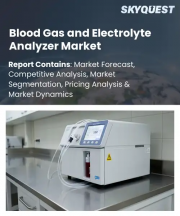
혈액가스 및 전해질 분석기는 전혈 샘플의 혈액가스(이산화탄소 및 산소 분압), pH, 전해질, 대사 산물 등 다양한 매개 변수를 측정하는 데 사용되는 의료기기를 말합니다. 이들은 대사 이상 감지 및 신장-심장 기능 측정에 널리 활용되고 있습니다. 또한 혈액 내 전해질 수치 이상, 산소 및 이산화탄소 교환 수준, 환자의 산염기 평형을 판단하는 데도 도움이 됩니다. 또한, 당뇨병, 혈관 출혈, 약물 섭취를 확인하는 데도 도움이 됩니다. 최근 혈액가스 및 전해질 분석기는 사용 편의성, 비용 효율성, 정확성 및 신속한 결과 제공으로 임상 진단실험실 및 중환자실에서 매우 높은 인기를 얻고 있습니다.
혈액가스 및 전해질 분석기 시장 동향 :
혈액가스 및 전해질 분석기는 업무 프로세스를 효율화하고, 실수를 최소화하며, 유지관리의 번거로움을 줄이고, 정확한 결과를 신속하게 제공할 수 있습니다. 그 결과, 중환자실(ICU), 수술실, 응급실의 환자 수 증가가 시장 성장을 견인하는 주요 요인으로 작용하고 있습니다. 여기에 당뇨, 심혈관 질환 등 만성질환의 확산과 이러한 질환에 걸리기 쉬운 고령 인구 증가가 제품 수요를 증가시키고 있습니다. 또한, 고처리량 및 통합 자동화 시스템에 대한 수요가 크게 증가하고 있습니다. 이와 더불어, 워크플로우를 효율화하고 환자의 건강 상태를 효과적으로 모니터링하기 위해 혈액가스 및 전해질 분석기와 검사 정보 시스템(LIS) 및 전자의무기록(EMR)과의 연계가 진행되고 있는 것이 시장 성장을 견인하고 있습니다. 또한, 몇몇 주요 제조업체들은 사용하기 쉽고 다루기 쉬우며 유지보수 요건을 최소화한 휴대용 혈액가스 및 전해질 분석기 개발에 많은 투자를 하고 있습니다. 이 외에도 현장 검사(POCT)에 대한 선호도 변화, 의료 산업의 발전, 기술 발전, 제품 혁신, 광범위한 조사 개발(R&D) 활동 등의 요인도 시장 전망을 긍정적으로 만들고 있습니다.
시장 세분화 :
이 보고서는 각 시장 부문의 주요 동향 분석과 함께 2026-2034년 세계, 지역 및 국가별 예측을 제공합니다. 이 보고서는 제품 유형, 양식 및 최종 사용자에 따라 시장을 분류합니다.
제품 유형별 내역 :
- 분석기
- 소모품
모달리티별 내역 :
- 탁상형
- 휴대용
최종 사용자별 내역 :
- 병원
- 진료소
- 외래수술센터
- 기타
지역별 내역 :
- 북미
- 미국
- 캐나다
- 아시아태평양
- 중국
- 일본
- 인도
- 한국
- 호주
- 인도네시아
- 기타
- 유럽
- 독일
- 프랑스
- 영국
- 이탈리아
- 스페인
- 러시아
- 기타
- 라틴아메리카
- 브라질
- 멕시코
- 기타
- 중동 및 아프리카
경쟁 구도 :
본 업계의 경쟁 상황에 대해서도 주요 기업 프로파일로서 Abbott Laboratories, DARCO Diagnostics, Elva Group(Transasia Biomedicals), Medica Corporation, Nova Biomedical Corporation, OPTI Medical Systems Inc. (IDEXX Laboratories), Radiometer Medical ApS (Danaher Corporation), Roche Holding AG, Siemens AG 및 WerfenLife S.A.가 검증을 완료했습니다.
본 보고서에서 답변을 얻을 수 있는 주요 질문
1. 혈액가스 및 전해질 분석기 시장 규모는 어느 정도입니까?
2. 2026-2034년 세계 혈액가스 및 전해질 분석기 시장의 예상 성장률은 얼마입니까?
3. 세계의 혈액가스 및 전해질 분석기 시장을 이끄는 주요 요인은?
4. 코로나19가 세계의 혈액가스 및 전해질 분석기 시장에 어떤 영향을 미쳤는가?
5. 제품 유형별 세계의 혈액가스 및 전해질 분석기 시장은 어떻게 구성되어 있는가?
6. 양식별 세계의 혈액가스 및 전해질 분석기 시장 시장 내역은 어떻게 이루어지고 있는가?
7. 최종 사용자별 세계 혈액가스 및 전해질 분석기 시장의 구성은 무엇인가?
8. 세계 혈액가스 및 전해질 분석기 시장의 주요 지역은?
9. 세계 혈액가스 및 전해질 분석기 시장의 주요 기업은?
목차
제1장 서문
제2장 조사 범위 및 조사 방법
제3장 주요 요약
제4장 서론
제5장 세계의 혈액가스 및 전해질 분석기 시장
제6장 시장 내역 : 제품 유형별
제7장 시장 내역 : 모달리티별
제8장 시장 내역 : 최종 사용자별
제9장 시장 내역 : 지역별
제10장 SWOT 분석
제11장 밸류체인 분석
제12장 Porter's Five Forces 분석
제13장 가격 분석
제14장 경쟁 구도
AJY 26.05.19The global blood gas and electrolyte analyzer market size reached USD 2.4 Billion in 2025. Looking forward, IMARC Group expects the market to reach USD 3.8 Billion by 2034, exhibiting a growth rate (CAGR) of 5.31% during 2026-2034. The growing occurrence of various chronic illnesses like cardiovascular complications, cancer, and diabetes, increasing integration of advanced technologies to decrease the size of devices and enhance accuracy, and rising adoption of point-of-care (POC) testing services are some of the factors impelling the growth of the market.
Blood gas and electrolyte analyzers refer to medical devices used to measure various parameters, including blood gas (partial pressure of carbon dioxide and oxygen), pH, electrolytes, and metabolites, in a whole blood sample. They are widely utilized for the detection of metabolic imbalances and the measurement of renal and cardiac functions. They also help determine abnormal electrolyte levels in the blood, levels of oxygen or carbon dioxide exchange, and the acid-base balance of the patient. Moreover, they assist in identifying diabetes, blood vessel hemorrhage, and drug consumption. In recent years, blood gas and electrolyte analyzers have gained immense popularity across clinical diagnostic labs and critical care units due to their ease of use, cost-effectiveness, accuracy, and fast results.
Blood Gas and Electrolyte Analyzer Market Trends:
Blood gas and electrolyte analyzers can streamline work processes, minimize errors, require minimum maintenance, and provide accurate results quickly. As a result, the increasing number of patients in intensive care units (ICUs), operating rooms, and emergency departments represent the primary factor driving the market growth. Besides this, the widespread prevalence of chronic diseases, such as diabetes and cardiovascular disorders, and the growing geriatric population that is more susceptible to developing these medical ailments are augmenting the product demand. Additionally, there has been a significant increase in the demand for high throughput, integrated, and automated systems. Along with this, the rising integration of blood gas and electrolyte analyzers with laboratory information systems and electronic medical records to streamline the workflow and enable effective monitoring of patient health is catalyzing the market growth. Furthermore, several leading players are making heavy investments for the development of portable blood gas and electrolyte analyzers with easy-to-use and handle features and minimum maintenance requirements. Other factors, including the shifting preferences toward point-of-care testing (POCT), developments in the healthcare industry, technological advancements, product innovations, and extensive research and development (R&D) activities, are also creating a favorable market outlook.
Market Segmentation:
This report provides an analysis of the key trends in each segment of the market, along with forecasts at the global, regional, and country levels for 2026-2034. The report categorizes the market based on product type, modality, and end user.
Breakup by Product Type:
- Analyzers
- Consumables
Breakup by Modality:
- Benchtop
- Portable
Breakup by End User:
- Hospitals
- Clinics
- Ambulatory Surgical Centers
- Others
Breakup by Region:
- North America
- United States
- Canada
- Asia-Pacific
- China
- Japan
- India
- South Korea
- Australia
- Indonesia
- Others
- Europe
- Germany
- France
- United Kingdom
- Italy
- Spain
- Russia
- Others
- Latin America
- Brazil
- Mexico
- Others
- Middle East and Africa
Competitive Landscape:
The competitive landscape of the industry has also been examined along with the profiles of the key players being Abbott Laboratories Inc., Dalko Diagnostics, Erba Group (Transasia Bio-Medicals Ltd.), Medica Corporation, Nova Biomedical Corporation, OPTI Medical Systems Inc. (IDEXX Laboratories), Radiometer Medical ApS (Danaher Corporation), Roche Holding AG, Siemens AG, and WerfenLife S.A.
Key Questions Answered in This Report
1. How big is the blood gas and electrolyte analyzer market?
2. What is the expected growth rate of the global blood gas and electrolyte analyzer market during 2026-2034?
3. What are the key factors driving the global blood gas and electrolyte analyzer market?
4. What has been the impact of COVID-19 on the global blood gas and electrolyte analyzer market?
5. What is the breakup of the global blood gas and electrolyte analyzer market based on the product type?
6. What is the breakup of the global blood gas and electrolyte analyzer market based on the modality?
7. What is the breakup of the global blood gas and electrolyte analyzer market based on the end user?
8. What are the key regions in the global blood gas and electrolyte analyzer market?
9. Who are the key players/companies in the global blood gas and electrolyte analyzer market?
Table of Contents
1 Preface
2 Scope and Methodology
- 2.1 Objectives of the Study
- 2.2 Stakeholders
- 2.3 Data Sources
- 2.3.1 Primary Sources
- 2.3.2 Secondary Sources
- 2.4 Market Estimation
- 2.4.1 Bottom-Up Approach
- 2.4.2 Top-Down Approach
- 2.5 Forecasting Methodology
3 Executive Summary
4 Introduction
- 4.1 Overview
- 4.2 Key Industry Trends
5 Global Blood Gas and Electrolyte Analyzer Market
- 5.1 Market Overview
- 5.2 Market Performance
- 5.3 Impact of COVID-19
- 5.4 Market Forecast
6 Market Breakup by Product Type
- 6.1 Analyzers
- 6.1.1 Market Trends
- 6.1.2 Market Forecast
- 6.2 Consumables
- 6.2.1 Market Trends
- 6.2.2 Market Forecast
7 Market Breakup by Modality
- 7.1 Benchtop
- 7.1.1 Market Trends
- 7.1.2 Market Forecast
- 7.2 Portable
- 7.2.1 Market Trends
- 7.2.2 Market Forecast
8 Market Breakup by End User
- 8.1 Hospitals
- 8.1.1 Market Trends
- 8.1.2 Market Forecast
- 8.2 Clinics
- 8.2.1 Market Trends
- 8.2.2 Market Forecast
- 8.3 Ambulatory Surgical Centers
- 8.3.1 Market Trends
- 8.3.2 Market Forecast
- 8.4 Others
- 8.4.1 Market Trends
- 8.4.2 Market Forecast
9 Market Breakup by Region
- 9.1 North America
- 9.1.1 United States
- 9.1.1.1 Market Trends
- 9.1.1.2 Market Forecast
- 9.1.2 Canada
- 9.1.2.1 Market Trends
- 9.1.2.2 Market Forecast
- 9.1.1 United States
- 9.2 Asia-Pacific
- 9.2.1 China
- 9.2.1.1 Market Trends
- 9.2.1.2 Market Forecast
- 9.2.2 Japan
- 9.2.2.1 Market Trends
- 9.2.2.2 Market Forecast
- 9.2.3 India
- 9.2.3.1 Market Trends
- 9.2.3.2 Market Forecast
- 9.2.4 South Korea
- 9.2.4.1 Market Trends
- 9.2.4.2 Market Forecast
- 9.2.5 Australia
- 9.2.5.1 Market Trends
- 9.2.5.2 Market Forecast
- 9.2.6 Indonesia
- 9.2.6.1 Market Trends
- 9.2.6.2 Market Forecast
- 9.2.7 Others
- 9.2.7.1 Market Trends
- 9.2.7.2 Market Forecast
- 9.2.1 China
- 9.3 Europe
- 9.3.1 Germany
- 9.3.1.1 Market Trends
- 9.3.1.2 Market Forecast
- 9.3.2 France
- 9.3.2.1 Market Trends
- 9.3.2.2 Market Forecast
- 9.3.3 United Kingdom
- 9.3.3.1 Market Trends
- 9.3.3.2 Market Forecast
- 9.3.4 Italy
- 9.3.4.1 Market Trends
- 9.3.4.2 Market Forecast
- 9.3.5 Spain
- 9.3.5.1 Market Trends
- 9.3.5.2 Market Forecast
- 9.3.6 Russia
- 9.3.6.1 Market Trends
- 9.3.6.2 Market Forecast
- 9.3.7 Others
- 9.3.7.1 Market Trends
- 9.3.7.2 Market Forecast
- 9.3.1 Germany
- 9.4 Latin America
- 9.4.1 Brazil
- 9.4.1.1 Market Trends
- 9.4.1.2 Market Forecast
- 9.4.2 Mexico
- 9.4.2.1 Market Trends
- 9.4.2.2 Market Forecast
- 9.4.3 Others
- 9.4.3.1 Market Trends
- 9.4.3.2 Market Forecast
- 9.4.1 Brazil
- 9.5 Middle East and Africa
- 9.5.1 Market Trends
- 9.5.2 Market Breakup by Country
- 9.5.3 Market Forecast
10 SWOT Analysis
- 10.1 Overview
- 10.2 Strengths
- 10.3 Weaknesses
- 10.4 Opportunities
- 10.5 Threats
11 Value Chain Analysis
12 Porters Five Forces Analysis
- 12.1 Overview
- 12.2 Bargaining Power of Buyers
- 12.3 Bargaining Power of Suppliers
- 12.4 Degree of Competition
- 12.5 Threat of New Entrants
- 12.6 Threat of Substitutes
13 Price Analysis
14 Competitive Landscape
- 14.1 Market Structure
- 14.2 Key Players
- 14.3 Profiles of Key Players
- 14.3.1 Abbott Laboratories Inc.
- 14.3.1.1 Company Overview
- 14.3.1.2 Product Portfolio
- 14.3.1.3 Financials
- 14.3.1.4 SWOT Analysis
- 14.3.2 Dalko Diagnostics
- 14.3.2.1 Company Overview
- 14.3.2.2 Product Portfolio
- 14.3.3 Erba Group (Transasia Bio-Medicals Ltd.)
- 14.3.3.1 Company Overview
- 14.3.3.2 Product Portfolio
- 14.3.4 Medica Corporation
- 14.3.4.1 Company Overview
- 14.3.4.2 Product Portfolio
- 14.3.5 Nova Biomedical Corporation
- 14.3.5.1 Company Overview
- 14.3.5.2 Product Portfolio
- 14.3.6 OPTI Medical Systems Inc. (IDEXX Laboratories)
- 14.3.6.1 Company Overview
- 14.3.6.2 Product Portfolio
- 14.3.7 Radiometer Medical ApS (Danaher Corporation)
- 14.3.7.1 Company Overview
- 14.3.7.2 Product Portfolio
- 14.3.8 Roche Holding AG
- 14.3.8.1 Company Overview
- 14.3.8.2 Product Portfolio
- 14.3.8.3 Financials
- 14.3.9 Siemens AG
- 14.3.9.1 Company Overview
- 14.3.9.2 Product Portfolio
- 14.3.9.3 Financials
- 14.3.9.4 SWOT Analysis
- 14.3.10 WerfenLife S.A.
- 14.3.10.1 Company Overview
- 14.3.10.2 Product Portfolio
- 14.3.1 Abbott Laboratories Inc.