|
시장보고서
상품코드
2109613
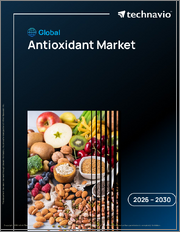
항산화제 시장(2026-2030년)Global Antioxidant Market 2026-2030 |
||||||

세계의 항산화제 시장은 2025년부터 2030년까지 16억 8,140만 달러 증가하고, 예측 기간 동안 CAGR은 6.4%에 달할 것으로 예측됩니다.
본 보고서에서는 전 세계 항산화제 시장에 대해 종합적인 분석, 시장 규모 및 전망, 동향, 성장 요인, 과제는 물론 약 25개 업체를 대상으로 한 공급업체 분석을 제공합니다.
본 보고서에서는 현재의 시장 상황, 최신 시장 동향 및 촉진요인, 그리고 전반적인 시장 환경에 대한 최신 분석을 제공합니다. 이 시장은 클린 라벨 제품에 대한 소비자의 선호도 증가가 식물 유래 항산화제의 수요를 가속화하고 있는 점, 가공식품 생산 확대가 유통기한 연장에 대한 수요를 높이고 있는 점, 그리고 안티에이징 화장품에 대한 수요 급증으로 기능성 스킨케어용 항산화제 배합이 확대되고 있는 점 등에 의해 뒷받침되고 있습니다.
본 조사는 업계 주요 관계자로부터 얻은 정보를 포함한 1차 정보와 2차 정보를 객관적으로 결합하여 수행되었습니다. 본 보고서에는 주요 기업에 대한 분석 외에도 종합적인 시장 규모 데이터, 지역별 분석을 포함한 부문별 데이터, 그리고 공급업체 현황이 수록되어 있습니다. 또한 과거 데이터와 예측 데이터도 포함되어 있습니다.
| 시장 범위 | |
|---|---|
| 기준 연도 | 2025년 |
| 종료 연도 | 2030년 |
| 조사 기간 | 2026-2030년 |
| 성장 모멘텀 | 가속 |
| 2026년 전년 대비 | 6.1% |
| CAGR | 6.4% |
| 증가액 | 16억 8,140만 달러 |
본 조사에서는 지속가능한 항산화제 생산을 위한 식물 유래 제품별 업사이클링을 전략적으로 도입하는 것이 향후 수년간 세계 항산화제 시장의 성장을 견인할 주요 요인 중 하나라고 규명하고 있습니다. 또한, 마이크로캡슐화 기술의 도입으로 식물 유래 항산화제의 열 안정성과 방출 특성이 향상되고, 천연 및 합성 성분의 시너지 효과를 통한 배합으로 식품 보존 효과가 최적화됨에 따라 시장에서 상당한 수요가 예상됩니다.
목차
제1장 주요 요약
제2장 Technavio 분석
제3장 시장 구도
제4장 시장 규모
제5장 시장 규모 실적
제6장 정성 분석
제7장 Five Forces 분석
제8장 시장 세분화 : 용도별
제9장 시장 세분화 : 유형별
제10장 시장 세분화 : 원료별
제11장 고객 상황
제12장 지역별 상황
제13장 촉진요인, 과제, 기회
제14장 경쟁 구도
제15장 경쟁 분석
제16장 부록
KSM 26.08.14The global antioxidant market is forecasted to grow by USD 1681.4 mn during 2025-2030, accelerating at a CAGR of 6.4% during the forecast period. The report on the global antioxidant market provides a holistic analysis, market size and forecast, trends, growth drivers, and challenges, as well as vendor analysis covering around 25 vendors.
The report offers an up-to-date analysis regarding the current market scenario, the latest trends and drivers, and the overall market environment. The market is driven by rising consumer preference clean label products accelerates botanical antioxidant demand, expanding processed food production heightens need for extended shelf life, surging anti aging cosmeceutical demand drives functional skincare antioxidant formulation.
The study was conducted using an objective combination of primary and secondary information including inputs from key participants in the industry. The report contains a comprehensive market size data, segment with regional analysis and vendor landscape in addition to an analysis of the key companies. Reports have historic and forecast data.
| Market Scope | |
|---|---|
| Base Year | 2025 |
| End Year | 2030 |
| Series Year | 2026-2030 |
| Growth Momentum | Accelerate |
| YOY 2026 | 6.1% |
| CAGR | 6.4% |
| Incremental Value | $1681.4 mn |
Technavio's global antioxidant market is segmented as below:
By Application
- Food and beverages
- Pharmaceuticals
- Personal care
- Animal feeds
By Type
- Vitamin C-based
- Vitamin E-based
- Polyphenols-based
- Carotenoids-based
By Source
- Synthetic
- Natural
Geography
- APAC
- China
- Japan
- India
- South Korea
- Australia
- Indonesia
- North America
- US
- Canada
- Mexico
- Europe
- Germany
- France
- UK
- Italy
- Spain
- The Netherlands
- Middle East and Africa
- South Africa
- UAE
- Turkey
- Egypt
- South America
- Brazil
- Argentina
- Chile
- Rest of World (ROW)
This study identifies the strategic adoption upcycled botanical side streams for sustainable antioxidant production as one of the prime reasons driving the global antioxidant market growth during the next few years. Also, microencapsulation technology integration enhances botanical antioxidant thermal stability and release and synergistic blending natural synthetic systems optimizes commercial food preservation efficacy will lead to sizable demand in the market.
The report on the global antioxidant market covers the following areas:
- Global antioxidant market sizing
- Global antioxidant market forecast
- Global antioxidant market industry analysis
The robust vendor analysis is designed to help clients improve their market position, and in line with this, this report provides a detailed analysis of several leading global antioxidant market vendors that include ADEKA Corp., Archer Daniels Midland Co., Barentz International BV, BASF SE, Cargill Inc., Clariant International Ltd., DSM Firmenich AG, Eastman Chemical Co., Evonik Industries AG, Givaudan SA, Indena S.p.A., International Flavors Inc., Kerry Group Plc, Lanxess AG, Northeast Pharmaceutical Group, Sigma Aldrich Chemicals Ltd., Solvay SA, Symrise Group, Synthite Industries Pvt. Ltd., The Lubrizol Corp.. Also, the global antioxidant market analysis report includes information on upcoming trends and challenges that will influence market growth. This is to help companies strategize and leverage all forthcoming growth opportunities.
The publisher presents a detailed picture of the market by the way of study, synthesis, and summation of data from multiple sources by an analysis of key parameters such as profit, pricing, competition, and promotions. It presents various market facets by identifying the key industry influencers. The data presented is comprehensive, reliable, and a result of extensive primary and secondary research. The market research reports provide a complete competitive landscape and an in-depth vendor selection methodology and analysis using qualitative and quantitative research to forecast accurate market growth.
Table of Contents
1 Executive Summary
- 1.1 Market overview
- Executive Summary - Chart on Market Overview
- Executive Summary - Data Table on Market Overview
- Executive Summary - Chart on Global Market Characteristics
- Executive Summary - Chart on Market by Geography
- Executive Summary - Chart on Market Segmentation by Application
- Executive Summary - Chart on Market Segmentation by Type
- Executive Summary - Chart on Market Segmentation by Source
- Executive Summary - Chart on Incremental Growth
- Executive Summary - Data Table on Incremental Growth
- Executive Summary - Chart on Company Market Positioning
2 Technavio Analysis
- 2.1 Analysis of price sensitivity, lifecycle, customer purchase basket, adoption rates, and purchase criteria
- Analysis of price sensitivity, lifecycle, customer purchase basket, adoption rates, and purchase criteria
- 2.2 Criticality of inputs and Factors of differentiation
- 2.3 Factors of disruption
- 2.4 Impact of drivers and challenges
3 Market Landscape
- 3.1 Market ecosystem
- 3.2 Market characteristics
- 3.3 Value chain analysis
4 Market Sizing
- 4.1 Market definition
- 4.2 Market segment analysis
- Market segments
- 4.3 Market size 2025
- 4.4 Market outlook: Forecast for 2025-2030
5 Historic Market Size
- 5.1 Global Antioxidant Market 2020 - 2024
- Historic Market Size - Data Table on Global Antioxidant Market 2020 - 2024 ($ million)
- 5.2 Application segment analysis 2020 - 2024
- Historic Market Size - Application Segment 2020 - 2024 ($ million)
- 5.3 Type segment analysis 2020 - 2024
- Historic Market Size - Type Segment 2020 - 2024 ($ million)
- 5.4 Source segment analysis 2020 - 2024
- Historic Market Size - Source Segment 2020 - 2024 ($ million)
- 5.5 Geography segment analysis 2020 - 2024
- Historic Market Size - Geography Segment 2020 - 2024 ($ million)
- 5.6 Country segment analysis 2020 - 2024
- Historic Market Size - Country Segment 2020 - 2024 ($ million)
6 Qualitative Analysis
- 6.1 Impact of AI on global antioxidant market
- 6.2 Impact of geopolitical conflicts on global antioxidant market
7 Five Forces Analysis
- 7.1 Five forces summary
- Five forces analysis - Comparison between 2025 and 2030
- 7.2 Bargaining power of buyers
- Bargaining power of buyers - Impact of key factors 2025 and 2030
- 7.3 Bargaining power of suppliers
- Bargaining power of suppliers - Impact of key factors in 2025 and 2030
- 7.4 Threat of new entrants
- Threat of new entrants - Impact of key factors in 2025 and 2030
- 7.5 Threat of substitutes
- Threat of substitutes - Impact of key factors in 2025 and 2030
- 7.6 Threat of rivalry
- Threat of rivalry - Impact of key factors in 2025 and 2030
- 7.7 Market condition
8 Market Segmentation by Application
- 8.1 Market segments
- 8.2 Comparison by Application
- 8.3 Food and beverages - Market size and forecast 2025-2030
- 8.4 Pharmaceuticals - Market size and forecast 2025-2030
- 8.5 Personal care - Market size and forecast 2025-2030
- 8.6 Animal feeds - Market size and forecast 2025-2030
- 8.7 Market opportunity by Application
- Market opportunity by Application ($ million)
9 Market Segmentation by Type
- 9.1 Market segments
- 9.2 Comparison by Type
- 9.3 Vitamin C-based - Market size and forecast 2025-2030
- 9.4 Vitamin E-based - Market size and forecast 2025-2030
- 9.5 Polyphenols-based - Market size and forecast 2025-2030
- 9.6 Carotenoids-based - Market size and forecast 2025-2030
- 9.7 Market opportunity by Type
- Market opportunity by Type ($ million)
10 Market Segmentation by Source
- 10.1 Market segments
- 10.2 Comparison by Source
- 10.3 Synthetic - Market size and forecast 2025-2030
- 10.4 Natural - Market size and forecast 2025-2030
- 10.5 Market opportunity by Source
- Market opportunity by Source ($ million)
11 Customer Landscape
- 11.1 Customer landscape overview
- Analysis of price sensitivity, lifecycle, customer purchase basket, adoption rates, and purchase criteria
12 Geographic Landscape
- 12.1 Geographic segmentation
- 12.2 Geographic comparison
- 12.3 APAC - Market size and forecast 2025-2030
- 12.3.1 China - Market size and forecast 2025-2030
- 12.3.2 Japan - Market size and forecast 2025-2030
- 12.3.3 India - Market size and forecast 2025-2030
- 12.3.4 South Korea - Market size and forecast 2025-2030
- 12.3.5 Australia - Market size and forecast 2025-2030
- 12.3.6 Indonesia - Market size and forecast 2025-2030
- 12.4 North America - Market size and forecast 2025-2030
- 12.4.1 US - Market size and forecast 2025-2030
- 12.4.2 Canada - Market size and forecast 2025-2030
- 12.4.3 Mexico - Market size and forecast 2025-2030
- 12.5 Europe - Market size and forecast 2025-2030
- 12.5.1 Germany - Market size and forecast 2025-2030
- 12.5.2 France - Market size and forecast 2025-2030
- 12.5.3 UK - Market size and forecast 2025-2030
- 12.5.4 Italy - Market size and forecast 2025-2030
- 12.5.5 Spain - Market size and forecast 2025-2030
- 12.5.6 The Netherlands - Market size and forecast 2025-2030
- 12.6 Middle East and Africa - Market size and forecast 2025-2030
- 12.6.1 Saudi Arabia - Market size and forecast 2025-2030
- 12.6.2 South Africa - Market size and forecast 2025-2030
- 12.6.3 UAE - Market size and forecast 2025-2030
- 12.6.4 Turkey - Market size and forecast 2025-2030
- 12.6.5 Egypt - Market size and forecast 2025-2030
- 12.7 South America - Market size and forecast 2025-2030
- 12.7.1 Brazil - Market size and forecast 2025-2030
- 12.7.2 Argentina - Market size and forecast 2025-2030
- 12.7.3 Chile - Market size and forecast 2025-2030
- 12.8 Market opportunity by geography
- Market opportunity by geography ($ million)
- Data Tables on Market opportunity by geography ($ million)
13 Drivers, Challenges, and Opportunity
- 13.1 Market drivers
- Rising consumer preference clean label products accelerates botanical antioxidant demand
- Expanding processed food production heightens need for extended shelf life
- Surging anti aging cosmeceutical demand drives functional skincare antioxidant formulation
- 13.2 Market challenges
- Natural antioxidant extraction yield inconsistencies and raw material cost fluctuations
- Regulatory restrictions enforcing synthetic preservative phasedowns across international food markets
- Thermal degradation and solubility barriers in advanced high temperature formulations
- 13.3 Impact of drivers and challenges
- Impact of drivers and challenges in 2025 and 2030
- 13.4 Market opportunities
- Strategic adoption upcycled botanical side streams for sustainable antioxidant production
- Microencapsulation technology integration enhances botanical antioxidant thermal stability and release
- Synergistic blending natural synthetic systems optimizes commercial food preservation efficacy
14 Competitive Landscape
- 14.1 Overview
- 14.2 Competitive Landscape
- Overview on criticality of inputs and factors of differentiation
- 14.3 Landscape disruption
- Overview on factors of disruption
- 14.4 Industry risks
- Impact of key risks on business
15 Competitive Analysis
- 15.1 Companies profiled
- Companies covered
- 15.2 Company ranking index
- Company ranking index
- 15.3 Market positioning of companies
- Matrix on companies position and classification
- 15.4 ADEKA Corp.
- ADEKA Corp. - Overview
- ADEKA Corp. - Business segments
- ADEKA Corp. - Key offerings
- ADEKA Corp. - Segment focus
- SWOT
- 15.5 Archer Daniels Midland Co.
- Archer Daniels Midland Co. - Overview
- Archer Daniels Midland Co. - Business segments
- Archer Daniels Midland Co. - Key news
- Archer Daniels Midland Co. - Key offerings
- Archer Daniels Midland Co. - Segment focus
- SWOT
- 15.6 BASF SE
- BASF SE - Overview
- BASF SE - Business segments
- BASF SE - Key news
- BASF SE - Key offerings
- BASF SE - Segment focus
- SWOT
- 15.7 Cargill Inc.
- Cargill Inc. - Overview
- Cargill Inc. - Product / Service
- Cargill Inc. - Key news
- Cargill Inc. - Key offerings
- SWOT
- 15.8 Clariant International Ltd.
- Clariant International Ltd. - Overview
- Clariant International Ltd. - Business segments
- Clariant International Ltd. - Key offerings
- Clariant International Ltd. - Segment focus
- SWOT
- 15.9 DSM Firmenich AG
- DSM Firmenich AG - Overview
- DSM Firmenich AG - Business segments
- DSM Firmenich AG - Key offerings
- DSM Firmenich AG - Segment focus
- SWOT
- 15.10 Eastman Chemical Co.
- Eastman Chemical Co. - Overview
- Eastman Chemical Co. - Business segments
- Eastman Chemical Co. - Key offerings
- Eastman Chemical Co. - Segment focus
- SWOT
- 15.11 Evonik Industries AG
- Evonik Industries AG - Overview
- Evonik Industries AG - Business segments
- Evonik Industries AG - Key news
- Evonik Industries AG - Key offerings
- Evonik Industries AG - Segment focus
- SWOT
- 15.12 Givaudan SA
- Givaudan SA - Overview
- Givaudan SA - Business segments
- Givaudan SA - Key news
- Givaudan SA - Key offerings
- Givaudan SA - Segment focus
- SWOT
- 15.13 Indena S.p.A.
- Indena S.p.A. - Overview
- Indena S.p.A. - Product / Service
- Indena S.p.A. - Key offerings
- SWOT
- 15.14 International Flavors Inc.
- International Flavors Inc. - Overview
- International Flavors Inc. - Business segments
- International Flavors Inc. - Key news
- International Flavors Inc. - Key offerings
- International Flavors Inc. - Segment focus
- SWOT
- 15.15 Lanxess AG
- Lanxess AG - Overview
- Lanxess AG - Business segments
- Lanxess AG - Key offerings
- Lanxess AG - Segment focus
- SWOT
- 15.16 Sigma Aldrich Chemicals Ltd.
- Sigma Aldrich Chemicals Ltd. - Overview
- Sigma Aldrich Chemicals Ltd. - Product / Service
- Sigma Aldrich Chemicals Ltd. - Key offerings
- SWOT
- 15.17 Solvay SA
- Solvay SA - Overview
- Solvay SA - Business segments
- Solvay SA - Key offerings
- Solvay SA - Segment focus
- SWOT
- 15.18 Symrise Group
- Symrise Group - Overview
- Symrise Group - Business segments
- Symrise Group - Key news
- Symrise Group - Key offerings
- Symrise Group - Segment focus
- SWOT
16 Appendix
- 16.1 Scope of the report
- Market definition
- Objectives
- Notes and caveats
- 16.2 Inclusions and exclusions checklist
- Inclusions checklist
- Exclusions checklist
- 16.3 Currency conversion rates for US$
- Currency conversion rates for US$
- 16.4 Research methodology
- Research methodology
- 16.5 Data procurement
- Information sources
- 16.6 Data validation
- Data validation
- 16.7 Validation techniques employed for market sizing
- Validation techniques employed for market sizing
- 16.8 Data synthesis
- Data synthesis
- 16.9 360 degree market analysis
- 360 degree market analysis
- 16.10 List of abbreviations
- List of abbreviations