|
시장보고서
상품코드
2085725
위험물 포장 시장 : 소재별, 용기 유형별, 포장 사이즈별, 위험물 분류별, 최종 용도별, 유통 채널별 예측(2026-2032년)HAZMAT Packaging Market by Material, Container Type, Package Size, Hazard Class, End Use, Distribution Channel - Global Forecast 2026-2032 |
||||||
 360iResearch
위험물(HAZMAT) 포장 시장은 2032년까지 연평균 복합 성장률(CAGR) 6.62%로 248억 3,000만 달러 규모로 확대될 것으로 예측됩니다.
| 주요 시장 통계 | |
|---|---|
| 기준 연도 : 2025년 | 158억 5,000만 달러 |
| 추정 연도 : 2026년 | 167억 7,000만 달러 |
| 예측 연도 : 2032년 | 248억 3,000만 달러 |
| CAGR(%) | 6.62% |
위험물(HAZMAT) 포장은 도로, 철도, 해상, 항공 운송 시 위험물로 규제되는 물질을 밀봉함으로써 사람, 자산 및 생태계를 보호합니다. 수요는 화학, 제약, 에너지 저장, 석유 및 가스, 농업, 광업, 의료 및 첨단 제조와 같은 분야에서 뒷받침되고 있으며, 이러한 분야에서는 무역의 지속과 누출, 화재, 오염 및 피폭 사고를 방지하기 위해 규정을 준수하는 포장이 필수적입니다.
이 시장은 유엔 위험물 운송 권고, 미국 교통부(DOT)/PHMSA의 위험물 규정, IATA 위험물 규정, ICAO 기술 지침, IMO의 IMDG 코드, 유럽의 ADR/RID, 그리고 각국의 화학물질 안전 체계 등 전 세계적으로 인정받는 규정에 따라 형성되어 있습니다. 시장의 성장은 유엔 인증 드럼통, 중간 벌크 컨테이너, 제리캔, 실린더, 복합 포장, 라이너, 라벨, 밀봉 부품, 흡수재, 오버팩 및 디지털 규정 준수 문서와 점점 더 밀접한 관련을 맺고 있습니다.
위험물 포장 분야의 혁신적인 변화
위험물 포장 분야는 단순한 규정 준수 차원의 조달에서 벗어나, 철저한 리스크 관리가 이루어지고, 추적 가능하며, 지속가능성을 고려한 포장 시스템으로 전환되고 있습니다. 화주들은 기본적인 격리 기능에 그치지 않고, 검증된 성능 시험, 변조 방지 기능, 일련번호 부여, 온도 관리, 분리 관리 및 문서화된 보관 이력을 지원하는 솔루션으로 전환하고 있습니다.
인공지능(AI)의 누적 영향
인공지능(AI)은 분류 지원, 운송 경로의 위험 평가, 포장재 선정, 검사 일정 수립 및 사고 예측을 개선함으로써 위험물 포장과 관련된 의사결정을 강화하기 시작했습니다. AI를 활용한 시스템은 출하 데이터를 위험물 규정에 대조하여 서류상의 불일치를 지적하고, 포장 코드의 불일치를 파악하며, 화물이 운송 네트워크에 진입하기 전에 규정 위반 가능성을 감지할 수 있습니다.
주요 지역별 인사이트
아시아태평양은 중국, 인도, 일본, 한국, 호주 및 아세안(ASEAN) 국가들이 대규모 화학제품 생산, 전자기기 수출, 의약품 제조, 광업 활동, 리튬 배터리 유통을 모두 갖추고 있어 주요 성장 거점으로 자리 잡고 있습니다. 수출업체들이 특히 배터리, 인화성 액체, 유독 물질, 부식성 물질에 대해 유엔의 성능 및 포장 기준, IATA의 항공 운송 규정, ICAO의 요건, 그리고 IMDG의 해상 운송 요건을 준수함에 따라 규정 준수 수준도 높아지고 있습니다.
주요 경제·전략 그룹에 대한 인사이트
아세안 지역 수요는 수출 지향 제조업, 특수 화학제품, 전자기기, 의약품 및 확대되는 역내 무역에 의해 뒷받침되고 있으며, 이에 따라 국제적으로 인정된 위험물(HAZMAT)의 포장, 통일된 표시, 그리고 복합 운송에 필요한 서류에 대한 수요가 발생하고 있습니다. GCC 시장은 석유화학제품, 유전용 화학제품, 정유 및 항만을 중심으로 한 물류로 구성되어 있으며, 안전한 보관과 운송을 위해서는 포장의 무결성, 내식성 및 내열성을 갖춘 소재가 필수적입니다.
주요 국가에 대한 인사이트
미국은 PHMSA(미국 위험물 안전 관리국)가 규제하는 위험물 운송, 견조한 화학제품 생산, 에너지 관련 활동, 그리고 대규모 전자상거래 및 배터리 물류 네트워크를 통해 업계를 선도하고 있습니다. 캐나다는 캐나다 교통부의 요건과 자원 부문의 운송을 중시하는 반면, 멕시코는 니어쇼어링, 자동차용 화학제품, 산업 제조, 그리고 북미 무역 체제에 기반한 국경 간 이동의 혜택을 누리고 있습니다. 브라질의 농약, 광업, 석유 및 가스 및 에너지 부문은 규정을 준수하는 드럼통, IBC(중간 벌크 용기), 실린더 및 벌크 포장에 대한 수요를 주도하고 있습니다.
업계 리더를 위한 실천적인 제안
업계 리더는 모든 운송 경로 및 운송 수단에서 포장의 적합성 확인, 공급업체의 추적 가능성, 그리고 문서화된 규정 준수를 최우선으로 삼아야 합니다. 유엔(UN) 성능 시험을 통과한 포장재, 검증된 밀봉 장치, 적절한 흡수재, 규격에 부합하는 라이너, 내압 규격을 충족하는 실린더, 규격에 부합하는 오버팩, 그리고 검증된 라벨에 대한 투자는 법규 위반 위험, 제품 손실 및 운송 차질을 줄여줍니다.
조사 방법
본 요약본은 국제적으로 인정된 위험물 관련 체계와 운송, 산업 안전, 환경, 화학물질 안전 분야 각 당국이 공개한 지침 등, 검증된 규제, 업계 및 무역 정보원을 바탕으로 작성되었습니다. 본 분석에서는 포장 유형, 재료의 적합성, 위험물 분류, 포장 그룹, 최종 용도 분야, 운송 수단, 지역 규정 및 공급망 리스크가 고려되었습니다.
결론
위험물 공급망이 점점 더 세계화되고, 규제가 강화되며, 기술 활용이 확대됨에 따라 위험물 포장 시장은 더욱 전략적인 성격을 띠고 있습니다. 규정 준수는 여전히 기반이 되지만, 시장에서의 리더십은 포장 성능, 문서의 정확성, 지속가능성, 자재 적합성 및 업무 가시성에 점점 더 많이 좌우되고 있습니다.
자주 묻는 질문
목차
제1장 서문
제2장 조사 방법
제3장 주요 요약
제4장 시장 개요
제5장 시장 인사이트
제6장 AI의 누적 영향, 2026년
제7장 위험물 포장 시장 : 소재별
제8장 위험물 포장 시장 : 용기 유형별
제9장 위험물 포장 시장 : 포장 사이즈별
제10장 위험물 포장 시장 : 위험물 분류별
제11장 위험물 포장 시장 : 최종 용도별
제12장 위험물 포장 시장 : 유통 채널별
제13장 위험물 포장 시장 : 지역별
제14장 위험물 포장 시장 : 그룹별
제15장 위험물 포장 시장 : 국가별
제16장 경쟁 구도
제17장 기업 개요
JHS 26.07.20The HAZMAT Packaging Market is projected to grow by USD 24.83 billion at a CAGR of 6.62% by 2032.
| KEY MARKET STATISTICS | |
|---|---|
| Base Year [2025] | USD 15.85 billion |
| Estimated Year [2026] | USD 16.77 billion |
| Forecast Year [2032] | USD 24.83 billion |
| CAGR (%) | 6.62% |
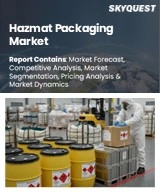
HAZMAT packaging protects people, assets, and ecosystems by containing substances regulated as dangerous goods across road, rail, sea, and air transport. Demand is anchored in chemicals, pharmaceuticals, energy storage, oil and gas, agriculture, mining, healthcare, and advanced manufacturing, where compliant packaging is essential for continuity of trade and prevention of leaks, fires, contamination, and exposure incidents.
The market is shaped by globally recognized rules, including the UN Recommendations on the Transport of Dangerous Goods, U.S. DOT/PHMSA hazardous materials regulations, IATA Dangerous Goods Regulations, ICAO Technical Instructions, the IMO IMDG Code, ADR/RID in Europe, and national chemical safety frameworks. Growth is increasingly tied to UN-certified drums, intermediate bulk containers, jerricans, cylinders, composite packaging, liners, labels, closures, absorbents, overpacks, and digital compliance documentation.
Transformative Shifts in the HAZMAT Packaging Landscape
The HAZMAT packaging landscape is shifting from compliance-only procurement toward risk-managed, traceable, and sustainability-aligned packaging systems. Shippers are moving beyond basic containment to solutions that support verified performance testing, tamper evidence, serialization, temperature control, segregation controls, and documented chain of custody.
Regulatory scrutiny is rising as lithium batteries, infectious substances, corrosives, flammable liquids, compressed gases, and reactive chemicals move through more complex global supply chains. At the same time, manufacturers are redesigning packaging to reduce material weight, improve reconditioning and reuse, increase closure reliability, and maintain compatibility with evolving circular economy and extended producer responsibility policies.
Cumulative Impact of Artificial Intelligence
Artificial intelligence is beginning to strengthen HAZMAT packaging decisions by improving classification support, route risk assessment, packaging selection, inspection scheduling, and incident prediction. AI-enabled systems can compare shipment data against dangerous goods rules, flag documentation inconsistencies, identify packaging-code mismatches, and detect likely noncompliance before goods enter transport networks.
In operations, computer vision and machine learning support defect detection for drums, IBCs, labels, closures, and pallets, while predictive analytics help optimize inventory of certified packaging and reconditioning cycles. The most credible adoption path is human-supervised AI, because regulatory responsibility remains with trained personnel under established dangerous goods, chemical safety, and occupational safety requirements.
Key Regional Insights
Asia-Pacific is a major growth center because China, India, Japan, South Korea, Australia, and ASEAN economies combine large chemical production, electronics exports, pharmaceutical manufacturing, mining activity, and lithium battery flows. Compliance maturity is advancing as exporters align with UN performance packaging standards, IATA air transport rules, ICAO requirements, and IMDG maritime requirements, particularly for batteries, flammable liquids, toxic substances, and corrosives.
North America remains highly regulated through PHMSA, OSHA, EPA, Transport Canada, and cross-border trade rules, making certified packaging, hazard communication, emergency response information, labeling, and reconditioning standards central to market demand. Latin America is expanding through mining, agrochemicals, oil and gas, industrial chemicals, and healthcare distribution, with Brazil and Mexico acting as major logistics anchors for dangerous goods movement.
Europe is driven by ADR/RID, REACH, CLP, Seveso-related risk management, and strong sustainability policy, pushing suppliers toward reusable, recyclable, and documentation-ready HAZMAT packaging formats. The Middle East benefits from petrochemicals, refining, oilfield chemicals, and industrial free zones, while Africa's demand is tied to mining, energy, healthcare logistics, fuel distribution, and agricultural inputs, with gradual formalization of dangerous goods handling practices.
Key Economic and Strategic Group Insights
ASEAN demand is supported by export manufacturing, specialty chemicals, electronics, pharmaceuticals, and growing intra-regional trade, creating need for internationally accepted HAZMAT packaging, consistent labeling, and multimodal documentation. GCC markets are shaped by petrochemicals, oilfield chemicals, refining, and port-centered logistics, where packaging integrity, corrosion resistance, and heat-resilient materials are critical for safe storage and transport.
The European Union sets a high compliance benchmark through harmonized dangerous goods transport, chemical classification, worker safety, waste management, and sustainability rules. BRICS economies collectively influence demand through large-scale production of chemicals, mining outputs, pharmaceuticals, fertilizers, fuels, and energy technologies, while G7 countries lead in advanced testing, quality assurance, digital documentation, and supplier auditing. NATO-related logistics reinforce secure packaging for fuels, batteries, compressed gases, oxidizers, and defense-related materials that require strict traceability and performance verification.
Key Country Insights
The United States leads through PHMSA-regulated hazardous materials transport, strong chemical production, energy activity, and large e-commerce and battery logistics networks. Canada emphasizes Transport Canada requirements and resource-sector shipments, while Mexico benefits from nearshoring, automotive chemicals, industrial manufacturing, and cross-border movement under North American trade frameworks. Brazil's agrochemical, mining, oil and gas, and energy sectors drive demand for compliant drums, IBCs, cylinders, and bulk packaging.
In Europe, the United Kingdom, Germany, France, Italy, and Spain rely on ADR-aligned transport, specialty chemicals, pharmaceuticals, aerospace, automotive, and advanced manufacturing, while Russia's demand is linked to energy, mining, fertilizers, and industrial chemicals. China is central to global chemical and lithium battery supply chains, India is expanding pharmaceuticals, agrochemicals, and specialty chemicals, Japan prioritizes high-specification packaging quality and precision logistics, Australia is driven by mining, energy, agriculture, and healthcare logistics, and South Korea is shaped by electronics, batteries, shipbuilding, petrochemicals, and export-oriented manufacturing.
Actionable Recommendations for Industry Leaders
Industry leaders should prioritize packaging qualification, supplier traceability, and documented compliance across every lane and mode of transport. Investing in UN performance-tested packaging, validated closures, correct absorbents, compatible liners, pressure-rated cylinders, compliant overpacks, and verified labels reduces enforcement risk, product loss, and shipment disruption.
Executives should also build resilience through dual sourcing, reconditioning partnerships, digital dangerous goods documentation, lane-level risk assessment, and staff training aligned with DOT, IATA, IMDG, ADR, RID, and local rules. Sustainability initiatives should focus on reusable IBCs, lightweighting, recycled content where legally and technically acceptable, improved reverse logistics, and life-cycle assessment without compromising containment performance or regulatory certification.
Research Methodology
This executive summary is developed from verified regulatory, industry, and trade intelligence sources, including internationally recognized dangerous goods frameworks and public guidance from transport, occupational safety, environmental, and chemical safety authorities. The analysis considers packaging type, material compatibility, hazard class, packing group, end-use sector, transport mode, regional regulation, and supply chain risk.
Research inputs include secondary review of regulatory codes, standards references, manufacturer disclosures, enforcement priorities, logistics trends, product safety guidance, and end-market demand indicators. Insights are validated through triangulation across multiple credible sources to ensure the assessment reflects measurable market drivers, compliance requirements, and operational realities rather than speculative claims.
Conclusion
The HAZMAT packaging market is becoming more strategic as dangerous goods supply chains grow more global, regulated, and technology-enabled. Compliance remains the foundation, but market leadership increasingly depends on packaging performance, documentation accuracy, sustainability, material compatibility, and operational visibility.
Companies that combine certified packaging with digital compliance workflows, trained personnel, supplier transparency, reconditioning discipline, and region-specific regulatory intelligence will be best positioned to reduce risk and support demand across chemicals, pharmaceuticals, batteries, energy, mining, agriculture, healthcare, and manufacturing.
Table of Contents
1. Preface
- 1.1. Objectives of the Study
- 1.2. Market Definition
- 1.3. Market Segmentation & Coverage
- 1.4. Years Considered for the Study
- 1.5. Currency Considered for the Study
- 1.6. Language Considered for the Study
- 1.7. Key Stakeholders
2. Research Methodology
- 2.1. Introduction
- 2.2. Research Design
- 2.2.1. Primary Research
- 2.2.2. Secondary Research
- 2.3. Research Framework
- 2.3.1. Qualitative Analysis
- 2.3.2. Quantitative Analysis
- 2.4. Market Size Estimation
- 2.4.1. Top-Down Approach
- 2.4.2. Bottom-Up Approach
- 2.5. Data Triangulation
- 2.6. Research Outcomes
- 2.7. Research Assumptions
- 2.8. Research Limitations
3. Executive Summary
- 3.1. Introduction
- 3.2. CXO Perspective
- 3.3. Market Size & Growth Trends
- 3.4. Market Share Analysis, 2025
- 3.5. FPNV Positioning Matrix, 2025
- 3.6. New Revenue Opportunities
- 3.7. Next-Generation Business Models
- 3.8. Industry Roadmap
4. Market Overview
- 4.1. Introduction
- 4.2. Industry Ecosystem & Value Chain Analysis
- 4.2.1. Supply-Side Analysis
- 4.2.2. Demand-Side Analysis
- 4.2.3. Stakeholder Analysis
- 4.3. Market Dynamics
- 4.3.1. Key Drivers
- 4.3.2. Key Restraints
- 4.3.3. Key Opportunities
- 4.3.4. Key Challenges
- 4.4. Porter's Five Forces Analysis
- 4.5. PESTLE Analysis
- 4.6. Market Outlook
- 4.6.1. Near-Term Market Outlook (0-2 Years)
- 4.6.2. Medium-Term Market Outlook (3-5 Years)
- 4.6.3. Long-Term Market Outlook (5-10 Years)
- 4.7. Go-to-Market Strategy
5. Market Insights
- 5.1. Consumer Insights & End-User Perspective
- 5.2. Consumer Experience Benchmarking
- 5.3. Opportunity Mapping
- 5.4. Distribution Channel Analysis
- 5.5. Pricing Trend Analysis
- 5.6. Regulatory Compliance & Standards Framework
- 5.7. ESG & Sustainability Analysis
- 5.8. Disruption & Risk Scenarios
- 5.9. Return on Investment & Cost-Benefit Analysis
6. Cumulative Impact of Artificial Intelligence 2026
7. HAZMAT Packaging Market, by Material
- 7.1. Composite
- 7.1.1. Fiber Reinforced
- 7.1.2. Laminate
- 7.2. Fiberboard
- 7.3. Glass
- 7.3.1. Amber Glass
- 7.3.2. Clear Glass
- 7.4. Plastic
- 7.4.1. HDPE
- 7.4.2. PET
- 7.4.3. Polypropylene
- 7.5. Steel
- 7.5.1. Carbon Steel
- 7.5.2. Stainless Steel
8. HAZMAT Packaging Market, by Container Type
- 8.1. Bottles
- 8.1.1. Glass Bottles
- 8.1.2. Plastic Bottles
- 8.2. Cylinders
- 8.2.1. Aluminum Cylinders
- 8.2.2. Steel Cylinders
- 8.3. Drums
- 8.3.1. Plastic Drums
- 8.3.2. Steel Drums
- 8.4. Intermediate Bulk Containers
- 8.4.1. Flexible IBC
- 8.4.2. Rigid IBC
9. HAZMAT Packaging Market, by Package Size
- 9.1. 30 To 200 Liter
- 9.2. Above 200 Liter
- 9.3. Upto 30 Liter
10. HAZMAT Packaging Market, by Hazard Class
- 10.1. Corrosive
- 10.2. Explosive
- 10.3. Flammable
- 10.4. Radioactive
- 10.5. Toxic
11. HAZMAT Packaging Market, by End Use
- 11.1. Agriculture
- 11.1.1. Fertilizers
- 11.1.2. Pesticides
- 11.2. Chemical
- 11.2.1. Bulk Chemicals
- 11.2.2. Specialty Chemicals
- 11.3. Food & Beverage
- 11.3.1. Beverages
- 11.3.2. Dairy
- 11.4. Oil & Gas
- 11.4.1. Downstream
- 11.4.2. Upstream
- 11.5. Pharmaceutical
- 11.5.1. API
- 11.5.2. Finished Dosage
12. HAZMAT Packaging Market, by Distribution Channel
- 12.1. Direct Sales
- 12.1.1. Enterprise Contract
- 12.1.2. OEM Contract
- 12.2. Distributors
- 12.2.1. National Distributor
- 12.2.2. Regional Distributor
- 12.3. E Commerce
- 12.3.1. B2B Platform
- 12.3.2. Manufacturer Website
13. HAZMAT Packaging Market, by Region
- 13.1. Asia-Pacific
- 13.2. North America
- 13.3. Latin America
- 13.4. Europe
- 13.5. Middle East
- 13.6. Africa
14. HAZMAT Packaging Market, by Group
- 14.1. ASEAN
- 14.2. GCC
- 14.3. European Union
- 14.4. BRICS
- 14.5. G7
- 14.6. NATO
15. HAZMAT Packaging Market, by Country
- 15.1. United States
- 15.2. Canada
- 15.3. Mexico
- 15.4. Brazil
- 15.5. United Kingdom
- 15.6. Germany
- 15.7. France
- 15.8. Russia
- 15.9. Italy
- 15.10. Spain
- 15.11. China
- 15.12. India
- 15.13. Japan
- 15.14. Australia
- 15.15. South Korea
16. Competitive Landscape
- 16.1. Market Concentration Analysis, 2025
- 16.1.1. Concentration Ratio (CR)
- 16.1.2. Herfindahl Hirschman Index (HHI)
- 16.2. Recent Developments & Impact Analysis, 2025
- 16.3. Product Portfolio Analysis, 2025
- 16.4. Benchmarking Analysis, 2025
17. Company Profiles
- 17.1. Amcor plc
- 17.2. Balmer Lawrie & Co. Ltd.
- 17.3. Berry Global Inc.
- 17.4. Clouds Drums Dubai LLC
- 17.5. Eagle Manufacturing Company
- 17.6. Fibrestar Drums Limited
- 17.7. Great Western Containers, Inc.
- 17.8. Greif, Inc.
- 17.9. HINRICH Industries Pvt. Ltd.
- 17.10. Hoover Ferguson Group, Inc.
- 17.11. International Paper Company
- 17.12. Mauser Group B.V.
- 17.13. Meyer Steel Drum, Inc.
- 17.14. Milford Barrel Company
- 17.15. Mondi Group
- 17.16. Orlando Drum & Container, Inc.
- 17.17. Patrick J. Kelly Drums, Inc.
- 17.18. Peninsula Drums, Inc.
- 17.19. SCHUTZ GmbH & Co. KGaA
- 17.20. Sealed Air Corporation
- 17.21. Sicagen India Limited
- 17.22. Sonoco Products Company
- 17.23. Thielmann U.S. LLC
- 17.24. Three Rivers Packaging, Inc.
- 17.25. TPL Plastech Limited