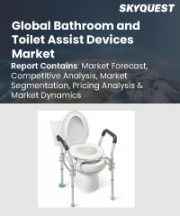
|
시장보고서
상품코드
2102752
욕실 및 화장실용 보조 기구 시장 : 세계 시장 예측(2026-2032년)Bathroom & Toilet Assist Devices Market - Global Forecast 2026-2032 |
||||||
 360iResearch
욕실 및 화장실용 보조 기구 시장은 2032년까지 연평균 복합 성장률(CAGR) 6.69%로 82억 5,000만 달러에 달할 것으로 예측됩니다.
| 주요 시장 통계 | |
|---|---|
| 기준 연도 : 2025년 | 52억 4,000만 달러 |
| 추정 연도 : 2026년 | 55억 4,000만 달러 |
| 예측 연도 : 2032년 | 82억 5,000만 달러 |
| CAGR(%) | 6.69% |
욕실 및 화장실용 보조 기구: 도입
욕실 및 화장실용 보조 기구는 배리어프리 생활, 재활, 고령자 돌봄, 장기 요양 환경에서 필수적인 요소로 자리 잡고 있습니다. 이러한 제품에는 변기 높이 조절 기구, 변기용 의자, 화장실용 안전 프레임, 손잡이, 샤워용 의자, 이동용 벤치, 욕조 리프트, 미끄럼 방지 바닥재, 비데용 어태치먼트, 센서가 탑재된 위생 솔루션 등이 포함되며, 고령자, 장애인, 수술 후 환자, 이동 능력이 저하된 분들이 보다 안전하게 화장실을 이용하고, 목욕, 이동, 일상 생활 관리를 할 수 있도록 지원합니다. 수요는 인구 고령화, 이동을 제한하는 질환의 유병률 상승, 낙상 방지에 대한 중점적인 노력, 재택 간병의 보급, 공공 및 민간 인프라의 배리어프리 규제에 의해 큰 영향을 받고 있습니다.
욕실 안전 및 이동 지원 분야의 혁신적인 변화
욕실 및 화장실용 보조 기구 부문은 기본적인 이동 지원에서 통합형이며 사용자 중심적이고 디자인성을 중시하는 접근성 솔루션으로 전환되고 있습니다. 기존 시설용과 같은 외관의 제품은 다양한 사용자와 생활 공간에 적응할 수 있도록 주거용 디자인, 항균 표면, 내식성 소재, 접이식, 조절형 구조, 하중 지지 능력의 다양성 등을 도입하여 재설계되고 있습니다. 이러한 변화는 사후 대응적인 부상 관리에서 적극적인 낙상 예방, 위생적 자립, 자립 유지로 향하는 보다 광범위한 움직임을 반영하고 있습니다.
인공지능이 욕실 돌봄 지원에 미치는 누적 영향
인공지능(AI)은 스마트 모니터링, 예측적 안전 경보, 네트워크화된 위생 시스템, 돌봄 조정 도구 등을 통해 욕실 및 화장실용 보조 기구에 영향을 미치기 시작했습니다. 많은 보조 기구는 여전히 기계식이지만, AI를 활용한 생태계는 욕실 사용 패턴의 이상을 감지하고, 장시간의 무활동을 파악하며, 낙상 위험 평가를 지원하고, 도움이 필요하다고 판단될 경우 간병인에게 알림을 보내 그 가치를 높일 수 있습니다. 이러한 기능은 노인 주거 시설, 재택치료, 재활, 원격 환자 모니터링 프로그램에서 특히 중요합니다.
아시아태평양, 북미, 유럽, 라틴아메리카, 중동 및 아프리카의 주요 지역별 인사이트
아시아태평양은 일본, 한국, 중국, 호주의 급속한 인구 고령화에 더해, 장애인 포용 정책의 추진과 재택치료에 대한 인식 제고로 특징지어집니다. 일본에서는 오랜 기간 축적된 고령자 돌봄 인프라와 유니버설 디자인 문화가 배설 보조 기구, 입욕 리프트, 난간, 스마트 위생 시스템의 고도화된 도입을 뒷받침하고 있습니다. 한편, 중국과 인도에서는 도시화, 퇴원 후의 요구, 만성 질환 관리, 가족 돌봄과 관련하여 수요가 증가하고 있습니다. 호주에서는 건축 기준, 노인 돌봄 개혁, 장애인 지원 제도, 작업치료사가 주도하는 주택 개조를 통해 접근성 확보에 중점을 두고 있습니다.
아세안(ASEAN), GCC, 유럽연합(EU), BRICS, G7, NATO 시장에 대한 주요 그룹 분석
아세안(ASEAN) 수요는 도시화, 중산층의 의료비 지출 증가, 일부 국가에서의 의료 관광, 장애인을 포함한 모든 사람을 배려한 인프라에 대한 인식 제고 등에 힘입어 뒷받침되고 있습니다. 이 지역의 욕실·화장실 보조 기구에는 합리적인 가격, 좁은 주택에 적합한 콤팩트한 디자인, 내습성 소재, 관리 용이성, 가족이 일상적인 돌봄을 제공하는 경우가 많은 다세대 가구에 대한 적합성 등 여러 요소의 균형이 요구되는 경우가 많습니다.
주요 욕실·화장실 보조 기구 시장의 국가별 분석
미국에서는 ‘익숙한 곳에서 노후를 보내는 것(에이징 인 플레이스)’에 대한 수요, 낙상 방지 대책, 배리어프리 주택 개조, 장애인 권리 관련 요건, 내구성이 뛰어난 의료기기의 유통이 시장을 형성하고 있으며, 재택 간병, 요양 주택, 병원, 재활 시설 등 각 부문에서 강한 수요가 나타나고 있습니다. 캐나다에서도 유사한 요인이 반영되고 있으나, 주(州)의 의료 프로그램, 접근성 관련 법률, 주택 개조 지원이 더욱 중시되고 있습니다. 멕시코에서는 도시 지역, 민간 의료시설, 고령자의 돌봄 수요에 대응하는 가정에서 도입이 확대되고 있습니다. 구매 결정에는 합리적인 가격, 소매점에서의 구입 용이성, 돌봄 제공업체의 인지도가 영향을 미치고 있습니다.
욕실·화장실 보조 기구 산업의 리더를 위한 실천적 제안
산업 리더는 낙상 위험을 줄이고, 안전한 이동을 지원하며, 이용자에게 편견을 주지 않으면서 위생적 자립성을 높이는 임상적 인사이트에 기반한 제품 설계를 우선시해야 합니다. 제품에 대해서는 안정성, 하중 지지 성능, 내식성, 세척 용이성, 직관적인 설치, 확실한 고정, 다양한 욕실 레이아웃과의 호환성에 대한 검사를 실시해야 합니다. 사용자 조사에는 고령자, 휠체어 사용자, 간병인, 작업치료사, 시설 관리자, 설치 업체, 일시적인 이동 제한이 있는 사람들을 포함해야 합니다.
증거 기반 욕실·화장실 보조 기구 분석 조사 기법
본 요약 보고서는 공중보건, 규제, 임상, 인구 통계, 접근성과 관련된 검증된 정보원에 초점을 맞춘 체계적인 2차 조사 접근법을 사용하여 작성되었습니다. 본 분석에서는 정부 보건 기관, 국제 보건 및 장애인 관련 단체, 고령화 및 인구 조사 통계, 건축물 접근성 기준, 의료기기 관련 지침, 재활 모범 사례, 그리고 낙상, 이동 제한, 주택 개조, 보조 기술에 관한 동료 심사를 거친 문헌의 근거를 고려했습니다.
결론: 안전하고 존엄성을 유지하며 접근성을 고려한 욕실 관리의 추진
욕실 및 화장실용 보조 기구는 안전한 노화, 장애인의 사회 참여, 재활, 재택 간호 분야에서 점점 더 중요한 역할을 수행하고 있습니다. 이 분야는 기본적인 보조 기구에서 일상생활에서 가장 위험이 높은 영역 중 하나에서 이용자가 자립과 존엄성을 유지할 수 있도록 지원하는 접근성이 뛰어나고 인체공학에 기반하며, 위생적이고 점점 더 네트워크화가 진전된 솔루션으로 진화하고 있습니다.
자주 묻는 질문
목차
제1장 서문
제2장 조사 방법
제3장 주요 요약
제4장 시장 개요
제5장 시장 인사이트
제6장 AI의 누적 영향, 2026년
제7장 욕실 및 화장실용 보조 기구 시장 : 제품 유형별
제8장 욕실 및 화장실용 보조 기구 시장 : 동작 모드별
제9장 욕실 및 화장실용 보조 기구 시장 : 최종사용자별
제10장 욕실 및 화장실용 보조 기구 시장 : 소재별
제11장 욕실 및 화장실용 보조 기구 시장 : 유통 채널별
제12장 욕실 및 화장실용 보조 기구 시장 : 지역별
제13장 욕실 및 화장실용 보조 기구 시장 : 그룹별
제14장 욕실 및 화장실용 보조 기구 시장 : 국가별
제15장 경쟁 구도
제16장 기업 개요
LSH 26.08.04The Bathroom & Toilet Assist Devices Market is projected to grow by USD 8.25 billion at a CAGR of 6.69% by 2032.
| KEY MARKET STATISTICS | |
|---|---|
| Base Year [2025] | USD 5.24 billion |
| Estimated Year [2026] | USD 5.54 billion |
| Forecast Year [2032] | USD 8.25 billion |
| CAGR (%) | 6.69% |
Bathroom & Toilet Assist Devices: Executive Introduction
Bathroom and toilet assist devices are becoming essential components of accessible living, rehabilitation, geriatric care, and long-term care environments. These products, including raised toilet seats, commode chairs, toilet safety frames, grab bars, shower chairs, transfer benches, bath lifts, non-slip flooring aids, bidet attachments, and sensor-enabled hygiene solutions, support safer toileting, bathing, transfers, and personal hygiene for older adults, people with disabilities, post-surgical patients, and individuals with reduced mobility. Demand is strongly influenced by demographic aging, higher prevalence of mobility-limiting conditions, fall-prevention priorities, home-based care adoption, and accessibility regulations in public and private infrastructure.
The sector sits at the intersection of medical devices, durable home healthcare equipment, bathroom safety products, and universal design. Verified public-health evidence consistently identifies bathrooms as high-risk locations for slips, falls, and transfer-related injuries, particularly among older adults and people with limited balance or strength. As healthcare systems encourage aging in place, shorter hospital stays, and community-based rehabilitation, bathroom safety aids are increasingly viewed not only as convenience products but also as preventive care tools that reduce caregiver burden, improve independence, and support dignified daily living.
Transformative Shifts in Bathroom Safety and Mobility Support
The bathroom and toilet assist devices landscape is shifting from basic mobility support toward integrated, user-centered, and design-conscious accessibility solutions. Traditional institutional-looking products are being redesigned with residential aesthetics, antimicrobial surfaces, corrosion-resistant materials, foldable formats, adjustable configurations, and weight-capacity variations to suit diverse users and living spaces. This shift reflects the broader movement from reactive injury management to proactive fall prevention, hygiene independence, and independence preservation.
Another transformative shift is the expansion of care from hospitals and nursing facilities into homes. Home modification programs, caregiver training, occupational therapy assessments, and reimbursement pathways in several countries are reinforcing the role of bathroom adaptations as part of discharge planning, chronic care management, and long-term care support. At the same time, inclusive building codes and accessibility standards are influencing product specifications for public restrooms, assisted living facilities, hotels, transportation hubs, schools, workplaces, and community healthcare settings.
Consumer expectations are also changing. Users increasingly seek products that combine safety, comfort, hygiene, discreet appearance, and ease of installation. Retail and digital channels have improved product visibility, while clinical recommendations continue to shape adoption for high-risk users. Sustainability considerations are emerging as manufacturers evaluate recyclable materials, longer product lifecycles, modular replacement parts, repairability, and packaging reduction without compromising medical-grade durability.
Cumulative Impact of Artificial Intelligence on Assistive Bathroom Care
Artificial intelligence is beginning to influence bathroom and toilet assist devices through smart monitoring, predictive safety alerts, connected hygiene systems, and care coordination tools. While many assist devices remain mechanical, AI-enabled ecosystems can enhance their value by detecting abnormal bathroom-use patterns, identifying prolonged inactivity, supporting fall-risk assessments, and notifying caregivers when assistance may be needed. These functions are especially relevant in senior living, home healthcare, rehabilitation, and remote patient monitoring programs.
AI can also improve product development and service delivery. Analysis of user movement, transfer behavior, caregiver workflows, and incident reports can guide ergonomic design, placement recommendations, and personalized accessibility planning. In smart bathrooms, AI may connect with pressure sensors, motion sensors, voice interfaces, automated toilet functions, water-temperature controls, lighting controls, and emergency response systems to reduce risk and improve hygiene independence.
However, AI adoption must be managed carefully. Bathroom environments involve highly sensitive personal activities, making privacy, consent, cybersecurity, data minimization, local processing, and non-intrusive design critical. Industry leaders should prioritize clinically meaningful alerts, interoperability with care platforms, explainable analytics, and inclusive design that works for users with cognitive, visual, hearing, and mobility limitations.
Key Regional Insights Across Asia-Pacific, North America, Europe, Latin America, Middle East, and Africa
Asia-Pacific is shaped by rapid population aging in Japan, South Korea, China, and Australia, alongside rising disability inclusion policies and expanding home healthcare awareness. Japan's long-standing eldercare infrastructure and universal design culture support advanced adoption of toileting aids, bath lifts, grab bars, and smart hygiene systems, while China and India show growing demand linked to urbanization, hospital discharge needs, chronic disease management, and family-based caregiving. Australia emphasizes accessibility through building standards, aged-care reforms, disability support systems, and occupational therapy-led home modifications.
North America remains strongly influenced by aging-in-place preferences, fall-prevention programs, disability rights legislation, accessible housing requirements, and widespread use of durable medical equipment channels. The United States and Canada show sustained attention to home safety assessments, post-acute care transitions, rehabilitation support, and accessible bathroom remodeling, with demand spanning private homes, assisted living facilities, rehabilitation centers, hospitals, and public infrastructure.
Latin America reflects a mix of urban healthcare modernization and affordability-driven purchasing patterns. Brazil and Mexico are prominent adopters due to large urban populations, expanding private healthcare access, rising awareness of eldercare needs, and increasing attention to disability inclusion, though out-of-pocket spending, uneven reimbursement, and regional distribution gaps can influence product selection.
Europe benefits from mature accessibility regulations, aging demographics, medical device compliance expectations, and public-health emphasis on independent living. Countries across Western and Northern Europe tend to integrate bathroom assist devices into social care, rehabilitation, and housing adaptation frameworks, while Southern and Eastern Europe show adoption shaped by family caregiving traditions, public procurement, housing stock constraints, and evolving long-term care systems.
The Middle East is developing demand through hospital expansion, rehabilitation services, premium residential construction, medical tourism, and accessibility requirements in public spaces. GCC countries are particularly active in healthcare infrastructure modernization and inclusive facility design. Africa presents diverse conditions, with demand concentrated in urban hospitals, rehabilitation centers, disability support organizations, and private households, while affordability, distribution reach, trained installation support, and awareness remain key constraints across many markets.
Key Group Insights for ASEAN, GCC, European Union, BRICS, G7, and NATO Markets
ASEAN demand is supported by urbanization, growing middle-class healthcare spending, medical tourism in selected countries, and increasing recognition of disability-inclusive infrastructure. Bathroom and toilet assist devices in this group often need to balance affordability, compact design for smaller homes, humidity-resistant materials, easy cleaning, and suitability for multigenerational households where family members often provide daily care.
The GCC shows strong relevance for premium healthcare facilities, rehabilitation centers, eldercare services, and accessible public infrastructure. High investment in hospitals, wellness-oriented real estate, and hospitality environments supports demand for durable, aesthetically integrated toilet and bathing aids that comply with accessibility expectations, perform reliably in high-use facilities, and accommodate diverse populations, including older adults, people with disabilities, and medical tourists.
The European Union provides one of the most structured environments for accessibility, medical device compliance, public procurement, sustainability requirements, and independent living policies. EU countries emphasize safety, product quality, inclusive design, circularity, and user rights, creating favorable conditions for certified bathroom safety devices in both home and institutional care.
BRICS countries represent broad and varied adoption dynamics. China and India provide large user bases driven by aging, disability support needs, urbanization, and expanding healthcare access; Brazil and South Africa reflect growing urban healthcare demand with affordability considerations; and Russia's adoption is influenced by public healthcare structures, rehabilitation services, and eldercare requirements. Across BRICS, localization, price accessibility, durable materials, and practical distribution are important adoption factors.
G7 countries are characterized by advanced healthcare systems, mature aging populations, and stronger integration of assistive devices into home care, rehabilitation, and long-term care planning. Product expectations in these countries often include regulatory compliance, ergonomic validation, infection-control features, professional installation guidance, and compatibility with clinical and caregiver workflows.
NATO member countries overlap significantly with developed accessibility markets in North America and Europe, where bathroom assist devices are connected to defense veteran care, rehabilitation services, public infrastructure accessibility, and aging civilian populations. Procurement standards, institutional safety protocols, occupational rehabilitation needs, and disability inclusion commitments shape product requirements across these countries.
Key Country Insights Across Major Bathroom & Toilet Assist Device Markets
The United States is shaped by aging-in-place demand, fall-prevention initiatives, accessible housing modifications, disability rights requirements, and durable medical equipment distribution, with strong need across home care, assisted living, hospitals, and rehabilitation settings. Canada reflects similar drivers, with additional emphasis on provincial healthcare programs, accessibility legislation, and home adaptation support. Mexico shows growing adoption in urban centers, private healthcare facilities, and households managing eldercare needs, with affordability, retail availability, and caregiver awareness influencing purchasing decisions.
Brazil is a key Latin American market due to its large population, expanding healthcare access, and rising attention to disability inclusion and eldercare, while demand varies by income level and regional healthcare infrastructure. The United Kingdom emphasizes independent living, social care support, occupational therapy assessments, and accessible housing adaptations. Germany benefits from a mature rehabilitation ecosystem, strong product quality expectations, and structured long-term care support. France combines public-health focus on aging, home support services, and accessibility requirements, while Italy and Spain show strong relevance due to older populations, multigenerational living, and family-centered caregiving models. Russia's demand is linked to rehabilitation care, public healthcare provision, and mobility support for aging and disabled populations.
China's adoption is supported by rapid aging, urban residential upgrades, hospital modernization, and growing awareness of home-based eldercare. India shows expanding need due to its large population, rising chronic disease burden, increasing surgical recovery care, and growth in organized healthcare, though affordability, installation support, and awareness remain central. Japan is one of the most advanced settings for toilet and bathing assist devices due to high aging levels, universal design acceptance, and established long-term care practices. Australia combines aged-care standards, home modification programs, disability support systems, and strong occupational therapy involvement. South Korea reflects rapid demographic aging, advanced consumer technology adoption, and increasing integration of smart hygiene and mobility support products in home and institutional settings.
Actionable Recommendations for Bathroom & Toilet Assist Device Industry Leaders
Industry leaders should prioritize clinically informed product design that reduces fall risk, supports safe transfers, and improves hygiene independence without creating stigma for users. Products should be tested for stability, load-bearing performance, corrosion resistance, ease of cleaning, intuitive installation, secure fit, and compatibility with varied bathroom layouts. User research should include older adults, wheelchair users, caregivers, occupational therapists, facility managers, installers, and people with temporary mobility limitations.
Manufacturers and distributors should expand portfolios across price tiers to address both advanced and affordability-driven markets. Modular designs, tool-free installation, replacement parts, compact storage, and clear instructional materials can improve adoption in rental housing, small bathrooms, and multigenerational homes. In institutional settings, infection-control materials, standardized maintenance protocols, cleaning compatibility, and procurement-ready documentation are essential.
Digital and AI-enabled solutions should focus on meaningful safety outcomes rather than unnecessary complexity. Privacy-preserving sensors, caregiver alerts, fall-risk analytics, and integration with remote care platforms can create differentiation when supported by clear consent models, cybersecurity safeguards, and accessible user interfaces. Partnerships with rehabilitation specialists, home modification professionals, payers, senior living operators, public agencies, and accessibility consultants can strengthen trust and accelerate adoption.
Companies should also localize products for regional needs, including toilet height norms, bathroom space constraints, water-use practices, climate conditions, regulatory requirements, installation skills, procurement processes, and cultural expectations around caregiving and personal hygiene.
Research Methodology for Evidence-Based Assistive Bathroom Device Analysis
This executive summary is developed using a structured secondary research approach focused on verified public-health, regulatory, clinical, demographic, and accessibility-related sources. The analysis considers evidence from government health agencies, international health and disability organizations, aging and census statistics, building accessibility standards, medical device guidance, rehabilitation best practices, and peer-reviewed literature on falls, mobility limitations, home modifications, and assistive technology.
The methodology emphasizes qualitative market intelligence rather than market sizing or forecasting. Key themes were assessed across product categories, end-use environments, demographic drivers, regulatory influences, care delivery models, procurement considerations, installation requirements, and regional adoption patterns. Insights were validated through triangulation of multiple source types, including healthcare policy documents, accessibility frameworks, gerontology research, assistive technology guidelines, durable medical equipment practice references, and occupational therapy guidance.
Special attention was given to avoiding unsupported numerical claims, promotional assertions, and competitive references. Regional, group, and country insights were synthesized into narrative analysis to support search relevance while maintaining evidence-based interpretation of bathroom safety, toilet assistance, bathing mobility, and accessible hygiene trends.
Conclusion: Advancing Safe, Dignified, and Accessible Bathroom Care
Bathroom and toilet assist devices are increasingly central to safer aging, disability inclusion, rehabilitation, and home-based care. The sector is advancing from basic support equipment toward accessible, ergonomic, hygienic, and increasingly connected solutions that help users maintain independence and dignity in one of the highest-risk areas of daily living.
Demographic aging, fall-prevention priorities, accessibility regulations, healthcare decentralization, and caregiver workforce pressures will continue to shape product design and adoption. Regional differences remain significant, with mature markets emphasizing compliance, clinical integration, product quality, and smart safety features, while emerging markets require affordability, awareness, installation support, and distribution expansion.
Industry success will depend on combining evidence-based safety performance with inclusive design, privacy-conscious technology, localized product strategies, and strong collaboration across healthcare, housing, rehabilitation, procurement, and caregiving ecosystems.
Table of Contents
1. Preface
- 1.1. Objectives of the Study
- 1.2. Market Definition
- 1.3. Market Segmentation & Coverage
- 1.4. Years Considered for the Study
- 1.5. Currency Considered for the Study
- 1.6. Language Considered for the Study
- 1.7. Key Stakeholders
2. Research Methodology
- 2.1. Introduction
- 2.2. Research Design
- 2.2.1. Primary Research
- 2.2.2. Secondary Research
- 2.3. Research Framework
- 2.3.1. Qualitative Analysis
- 2.3.2. Quantitative Analysis
- 2.4. Market Size Estimation
- 2.4.1. Top-Down Approach
- 2.4.2. Bottom-Up Approach
- 2.5. Data Triangulation
- 2.6. Research Outcomes
- 2.7. Research Assumptions
- 2.8. Research Limitations
3. Executive Summary
- 3.1. Introduction
- 3.2. CXO Perspective
- 3.3. Market Size & Growth Trends
- 3.4. New Revenue Opportunities
- 3.5. Next-Generation Business Models
- 3.6. Industry Roadmap
4. Market Overview
- 4.1. Introduction
- 4.2. Industry Ecosystem & Value Chain Analysis
- 4.2.1. Supply-Side Analysis
- 4.2.2. Demand-Side Analysis
- 4.2.3. Stakeholder Analysis
- 4.3. Market Dynamics
- 4.3.1. Key Drivers
- 4.3.2. Key Restraints
- 4.3.3. Key Opportunities
- 4.3.4. Key Challenges
- 4.4. Porter's Five Forces Analysis
- 4.5. PESTLE Analysis
- 4.6. Market Outlook
- 4.6.1. Near-Term Market Outlook (0-2 Years)
- 4.6.2. Medium-Term Market Outlook (3-5 Years)
- 4.6.3. Long-Term Market Outlook (5-10 Years)
- 4.7. Go-to-Market Strategy
5. Market Insights
- 5.1. Consumer Insights & End-User Perspective
- 5.2. Consumer Experience Benchmarking
- 5.3. Opportunity Mapping
- 5.4. Distribution Channel Analysis
- 5.5. Pricing Trend Analysis
- 5.6. Regulatory Compliance & Standards Framework
- 5.7. ESG & Sustainability Analysis
- 5.8. Disruption & Risk Scenarios
- 5.9. Return on Investment & Cost-Benefit Analysis
6. Cumulative Impact of Artificial Intelligence 2026
7. Bathroom & Toilet Assist Devices Market, by Product Type
- 7.1. Introduction
- 7.2. Bath Lifts
- 7.3. Grab Bars
- 7.4. Raised Toilet Seats
- 7.5. Shower Chairs
- 7.6. Support Rails
- 7.7. Toilet Frames
8. Bathroom & Toilet Assist Devices Market, by Operation Mode
- 8.1. Introduction
- 8.2. Electric
- 8.3. Manual
9. Bathroom & Toilet Assist Devices Market, by End User
- 9.1. Introduction
- 9.2. Assisted Living Facilities
- 9.3. Home Care
- 9.4. Hospitals & Clinics
- 9.5. Rehabilitation Centers
10. Bathroom & Toilet Assist Devices Market, by Material
- 10.1. Introduction
- 10.2. Aluminum
- 10.3. Plastic
- 10.4. Stainless Steel
- 10.5. Wood
11. Bathroom & Toilet Assist Devices Market, by Distribution Channel
- 11.1. Introduction
- 11.2. Offline
- 11.3. Online
- 11.3.1. Ecommerce Platforms
- 11.3.2. Manufacturer Website
12. Bathroom & Toilet Assist Devices Market, by Region
- 12.1. Asia-Pacific
- 12.2. North America
- 12.3. Latin America
- 12.4. Europe
- 12.5. Middle East
- 12.6. Africa
13. Bathroom & Toilet Assist Devices Market, by Group
- 13.1. ASEAN
- 13.2. GCC
- 13.3. European Union
- 13.4. BRICS
- 13.5. G7
- 13.6. NATO
14. Bathroom & Toilet Assist Devices Market, by Country
- 14.1. United States
- 14.2. Canada
- 14.3. Mexico
- 14.4. Brazil
- 14.5. United Kingdom
- 14.6. Germany
- 14.7. France
- 14.8. Russia
- 14.9. Italy
- 14.10. Spain
- 14.11. China
- 14.12. India
- 14.13. Japan
- 14.14. Australia
- 14.15. South Korea
15. Competitive Landscape
- 15.1. Market Share Analysis, 2025
- 15.2. FPNV Positioning Matrix, 2025
- 15.3. Market Concentration Analysis, 2025
- 15.3.1. Concentration Ratio (CR)
- 15.3.2. Herfindahl Hirschman Index (HHI)
- 15.4. Recent Developments & Impact Analysis, 2025
- 15.5. Product Portfolio Analysis, 2025
- 15.6. Benchmarking Analysis, 2025
16. Company Profiles
- 16.1. Aidapt
- 16.2. AKW Medicare Ltd.
- 16.3. Arjo by Getinge Group
- 16.4. Bischoff & Bischoff GmbH
- 16.5. Drive DeVilbiss Healthcare
- 16.6. Enovis Corporation
- 16.7. Etac AB
- 16.8. GF Health Products, Inc.
- 16.9. Guldmann
- 16.10. Handicare Group AB
- 16.11. Hewi Heinrich Wilke GmbH
- 16.12. Invacare Corporation
- 16.13. Joerns Healthcare
- 16.14. Juvo Solutions Pty Ltd
- 16.15. K Care Healthcare Equipment Ltd.
- 16.16. MEYRA GmbH
- 16.17. NRS Healthcare
- 16.18. Ossenberg GmbH
- 16.19. Patterson Medical Holdings, Inc.
- 16.20. Pressalit A/S
- 16.21. RCN Medizin und Rehatechnik GmbH
- 16.22. Rifton Equipment
- 16.23. Savaria Corporation
- 16.24. Stryker Corporation
- 16.25. Winncare Group