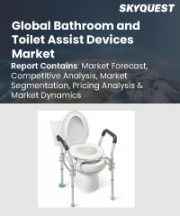
|
시장보고서
상품코드
1918183
욕실 및 화장실 보조기구 시장 : 예측(2026-2031년)Bathroom and Toilet Assist Devices Market - Forecast from 2026 to 2031 |
||||||

욕실 및 화장실 보조기구 시장은 2025년 58억 2,900만 달러에서 2031년에는 85억 2,300만 달러에 이르고, CAGR 6.54%를 나타낼 것으로 예측되고 있습니다.
욕실 및 화장실 보조기구 시장은 의료기기 및 보조 기술 산업의 전문 분야를 구성하고 있으며, 개인 위생 활동의 안전, 독립성, 접근성 향상을 목적으로 하는 제품에 초점을 맞추었습니다. 변기 승강기, 샤워 의자, 난간, 변기가 달린 휠체어 등이 포함되며, 거동이 불편하거나 장애가 있거나 노화로 인한 신체적 문제를 가진 사람들에게 매우 중요합니다.
핵심 제품 기능 및 사용자 중심 디자인
이러한 보조기구의 근본적인 가치는 위험을 줄이고 사용자의 존엄성을 보호하는 데 있습니다. 욕실 환경의 특정 위험, 예를 들어 미끄러운 바닥이나 앉거나 서 있는 동작의 신체적 어려움을 해결하기 위해 설계되었습니다. 안정된 지지력, 높은 좌면, 안전한 이동 지점을 제공함으로써 노인과 장애인의 주요 발병 원인인 낙상 및 부상 발생률을 직접적으로 감소시킵니다. 기능, 사용 편의성, 기존 욕실 설비와의 호환성을 우선시하여 사용자가 간병인에 대한 의존도를 낮추고 자신감을 가지고 주변을 계속 돌볼 수 있도록 설계되었습니다.
주요 시장 성장 촉진요인
시장 확대는 강력하고 지속적인 세계 인구 통계학적 변화에 의해 근본적으로 추진되고 있습니다. 전 세계적으로 고령화가 가장 중요한 요인이며, 노인은 이동장애, 관절염, 균형장애의 유병률이 높아 환경개선이 필요합니다. 이 계층이 시설 요양시설로의 이동이 아닌 집에서 '재가 요양'을 강력하게 원하는 경향은 자립생활을 보다 안전하고 실현 가능하게 하는 제품에 대한 지속적인 수요를 창출하고 있습니다.
동시에 선천적 및 후천적 신체적, 인지적 장애가 전 세계적으로 증가하는 추세도 잠재적 사용자층 확대에 기여하고 있습니다. 척수 손상, 뇌졸중, 중증 관절염, 신경 질환 등의 상태는 장기적으로 적응형 기기에 대한 장기적인 필요를 야기합니다. 이러한 수요는 외상이나 질병으로 인한 생존율을 향상시키는 급성기 의료의 발전으로 인해 더욱 증폭되고 있으며, 일상적인 관리가 필요한 장애를 가진 채로 오래 사는 사람들이 증가하고 있습니다.
재택의료 서비스로의 구조적 전환은 시장 촉매제입니다. 의료 시스템과 지불 기관이 시설 입소보다 비용 효율적인 재택 치료를 우선시하는 가운데, 보조기구의 도입은 치료 계획의 중요한 요소가 되고 있습니다. 이러한 장비는 전문 간병인이 효율적인 지원을 제공하고, 방문 간 환자의 자율성을 향상시켜 재택치료 모델의 임상적, 경제적 목표에 부합합니다.
정부의 지원책과 환급 정책도 중요한 촉진제 역할을 하고 있습니다. 보조금 지원, 보조금, 세제 혜택을 제공하는 프로그램은 도입의 경제적 장벽을 낮춥니다. 또한, 장애인의 사회 참여와 자립생활을 중시하는 국가 정책 및 행동 계획은 이러한 기술의 활용을 명시적으로 장려하고 그 중요성을 정당화하며, 공중 보건 및 사회 서비스 프레임워크에의 통합을 촉진하고 있습니다.
시장 성장 억제요인 및 도입 장벽
강력한 수요 요인이 있음에도 불구하고 시장에는 몇 가지 도입 장벽이 존재합니다. 고품질의 내구성이 뛰어난 의료기기의 상대적으로 높은 비용은 충분한 보험 적용 범위나 가처분 소득이 없는 개인에게는 장벽이 되어 저소득층 시장 침투를 제한합니다.
기술적 복잡성과 사용자 저항도 추가적인 과제입니다. 일부 고급 장비는 조립 및 조정에 일정한 기술 지식이 필요한 경우가 있으며, 고령의 사용자에게는 어려울 수 있습니다. 보다 광범위하게는 낙인, 필요성에 대한 부정, 또는 장애의 상징을 피하려는 욕구에서 비롯된 보조기구 사용에 대한 심리적 저항은 명백한 기능적 이점이 있더라도 도입을 지연시키거나 방해할 수 있습니다.
지역 정세별 및 지역별 동향
북미는 이러한 장비의 선도적이고 성숙한 시장입니다. 이러한 지위는 고령화, 높은 장애 유병률, 탄탄한 재택의료 인프라 등 이미 확립된 트렌드에 의해 뒷받침되고 있습니다. 이 지역은 선진적인 제품 혁신, 전문 제조업체와 유통업체의 경쟁 환경, 민간 보험 및 메디케어-메디케이드와 같은 공공 프로그램을 통한 비교적 잘 정비된 상환 경로의 혜택을 누리고 있습니다. 이러한 요인들이 복합적으로 작용하여 수요 및 공급 모두에 유리한 환경을 조성하고 있습니다.
경쟁 구도와 전략적 초점
경쟁 환경에는 기존 의료기기 제조업체, 전문 보조 기술 기업, 대형 온라인 의료 용품 소매 업체 등이 포함됩니다. 전략적 중점 분야는 안전과 편안함을 높이고, 미적 감각을 향상시켜 사회적 편견을 줄이는 제품 혁신에 집중하고 있습니다. 여기에는 영구적인 개조 없이도 쉽게 설치할 수 있는 기기 개발, 내하중과 안정성을 높인 제품, 표준 욕실 설비와 유사한 디자인으로 주거공간에 어울리는 외관 구현 등이 포함됩니다.
또한, 기업들은 특히 온라인 채널을 통해 소비자에게 직접 판매 및 교육적 마케팅 활동을 확대하여 구매 결정을 내리는 환자 및 가족에게 접근하고 있습니다. 작업치료사, 재택의료기관, 병원 퇴원 조정 담당자와의 협력은 제품 추천 및 케어 패스 통합에 있어 매우 중요합니다.
향후 시장 동향
본 시장 전망 방향은 제품의 지능화, 통합성, 사용자 중심 설계의 심화에 있습니다. 새로운 트렌드로는 사용 패턴을 모니터링하고 낙상을 감지하며 간병인에게 잠재적인 문제를 알려주는 센서가 장착된 '스마트' 보조기구의 개발이 있습니다. 보조기구와 스마트홈 생태계의 융합도 새로운 영역입니다.
시장의 성장은 전 세계 고령화 및 지역 밀착형 케어에 대한 정책의 지속적 강조와 밀접하게 연동될 것입니다. 시장 진출기업의 성공 여부는 상환 환경 대응, 안전성, 사용 편의성, 미적 매력을 효과적으로 조화시킨 제품 설계, 그리고 소비자와 의료 전문가 모두에 대한 인식 개선 활동으로 도입 저항을 극복하는 데 달려 있습니다. 욕실 및 화장실 보조기구 시장은 자립생활을 지원하는 중요한 기반으로서, 인구 통계학적 불가역성과 안전하고 존엄한 개인 관리에 대한 보편적 요청에 힘입어 지속적으로 확대될 것으로 예측됩니다.
본 보고서의 주요 장점:
- 통찰력 있는 분석 : 주요 지역 및 신흥 지역을 포괄하는 상세한 시장 인사이트를 제공하며, 고객 부문, 정부 정책 및 사회경제적 요인, 소비자 선호도, 산업 수직 분야, 기타 하위 부문에 초점을 맞추었습니다.
- 경쟁 구도: 주요 기업들의 세계 전략 움직임을 이해하고, 적절한 전략을 통한 시장 진입 가능성을 파악합니다.
- 시장 성장 촉진요인과 미래 동향 : 시장을 형성하는 역동적인 요인과 주요 동향, 그리고 이들이 향후 시장 발전에 미치는 영향을 살펴봅니다.
- 실천적 제안: 이러한 지식을 활용하여 전략적 의사결정을 내리고, 급변하는 환경 속에서 새로운 비즈니스 기회와 수익원을 발굴할 수 있습니다.
- 스타트업, 연구기관, 컨설턴트, 중소기업, 대기업 등 다양한 독자층에게 유익하고 비용 대비 효과가 높은 내용입니다.
어떤 용도로 사용되는가?
산업 및 시장 분석, 기회 평가, 제품 수요 예측, 시장 진출 전략, 지역 확장, 자본 투자 결정, 규제 프레임워크 및 영향, 신제품 개발, 경쟁사 정보 수집
보고서의 범위:
- 2021-2025년 과거 데이터 및 2026-2031년 예측 데이터
- 성장 기회, 과제, 공급망 전망, 규제 프레임워크, 트렌드 분석
- 경쟁사 포지셔닝, 전략, 시장 점유율 분석
- 국가를 포함한 부문 및 지역별 수익 및 예측 평가 및 예측 평가
- 기업 프로파일링(전략, 제품, 재무정보, 주요 발전 등)
목차
제1장 주요 요약
제2장 시장 개요
- 시장 개요
- 시장의 정의
- 조사 범위
- 시장 세분화
제3장 비즈니스 상황
- 시장 성장 촉진요인
- 시장 성장 억제요인
- 시장 기회
- Porter의 Five Forces 분석
- 업계 밸류체인 분석
- 정책과 규제
- 전략적 제안
제4장 기술 전망
제5장 욕실 및 화장실 보조기구 시장 : 제품별
- 서론
- 샤워 체어·스툴
- 버스 리프트
- 변좌
- 승강기
- 변기 부착 이동용 의자
- 입욕 보조도구
- 기타
제6장 욕실 및 화장실 보조기구 시장 : 유통 채널별
- 서론
- 주택용
- 상업용
- 기타
제7장 욕실 및 화장실 보조기구 시장 : 최종사용자별
- 서론
- 온라인
- 오프라인
제8장 욕실 및 화장실 보조기구 시장 : 지역별
- 서론
- 북미
- 미국
- 캐나다
- 멕시코
- 남미
- 브라질
- 아르헨티나
- 기타
- 유럽
- 독일
- 프랑스
- 영국
- 스페인
- 기타
- 중동 및 아프리카
- 사우디아라비아
- 아랍에미리트(UAE)
- 기타
- 아시아태평양
- 중국
- 인도
- 일본
- 한국
- 인도네시아
- 태국
- 기타
제9장 경쟁 환경과 분석
- 주요 기업과 전략 분석
- 시장 점유율 분석
- 합병, 인수, 합의 및 협업
- 경쟁 대시보드
제10장 기업 개요
- Etac
- Cascade Healthcare Solutions
- Hart Medical Equipment
- Aetna
- Healthcare Pro
- Harmony Home Medical
- Kohler India
- Duravit
- Gessi
- Bobrick
제11장 부록
- 통화
- 전제조건
- 기준연도 및 예측연도 타임라인
- 이해관계자에게 있어서의 주요 이점
- 조사 방법
- 약어
Bathroom And Toilet Assist Devices Market is anticipated to grow at a 6.54% CAGR, reaching USD 8.523 billion in 2031 from USD 5.829 billion in 2025.
The bathroom and toilet assist devices market comprises a specialized segment within the broader medical equipment and assistive technology industry, focused on products designed to enhance safety, independence, and accessibility in personal hygiene activities. These devices, which include raised toilet seats, shower chairs, grab bars, and commodes, are critical for individuals with mobility limitations, disabilities, or age-related physical challenges.
Core Product Function and User-Centric Design
The fundamental value of these assistive devices lies in mitigating risk and preserving dignity for users. They are engineered to address specific hazards in the bathroom environment, such as slippery surfaces and the physical difficulty of sitting and standing. By providing stable support, raised seating, and secure transfer points, these products directly reduce the incidence of falls and injuries, which are a leading cause of morbidity among the elderly and disabled. Their design prioritizes functionality, ease of use, and compatibility with existing bathroom fixtures, enabling users to maintain personal care routines with greater confidence and reduced reliance on caregiver assistance.
Primary Market Growth Drivers
Market expansion is fundamentally driven by powerful and sustained global demographic shifts. The aging of populations worldwide is a paramount factor, as older adults experience a higher prevalence of mobility impairments, arthritis, and balance issues that necessitate environmental modifications. The strong preference among this demographic to "age in place" in their own homes, rather than relocate to institutional care settings, creates sustained demand for products that make independent living safer and more feasible.
Concurrently, the rising global prevalence of both congenital and acquired physical and cognitive disabilities contributes to a growing, addressable user base. Conditions such as spinal cord injuries, stroke, severe arthritis, and neurological disorders create long-term needs for adaptive equipment. This demand is further amplified by improvements in acute medical care, which increase survival rates from traumatic events and illnesses, often resulting in individuals living longer with disabilities that require daily management.
The structural shift toward home-based healthcare services is a significant market catalyst. As healthcare systems and payers increasingly favor cost-effective home care over institutionalization, the integration of assistive devices becomes a critical component of care plans. These devices enable professional caregivers to provide efficient support and allow for greater patient autonomy between visits, aligning with the clinical and economic objectives of home health models.
Supportive government initiatives and reimbursement policies also play a crucial enabling role. Programs that provide funding, subsidies, or tax benefits for the purchase of assistive devices lower financial barriers to adoption. Furthermore, national policies and action plans focused on disability inclusion and independent living often explicitly promote the use of such technologies, legitimizing their importance and integrating them into public health and social service frameworks.
Market Restraints and Adoption Barriers
Despite strong demand drivers, the market faces several adoption barriers. The relatively high cost of quality, durable medical equipment can be prohibitive for individuals without adequate insurance coverage or disposable income, limiting market penetration in lower socioeconomic segments.
Technological complexity and user resistance present additional challenges. Some advanced devices may require a degree of technological literacy for assembly or adjustment, which can be daunting for older users. More broadly, psychological resistance to using assistive devices-often stemming from stigma, denial of need, or a desire to avoid symbols of disability-can delay or prevent adoption, even when a clear functional benefit exists.
Geographic Landscape and Regional Dynamics
North America represents a leading and mature market for these devices. This position is underpinned by a well-established demographic trend toward an aging population, a high prevalence of disabilities, and a robust infrastructure for home healthcare. The region benefits from advanced product innovation, a competitive landscape of specialized manufacturers and distributors, and relatively developed reimbursement pathways through private insurance and public programs like Medicare and Medicaid. These factors collectively foster a conducive environment for both supply and demand.
Competitive Landscape and Strategic Focus
The competitive environment includes established medical device manufacturers, specialized assistive technology firms, and large online medical supply retailers. Strategic focus areas center on product innovation that enhances safety, comfort, and aesthetics to reduce stigma. This includes the development of devices that are more easily installed without permanent modifications, products with improved weight capacity and stability, and designs that resemble standard bathroom fixtures for a more residential appearance.
Companies are also expanding their direct-to-consumer sales and educational marketing efforts, particularly through online channels, to reach patients and families making purchasing decisions. Partnerships with occupational therapists, home health agencies, and hospital discharge planners are critical for product recommendation and integration into care pathways.
Future Market Trajectory
The future trajectory of this market is oriented toward greater product intelligence, integration, and user-centric design. Emerging trends include the development of "smart" assistive devices equipped with sensors to monitor usage patterns, detect falls, or alert caregivers to potential issues. The convergence of assistive devices with smart home ecosystems represents another frontier.
Market growth will remain tightly coupled to global demographic aging and the continued policy emphasis on community-based care. Success for industry participants will depend on navigating reimbursement landscapes, designing products that effectively balance safety with ease of use and aesthetic appeal, and educating both consumers and healthcare professionals to overcome adoption resistance. As a critical enabler of independent living, the bathroom and toilet assist devices market is poised for sustained expansion, driven by the irreversibility of demographic trends and the universal imperative for safe, dignified personal care.
Key Benefits of this Report:
- Insightful Analysis: Gain detailed market insights covering major as well as emerging geographical regions, focusing on customer segments, government policies and socio-economic factors, consumer preferences, industry verticals, and other sub-segments.
- Competitive Landscape: Understand the strategic maneuvers employed by key players globally to understand possible market penetration with the correct strategy.
- Market Drivers & Future Trends: Explore the dynamic factors and pivotal market trends and how they will shape future market developments.
- Actionable Recommendations: Utilize the insights to exercise strategic decisions to uncover new business streams and revenues in a dynamic environment.
- Caters to a Wide Audience: Beneficial and cost-effective for startups, research institutions, consultants, SMEs, and large enterprises.
What do businesses use our reports for?
Industry and Market Insights, Opportunity Assessment, Product Demand Forecasting, Market Entry Strategy, Geographical Expansion, Capital Investment Decisions, Regulatory Framework & Implications, New Product Development, Competitive Intelligence
Report Coverage:
- Historical data from 2021 to 2025 & forecast data from 2026 to 2031
- Growth Opportunities, Challenges, Supply Chain Outlook, Regulatory Framework, and Trend Analysis
- Competitive Positioning, Strategies, and Market Share Analysis
- Revenue Growth and Forecast Assessment of segments and regions including countries
- Company Profiling (Strategies, Products, Financial Information, and Key Developments among others.)
Bathroom and Toilet Assist Devices Market Segmentation
- By Product
- Shower Chairs & Stools
- Bath Lifts
- Toilet Seat
- Raiser
- Commodes
- Bath Aids
- Others
- By Distribution Channel
- Residential
- Commercial
- Others
- By End-User
- Online
- Offline
- By Geography
- North America
- United States
- Canada
- Mexico
- South America
- Brazil
- Argentina
- Others
- Europe
- Germany
- France
- United Kingdom
- Spain
- Others
- Middle East and Africa
- Saudi Arabia
- UAE
- Others
- Asia Pacific
- China
- India
- Japan
- South Korea
- Indonesia
- Thailand
- Others
TABLE OF CONTENTS
1. EXECUTIVE SUMMARY
2. MARKET SNAPSHOT
- 2.1. Market Overview
- 2.2. Market Definition
- 2.3. Scope of the Study
- 2.4. Market Segmentation
3. BUSINESS LANDSCAPE
- 3.1. Market Drivers
- 3.2. Market Restraints
- 3.3. Market Opportunities
- 3.4. Porter's Five Forces Analysis
- 3.5. Industry Value Chain Analysis
- 3.6. Policies and Regulations
- 3.7. Strategic Recommendations
4. TECHNOLOGICAL OUTLOOK
5. BATHROOM AND TOILET ASSIST DEVICES MARKET BY PRODUCT
- 5.1. Introduction
- 5.2. Shower Chairs & Stools
- 5.3. Bath Lifts
- 5.4. Toilet Seat
- 5.5. Raiser
- 5.6. Commodes
- 5.7. Bath Aids
- 5.8. Others
6. BATHROOM AND TOILET ASSIST DEVICES MARKET BY DISTRIBUTION CHANNEL
- 6.1. Introduction
- 6.2. Residential
- 6.3. Commercial
- 6.4. Others
7. BATHROOM AND TOILET ASSIST DEVICES MARKET BY END-USER
- 7.1. Introduction
- 7.2. Online
- 7.3. Offline
8. BATHROOM AND TOILET ASSIST DEVICES MARKET BY GEOGRAPHY
- 8.1. Introduction
- 8.2. North America
- 8.2.1. USA
- 8.2.2. Canada
- 8.2.3. Mexico
- 8.3. South America
- 8.3.1. Brazil
- 8.3.2. Argentina
- 8.3.3. Others
- 8.4. Europe
- 8.4.1. Germany
- 8.4.2. France
- 8.4.3. United Kingdom
- 8.4.4. Spain
- 8.4.5. Others
- 8.5. Middle East and Africa
- 8.5.1. Saudi Arabia
- 8.5.2. UAE
- 8.5.3. Others
- 8.6. Asia Pacific
- 8.6.1. China
- 8.6.2. India
- 8.6.3. Japan
- 8.6.4. South Korea
- 8.6.5. Indonesia
- 8.6.6. Thailand
- 8.6.7. Others
9. COMPETITIVE ENVIRONMENT AND ANALYSIS
- 9.1. Major Players and Strategy Analysis
- 9.2. Market Share Analysis
- 9.3. Mergers, Acquisitions, Agreements, and Collaborations
- 9.4. Competitive Dashboard
10. COMPANY PROFILES
- 10.1. Etac
- 10.2. Cascade Healthcare Solutions
- 10.3. Hart Medical Equipment
- 10.4. Aetna
- 10.5. Healthcare Pro
- 10.6. Harmony Home Medical
- 10.7. Kohler India
- 10.8. Duravit
- 10.9. Gessi
- 10.10. Bobrick
11. APPENDIX
- 11.1. Currency
- 11.2. Assumptions
- 11.3. Base and Forecast Years Timeline
- 11.4. Key Benefits for the Stakeholders
- 11.5. Research Methodology
- 11.6. Abbreviations