|
시장보고서
상품코드
1456898
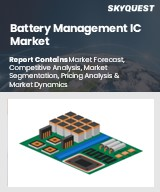
배터리 관리 IC 시장 예측(2024-2029년)Battery Management IC Market - Forecasts from 2024 to 2029 |
||||||

배터리 관리 IC 시장은 복합 연간 성장률(CAGR) 4.43%로 성장할 전망이며 2022년 24억 5,600만 달러에서 2029년에는 33억 2,700만 달러에 이를 것으로 예측됩니다.
배터리 관리 IC는 다양한 배터리의 방전,충전 능력을 관리,감시하는 전자 기기입니다. 전기자동차, 신재생에너지저장시스템, 휴대전자기기 등의 용도로 일반적으로 사용되고 있습니다. 배터리 관리 IC의 주요 기능은 배터리 전압, 온도, 전류를 모니터링하는 센서, 마이크로컨트롤러 및 기타 전자 부품을 사용하여 배터리 충전 및 방전 프로세스를 제어하여 배터리의 안전하고 효율적인 작업을 보장하는 것입니다. 배터리 관리 IC는 다양한 용도로 배터리의 안전하고 효율적인 작동을 보장할 수 있기 때문에 가전, 자동차, 통신, 산업 등 다양한 분야에서 수요가 증가하고 있습니다. 또한 배터리 관리 IC에 고급 모니터링 및 보호 기능을 추가하여 배터리 성능을 최적화하고 수명을 연장할 수 있어 비용 절감과 고객 만족도 향상으로 시장 수요를 자극 있습니다.
시장 성장 촉진요인
- 축전지 시스템 수요 증가가 시장 확대의 원동력
배터리 스토리지 시스템(BSS)에서 배터리 관리 IC가 중요한 역할을 하기 때문에 배터리 스토리지 시스템에 대한 수요가 증가함에 따라 배터리 관리 IC의 소비가 증가하고 있습니다. 배터리 관리 IC는 BSS에서 배터리 충전 및 방전을 안전하고 효율적으로 모니터링하고 제어하는 데 사용되며 과충전 및 과방전을 방지하여 배터리 수명을 연장하는 데 도움이 됩니다. 또한 배터리 관리 IC는 배터리 성능에 대한 실시간 데이터를 제공하며 운영자는 BSS 운영을 최적화하고 심각한 문제가 되기 전에 잠재적인 문제를 파악할 수 있습니다. 신재생에너지 도입 증가와 그리드 안정화의 필요성에 의해 BSS 수요가 높아지고 있기 때문에 BSS의 요구에 부응하는 새로운 배터리 관리 IC의 발매가 촉진되고 있습니다. 예를 들어, Maxim Integrated는 2021년 2월 최대 14셀을 지원하는 능력으로 대규모 BSS에서 사용하기 위한 배터리 관리 IC인 MAX17852를 출시했습니다.
- 전기자동차 수요 증가가 시장 성장을 뒷받침
배터리 관리 IC는 EV에 탑재되는 배터리 관리 시스템(BMS)의 중요한 구성 요소이기 때문에 EV 소비량 증가나 Tesla 등 대기업에 의한 EV의 생산이 배터리 관리 IC 시장 수요를 촉진 하고 있습니다. BMS는 EV 배터리의 건전성, 성능, 안전성을 감시 및 제어하는 역할을 담당하고 있습니다. 국제에너지기구는 미국에서 배터리 EV 판매량이 2017년 10만 4,000대에서 2021년 46만 6,000대로 증가하는 반면, 유럽에서는 배터리 EV 판매 대수가 2017년 13만 9,000대 부터 2021년에는 123만 1,000대로 증가할 것을 밝혔습니다. 게다가 주요 자동차 회사는 EV 제품의 제공을 확대하고 있으며, 이는 예측 기간 동안 배터리 관리 IC 시장의 성장을 더욱 촉진할 것으로 예상됩니다. 예를 들어 BMW는 2023년 3월 2025년 말까지 6개의 새로운 배터리 EV 모델을 출시할 것이라고 선언했습니다.
업계별로 통신 업계는 예측 기간 동안 크게 성장할 것으로 예측됩니다.
통신 업계에서 배터리 관리 IC는 웨어러블 기기 및 무선 통신 기기 등 다양한 용도에서 사용되고 있습니다. 또한, 효율적인 배터리 관리는 통신 장비의 배터리 수명을 연장하고 장치 성능을 향상시키는 데 매우 중요합니다. 무선 통신의 급속한 진보와 5G 네트워크의 채용 확대에 의해 통신 업계에 의한 배터리 관리 IC의 소비 확대가 전망되고 있습니다.
아시아태평양은 배터리 관리 IC 시장의 대부분을 차지합니다.
한국, 중국, 인도 등 아시아의 주요 국가에서는 가전제품 생산이 증가하고 EV 소비가 증가하고 있기 때문에 이 지역의 배터리 관리 IC 시장을 견인할 것으로 예상됩니다. 국제에너지기구(IEA)에 따르면 중국은 최대 EV 소비국 중 하나이며 2022년에는 자동차 판매 대수 전체에서 차지하는 EV 판매 대수의 비율은 29%에 달하며 2021년부터 13% 증가 했습니다. 또한 이 지역에서는 소비자용 전자기기의 생산 활동이 확대되고 있으며, 연료계 IC, 배터리 충전기 IC, 인증 IC가 이 부문에서 널리 소비되고 있기 때문에 시장의 성장이 더욱 자극되고 있습니다. 연료계 IC는 배터리 잔량을 측정하고 보고하는 데 사용되며 배터리 충전기 IC는 배터리 충전을 관리하는 데 사용됩니다. 또한 인증 IC는 배터리 및 기타 부품의 진정성을 확인하는 데 사용됩니다.
목차
제1장 서론
- 시장 개요
- 시장의 정의
- 조사 범위
- 시장 세분화
- 통화
- 전제조건
- 기준년과 예측년의 타임라인
- 관계자에게 있어서의 주요 이점
제2장 조사 방법
- 조사 디자인
- 조사 과정
제3장 주요 요약
- 주요 조사 결과
- 애널리스트 보기
제4장 시장 역학
- 시장 성장 촉진요인
- 시장 성장 억제요인
- Porter's Five Forces 분석
- 업계 밸류체인 분석
- 애널리스트 보기
제5장 배터리 관리 IC 시장 : 유형별
- 소개
- 연료계 IC
- 배터리 충전기 IC
- 인증 IC
제6장 배터리 관리 IC 시장 : 업계별
- 소개
- 가전
- 자동차
- 통신
- 산업용
- 기타
제7장 배터리 관리 IC 시장 : 지역별
- 소개
- 북미
- 남미
- 유럽
- 중동 및 아프리카
- 아시아태평양
제8장 경쟁 환경과 분석
- 주요 기업과 전략 분석
- 시장 점유율 분석
- 합병, 인수, 합의 및 콜라보레이션
- 경쟁 대시보드
제9장 기업 프로파일
- Analog Devices, Inc.
- Renesas Electronics Corporation
- Richtek Technology Corporation(Media Tek)
- Texas Instruments
- STMicroelectronics
- Qualcomm Technologies, Inc.
- Semtech
The battery management IC market is projected to grow at a CAGR of 4.43% to reach US$3.327 billion in 2029 from US$2.456 billion in 2022.
A battery management IC is an electronic device that manages and monitors the discharge and charging abilities of various batteries. It is commonly used in applications such as electric vehicles, renewable energy storage systems, and portable electronic devices. The primary function of a battery management IC is to ensure the safe and efficient operation of the battery by controlling its charging and discharging processes through the collective use of sensors, microcontrollers, and other electronic components to monitor the battery's voltage, temperature, and current. The ability of battery management ICs to ensure the safe and efficient operation of batteries in a wide range of applications is increasing its demand across various sectors such as consumer electronics, automotive, communication, and industrial areas. Further, the addition of advanced monitoring and protection features to battery management ICs to aid in the optimization of the performance of batteries and extend their lifespan is stimulating the demand for the market by resulting in cost savings and improved customer satisfaction.
Market Drivers
- Increase in the demand for battery storage systems is driving the market expansion
The growing demand for battery storage systems is increasing the consumption of battery management ICs as battery management ICs play an important role in battery storage systems (BSS). Battery management ICs are used in BSS to monitor and control the charging and discharging of batteries safely and efficiently which aids in the extension of the lifespan of batteries by preventing overcharging or over-discharging. In addition, battery management ICs provide real-time data on battery performance, allowing operators to optimize the operation of the BSS and identify potential issues before they become serious problems. The rising demand for BSS driven by the increasing adoption of renewable energy and the need for grid stabilization is promoting the launch of new battery management ICs to cater to the needs of BSS. For instance, Maxim Integrated launched MAX17852, a battery management IC intended to be used in large-scale BSS due to its ability to support up to 14 cells in February 2021.
- Growing electric vehicle demand has propelled the market growth
The increase in consumption of EVs and the production of EVs by major companies such as Tesla is driving the demand for the battery management IC market as battery management ICs are a critical component of the battery management systems (BMS) installed in EVs. The BMS is responsible for monitoring and controlling the health, performance, and safety of EV batteries as EVs rely on large battery packs to power their operations. The International Energy Agency revealed that the sales of battery EVs in the US increased from 104,000 in 2017 to 466,000 in 2021 whereas the European region witnessed an increase in its battery EV sales from 139,000 in 2017 to 1,231,000 in 2021. In addition, leading automotive companies are expanding their EV product offerings which are further anticipated to drive the growth of the battery management IC market over the forecast period. For instance, in March 2023, BMW company declared that it will be introducing six new battery EV models by the end of 2025.
By industry vertical, the communication sector is anticipated to grow prominently over the forecast period.
In the communication industry, battery management ICs are used in various applications such as wearables and wireless communication devices since these devices rely on batteries to power their operations. In addition, efficient battery management is crucial to ensure longer battery life and better device performance of communication devices. The rapid advancements in wireless communication and the increasing adoption of 5G networks are expected to result in the growth of the consumption of battery management ICs by the communication industry.
Asia Pacific region holds a significant portion of the battery management IC market.
The growing production of consumer electronics and the increasing consumption of EVs in major Asian economies such as South Korea, China, and India is expected to drive the battery management IC market in the region. According to the International Energy Agency, China is one of the largest EV-consuming vehicles and in 2022, the share of EV sales in total vehicle sales stood at 29% which represented a 13% increase from 2021. In addition, the expansion of consumer electronics production activities in the region is further stimulating market growth as fuel gauge ICs, battery charger ICs, and authentication ICs are extensively consumed by this sector. A fuel gauge IC is used to measure and report the remaining capacity of a battery whereas a battery charger IC is used to manage the charging of a battery. Further, authentication ICs are employed to verify the authenticity of a battery or other component.
Key Developments
- In May 2023: Lithionics Battery, a company specializing in the manufacture of battery management systems and IC products using its patented NeverDie Technology was acquired by Winnebago Industries.
- In March 2023: Qorvo, a semiconductor company in the US providing solutions to the communication industry introduced two new battery management systems, PAC22140 and PAC25140 that employ single battery management ICs to offer support to up to 20 battery pack cells.
Segmentation:
By Type
- Fuel Gauge IC
- Battery Charger IC
- Authentication IC
By Industry Vertical
- Consumer Electronics
- Automotive
- Communication
- Industrial
- Others
By Geography
- North America
- USA
- Canada
- Mexico
- South America
- Brazil
- Argentina
- Others
- Europe
- Germany
- France
- United Kingdom
- Spain
- Others
- Middle East and Africa
- Saudi Arabia
- Israel
- Others
- Asia Pacific
- China
- Japan
- India
- South Korea
- Taiwan
- Others
TABLE OF CONTENTS
1. INTRODUCTION
- 1.1. Market Overview
- 1.2. Market Definition
- 1.3. Scope of the Study
- 1.4. Market Segmentation
- 1.5. Currency
- 1.6. Assumptions
- 1.7. Base, and Forecast Years Timeline
- 1.8. Key Benefits for the stakeholder
2. RESEARCH METHODOLOGY
- 2.1. Research Design
- 2.2. Research Processes
3. EXECUTIVE SUMMARY
- 3.1. Key Findings
- 3.2. Analyst View
4. MARKET DYNAMICS
- 4.1. Market Drivers
- 4.2. Market Restraints
- 4.3. Porter's Five Forces Analysis
- 4.3.1. Bargaining Power of Suppliers
- 4.3.2. Bargaining Power of Buyers
- 4.3.3. Threat of New Entrants
- 4.3.4. Threat of Substitutes
- 4.3.5. Competitive Rivalry in the Industry
- 4.4. Industry Value Chain Analysis
- 4.5. Analyst View
5. BATTERY MANAGEMENT IC MARKET BY TYPE
- 5.1. Introduction
- 5.2. Fuel Gauge IC
- 5.2.1. Market Trends and Opportunities
- 5.2.2. Growth Prospects
- 5.2.3. Geographic Lucrativeness Insights
- 5.3. Battery Charger IC
- 5.3.1. Market Trends and Opportunities
- 5.3.2. Growth Prospects
- 5.3.3. Geographic Lucrativeness Insights
- 5.4. Authentication IC
- 5.4.1. Market Trends and Opportunities
- 5.4.2. Growth Prospects
- 5.4.3. Geographic Lucrativeness Insights
6. BATTERY MANAGEMENT IC MARKET BY INDUSTRY VERTICAL
- 6.1. Introduction
- 6.2. Consumer Electronics
- 6.2.1. Market Trends and Opportunities
- 6.2.2. Growth Prospects
- 6.2.3. Geographic Lucrativeness Insights
- 6.3. Automotive
- 6.3.1. Market Trends and Opportunities
- 6.3.2. Growth Prospects
- 6.3.3. Geographic Lucrativeness Insights
- 6.4. Communication
- 6.4.1. Market Trends and Opportunities
- 6.4.2. Growth Prospects
- 6.4.3. Geographic Lucrativeness Insights
- 6.5. Industrial
- 6.5.1. Market Trends and Opportunities
- 6.5.2. Growth Prospects
- 6.5.3. Geographic Lucrativeness Insights
- 6.6. Others
- 6.6.1. Market Trends and Opportunities
- 6.6.2. Growth Prospects
- 6.6.3. Geographic Lucrativeness Insights
7. BATTERY MANAGEMENT IC MARKET BY GEOGRAPHY
- 7.1. Introduction
- 7.2. North America
- 7.2.1. By Type
- 7.2.2. By Industry Vertical
- 7.2.3. By Country
- 7.2.3.1. USA
- 7.2.3.1.1. Market Trends and Opportunities
- 7.2.3.1.2. Growth Prospects
- 7.2.3.2. Canada
- 7.2.3.2.1. Market Trends and Opportunities
- 7.2.3.2.2. Growth Prospects
- 7.2.3.3. Mexico
- 7.2.3.3.1. Market Trends and Opportunities
- 7.2.3.3.2. Growth Prospects
- 7.2.3.1. USA
- 7.3. South America
- 7.3.1. By Type
- 7.3.2. By Industry Vertical
- 7.3.3. By Country
- 7.3.3.1. Brazil
- 7.3.3.1.1. Market Trends and Opportunities
- 7.3.3.1.2. Growth Prospects
- 7.3.3.2. Argentina
- 7.3.3.2.1. Market Trends and Opportunities
- 7.3.3.2.2. Growth Prospects
- 7.3.3.3. Others
- 7.3.3.3.1. Market Trends and Opportunities
- 7.3.3.3.2. Growth Prospects
- 7.3.3.1. Brazil
- 7.4. Europe
- 7.4.1. By Type
- 7.4.2. By Industry Vertical
- 7.4.3. By Country
- 7.4.3.1. Germany
- 7.4.3.1.1. Market Trends and Opportunities
- 7.4.3.1.2. Growth Prospects
- 7.4.3.2. France
- 7.4.3.2.1. Market Trends and Opportunities
- 7.4.3.2.2. Growth Prospects
- 7.4.3.3. United KIngdom
- 7.4.3.3.1. Market Trends and Opportunities
- 7.4.3.3.2. Growth Prospects
- 7.4.3.4. Spain
- 7.4.3.4.1. Market Trends and Opportunities
- 7.4.3.4.2. Growth Prospects
- 7.4.3.5. Others
- 7.4.3.5.1. Market Trends and Opportunities
- 7.4.3.5.2. Growth Prospects
- 7.4.3.1. Germany
- 7.5. Middle East and Africa
- 7.5.1. By Type
- 7.5.2. By Industry Vertical
- 7.5.3. By Country
- 7.5.3.1. Saudi Arabia
- 7.5.3.1.1. Market Trends and Opportunities
- 7.5.3.1.2. Growth Prospects
- 7.5.3.2. Israel
- 7.5.3.2.1. Market Trends and Opportunities
- 7.5.3.2.2. Growth Prospects
- 7.5.3.3. Others
- 7.5.3.3.1. Market Trends and Opportunities
- 7.5.3.3.2. Growth Prospects
- 7.5.3.1. Saudi Arabia
- 7.6. Asia Pacific
- 7.6.1. By Type
- 7.6.2. By Industry Vertical
- 7.6.3. By Country
- 7.6.3.1. China
- 7.6.3.1.1. Market Trends and Opportunities
- 7.6.3.1.2. Growth Prospects
- 7.6.3.2. Japan
- 7.6.3.2.1. Market Trends and Opportunities
- 7.6.3.2.2. Growth Prospects
- 7.6.3.3. India
- 7.6.3.3.1. Market Trends and Opportunities
- 7.6.3.3.2. Growth Prospects
- 7.6.3.4. South Korea
- 7.6.3.4.1. Market Trends and Opportunities
- 7.6.3.4.2. Growth Prospects
- 7.6.3.5. Taiwan
- 7.6.3.5.1. Market Trends and Opportunities
- 7.6.3.5.2. Growth Prospects
- 7.6.3.6. Others
- 7.6.3.6.1. Market Trends and Opportunities
- 7.6.3.6.2. Growth Prospects
- 7.6.3.1. China
8. COMPETITIVE ENVIRONMENT AND ANALYSIS
- 8.1. Major Players and Strategy Analysis
- 8.2. Market Share Analysis
- 8.3. Mergers, Acquisitions, Agreements, and Collaborations
- 8.4. Competitive Dashboard
9. COMPANY PROFILES
- 9.1. Analog Devices, Inc.
- 9.2. Renesas Electronics Corporation
- 9.3. Richtek Technology Corporation (Media Tek)
- 9.4. Texas Instruments
- 9.5. STMicroelectronics
- 9.6. Qualcomm Technologies, Inc.
- 9.7. Semtech