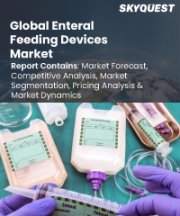
|
시장보고서
상품코드
1456973
경장영양 기기 시장 - 예측(2024-2029년)Global Enteral Feeding Devices Market - Forecasts from 2024 to 2029 |
||||||

경장영양 기기 시장은 2022년 35억 2,300만 달러로 평가되며, 연평균 4.81% 성장하여 2029년에는 48억 9,500만 달러의 시장 규모에 도달할 것으로 예상됩니다.
경장영양 기기는 액체 영양제를 소화관에 직접 공급하는 의료기기로, 환자는 튜브를 통해 단백질, 탄수화물, 지방, 비타민, 미네랄 및 기타 필수 영양소를 섭취 할 수 있습니다. 이 장비는 일반적으로 병원, 장기 요양원, 재택 의료 현장에서 사용되어 영양을 제어하고 측정하는 데 사용됩니다.
미숙아 증가, 개발도상국의 의료 시설의 급속한 개선, 당뇨병, B형 간염, C형 간염, 암, 류마티스 관절염, 위장병, CVD와 같은 만성 질환의 유병률 증가 등이 이 놀라운 성장을 촉진할 것으로 예상되는 요인입니다. 예를 들어, 중동 및 북아프리카 국가에서는 소화기 질환과 간 질환이 사망과 장애의 주요 원인이 되고 있습니다. 아프가니스탄, 파키스탄, 이집트에서 GLD로 고통받는 환자 수가 가장 많습니다. 이 지역 대부분의 국가에서 설사병은 소화기암과 간경변증을 대체하고 있습니다. 그러나 아프가니스탄, 파키스탄, 투르크메니스탄, 이집트, 예멘 등 일부 국가에서는 비감염성 GILD와 암 외에도 전염성 GILD가 여전히 사망률과 이환율의 상위권을 차지하고 있으며, GILD 환자 증가로 인해 경장영양 기기를 포함한 의료 서비스 및 장비에 대한 수요가 크게 증가하고 있습니다. 수요가 크게 증가하고 있습니다.
또한, 재택 및 외래 진료에서 경장영양 기기의 채택이 증가함에 따라 예측 기간 동안 이러한 괄목할 만한 성장을 더욱 촉진할 것으로 예상됩니다. 그러나 장영양 기기와 관련된 합병증, 장영양에 대한 불충분한 상환, 장영양 기기를 사용한 시술에 대한 소비자 인식 부족 등의 요인이 시장 성장을 저해할 것으로 예상됩니다.
시장 촉진요인:
- 노인 인구의 증가와 만성 질환의 유병률 증가.
다양한 신경 및 근골격계 질환으로 인해 병상에 누워있는 노인 인구의 증가는 시장 성장을 더욱 촉진할 것으로 예상됩니다. 호주와 같은 선진국에서는 노인 인구가 계속 증가하고 있으며, 2057년까지 2배 이상 증가할 것으로 예상됩니다. 이 질환의 유병률은 매년 증가하고 있으며, 이는 장내 영양 기기에 대한 큰 수요를 창출할 것으로 보입니다.
또한 심혈관 질환, 당뇨병, 암 등 자가면역질환의 유병률이 증가하고 있어 프리필드 시린지에 대한 거대한 수요가 시장에서 창출될 것으로 예상됩니다. 세계보건기구(WHO)에 따르면 심혈관 질환의 증가로 인해 약 1,790만 명이 사망한 것으로 추정되며, 이는 전 세계 사망자 수의 약 32%에 해당합니다.
또한, 설사 질환의 증가도 전체 시장 성장을 촉진할 것으로 예상됩니다. 세계보건기구(WHO)에 따르면, 설사병은 매년 약 52만 5,000명의 5세 이하 어린이를 사망에 이르게 합니다. 설사병은 영양실조와 오염된 음식 및 수자원으로 인해 전 세계 어린이 사망률의 주요 원인으로 꼽힙니다. 전 세계 7억 8,000만 명이 식수 접근성이 부족하고, 25억 명이 개선된 위생 시설을 이용하지 못하고 있습니다.
북미 지역이 전체 시장을 지배할 것으로 예상됩니다.
지역별로 장내 영양 기기 시장은 북미, 유럽, 중동 및 아프리카, 남미, 아시아태평양으로 분류됩니다. 인도, 중국 등의 국가는 예측 기간 동안 상당한 시장 성장이 예상됩니다. 이러한 성장은 당뇨병 유병률의 증가에 기인하며, 인도에서는 20-79세 연령층에서 7억 7천만 명이 당뇨병을 앓고 있고, 중국에서는 1억 1,600만 명의 성인이 당뇨병을 앓고 있습니다. 이러한 성장은 주로 서태평양과 동남아시아 국가들이 기여하고 있습니다(출처: IDF). 북미는 의료 분야의 첨단 치료 접근 방식에 따라 이 기기의 채택이 증가함에 따라 전체 시장 성장을 주도할 것으로 예상됩니다. 또한, 2020년 미국에서 약 1,860만 명이 암 진단을 받았고, 5만5,000명 이상이 암으로 사망한 것으로 추정되는 등 만성질환의 높은 유병률로 인해 장내 영양기기에 대한 수요가 더욱 증가할 것으로 예상됩니다(출처: 미국 국립암연구소). 북미 경장영양 기기 시장은 미국 정부의 재정적 지원과 지속적인 연구, 예방 및 치료에 대한 정부의 지원으로 견인될 것으로 예상됩니다.
목차
제1장 소개
- 시장 개요
- 시장 정의
- 조사 범위
- 시장 세분화
- 통화
- 가정
- 기준 연도와 예측 연도 타임라인
- 관계자에 대한 주요 이점
제2장 조사 방법
- 조사 디자인
- 조사 과정
제3장 주요 요약
- 주요 조사 결과
- CXO의 견해
제4장 시장 역학
- 시장 성장 촉진요인
- 시장 성장 억제요인
- Porter's Five Forces 분석
- 업계 밸류체인 분석
- 애널리스트의 견해
제5장 경장영양 기기 세계 시장 : 유형별
- 소개
- 경장영양 펌프
- 시장 기회와 동향
- 성장 전망
- 지리적 수익성
- 경장영양 튜브
- 시장 기회와 동향
- 성장 전망
- 지리적 수익성
- 경장주사기
- 시장 기회와 동향
- 성장 전망
- 지리적 수익성
제6장 경장영양 기기 세계 시장 : 연령층별
- 소개
- 성인
- 시장 기회 동향
- 성장 전망
- 지리적 수익성
- 소아
- 시장 기회와 동향
- 성장 전망
- 지리적 매출
제7장 경장영양 기기 세계 시장 : 용도별
- 소개
- 소화기과
- 시장 기회와 동향
- 성장 전망
- 지리적 수익성
- 종양
- 시장 기회와 동향
- 성장 전망
- 지리적 매출
- 신경내과
- 시장 기회와 동향
- 성장 전망
- 지리적 수익성
- 대사항진증
- 시장 기회와 동향
- 성장 전망
- 지리적 수익성
- 당뇨병
- 시장 기회와 동향
- 성장 전망
- 지리적 매출
- 기타
- 시장 기회와 동향
- 성장 전망
- 지리적 수익성
제8장 경장영양 기기 세계 시장 : 최종사용자별
- 소개
- 병원
- 시장 기회와 동향
- 성장 전망
- 지리적 수익성
- 재택의료
- 시장 기회와 동향
- 성장 전망
- 지리적 수익성
- 외래 진료 환경
- 시장 기회와 동향
- 성장 전망
- 지리적 수익성
제9장 경장영양 기기 세계 시장 : 지역별
- 소개
- 북미
- 유형별
- 연령층별
- 용도별
- 최종사용자별
- 국가별
- 남미
- 유형별
- 연령층별
- 용도별
- 최종사용자별
- 국가별
- 유럽
- 유형별
- 연령층별
- 용도별
- 최종사용자별
- 국가별
- 중동 및 아프리카
- 유형별
- 연령층별
- 용도별
- 최종사용자별
- 국가별
- 아시아태평양
- 유형별
- 연령층별
- 용도별
- 최종사용자별
- 국가별
제10장 경쟁 환경과 분석
- 주요 기업과 전략 분석
- 시장 점유율 분석
- 합병, 인수, 합의와 협업
- 경쟁 대시보드
제11장 기업 개요
- GBUK Enteral Ltd.
- Nestle SA
- B.Braun Melsungen AG
- Cardinal Health, Inc.
- Vygon(영국) Ltd
- Avanos Medical, Inc.
- Rockfield Medical Device
- Applied Medical Technology, Inc.
- Fresenius SE & Co. KGaA
- Conmed Corporation
- Moog Inc.
The global enteral feeding devices market is evaluated at US$3.523 billion for 2022 and is projected to grow at a CAGR of 4.81% to reach the market size of US$4.895 billion by 2029.
Enteral feeding devices are medical devices that deliver liquid nutrients directly into the gastrointestinal tract, allowing patients to receive essential nutrients like proteins, carbohydrates, fats, vitamins, and minerals through a tube. These devices are commonly used in hospitals, long-term care facilities, and home healthcare settings to ensure controlled and measured administration of nutrition.
Factors that are expected to drive this notable growth are an increasing number of premature births, rapid improvements in medical facilities in developing countries, and the rising prevalence of chronic diseases like diabetes mellitus, hepatitis B and C, cancer, rheumatoid arthritis, gastrointestinal disease, and CVDs. For instance, gastrointestinal and liver diseases are major causes of death and disability in the Middle East and North African countries. The number of patients suffering from GLDs is highest in Afghanistan, Pakistan, and Egypt. Diarrheal diseases have been replaced by gastrointestinal cancers and cirrhosis in most countries in the region. However, in several countries including Afghanistan, Pakistan, Turkmenistan, Egypt, and Yemen, communicable GILDs are still among the top causes of mortality and morbidity in addition to non-communicable GILDs and cancers. The rising prevalence of GILD cases has significantly increased the demand for healthcare services and equipment, including enteral feeding devices.
Moreover, the rising adoption of enteral feeding devices in the home and ambulatory care settings is further projected to drive this notable growth during the forecast period. However, factors such as complications associated with enteral feeding devices, insufficient reimbursement for enteral nutrition, and lack of consumer awareness for procedures using enteral feeding devices are expected to hinder market growth.
MARKET DRIVER:
- Growing geriatric population and rise in prevalence of chronic diseases.
A rising geriatric population that gets bedridden due to various neurological and musculoskeletal disorders is further expected to boost the market growth. In developed countries like Australia, the older population continues to grow and is projected to more than double by 2057. The prevalence of the disease is rising from year to year which will create a huge demand for enteral feeding devices.
Further, the rising prevalence of autoimmune diseases such as cardiovascular disease, diabetes, and cancer is expected to create a huge demand for prefilled syringes in the market. According to the World Health Organization, it was estimated that around 17.9 million people died due to the increasing cases of cardiovascular disease which represents around 32% of all global deaths.
Additionally, growing cases of diarrheal disease are further anticipated to drive the overall market growth. According to the World Health Organization, diarrhoeal disease kills around 525,000 children under five every year. It is a leading cause of child mortality in the world which results from malnutrition and contaminated food and water sources. Worldwide, 780 million individuals lack access to drinking water, and 2.5 billion lack improved sanitation.
Key developments
- September 2023- Cardinal Health has announced the launch of the Kangaroo OMNI enteral feeding pump, offering patients more personalized options for their enteral feeding journey. The first and attitude-independent enteral feeding system in the US, Kangaroo OMNI delivers thick, homogenized, and blended formulas. Its compact size, versatility to feed, flush, and hydrate, and 30-day feeding history make it a convenient pump for patients and caregivers, from hospital to home. The pump is designed to meet the needs of patients and caregivers.
- November 2022- Medela has donated products to 60 Ronald McDonald House locations in Australia, China, the UK, and the USA to improve maternal and infant health outcomes. The donation will support 15,000 breastfeeding families and includes Symphony breast pumps, kits, and accessories. Medela also partnered with Ronald McDonald House Charities to donate NICU supplies under its breastfeeding business unit. The company's focus is on fighting infant mortality and malnutrition, protecting vulnerable infants, increasing access to quality healthcare, education, and resources, and promoting gender equality and inclusion.
North America is anticipated to dominate the overall market
Geographically, the global enteral feeding devices market has been classified into North America, Europe, the Middle East and Africa, South America, and the Asia Pacific. Countries like India and China are anticipated to have considerable market growth during the forecast period. The growth is attributed due to the rise in the prevalence of diabetes, India has 77 million people that are suffering from diabetes in the 20-79 years age group followed by China which has 116 million adults with diabetes. The growth is mainly contributed by the countries that lie in the western pacific and southeast Asia (Source: IDF). North America is anticipated to dominate the overall market growth due to the rising adoption of this device followed by advanced treatment approaches in healthcare. Moreover, the high prevalence of the chronic disease across the region will further increase the demand for enteral feeding devices. In 2020, an estimated 1.86 million cases of cancer were diagnosed in the United States and more than 55,000 people died from the disease (Source: National Cancer Institute). The enteral feeding devices market in North America is projected to be driven by favorable funding from the government and continuous research, prevention, and treatment in the United States.
Market Segments
By Type
- Enteral Feeding Pumps
- Enteral Feeding Tubes
- Enteral Syringes
By Age Group
- Adult
- Pediatric
By Application
- Gastroenterology
- Oncology
- Neurology
- Hypermetabolism
- Diabetes
- Others
By End-User
- Hospitals
- Home Care
- Ambulatory Care Settings
By Geography
- North America
- USA
- Canada
- Mexico
- South America
- Brazil
- Argentina
- Others
- Europe
- Germany
- France
- U.K.
- Others
- Middle East and Africa
- Saudi Arabia
- UAE
- Others
- Asia Pacific
- China
- Japan
- India
- South Korea
- Taiwan
- Thailand
- Indonesia
- Others
TABLE OF CONTENTS
1. INTRODUCTION
- 1.1. Market Overview
- 1.2. Market Definition
- 1.3. Scope of the Study
- 1.4. Market Segmentation
- 1.5. Currency
- 1.6. Assumptions
- 1.7. Base, and Forecast Years Timeline
- 1.8. Key Benefits to the Stakeholder
2. RESEARCH METHODOLOGY
- 2.1. Research Design
- 2.2. Research Processes
3. EXECUTIVE SUMMARY
- 3.1. Key Findings
- 3.2. CXO Perspective
4. MARKET DYNAMICS
- 4.1. Market Drivers
- 4.2. Market Restraints
- 4.3. Porter's Five Forces Analysis
- 4.3.1. Bargaining Power of Suppliers
- 4.3.2. Bargaining Power of Buyers
- 4.3.3. Threat of New Entrants
- 4.3.4. Threat of Substitutes
- 4.3.5. Competitive Rivalry in the Industry
- 4.4. Industry Value Chain Analysis
- 4.5. Analyst View
5. GLOBAL ENTERAL FEEDING DEVICES MARKET, BY TYPE
- 5.1. Introduction
- 5.2. Enteral Feeding Pumps
- 5.2.1. Market Opportunities and Trends
- 5.2.2. Growth Prospects
- 5.2.3. Geographic Lucrativeness
- 5.3. Enteral Feeding Tubes
- 5.3.1. Market Opportunities and Trends
- 5.3.2. Growth Prospects
- 5.3.3. Geographic Lucrativeness
- 5.4. Enteral Syringes
- 5.4.1. Market Opportunities and Trends
- 5.4.2. Growth Prospects
- 5.4.3. Geographic Lucrativeness
6. GLOBAL ENTERAL FEEDING DEVICES MARKET, BY AGE GROUP
- 6.1. Introduction
- 6.2. Adult
- 6.2.1. Market Opportunities and Trends
- 6.2.2. Growth Prospects
- 6.2.3. Geographic Lucrativeness
- 6.3. Paediatric
- 6.3.1. Market Opportunities and Trends
- 6.3.2. Growth Prospects
- 6.3.3. Geographic Lucrativeness
7. GLOBAL ENTERAL FEEDING DEVICES MARKET, BY APPLICATION
- 7.1. Introduction
- 7.2. Gastroenterology
- 7.2.1. Market Opportunities and Trends
- 7.2.2. Growth Prospects
- 7.2.3. Geographic Lucrativeness
- 7.3. Oncology
- 7.3.1. Market Opportunities and Trends
- 7.3.2. Growth Prospects
- 7.3.3. Geographic Lucrativeness
- 7.4. Neurology
- 7.4.1. Market Opportunities and Trends
- 7.4.2. Growth Prospects
- 7.4.3. Geographic Lucrativeness
- 7.5. Hypermetabolism
- 7.5.1. Market Opportunities and Trends
- 7.5.2. Growth Prospects
- 7.5.3. Geographic Lucrativeness
- 7.6. Diabetes
- 7.6.1. Market Opportunities and Trends
- 7.6.2. Growth Prospects
- 7.6.3. Geographic Lucrativeness
- 7.7. Others
- 7.7.1. Market Opportunities and Trends
- 7.7.2. Growth Prospects
- 7.7.3. Geographic Lucrativeness
8. GLOBAL ENTERAL FEEDING DEVICES MARKET, BY END-USER
- 8.1. Introduction
- 8.2. Hospitals
- 8.2.1. Market Opportunities and Trends
- 8.2.2. Growth Prospects
- 8.2.3. Geographic Lucrativeness
- 8.3. Home Care
- 8.3.1. Market Opportunities and Trends
- 8.3.2. Growth Prospects
- 8.3.3. Geographic Lucrativeness
- 8.4. Ambulatory Care Settings
- 8.4.1. Market Opportunities and Trends
- 8.4.2. Growth Prospects
- 8.4.3. Geographic Lucrativeness
9. GLOBAL ENTERAL FEEDING DEVICES MARKET, BY GEOGRAPHY
- 9.1. Introduction
- 9.2. North America
- 9.2.1. By Type
- 9.2.2. By Age Group
- 9.2.3. By Application
- 9.2.4. By End User
- 9.2.5. By Country
- 9.2.5.1. United States
- 9.2.5.1.1. Market Opportunities and Trends
- 9.2.5.1.2. Growth Prospects
- 9.2.5.2. Canada
- 9.2.5.2.1. Market Opportunities and Trends
- 9.2.5.2.2. Growth Prospects
- 9.2.5.3. Mexico
- 9.2.5.3.1. Market Opportunities and Trends
- 9.2.5.3.2. Growth Prospects
- 9.2.5.1. United States
- 9.3. South America
- 9.3.1. By Type
- 9.3.2. By Age Group
- 9.3.3. By Application
- 9.3.4. By End User
- 9.3.5. By Country
- 9.3.5.1. Brazil
- 9.3.5.1.1. Market Opportunities and Trends
- 9.3.5.1.2. Growth Prospects
- 9.3.5.2. Argentina
- 9.3.5.2.1. Market Opportunities and Trends
- 9.3.5.2.2. Growth Prospects
- 9.3.5.3. Others
- 9.3.5.3.1. Market Opportunities and Trends
- 9.3.5.3.2. Growth Prospects
- 9.3.5.1. Brazil
- 9.4. Europe
- 9.4.1. By Type
- 9.4.2. By Age Group
- 9.4.3. By Application
- 9.4.4. By End User
- 9.4.5. By Country
- 9.4.5.1. United Kingdom
- 9.4.5.1.1. Market Opportunities and Trends
- 9.4.5.1.2. Growth Prospects
- 9.4.5.2. Germany
- 9.4.5.2.1. Market Opportunities and Trends
- 9.4.5.2.2. Growth Prospects
- 9.4.5.3. France
- 9.4.5.3.1. Market Opportunities and Trends
- 9.4.5.3.2. Growth Prospects
- 9.4.5.4. Italy
- 9.4.5.4.1. Market Opportunities and Trends
- 9.4.5.4.2. Growth Prospects
- 9.4.5.5. Spain
- 9.4.5.5.1. Market Opportunities and Trends
- 9.4.5.5.2. Growth Prospects
- 9.4.5.6. Others
- 9.4.5.6.1. Market Opportunities and Trends
- 9.4.5.6.2. Growth Prospects
- 9.4.5.1. United Kingdom
- 9.5. Middle East and Africa
- 9.5.1. By Type
- 9.5.2. By Age Group
- 9.5.3. By Application
- 9.5.4. By End User
- 9.5.5. By Country
- 9.5.5.1. Saudi Arabia
- 9.5.5.1.1. Market Opportunities and Trends
- 9.5.5.1.2. Growth Prospects
- 9.5.5.2. UAE
- 9.5.5.2.1. Market Opportunities and Trends
- 9.5.5.2.2. Growth Prospects
- 9.5.5.3. Others
- 9.5.5.3.1. Market Opportunities and Trends
- 9.5.5.3.2. Growth Prospects
- 9.5.5.1. Saudi Arabia
- 9.6. Asia Pacific
- 9.6.1. By Type
- 9.6.2. By Age Group
- 9.6.3. By Application
- 9.6.4. By End User
- 9.6.5. By Country
- 9.6.5.1. Japan
- 9.6.5.1.1. Market Opportunities and Trends
- 9.6.5.1.2. Growth Prospects
- 9.6.5.2. China
- 9.6.5.2.1. Market Opportunities and Trends
- 9.6.5.2.2. Growth Prospects
- 9.6.5.3. India
- 9.6.5.3.1. Market Opportunities and Trends
- 9.6.5.3.2. Growth Prospects
- 9.6.5.4. South Korea
- 9.6.5.4.1. Market Opportunities and Trends
- 9.6.5.4.2. Growth Prospects
- 9.6.5.5. Taiwan
- 9.6.5.5.1. Market Opportunities and Trends
- 9.6.5.5.2. Growth Prospects
- 9.6.5.6. Thailand
- 9.6.5.6.1. Market Opportunities and Trends
- 9.6.5.6.2. Growth Prospects
- 9.6.5.7. Indonesia
- 9.6.5.7.1. Market Opportunities and Trends
- 9.6.5.7.2. Growth Prospects
- 9.6.5.8. Others
- 9.6.5.8.1. Market Opportunities and Trends
- 9.6.5.8.2. Growth Prospects
- 9.6.5.1. Japan
10. COMPETITIVE ENVIRONMENT AND ANALYSIS
- 10.1. Major Players and Strategy Analysis
- 10.2. Market Share Analysis
- 10.3. Mergers, Acquisitions, Agreements, and Collaborations
- 10.4. Competitive Dashboard
11. COMPANY PROFILES
- 11.1. GBUK Enteral Ltd.
- 11.2. Nestle SA
- 11.3. B.Braun Melsungen AG
- 11.4. Cardinal Health, Inc.
- 11.5. Vygon (UK) Ltd
- 11.6. Avanos Medical, Inc.
- 11.7. Rockfield Medical Device
- 11.8. Applied Medical Technology, Inc.
- 11.9. Fresenius SE & Co. KGaA
- 11.10. Conmed Corporation
- 11.11. Moog Inc.