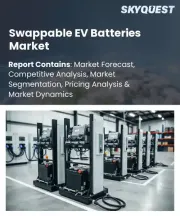
|
시장보고서
상품코드
1995918
EV 배터리 교환 시장 - 예측(2026-2031년)EV Battery Swapping Market-Forecasts from 2026 to 2031 |
||||||

EV 배터리 교환 시장은 2026년 61억 달러에서 2031년까지 182억 달러로 확대하며, CAGR 24.4%로 성장할 것으로 전망되고 있습니다.
EV 배터리 교체 시장은 전기 모빌리티 생태계에서 중요한 요소로 부상하고 있습니다. 배터리 교체 기술을 통해 전기자동차 사용자는 몇 분 안에 방전된 배터리를 완전히 충전된 배터리로 교체할 수 있습니다. 이러한 접근 방식은 충전으로 인한 다운타임을 줄이고 차량 가동률을 향상시킬 수 있습니다. 이 개념은 업무 효율성이 필수적인 상용차, 승차공유 서비스, 라스트마일 물류 사업자에게 특히 중요합니다. 도시 시장에서 전기자동차의 급속한 보급에 따라 확장 가능한 충전 대안에 대한 요구가 증가하고 있습니다. 정부와 업계 이해관계자들이 주행거리 불안과 충전 제약에 대한 우려를 해소하면서 전기자동차 보급을 가속화하기 위해 배터리 교체 인프라가 주목받고 있습니다.
시장 촉진요인
EV 배터리 교체 시장의 주요 촉진요인은 전 세계 전기자동차 보급의 급속한 확대입니다. 각국 정부는 전기 모빌리티를 촉진하기 위해 규제 인센티브, 배출가스 목표 및 보조금 프로그램을 도입하고 있습니다. 이러한 정책은 배터리 교환 네트워크를 포함한 EV 인프라에 대한 투자를 촉진하고 있습니다.
또 다른 주요 성장 요인은 기존 충전과 비교했을 때 배터리 교체 기술의 운영상 이점입니다. 배터리 교체는 몇 분 안에 완료되므로 차량 가동 중단 시간을 크게 줄일 수 있습니다. 이 장점은 하루 종일 지속적으로 운행하는 이륜차, 삼륜차, 택시, 배달 차량에 특히 유용합니다.
'서비스형 배터리(BaaS, Battery as a Service)'라는 비즈니스 모델의 등장도 시장 성장을 지원하고 있습니다. 이 모델에서 고객은 배터리가 없는 차량을 구매하고, 배터리 사용에 대한 구독료를 지불합니다. 이를 통해 전기자동차 소유에 소요되는 초기 비용을 절감하고, 저렴한 가격으로 이용할 수 있습니다. 배터리 비용은 여전히 전기자동차 가격의 중요한 요소이기 때문에 BaaS 모델은 소비자와 차량 운영자 모두에게 매력적인 선택이 되고 있습니다.
시장 억제요인
견고한 성장이 예상되는 반면, EV 배터리 교체 시장에는 몇 가지 과제가 존재합니다. 주요 장벽 중 하나는 자동차 제조업체들 간에 배터리 설계의 표준화가 이루어지지 않고 있다는 점입니다. 배터리의 크기, 화학적 조성, 아키텍처가 다양하므로 범용적인 교체 시스템을 구축하는 것이 어려워지고 있습니다.
거래소 인프라 구축에 필요한 막대한 자본도 또 다른 제약 요인입니다. 자동 교환소 건설에는 로봇 공학, 배터리 저장 시스템, 전력망 연결, 디지털 관리 플랫폼에 대한 투자가 필요합니다. 이러한 투자는 전기자동차 보급이 아직 초기 단계에 있는 지역에서의 보급을 지연시킬 수 있습니다.
운영상의 복잡성도 여전히 우려되는 부분입니다. 배터리 재고를 관리하고, 배터리 건전성을 보장하며, 여러 사이클에 걸쳐 일관된 성능을 유지하려면 첨단 모니터링 시스템이 필요합니다.
기술 및 부문에 대한 인사이트
배터리 교체 인프라는 자동화, 배터리 관리 시스템 및 디지털 플랫폼의 발전을 통해 진화하고 있습니다. 사람의 개입을 줄이고 운영 효율성을 향상시키기 위해 자동 교환 스테이션이 개발되고 있습니다. 이러한 시스템을 통해 로봇 메커니즘을 통해 차량이 신속하게 배터리를 교체할 수 있습니다.
리튬이온 배터리는 높은 에너지 밀도, 긴 사이클 수명 및 생산 비용 절감으로 인해 현재 기술 분야를 지배하고 있습니다. 배터리 모니터링 기술의 발전으로 사업자는 배터리 성능을 추적하고 여러 교체 주기에 걸쳐 안전한 운영을 보장할 수 있게 되었습니다.
시장 세분화의 관점에서 볼 때, 시장은 일반적으로 차종, 스테이션 유형, 서비스 모델 및 배터리 화학 성분에 따라 분류됩니다. 이륜차는 도시 교통 시스템에서 큰 존재감을 보이고 있으므로 배터리 교체 도입에 있으며, 큰 비중을 차지하고 있습니다. 또한 구독형 서비스도 고객이 예측 가능한 비용으로 배터리 네트워크를 이용할 수 있다는 점에서 호응을 얻고 있습니다.
경쟁 및 전략적 전망
기술 프로바이더, 전기자동차 제조업체, 에너지 기업이 네트워크 확장에 투자함에 따라 전기자동차 배터리 교체 시장에서의 경쟁이 치열해지고 있습니다. 각 업체들은 표준화된 배터리 생태계를 구축하고 인프라 구축을 가속화하기 위해 전략적 제휴에 집중하고 있습니다.
또한 전략적 투자는 전기자동차 제조업체와 배터리 서비스 프로바이더 간의 협력에도 집중되고 있습니다. 이러한 이해관계자들 간의 협력을 통해 호환 가능한 배터리 플랫폼과 공유 인프라 네트워크를 개발할 수 있습니다.
또한 기업은 상업용 전기 모빌리티의 도입이 빠르게 확대되고 있는 인구 밀집 도시에서 교환 네트워크를 확장하고 있습니다. 확장 전략에는 일반적으로 차량 사업자, 물류 회사, 도시형 모빌리티 플랫폼과의 제휴가 포함됩니다.
주요 포인트
EV 배터리 교체 시장은 전기 모빌리티로의 전환에 있으며, 중요한 역할을 할 것으로 예상됩니다. 충전 시간 단축과 EV의 초기 비용 절감으로 교체 솔루션은 EV 도입의 주요 장벽을 해소할 수 있습니다. 이 모델을 전 세계로 확장하기 위해서는 지속적인 기술 혁신, 인프라 투자, 산업 간 협력이 필수적입니다.
이 보고서의 주요 장점
- 인사이트 분석: 지역, 고객 부문, 정책, 사회경제적 요인, 소비자 선호도, 산업별 부문에 대한 심층적인 시장 인사이트를 얻을 수 있습니다.
- 경쟁 상황: 주요 기업의 전략적 동향을 파악하여 최적의 시장 진입 접근 방식을 파악할 수 있습니다.
- 시장 촉진요인 및 향후 동향: 시장을 형성하는 주요 성장 요인과 새로운 동향을 평가합니다.
- 실용적인 제안: 새로운 수입원 발굴을 위한 전략적 의사결정을 지원합니다.
- 폭넓은 독자층 대응: 스타트업, 연구기관, 컨설턴트, 중소기업, 대기업에 적합합니다.
보고서 활용 사례
산업 및 시장 인사이트, 기회 평가, 제품 수요 예측, 시장 진입 전략, 지역 확장, 자본 투자 결정, 규제 분석, 신제품 개발, 경쟁 정보.
보고서 범위
- 2021-2025년 과거 데이터 및 2026-2031년 예측 데이터
- 성장 기회, 도전과제, 공급망 전망, 규제 프레임워크 및 동향 분석
- 경쟁사 포지셔닝, 전략 및 시장점유율 평가
- 부문 및 지역별 매출 성장 및 예측 평가 및 예측 평가
- 전략, 제품, 재무 상태 및 주요 개발 사항을 포함한 회사 프로필
목차
제1장 개요
제2장 시장 스냅숏
제3장 비즈니스 상황
제4장 기술적 전망
제5장 EV 배터리 교환 시장 : 차종별
제6장 EV 배터리 교환 시장 : 서비스 모델별
제7장 EV 배터리 교환 시장 : 배터리 교환 스테이션별
제8장 EV 배터리 교환 시장 : 배터리 유형별
제9장 EV 배터리 교환 시장 : 지역별
제10장 경쟁 환경과 분석
제11장 기업 개요
제12장 부록
KSA 26.04.24The EV Battery Swapping Market will expand from USD 6.1 billion in 2026 to USD 18.2 billion by 2031, advancing at a 24.4% CAGR.
The EV battery swapping market is emerging as a critical component of the electric mobility ecosystem. Battery swapping technology enables electric vehicle users to replace depleted batteries with fully charged units within minutes. This approach reduces charging downtime and improves vehicle utilization. The concept is particularly relevant for commercial fleets, ride-hailing services, and last-mile logistics operators where operational efficiency is essential. Rapid growth in electric vehicle adoption across urban markets is strengthening the need for scalable charging alternatives. Battery swapping infrastructure is gaining traction as governments and industry stakeholders aim to accelerate EV adoption while addressing range anxiety and charging limitations.
Market Drivers
The primary driver of the EV battery swapping market is the rapid expansion of electric vehicle adoption worldwide. Governments are introducing regulatory incentives, emission targets, and subsidy programs to promote electric mobility. These policies are encouraging investments in EV infrastructure, including battery swapping networks.
Another major growth factor is the operational advantage of swapping technology compared with conventional charging. Battery replacement can be completed in a few minutes, significantly reducing downtime for vehicles. This advantage is particularly valuable for two-wheelers, three-wheelers, taxis, and delivery fleets that operate continuously throughout the day.
The emergence of battery-as-a-service (BaaS) business models is also supporting market growth. In this model, customers purchase the vehicle without the battery and pay a subscription fee for battery access. This reduces the upfront cost of EV ownership and improves affordability. As battery costs remain a significant component of EV pricing, BaaS models are becoming attractive to both consumers and fleet operators.
Market Restraints
Despite strong growth prospects, several challenges affect the EV battery swapping market. One of the major barriers is the lack of standardization in battery design across different vehicle manufacturers. Variations in battery size, chemistry, and architecture make it difficult to create universal swapping systems.
The high capital requirement for deploying swapping infrastructure is another constraint. Building automated swap stations requires investments in robotics, battery storage systems, grid connections, and digital management platforms. These investments may slow deployment in regions where EV adoption is still in the early stage.
Operational complexity also remains a concern. Managing battery inventory, ensuring battery health, and maintaining consistent performance across multiple cycles require sophisticated monitoring systems.
Technology and Segment Insights
Battery swapping infrastructure is evolving through advancements in automation, battery management systems, and digital platforms. Automated swap stations are being developed to reduce human intervention and improve operational efficiency. These systems allow vehicles to exchange batteries quickly through robotic mechanisms.
Lithium-ion batteries currently dominate the technology landscape due to their high energy density, long cycle life, and declining production costs. Improvements in battery monitoring technologies enable operators to track battery performance and ensure safe operation across multiple swapping cycles.
From a segmentation perspective, the market is commonly categorized by vehicle type, station type, service model, and battery chemistry. Two-wheelers represent a significant share of battery swapping deployments because of their large presence in urban transportation systems. Subscription-based services are also gaining traction as they allow customers to access battery networks at predictable costs.
Competitive and Strategic Outlook
Competition in the EV battery swapping market is intensifying as technology providers, EV manufacturers, and energy companies invest in network expansion. Companies are focusing on strategic partnerships to develop standardized battery ecosystems and accelerate infrastructure deployment.
Strategic investments are also targeting integration between EV manufacturers and battery service providers. Collaboration between these stakeholders enables the development of compatible battery platforms and shared infrastructure networks.
In addition, companies are expanding swapping networks in densely populated cities where commercial electric mobility adoption is rising rapidly. Expansion strategies typically involve partnerships with fleet operators, logistics companies, and urban mobility platforms.
Key Takeaways
The EV battery swapping market is expected to play an important role in the transition toward electric mobility. By reducing charging time and lowering upfront EV costs, swapping solutions address key barriers to EV adoption. Continued technological improvements, infrastructure investments, and industry collaborations will be essential to scale this model globally.
Key Benefits of this Report
- Insightful Analysis: Gain detailed market insights across regions, customer segments, policies, socio-economic factors, consumer preferences, and industry verticals.
- Competitive Landscape: Understand strategic moves by key players to identify optimal market entry approaches.
- Market Drivers and Future Trends: Assess major growth forces and emerging developments shaping the market.
- Actionable Recommendations: Support strategic decisions to unlock new revenue streams.
- Caters to a Wide Audience: Suitable for startups, research institutions, consultants, SMEs, and large enterprises.
What businesses use our reports for
Industry and market insights, opportunity assessment, product demand forecasting, market entry strategy, geographical expansion, capital investment decisions, regulatory analysis, new product development, and competitive intelligence.
Report Coverage
- Historical data from 2021 to 2025 and forecast data from 2026 to 2031
- Growth opportunities, challenges, supply chain outlook, regulatory framework, and trend analysis
- Competitive positioning, strategies, and market share evaluation
- Revenue growth and forecast assessment across segments and regions
- Company profiling including strategies, products, financials, and key developments
TABLE OF CONTENTS
1. EXECUTIVE SUMMARY
2. MARKET SNAPSHOT
- 2.1. Market Overview
- 2.2. Market Definition
- 2.3. Scope of the Study
- 2.4. Market Segmentation
3. BUSINESS LANDSCAPE
- 3.1. Market Drivers
- 3.2. Market Restraints
- 3.3. Market Opportunities
- 3.4. Porter's Five Forces Analysis
- 3.5. Industry Value Chain Analysis
- 3.6. Policies and Regulations
- 3.7. Strategic Recommendations
4. TECHNOLOGICAL OUTLOOK
5. EV BATTERY SWAPPING MARKET BY VEHICLE TYPE
- 5.1. Introduction
- 5.2. Passenger Cars
- 5.3. Commercial Vehicles
- 5.4. Two-Wheelers
- 5.5. Three-Wheelers
6. EV BATTERY SWAPPING MARKET BY SERVICE MODEL
- 6.1. Introduction
- 6.2. Battery-as-a-Service (BaaS) / Subscription Model
- 6.3. Pay-Per-Use Model
7. EV BATTERY SWAPPING MARKET BY BATTERY SWAPPING STATION
- 7.1. Introduction
- 7.2. Manual Battery Swapping Station
- 7.3. Autonomous Battery Swapping Station
8. EV BATTERY SWAPPING MARKET BY BATTERY TYPE
- 8.1. Introduction
- 8.2. Lithium-Ion
- 8.3. Lead Acid
- 8.4. Others
9. EV BATTERY SWAPPING MARKET BY GEOGRAPHY
- 9.1. Introduction
- 9.2. North America
- 9.2.1. USA
- 9.2.2. Canada
- 9.2.3. Mexico
- 9.3. South America
- 9.3.1. Brazil
- 9.3.2. Argentina
- 9.3.3. Others
- 9.4. Europe
- 9.4.1. United Kingdom
- 9.4.2. Germany
- 9.4.3. France
- 9.4.4. Spain
- 9.4.5. Others
- 9.5. Middle East and Africa
- 9.5.1. Saudi Arabia
- 9.5.2. UAE
- 9.5.3. Others
- 9.6. Asia Pacific
- 9.6.1. China
- 9.6.2. India
- 9.6.3. Japan
- 9.6.4. South Korea
- 9.6.5. Indonesia
- 9.6.6. Thailand
- 9.6.7. Others
10. COMPETITIVE ENVIRONMENT AND ANALYSIS
- 10.1. Major Players and Strategy Analysis
- 10.2. Market Share Analysis
- 10.3. Mergers, Acquisitions, Agreements, and Collaborations
- 10.4. Competitive Dashboard
11. COMPANY PROFILES
- 11.1. NIO
- 11.2. Gogoro
- 11.3. Ample
- 11.4. Sun Mobility
- 11.5. Battery Smart
- 11.6. Aulton
- 11.7. KYMCO
- 11.8. Tycorun
- 11.9. VoltUp
- 11.10. Scin Power
12. APPENDIX
- 12.1. Currency
- 12.2. Assumptions
- 12.3. Base and Forecast Years Timeline
- 12.4. Key Benefits for the Stakeholders
- 12.5. Research Methodology
- 12.6. Abbreviations