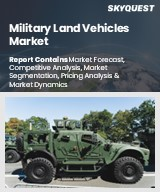
|
시장보고서
상품코드
2105911
군용 육상 차량 시장 보고서 : 동향, 예측 및 경쟁 분석(-2035년)Military Land Vehicle Market Report: Trends, Forecast and Competitive Analysis to 2035 |
||||||
 Lucintel
군용 지상 차량 시장
전 세계 군용 지상 차량 시장의 미래는 방위 및 수송 시장의 기회로 인해 밝은 전망을 보이고 있습니다. 전 세계 군용 지상 차량 시장은 2026-2035년 연평균 성장률(CAGR) 4.5%로 확대되며, 2035년에는 약 820억 달러에 달할 것으로 예측됩니다. 이 시장의 주요 성장 요인으로는 장갑 전투 차량 현대화에 대한 수요 증가, 국경 경비에 대한 국방 투자 확대, 그리고 자율주행 군용 차량의 배치 확대 등이 꼽힙니다.
- Lucintel사의 예측에 따르면 차종별로는 전장에서의 방어 능력 강화에 대한 수요가 증가함에 따라 군용 장갑차가 예측 기간 중 가장 높은 성장률을 보일 것으로 전망됩니다.
- 용도별로는 안보 위협의 증가와 군사 현대화 프로그램의 추진으로 인해 방위 분야가 더 높은 성장률을 보일 것으로 예상됩니다.
- 지역별로는 국방비 및 지상 차량 조달이 증가하고 있는 점에 비추어, APAC 지역이 예측 기간 중 가장 높은 성장률을 보일 것으로 전망됩니다.
군용 지상 차량 시장의 새로운 동향
군용 지상 차량 시장은 기술 발전, 지정학적 변화, 그리고 국방 전략의 변모에 힘입어 급속한 진화를 거듭하고 있습니다. 각국이 지상 군사 능력 강화를 도모하는 가운데, 기동성, 방어 능력, 그리고 운용 효율을 향상시키는 혁신적인 솔루션이 등장하고 있습니다. 이러한 동향은 군사용 지상 차량의 시장 구조를 재편하고, 조달 결정에 영향을 미치며, 시장 내에 새로운 하위 부문를 형성하고 있습니다. 이처럼 경쟁이 치열하고 역동적인 환경에서 선제적에 대응하고자 하는 이해관계자들에게 이러한 동향을 이해하는 것은 매우 중요합니다. 다음의 주요 동향은 이 시장의 미래를 형성할 가장 중요한 발전 사항을 부각시키고 있습니다.
- 자율주행 차량의 도입 확대: 군사용 지상 차량에 자율주행 기술을 통합함으로써 전장에서의 작전 활동이 혁신되고 있습니다. 이러한 차량은 안전성 향상, 인력 감축, 작전 효율 개선을 가져옵니다. 자율 시스템은 복잡한 지형에서도 정밀한 항행을 가능하게 하며, 인명을 위험에 빠뜨리지 않고 정찰, 병참, 전투 각 역할을 수행할 수 있습니다. 이러한 추세는 AI, 센서 기술, 기계학습의 발전에 힘입어 주도되고 있으며, 자율주행 차량은 현대 군대에 있으며, 전략적 자산으로 자리 잡고 있습니다. 그 결과 작전의 유연성이 높아지고 장기적인 비용이 절감됨에 따라 자율주행 차량은 미래 군용 지상 차량 개발에서 주요 하위 부문으로서의 입지를 확립해 가고 있습니다.
- 모듈식 및 다목적 차량에 대한 중점: 현대 군사 전략에서는 여러 기능을 수행할 수 있는 범용성이 높은 차량이 중시되고 있습니다. 모듈식 설계를 통해 병력 수송, 정찰, 전투 지원 등 다양한 임무에 맞춰 신속하게 재구성할 수 있습니다. 이러한 유연성 덕분에 조달 비용과 병참상의 복잡성이 경감되는 동시에 작전상의 적응성도 향상됩니다. 각 제조사는 교체 가능한 모듈을 갖춘 다목적 플랫폼 개발에 주력하고 있으며, 이를 통해 군은 변화하는 위협에 신속하게 대응할 수 있게 됩니다. 이러한 추세는 효율성과 비용 대비 효과를 촉진하며, 특정 작전상의 요구에 맞춰 맞춤화할 수 있는 적응성이 높은 다목적 차량이라는 더 광범위한 하위 부문의 확대로 이어지고 있습니다.
- 첨단 장갑 및 방어 시스템의 통합: 인원과 장비의 보호는 여전히 최우선 과제이며, 최첨단 장갑 및 능동형 방어 시스템의 도입이 진행되고 있습니다. 혁신적인 기술로는 경량 복합 장갑, 반응 장갑, 그리고 대전차 미사일 및 즉석 폭발 장치(IED)로부터 방어하는 전자 대책 등이 있습니다. 이러한 시스템은 적대적인 환경에서 차량의 생존성을 크게 향상시킵니다. 그 결과, 차량의 내구성과 부대의 안전성이 현저히 향상되었으며, 이는 조달 우선순위에 영향을 미치고 있습니다. 이러한 동향은 비대칭 전쟁 지역에서의 작전에 필수적인 강화된 방어 솔루션에 초점을 맞춘 하위 부문의 성장을 촉진하고 있습니다.
- 전기 및 하이브리드 파워트레인의 활용 확대: 환경적 고려와 운용상 이점이 군용 지상 차량의 전기 및 하이브리드 추진 시스템으로의 전환을 지원하고 있습니다. 이러한 파워트레인은 연료 소비량 감소, 배기가스 저감, 정숙성 향상과 같은 이점을 제공하며, 이는 은밀성과 지속가능성에 있으며, 매우 중요합니다. 배터리 기술과 하이브리드 시스템의 발전으로 인해 이러한 차량은 군사 용도에서 더욱 실용적으로 활용되고 있습니다. 그 결과로 주행 거리 연장 및 연료 보급과 관련된 후방 지원 부담 경감 등을 들 수 있습니다. 이러한 추세는 지속가능하고 에너지 효율이 뛰어난 군용 지상 차량에 특화된 새로운 하위 부문을 창출하고 있으며, 더 광범위한 국방 현대화 노력과 발을 맞추고 있습니다.
- 네트워크 중심형 및 커넥티드 차량에 대한 집중: 지상 차량을 보다 광범위한 군사 네트워크에 통합함으로써 상황 인식 능력과 지휘 능력이 향상됩니다. 커넥티드 차량은 실시간 데이터를 공유하고, 이동을 조정하며, 복잡한 임무를 협력하여 수행할 수 있습니다. 이러한 추세는 통신 기술, IoT, 사이버 보안의 진보를 활용하여 원활한 전장 환경을 구축하는 것입니다. 그 결과, 작전상의 연계가 개선되고 의사결정이 신속해지며 임무 성공률이 향상됩니다. 이를 통해 현대의 디지털화된 전쟁에 필수적인 ‘네트워크 대응 차량’이라는 하위 부문이 육성되고 있으며, 지상 차량이 포괄적인 방위 시스템의 필수 구성 요소가 될 것이 보장되고 있습니다.
이러한 새로운 동향은 자동화, 범용성, 방어력, 지속가능성 및 연결성을 중시함으로써 군용 지상 차량 시장을 근본적으로 변화시키고 있습니다. 이러한 발전은 작전상의 효율성을 향상시킬 뿐만 아니라, 조달 전략과 기술적 우선순위를 재정의하여, 궁극적으로 현대 군대에 더 정교하고, 강인하며, 적응력이 뛰어난 지상전 능력을 가져다줄 것입니다.
군용 지상 차량 시장의 최근 동향
군용 지상 차량 시장은 기술 혁신, 국방 예산 증가, 그리고 진화하는 안보 위협에 힘입어 급속한 발전을 이루고 있습니다. 각국은 지상 부대의 현대화에 막대한 투자를 하고 있으며, 그 결과 첨단 장갑차, 무인 시스템, 통합 통신 플랫폼의 개발이 진행되고 있습니다. 이러한 발전은 군사 지상 작전의 미래상을 형성하며, 보호 성능, 기동성 및 작전 효율의 향상을 가져오고 있습니다. 다음의 주요 발전 사항은 이 역동적인 시장의 현재 동향과 기회를 여실히 보여주고 있습니다.
- 자율주행 차량: 지상전에 혁명을 일으키다: 자율주행형 군용 지상 차량은 인원의 위험을 줄이고 작전 효율을 높임으로써 전장의 전술을 변화시키고 있습니다. AI와 센서 기술을 탑재한 이 차량들은 정찰, 병참 및 전투 임무를 수행할 수 있습니다. 이러한 차량의 배치는 전략적 유연성을 향상시켜, 부대가 인명을 위험에 빠뜨리지 않고도 위험한 환경에서도 작전을 전개할 수 있게 해줍니다. 기술이 성숙해짐에 따라 자율 시스템은 현대 군대에 필수적인 요소가 되어, 큰 전술적 우위와 운영 비용 절감을 가져올 것으로 기대됩니다.
- 첨단 장갑·방호 시스템: 차량의 생존성 향상: 복합재료나 반응 장갑과 같은 장갑 기술의 혁신으로 인해 IED(즉석 폭발 장치)나 대전차 무기와 같은 현대의 위협에 대한 차량의 생존성이 대폭 향상되고 있습니다. 이러한 시스템은 승무원과 중요 장비를 보다 확실하게 보호하여 사상자 발생 및 임무 실패의 위험을 줄여줍니다. 능동 방어 시스템(APS)의 통합을 통해 날아오는 탄환으로부터 차량을 더욱 효과적으로 방어합니다. 이러한 발전은 복잡한 전투 지역에서 작전상의 유효성을 유지하는 데 필수적이며, 개량형 및 신형 차량 플랫폼에 대한 수요를 견인하고 있습니다.
- 차세대 보병전투차(IFV): 전투 능력 향상: 현대의 IFV는 뛰어난 화력, 기동성 및 상황 인식 능력을 갖추도록 설계되었습니다. 모듈식 무기 시스템, 첨단 조준 시스템, 통신 시스템 등의 기능을 갖추고 있으며, 부대가 다양한 지형에서 효과적으로 작전을 전개할 수 있도록 지원합니다. 이러한 차량은 신속한 전개, 병력 수송 및 직접 교전을 지원하여 전장에서의 다목적성을 높입니다. 더 가볍고 기동성이 뛰어난 IFV의 개발로 신속한 대응과 전략적 유연성이 가능해졌으며, 현대 군사 작전에서 필수적인 자산이 되었습니다.
- 디지털 기술과 통신 기술의 통합: 네트워크 중심 전쟁의 촉진: 첨단 통신 및 데이터 공유 플랫폼의 도입을 통해 전장 상황을 실시간으로 파악하고 협력을 도모할 수 있게 됩니다. 디지털 시스템을 통해 다양한 부대의 원활한 통합이 가능해지며, 지휘통제가 향상됩니다. 이러한 연결성은 현대 전투 시나리오에서 필수적인 의사결정의 속도와 정확성을 높여줍니다. 안전하고 내결함성이 높은 네트워크의 구축은 연합군 간의 공동 작전 및 상호 운용성을 지원하며, 복잡한 환경에서의 작전 효과와 상황 대응 능력을 대폭 향상시킵니다.
- 전기 및 하이브리드 구동 시스템: 지속가능한 군사 작전 추진: 전기 및 하이브리드 구동 시스템으로의 전환은 후방 지원 부담, 연료 소비 및 환경에 미치는 영향을 줄이는 것을 목표로 합니다. 이러한 구동 시스템은 저소음 작동, 배기가스 저감 및 에너지 효율 향상을 실현하여, 비밀 작전이나 장기간에 걸친 임무에서 유리하게 작용합니다. 배터리 기술과 대체 연료의 발전으로 인해 이러한 시스템은 군용 차량에서 점점 더 실용화되고 있습니다. 지속가능한 동력 솔루션의 도입은 전 세계적인 환경 목표와 부합할 뿐만 아니라, 다양한 지형과 기후 조건 하에서 작전의 지속가능성을 높입니다.
이러한 발전은 작전 능력, 안전성, 지속가능성을 향상시킴으로써 군용 지상 차량 시장에 큰 변화를 가져오고 있습니다. 자율 시스템, 첨단 장갑, 디지털 통합은 전장에서의 효율성을 높이는 한편, 파워트레인의 혁신은 환경 및 병참 목표를 지원하고 있습니다. 이러한 발전들이 결합되어 시장 성장을 촉진하고 혁신을 촉진함으로써, 전 세계 군대가 더 다목적적이고, 강인하며, 효율적인 지상 차량을 활용하여 현대의 안보 과제에 적응할 수 있게 하고 있습니다.
목차
제1장 개요
제2장 시장 개요
제3장 시장 동향과 예측 분석
제4장 세계의 군용 육상 차량 시장 : 유형별
제5장 세계의 군용 육상 차량 시장 : 용도별
제6장 지역별 분석
제7장 북미의 군용 육상 차량 시장
제8장 유럽의 군용 육상 차량 시장
제9장 아시아태평양의 군용 육상 차량 시장
제10장 RoW의 군용 육상 차량 시장
제11장 경쟁 분석
제12장 기회와 전략 분석
제13장 밸류체인 전체에서 주요 기업의 기업 개요
제14장 부록
KSAMilitary Land Vehicle Market
The future of the global military land vehicle market looks promising with opportunities in the defense and transportation markets. The global military land vehicle market is expected to reach an estimated $82 billion by 2035 with a CAGR of 4.5% from 2026 to 2035. The major drivers for this market are the increasing demand for armored combat vehicle modernization, the rising border security defense investments, and the growing deployment of autonomous military vehicles.
- Lucintel forecasts that, within the type category, military armored vehicle is expected to witness the highest growth over the forecast period due to the increasing demand for enhanced battlefield protection capabilities.
- Within the application category, defense is expected to witness higher growth due to the rising security threats and military modernization programs.
- In terms of regions, APAC is expected to witness the highest growth over the forecast period due to the growing defense spending and land vehicle procurement.
Emerging Trends in Military Land Vehicle Market
The military land vehicle market is experiencing rapid evolution driven by technological advancements, geopolitical shifts, and changing defense strategies. As nations seek to enhance their land-based military capabilities, innovative solutions are emerging to improve mobility, protection, and operational efficiency. These developments are reshaping the landscape of military land vehicles, influencing procurement decisions, and fostering new sub-segments within the market. Understanding these trends is crucial for stakeholders aiming to stay ahead in this competitive and dynamic environment. The following key trends highlight the most significant developments shaping the future of this market.
- Increased Adoption of Autonomous Vehicles: The integration of autonomous technology into military land vehicles is transforming battlefield operations. These vehicles offer enhanced safety, reduced manpower requirements, and improved operational efficiency. Autonomous systems enable precise navigation in complex terrains and can perform reconnaissance, logistics, and combat roles without risking human lives. This trend is driven by advancements in AI, sensor technology, and machine learning, making autonomous vehicles a strategic asset for modern armies. The impact includes increased operational flexibility and reduced long-term costs, positioning autonomous vehicles as a key sub-segment in future military land vehicle development.
- Emphasis on Modular and Multi-Role Vehicles: Modern military strategies favor versatile vehicles capable of performing multiple functions. Modular designs allow quick reconfiguration for different missions, such as troop transport, reconnaissance, or combat support. This flexibility reduces procurement costs and logistical complexity while enhancing operational adaptability. Manufacturers are focusing on developing multi-role platforms with interchangeable modules, enabling armed forces to respond swiftly to evolving threats. The trend promotes efficiency and cost-effectiveness, leading to a broader sub-segment of adaptable, multi-purpose vehicles that can be customized for specific operational needs.
- Integration of Advanced Armor and Protection Systems: Protecting personnel and equipment remains a top priority, prompting the adoption of cutting-edge armor and active protection systems. Innovations include lightweight composite armors, reactive armor, and electronic countermeasures that defend against anti-tank missiles and improvised explosive devices (IEDs). These systems significantly enhance vehicle survivability in hostile environments. The impact is a marked increase in vehicle durability and troop safety, which influences procurement priorities. This trend is fostering a sub-segment focused on enhanced protection solutions, vital for operations in asymmetric warfare zones.
- Growing Use of Electric and Hybrid Powertrains: Environmental concerns and operational advantages are driving the shift toward electric and hybrid propulsion systems in military land vehicles. These powertrains offer benefits such as reduced fuel consumption, lower emissions, and quieter operation, which are crucial for stealth and sustainability. Advances in battery technology and hybrid systems are making these vehicles more viable for military applications. The impact includes increased operational range and reduced logistical burden related to fuel supply. This trend is creating a new sub-segment dedicated to sustainable, energy-efficient military land vehicles, aligning with broader defense modernization efforts.
- Focus on Network-Centric and Connected Vehicles: The integration of land vehicles into broader military networks enhances situational awareness and command capabilities. Connected vehicles can share real-time data, coordinate movements, and execute complex missions collaboratively. This trend leverages advancements in communication technologies, IoT, and cybersecurity to create a seamless battlefield environment. The impact is improved operational coordination, faster decision-making, and enhanced mission success rates. It is fostering a sub-segment of network-enabled vehicles that are vital for modern, digitized warfare, ensuring land vehicles are integral components of comprehensive defense systems.
These emerging trends are fundamentally transforming the military land vehicle market by emphasizing automation, versatility, protection, sustainability, and connectivity. These developments are not only improving operational effectiveness but also redefining procurement strategies and technological priorities, ultimately leading to a more advanced, resilient, and adaptable land warfare capability for modern armed forces.
Recent Developments in the Military Land Vehicle Market
The military land vehicle market is experiencing rapid advancements driven by technological innovation, increased defense budgets, and evolving security threats. Countries are investing heavily in modernizing their land forces, leading to the development of advanced armored vehicles, unmanned systems, and integrated communication platforms. These developments are shaping the future landscape of military land operations, offering enhanced protection, mobility, and operational efficiency. The following key developments highlight the current trajectory and opportunities within this dynamic market.
- Autonomous Vehicles: Revolutionizing Land Warfare: Autonomous military land vehicles are transforming battlefield tactics by reducing personnel risk and increasing operational efficiency. These vehicles, equipped with AI and sensor technologies, can perform reconnaissance, logistics, and combat roles. Their deployment enhances strategic flexibility, allowing forces to operate in hazardous environments without risking human lives. As technology matures, autonomous systems are expected to become integral to modern armies, offering significant tactical advantages and operational cost savings.
- Advanced Armor and Protection Systems: Improving Vehicle Survivability: Innovations in armor technology, such as composite materials and reactive armor, significantly enhance vehicle survivability against modern threats like IEDs and anti-tank weapons. These systems provide better protection for personnel and critical equipment, reducing casualties and mission failure risks. The integration of active protection systems (APS) further defends vehicles from incoming projectiles. These advancements are crucial for maintaining operational effectiveness in complex combat zones, driving demand for upgraded and new vehicle platforms.
- Next-Generation Infantry Fighting Vehicles (IFVs): Enhancing Combat Capabilities: Modern IFVs are designed with superior firepower, mobility, and situational awareness. Features include modular weapon systems, advanced targeting, and communication systems, enabling troops to operate effectively in diverse terrains. These vehicles support rapid deployment, troop transport, and direct engagement, boosting battlefield versatility. The development of lighter, more agile IFVs allows for rapid response and strategic flexibility, making them vital assets for contemporary military operations.
- Integration of Digital and Communication Technologies: Facilitating Network-Centric Warfare: The incorporation of advanced communication and data-sharing platforms enables real-time battlefield awareness and coordination. Digital systems allow seamless integration of various units, improving command and control. This connectivity enhances decision-making speed and accuracy, vital for modern combat scenarios. The deployment of secure, resilient networks supports joint operations and interoperability among allied forces, significantly increasing operational effectiveness and situational responsiveness in complex environments.
- Electric and Hybrid Powertrains: Promoting Sustainable Military Operations: The shift towards electric and hybrid propulsion systems aims to reduce logistical burdens, fuel consumption, and environmental impact. These powertrains offer quieter operation, lower emissions, and improved energy efficiency, which are advantageous in covert and long-duration missions. Advances in battery technology and alternative fuels are making these systems more viable for military vehicles. Adoption of sustainable power solutions aligns with global environmental goals and enhances operational sustainability in diverse terrains and climates.
These developments are significantly transforming the military land vehicle market by enhancing operational capabilities, safety, and sustainability. Autonomous systems, advanced armor, and digital integration are increasing battlefield effectiveness, while innovations in powertrains support environmental and logistical goals. Collectively, these advancements are driving market growth, fostering innovation, and enabling armed forces worldwide to adapt to modern security challenges with more versatile, resilient, and efficient land vehicles.
Strategic Growth Opportunities in the Military Land Vehicle Market
The military land vehicle market is experiencing rapid growth driven by technological advancements, increasing defense budgets, and evolving security threats. Countries are investing heavily in modernizing their land forces, leading to innovations in armored vehicles, tactical trucks, and unmanned ground systems. The integration of AI, automation, and enhanced mobility features is creating new opportunities for defense contractors. This dynamic environment offers significant potential for market expansion across various applications, including combat, logistics, and reconnaissance, shaping the future landscape of military land vehicles worldwide.
- Advanced Armor Technologies for Enhanced Protection: Developing lightweight, high-strength armor materials such as composite and reactive armor improves vehicle survivability against modern threats. These innovations enable the design of more agile and protected vehicles, reducing weight without compromising safety. Sub-segments include modular armor systems, active protection systems, and stealth coatings, which are increasingly adopted by armed forces to counter evolving threats and improve battlefield resilience.
- Integration of Autonomous and Unmanned Systems: The deployment of autonomous ground vehicles and unmanned systems is transforming military logistics, reconnaissance, and combat operations. These vehicles reduce personnel risk and increase operational efficiency. Sub-segments include driverless tactical trucks, robotic combat vehicles, and autonomous reconnaissance drones. Advances in AI, sensor technology, and navigation systems are critical drivers, enabling smarter, more adaptable land vehicles for future warfare scenarios.
- Electrification and Alternative Power Sources: The shift toward electric and hybrid powertrains in military vehicles aims to reduce fuel dependency, lower emissions, and improve operational sustainability. These vehicles offer quieter operation and enhanced energy efficiency, crucial for covert missions. Sub-segments include hybrid tactical trucks, electric armored vehicles, and fuel cell-powered systems. This transition supports strategic energy independence and aligns with global environmental initiatives.
- Modernization of Existing Fleet with Upgraded Systems: Upgrading legacy vehicles with advanced communication, weaponry, and sensor systems enhances battlefield effectiveness. Modernization programs include installing battlefield management systems, improved armor, and integrated weapon platforms. These upgrades extend vehicle lifespan, improve interoperability, and ensure compatibility with new technologies, providing a cost-effective way to maintain operational readiness amid evolving threats.
- Development of Specialized Vehicles for Unique Missions: Custom-designed vehicles for specific roles such as mine clearance, medical evacuation, and engineering support are gaining importance. These specialized vehicles improve mission success rates and safety for personnel. Sub-segments include explosive ordnance disposal vehicles, armored ambulances, and engineering support trucks. Tailored solutions address unique operational challenges, ensuring versatility and adaptability in diverse combat environments.
The overall impact of these growth opportunities will significantly enhance the capabilities, safety, and efficiency of military land vehicles. As technological innovations and strategic investments continue, the market is poised for substantial expansion, supporting modern defense needs and fostering competitive advancements across global armed forces.
Military Land Vehicle Market Drivers and Challenges
The military land vehicle market is influenced by a complex interplay of technological advancements, economic conditions, and regulatory frameworks. Rapid innovations in vehicle design, automation, and weapon integration drive growth, while economic factors such as government defense budgets and geopolitical stability impact procurement and development. Regulatory standards concerning safety, environmental impact, and international arms treaties also shape market dynamics. These drivers and challenges collectively determine the pace of innovation, market expansion, and strategic investments within the sector, making it a highly dynamic and competitive landscape.
The factors responsible for driving the military land vehicle market include:
- Technological Innovation: The continuous development of advanced armor, weapon systems, and autonomous capabilities enhances vehicle performance and survivability. Governments prioritize modernization to maintain strategic superiority, leading to increased R&D investments. Innovations such as hybrid powertrains and AI integration improve operational efficiency and reduce logistical burdens. This technological evolution attracts defense contracts and fosters market growth, ensuring vehicles meet evolving battlefield requirements.
- Defense Budget Allocations: Government spending on defense significantly influences market growth. Countries with expanding military budgets invest heavily in land vehicles to upgrade existing fleets and procure new systems. Budget increases often correlate with geopolitical tensions, prompting procurement of advanced vehicles for national security. Steady or rising defense budgets enable manufacturers to plan long-term R&D projects, fostering innovation and expanding market opportunities.
- Geopolitical Tensions and Conflicts: Ongoing regional conflicts and geopolitical instability drive demand for modern military land vehicles. Nations seek to enhance their land force capabilities to counter threats, leading to increased procurement of armored vehicles, troop carriers, and reconnaissance units. These tensions create a sense of urgency for rapid deployment of advanced vehicles, stimulating market activity and encouraging technological advancements tailored to specific operational needs.
- Regulatory and Environmental Standards: Stricter regulations concerning safety, emissions, and international arms treaties influence vehicle design and manufacturing processes. Compliance with environmental standards necessitates the adoption of cleaner, more efficient powertrains, impacting R&D and production costs. Regulatory frameworks also affect export potential, as vehicles must meet international standards to access global markets, shaping product development strategies.
The challenges facing the military land vehicle market are:
- High Development and Procurement Costs: Developing advanced military vehicles involves significant capital investment in research, testing, and manufacturing. Procurement costs for end-users are also substantial, often limiting budget allocations. These high costs can delay procurement cycles and restrict the number of units acquired, impacting market growth. Budget constraints and economic downturns further exacerbate funding challenges, forcing governments to prioritize spending and sometimes delay modernization programs.
- Rapid Technological Obsolescence: The fast pace of technological innovation can render existing vehicle platforms obsolete quickly. Manufacturers face pressure to continuously upgrade systems, leading to increased R&D expenses and shorter product life cycles. This rapid obsolescence complicates long-term planning and can result in higher costs for end-users, who may be reluctant to invest in systems that could become outdated shortly after deployment.
- Regulatory and Export Restrictions: International arms treaties and export controls impose limitations on the sale and transfer of military vehicles. These restrictions can hinder market expansion, especially for manufacturers seeking to enter new regions. Compliance with diverse regulatory standards also increases complexity and costs, potentially delaying product launches and reducing competitiveness in global markets.
The military land vehicle market is shaped by significant technological advancements, strategic defense investments, and geopolitical factors that drive growth. However, high costs, rapid technological changes, and regulatory restrictions pose substantial challenges. These dynamics require manufacturers and governments to balance innovation with cost-efficiency and compliance. Overall, the markets future depends on navigating these drivers and challenges effectively, ensuring technological superiority while managing economic and regulatory constraints to sustain growth and modernization efforts.
List of Military Land Vehicle Market Companies
Companies in the market compete on the basis of product quality offered. Major players in this market focus on expanding their manufacturing facilities, R&D investments, infrastructural development, and leverage integration opportunities across the value chain. Through these strategies military land vehicle market companies cater increasing demand, ensure competitive effectiveness, develop innovative products & technologies, reduce production costs, and expand their customer base. Some of the military land vehicle market companies profiled in this report include-
- BAE Systems
- Rheinmetall
- General Dynamics
- Oshkosh Corporation
- ST Engineering
- Achleitner
- Ashok Leyland
- Iveco
- John Deere
- Otokar
Military Land Vehicle Market by Segment
The study includes a forecast for the global military land vehicle market by type, application, and region.
Military Land Vehicle Market by Type [Value ($B) from 2019 to 2035]:
- Military Armored Vehicles
- Military Battle Tanks
- Unmanned Ground Vehicles
Military Land Vehicle Market by Application [Value ($B) from 2019 to 2035]:
- Defense
- Transportation
- Others
Military Land Vehicle Market by Region [Value ($B) from 2019 to 2035]:
- North America
- Europe
- Asia Pacific
- The Rest of the World
Country Wise Outlook for the Military Land Vehicle Market
The military land vehicle market has experienced significant advancements driven by technological innovation, geopolitical shifts, and increased defense budgets worldwide. Countries are investing heavily in modernizing their land forces to enhance mobility, protection, and combat effectiveness. Emerging technologies such as autonomous systems, advanced armor, and hybrid powertrains are transforming military land vehicles. The market is also influenced by international collaborations and procurement strategies aimed at maintaining strategic superiority. As nations seek to upgrade their land forces, the landscape is becoming more competitive and technologically sophisticated, reflecting the evolving nature of modern warfare and defense priorities.
- United States: The US military is focusing on integrating autonomous and unmanned ground vehicles to improve operational efficiency. Recent developments include the deployment of next-generation armored vehicles with enhanced protection and mobility. The Army's modernization efforts emphasize hybrid powertrains and advanced communication systems, ensuring better battlefield connectivity. Significant investments are also being made in developing robotic systems for reconnaissance and logistics, aiming to reduce troop exposure and increase operational versatility.
- China: China has rapidly advanced its military land vehicle capabilities, emphasizing indigenous development of armored vehicles and infantry fighting vehicles. The country is investing in hybrid and electric propulsion systems to improve vehicle efficiency and reduce logistical burdens. Recent innovations include the deployment of new main battle tanks with improved firepower and armor protection. China is also focusing on integrating modern electronics and weapon systems into its vehicles, aligning with its broader strategy to modernize its armed forces and enhance regional influence.
- Germany: Germany continues to modernize its land forces through the upgrade of existing vehicles and procurement of new systems. The Bundeswehr is investing in protected mobility vehicles, including MRAPs and armored personnel carriers, with an emphasis on survivability and troop comfort. Recent developments include the integration of digital battlefield management systems and enhanced weaponry. Germany also collaborates with NATO allies to develop interoperable vehicles, ensuring readiness for multinational operations and peacekeeping missions.
- India: India is actively expanding its military land vehicle fleet, focusing on indigenous production and modernization. The country has introduced new infantry combat vehicles and armored personnel carriers equipped with advanced fire control and communication systems. India is also exploring hybrid propulsion technologies to improve fuel efficiency and operational range. Recent initiatives include the development of indigenous main battle tanks and the upgrade of existing vehicles to meet modern combat requirements, reflecting its strategic emphasis on self-reliance and regional security.
- Japan: Japan is modernizing its land vehicles to address regional security challenges, emphasizing mobility, protection, and technological integration. The country has introduced new armored vehicles with enhanced armor and electronic warfare capabilities. Japan is investing in hybrid and electric propulsion systems to improve sustainability and operational efficiency. Recent developments include the deployment of advanced reconnaissance vehicles and the integration of network-centric warfare systems, aligning with its focus on maintaining a technologically advanced and self-sufficient defense posture.
Features of the Global Military Land Vehicle Market
- Market Size Estimates: military land vehicle market size estimation in terms of value ($B).
- Trend and Forecast Analysis: Market trends (2019 to 2025) and forecast (2026 to 2035) by various segments and regions.
- Segmentation Analysis: military land vehicle market size by type, application, and region in terms of value ($B).
- Regional Analysis: military land vehicle market breakdown by North America, Europe, Asia Pacific, and Rest of the World.
- Growth Opportunities: Analysis of growth opportunities in different types, applications, and regions for the military land vehicle market.
- Strategic Analysis: This includes M&A, new product development, and competitive landscape of the military land vehicle market.
Analysis of competitive intensity of the industry based on Porter's Five Forces model.
If you are looking to expand your business in this or adjacent markets, then contact us. We have done hundreds of strategic consulting projects in market entry, opportunity screening, due diligence, supply chain analysis, M & A, and more.
This report answers following 11 key questions:
- Q.1. What are some of the most promising, high-growth opportunities for the military land vehicle market by type (military armored vehicles, military battle tanks, and unmanned ground vehicles), application (defense, transportation, and others), and region (North America, Europe, Asia Pacific, and the Rest of the World)?
- Q.2. Which segments will grow at a faster pace and why?
- Q.3. Which region will grow at a faster pace and why?
- Q.4. What are the key factors affecting market dynamics? What are the key challenges and business risks in this market?
- Q.5. What are the business risks and competitive threats in this market?
- Q.6. What are the emerging trends in this market and the reasons behind them?
- Q.7. What are some of the changing demands of customers in the market?
- Q.8. What are the new developments in the market? Which companies are leading these developments?
- Q.9. Who are the major players in this market? What strategic initiatives are key players pursuing for business growth?
- Q.10. What are some of the competing products in this market and how big of a threat do they pose for loss of market share by material or product substitution?
- Q.11. What M&A activity has occurred in the last 5 years and what has its impact been on the industry?
Table of Contents
1. Executive Summary
2. Market Overview
- 2.1 Background and Classifications
- 2.2 Supply Chain
3. Market Trends & Forecast Analysis
- 3.1 Macroeconomic Trends and Forecasts
- 3.2 Industry Drivers and Challenges
- 3.3 PESTLE Analysis
- 3.4 Patent Analysis
- 3.5 Regulatory Environment
4. Global Military Land Vehicle Market by Type
- 4.1 Overview
- 4.2 Attractiveness Analysis by Type
- 4.3 Military Armored Vehicles : Trends and Forecast (2019 to 2035)
- 4.4 Military Battle Tanks : Trends and Forecast (2019 to 2035)
- 4.5 Unmanned Ground Vehicles : Trends and Forecast (2019 to 2035)
5. Global Military Land Vehicle Market by Application
- 5.1 Overview
- 5.2 Attractiveness Analysis by Application
- 5.3 Defense : Trends and Forecast (2019 to 2035)
- 5.4 Transportation : Trends and Forecast (2019 to 2035)
- 5.5 Others : Trends and Forecast (2019 to 2035)
6. Regional Analysis
- 6.1 Overview
- 6.2 Global Military Land Vehicle Market by Region
7. North American Military Land Vehicle Market
- 7.1 Overview
- 7.2 North American Military Land Vehicle Market by Type
- 7.3 North American Military Land Vehicle Market by Application
- 7.4 The United States Military Land Vehicle Market
- 7.5 Canadian Military Land Vehicle Market
- 7.6 Mexican Military Land Vehicle Market
8. European Military Land Vehicle Market
- 8.1 Overview
- 8.2 European Military Land Vehicle Market by Type
- 8.3 European Military Land Vehicle Market by Application
- 8.4 German Military Land Vehicle Market
- 8.5 French Military Land Vehicle Market
- 8.6 Italian Military Land Vehicle Market
- 8.7 Spanish Military Land Vehicle Market
- 8.8 The United Kingdom Military Land Vehicle Market
9. APAC Military Land Vehicle Market
- 9.1 Overview
- 9.2 APAC Military Land Vehicle Market by Type
- 9.3 APAC Military Land Vehicle Market by Application
- 9.4 Chinese Military Land Vehicle Market
- 9.5 Indian Military Land Vehicle Market
- 9.6 Japanese Military Land Vehicle Market
- 9.7 South Korean Military Land Vehicle Market
- 9.8 Indonesian Military Land Vehicle Market
10. ROW Military Land Vehicle Market
- 10.1 Overview
- 10.2 ROW Military Land Vehicle Market by Type
- 10.3 ROW Military Land Vehicle Market by Application
- 10.4 Middle Eastern Military Land Vehicle Market
- 10.5 South American Military Land Vehicle Market
- 10.6 African Military Land Vehicle Market
11. Competitor Analysis
- 11.1 Product Portfolio Analysis
- 11.2 Operational Integration
- 11.3 Porter's Five Forces Analysis
- Competitive Rivalry
- Bargaining Power of Buyers
- Bargaining Power of Suppliers
- Threat of Substitutes
- Threat of New Entrants
- 11.4 Market Share Analysis
12. Opportunities & Strategic Analysis
- 12.1 Value Chain Analysis
- 12.2 Growth Opportunity Analysis
- 12.2.1 Growth Opportunity by Type
- 12.2.2 Growth Opportunity by Application
- 12.2.3 Growth Opportunity by Region
- 12.3 Emerging Trends in the Global Military Land Vehicle Market
- 12.4 Strategic Analysis
- 12.4.1 New Product Development
- 12.4.2 Certification and Licensing
- 12.4.3 Mergers, Acquisitions, Agreements, Collaborations, and Joint Ventures
13. Company Profiles of the Leading Players Across the Value Chain
- 13.1 Competitive Analysis Overview
- 13.2 BAE Systems
- Company Overview
- Military Land Vehicle Market Business Overview
- New Product Development
- Merger, Acquisition, and Collaboration
- Certification and Licensing
- 13.3 Rheinmetall
- Company Overview
- Military Land Vehicle Market Business Overview
- New Product Development
- Merger, Acquisition, and Collaboration
- Certification and Licensing
- 13.4 General Dynamics
- Company Overview
- Military Land Vehicle Market Business Overview
- New Product Development
- Merger, Acquisition, and Collaboration
- Certification and Licensing
- 13.5 Oshkosh Corporation
- Company Overview
- Military Land Vehicle Market Business Overview
- New Product Development
- Merger, Acquisition, and Collaboration
- Certification and Licensing
- 13.6 ST Engineering
- Company Overview
- Military Land Vehicle Market Business Overview
- New Product Development
- Merger, Acquisition, and Collaboration
- Certification and Licensing
- 13.7 Achleitner
- Company Overview
- Military Land Vehicle Market Business Overview
- New Product Development
- Merger, Acquisition, and Collaboration
- Certification and Licensing
- 13.8 Ashok Leyland
- Company Overview
- Military Land Vehicle Market Business Overview
- New Product Development
- Merger, Acquisition, and Collaboration
- Certification and Licensing
- 13.9 Iveco
- Company Overview
- Military Land Vehicle Market Business Overview
- New Product Development
- Merger, Acquisition, and Collaboration
- Certification and Licensing
- 13.10 John Deere
- Company Overview
- Military Land Vehicle Market Business Overview
- New Product Development
- Merger, Acquisition, and Collaboration
- Certification and Licensing
- 13.11 Otokar
- Company Overview
- Military Land Vehicle Market Business Overview
- New Product Development
- Merger, Acquisition, and Collaboration
- Certification and Licensing
14. Appendix
- 14.1 List of Figures
- 14.2 List of Tables
- 14.3 Research Methodology
- 14.4 Disclaimer
- 14.5 Copyright
- 14.6 Abbreviations and Technical Units
- 14.7 About Us
- 14.8 Contact Us