|
시장보고서
상품코드
1624594
라틴아메리카의 의약품 포장 : 시장 점유율 분석, 산업 동향 및 통계, 성장 예측(2025-2030년)Latin America Pharmaceutical Packaging - Market Share Analysis, Industry Trends & Statistics, Growth Forecasts (2025 - 2030) |
||||||
 Mordor Intelligence
■ 보고서에 따라 최신 정보로 업데이트하여 보내드립니다. 배송일정은 문의해 주시기 바랍니다.
가격
※ 부가세 별도
한글목차
영문목차
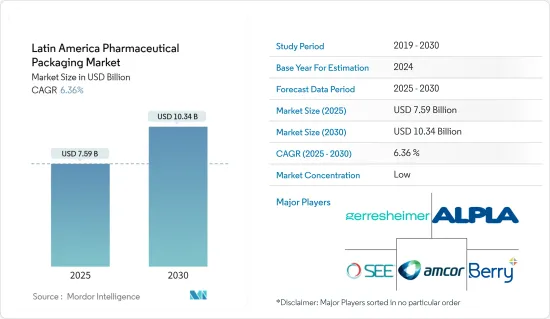
라틴아메리카의 의약품 포장 시장 규모는 2025년 75억 9,9000만 달러로 추정되며, 예측 기간(2025-2030년) 동안 6.36%의 연평균 복합 성장률(CAGR)로 2030년에는 102억 4,000만 달러에 달할 전망입니다.
주요 하이라이트
- 의약품 포장은 의약품의 수명주기 동안 의약품을 표시, 보호, 식별 및 봉쇄하는 데 매우 중요합니다. 제품이 소비될 때까지 보관, 운송 및 진열을 용이하게 하면서 규제 표준을 준수할 수 있도록 합니다. 적절한 포장은 기후, 생물학적, 물리적, 화학적 조건을 포함한 다양한 환경적 요인으로부터 의약품을 보호합니다. 최적의 의약품 포장은 비용 효율적이어야 하며, 제품의 유통기한 동안 충분한 안정성을 제공해야 합니다. 포장 재료 및 제품 유형의 선택은 의약품의 고유 한 특성에 따라 선택된 포장이 적절한 보호와 명확한 식별을 제공하고 포장 된 의약품의 무결성을 유지할 수 있도록 보장합니다.
- 라틴아메리카의 의약품 포장 산업은 이 지역의 경제 성장과 도시화로 인해 수요가 증가하고 있습니다. 지속적인 의료 서비스를 필요로 하는 노인 인구 증가도 이러한 추세에 박차를 가하고 있습니다. 의약품 제조 부문이 성장함에 따라 이 지역의 포장 업체들은 시장의 큰 잠재력을 활용할 수 있게 되었습니다. 해외 투자, 현지 생산 증가, 신제품 개발은 이 지역의 포장 산업 성장에 기여하고 있습니다. 그 결과, 라틴아메리카는 곧 제약 포장의 주요 시장으로 남을 것으로 예상됩니다.
- 라틴아메리카의 제약 산업은 이 지역에서 가장 크고 자본 집약적인 분야 중 하나입니다. 연구개발(R&D)은 혁신적인 의약품 개발에 중요한 역할을 하고 있으며, 지난 20년간 라틴아메리카의 평균 수명을 늘리는 데 기여해 왔습니다. 이러한 R&D에 대한 집중적인 노력은 치료법과 치료법을 크게 발전시켜 이 지역 특유의 다양한 건강 문제를 해결하고 있습니다.
- 전통적으로 라틴아메리카의 의약품 시장을 독점해 온 것은 서유럽과 미국의 대형 다국적 기업이었습니다. 이 전통 있는 기업들은 광범위한 자원, 세계 연구 네트워크, 고도의 제조 능력을 활용하여 이 지역에서 강력한 입지를 유지해 왔습니다. 그러나 최근 몇 년동안 새로운 업체들의 진입으로 인해 상황이 바뀌기 시작했습니다.
- 이러한 신규 진출기업에는 중국, 인도, 한국의 다국적 기업이 포함되며, 이들은 서로 다른 의약품 개발 및 제조 접근 방식을 가져오고 있습니다. 또한, 라틴아메리카의 개발도상국에서도 제네릭 의약품과 틈새 치료 분야에 특화된 현지 기업들이 등장하고 있습니다. 이러한 시장 진출기업의 다양화는 경쟁을 증가시키고, 혁신을 촉진하며, 라틴아메리카 국민들의 의약품 접근성을 향상시킬 수 있습니다. 라틴아메리카의 제약 환경의 변화는 기존 기업과 신생 기업에게 기회이자 도전이 될 수 있습니다. 시장이 계속 발전하고 있는 가운데 규제 환경, 지적재산권, 헬스케어 정책 등의 요인이 이 지역 제약 산업의 미래를 좌우할 것입니다.
- 라틴아메리카 제약산업협회(ALIFAR)는 정부 및 정부간 기관과 독립적으로 활동하는 비영리 국제기구로 라틴아메리카 전역의 국영 제약회사를 대표하고 있습니다. ALIFAR는 라틴아메리카 전역의 국영 제약회사를 대표하며, 라틴아메리카 12개국에서 400개 이상의 회원사를 보유하고 있으며, 라틴아메리카의 의약품 시장의 90% 이상을 점유하고 있습니다. ALIFAR는 회원사 간 협력을 촉진하고, 모범 사례를 공유하며, 이 지역 제약업계가 직면한 공통의 과제를 해결하기 위해 노력하고 있습니다.
- 라틴아메리카의 의약품 수요 증가는 인구 증가, 평균 수명 증가, 만성 질환 증가로 인한 것입니다. 이러한 수요와 제약 산업의 기술 발전은 병, 앰플 및 기타 용기와 같은 포장 솔루션에 대한 수요 증가와 직결됩니다. 그 결과, 라틴아메리카의 제약 포장 시장은 크게 성장했습니다. 포장재 및 포장 솔루션 제조업체는 의약품의 안정성, 안전성, 규제 기준 준수 등 업계의 변화하는 요구 사항을 충족하기 위해 적응해야 했습니다.
- 제약 포장 원료와 관련된 환경 문제는 시장을 제한할 수 있지만, 동시에 이 지역 제약 산업에서 포장 기술 혁신의 기회가 될 수 있습니다. 지속가능성에 대한 관심이 높아짐에 따라 기존 포장재에 대한 감시가 강화되면서 제조업체들은 환경 친화적인 대안을 모색하고 있습니다. 이러한 변화는 비용과 규제 준수 문제를 야기하지만 새로운 환경 친화적 인 포장 솔루션 개발의 길을 열어줍니다.
- 기업들은 생분해성 소재 개발, 플라스틱 사용량 감소, 의약품 포장의 재활용성 향상을 위한 연구개발에 투자하고 있습니다. 이러한 노력은 환경 문제에 대응하고 소비자 선호도 변화 및 규제 요건에 부합하는 것입니다. 그 결과, 업계에서는 환경 영향을 최소화하면서 제품의 무결성을 유지하는 혁신적인 포장 디자인이 급증하고 있으며, 이는 선도적인 기업에게 새로운 시장 부문과 경쟁 우위를 창출할 수 있는 잠재력을 가지고 있습니다.
라틴아메리카의 의약품 포장 시장 동향
플라스틱 병이 큰 시장 점유율을 차지합니다.
- 플라스틱은 다용도성, 내구성, 유연성, 지속가능성으로 인해 의약품 포장에 널리 사용되고 있습니다. 폴리염화비닐, 폴리에틸렌, 폴리프로필렌, 폴리스티렌 등 다양한 소재의 플라스틱 병이 의약품 포장에 사용됩니다. 이 업계는 투명하고 내구성이 뛰어나며 가벼운 플라스틱을 보관 및 유통에 사용합니다. 이러한 플라스틱 소재는 깨지기 쉽지 않고, 다양한 모양과 크기로 쉽게 성형할 수 있으며, 다양한 의약품에 적합하다는 장점이 있습니다.
- 또한 플라스틱 포장은 습기, 빛, 오염 물질로부터 의약품을 보호하여 제품의 무결성을 보장하고 유통기한을 연장하는 데 도움이 됩니다. 의약품 포장에 플라스틱을 사용하는 것은 일반적으로 유리나 금속과 같은 대체 재료보다 가볍고 경제적이기 때문에 제조 및 운송의 비용 효율성에 기여합니다.
- 플라스틱 병은 시럽, 캡슐, 정제, 안약 등 다양한 액체 및 고체 의약품의 포장에 널리 사용되고 있습니다. 제약업계가 플라스틱 포장을 선호하는 이유는 강도, 경량성, 유연성, 다양한 모양과 크기에 대응할 수 있기 때문입니다. 제약용 플라스틱 병 시장은 기술 발전과 경구용 고체 및 액체 의약품의 플라스틱 용기 채택 증가로 인해 확대되고 있습니다.
- 제약용 플라스틱은 무독성, 비발암성, 생체적합성, 생체환경에 무해해야 합니다. 이러한 엄격한 요구 사항은 의약품의 안전성과 효능을 보장합니다. 의약품 개발 과정에서 PET 포장재가 의약품에 용출 및 추출되지 않는지 여부를 엄격하게 테스트합니다. 이 테스트는 포장과 의약품 내용물 사이의 오염 및 상호 작용을 방지하기 위해 매우 중요하며, PET 병은 효과적인 오일 장벽을 제공하여 운송 중에 화학 물질이 유출되는 것을 방지합니다. 이 장벽 특성은 액체 의약품의 무결성을 유지하고 외부 오염을 방지하는 데 중요합니다. 또한, PET 포장은 내구성과 파손에 대한 저항력이 뛰어나 다양한 취급 및 운송 조건에 노출될 수 있는 의약품 용기에 필수적인 품질입니다.
- 의약품 플라스틱 병에 대한 수요가 증가하고 있으며, 이는 라틴아메리카의 플라스틱 병 시장 평가에 영향을 미치고 있으며, 2023년 라틴아메리카 및 카리브해 국가의 의약품 수출 총액은 약 93억 달러에 달했으며 분석 기간 동안이 지역의 의약품 수출액에서 최고 수준을 기록했습니다. 2022년에는 멕시코가 의약품 수출액에서 라틴아메리카 국가 중 선두를 차지할 것으로 예상됩니다. 또한, 고체 용기의 성장은 영양소 함유 의약품의 채택 증가로 인해 도움이 될 것으로 예상됩니다. 인체의 영양 균형을 유지하기 위해 영양 강화에 대한 인식이 높아짐에 따라 영양 보충제 소비가 증가하여 이 지역의 플라스틱 병 수요를 촉진할 것으로 예상됩니다.
- 안과 질환을 앓고 있는 사람들은 일반적으로 스포이드 병을 사용합니다. 이러한 특수 용기는 안과 약물과 용액을 정확하게 투여할 수 있게 해주며, Gerresheimer와 같은 회사는 고체, 액체, 안과 제품 등 다양한 용도의 제약 플라스틱 포장을 제공합니다. 이 기업의 제품군에는 액체 제제 및 점안액용 PET 병이 포함됩니다. 이 병은 안과용 의약품의 보관 및 조제, 적절한 복용량 보장, 제품 무결성 유지에 대한 특정 요구 사항을 충족하도록 설계되었습니다. 안과 용도의 스포이드 병 사용은 이 지역에서 눈 관련 질환의 유병률이 계속 증가함에 따라 점점 더 중요해지고 있습니다.
눈에 띄는 성장이 예상되는 멕시코
- 멕시코는 라틴아메리카의 의약품 시장 점유율에 크게 기여하고 있습니다. 멕시코는 이 지역의 성숙한 제약 산업 시장으로, 특히 의약품 포장 분야에서 많은 제품 혁신이 일어나고 있습니다. 이러한 혁신의 원동력은 멕시코 전역에 존재하는 대규모 벤더들이 주도하고 있습니다. 멕시코의 의약품 시장은 탄탄한 의료 시스템과 제네릭 및 브랜드 의약품에 대한 수요 증가에 힘입어 꾸준히 성장하고 있습니다.
- 멕시코의 전략적 위치와 NAFTA(현 USMCA)와 같은 무역협정으로 인해 멕시코는 지역 내 제약업계의 중요한 기업로서 그 위상이 더욱 높아지고 있습니다. 최근 멕시코에서는 의약품 연구개발 활동이 활발해지고 있으며, 국내외 기업들이 현지 시설에 투자하고 있습니다. 이를 통해 고품질의 비용 효율적인 의약품 생산이 증가하여 라틴아메리카의 의약품 시장에서 멕시코의 입지를 더욱 공고히 하고 있습니다.
- 멕시코 제약 산업의 포장 부문은 특히 역동적입니다. 이 분야의 기술 혁신은 의약품의 안전성 향상, 유통기한 연장, 환자의 복약 순응도 향상에 초점을 맞추었습니다. 이러한 첨단 포장에는 지능형 포장 솔루션, 환경 친화적 인 재료, 다양한 환자 그룹의 요구를 충족시키는 디자인 등이 포함됩니다. 멕시코 제약 산업은 복잡한 규제와 다른 신흥 시장과의 경쟁이라는 도전에도 불구하고 계속 진화하고 적응해 나가고 있습니다. 멕시코는 기술 혁신에 대한 헌신과 탄탄한 제조 역량을 바탕으로 라틴아메리카 제약 시장에서 지속적인 성장과 영향력을 발휘할 수 있는 유리한 위치를 점하고 있습니다.
- 멕시코의 의료 산업은 주로 가격 주도형이며, 국산품은 정부 판매에서 가격 우위를 점하고 있습니다. 기업은 품질을 보장하기 위해 모든 위생 등록 기준을 준수해야 합니다. 외국계 기업은 비용 절감 방안을 검토하고 마케팅 및 홍보 자료에서 신기술의 장점을 강조해야 합니다.2023년 멕시코의 의약품 매출은 약 108억 3,000만 달러로 2022년 101억 2,000만 달러에서 증가할 것으로 예상됩니다. 이 지역의 의약품 생산 확대, 시판 의약품의 가용성 증가, 현지 기업의 대규모 투자는 브라질 제약 부문의 상당한 성장에 기여하고 있습니다. 이러한 추세는 수출 증가와 함께 전국적으로 의약품 포장에 대한 수요 증가로 이어질 것으로 예상됩니다.
- 의료 비용 증가와 병원 및 제약 제조업체와 같은 최종 사용자들 사이에서 선호도가 높아짐에 따라 예측 기간 동안 멕시코에서 제품 사용을 촉진할 것으로 예상됩니다. 바이알은 다른 유리 용기와 마찬가지로 재활용이 용이하고 환경 친화적인 것으로 간주됩니다. 멕시코의 의료 및 헬스케어 분야에서 최종 사용자가 기존 용기에서 바이알로 전환함에 따라 이러한 제품에 대한 유리한 수요가 발생하고 있습니다.
라틴아메리카의 의약품 포장 산업 개요
- 2024년 5월 - 독일에 본사를 둔 제약 및 헬스케어 포장 전문 기업 게레스하이머(Geresheimer)가 멕시코 케레타로(Queretaro)에 위치한 시설을 확장할 예정입니다. 이번 확장은 북미 시장의 고급 주사기 수요를 충족시키기 위해 RTF(Ready-to-Fill) 주사기 생산 능력을 강화하는 것을 목표로 하고 있습니다. 이 프리필러블 유리 주사기는 비만 관리를 위한 글루카곤 유사 펩타이드-1 제제를 포함한 주사제용 바이오의약품을 위해 설계됐습니다. 이번 증설은 2023년 11월 기공식을 시작으로 시작되며, 게레스하이머는 이 프로젝트에 약 1억 유로(미화 1억 6,000만 달러)를 투자할 예정입니다.
- 2023년 11월 - 암코는 폴리에틸렌 흐름으로 재활용 가능한 모든 필름 의료용 포장재를 만들기 위해 모노 PE 라미네이트를 도입했습니다. 이 혁신은 환자의 안전을 보장하는 동시에 포장의 탄소 배출량을 줄일 수 있는 것으로 보고되고 있습니다. 이 필름은 드레이프, 보호재, 카테터, 주사 및 튜브 시스템 등을 담는 3D 열성형 패키지의 재활용 가능한 뚜껑을 만들 수 있을 것으로 기대됩니다.
기타 혜택 :
기타 혜택- 엑셀 형식 시장 예측(ME) 시트
- 3개월간의 애널리스트 지원
목차
제1장 서론
- 조사의 전제조건과 시장 정의
- 조사 범위
제2장 조사 방법
제3장 주요 요약
제4장 시장 인사이트
- 시장 개요
- 산업 밸류체인 분석
- 업계의 매력 - Porter의 Five Forces 분석
- 공급 기업의 교섭력
- 바이어의 교섭력
- 신규 진출업체의 위협
- 대체품의 위협
- 경쟁 기업간 경쟁 관계
제5장 시장 역학
- 시장 성장 촉진요인
- 시장 성장 억제요인
제6장 시장 세분화
- 포장재료별
- 플라스틱
- 유리
- 금속
- 종이
- 제품 유형별
- 블리스터 팩
- 플라스틱 병
- 프리필러블 시린지
- 바이알 및 앰플
- 폐쇄 용기
- 용기
- 기타 제품 유형
- 국가별
- 브라질
- 멕시코
- 콜롬비아
- 아르헨티나
제7장 경쟁 구도
- 기업 개요
- Amcor Group GmbH
- Sealed Air Corporation
- Berry Global Inc.
- Schott AG
- Gerresheimer AG
- Aptar Group Inc.
- ALPLA Werke Alwin Lehner GmbH & Co KG
- Pretium Packaging
- Silgan Holdings Inc.
- Greiner Packaging International GmbH
제8장 투자 분석
제92장 시장의 미래
LSH 25.01.15The Latin America Pharmaceutical Packaging Market size is estimated at USD 7.59 billion in 2025, and is expected to reach USD 10.34 billion by 2030, at a CAGR of 6.36% during the forecast period (2025-2030).
Key Highlights
- Pharmaceutical packaging is crucial in drug product presentation, protection, identification, and containment throughout their lifecycle. It facilitates storage, transport, and display while ensuring compliance with regulatory standards until the product is consumed. Adequate packaging shields the drug from various environmental factors, including climatic, biological, physical, and chemical conditions. To be optimal, pharmaceutical packaging must be cost-effective and provide adequate stability throughout the product's shelf life. The selection of packaging materials and types is based on the specific nature of the drug, ensuring that the chosen packaging offers appropriate protection and clear identification and maintains the integrity of the enclosed pharmaceutical product.
- The pharmaceutical packaging industry in Latin America is experiencing increased demand driven by the region's expanding economies and urbanising population. The growing elderly demographic requiring continuous medical care further fuels this trend. As the pharmaceutical manufacturing sector gains momentum, packaging vendors in the region can capitalise on the market's significant potential. Foreign investments, rising local production, and new product development contribute to the growth of the regional packaging industry. Consequently, Latin America is expected to remain a key market for pharmaceutical packaging shortly.
- The pharmaceutical industry in Latin America stands as one of the region's largest and most capital-intensive sectors. Research and development (R&D) plays a crucial role in developing innovative drugs, contributing to increased life expectancy in Latin America over the past two decades, albeit at a high cost. This focus on R&D has led to significant advancements in medical treatments and therapies, addressing various health challenges specific to the region.
- Traditionally, large multinational companies from Western Europe and the United States have dominated the pharmaceutical market in Latin America. These established firms have leveraged their extensive resources, global research networks, and advanced manufacturing capabilities to maintain a strong regional presence. However, in recent years, the landscape has begun to shift with the entry of new players into the industry.
- These new entrants include multinational companies from China, India, and South Korea, bringing different drug development and manufacturing approaches. Additionally, local firms from several developing countries within Latin America have emerged, often focusing on generic drugs or niche therapeutic areas. This diversification of market participants has led to increased competition, potentially driving innovation and improving access to medicines for Latin American populations.The evolving pharmaceutical landscape in Latin America presents opportunities and challenges for established and emerging companies. As the market continues to develop, factors such as regulatory environments, intellectual property rights, and healthcare policies will significantly shape the industry's future in the region.
- ALIFAR, the Latin American Association of Pharmaceutical Industries, is a non-profit international organisation operating independently from governmental and intergovernmental bodies. It represents nationally owned pharmaceutical companies across Latin America. ALIFAR's membership encompasses over 400 companies from 12 Latin American countries, accounting for over 90% of the region's pharmaceutical market. The organization plays a crucial role in advocating for the interests of its member companies and promoting the development of the pharmaceutical industry in Latin America. ALIFAR works to foster collaboration among its members, share best practices, and address common challenges faced by the industry in the region.
- The growing demand for pharmaceutical drugs and medicines in Latin America has been driven by population growth, increasing life expectancy, and a rising prevalence of chronic diseases. This demand and technological advancements in the pharmaceutical industry have directly led to an increased need for packaging solutions such as bottles, ampules, and other containers. The pharmaceutical packaging market in Latin America has consequently experienced significant growth. Manufacturers of packaging materials and solutions have had to adapt to meet the industry's evolving requirements, including considerations for drug stability, safety, and compliance with regulatory standards.
- Environmental concerns related to pharmaceutical packaging raw materials may limit the market but also provide opportunities for innovation in packaging within the pharmaceutical industry in the region. The increasing focus on sustainability has heightened scrutiny of traditional packaging materials, prompting manufacturers to explore eco-friendly alternatives. This shift presents cost and regulatory compliance challenges but also opens avenues for developing novel, environmentally responsible packaging solutions.
- Companies are investing in research and development to create biodegradable materials, reduce plastic usage, and improve the recyclability of pharmaceutical packaging. These efforts address environmental concerns and align with changing consumer preferences and regulatory requirements. As a result, the industry is witnessing a surge in innovative packaging designs that maintain product integrity while minimising environmental impact, potentially creating new market segments and competitive advantages for forward-thinking companies.
Latin America Pharmaceutical Packaging Market Trends
Plastic Bottles to Hold Significant Market Share
- Plastic is widely used in pharmaceutical packaging due to its versatility, durability, flexibility, and sustainability. Pharmaceutical packaging employs plastic bottles made from various materials, including polyvinyl chloride, polyethene, polypropylene, and polystyrene. The industry utilises transparent, durable, lightweight plastic for storage and distribution. These plastic materials offer several advantages, such as resistance to breakage, ease of moulding into various shapes and sizes, and compatibility with a wide range of pharmaceutical products.
- Additionally, plastic packaging helps protect medications from moisture, light, and contaminants, ensuring product integrity and extending shelf life. The use of plastic in pharmaceutical packaging also contributes to cost-effectiveness in manufacturing and transportation, as it is generally lighter and more economical than alternative materials like glass or metal.
- Plastic bottles are extensively utilised for packaging various liquid and solid medicines, including syrups, capsules, tablets, and ophthalmic preparations. The pharmaceutical industry favours plastic packaging due to its strength, lightweight nature, and flexibility, allowing for diverse forms and sizes. The market for pharmaceutical plastic bottles has expanded, driven by technological advancements and the increased adoption of plastic containers for oral solid and liquid medications.
- Plastics in pharmaceutical applications must be non-toxic, non-carcinogenic, biocompatible, and harmless to the biological environment. These stringent requirements ensure the safety and efficacy of pharmaceutical products. The drug development process includes rigorous testing of PET packaging for leaching and extractability in conjunction with the drug. This testing is crucial to prevent contamination or interaction between the packaging and the pharmaceutical contents. PET bottles provide an effective oil barrier, helping to resist chemical spills during transport. This barrier property is significant for maintaining the integrity of liquid medications and preventing contamination from external sources. Additionally, PET packaging offers durability and resistance to breakage, essential qualities for pharmaceutical containers that may be subject to various handling and transportation conditions.
- The demand for pharmaceutical plastic bottles has increased, impacting the market valuation of plastic bottles in Latin America. In 2023, the combined value of pharmaceutical exports from Latin America and the Caribbean reached approximately USD 9.3 billion, marking the region's highest level of pharmaceutical exports during the analyzed period. In 2022, Mexico led Latin American countries in pharmaceutical export value.Further, it is anticipated that the growth of solid containers may be aided due to the increased adoption of medicines containing nutrients. The increasing awareness of nutritional enrichment among working professionals for maintaining balanced nutrition in the human body is anticipated to promote the consumption of dietary supplements and drive demand for plastic bottles in the region.
- Individuals with eye conditions commonly use dropper bottles. These specialised containers allow for the precise administration of eye medications and solutions. Companies like Gerresheimer provide pharmaceutical plastic packaging for various applications, including solid, liquid, and ophthalmic products. Their product range includes PET bottles for liquid dosage forms and ophthalmic solutions. These bottles are engineered to meet specific requirements for preserving and dispensing eye medications, ensuring proper dosage and maintaining product integrity. The use of dropper bottles in ophthalmic applications has become increasingly important as the prevalence of eye-related disorders continues to rise in the region.
Mwxico is Expected to Witness Significant Growth
- Mexico is a significant contributor to the pharmaceutical market share in Latin America. As a mature market in the region's pharmaceutical industry, Mexico has experienced numerous product innovations, particularly in pharmaceutical packaging. This innovation is driven by the presence of significant vendors throughout the country. The Mexican pharmaceutical market has grown steadily, supported by a robust healthcare system and increasing demand for generic and branded medications.
- The country's strategic location and trade agreements, such as NAFTA (now USMCA), have further enhanced its position as a critical player in the regional pharmaceutical landscape. In recent years, Mexico has seen a rise in pharmaceutical research and development activities, with domestic and international companies investing in local facilities. This has increased the production of high-quality, cost-effective medications, further solidifying Mexico's position in the Latin American pharmaceutical market.
- The packaging sector within Mexico's pharmaceutical industry has been particularly dynamic. Innovations in this area have focused on improving drug safety, extending shelf life, and enhancing patient compliance. These advancements include intelligent packaging solutions, eco-friendly materials, and designs catering to different patient groups' needs. Despite challenges such as regulatory complexities and competition from other emerging markets, Mexico's pharmaceutical industry continues to evolve and adapt. The country's commitment to innovation and established manufacturing capabilities position it well for continued growth and influence in the Latin American pharmaceutical market.
- The Mexican healthcare industry is primarily price-driven, with domestically produced goods having a pricing advantage in government sales. Businesses must comply with all sanitary registration standards to ensure quality. Foreign companies should consider cost-cutting measures and highlight the benefits of new technology in their marketing and promotional materials. In 2023, Mexico's pharmaceutical product sales reached approximately USD 10.83 billion, an increase from USD 10.12 billion in 2022. The region's expanding pharmaceutical production, increased availability of over-the-counter medicines, and significant investments by local businesses contribute to the substantial growth of the Brazilian pharmaceutical sector. These trends are expected to lead to an increase in pharmaceutical packaging demand nationwide, along with growing exports.
- The increasing cost of healthcare and the growing preference among end-users such as hospitals and pharmaceutical manufacturers are expected to drive product usage in Mexico during the forecast period. Vials, like other glass containers, are easily recyclable and considered environmentally friendly. The medical and healthcare sectors in the country are experiencing a lucrative demand for these products due to end-users' shift from conventional containers to vials.
Latin America Pharmaceutical Packaging Industry Overview
The pharmaceutical packaging market in Latin America is fragmented, as established companies focus on innovation and acquisition. Companies like Amcor Group GmbH, Berry Global Inc., Schott AG. invest a lot of their resources and money in Research and development to innovate new products, meet with the environment, and ensure government compliance.
- May 2024 - Gerresheimer, a Germany-based company specialising in pharmaceutical and healthcare packaging, is set to expand its facility in Queretaro, Mexico. This expansion aims to boost production capacities for ready-to-fill (RTF) syringes, addressing the North American market's demand for premium syringes. These prefillable glass syringes are designed for injectable biopharmaceuticals, including glucagon-like peptide-1 drugs for obesity management. The expansion started with a ground-breaking ceremony in November 2023, and Gerresheimer is channelling an investment of around EUR 100 million (USD 106 million) into the project.
- November 2023 - Amcor has introduced a mono-PE laminate to create all-film medical packaging recyclable in the polyethylene stream. This innovation reportedly reduces the package's carbon footprint while ensuring patient safety. The film is expected to enable recycle-ready lidding for 3D thermoformed packages, which house items like drapes, protective materials, catheters, and injection and tubing systems.
Additional Benefits:
- The market estimate (ME) sheet in Excel format
- 3 months of analyst support
TABLE OF CONTENTS
1 INTRODUCTION
- 1.1 Study Assumptions and Market Definition
- 1.2 Scope of the Study
2 RESEARCH METHODOLOGY
3 EXECUTIVE SUMMARY
4 MARKET INSIGHTS
- 4.1 Market Overview
- 4.2 Industry Value Chain Analysis
- 4.3 Industry Attractiveness - Porter's Five Forces Analysis
- 4.3.1 Bargaining Power of Suppliers
- 4.3.2 Bargaining Power of Buyers
- 4.3.3 Threat of New Entrants
- 4.3.4 Threat of Substitute Products
- 4.3.5 Intensity of Competitive Rivalry
5 MARKET DYNAMICS
- 5.1 Market Drivers
- 5.1.1 Increasing Domestic Pharmaceuticals Production
- 5.1.2 Growing FDI In regional pharmaceutical and packaging sector
- 5.2 Market Restraints
- 5.2.1 Environmental Concerns related to Pharmaceutical Packaging Raw Materials
- 5.2.2 Fluctuations In Raw Material Prices
6 MARKET SEGMENTATION
- 6.1 By Packaging Material
- 6.1.1 Plastic
- 6.1.2 Glass
- 6.1.3 Metal
- 6.1.4 Paper
- 6.2 By Product Type
- 6.2.1 Blister Packs
- 6.2.2 Plastic Bottles
- 6.2.3 Prefillable Syringes
- 6.2.4 Vials and Ampuls
- 6.2.5 Closures
- 6.2.6 Containers
- 6.2.7 Other Product Types
- 6.3 By Country
- 6.3.1 Brazil
- 6.3.2 Mexico
- 6.3.3 Columbia
- 6.3.4 Argentina
7 COMPETITIVE LANDSCAPE
- 7.1 Company Profiles
- 7.1.1 Amcor Group GmbH
- 7.1.2 Sealed Air Corporation
- 7.1.3 Berry Global Inc.
- 7.1.4 Schott AG
- 7.1.5 Gerresheimer AG
- 7.1.6 Aptar Group Inc.
- 7.1.7 ALPLA Werke Alwin Lehner GmbH & Co KG
- 7.1.8 Pretium Packaging
- 7.1.9 Silgan Holdings Inc.
- 7.1.10 Greiner Packaging International GmbH