

|
시장보고서
상품코드
1630444
민간항공기용 항공 연료 : 시장 점유율 분석, 산업 동향 및 통계, 성장 예측(2025-2030년)Commercial Aircraft Aviation Fuel - Market Share Analysis, Industry Trends & Statistics, Growth Forecasts (2025 - 2030) |
||||||
 Mordor Intelligence
■ 보고서에 따라 최신 정보로 업데이트하여 보내드립니다. 배송일정은 문의해 주시기 바랍니다.
가격
※ 부가세 별도
한글목차
영문목차
민간항공기용 항공 연료 시장은 예측 기간 동안 20.86% 이상의 CAGR을 기록할 것으로 예상됩니다.
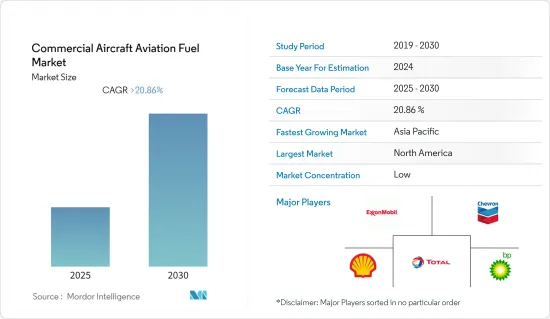
민간항공기 연료 시장은 지역 폐쇄로 인해 COVID-19의 악영향을 받았습니다. 그러나 2021년에는 시장이 회복되었습니다.
주요 하이라이트
- 정기편과 비정기편 항공기는 민간 항공의 일부입니다. 향후 몇 년 동안 전 세계 항공 여행객 수와 항공기 보유 대수 증가가 시장을 주도할 것으로 보입니다.
- 그러나 항공 연료의 높은 비용이 시장 성장을 억제할 것으로 예상됩니다.
- 항공 산업에서 배출되는 배기가스에 대한 우려가 커지고 있으며, 신흥 경제국 정부는 항공사의 배기가스 배출을 줄이기 위한 조치를 취하고 있습니다. 향후 몇 년 동안 민간항공기용 항공 연료는 많은 비즈니스 기회를 창출할 가능성이 높습니다.
- 예측 기간 동안 아시아태평양이 가장 빠르게 성장하는 시장이 될 것으로 예상되며, 대부분의 수요는 중국, 인도, 일본 등의 국가에서 발생할 것으로 예상됩니다.
민간항공기용 항공 연료 시장 동향
공기터빈 연료(ATF) 타입이 시장을 독점
- Jet-A 사양의 연료는 1950 년대부터 미국에서 사용되어 왔으며 일반적으로 미국과 토론토 및 밴쿠버와 같은 캐나다의 일부 공항 외에는 구할 수 없으며 Jet-A의 인화점은 Jet-A1과 동일하지만 최대 어는점이 더 높습니다(-40 ℃). A) 사양에 따라 공급되며, Jet A1은 대부분의 터빈 엔진 기계에 적합합니다. 최소 인화점은 38 ° C(100 ° F), 최대 어는점은 -47 ° C. Jet A1은 미국 이외의 지역에서도 널리 사용할 수 있습니다.
- LanzaTech의 에탄올 기반 ATJ-SPK는 이제 미국과 세계 대부분의 국가에서 민간 항공사의 표준 제트 A와 혼합하여 사용할 수 있으며, ASTM D7566의 개정으로 LanzaTech ATJ-SPK는 민간항공기의 기존 제트 연료의 제트 연료에 최대 50%까지 혼합하여 사용할 수 있습니다.
- 제트 A 연료는 최근 대학의 개발 동향을 목격하고 있습니다. 예를 들어, 2021년 6월 워싱턴 주립대 연구진은 폐플라스틱을 지속가능한 제트A 연료로 전환하는 공정을 개발했습니다. 이 공정이 개선되고 대규모로 적용되면 온실 가스 배출 및 플라스틱 오염과 같은 주요 환경 문제를 해결할 수 있을 것으로 기대됩니다.
- 1차 산업은 항공 노선과 국제 여객 수가 가장 많은 도시를 "항공 메가 시티"(AMC)로 분류하고 있으며, Airbus에 따르면 66개의 AMC가 있으며, 이들 도시를 오가는 항공편의 60% 이상, AMC 간 항공편만 17%를 차지한다고 합니다. 전 세계적으로 AMC가 증가함에 따라 장거리 항공편이 기하급수적으로 증가하여 제트 연료에 대한 수요가 증가하고 있으며, 이에 따라 상업 부문의 항공 연료 수요도 증가하고 있습니다.
- 따라서 위의 요인에 따라 예측 기간 동안 항공 터빈 연료(ATF)가 민간항공기용 항공 연료 시장을 독점할 것으로 예상됩니다.
아시아태평양이 시장을 독점
- 아시아태평양은 민간 부문에서 중요한 항공 연료 시장 중 하나입니다. 최근 몇 년 동안 인도와 동남아시아 등 급성장하는 시장은 이 지역의 성장에 점점 더 많은 기여를 하고 있으며, 이러한 신흥 경제 국가들이 견조한 승객 수 증가를 뒷받침하고 있습니다. 국제항공 운송협회(IATA)에 따르면, 아시아태평양에서는 중국, 인도, 인도네시아, 베트남을 포함한 국가들이 2035년까지 여객 수송량이 가장 많을 것으로 예상됩니다.
- 또한 Boeing Commercial Market Outlook(CMO) 2021-2040에 따르면, 지역 간 이동하는 사람들의 수는 2040년까지 크게 증가할 것으로 예상됩니다. 따라서 여객 운송량의 증가는 특히 신흥 지역의 공급망에 관련된 모든 사람들에게 미래의 수요 증가에 대응하고 성장할 수있는 많은 기회를 제공 할 가능성이 높습니다.
- 또한, 민간 항공사의 항공기는 지난 10년간 지속적으로 증가하여 2022년 1월 현재 전 세계적으로 2만 2,799대의 항공기가 사용되고 있습니다. 승객 수는 민간 항공사의 운항 횟수와 직결되며, 보잉과 에어버스 모두 꾸준히 주문과 납품을 늘리고 있습니다.
- 중국은 세계 최대 항공 연료 시장 중 하나이며, 항공 여객 수에서도 가장 큰 시장 중 하나이며, 2021년 현재 중국 국내선 여객 수는 미국에 이어 두 번째로 큰 항공 시장입니다.
- 일본에서는 일본항공(JAL)과 전일본공수(ANA)가 양대 항공사입니다. 그러나 Peach Aviation, Jetstar Japan, Vanilla Air와 같은 저비용항공사(LCC)가 시장 점유율을 확대하며 일본 항공 시장을 끌어올리고 있습니다.
- 이러한 모든 요인으로 인해 예측 기간 동안 아시아태평양이 민간항공기용 항공 연료 시장을 주도할 것으로 예상됩니다.
민간항공기용 항공 연료 산업 개요
민간항공기 연료 시장은 세분화되어 있습니다. 주요 참여업체로는 Exxon Mobil Corporation, Chevron Corporation, Shell PLC, TotalEnergies SE, BP PLC 등이 있습니다.
기타 혜택
- 엑셀 형식의 시장 예측(ME) 시트
- 3개월간의 애널리스트 지원
목차
제1장 소개
- 조사 범위
- 시장 정의
- 조사 가정
제2장 조사 방법
제3장 주요 요약
제4장 시장 개요
- 소개
- 2028년까지 시장 규모와 수요 예측(단위 : 10억 달러)
- 최근 동향과 개발
- 정부 규제와 시책
- 시장 역학
- 성장 촉진요인
- 성장 억제요인
- 공급망 분석
- Porter's Five Forces 분석
- 공급 기업의 교섭력
- 소비자의 협상력
- 신규 참여업체의 위협
- 대체품의 위협
- 경쟁 기업 간의 경쟁 강도
제5장 시장 세분화
- 연료 유형
- 에어 터빈 연료(ATF)
- 항공 바이오연료
- 기타 연료 유형
- 지역
- 북미
- 유럽
- 아시아태평양
- 남미
- 중동 및 아프리카
제6장 경쟁 구도
- M&A, 합작투자, 제휴, 협정
- 주요 기업의 전략
- 기업 개요
- 기존 항공 연료 공급업체
- Exxon Mobil Corporation
- Shell PLC
- TotalEnergies SE
- BP PLC
- Chevron Corporation
- 재생 항공 연료 공급업체
- Neste Oyj
- Swedish Biofuels AB
- Gevo Inc.
- Honeywell International Inc.
- 기존 항공 연료 공급업체
제7장 시장 기회와 향후 동향
ksm 25.01.23The Commercial Aircraft Aviation Fuel Market is expected to register a CAGR of greater than 20.86% during the forecast period.
The commercial aviation fuel market was adversely affected by COVID-19 due to regional lockdowns. However, the market rebounded in 2021.
Key Highlights
- Scheduled and non-scheduled aircraft are a part of commercial aviation. These planes carry people or goods for a fee.During the next few years, the market is likely to be driven by things like the growing number of air travelers and aircraft fleets around the world.
- However, the high cost of aviation fuel is expected to restrain market growth.
- Concerns about emissions from the airline industry are growing, and governments in developed economies are taking steps to reduce airline emissions. In the coming years, this is likely to create a lot of opportunities for commercial aircraft aviation fuel.
- Asia-Pacific is expected to be the fastest-growing market during the forecast period, with the majority of the demand coming from countries like China, India, Japan, etc.
Commercial Aircraft Aviation Fuel Market Trends
Air Turbine Fuel (ATF) Type to Dominate the Market
- Jet-A-specified fuel has been used in the United States since the 1950s, and it is usually not available outside the United States and a few Canadian airports, such as Toronto and Vancouver. Jet-A has the same flash point as Jet-A1 but a higher freeze point maximum (-40°C). It is supplied against the ASTM D1655 (Jet A) specification. Jet A1 is suitable for most turbine-engine aircraft. It has a flash point minimum of 38 °C (100°F) and a freeze point maximum of -47 °C. Jet A1 is widely available outside of the United States.
- LanzaTech's ethanol-based ATJ-SPK was made eligible for use as a blending component with standard Jet-A for commercial airline use in the United States and in most countries around the world. Under the revised ASTM D7566, LanzaTech ATJ-SPK is eligible to be used up to a 50% blend in conventional jet fuel for commercial flights.
- Jet-A fuels have been witnessing developments from universities in recent years. For instance, in June 2021, researchers at Washington State University developed a process for turning waste plastics into sustainable jet-A fuel. If the process is refined and applied on a large scale, the procedure is expected to address major environmental problems, including greenhouse gas emissions and plastic pollution.
- The primary industry classifies the cities with the most aviation connectivity and international passengers as "aviation megacities" (AMC). According to Airbus, there are 66 AMCs, with over 60% of traffic flying to and from these cities and 17% between AMCs alone. With the increase in AMCs across the world, long-haul flights are increasing exponentially, driving the demand for jet fuels and thus increasing the demand for aviation fuel in the commercial sector.
- Therefore, based on the above-mentioned factors, air turbine fuel (ATF) is expected to dominate the commercial aircraft aviation fuel market during the forecast period.
Asia-Pacific to Dominate the Market
- Asia-Pacific is one of the significant aviation fuel markets in the commercial segment. In recent years, the fastest-growing markets, such as India and Southeast Asia, are increasingly contributing to the region's growth as these emerging economies have been endorsing robust passenger growth. As per the International Air Transport Association (IATA), in the Asia-Pacific region, countries including China, India, Indonesia, and Vietnam are expected to witness the highest passenger traffic by 2035.
- Furthermore, the Boeing Commercial Market Outlook (CMO) 2021-2040 says that the number of people traveling between the regions will go up a lot by 2040. So, the rise in passenger traffic is likely to give everyone in the supply chain, especially in emerging regions, a lot of chances to grow and meet the growing demand in the future.
- Also, commercial airline fleets have been growing over the past ten years, and as of January 2022, there were 22,799 planes in use around the world. The number of passengers is directly related to the number of commercial flights, and both Boeing and Airbus are steadily getting more orders and delivering more planes.
- China is one of the largest aviation fuel markets globally, and it is also one of the largest in terms of air passengers carried. As of 2021, domestic passengers in China were the second largest in the aviation market after the United States.
- Japan Airlines (JAL) and All Nippon Airways (ANA) are the two largest commercial airlines in Japan. However, low-cost carriers (LCCs) like Peach Aviation, Jetstar Japan, and Vanilla Air are gaining market share and boosting the aviation market in the country.
- Based on all of these factors, Asia-Pacific is expected to lead the market for aviation fuel for commercial aircraft during the forecast period.
Commercial Aircraft Aviation Fuel Industry Overview
The commercial aviation fuel market is fragmented. Some of the major players (in no particular order) include Exxon Mobil Corporation, Chevron Corporation, Shell PLC, TotalEnergies SE, and BP PLC.
Additional Benefits:
- The market estimate (ME) sheet in Excel format
- 3 months of analyst support
TABLE OF CONTENTS
1 INTRODUCTION
- 1.1 Scope of the Study
- 1.2 Market Definition
- 1.3 Study Assumptions
2 RESEARCH METHODOLOGY
3 EXECUTIVE SUMMARY
4 MARKET OVERVIEW
- 4.1 Introduction
- 4.2 Market Size and Demand Forecast in USD billion, till 2028
- 4.3 Recent Trends and Developments
- 4.4 Government Policies and Regulations
- 4.5 Market Dynamics
- 4.5.1 Drivers
- 4.5.2 Restraints
- 4.6 Supply Chain Analysis
- 4.7 Porter's Five Forces Analysis
- 4.7.1 Bargaining Power of Suppliers
- 4.7.2 Bargaining Power of Consumers
- 4.7.3 Threat of New Entrants
- 4.7.4 Threat of Substitute Products and Services
- 4.7.5 Intensity of Competitive Rivalry
5 MARKET SEGMENTATION
- 5.1 Fuel Type
- 5.1.1 Air Turbine Fuel (ATF)
- 5.1.2 Aviation Biofuel
- 5.1.3 Other Fuel Types
- 5.2 Geography
- 5.2.1 North America
- 5.2.2 Europe
- 5.2.3 Asia-Pacific
- 5.2.4 South America
- 5.2.5 Middle-East and Africa
6 COMPETITIVE LANDSCAPE
- 6.1 Mergers and Acquisitions, Joint Ventures, Collaborations, and Agreements
- 6.2 Strategies Adopted by Leading Players
- 6.3 Company Profiles
- 6.3.1 Conventional Aviation Fuel Suppliers
- 6.3.1.1 Exxon Mobil Corporation
- 6.3.1.2 Shell PLC
- 6.3.1.3 TotalEnergies SE
- 6.3.1.4 BP PLC
- 6.3.1.5 Chevron Corporation
- 6.3.2 Renewable Aviation Fuel Suppliers
- 6.3.2.1 Neste Oyj
- 6.3.2.2 Swedish Biofuels AB
- 6.3.2.3 Gevo Inc.
- 6.3.2.4 Honeywell International Inc.
- 6.3.1 Conventional Aviation Fuel Suppliers


