


|
시장보고서
상품코드
1693664
아시아태평양의 연료전지 자동차 시장 : 점유율 분석, 산업 동향, 성장 예측(2025-2030년)Asia-Pacific Fuel Cell Vehicles - Market Share Analysis, Industry Trends & Statistics, Growth Forecasts (2025 - 2030) |
||||||
 Mordor Intelligence
■ 보고서에 따라 최신 정보로 업데이트하여 보내드립니다. 배송일정은 문의해 주시기 바랍니다.
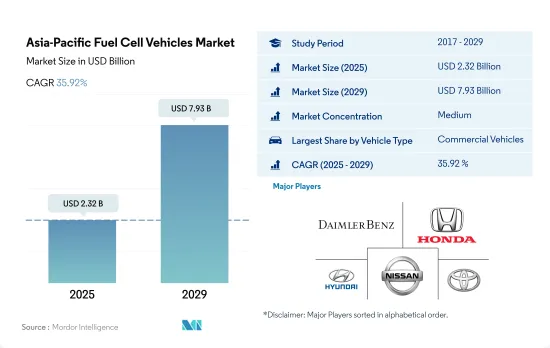
아시아태평양의 연료전지 자동차 시장 규모는 2025년 23억 2,000만 달러로 추정되고, 2029년에는 79억 3,000만 달러에 이를 것으로 예측되며, 예측 기간 중(2025-2029년) CAGR 35.92%로 성장할 전망입니다.
다양한 유형의 차량에 연료전지 기술을 도입하는이 지역의 첨단 접근법을 보여주고 수송의 청정 에너지 원으로서 수소의 강한 잠재력을 보여줍니다.
- 아시아태평양은 지속가능한 수송수단의 급증을 눈에 띄고 있으며, 이는 다양한 부문에 걸친 견조한 성장에서도 분명합니다.
- 상용차 부문에서는 수소연료전지 기술에 대한 전략적 중점화에 의해 소형상용차와 대형상용차의 양쪽 부문이 대폭적인 성장을 이룰 것으로 예측됩니다. 이 이행은 수소 인프라에 대한 투자와, 이산화탄소 배출의 억제를 목적으로 한 정부의 인센티브에 의해 뒷받침되고 있습니다.
- FCEV를 탑재한 버스와 더불어 중형과 대형 상용 트럭도 급속한 성장 궤도에 있으며, 2030년까지 판매 대수는 급증합니다. 정부의 이니셔티브, 기술적 진보, 그린 수소 제조 비용의 저하는 이 이행에 있어서 매우 중요한 요인이며, FCEV는 상업 수송과 여객 수송 모두에 있어서 점점 매력적인 것이 되고 있습니다.
아시아태평양의 연료전지 자동차 시장은 특정 국가가 수소연료 기술 채용을 향해 선도하고 있으며, 기세를 늘리고 있습니다.
- 운송 공해를 억제하고 억제하기 위해 세계 정부가 녹색 에너지 모빌리티를 채택하기 위해 수행하는 이러한 이니셔티브는 가까운 미래에 연료전지 상용차 시장을 견인할 것으로 예상되는 중요한 요소 중 하나입니다. 정부가 지원하는 중국 기업이며 트럭 및 버스 제조업체인 Beiqi Foton Motor는 연료전지 엔진을 포함한 대체에너지차에 26억 달러를 투자한다고 발표했습니다.
- 일부 선도적인 OEM 업체들은 연구 개발에 많은 투자를 하고 있으며, 상용차를 위한 기술을 강화하기 위해 전략적 파트너십을 맺고 있습니다. 2020년 1월, 일본의 Honda Motor과 Isuzu Motors는 연료전지를 사용하는 연구를 공동으로 실시한다고 발표해, 제로에미션 기술을 대형차에 적용하는 것으로 연료전지의 이용을 확대하는 것을 기대하고 있습니다.
- 2020년 한국은 전기차 구입 보조금을 승용차에 대해서는 2024년, 버스와 트럭에 대해서는 2025년까지 연장했습니다. 보너스는 가격 상한과 연동하고 있습니다. 6천만원 이하 EV는 전액 보조를 받을 수 있지만, 6,000만원에서 9,000만원까지의 차량은 전액의 50%밖에 받을 수 없습니다. 이전에는 1대당 800만원까지 보조금이 지급되고 있었습니다.
아시아태평양 연료전지 자동차 시장 동향
아시아태평양 자동차 대출 금리는 각국의 경제 전략을 반영하고 있으며, 경기 자극책을 중시하는 국가도 있고, 보다 보수적인 자세를 취하는 국가도 있습니다.
- 지난 몇 년 동안 이 수치에는 현저한 변화가 있었습니다. 일본은 전통에 충실히 명목 금리를 유지했지만, 이것은 초금융 완화 시책의 지속을 나타내는 지표입니다. 말레이시아는 2021년에 급락했지만 2022년에는 적응적인 경제의 재조정을 시사했습니다. 한편, 뉴질랜드와 필리핀은 하강선을 따라갔습니다.
- 2017-2023년까지 아시아태평양은 자동차 대출의 금리 변동의 파노라마를 보였습니다. 상황을 명확히 뒷받침합니다. 이와는 대조적으로, 일본의 금리는 일관되게 1% 미만으로 경제 활동을 촉진하기위한 오랜 저금리 시책을 반영합니다. 호주와 뉴질랜드는 보다 안정된 동향으로, 2019년까지 약간의 인상이 전망되고 있습니다. 한편, 필리핀은 2017년에 완만한 베이스로부터 스타트했지만, 극적인 상승을 나타내, 2019년에 는 7% 이상의 피크에 도달했습니다. 인도는 안정된 리듬을 유지해, 9-10%의 범위내에 머물렀고, 말레이시아는 약간 상승했습니다.
아시아의 전기자동차(EV) 수요가 급증함에 따라 세계 자동차 제조업체들에게 신제품 출시를 촉구하고 EV와 배터리 팩 시장을 확대하고 있습니다.
- 아시아태평양의 전기자동차(EV) 수요가 높아짐에 따라 많은 자동차 제조업체가 이 급성장하는 시장에 맞춘 혁신적인 제품을 발표하는 전략을 취하고 있습니다.
- 아시아태평양의 도시 생활에 있어서 공공 수송이 점점 불가결하게 됨에 따라, 신세대의 제조업체가 참신하고 친환경 모델을 데뷔시키는 자극이 되고 있습니다. 2022년 4월, GreenCell Mobility는 전기 모빌리티 버스 서비스 브랜드 'NueGo'를 발표했습니다. 750대의 프리미엄 전기버스를 배치해 도시간 통근에 혁명을 일으킬 계획입니다. 이러한 이니셔티브는 전기 대중교통 솔루션의 유망한 급성장을 나타내는 것이며, 향후 수년간 아시아태평양 전역에서 보다 광범위한 채용이 전망됩니다.
아시아태평양 연료전지 자동차 산업 개요
아시아태평양의 연료전지 자동차 시장은 상위 5개 기업에서 60%를 차지할 정도로 적당히 통합되어 있습니다.
기타 혜택
- 엑셀 형식 시장 예측(ME) 시트
- 3개월의 애널리스트 서포트
목차
제1장 주요 요약과 주요 조사 결과
제2장 보고서 제안
제3장 소개
- 조사의 전제조건과 시장 정의
- 조사 범위
- 조사 방법
제4장 주요 산업 동향
- 인구
- 1인당 GDP
- 자동차 구매를 위한 소비자 지출(cvp)
- 인플레이션율
- 자동차 대출 금리
- 공유 라이드
- 전동화의 영향
- EV 충전소
- 배터리 팩 가격
- Xev 신모델 발표
- 물류실적지수
- 중고차 판매
- 연료 가격
- OEM 생산 통계
- 규제 틀
- 밸류체인과 유통채널 분석
제5장 시장 세분화
- 차종
- 상용차
- 버스
- 대형 상용 트럭
- 소형 상용 픽업 트럭
- 소형 상용 밴
- 중형 상용 트럭
- 상용차
- 국가명
- 호주
- 중국
- 인도
- 인도네시아
- 일본
- 말레이시아
- 한국
- 태국
- 기타 아시아태평양
제6장 경쟁 구도
- 주요 전략 동향
- 시장 점유율 분석
- 기업 상황
- 기업 프로파일
- Ballard Power Systems
- Daihatsu Motor Co. Ltd.
- Daimler AG(Mercedes-Benz AG)
- Dongfeng Motor Corporation
- Honda Motor Co. Ltd.
- Hyundai Motor Company
- Mazda Motor Corporation
- Nissan Motor Co. Ltd.
- Toyota Motor Corporation
제7장 CEO에 대한 주요 전략적 질문
제8장 부록
- 세계 개요
- 개요
- Porter's Five Forces 분석 프레임워크
- 세계의 밸류체인 분석
- 시장 역학(DROs)
- 정보원과 참고문헌
- 도표 일람
- 주요 인사이트
- 데이터 팩
- 용어집
The Asia-Pacific Fuel Cell Vehicles Market size is estimated at 2.32 billion USD in 2025, and is expected to reach 7.93 billion USD by 2029, growing at a CAGR of 35.92% during the forecast period (2025-2029).
Demonstrates the region's advanced approach to implementing fuel cell technology in various vehicle types, indicating strong potential for hydrogen as a clean energy source in transportation
- The Asia-Pacific region is witnessing a surge in sustainable transportation, evident in its robust growth across diverse segments. From passenger cars to commercial vehicles, spanning light commercial pick-up trucks, vans, medium to heavy-duty trucks, and buses, the region is steadfastly embracing green mobility. Notably, the rising sales of fuel cell electric vehicles (FCEVs) in the passenger car segment highlight the region's leadership in adopting clean transportation. These sales saw a significant increase from 2017 to 2023, and the trend is projected to persist till 2030.
- In the commercial vehicle arena, both light and heavy-duty segments are poised for substantial growth, driven by a strategic emphasis on hydrogen fuel cell technology. Sales of light commercial pick-up trucks and vans have witnessed a remarkable surge, signaling a shift toward zero-emission vehicles tailored for the logistics and transportation sectors. This transition is bolstered by investments in hydrogen infrastructure and government incentives aimed at curbing carbon emissions.
- Medium and heavy-duty commercial trucks, alongside FCEV-powered buses, are also on a rapid growth trajectory, with sales volumes set to soar by 2030. The optimism surrounding FCEVs in the Asia-Pacific region underscores a significant move toward a hydrogen-based economy, setting a global precedent for clean energy adoption. Government initiatives, technological advancements, and the declining cost of green hydrogen production are pivotal factors in this transition, rendering FCEVs increasingly attractive for both commercial and passenger transportation.
The Asia-Pacific fuel cell vehicles market is gaining momentum, with specific countries leading the charge toward hydrogen fuel technology adoption
- These initiatives taken by governments across the world to adopt green energy mobility in order to curtail and curb transportation pollution are among the key factors that are projected to drive the fuel cell commercial vehicle market in the near future. In November 2019, the government-backed Chinese business, Beiqi Foton Motor, a truck and bus manufacturer, announced that it would invest USD 2.6 billion in alternative energy vehicles, including fuel cell engines. The company plans to deploy 200,000 new energy commercial vehicles by 2025.
- Several major OEM players are investing heavily in research and development, and they are entering strategic partnerships to enhance their technologies for commercial vehicles. In January 2020, Japan's Honda Motor and Isuzu Motors announced that they would jointly conduct research on the use of hydrogen fuel cells to power heavy-duty trucks, looking forward to expanding fuel-cell usage by applying zero-emission technology to larger vehicles. Such developments are expected to enhance the electric commercial vehicles market across Asia-Pacific.
- In 2020, South Korea extended the purchase subsidy for electric vehicles for passenger cars until 2024, and for buses and trucks, it was extended until 2025. The bonus is tied to a price cap. EVs priced below KRW 60 million are eligible for full subsidies, but vehicles priced between KRW 60 million and 90 million may receive only 50% of the full amount. Previously, up to KRW 8 million in subsidies were available per vehicle.
Asia-Pacific Fuel Cell Vehicles Market Trends
Asia-Pacific's auto loan interest rates reflected varying national economic strategies, with some countries emphasizing stimulation while others took a more conservative stance
- Over the past few years, there have been noticeable changes in these figures. Indonesia and India notably reduced their auto loan rates, signaling potential efforts to bolster the automotive sector in the face of fluctuating sales. Japan, adhering to its legacy, sustained its nominal rates, an indicator of its persistent ultra-loose monetary policy. Malaysia, after a sharp dip in 2021, seemed to regain its footing in 2022, hinting at an adaptive economic recalibration. New Zealand and the Philippines, meanwhile, navigated a descending path. Thailand, with a plunge in 2020, retraced some steps upward by 2022. Australia's journey was intriguing, with a steady climb each year, possibly indicating a blend of economic resilience and strategic divergence from its regional peers.
- During 2017-2023 period, Asia-Pacific showcased a panorama of fluctuating interest rates for auto loans. Indonesia stood out with the steepest rates oscillating between 10% and11%, clearly underlining its economic landscape. In stark contrast, Japan's rates remained consistently below 1%, reflecting its long-standing policy of low-interest rates to boost economic activity. Australia and New Zealand moved along a more stable trend with a slight increase by 2019. Meanwhile, the Philippines, though starting from a moderate base in 2017, marked a dramatic ascent, peaking over 7% in 2019. India maintained a steady rhythm, keeping within the 9-10% bracket, while Malaysia's course was slightly upward. Conversely, Thailand embraced a gentle downward slope.
The surging demand for electric vehicles (EVs) in Asia is prompting global automakers to introduce new offerings, thereby expanding the EV and battery pack market
- In response to the escalating demand for electric vehicles (EVs) in the Asia-Pacific region, numerous automakers are aligning their strategies to unveil innovative products tailored to this burgeoning market. One important instance is the announcement made by Skoda in January 2023, where it shared plans to introduce a cutting-edge electric SUV in India. This vehicle stands out due to its formidable 82-kWh battery, boasting an impressive range exceeding 500 kilometers on a singular charge. With its launch slated for late 2023, Skoda's move is emblematic of the broader trend sweeping across the region. Such introductions are poised to not only fuel the EV demand but also drive the proliferation of battery packs in various Asia-Pacific countries.
- As public transportation becomes increasingly integral to urban life in the Asia-Pacific, it is inspiring a new generation of manufacturers to debut novel, eco-friendly models. In a significant move in April 2022, the pioneering India-based startup, GreenCell Mobility, unveiled its electric mobility bus service brand, NueGo. GreenCell has plans to revolutionize intercity commutes by deploying 750 premium electric buses across three key regions in India, encompassing the South, North, and West. While the initial phase will witness the rollout of 250 buses across 24 cities, the long-term vision underscores the company's commitment to enhancing green public transportation. Such initiatives signal a promising surge in electric public transit solutions, setting the pace for broader adoption across Asia-Pacific in the coming years.
Asia-Pacific Fuel Cell Vehicles Industry Overview
The Asia-Pacific Fuel Cell Vehicles Market is moderately consolidated, with the top five companies occupying 60%. The major players in this market are Daimler AG (Mercedes-Benz AG), Honda Motor Co. Ltd., Hyundai Motor Company, Nissan Motor Co. Ltd. and Toyota Motor Corporation (sorted alphabetically).
Additional Benefits:
- The market estimate (ME) sheet in Excel format
- 3 months of analyst support
TABLE OF CONTENTS
1 EXECUTIVE SUMMARY & KEY FINDINGS
2 REPORT OFFERS
3 INTRODUCTION
- 3.1 Study Assumptions & Market Definition
- 3.2 Scope of the Study
- 3.3 Research Methodology
4 KEY INDUSTRY TRENDS
- 4.1 Population
- 4.2 GDP Per Capita
- 4.3 Consumer Spending For Vehicle Purchase (cvp)
- 4.4 Inflation
- 4.5 Interest Rate For Auto Loans
- 4.6 Shared Rides
- 4.7 Impact Of Electrification
- 4.8 EV Charging Station
- 4.9 Battery Pack Price
- 4.10 New Xev Models Announced
- 4.11 Logistics Performance Index
- 4.12 Used Car Sales
- 4.13 Fuel Price
- 4.14 Oem-wise Production Statistics
- 4.15 Regulatory Framework
- 4.16 Value Chain & Distribution Channel Analysis
5 MARKET SEGMENTATION (includes market size in Value in USD and Volume, Forecasts up to 2029 and analysis of growth prospects)
- 5.1 Vehicle Type
- 5.1.1 Commercial Vehicles
- 5.1.1.1 Buses
- 5.1.1.2 Heavy-duty Commercial Trucks
- 5.1.1.3 Light Commercial Pick-up Trucks
- 5.1.1.4 Light Commercial Vans
- 5.1.1.5 Medium-duty Commercial Trucks
- 5.1.1 Commercial Vehicles
- 5.2 Country
- 5.2.1 Australia
- 5.2.2 China
- 5.2.3 India
- 5.2.4 Indonesia
- 5.2.5 Japan
- 5.2.6 Malaysia
- 5.2.7 South Korea
- 5.2.8 Thailand
- 5.2.9 Rest-of-APAC
6 COMPETITIVE LANDSCAPE
- 6.1 Key Strategic Moves
- 6.2 Market Share Analysis
- 6.3 Company Landscape
- 6.4 Company Profiles
- 6.4.1 Ballard Power Systems
- 6.4.2 Daihatsu Motor Co. Ltd.
- 6.4.3 Daimler AG (Mercedes-Benz AG)
- 6.4.4 Dongfeng Motor Corporation
- 6.4.5 Honda Motor Co. Ltd.
- 6.4.6 Hyundai Motor Company
- 6.4.7 Mazda Motor Corporation
- 6.4.8 Nissan Motor Co. Ltd.
- 6.4.9 Toyota Motor Corporation
7 KEY STRATEGIC QUESTIONS FOR VEHICLES CEOS
8 APPENDIX
- 8.1 Global Overview
- 8.1.1 Overview
- 8.1.2 Porter's Five Forces Framework
- 8.1.3 Global Value Chain Analysis
- 8.1.4 Market Dynamics (DROs)
- 8.2 Sources & References
- 8.3 List of Tables & Figures
- 8.4 Primary Insights
- 8.5 Data Pack
- 8.6 Glossary of Terms












샘플 요청 목록