
|
시장보고서
상품코드
1910686
온라인 복권 시장 : 점유율 분석, 업계 동향 및 통계, 성장 예측(2026-2031년)Online Lottery - Market Share Analysis, Industry Trends & Statistics, Growth Forecasts (2026 - 2031) |
||||||
 Mordor Intelligence
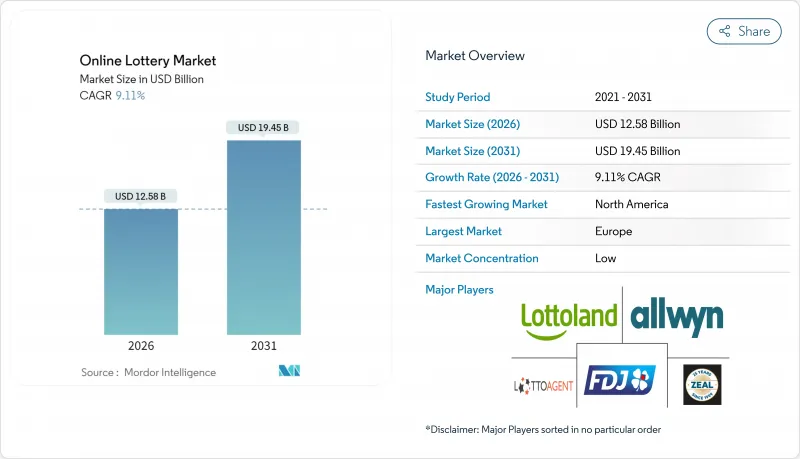
세계의 온라인 복권 시장은 2025년 115억 3,000만 달러로 평가되었고, 2026년 125억 8,000만 달러에서 2031년까지 194억 5,000만 달러에 이를 것으로 예측됩니다. 예측 기간 중(2026-2031년) CAGR은 9.11%로 전망되고 있습니다.

이러한 성장은 모바일 단말기 보급 확대, 원활한 디지털 결제 프로세스 및 고급 규제에 의해 지원됩니다. 현재 모바일 채널은 전체 티켓 판매의 절반 이상을 차지하고 있으며 모바일 상거래에 대한 친숙함이 전환 프로세스를 효율화하고 있습니다. 투명성 향상을 위한 블록체인 기술, 모바일 애플리케이션, 안전한 결제 게이트웨이, AI를 활용한 사용자 계정 등의 혁신으로 기업의 보안과 참여가 향상되었습니다. 소셜 미디어의 활용, 타겟팅된 메일 캠페인, 온라인 광고 등의 전략은 복권 애호가의 획득과 유지의 양면에서 효과를 발휘하고 있습니다. 정기 구매 서비스와 게이미피케이션 체험 등의 기능은 기업의 정착율을 높일 뿐만 아니라 젊은층의 섭취에도 기여하고 있습니다. 유럽은 명확한 라이선싱 틀과 여러 국가 공동 추첨을 통해 시장 가치로 주도적 입장에 있습니다. 한편 미국에서는 최근 합법화로 시장 기반이 확대되고 있습니다. 청년층은 디지털 우선 인스턴트 게임에 기울이는 반면, 미디어가 풀형 잭팟에 초점을 맞추기 때문에 전통적인 추첨 형식도 여전히 뿌리 깊은 지지를 얻고 있습니다. 사이버 보안 및 컴플라이언스 자동화에 대한 투자 증가는 기존 플랫폼 제공업체의 입지를 강화하고 있습니다.
세계의 온라인 복권 시장 동향과 통찰
디지털 월렛과 모바일 결제 통합의 침투 확대
디지털 월렛과 모바일 결제 옵션을 활용하면 복권 구매가 원활하고 안전하며 언제 어디서나 티켓을 구입할 수 있습니다. 이러한 진보로 기존의 결제 방법의 과제가 해소되어 고객기반이 확대되고 티켓 판매가 촉진되고 있습니다. 중국 인터넷 정보 센터에 따르면 2024년에는 중국의 모바일 인터넷 사용자의 92.8%가 모바일 결제를 이용했습니다. 이 성장은 현금 거래 및 실제 매장 판매의 제한을 피하고 번거로움이 없는 복권 구매를 가능하게합니다. 유럽 중앙은행이 현재 준비 중인 디지털 유로 구상은 기존 결제 시스템을 보완하면서 비유럽 플랫폼에 대한 의존도를 줄이고 국경을 넘은 복권 거래의 효율화를 도모하는 것입니다. 모바일 결제의 통합은 즉각적인 결과를 요구하는 수요와 디지털 지갑의 편의성이 일치하는 스크래치 복권에서 특히 유리합니다. 판매 거점 인프라가 제한되는 아시아 개발 도상 시장에서는 QR 코드 결제 시스템이 NFC 기반 솔루션에 대한 강력한 경쟁으로 부상하고 복권 시장 성장의 새로운 기회를 창출하고 있습니다. 또한, 보존형 결제 자격 증명의 채용은 보안을 강화하고 정기 구독형 복권 서비스를 지원함으로써 안정적인 수익 창출을 촉진합니다.
합법화 및 규제 완화
합법화는 명확한 규정, 라이선스 요구 사항, 소비자 보호를 확립하고 온라인 복권에 대한 신뢰를 높입니다. 이것은 공정한 게임과 안전한 상금을 보장하고 기업의 신뢰를 높입니다. 2024년 7월 매사추세츠 주지사 Maura Healey는 2025년 예산을 승인하고 온라인 복권 판매를 합법화했습니다. 매사추세츠 주 복권은 16개월 이내에 디지털 플랫폼을 시작할 예정이며, 참가자는 21세 이상이어야 합니다. 핀란드의 게임 시장 개혁은 스포츠 베팅 및 온라인 게임 사업자에게 개방적인 라이선싱 제도를 도입하는 반면, 복권에 대해서는 Veikkaus의 독점을 유지할 것을 제안하고 있습니다. 싱가포르 도박 규제국은 2022년 도박 규제법에 따라 2025년 10월까지 유효한 라이선스를 Singapore Pools에 발행하여 아시아태평양의 구조적 규제 조치를 제시합니다. 유타 주 하원 의원 Kera Birkeland는 주민이 타 주에서 구입하는 복권 금액 2억 달러를 주 내에 끌어들이기 위해 2025년에 주 복권 합법화를 목적으로 한 헌법 개정안을 재제출할 의향입니다. 이러한 규제 동향은 시장 기회를 확대하고 온라인 복권 사업을 합법화하는 컴플라이언스 틀을 확립합니다. 브라질 법률 14,790/2023은 책임있는 도박 관행을 의무화하고, 사업자에게 베팅 활동을 모니터링하고, 위험한 기업을 식별하는 시스템의 도입을 요구하며, 신흥 시장에서 규제 기준을 설정합니다.
규제 및 법적 과제
세계적으로 분리된 규제 기준은 라이선싱, 과세, 소비자 보호에 관한 혼란을 초래합니다. 이 불일치는 국경을 넘어 주내에도 존재하며 복권 사업자 시장 진입과 운영을 복잡화시키고 있습니다. 2025년 4월, 텍사스 주 복권 위원회는 이러한 서비스와 관련된 논란이 있는 잭팟 당첨 후 합법성과 완전성에 대한 우려를 이유로 제3자 택배 서비스에 의한 복권 구매를 금지하기로 만장일치로 결정했습니다. 규제환경의 변동성을 보여주는 사례로 텍사스 상원은 상원법안 28호를 통과하여 택배를 이용한 온라인 복권 판매를 범죄화했습니다. 홍콩에서는 도박 조례가 엄격한 규제를 실시하고 홍콩 조키 클럽에 도박 활동 및 Mark Six 복권 운영의 독점권을 부여하고 있기 때문에 국제 사업자 시장 진입이 제한되고 있습니다. 마찬가지로 서호주 '2024년 도박법 개정법'은 위반에 대한 벌칙 강화 및 복권 허가증 취득을 위한 은행 보증 제공 의무화를 통해 대화형 도박 서비스 규제를 강화하고 있습니다. 이러한 규제의 단편화는 컴플라이언스의 복잡화와 운영 비용 증가를 초래해, 규제에 관한 전문 지식이 풍부한 기존 사업자에게는 유리하게 일하는 한편, 소규모 사업자에게는 불균형한 영향을 주고 있습니다.
부문 분석
모바일 플랫폼은 2025년 55.72%의 시장 점유율을 획득했으며, 2031년까지 연평균 복합 성장률(CAGR) 11.08%라는 가장 빠른 성장 궤도를 보이고 있습니다. 이 성장은 주로 스마트폰의 보급과 모바일 결제 시스템의 통합에 의해 견인되고 있습니다. 데스크톱 플랫폼은 상세한 인터페이스를 필요로 하는 복잡한 복권 게임에서 여전히 중요하지만, 모바일 최적화가 진행됨에 따라 사용자 참여도가 떨어지는 경향이 있습니다. 모바일 우선 접근 방식은 위치 서비스, 추첨 결과 푸시 알림, 원활한 소셜 공유를 지원하여 기존 데스크톱 플랫폼의 한계를 넘어선 기업 참여도를 향상시킵니다.
2024년 12월에 Pollard Banknote가 Premier Lotteries Ireland와 제휴하여 모바일 앱과 e인스턴트 게임 포트폴리오를 도입한 사례는 업계가 모바일 중심의 경험에 주력하고 있음을 보여줍니다. 이 플랫폼에는 기업 등록, 게임 구매, 티켓 스캔 등의 기능이 포함됩니다. 모바일 플랫폼은 앱 스토어 유통 채널의 혜택을 받지만 지오게이팅 및 연령 확인을 포함한 규제 문제를 해결해야 합니다. 모바일 게임의 미학과 전통 복권의 구조를 융합시킴으로써, 규제 기준을 준수하면서 젊은층을 끌어들이는 하이브리드 체험이 탄생합니다. 또한 크로스 플랫폼 동기화를 통해 기업은 모바일 기기에서 거래를 시작하고 데스크톱 플랫폼에서 완료할 수 있어 전체 사용자 저니의 전환율 향상에 기여합니다.
추첨식 복권 게임은 2025년에 32.10%의 시장 점유율을 차지해 정기적인 추첨과 매력적인 잭팟을 갖춘 전통적인 복권에 대한 소비자의 강한 기호가 부각되었습니다. EuroMillions와 같은 이 게임들은 국경을 넘어선 잭팟 풀을 활용하며, 단독 관할 구역에서는 달성할 수 없는 규모의 상금을 창출하고 있습니다. 인스턴트 복권 게임은 즉각적인 만족감과 디지털 네이티브 레이어를 끌어들이는 모바일 게임 기능의 매력으로 2031년까지 연평균 복합 성장률(CAGR) 10.12%의 급속한 성장이 전망되고 있습니다. 게다가, 스포츠 복권 및 기타 신흥 게임 유형은 전통적인 복권 구조와 현대적인 엔터테인먼트 형식을 융합하지만, 지역에 따라 규제 프레임 워크가 크게 다릅니다.
인스턴트 게임은 기술 혁신을 활용하고 복권 규정 준수 표준을 준수하면서 모바일 게임 경험을 모방한 고급 그래픽, 애니메이션 및 대화형 기능을 제공합니다. 또한 복권 운영에서 블록체인 기술을 채택하는 것은 추첨 게임과 인스턴트 게임 모두에게 투명성이 높고 변조 불가능한 기록을 제공함으로써 업계를 변화시키고 있습니다. 이 혁신은 사기 방지에 기여하고 스마트 계약 자동화를 촉진합니다. 게임 유형의 다양화는 인생을 바꾸는 잭팟을 요구하는 기업로부터, 간편하고 소액의 승리를 선호하는 캐주얼인 참가자까지, 기업의 다양한 기호에 응하기 위한 운영자의 대처를 반영하고 있습니다.
지역별 분석
2025년에도 EuroMillions 등의 확립된 크로스 보더 복권 사업에 힘입어 유럽은 45.20%의 시장 점유율을 유지했습니다. EuroMillions는 9개국에서 운영되며 표준화된 상금체계와 수익분배 메커니즘을 채용하고 있습니다. 영국에서는 Allwyn Entertainment가 제 4 라이선스 사업자가 되는 큰 전환점을 맞이했습니다. 이 마이그레이션에는 3억 5,000만 파운드의 투자가 이루어지고, 30개 이상의 새로운 시스템 도입과 복잡한 데이터 마이그레이션이 실시되어, Good Causes에 환원액 배증을 목표로 하고 있습니다. 독일에서는 온라인 갬블 규제를 구축하고 최근 소셜 미디어 조사에서 지적된 낙인화에 대한 우려에 대처한 '도박에 관한 주간 협약' 하에서 규제 체제의 적응을 계속하고 있습니다. 북유럽 국가에서는 현저한 진전을 보이고 있으며, 핀란드는 2027년 1월까지 상업 사업자를 위한 오픈 라이선싱 제도를 도입하는 종합적인 게이밍 시장 개혁을 계획하고 있습니다. 또한 유럽 중앙 은행의 디지털 유로 개념은 통합 결제 인프라를 구축하여 국경을 넘는 복권 거래를 효율화하고 유럽 외 결제 제공업체에 대한 의존도를 줄일 수 있습니다.
북미는 가장 빠르게 성장하고 있으며 2031년까지 연평균 복합 성장률(CAGR) 10.44%가 예상됩니다. 이 성장은 주 차원에서의 합법화 노력과 기술 인프라 투자로 추진되어 대상 시장을 확대하고 있습니다. 2024년 7월, 매사추세츠는 온라인 복권 판매를 승인하고 그 수익을 유아 교육 프로그램에 사용하기로 결정했습니다. 버지니아는 NeoPollard Interactive와의 iLottery 계약을 2028년까지 연장하여 과거 최고의 총 매출액을 달성한 파트너십을 지속합니다. 캐나다에서는 앨버타 주가 온라인 추첨식 복권을 도입하여 북미 최초의 추첨 게임 통합을 실현했습니다. 국가의 디지털 복권 제공의 혁신을 보여주었습니다. 그러나 텍사스 주에서 제3자 배송 서비스 금지 사례에서 볼 수 있듯이 규제 분단이 과제가 되고 있습니다. 한편, 다른 주에서는 디지털 복권의 확대를 추진 중입니다. 첨단 모바일 결제 시스템과 높은 스마트폰 보급률이 지역 복권 디지털화를 견인하고 있지만, 연방 도박 규제가 주간 복권 사업에 컴플라이언스상의 과제를 가져오고 있습니다.
아시아태평양 및 기타 세계 시장에는 다양한 성장 기회가 존재하지만, 이들은 도박에 대한 규제 접근법과 문화적 태도의 차이에 의해 제한됩니다. 싱가포르의 도박 규제청은 2022년 도박 관리법에 따라 Singapore Pools를 공영 복권을 포함한 온라인 비카지노형 도박 서비스의 독점 운영자로 허가하며, 이는 아시아의 선진 시장에서 구조화된 규제 체제를 반영합니다. 호주의 규제 상황은 국가 소비자 보호 틀과 베트 스톱 자기 배제 등록 제도의 도입, 외국 대응 복권이나 온라인 키노 서비스의 재검토에 따라 진화를 계속하고 있습니다. 남미에서는 브라질 법률 14,790/2023이 책임있는 도박 대책을 강조하고 사업자 감시 시스템을 의무화함으로써 이 지역 신흥 시장에서 규제의 선례를 확립하고 있습니다. 신흥경제국에서 디지털 인프라가 지속적으로 발전함에 따라 고소득국가와 저소득국 간 인터넷 보급률의 격차는 큰 성장 가능성을 보여줍니다.
기타 혜택:
- 엑셀 형식 시장 예측(ME) 시트
- 애널리스트에 의한 3개월간의 지원
자주 묻는 질문
목차
제1장 서론
- 조사의 전제조건과 시장의 정의
- 조사 범위
제2장 조사 방법
제3장 주요 요약
제4장 시장 상황
- 시장 개요
- 시장 성장 촉진요인
- 디지털 월렛 보급률 상승과 모바일 결제의 통합
- 합법화와 규제 완화
- 세계 인터넷 보급률 증가
- 크로스 보더 잭팟 풀에 의한 상금 규모 확대
- 디지털 기술의 진보
- 마이크로 인플루언서의 제휴 마케팅으로 고객 획득 비용 절감
- 시장 성장 억제요인
- 규제 및 법적 과제
- 앱 스토어에서 현금 도박 규제 강화
- 사이버 보안 위협과 부정 위험
- 부정적인 사회적 인식과 낙인
- 소비자 행동 분석
- 규제 상황
- 기술의 전망
- Porter's Five Forces
- 신규 참가업체의 위협
- 구매자의 협상력
- 공급기업의 협상력
- 대체품의 위협
- 경쟁 기업간 경쟁 관계
제5장 시장 규모와 성장 예측
- 플랫폼 유형별
- 데스크톱
- 모바일
- 게임 유형별
- 추첨식 복권
- 즉석 복권
- 스포트 추첨
- 기타
- 연령층별
- 25세 미만
- 25-40세
- 40-55세
- 55세 이상
- 최종 사용자별
- 남성
- 여성
- 지역별
- 북미
- 미국
- 캐나다
- 멕시코
- 기타 북미
- 유럽
- 영국
- 독일
- 스웨덴
- 프랑스
- 스페인
- 이탈리아
- 기타 유럽
- 아시아태평양
- 오세아니아 국가
- 기타 아시아태평양
- 기타 지역
- 남미
- 중동 및 아프리카
- 북미
제6장 경쟁 구도
- 시장 집중도
- 전략적 동향
- 시장 점유율 분석
- 기업 프로파일
- Allwyn Entertainment
- PlayHugeLottos
- Francaise des Jeux
- ZEAL Network SE
- Lotto Direct Ltd
- Lottoland
- Lotto Agent
- LottoKings
- WinTrillions
- Lotto247
- Annexio Ltd.
- China Welfare Lottery
- Intralot
- Sisal
- The Lottery Corporation
- International Game Technology(IGT)
- Flutter Entertainment(The Lotteries Pilot)
- NeoGames
- Pollard Banknote
- Jumbo Interactive
제7장 시장 기회와 미래 전망
SHW 26.01.26The online lottery market was valued at USD 11.53 billion in 2025 and estimated to grow from USD 12.58 billion in 2026 to reach USD 19.45 billion by 2031, at a CAGR of 9.11% during the forecast period (2026-2031).
This growth is bolstered by a surge in mobile adoption, seamless digital payment processes, and forward-thinking regulations. Currently, mobile channels account for over half of all ticket sales, and the familiarity with m-commerce streamlines the conversion process. Innovations like blockchain for enhanced transparency, mobile applications, secure payment gateways, and AI-driven user accounts are elevating player security and engagement. Strategies such as leveraging social media, targeted email campaigns, and online advertising are proving effective in both attracting and retaining lottery enthusiasts. Features like subscription services and gamified experiences are not only boosting player retention but also drawing in a younger demographic. Europe leads in market value, thanks to its clear licensing frameworks and multi-country draws. Meanwhile, recent legalizations are expanding the market base in the U.S. While younger adults are leaning towards digital-first instant games, traditional draw formats still hold their ground, largely due to the media's focus on pooled jackpots. Increased spending on cybersecurity and automation in compliance are fortifying the position of established platform providers.
Global Online Lottery Market Trends and Insights
Rising penetration of digital wallets and mobile payments integration
Lottery ticket purchases have become seamless and secure with the use of digital wallets and mobile payment options, allowing users to buy tickets anytime and anywhere. This advancement removes the challenges of traditional payment methods, increasing the customer base and driving ticket sales. In 2024, 92.8% of mobile internet users in China utilized mobile payments, according to the China Internet Network Information Center. This growth facilitates hassle-free lottery ticket purchases, bypassing the limitations of cash transactions and physical retail outlets. The European Central Bank's digital euro initiative, currently under preparation, seeks to complement existing payment systems while reducing reliance on non-European platforms, potentially streamlining cross-border lottery transactions. Mobile payment integration is particularly advantageous for instant lottery games, where the demand for immediate results aligns with the convenience of digital wallets. In developing Asian markets with limited point-of-sale infrastructure, QR code-based payment systems are emerging as strong competitors to NFC-based solutions, creating new opportunities for lottery market growth. Additionally, the adoption of stored payment credentials enhances security and supports subscription-based lottery services, fostering consistent revenue generation.
Legalization and regulatory liberalization
Legalization establishes clear regulations, licensing requirements, and consumer protections, enhancing trust in online lotteries. This increases player confidence by ensuring fair games and secure winnings. In July 2024, Massachusetts Governor Maura Healey approved the FY 2025 budget, legalizing online lottery sales. The Massachusetts Lottery plans to launch its digital platform within 16 months, requiring participants to be at least 21 years old. Finland's gaming market reform suggests an open licensing system for commercial operators in sports betting and online gaming while preserving Veikkaus's monopoly over lotteries. Singapore's Gambling Regulatory Authority issued a license to Singapore Pools under the 2022 Gambling Control Act, valid until October 2025, showcasing structured regulatory measures in Asia-Pacific. Utah State Representative Kera Birkeland intends to reintroduce a constitutional amendment in 2025 to legalize the state lottery, aiming to capture the USD 200 million spent by Utah residents on lottery tickets in neighboring states. These regulatory developments expand market opportunities and establish compliance frameworks that legitimize online lottery operations. Brazil's Law 14,790/2023 enforces responsible gambling practices, requiring operators to monitor bettor activity and implement systems to identify at-risk players, setting a regulatory standard for emerging markets.
Regulatory and legal challenges
Fragmented global regulatory standards cause confusion regarding licensing, taxation, and consumer protection. This inconsistency, present across countries and even within states, complicates market entry and operations for lottery operators. In April 2025, the Texas Lottery Commission unanimously decided to ban third-party courier services from purchasing lottery tickets, citing concerns over legality and integrity after controversial jackpot wins linked to these services. Highlighting the volatility of the regulatory environment, the Texas Senate passed Senate Bill 28, criminalizing online lottery ticket sales through couriers. In Hong Kong, the Gambling Ordinance enforces strict regulations, granting the Hong Kong Jockey Club exclusive rights to betting activities and Mark Six Lottery operations, thereby restricting market access for international operators. Similarly, Western Australia's Gambling Legislation Amendment Act 2024 strengthens regulations for interactive gambling services by increasing penalties for noncompliance and requiring operators to provide bank guarantees for lottery permits. This regulatory fragmentation increases compliance complexities and operational costs, disproportionately affecting smaller operators while favoring established players with greater regulatory expertise.
Other drivers and restraints analyzed in the detailed report include:
- Increasing global internet penetration
- Cross-border jackpot pooling boosting prize sizes
- App-store policy tightening on real-money gambling
For complete list of drivers and restraints, kindly check the Table Of Contents.
Segment Analysis
Mobile platforms captured 55.72% market share in 2025 and exhibit the fastest growth trajectory at 11.08% CAGR through 2031. This growth is primarily driven by the widespread use of smartphones and the integration of mobile payment systems. Desktop platforms remain relevant, particularly for complex lottery games requiring detailed interfaces, but they are experiencing a decline in user engagement as mobile optimization continues to improve. The mobile-first approach supports location-based services, push notifications for draw results, and seamless social sharing, enhancing player engagement beyond the limitations of traditional desktop platforms.
Pollard Banknote's partnership with Premier Lotteries Ireland in December 2024, which introduced a mobile app and an eInstant games portfolio, highlights the industry's focus on mobile-centric experiences. This platform includes features such as player registration, game purchases, and ticket scanning. While mobile platforms benefit from app store distribution channels, they must address regulatory challenges, including geo-gating and age verification. The fusion of mobile gaming aesthetics with traditional lottery mechanics creates hybrid experiences that attract younger demographics while adhering to regulatory standards. Additionally, cross-platform synchronization allows players to initiate transactions on mobile devices and complete them on desktop platforms, improving conversion rates across the user journey.
Draw-based lottery games commanded 32.10% market share in 2025, highlighting consumers' strong preference for traditional lotteries with scheduled draws and attractive jackpots. These games, such as EuroMillions, utilize cross-border jackpot pooling to generate prize sizes that individual jurisdictions cannot achieve alone. Instant lottery games are experiencing rapid growth, with a 10.12% CAGR projected through 2031, driven by the appeal of immediate gratification and mobile gaming features that attract digital-native audiences. Additionally, sports lotteries and other emerging game types combine traditional lottery mechanics with modern entertainment formats, though regulatory frameworks differ significantly across regions.
Instant games are leveraging technological advancements to deliver enhanced graphics, animations, and interactive features that mimic mobile gaming experiences while adhering to lottery compliance standards. Furthermore, the adoption of blockchain technology in lottery operations is transforming the industry by providing transparent and immutable records for both draw-based and instant games. This innovation helps reduce fraud and facilitates smart contract automation. The diversification of game types reflects operators' efforts to meet the varied preferences of players, ranging from those seeking life-changing jackpots to casual participants favoring quick, smaller-value wins.
The Online Lottery Market Report is Segmented by Platform Type (Desktop, Mobile), Game Type (Draw-Based Lottery, Instant Lottery, Sports Lottery, Others), Age Group (Below 25 Years, 25-40 Years, 40-55 Years, 55+ Years), End User (Male, Female), and Geography (North America, Europe, Asia-Pacific, Rest of the World). The Market Forecasts are Provided in Terms of Value (USD).
Geography Analysis
Europe maintained a 45.20% market share in 2025, supported by well-established cross-border lottery operations such as EuroMillions. EuroMillions operates across nine countries with standardized prize structures and revenue distribution mechanisms. The UK experienced a major shift as Allwyn Entertainment became the Fourth Licence operator. This transition involved a GBP 350 million investment, introducing over 30 new systems and complex data migrations, with the goal of doubling returns to Good Causes. Germany continues to adapt its regulatory framework under the State Treaty on Gambling, which structured online gambling regulations and addressed stigmatization concerns highlighted in recent social media studies. Nordic countries are making significant progress, with Finland planning a comprehensive gaming market reform to introduce open licensing systems for commercial operators by January 2027. Additionally, the European Central Bank's digital euro initiative is creating a unified payment infrastructure that could streamline cross-border lottery transactions and reduce reliance on non-European payment providers.
North America is experiencing the fastest regional growth, with a 10.44% CAGR projected through 2031. This growth is driven by state-level legalization efforts and investments in technological infrastructure, which are expanding the addressable market. In July 2024, Massachusetts approved online lottery sales, allocating funds to early childhood education programs. Virginia extended its iLottery contract with NeoPollard Interactive through 2028, continuing a partnership that has achieved record gross sales. In Canada, Alberta launched online draw-based lottery games, marking the first integration of draw games in North America and showcasing provincial innovation in digital lottery delivery. However, regulatory fragmentation poses challenges, as seen in Texas's ban on third-party courier services, while other states embrace digital lottery expansion. Advanced mobile payment systems and high smartphone penetration rates are driving lottery digitization in the region, though federal gambling regulations create compliance challenges for interstate lottery operations.
Asia-Pacific and other global markets offer diverse growth opportunities, though these are constrained by varying regulatory approaches and cultural attitudes toward gambling. Singapore's Gambling Regulatory Authority, under the 2022 Gambling Control Act, has authorized Singapore Pools as the exclusive operator for online non-casino gambling services, including public lotteries, reflecting structured regulatory frameworks in developed Asian markets. Australia's regulatory landscape is evolving with the implementation of the National Consumer Protection Framework and the BetStop self-exclusion register, alongside reviews of foreign-matched lotteries and online keno services. In South America, Brazil's Law 14,790/2023 emphasizes responsible gambling measures and mandates operator monitoring systems, setting a regulatory precedent for emerging markets in the region. As digital infrastructure continues to develop in emerging economies, disparities in internet penetration between high-income and low-income countries highlight significant growth potential.
- Allwyn Entertainment
- PlayHugeLottos
- Francaise des Jeux
- ZEAL Network SE
- Lotto Direct Ltd
- Lottoland
- Lotto Agent
- LottoKings
- WinTrillions
- Lotto247
- Annexio Ltd.
- China Welfare Lottery
- Intralot
- Sisal
- The Lottery Corporation
- International Game Technology (IGT)
- Flutter Entertainment (The Lotteries Pilot)
- NeoGames
- Pollard Banknote
- Jumbo Interactive
Additional Benefits:
- The market estimate (ME) sheet in Excel format
- 3 months of analyst support
TABLE OF CONTENTS
1 INTRODUCTION
- 1.1 Study Assumptions and Market Definition
- 1.2 Scope of the Study
2 RESEARCH METHODOLOGY
3 EXECUTIVE SUMMARY
4 MARKET LANDSCAPE
- 4.1 Market Overview
- 4.2 Market Drivers
- 4.2.1 Rising penetration of digital wallets and mobile payments integration
- 4.2.2 Legalization and regulatory liberalization
- 4.2.3 Increasing global internet penetration
- 4.2.4 Cross-border jackpot pooling boosting prize sizes
- 4.2.5 Advancement of digital technologies
- 4.2.6 Micro-influencer affiliate marketing lowering acquisition costs
- 4.3 Market Restraints
- 4.3.1 Regulatory and legal challenges
- 4.3.2 App-store policy tightening on real-money gambling
- 4.3.3 Cybersecurity threats and fraud risks
- 4.3.4 Negative public perception and stigma
- 4.4 Consumer Behaviour Analysis
- 4.5 Regulatory Landscape
- 4.6 Technological Outlook
- 4.7 Porter's Five Forces
- 4.7.1 Threat of New Entrants
- 4.7.2 Bargaining Power of Buyers
- 4.7.3 Bargaining Power of Suppliers
- 4.7.4 Threat of Substitutes
- 4.7.5 Competitive Rivalry
5 MARKET SIZE AND GROWTH FORECASTS
- 5.1 By Platform Type
- 5.1.1 Desktop
- 5.1.2 Mobile
- 5.2 By Game Type
- 5.2.1 Draw-based Lottery
- 5.2.2 Instant Lottery
- 5.2.3 Spots Lottery
- 5.2.4 Others
- 5.3 By Age Group
- 5.3.1 Below 25 Years
- 5.3.2 25-40 Years
- 5.3.3 40-55 Years
- 5.3.4 55+ Years
- 5.4 By End User
- 5.4.1 Male
- 5.4.2 Female
- 5.5 By Geography
- 5.5.1 North America
- 5.5.1.1 United States
- 5.5.1.2 Canada
- 5.5.1.3 Mexico
- 5.5.1.4 Rest of North America
- 5.5.2 Europe
- 5.5.2.1 United Kingdom
- 5.5.2.2 Germany
- 5.5.2.3 Sweden
- 5.5.2.4 France
- 5.5.2.5 Spain
- 5.5.2.6 Italy
- 5.5.2.7 Rest of Europe
- 5.5.3 Asia-Pacific
- 5.5.3.1 Oceanic Countries
- 5.5.3.2 Rest of Asia-Pacific
- 5.5.4 Rest of the Wolrd
- 5.5.4.1 South America
- 5.5.4.2 Middle East and Africa
- 5.5.1 North America
6 COMPETITIVE LANDSCAPE
- 6.1 Market Concentration
- 6.2 Strategic Moves
- 6.3 Market Share Analysis
- 6.4 Company Profiles (includes Global level Overview, Market level overview, Core Segments, Financials as available, Strategic Information, Market Rank/Share for key companies, Products and Services, and Recent Developments)
- 6.4.1 Allwyn Entertainment
- 6.4.2 PlayHugeLottos
- 6.4.3 Francaise des Jeux
- 6.4.4 ZEAL Network SE
- 6.4.5 Lotto Direct Ltd
- 6.4.6 Lottoland
- 6.4.7 Lotto Agent
- 6.4.8 LottoKings
- 6.4.9 WinTrillions
- 6.4.10 Lotto247
- 6.4.11 Annexio Ltd.
- 6.4.12 China Welfare Lottery
- 6.4.13 Intralot
- 6.4.14 Sisal
- 6.4.15 The Lottery Corporation
- 6.4.16 International Game Technology (IGT)
- 6.4.17 Flutter Entertainment (The Lotteries Pilot)
- 6.4.18 NeoGames
- 6.4.19 Pollard Banknote
- 6.4.20 Jumbo Interactive