|
시장보고서
상품코드
2061536
스페인의 동물 헬스케어 시장 : 시장 점유율 분석, 업계 동향 및 통계, 성장 예측(2026-2031년)Spain Animal Healthcare - Market Share Analysis, Industry Trends & Statistics, Growth Forecasts (2026 - 2031) |
||||||
 Mordor Intelligence
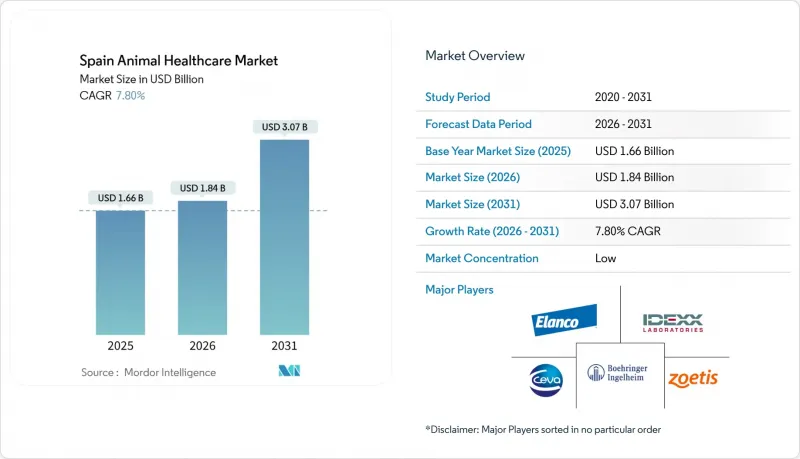
Mordor Intelligence에 의하면, 스페인의 동물 헬스케어 시장 규모는 2025년에 16억 6,000만 달러로 평가되었고, 2026년에 18억 4,000만 달러로 추정되고, 2031년까지 30억 7,000만 달러에 이를 것으로 예측되며, 2026-2031년 CAGR 7.80%로 성장할 전망입니다.
본 보고서는 제품별(치료 및 진단), 동물 유형별(반려동물 및 가축), 투여 경로별(경구, 비경구, 외용, 기타), 유통 채널별(동물병원 및 진료소, 소매 약국, 온라인 약국 및 전자상거래, 농장 직송 및 직접 공급)로 분류되어 있습니다. 시장 전망은 금액(달러) 기준으로 제시되어 있습니다.
스페인의 동물 헬스케어 시장 동향과 인사이트
반려동물 사육 마릿수 증가와 인간화
2024년, 스페인의 반려동물 수는 개 946만 마리, 고양이 595만 마리에 달했으며, 가구의 49%가 적어도 한 마리의 반려동물을 키우고 있고, 반려인 중 39%는 스스로를 '반려동물의 부모'라고 인식하고 있습니다. 반려동물의 74%가 가족 사진에 반려동물을 함께 담고, 71%가 명절 선물을 구매하고 있다는 점에서도 반려동물에 대한 애정이 커지고 있음이 분명하며, 이는 백신, 구충제, 진단약 수요를 견인하고 있습니다. 반려동물 관련 지출은 2030년까지 38억 유로(41억 8,000만 달러)에 달할 것으로 예상되며, 도시 지역 가구에서는 프리미엄 제품과 동물병원 방문을 선호하는 경향이 있습니다. 기호성이 높고 먹기 편한 껌이나 복합 기생충 구제제가 선호되는 경향이 있는 반면, 반려동물용 제품에 대한 규제 완화로 인해 혁신의 주기가 가속화되고 있습니다.
EU의 '원 헬스' 규제가 예방 의학을 촉진합니다.
스페인 왕실령 제1157/2021호를 통해 시행된 EU 규정 2019/6은 예방적 항생제 사용을 제한하고 보다 엄격한 처방 기준을 의무화함으로써, 예산을 백신 접종 및 진단 검사에 재분배하고 있습니다. 2024년까지 스페인은 가축에 대한 항생제 사용량을 70% 감축했으며, 이는 EU 내에서 가장 높은 감축률로, 백신 도입과 주요 항생제 대체 수단의 활용을 촉진했습니다. 현재 생산자들은 규제 대상 약제를 사용하기 전에 병원체를 확인해야 하므로, 이에 따라 신속 검사 및 PCR 검사 키트에 대한 수요가 증가하고 있습니다. 규제 준수 비용은 소규모 농가에게는 과제가 되고 있지만, 통합형 생산자는 규모의 경제 혜택을 누리고 있습니다. 위반에 대한 처벌 조치로 인해 예방 전략이 표준 관행으로 자리 잡게 되었으며, 시장은 백신과 진단 검사에 중점을 두게 되었습니다.
특히 스페인 농촌 지역의 수의사 부족
2024년 기준, 스페인에는 3만 7,836명의 등록 수의사가 있었지만, 농촌 지역에서는 가축 수에 비해 만성적인 인력 부족에 직면해 있습니다. 이러한 격차로 인해 치료가 지연되고, 비전문 인력에 대한 의존도가 높아지고 있습니다. 신입 사원들은 더 나은 보상과 안정적인 근무 일정을 찾아 도시 지역을 선호하는 반면, 농촌 지역의 가축 관련 직종은 경쟁력이 떨어지고 있습니다. 대형 통합 기업들은 연봉제 고용과 집중적인 지원을 통해 젊은 수의사들을 유치하고 있어, 인력이 도시 지역의 동물병원에 더욱 집중되는 추세입니다. 이러한 부족 현상은 경제에도 영향을 미치고 있습니다. 카탈루냐에서 럼피 스킨 디지즈(LSD)가 발생했을 때 보았듯이, 질병 진단이 늦어지면 가축 이동 제한이나 농장 수익 감소로 이어질 수 있기 때문입니다. 정부가 제안한 농촌 지역 의무 근무 제도는 반대에 부딪혀 철회되었으며, 원격 의료나 이동 진료팀과 같은 대체 수단도 현장에서의 직접적인 돌봄을 완전히 대체하지는 못하고 있습니다. 이러한 구조적 격차는 프로토콜을 표준화할 자원이 부족한 소규모 농가에게 질병 관리와 현대화의 걸림돌이 되고 있습니다.
부문별 분석
2025년, 치료제가 64.6%의 점유율을 차지했으며, 스페인 동물 헬스케어 시장을 주도했으나, 진단제는 2031년까지 연평균 성장률(CAGR) 11.5%로 성장하여 시장 전체의 성장률을 상회할 것으로 전망됩니다. 백신은 여전히 치료의 핵심을 이루고 있으며, 소 결핵이나 브루셀라증 등의 질병을 대상으로 한 국가 프로그램의 지원을 받아 예측 가능한 구매와 프로토콜 준수가 보장되고 있습니다. 보조금을 활용한 백신 접종 캠페인은 가축 군집 전체의 면역력을 높이고, 항생제 의존도를 낮춥니다. 구충제, 특히 이소옥사졸린계 복합제는 광범위한 효과와 투여의 용이성으로 인해 많은 지지를 받고 있으며, 도시 지역 반려동물 주인들의 선호에도 부합합니다. 특정 증례에서는 항감염제가 여전히 필수적이지만, 가축 분야에서는 '진단 우선' 방침이 점점 더 중요시되고 있습니다. 진료소가 신속한 결과를 제공하는 원내 진단 플랫폼을 도입함에 따라 진단 기술이 발전하고 있으며, 이는 내원 당일 치료가 가능하게 하여 고객 만족도를 높이고 있습니다. 가축 분야에서는 PCR 선별 검사나 신속 검사 등의 도구가 병원체의 조기 발견에 도움이 되어, 전두 처분에 드는 비용을 절감하고 있습니다. 가격에 대한 민감도가 있음에도 불구하고, 진료소가 현장 진단(PoC) 워크플로우를 정착시켜 감에 따라, 이러한 진단 방식로의 전환이 지속적인 성장을 이끌고 있습니다.
2025년 기준, 스페인 동물 헬스케어 시장의 58.5%를 반려동물이 차지했으며, 도시 지역의 반려동물 보유율 상승과 진단, 백신, 예방 의료에 대한 지출 증가에 힘입어 연평균 성장률(CAGR) 10.2%로 성장하고 있습니다. 고양이 시장은 가장 성장세가 두드러지는 하위 부문이며, 2024년 출시된 고양이용 백신이 성장을 주도하고 있습니다. 정책의 안정성과 규제 완화로 인해 제제 개선을 통한 프리미엄 가격 책정이 가능해졌으며, 한편으로는 보험 가입률의 상승이 고액 치료의 보급을 뒷받침하고 있습니다. 축산 분야는 생산자들이 수출과 생산성을 지키기 위해 생물학적 안전성을 최우선으로 하고 있어, 2031년까지 연평균 성장률(CAGR) 11.8%로 더욱 빠르게 성장할 것으로 전망됩니다. 스페인이 돼지 생산 및 반추동물 사육 두수에서 선도적인 위치를 차지하고 있다는 점은 백신과 진단제에 대한 안정적인 수요를 보장하며, 감시 체계 강화를 위한 건강 데이터 통합을 수행하는 디지털 플랫폼에 의해 뒷받침되고 있습니다. 최근 질병 발생은 조기 발견과 예방을 최우선으로 하는 전략의 중요성을 부각시키고 있으며, 이러한 전략은 반려동물 분야 수요와 더불어 가축 분야의 성장을 이끌고 있습니다.
기타 혜택 :
- 엑셀 형식 시장 예측(ME) 시트
- 3개월간의 애널리스트 지원
자주 묻는 질문
목차
제1장 서론
제2장 조사 방법
제3장 주요 요약
제4장 시장 구도
제5장 시장 규모 및 성장 예측
제6장 경쟁 구도
제7장 시장 기회 및 향후 전망
AJY 26.06.22According to Mordor Intelligence, the spain animal healthcare market size is projected to be USD 1.66 billion in 2025, USD 1.84 billion in 2026, and reach USD 3.07 billion by 2031, growing at a CAGR of 7.80% from 2026 to 2031.
This report is Segmented by Product (Therapeutics and Diagnostics), Animal Type (Companion Animals and Livestock Animals), Route of Administration (Oral, Parenteral, Topical, Others), and Distribution Channel (Veterinary Clinics & Hospitals, Retail Pharmacies, Online Pharmacies & E-Commerce, On-Farm / Direct Supply). Market Forecasts are Provided in Terms of Value (USD).
Spain Animal Healthcare Market Trends and Insights
Rising Pet Ownership & Humanisation
In 2024, Spain's pet population reached 9.46 million dogs and 5.95 million cats, with 49% of households owning at least one pet and 39% of owners identifying as "pet parents." Increased attachment is evident as 74% of pet owners include pets in family photos and 71% purchase holiday gifts, driving demand for vaccines, parasiticides, and diagnostics. Pet-related spending is projected to hit EUR 3.8 billion (USD 4.18 billion) by 2030, with urban households favoring premium products and frequent clinic visits. Preferences lean towards palatable chews and combination parasiticides, while lighter regulatory pathways for companion products accelerate innovation cycles.
EU "One-Health" Regulation Stimulating Preventive Care
EU Regulation 2019/6, implemented through Spanish Royal Decree 1157/2021, restricts prophylactic antimicrobial use and enforces stricter prescribing standards, redirecting budgets to vaccinations and diagnostics. By 2024, Spain reduced livestock antibiotic use by 70%, the highest in the EU, boosting vaccine adoption and alternatives to critical antimicrobials. Producers must now identify pathogens before accessing restricted classes, increasing demand for rapid tests and PCR panels. Compliance costs challenge smallholders, while integrated producers benefit from economies of scale. Non-compliance penalties push preventive strategies as standard practice, aligning the market with vaccines and diagnostics.
Veterinarian Shortage, Particularly in Rural Spain
In 2024, Spain reported 37,836 registered veterinarians, yet rural areas face persistent staffing shortages relative to livestock populations. This gap delays treatments and increases reliance on non-specialist labor. New graduates prefer urban areas due to better compensation and predictable schedules, while rural livestock roles struggle to compete. Consolidators attract young veterinarians with salaried roles and centralized support, further concentrating talent in urban clinics. The shortage impacts the economy, as delayed disease diagnoses can lead to movement restrictions and reduced farm revenues, as seen during the lumpy skin disease outbreak in Catalonia. Government proposals for mandatory rural service were withdrawn after objections, and alternatives like telemedicine and mobile units have not fully replaced hands-on care. This structural gap hinders disease control and modernization for smallholder farms lacking resources to standardize protocols.
Other drivers and restraints analyzed in the detailed report include:
- Technological Advances in Point-of-Care Diagnostics
- Growing Pet-Insurance Penetration Enabling Spend
- High Cost of Advanced Therapeutics & Diagnostics
For complete list of drivers and restraints, kindly check the Table Of Contents.
Segment Analysis
In 2025, therapeutics dominated Spain's animal healthcare market with a 64.6% share, but diagnostics are projected to grow at an 11.5% CAGR through 2031, outpacing the baseline. Vaccines remain central to therapeutics, driven by national programs targeting diseases such as bovine tuberculosis and brucellosis, ensuring predictable purchasing and adherence to protocols. Subsidized vaccine campaigns enhance herd immunity and reduce reliance on antimicrobials. Parasiticides, particularly isoxazoline combinations, are gaining traction due to their broad-spectrum coverage and ease of administration, aligning with urban pet owners' preferences. Anti-infectives remain vital for specific cases, though diagnostics-first policies are increasingly emphasized in livestock. Diagnostics are advancing as clinics adopt in-house platforms delivering rapid results, enabling same-visit treatments and boosting client satisfaction. In livestock, tools like PCR screening and rapid tests help detect pathogens early, reducing depopulation costs. This shift toward diagnostics is driving sustained growth despite price sensitivity, as clinics embed point-of-care workflows.
In 2025, companion animals accounted for 58.5% of Spain's animal healthcare market, growing at a 10.2% CAGR, supported by urban ownership rates and increased spending on diagnostics, vaccines, and preventive care. Cats are the fastest-growing sub-segment, driven by the 2024 launch of feline-specific vaccines. Policy stability and lighter regulations enable premium pricing through formulation upgrades, while rising insurance penetration supports higher-ticket procedures. Livestock is projected to grow faster at an 11.8% CAGR through 2031, as producers prioritize biosecurity to protect exports and productivity. Spain's leadership in pig production and ruminant herds ensures steady demand for vaccines and diagnostics, supported by digital platforms consolidating health data for better oversight. Recent disease outbreaks highlight the importance of early detection and prevention-first strategies, which are driving livestock growth dynamics alongside companion demand.
List of Companies Covered in this Report:
- Bioiberica
- BioVet SA
- Boehringer Ingelheim
- Ceva
- Dechra Pharmaceuticals Inc.
- Elanco
- Hipra
- IDEXX
- Laboratorios Eurisko
- Laboratorios Karizoo
- Laboratorios Syva
- MSD Animal Health (Merck)
- Neogen
- S.P. Veterinaria
- Super's Diana S.L.
- Vetoquinol
- Virbac
- Zoetis
- Zoopan
Additional Benefits:
- The market estimate (ME) sheet in Excel format
- 3 months of analyst support
TABLE OF CONTENTS
1 Introduction
- 1.1 Study Assumptions & Market Definition
- 1.2 Scope of the Study
2 Research Methodology
3 Executive Summary
4 Market Landscape
- 4.1 Market Overview
- 4.2 Market Drivers
- 4.2.1 Rising Pet Ownership & Humanisation
- 4.2.2 EU One-Health Regulation Stimulating Preventive Care
- 4.2.3 Technological Advances in Point-of-Care Diagnostics
- 4.2.4 Growing Pet-Insurance Penetration Enabling Spend
- 4.2.5 Tele-Veterinary Adoption in Underserved Rural Areas
- 4.2.6 Government Subsidies for Iberian-Pig Disease Eradication
- 4.3 Market Restraints
- 4.3.1 Veterinarian Shortage, Particularly in Rural Spain
- 4.3.2 High Cost of Advanced Therapeutics & Diagnostics
- 4.3.3 Strict Antibiotic-Use Curbs Raising R&D Costs
- 4.3.4 Fragmented Distribution to Smallholder Farms
- 4.4 Supply-Chain Analysis
- 4.5 Regulatory Landscape
- 4.6 Technological Outlook
- 4.7 Porter's Five Forces Analysis
- 4.7.1 Threat of New Entrants
- 4.7.2 Bargaining Power of Buyers
- 4.7.3 Bargaining Power of Suppliers
- 4.7.4 Threat of Substitutes
- 4.7.5 Industry Rivalry
5 Market Size & Growth Forecasts (Value in USD)
- 5.1 By Product
- 5.1.1 Therapeutics
- 5.1.1.1 Vaccines
- 5.1.1.2 Parasiticides
- 5.1.1.3 Anti-infectives
- 5.1.1.4 Medical Feed Additives
- 5.1.1.5 Other Therapeutics
- 5.1.2 Diagnostics
- 5.1.2.1 Immunodiagnostic Tests
- 5.1.2.2 Molecular Diagnostics
- 5.1.2.3 Diagnostic Imaging
- 5.1.2.4 Clinical Chemistry
- 5.1.2.5 Other Diagnostics
- 5.1.1 Therapeutics
- 5.2 By Animal Type
- 5.2.1 Companion Animals
- 5.2.1.1 Dogs
- 5.2.1.2 Cats
- 5.2.1.3 Other Companion Animals
- 5.2.2 Livestock Animals
- 5.2.2.1 Ruminants (Cattle, Sheep, Goats)
- 5.2.2.2 Swine
- 5.2.2.3 Poultry
- 5.2.2.4 Other Livestock Animals
- 5.2.1 Companion Animals
- 5.3 By Route of Administration
- 5.3.1 Oral
- 5.3.2 Parenteral (Injectables)
- 5.3.3 Topical
- 5.3.4 Others
- 5.4 By Distribution Channel
- 5.4.1 Veterinary Clinics & Hospitals
- 5.4.2 Retail Pharmacies
- 5.4.3 Online Pharmacies & e-Commerce
- 5.4.4 On-Farm / Direct Supply
6 Competitive Landscape
- 6.1 Market Concentration Analysis
- 6.2 Market Share Analysis
- 6.3 Company Profiles (includes Global level Overview, Market-level Overview, Core Segments, Financials, Strategic Information, Market Rank/Share, Products & Services, Recent Developments)
- 6.3.1 Bioiberica S.A.U.
- 6.3.2 BioVet SA
- 6.3.3 Boehringer Ingelheim GmbH
- 6.3.4 Ceva Sante Animale
- 6.3.5 Dechra Pharmaceuticals Inc.
- 6.3.6 Elanco Animal Health
- 6.3.7 HIPRA
- 6.3.8 IDEXX Laboratories
- 6.3.9 Laboratorios Eurisko
- 6.3.10 Laboratorios Karizoo
- 6.3.11 Laboratorios Syva
- 6.3.12 MSD Animal Health (Merck)
- 6.3.13 Neogen Corporation
- 6.3.14 S.P. Veterinaria
- 6.3.15 Super's Diana S.L.
- 6.3.16 Vetoquinol SA
- 6.3.17 Virbac
- 6.3.18 Zoetis Inc.
- 6.3.19 Zoopan
7 Market Opportunities & Future Outlook
- 7.1 White-space & Unmet-Need Assessment