

|
시장보고서
상품코드
2063348
새우 사료 : 시장 점유율 분석, 업계 동향 및 통계, 성장 예측(2026-2031년)Shrimp Feed - Market Share Analysis, Industry Trends & Statistics, Growth Forecasts (2026 - 2031) |
||||||
 Mordor Intelligence
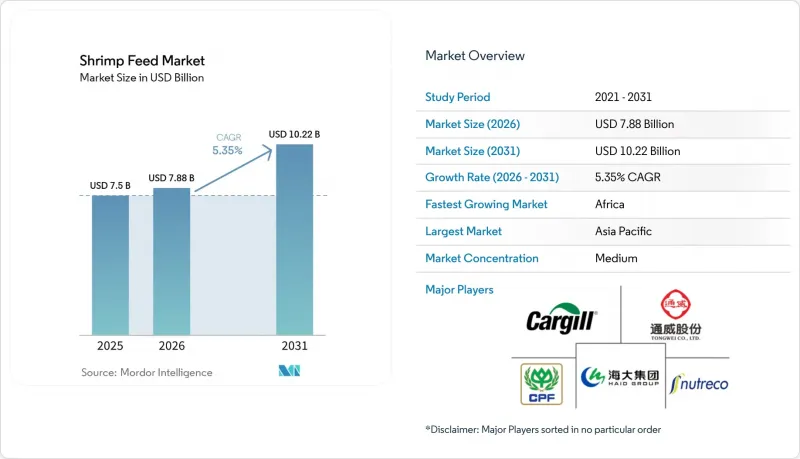
Mordor Intelligence에 의하면, 새우 사료 시장은 2025년에 75억 달러로 평가되었습니다. 2026년 78억 8,000만 달러에서 2031년까지 102억 2,000만 달러로 성장하여 2026-2031년의 예측 기간 동안 CAGR은 5.35%를 나타낼 전망입니다.
본 보고서는 사료 유형(스타터 사료, 육성용 사료, 비육용 사료, 기능성/의약용 사료), 형태(펠렛, 크럼블, 분말, 액상 사료), 새우 품종(태평양 흰새우, 블랙 타이거, 기타), 지역(북미, 남미, 유럽, 아시아태평양, 중동 및 아프리카)별로 분류되어 있습니다. 시장 전망은 금액(달러) 기준으로 제시되어 있습니다.
세계의 새우 사료 시장 동향 및 인사이트
수산물 소비 확대와 고단백 식단에 대한 수요
세계 새우 사료 수요는 양식 생산량 증가에 힘입어 2025년에는 양식 새우 생산량이 약 600만 톤에 달할 것으로 전망됩니다. 양식업자들이 사육 밀도를 높이고 성장 주기를 단축하기 위해 고단백 사료를 도입함에 따라, 새우 사료 시장은 직접적인 혜택을 보고 있습니다. 2025년, 에콰도르의 새우 수출량은 139만 톤에 달했으며, 이 중 중국이 총 수출량의 약 48%를 차지하여, 아시아가 세계 새우 소비의 성장을 주도하는 데 있어 중요한 역할을 하고 있음이 부각되고 있습니다. 사료 제조업체들은 항생제 사용을 줄이고 유럽연합(EU) 및 미국의 지속가능성 기준을 준수하기 위해 프로바이오틱스와 면역 증진제를 배합하고 있습니다.
주요 지역에서의 집약형 새우 양식 확대
인도네시아는 사료 수입을 줄이고 밸류체인의 효율성을 높이기 위해, 새우 양식과 사료 생산에 중점을 둔 통합형 양식 허브 개발을 추진하고 있습니다. 2025년, 베트남은 카마우 지역의 순환식 양식 시스템 확대, 특히 새우 양식 분야로의 도입에 주력했으며, BAP(Best Aquaculture Practices) 인증 취득을 중시했습니다. 마찬가지로 중국도 수질 개선과 사료 이용 효율 향상을 목표로, 새우 양식의 효율성을 높이기 위해 바이오플록식 연못 양식 시스템을 도입하고 있습니다. 한편, 에콰도르의 상업용 새우 양식장에서는 사료 전환율 최적화에 주력하고 있으며, 인도의 블랙타이거 새우 양식 검사용 연못에서는 새로운 효율성 기준이 확립되고 있습니다.
어분·어유 가격 변동
페루산 어분의 FOB 가격은 최근 몇 년간 상승 추세를 보이고 있습니다. 4분기 공급 감소 전망에 따라, 어분 가격 급등이라는 ‘뉴노멀’이 자리 잡았습니다. 2025년 12월, 어분 가격은 할당량이 163만 톤으로 수정되었음에도 불구하고 계속 상승했습니다. 이는 주로 안초비의 할당량이 줄어들어 원료 공급에 제약이 생긴 데 기인합니다. 중국은 세계 공급량의 상당 부분을 차지하고 있으며, 이전 수준보다 높은 최저 가격을 유지하고 있습니다. 아반티 피드사에 따르면, 국내 어분 가격은 시간이 지남에 따라 크게 상승하고 있습니다. 이러한 가격 급등으로 인해 이익률이 압박을 받으면서, 대두, 곤충, 단세포 단백질 등의 대체 단백질 원료로의 전환이 진행되고 있습니다.
부문별 분석
2025년까지 새우 사료 시장에서 성장기용 사료가 45.5%라는 가장 큰 시장 점유율을 차지했습니다. 이는 하루 사료 섭취량이 정점에 달하는 가장 긴 생산 단계에 해당하기 때문입니다. 기능성·의약용 사료 시장 규모는 2026년부터 2031년에 걸쳐 연평균 성장률(CAGR) 9.0%라는 가장 높은 성장률을 기록하며 확대될 것으로 전망됩니다. 이는 미국이나 유럽연합(EU)에서 잔류 기준이 강화됨에 따라, 면역력을 높이는 첨가물의 사용이 촉진되고 있기 때문입니다. 스타터용 배합 사료는 매출액은 낮지만, 초기 단계의 높은 사망 위험으로 인해 프리미엄 가격이 책정되어 있습니다. Grobest 등 사료 제조업체들은 독자적인 기능성 원료를 사용했을 때 현장에서의 사료 전환율이 1.3 이하라는 점을 보고하고 있으며, 이는 이러한 원료들의 지속적인 채택을 뒷받침하는 경제적 이점을 입증하고 있습니다.
기능 혼합은 제조업체의 이익률 향상에 기여하고 있습니다. 베타글루칸이 강화된 사료를 사용하고 있는 베트남의 양식장에서는 수익성이 입증되었으며, 양식업자들이 질병 완화 전략에 대한 투자에 적극적인 태도를 보이고 있음이 드러나고 있습니다. 인도에서는 블랙 타이거 새우의 포스트라바 생산 확대에 따라, 아미노산 구성을 맞춤화한 치어용 사료 수요가 증가할 것으로 전망됩니다. 비육용 사료는 여전히 틈새 시장이지만, 고급 소매업체들로부터 점점 더 요구되고 있는 색상 개선 및 육질의 탄력성 향상을 위해 배합이 재검토되고 있습니다. 이러한 동향은 전반적으로 새우 사료 시장의 질적 변화를 의미합니다.
지역별 분석
2025년, 아시아태평양은 새우 사료 시장에서 70%라는 최대 시장 점유율을 차지했습니다. 이러한 우위는 중국의 생산 목표와 인도에서의 블랙타이거 새우 생산으로의 전환 확대에 힘입어 이루어졌습니다. 베트남에서는 순환식 양식장이 도입되었고, 인도네시아에서는 새우 생산 거점에 대한 투자가 이루어졌으며, 이러한 조치들이 생산량의 구조적 증가에 기여했습니다. 각 지역 정부는 유럽연합(EU)과 미국 시장 기준을 충족하기 위해 항생제 미사용 프로토콜을 추진하고 있으며, 이에 따라 기능성 사료의 도입이 촉진되고 있습니다. 다국적 사료 제조업체들은 중국, 베트남, 인도에서 생산 능력을 확대하며, 새우 사료 시장에서 아시아의 주도적 입지를 강화하고 있습니다.
아프리카의 새우 시장 규모는 2026년부터 2031년까지 연평균 성장률(CAGR) 9.0%로 확대될 것으로 전망됩니다. 2026년에 시작된 탄자니아의 세계은행 자금 지원 TASFAM 프로그램은 새우 양식을 포함한 수산 양식 확대를 목표로 하고 있는 반면, 이집트는 여전히 아프리카 대륙의 수산 양식 시장을 독점하고 있습니다. 나이지리아와 케냐에 새로 설립된 사료 공장으로 인해 공급망 거리와 운송 비용이 절감되어, 소규모 양식업자들도 상업용 새우 사료를 더 쉽게 구할 수 있게 되었습니다. 도입률이 낮은 현 상황에서 생산 능력 증가는 곧바로 새로운 수요로 이어지며, 아프리카는 새우 사료 시장에서 중요한 성장의 전초기지로서의 위상을 확립하고 있습니다.
남미는 세계 2위의 새우 사료 시장이며, 에콰도르에서는 2025년에 출하량이 증가했습니다. 정밀 사료 공급 시스템이 점차 보급되면서, 이에 따라 사료 요구율이 낮아지고, 지역 전체적으로 사료 배합의 개선이 진행되고 있습니다. 브라질 북동부 해안에서는 국내 소매 수요를 충족하기 위해 반집약형 새우 양식장이 확대되고 있는 반면, 중미의 양식장에서는 특정 사료를 사용해 색을 입혀야 하는 고부가가치 ‘머리·껍질 포함 새우’ 팩으로의 전환이 진행되고 있습니다. 이러한 발전으로 인해 남미는 새우 사료 시장에서 가장 빠르게 성장하고 있는 성숙 시장으로서의 입지를 확고히 하고 있습니다.
기타 혜택
- 엑셀 형식 시장 예측(ME) 시트
- 3개월간의 애널리스트 지원
자주 묻는 질문
목차
제1장 서론
제2장 조사 방법
제3장 주요 요약
제4장 시장 구도
제5장 시장 규모 및 성장 예측
제6장 경쟁 구도
제7장 시장 기회 및 향후 전망
KTH 26.06.24According to Mordor Intelligence, the shrimp feed market was valued at USD 7.5 billion in 2025 and is projected to grow from USD 7.88 billion in 2026 to USD 10.22 billion by 2031, registering a CAGR of 5.35% during the forecast period from 2026 to 2031.
This report is Segmented by Feed Type (Starter Feed, Grower Feed, Finisher Feed, and Functional/Medicated Feed), by Form (Pellets, Crumbles, Powder, and Liquid Feed), by Shrimp Species (Pacific White, Black Tiger, and Other Species), and by Geography (North America, South America, Europe, Asia-Pacific, Middle East, and Africa). The Market Forecasts are Provided in Terms of Value (USD).
Global Shrimp Feed Market Trends and Insights
Rising Seafood Consumption and Protein-Rich Diet Demand
Global shrimp feed demand is supported by rising aquaculture output, with farmed shrimp production reaching around 6 million metric tons in 2025. The shrimp feed market has directly benefited as farmers increase stocking densities and adopt high-protein diets to accelerate grow-out cycles. Ecuador's shrimp exports reached 1.39 million metric tons in 2025, with China accounting for approximately 48% of total shipments, underscoring Asia's significant role in driving global shrimp consumption growth. Feed manufacturers are incorporating probiotics and immunostimulants to reduce antibiotic usage and comply with sustainability standards in the European Union and the United States.
Expansion of Intensive Shrimp Aquaculture in Key Regions
Indonesia is developing an integrated aquaculture hub focused on shrimp farming and feed production to decrease feed imports and enhance value chain efficiency. In 2025, Vietnam is focusing on expanding recirculating aquaculture systems in Ca Mau, particularly for shrimp farming, with an emphasis on obtaining Best Aquaculture Practices (BAP) certification. Similarly, China is adopting biofloc pond systems to enhance shrimp farming, aiming to improve water quality and feed utilization efficiency. Meanwhile, Ecuador's commercial shrimp farms are striving to optimize feed-conversion ratios, and pilot ponds in India for black tiger shrimp farming are setting new efficiency benchmarks.
Volatility in Fishmeal and Fish Oil Prices
Peru's fishmeal free-on-board quotations have been rising over the past few years. The prospect of lower supply in the final quarter created a "new normal" for higher fishmeal prices. In December 2025, fishmeal prices continued to rise, even with the revised USD 1.63 million mt quota. This is primarily due to reduced anchovy quotas, which constrained the supply of raw materials. China accounts for a significant share of global supply, maintaining a higher price floor than earlier levels. Avanti Feeds reported that domestic fishmeal prices have risen substantially over time. These price surges have compressed profit margins and driven a shift toward alternative protein sources such as soybean, insect, and single-cell proteins.
Other drivers and restraints analyzed in the detailed report include:
- Advances in Functional Additives and Immunostimulants Usage
- Adoption of AI-Enabled Precision Feeding Systems
- Disease Outbreaks Disrupting Shrimp Feed Demand
For complete list of drivers and restraints, kindly check the Table Of Contents.
Segment Analysis
Grower feed is projected to account for the largest market share of 45.5% in the shrimp feed market by 2025, as it corresponds to the longest production phase when daily feed intake is at its peak. The functional and medicated feed market size is projected to grow at the fastest CAGR of 9.0% from 2026 to 2031, driven by stricter residue limits in the United States and European Union, which encourage the use of additives that boost immunity. Starter formulas, while generating lower revenue, command premium pricing due to the high mortality risk during the initial days. Feed mills, such as Grobest, have reported field feed-conversion ratios below 1.3 when using proprietary functional ingredients, demonstrating the economic benefits that support their continued adoption.
Functional blends contribute to improved manufacturer margins. Vietnamese ponds utilizing beta-glucan fortified diets have demonstrated profitability, highlighting farmers' readiness to invest in disease mitigation strategies. In India, the growing production of black tiger post-larvae is projected to drive demand for nursery diets with customized amino acid profiles. While finisher diets remain a niche segment, they are being reformulated to enhance pigmentation and flesh firmness, attributes increasingly sought by premium retailers. These developments collectively signify a qualitative transformation in the shrimp feed market.
Geography Analysis
In 2025, the Asia-Pacific region accounted for the largest market share of 70% in the shrimp feed market. This dominance was driven by China's target and India's increasing shift toward black tiger shrimp production. Vietnam introduced recirculating ponds, while Indonesia invested in a shrimp production hub, contributing to structural volume growth. Regional governments are promoting antibiotic-free protocols to meet European Union and United States market standards, encouraging the adoption of functional feeds. Multinational feed mills are expanding their capacities in China, Vietnam, and India, reinforcing Asia's leading position in the shrimp feed market.
The African shrimp market size is projected to grow at a CAGR of 9.0% from 2026 to 2031. Tanzania's World Bank-funded TASFAM program, launched in 2026, aims to expand aquaculture production, including shrimp output, while Egypt continues to dominate continental aquaculture. New feed plants in Nigeria and Kenya are reducing supply chain distances and freight costs, making commercial shrimp diets more accessible to small-scale farmers. With low baseline adoption, incremental capacity increases directly translate into new demand, positioning Africa as a key growth frontier in the shrimp feed market.
South America ranks as the second-largest shrimp feed market, with Ecuador achieving shipment growth in 2025. Precision feeding systems are becoming widespread, reducing feed conversion ratios and driving formulation improvements across the region. Brazil's northeast coast is expanding semi-intensive shrimp ponds to meet domestic retail demand, while Central American farms are shifting toward value-added headless-shell-on shrimp packs, which require specific diet pigmentation. These advancements solidify South America's position as the fastest-growing mature market for shrimp feed.
- Charoen Pokphand Foods Public Company Limited
- Cargill, Incorporated
- Skretting (Nutreco N.V.)
- BioMar Group A/S (Schouw & Co.)
- Guangdong Haid Group Co., Ltd.
- Tongwei Co., Ltd.
- Avanti Feeds Limited
- Grobest Holdings Limited
- Guangdong Yuehai Feed Group Co., Ltd.
- BernAqua NV
- Ridley Corporation Limited
- INVE Aquaculture Holding B.V.
- Uni-President Enterprises Corporation
- Thai Union Group Public Company Limited
Additional Benefits:
- The market estimate (ME) sheet in Excel format
- 3 months of analyst support
TABLE OF CONTENTS
1 Introduction
- 1.1 Study Assumptions and Market Definition
- 1.2 Scope of the Study
2 Research Methodology
3 Executive Summary
4 Market Landscape
- 4.1 Market Overview
- 4.2 Market Drivers
- 4.2.1 Rising seafood consumption and protein-rich diet demand
- 4.2.2 Expansion of intensive shrimp aquaculture in key regions
- 4.2.3 Advances in functional additives and immunostimulants usage
- 4.2.4 Adoption of AI-enabled precision feeding systems
- 4.2.5 Carbon labeling driving insect and algae protein adoption
- 4.2.6 Demand for specialized feeds for disease-resistant larvae
- 4.3 Market Restraints
- 4.3.1 Volatility in fishmeal and fish oil prices
- 4.3.2 Disease outbreaks disrupting shrimp feed demand
- 4.3.3 Stricter antibiotic and additive regulations in markets
- 4.3.4 Anti-dumping risks on key amino acid inputs
- 4.4 Regulatory Landscape
- 4.5 Technological Outlook
- 4.6 Porter's Five Forces Analysis
- 4.6.1 Threat of New Entrants
- 4.6.2 Bargaining Power of Suppliers
- 4.6.3 Bargaining Power of Buyers
- 4.6.4 Threat of Substitutes
- 4.6.5 Intensity of Competitive Rivalry
5 Market Size and Growth Forecasts (Value)
- 5.1 By Feed Type
- 5.1.1 Starter Feed
- 5.1.2 Grower Feed
- 5.1.3 Finisher Feed
- 5.1.4 Functional / Medicated Feed
- 5.2 By Form
- 5.2.1 Pellets
- 5.2.2 Crumbles
- 5.2.3 Powder
- 5.2.4 Liquid Feed
- 5.3 By Shrimp Species
- 5.3.1 Pacific White
- 5.3.2 Black Tiger
- 5.3.3 Other Species
- 5.4 By Geography
- 5.4.1 North America
- 5.4.1.1 United States
- 5.4.1.2 Canada
- 5.4.1.3 Mexico
- 5.4.1.4 Rest of North America
- 5.4.2 South America
- 5.4.2.1 Brazil
- 5.4.2.2 Ecuador
- 5.4.2.3 Rest of South America
- 5.4.3 Europe
- 5.4.3.1 Germany
- 5.4.3.2 United Kingdom
- 5.4.3.3 Russia
- 5.4.3.4 Rest of Europe
- 5.4.4 Asia-Pacific
- 5.4.4.1 China
- 5.4.4.2 India
- 5.4.4.3 Vietnam
- 5.4.4.4 Indonesia
- 5.4.4.5 Rest of Asia-Pacific
- 5.4.5 Middle East
- 5.4.5.1 Saudi Arabia
- 5.4.5.2 United Arab Emirates
- 5.4.5.3 Rest of Middle East
- 5.4.6 Africa
- 5.4.6.1 Egypt
- 5.4.6.2 South Africa
- 5.4.6.3 Rest of Africa
- 5.4.1 North America
6 Competitive Landscape
- 6.1 Market Concentration
- 6.2 Strategic Moves
- 6.3 Market Share Analysis
- 6.4 Company Profiles (Includes Global level Overview, Market level Overview, Core Segments, Financials as Available, Strategic Information, Market Rank/Share, Products and Services, and Recent Developments)
- 6.4.1 Charoen Pokphand Foods Public Company Limited
- 6.4.2 Cargill, Incorporated
- 6.4.3 Skretting (Nutreco N.V.)
- 6.4.4 BioMar Group A/S (Schouw & Co.)
- 6.4.5 Guangdong Haid Group Co., Ltd.
- 6.4.6 Tongwei Co., Ltd.
- 6.4.7 Avanti Feeds Limited
- 6.4.8 Grobest Holdings Limited
- 6.4.9 Guangdong Yuehai Feed Group Co., Ltd.
- 6.4.10 BernAqua NV
- 6.4.11 Ridley Corporation Limited
- 6.4.12 INVE Aquaculture Holding B.V.
- 6.4.13 Uni-President Enterprises Corporation
- 6.4.14 Thai Union Group Public Company Limited


