

|
시장보고서
상품코드
2063638
스마트 불임 추적기 : 시장 점유율 분석, 업계 동향 및 통계, 성장 예측(2026-2031년)Smart Fertility Trackers - Market Share Analysis, Industry Trends & Statistics, Growth Forecasts (2026 - 2031) |
||||||
 Mordor Intelligence
Mordor Intelligence에 의하면, 스마트 불임 추적기 시장 규모는 2025년 16억 2,000만 달러로 평가되었습니다. 2026년에는 17억 1,000만 달러로 확대되어 2031년까지 26억 3,000만 달러에 이를 것으로 예측되며, 2026-2031년 CAGR은 9.03%를 나타낼 전망입니다.
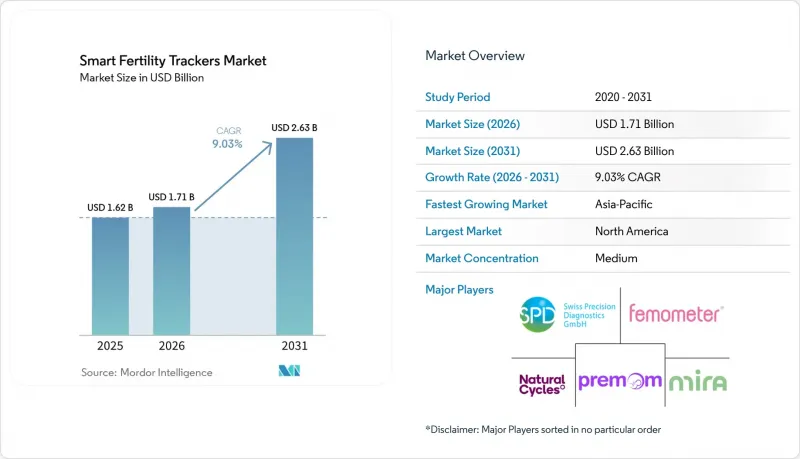
본 보고서는 제품 유형(웨어러블 불임 치료 트래커 등), 바이오마커(황체형성호르몬 등), 연결 모델(앱 및 전용 기기 등), 최종 용도(임신 희망, 자연 피임 등), 판매 채널(D2C 브랜드 웹사이트, 전자상거래 마켓플레이스, 약국·소매점, 클리닉) 및 지역별로 분류되어 있습니다. 시장 전망은 금액(달러) 기준입니다.
세계의 스마트 불임 추적기 시장 동향 및 인사이트
불임 유병률 증가와 출산 연령의 상승
디지털 추적 도구의 보급은 가족 계획 시기가 늦어지는 경향과 일치하며, 이로 인해 임신 가능 기간을 보다 정확하게 파악해야 할 필요성이 커지고 있습니다. 스마트 불임 추적기 시장에서는 규제 측면의 진전과 플랫폼의 확대로 인해 기기 간 및 케어 경로에서의 마찰이 줄어들면서, 구매 의향이 실제 도입으로 이어지고 있습니다. 웨어러블 기기 간의 연동을 통해 스마트 워치 사용자도 임상적으로 승인된 피임 알고리즘을 이용할 수 있게 되었으며, 별도의 하드웨어 구매 없이도 도입할 수 있는 경로가 마련되고 있습니다. 수치 표시 기능을 갖춘 가정용 다중 호르몬 측정 시스템은 보다 정보에 기반한 생리 주기 관리를 촉진하며, 사용자와 의료진이 여러 주기에 걸친 추이를 추적할 수 있게 해줍니다. 디지털 피임과 관련된 표준화된 청구 코드는 보험 환급 및 고용주의 보험 적용에 대한 장벽을 낮추고, 복리후생 담당자들이 비용 대비 효과가 높은 대안을 모색하는 가운데 해당 분야의 지속적인 성장을 뒷받침하고 있습니다.
가정용·앱 연동형 불임 검사로의 급속한 전환
스마트 불임 추적기 시장은 몇 분 이내에 검사실 수준의 결과를 제공하는 정량적 자가 검사 키트로 계속해서 전환되고 있습니다. 그 예로, 이중 형광 및 비색 감지 기술을 채택한 무선 다중 호르몬 측정기를 들 수 있습니다. 이 기기는 혈청 수치와 밀접한 관련이 있는 수치 농도를 산출하여 높은 정확도로 배란을 확인할 수 있으며, 결과는 모바일 앱에 직접 동기화됩니다. 주요 소비자 기술 포럼에서의 평가는 한 번의 측정으로 여러 호르몬을 측정할 수 있으며, 일상생활에 자연스럽게 접목할 수 있는 통합 시스템에 대한 사용자 수요를 다시 한번 입증하고 있습니다. 앱 생태계에서는 기기 데이터와 교육·코칭을 결합하는 경향이 강해지고 있으며, 현재는 보다 광범위한 웰니스 플랫폼과도 연동하여 생리 주기의 각 단계에 걸친 지속적인 참여를 지원하고 있습니다. 스마트 불임 추적기 시장이 호르몬, 생체 인식, 소프트웨어 서비스를 통합함에 따라, 사용자들의 기대는 단순한 달력 기반의 예측이 아닌 명확한 수치에 기반한 인사이트와 실질적인 지침으로 변화하고 있습니다.
불임 치료 앱 및 데이터 처리에 대한 개인정보 보호 및 규제 측면의 면밀한 검토
생식 건강 정보에 대한 엄격한 관리를 기대하는 사용자에게 있어, 데이터 처리는 여전히 큰 우려 사항입니다. 스마트 불임 추적기 시장은 개인정보 보호 관련 동향에 민감하며, 이는 유료·무료를 불문하고 각 서비스의 신뢰도와 해지율에 영향을 미치고 있습니다. 동의 및 적용 범위에 관한 지역별 규정이 서로 다르기 때문에 여러 관할 구역에서 사업을 영위하는 공급업체는 재작업을 피하고 사용자의 신뢰를 쌓기 위해 보다 엄격한 기준에 따라 설계를 진행하는 경우가 많습니다. 제품에 대한 주장 또한 규제 당국의 감시와 밀접한 관련이 있습니다. 피임, 진단, 웰니스에는 각각 서로 다른 규제상 정의가 있으며, 이러한 정의에 따라 증거 기준과 마케팅 제한 사항이 결정되기 때문입니다. 이러한 상황으로 인해 2026년에는 명확한 정보 공개 및 동의 모델이 제품 설계, 앱 온보딩, 그리고 고객 지원 분야에서 중요한 요소가 될 것입니다. 개인정보 보호 문제에 조기에 대응하는 공급업체는 더 높은 재이용률과 지지를 얻는 경향이 있으며, 이것이 이 부문의 지속적인 성장을 뒷받침하고 있습니다.
부문별 분석
웨어러블 생식 기능 추적기는 2025년에 32.34%의 시장 점유율을 차지했으며, 이는 생리 주기에 대한 인사이트와 연계된, 수동적이고 야간에 이루어지는 센싱 방식에 대한 사용자들의 강력한 지지를 반영하고 있습니다. 스마트 불임 추적기 시장은 승인된 생식 기능 알고리즘을 인기 있는 스마트 워치 플랫폼에 통합하는 추세로 인해 계속해서 혜택을 보고 있으며, 이를 통해 기존 기기 소유자는 별도의 트래커를 새로 구매하지 않고도 앱 구독자가 될 수 있습니다. 가정용 다중 호르몬 분석 장치는 사용자와 임상의들이 보다 정확한 타이밍 및 주기 평가를 위해 수치화된 호르몬 데이터를 중요시하게 됨에 따라, 2031년까지 연평균 성장률(CAGR) 11.32%를 나타낼 것으로 전망됩니다. 어느 가전 포럼에서 주목을 받은 이 플랫폼은 1회 16분간의 세션으로 여러 호르몬을 실험실 수준의 정확도로 측정할 수 있다는 점을 강조하고 있으며, 초기 사용자들로부터 자신의 호르몬 곡선과 대조해 보며 증상에 대한 이해가 깊어졌습니다는 보고가 접수되고 있습니다. 정량적 시스템이 성숙해짐에 따라, 연결형 배란 검사 키트와 연결형 기초 체온계는 중견 위치를 유지하고 있지만, 완전히 통합된 솔루션이 수동 데이터 입력을 줄이고 분석 결과와 코칭을 함께 제공함에 따라 이익률에 대한 압박은 커지고 있습니다.
스마트 불임 추적기 시장 역시 기기 및 소프트웨어의 다양화가 진행되고 있음을 반영하고 있습니다. 2026년에 도입된 새로운 무선 리더기는 듀얼 형광 및 비색 감지 기술을 채택하여, 정맥 채혈을 통한 검사 결과와 높은 상관관계를 보이는 고정밀 호르몬 측정 결과를 제공할 뿐만 아니라, 앱과의 원활한 동기화를 실현하는 연결 기능을 내장하고 있습니다. 앱 전용 옵션은 생리 주기 추적 및 교육을 위한 저렴한 진입 수단으로서 여전히 존재하지만, 정확도나 개인 맞춤화가 사용자의 기대에 미치지 못할 경우 해지율이 높아지는 경향이 있습니다. 하드웨어와 소프트웨어를 결합한 업체들은 테스트 스트립 보충 및 프리미엄 구독 서비스를 통해 지속적인 수익 창출을 강화하고 있습니다. 한편, 개방형 웨어러블 통합은 대규모 도입 기반을 활용함으로써 저비용으로 사업을 확장할 수 있는 길을 열어주고 있습니다. 보다 명확한 증거와 탄탄한 사용자 지원 덕분에 정량 분석 장비는 프리미엄 부문에서의 도입을 주도하는 위치에 있으며, 웨어러블 기기는 규모에 따른 편의성을 정의하고 있습니다. 이러한 동향은 스마트 불임 추적기 시장에서 수직 통합형 번들 전략과 오픈 플랫폼 전략이라는 두 가지 성장 경로를 형성하고 있습니다.
황체형성호르몬(LH)은 배란이 임박했음을 나타내는 가장 대표적인 신호로서의 역할에 힘입어, 2025년에는 바이오마커 시장의 35.67%를 차지했습니다. 프로게스테론 대사산물의 추적은 사용자와 임상의들이 정량적 신호를 활용해 배란을 확인하거나 황체 기능을 평가하고자 하는 수요가 증가함에 따라, 2031년까지 연평균 성장률(CAGR) 10.87%를 기록하며 가장 빠르게 성장하고 있는 바이오마커입니다. 스마트 불임 추적기 시장에서 멀티 호르몬 시스템은 에스트로겐의 상승, LH의 급증, 그리고 배란 후 프로게스테론의 변화를 하나의 곡선으로 추적함으로써, 상황을 보다 종합적으로 파악할 수 있게 하여, 더 정확한 시기를 파악하고 명확한 진단을 가능하게 합니다. 형광 이미징과 비색 이미징을 결합한 측정기는 안정적인 수치 기준선과 추세선을 생성하여, 양성·음성 판정 스트립에서 흔히 발생하는 해석 오류를 줄여줍니다. 호르몬 측정 결과와 알고리즘을 통해 얻은 정보를 연계하는 플랫폼이 늘어남에 따라, 사용자는 난포기 및 황체기 전반에 걸쳐 더욱 명확한 일별 지침을 얻을 수 있게 될 것입니다.
체온 및 관련 생체 정보를 모니터링하는 웨어러블 기기는 자가 검진 중간에 배란 패턴을 수동적으로 포착함으로써 부가가치를 제공하며, 동료 심사를 거친 분석에 따르면 체온만을 측정하는 방법에 비해 다중 매개변수 접근 방식이 통합 정확도가 더 높은 것으로 나타났습니다. 실제로 스마트 불임 추적기 시장은 바이오마커의 융합을 향해 나아가고 있으며, 호르몬 패널이 확인의 기반이 되고, 웨어러블 기기가 지속적인 맥락 속에서 그 공백을 메우고 있습니다. 앱 내 워크플로우를 통해 호르몬 데이터와 생체 데이터를 통합하여 제시하는 공급업체는 사용자가 신호를 쉽게 해석할 수 있도록 하고, 임상의가 시간 경과에 따른 추이를 쉽게 확인할 수 있도록 합니다. 이러한 통합적인 접근 방식은 위양성 판정이나 가임기 놓침을 줄이는 데 도움이 되며, 유료 요금제로의 전환을 촉진합니다. 정량적 정확도와 사용자 경험이 향상됨에 따라, 심도 있는 분석과 편의성의 균형을 맞춘 바이오마커 전략은 스마트 불임 추적기 시장에서 점유율을 지속적으로 확대해 나갈 것입니다.
지역별 분석
북미는 보험 적용 범위 확대와 새로운 하드웨어를 도입하지 않고도 규모 확장이 가능한 타사 웨어러블 기기와의 연동에 힘입어, 2025년에는 매출 점유율 43.45%로 주도적인 위치를 차지했습니다. 스마트 불임 추적기 시장 규모는 이러한 기반을 반영하고 있으며, 승인된 피임 알고리즘이 모니터링 플랫폼과 연동되고, 보다 간소화된 보험 청구를 위한 절차가 확립됨에 따라 2026년에도 성장을 이어가고 있습니다. 2024년 캐나다에서의 승인으로 인해, 비호르몬형 디지털 피임법에 대한 접근성이 많은 사용자에게 확대되었습니다. 이는 해당 지역의 높은 스마트폰 및 웨어러블 기기 보급률과 맞물려 긍정적인 영향을 미치고 있습니다. 2026년, 사용자들의 기대는 정확도, 개인정보 보호, 생태계와의 호환성에 집중될 것이며, 수치화된 호르몬 데이터와 검증된 생체 인증 융합 기술을 제공하는 플랫폼이 유리한 입지를 차지할 것입니다. 또한, 전문가의 지도가 임신을 희망하는 사람이나 복잡한 증례를 지원하는 보완적 수단으로서, 의료기관 연계형 모델도 부상하고 있습니다.
아시아태평양은 ‘모바일 우선’ 행동 양식과, 소비자와 판매자 모두에게 국경을 초월한 거래를 용이하게 하는 마켓플레이스의 확대에 힘입어, 2031년까지 연평균 성장률(CAGR) 12.82%를 기록하며 가장 빠르게 성장하는 지역이 될 것입니다. 스마트 불임 추적기 시장은 수입 장벽을 낮추고, 처음 구매하는 사용자의 신뢰를 높이는 인증 공급업체 프로그램 및 물류 지원의 혜택을 받고 있습니다. 많은 아시아태평양 시장에서는 여전히 가격 민감도가 주요 요인으로 작용하고 있기 때문에 개방형 웨어러블 연동은 사용자가 이미 보유하고 있는 기기를 활용한 도입 경로를 제공합니다. 2026년에는 각 벤더사가 전환율과 재이용률을 높이기 위해 현지 상황에 맞추어 SKU, 언어 팩, 교육 컨텐츠를 최적화하고 있습니다. 브랜드가 지역적으로 규모를 확대함에 따라, 마켓플레이스의 도달 범위와 자사 앱 커뮤니티를 결합한 하이브리드 전략이 표준화되고 있습니다.
유럽에서는 ‘프라이버시 바이 디자인’과 임상적 명확성이 중시되어 시장이 안정적입니다. 사용자들이 정확성에 대한 주장과 개인정보 보호에 대한 기대를 모두 고려하여 검토하는 가운데, 지역 사회의 승인을 얻고 투명한 데이터 관리를 유지하는 기업의 스마트 불임 추적기 시장 점유율이 상승하고 있습니다. 주요 스마트 워치 생태계 전반에 걸쳐 피임 및 임신 관리를 가능하게 하는 연동 기능은 인지도를 높이고, 설정의 장벽을 지속적으로 낮추고 있습니다. 중동 및 아프리카 및 남미는 도입 곡선의 초기 단계에 있지만, 마켓플레이스가 배송 신뢰성과 고객 지원을 개선하는 지역에서는 눈부신 성장세를 보이고 있습니다. 2026년에는 지역별 클리닉 및 여성 대상 의료 서비스 제공업체와의 제휴를 통해 제품이 현지 기준 및 치료 경로에 부합하게 됨으로써, 스마트 불임 추적기 시장의 지속적인 성장을 뒷받침하고 있습니다.
기타 혜택 :
- 엑셀 형식 시장 예측(ME) 시트
- 3개월간의 애널리스트 지원
자주 묻는 질문
목차
제1장 서론
제2장 조사 방법
제3장 주요 요약
제4장 시장 구도
제5장 시장 규모 및 성장 예측
제6장 경쟁 구도
제7장 시장 기회 및 향후 전망
KTH 26.06.24According to Mordor Intelligence, the smart fertility trackers market size is expected to increase from USD 1.62 billion in 2025 to USD 1.71 billion in 2026 and reach USD 2.63 billion by 2031, growing at a CAGR of 9.03% over 2026-2031.
This report is Segmented by Product Type (Wearable Fertility Trackers, and More), Biomarker (Luteinizing Hormone, and More), Connectivity Model (App & Proprietary Device, and More), End Use (Trying To Conceive, Natural Contraception, and More), Sales Channel (Direct-To-Consumer Brand Websites, E-Commerce Marketplaces, Pharmacies and Retail, Clinics), and Geography. The Market Forecasts in Value (USD).
Global Smart Fertility Trackers Market Trends and Insights
Rising Infertility Prevalence And Delayed Parenthood
Wider use of digital tracking aligns with later family planning timelines, which increases the need to pinpoint fertile windows with greater certainty. In the smart fertility trackers market, regulatory progress and platform expansion help convert intent into adoption by reducing friction across devices and care pathways. Cross-wearable integrations extend access to clinically cleared contraceptive algorithms for smartwatch owners, creating a conversion funnel without added hardware purchases. At-home multi-hormone systems that generate numeric readouts promote more informed cycle management and allow users and clinicians to track trends over multiple cycles. Standardized billing codes for digital contraception lower hurdles to reimbursement and employer coverage, which supports continued category growth as benefits teams look for cost-effective options.
Rapid Shift To At-Home, App-Connected Fertility Testing
The smart fertility trackers market continues to shift toward quantitative, at-home panels that deliver lab-like results within minutes. One example is a wireless multi-hormone reader that uses dual fluorescence and colorimetric sensing to produce numerical concentrations that correlate closely with blood serum and confirm ovulation with high precision, with results syncing directly to mobile apps. Recognition from major consumer technology forums further validates user demand for integrated systems that measure multiple hormones in a single session and fit within daily routines. App ecosystems increasingly combine device data with education and coaching, and they now link to broader wellness platforms, which support continuous engagement across cycle phases. As the smart fertility trackers market integrates hormones, biometrics, and software services, user expectations evolve toward clear, numeric insights and actionable guidance rather than simple calendar estimates.
Privacy/Regulatory Scrutiny Of Fertility Apps And Data Handling
Data handling remains a visible concern for users who expect strong controls on reproductive health information. The smart fertility trackers market is sensitive to privacy signals, which influences trust and churn across paid and free offerings. Regional frameworks differ on consent and scope, so vendors that operate in multiple jurisdictions often design toward stricter baselines to avoid rework and build user confidence. Product claims also interact with oversight because contraception, diagnosis, and wellness have different regulatory definitions that determine evidence standards and marketing limits. These dynamics make clear disclosures and consent models an important part of product design, app onboarding, and customer support in 2026. Vendors that address privacy up front tend to see stronger retention and advocacy, which supports sustainable growth in the category.
Other drivers and restraints analyzed in the detailed report include:
- Wearable Integrations Enabling Overnight Temperature Capture
- Employer Fertility Benefits And HSA/FSA Eligibility Broaden Access
- Clinical Validity Limits Of Single-Parameter Approaches
For complete list of drivers and restraints, kindly check the Table Of Contents.
Segment Analysis
Wearable fertility trackers held a 32.34% share in 2025, reflecting strong user preference for passive, overnight sensing tied to cycle insights. The smart fertility trackers market continues to benefit from integrations that bring cleared fertility algorithms to popular smartwatch platforms, which convert existing device owners into app subscribers without requiring a new dedicated tracker purchase. At-home multi-hormone analyzers are projected to grow at an 11.32% CAGR through 2031 as users and clinicians prioritize numeric hormone data for more precise timing and cycle assessment. One platform recognized at a global consumer electronics forum highlighted at-home lab-quality testing for multiple hormones in a single 16-minute session, with early users reporting a stronger understanding of symptoms that map to their hormone curves. As quantitative systems mature, connected ovulation tests and connected basal thermometers keep a mid-tier position, although margin pressure rises as fully integrated solutions cut manual data entry and bundle insights with coaching.
The smart fertility trackers market also reflects growing diversity across devices and software. A new wireless reader introduced in 2026 uses dual fluorescence and colorimetric sensing to deliver high-precision hormone results that correlate well with venous assays, with built-in connectivity for seamless app sync. App-only options remain a lower-cost entry point for cycle tracking and education, yet they face higher churn when accuracy or personalization falls short of user expectations. Vendors that pair hardware with software strengthen recurring revenue via test-strip refills and premium subscriptions, while open wearable integrations offer a lower-cost path to scale by tapping into large installed bases. With clearer evidence and more robust user support, quantitative analyzers are positioned to lead premium adoption, while wearables define convenience at scale. These dynamics shape growth paths for both vertical bundles and open-platform strategies in the smart fertility trackers market.
Luteinizing hormone represented a 35.67% biomarker share in 2025, supported by its role as the most familiar signal for imminent ovulation. Progesterone-metabolite tracking is the fastest-growing biomarker with a 10.87% CAGR through 2031 as users and clinicians look to confirm ovulation and assess luteal sufficiency with quantitative signals. In the smart fertility trackers market, multi-hormone systems present a fuller picture by tracking estrogenic rise, LH surge, and post-ovulation progesterone changes as a single curve, which enables more targeted timing and clearer diagnostics. Readers that combine fluorescence and colorimetric imaging produce stable numeric baselines and trend lines that reduce interpretation errors common in yes or no strips. As more platforms link hormone results to algorithmic insights, users gain clearer, day-by-day guidance across the follicular and luteal phases.
Wearables that monitor temperature and related biometrics add value by passively capturing ovulatory patterns between at-home tests, and peer-reviewed analyses support higher pooled accuracy for multi-parameter approaches over temperature-only methods. In practice, the smart fertility trackers market is moving toward biomarker fusion, where hormone panels anchor confirmation and wearables fill gaps with continuous context. Vendors that present hormone and biometric data together in an app workflow make it easier for users to interpret signals and for clinicians to review longitudinal trends. This integrated approach helps reduce false positives and missed windows, which supports conversion to paid tiers. As quantitative accuracy and user experience improve, biomarker strategies that balance depth and convenience will continue to gain share in the smart fertility trackers market.
Geography Analysis
North America holds a leading position with a 43.45% revenue share in 2025, supported by coverage progress and third-party wearable integrations that allow scale without new hardware. The smart fertility trackers market size reflects that base and continues to grow in 2026 as cleared contraceptive algorithms connect to watch platforms and gain billing pathways for simpler reimbursement. Canada's 2024 approval extended access to a large audience for non-hormonal digital contraception, which pairs well with the region's high smartphone and wearable penetration. In 2026, user expectations center on accuracy, privacy, and ecosystem fit, which favor platforms that provide numeric hormone data or validated biometric fusion. Clinic-linked models also emerge as complements where specialist guidance supports TTC users and complex cases.
Asia-Pacific is the fastest-growing region at a 12.82% CAGR through 2031, powered by mobile-first behavior and expanding marketplace infrastructure that makes cross-border fulfillment easier for consumers and sellers. The smart fertility trackers market gains from verified-supplier programs and logistics support that reduce import friction and elevate trust for first-time buyers. As price sensitivity remains a factor in many APAC markets, open wearable integrations provide a path to adoption using devices users already own. In 2026, vendors are tailoring SKUs, language packs, and education content for local contexts to raise conversion and retention. Hybrid strategies that combine marketplace reach with owned app communities are becoming standard as brands scale regionally.
Europe holds steady with emphasis on privacy-by-design and clinical clarity. The smart fertility trackers market share for companies that secure regional approvals and maintain transparent data practices is rising as users weigh accuracy claims alongside privacy expectations. Integrations that enable contraception and conception support across major watch ecosystems continue to raise awareness and lower setup friction. The Middle East and Africa, along with South America, are early in the adoption curve yet show meaningful momentum where marketplaces improve delivery reliability and customer support. In 2026, region-specific partnerships with clinics and women's health providers are helping align products with local standards and care pathways, which supports durable expansion in the smart fertility trackers market.
- AccuQuik
- Apple
- Ava
- Daysy
- Fairhaven Health
- Femometer
- Garmin
- Inito Inc.
- Mira
- Modern Fertility (Ro)
- NaturalCycles Nordic AB
- Oura Health
- OvuSense
- Ovy
- PREGMATE
- Premom (Easy@Home)
- Proov
- SPD Swiss Precision Diagnostics
- Tempdrop
- Wondfo
Additional Benefits:
- The market estimate (ME) sheet in Excel format
- 3 months of analyst support
TABLE OF CONTENTS
1 Introduction
- 1.1 Study Assumptions & Market Definition
- 1.2 Scope of the Study
2 Research Methodology
3 Executive Summary
4 Market Landscape
- 4.1 Market Overview
- 4.2 Market Drivers
- 4.2.1 Rising Infertility Prevalence And Delayed Parenthood
- 4.2.2 Rapid Shift to At-Home, App-Connected Fertility Testing
- 4.2.3 Wearable Integrations Enabling Overnight Temperature Capture
- 4.2.4 Employer Fertility Benefits and HSA/FSA Eligibility Broaden Access
- 4.2.5 AI-Powered Multi-Parameter Tracking Improves Accuracy and Usability
- 4.2.6 D2C and E-Commerce Scale Global Reach for Smart Trackers
- 4.3 Market Restraints
- 4.3.1 Privacy/Regulatory Scrutiny of Fertility Apps and Data Handling
- 4.3.2 Clinical Validity Limits of Single-Parameter Approaches
- 4.3.3 Subscription and Device Lock-In Raise Total Cost of Ownership
- 4.3.4 Platform/Regulatory Limits on Contraceptive Claims
- 4.4 Value-Chain Analysis
- 4.5 Regulatory Landscape
- 4.6 Technological Outlook
- 4.7 Porter's Five Forces
- 4.7.1 Threat of New Entrants
- 4.7.2 Bargaining Power of Suppliers
- 4.7.3 Bargaining Power of Buyers
- 4.7.4 Threat of Substitutes
- 4.7.5 Competitive Rivalry
5 Market Size & Growth Forecasts (Value, USD)
- 5.1 By Product Type
- 5.1.1 Wearable Fertility Trackers
- 5.1.2 Connected Ovulation Test Systems
- 5.1.3 Connected Basal Thermometers
- 5.1.4 At-home Multi-hormone Analyzers
- 5.1.5 App-only Fertility/Contraceptive Solutions
- 5.2 By Biomarker
- 5.2.1 Luteinizing Hormone
- 5.2.2 Estrogen Metabolites
- 5.2.3 Progesterone Metabolite
- 5.2.4 Basal/Skin Temperature
- 5.2.5 Others (HRV and respiratory rate, Multi-parameter fusion)
- 5.3 By Connectivity Model
- 5.3.1 App & Proprietary Device
- 5.3.2 App & Third-party Wearable Integration
- 5.3.3 Standalone App
- 5.4 By End Use
- 5.4.1 Trying to conceive (TTC)
- 5.4.2 Natural contraception
- 5.4.3 Cycle Health Tracking and Insights
- 5.5 By Sales Channel
- 5.5.1 Direct-to-Consumer Brand Websites
- 5.5.2 E-commerce marketplaces
- 5.5.3 Pharmacies and Retail
- 5.5.4 Clinics
- 5.6 By Geography
- 5.6.1 North America
- 5.6.1.1 United States
- 5.6.1.2 Canada
- 5.6.1.3 Mexico
- 5.6.2 Europe
- 5.6.2.1 Germany
- 5.6.2.2 United Kingdom
- 5.6.2.3 France
- 5.6.2.4 Italy
- 5.6.2.5 Spain
- 5.6.2.6 Rest of Europe
- 5.6.3 Asia-Pacific
- 5.6.3.1 China
- 5.6.3.2 India
- 5.6.3.3 Japan
- 5.6.3.4 Australia
- 5.6.3.5 South Korea
- 5.6.3.6 Rest of Asia-Pacific
- 5.6.4 Middle East and Africa
- 5.6.4.1 GCC
- 5.6.4.2 South Africa
- 5.6.4.3 Rest of Middle East and Africa
- 5.6.5 South America
- 5.6.5.1 Brazil
- 5.6.5.2 Argentina
- 5.6.5.3 Rest of South America
- 5.6.1 North America
6 Competitive Landscape
- 6.1 Market Concentration
- 6.2 Market Share Analysis
- 6.3 Company Profiles {(includes Global level Overview, Market level overview, Core Segments, Financials as available, Strategic Information, Market Rank/Share for key companies, Products & Services, and Recent Developments)}
- 6.3.1 AccuQuik
- 6.3.2 Apple Inc.
- 6.3.3 Ava
- 6.3.4 Daysy
- 6.3.5 Fairhaven Health
- 6.3.6 Femometer
- 6.3.7 Garmin
- 6.3.8 Inito Inc.
- 6.3.9 Mira
- 6.3.10 Modern Fertility (Ro)
- 6.3.11 NaturalCycles Nordic AB
- 6.3.12 Oura Health
- 6.3.13 OvuSense
- 6.3.14 Ovy
- 6.3.15 PREGMATE
- 6.3.16 Premom (Easy@Home)
- 6.3.17 Proov
- 6.3.18 SPD Swiss Precision Diagnostics
- 6.3.19 Tempdrop
- 6.3.20 Wondfo
7 Market Opportunities & Future Outlook
- 7.1 White-space & unmet-need assessment


