

|
시장보고서
상품코드
2063730
털세포 백혈병 치료 : 시장 점유율 분석, 업계 동향 및 통계, 성장 예측(2026-2031년)Hairy Cell Leukemia Treatment - Market Share Analysis, Industry Trends & Statistics, Growth Forecasts (2026 - 2031) |
||||||
 Mordor Intelligence
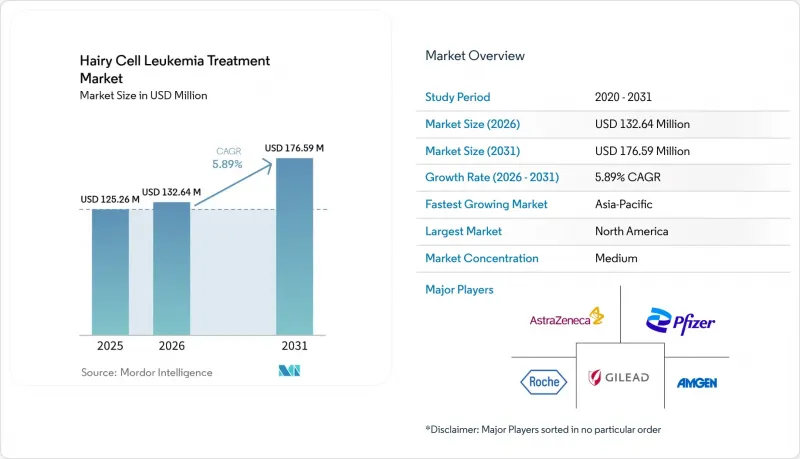
Mordor Intelligence에 의하면, 털세포 백혈병 치료 시장 규모는 2025년 1억 2,526만 달러로 평가되었습니다. 2026년에는 1억 3,264만 달러로 확대되어 2031년까지 1억 7,659만 달러에 이를 것으로 예측되며, 2026-2031년 CAGR은 5.89%를 나타낼 전망입니다.
본 보고서는 치료법별(화학요법, 표적요법, 면역요법, 기타), 환자 유형별(전형적 HCL, 변이형 HCL, 기타), 투여 경로별(정맥 주입, 피하 주사, 경구), 지역별(북미, 유럽, 아시아태평양, 중동 및 아프리카, 남미)로 분류되어 있습니다. 시장 전망은 금액(달러) 기준으로 제시되어 있습니다.
세계의 털세포 백혈병 치료 시장 동향 및 인사이트
백혈병 환자 수 증가와 진단율의 상승
유세포분석 및 면역표현형 분석을 통해, 이전에는 임상적으로 간과되었던 사례들이 밝혀지면서 확진 사례 수가 증가함과 동시에 신속한 치료 개입이 가능해졌습니다. AI를 활용한 패턴 인식은 수동 판독과의 일치율 97.5%를 유지하면서 처리 시간을 60.3% 단축함으로써, 처리 능력 향상과 품질 표준화를 실현하고 있습니다. 원격의료를 통해 지방의 검사실과 대도시의 참조 센터가 협력함으로써, 비정형 소견에 대한 제2의견을 얻는 과정이 가속화되고 있습니다. 형태학적 평가 기준의 정교화를 통해 역학적 상황도 명확해졌습니다. 거의 보편적으로 인정되는 BRAF V600E 돌연변이라는 특징은 진단상의 모호함을 해소하는 단일 유전자 지표가 됩니다. 이러한 발전들이 맞물리면서 치료 대상 환자층이 확대되고, 첫 치료까지 걸리는 시간이 단축되고 있습니다.
고령화의 진행
발병 시 평균 연령은 여전히 50-55세이지만, 80대 이상 집단에서는 유병률이 급격히 증가하고 있습니다. 85세 이상 환자를 대상으로 한 골수 생검 감사 결과, 합병증 증가 없이 44.1%에서 초기 진단이 수정되었고, 25.4%에서 치료 계획이 재검토되었습니다. 고령 환자 수가 증가함에 따라, 골수 억제 효과가 크지 않으면서도 깊은 치료 효과를 가져오는 치료법에 대한 수요가 높아지고 있으며, 처방 경향은 BRAF 또는 BTK 억제제로 이동하고 있습니다. 피하 투여 일정은 입원 기간을 단축하고 신체적 제약에도 부합하므로, 고령자의 생활 방식에 잘 맞습니다. 관해 후 생존 기간이 연장됨에 따라, 체계적인 경과 관찰과 재치료의 적응 기준이 더욱 필요해지고 있습니다.
지방에서의 낮은 인지도와 전문의에 대한 접근성
자원 제약으로 인해 면역 표현형 분석 및 분자 검사는 3차 의료기관에서만 이루어지고 있습니다. 저소득 지역 사례 시리즈에 따르면, 공급망에 푸린 유사체가 항상 재고로 비치되어 있는 것은 아니기 때문에 클라드리빈을 대체하는 치료법으로 비장 절제술이 여전히 시행되고 있는 것으로 밝혀졌습니다. 혈액 전문의 부족 현상은 계속되고 있으며, 필리핀의 경우 1억 1,000만 명의 국민에 비해 방사선 종양 전문의가 113명에 불과한데, 이 비율은 제도적 격차를 여실히 보여주고 있습니다. 원격 종양학은 이러한 격차를 완화하지만, 아직 완전히 해소되지는 않았습니다. 외진 지역에서는 인터넷 연결 상태가 불안정하기 때문에 화상 진료의 신뢰성이 떨어지고 있기 때문입니다.
부문별 분석
표적 치료는 가장 빠른 성장세를 보이고 있으며, 이 부문은 2031년까지 연평균 성장률(CAGR) 8.21%를 나타낼 것으로 예측됩니다. 거의 모든 사례에서 BRAF V600E 양성이 확인된 점은 명확한 바이오마커가 되며, 베무라페닙과 리툭시맙의 병용 요법은 96%의 완전 반응을 달성하여 개념 증명을 확고히 하고 있습니다. BTK 억제는 재발 사례나 돌연변이로 인한 내성을 보이는 하위 그룹에 대한 대체 치료 옵션을 제공하며, 초기 치료 단계에서의 도입 임상시험이 진행 중입니다. CD22를 표적으로 하는 모크세툼맙-파스도톡스 등의 면역독소 요법은 모세혈관 누출의 위험이나 가격 측면을 고려하여 여전히 다발성 재발 사례로만 제한되어 있습니다.
화학요법은 여전히 중요한 위치를 차지하고 있으며, 2025년 모발세포 백혈병 치료 시장 점유율의 60.78%를 차지하고 있습니다. 클라드리빈과 펜토스타틴은 80% 이상의 완전 관해율과 수십 년에 걸친 임상의들의 풍부한 경험 덕분에 1차 치료제로서의 위상을 유지하고 있습니다. 리툭시맙의 병용 요법은 치료 효과를 높이는 동시에 재발 빈도를 낮추기 때문에 화학요법의 중요성을 여전히 유지하고 있습니다. 새롭게 출시된 피하 투여 제제는 외래나 재택에서의 투여를 가능하게 하여, 시장 점유율 하락을 막는 데 일조하고 있습니다.
지역별 분석
북미는 혁신적인 치료법의 신속한 도입과 실시간 MRD(미세 잔류 병변) 모니터링을 가능하게 하는 전문 혈액학 센터의 밀집된 네트워크에 힘입어, 2025년 전 세계 매출의 41.95%를 차지했습니다. FDA의 결정은 계속해서 전 세계 표준 설정에 영향을 미치고 있으며, 획기적 치료법 지정을 통해 개발 기간이 수년에서 수개월로 단축되고 있습니다. 원격 종양학 서비스는 급속히 성장하고 있으며, 메이요 클리닉의 보고에 따르면 종양학 분야의 가상 진료 완료율은 90%를 넘어섰고, 전문의의 진료 범위가 확대되고 있습니다.
아시아태평양은 3차 의료 체계 확충과 임상시험 실시를 장려하는 정책 체계에 힘입어 연평균 성장률(CAGR) 8.55%를 나타낼 것으로 전망됩니다. 중국에서 백혈병 발병률은 정체 상태이지만, 기술의 보급이 확대됨에 따라 생존율은 향상되고 있습니다. 인도의 개정된 임상시험 지침은 ICH-GCP를 준수하게 되었으며, 시험 시작까지의 기간을 단축하고 안전성 거버넌스를 강화하고 있습니다. 이 생태계는 다국적 후원사들이 지금까지 치료를 받지 못했던 환자들을 등록하도록 장려함으로써 조기 접근을 촉진하고 있습니다.
유럽에서는 EMA(유럽의약품청)의 중앙 승인 메커니즘이 효과를 발휘하고 있어, 보험급여 신청 서류가 각국의 HTA(의료기술평가) 기관의 심사를 통과하면 회원국 전체에서 동시에 시장에 진출할 수 있게 됩니다. 지역을 아우르는 공동 연구 그룹을 통해, 임상시험 담당 의사가 주도하는 임상시험, 특히 신규 키나아제 억제제와 벤치마크 약물인 푸린 아날로그를 비교하는 임상시험에서 높은 피험자 등록 수가 유지되고 있습니다.
라틴아메리카와 중동 및 아프리카에서는 도입이 서서히 진행되고 있지만, 공급망 단절과 상환상의 제약으로 인해 그 속도가 더뎌지고 있습니다. 일부 자원이 부족한 지역에서는 여전히 비장 적출술이 시행되고 있으며, 이는 치료에 대한 접근성 부족을 반영하고 있습니다. 보조금을 지원받은 의약품, 진단 키트, 원격 병리 진단 지도를 제공하는 국제적 파트너십을 통해 향후 10년 동안 격차가 줄어들 것으로 전망됩니다.
기타 혜택 :
- 엑셀 형식 시장 예측(ME) 시트
- 3개월간의 애널리스트 지원
자주 묻는 질문
목차
제1장 서론
제2장 조사 방법
제3장 주요 요약
제4장 시장 구도
제5장 시장 규모 및 성장 예측
제6장 경쟁 구도
제7장 시장 기회 및 향후 전망
KTH 26.06.24According to Mordor Intelligence, the hairy cell leukemia treatment market size is expected to increase from USD 125.26 million in 2025 to USD 132.64 million in 2026 and reach USD 176.59 million by 2031, growing at a CAGR of 5.89% over 2026-2031.
This report is Segmented by Therapy Type (Chemotherapy, Targeted Therapy, Immunotherapy, and Others), Patient Type (Classic HCL, Variant HCL, and More), Route of Administration (Intravenous Infusion, Subcutaneous Injection, and Oral), and Geography (North America, Europe, Asia-Pacific, Middle East and Africa, and South America). The Market Forecasts are Provided in Terms of Value (USD).
Global Hairy Cell Leukemia Treatment Market Trends and Insights
Growing Burden of Leukemia Cases & Higher Diagnosis Rates
Flow cytometry and immunophenotyping now uncover cases that previously slipped under clinical radar, raising confirmed incidence counts and enabling prompt therapeutic intervention. AI-enabled pattern recognition archives a 97.5% concordance with manual reads while trimming processing time by 60.3%, increasing throughput and standardizing quality. Telemedicine links provincial laboratories with metropolitan reference centers, accelerating second opinions for atypical findings. Refinement of morphological scoring has also clarified epidemiology; the near-universal BRAF V600E hallmark provides a single-gene anchor that removes diagnostic ambiguity. These advances collectively swell treatment-eligible populations and shorten lead times to first treatment.
Rising Geriatric Population
Median presentation age remains between 50 and 55 years, yet prevalence rises sharply in octogenarian cohorts. Bone marrow biopsy audits in individuals aged 85 plus revised initial diagnoses in 44.1% and reshaped therapy plans in 25.4% without added complications. Older patients push demand for regimens that offer deep responses without myelosuppressive intensity, tilting prescribing toward BRAF or BTK inhibition. Subcutaneous dosing schedules reduce hospital stays, align with mobility constraints, and thus resonate with senior lifestyle preferences. Prolonged post-remission survival further necessitates structured surveillance and retreatment triggers.
Limited Awareness & Specialist Access in Rural Areas
Resource limitations confine immunophenotyping and molecular labs to tertiary centers. Case series from low-income regions reveal splenectomy still substituted for cladribine because supply chains do not consistently stock purine analogues. Hematologist shortages persist, with 113 radiation oncologists serving 110 million citizens in the Philippines, a ratio that illustrates systemic gaps. Tele-oncology mitigates but does not yet erase these disparities, as patchy internet coverage curtails video consultation reliability in remote districts.
Other drivers and restraints analyzed in the detailed report include:
- Rapid Uptake of Next-Generation Targeted Therapies
- MRD-Guided Retreatment Algorithms
- High Cost of Novel Targeted Agents
For complete list of drivers and restraints, kindly check the Table Of Contents.
Segment Analysis
Targeted modalities are registering the swiftest momentum, as the segment is expected to grow at an 8.21% CAGR through 2031. Near-universal BRAF V600E positivity provides a clear biomarker, and the vemurafenib-rituximab pair achieves a 96% complete response, solidifying the proof of concept. BTK inhibition furnishes an alternative axis for relapsed or mutation-resistant subsets, and early-line integration trials are underway. Immunotoxin therapy, such as CD22-directed moxetumomab pasudotox, remains reserved for multiply relapsed disease because of capillary leak risk and price considerations.
Chemotherapy maintains a significant presence, accounting for 60.78% of the hairy cell leukemia treatment market share in 2025. Cladribine and pentostatin remain frontline standards, thanks to 80% or higher complete remission rates and decades of clinician familiarity. Rituximab co-administration enhances the depth of response while reducing relapse frequency, thereby maintaining the relevance of chemotherapy. Emerging subcutaneous formulations support outpatient or home deployment, helping to fend off share erosion.
Geography Analysis
North America steered 41.95% of 2025 global sales, anchored by dense networks of specialty hematology centers that facilitate rapid adoption of innovative regimens and real-time MRD surveillance. FDA decisions continue to influence worldwide standard-setting, with breakthrough labels cutting development timelines from years to months. Tele-oncology services have grown rapidly; the Mayo Clinic reports oncology virtual-care completion rates above 90%, broadening specialist reach.
Asia-Pacific is set to grow at an 8.55% CAGR owing to expanding tertiary care capacity and policy frameworks that encourage clinical trial hosting. Chinese leukemia incidence stabilizes, yet survival metrics improve as technology diffusion continues. India's updated trial guidelines now align with ICH-GCP, accelerating start-up timelines and enhancing safety governance. This ecosystem invites multinational sponsors to enroll previously unserved patients, bolstering early access.
Europe benefits from the EMA's centralized approval mechanism, permitting simultaneous market entry across member states once reimbursement dossiers clear national HTA bodies. Pan-regional cooperative research groups sustain high enrollment for investigator-initiated trials, particularly those comparing novel kinase inhibitors against purine analog benchmarks.
Latin America, the Middle East, and Africa record gradual uptake, yet supply chain gaps and reimbursement constraints hinder pace. Splenectomy persists in certain low-resource pockets, reflecting therapy access shortfalls. International partnerships that supply subsidized drug, diagnostic kits, and telepathology teaching promise to narrow disparity margins over the coming decade.
- GlaxoSmithKline
- Roche
- AstraZeneca
- Bristol-Myers Squibb
- Pfizer
- Sanofi
- Eli Lilly and Company
- Merck
- Novartis
- Abbvie
- Aurinia Pharmaceuticals
- UCB
- Biogen
- Viatris
- ImmuPharma
- RemeGen
- Idorsia
- Equillium
- Kyverna Therapeutics
- AnaptysBio
Additional Benefits:
- The market estimate (ME) sheet in Excel format
- 3 months of analyst support
TABLE OF CONTENTS
1 Introduction
- 1.1 Study Assumptions & Market Definition
- 1.2 Scope of the Study
2 Research Methodology
3 Executive Summary
4 Market Landscape
- 4.1 Market Overview
- 4.2 Market Drivers
- 4.2.1 Rising Prevalence & Earlier Diagnosis of SLE
- 4.2.2 Rapid Approvals of Novel Biologics
- 4.2.3 Expansion of Companion-Diagnostic Biomarkers
- 4.2.4 Tele-Rheumatology Boosting Access in Underserved Areas
- 4.2.5 Venture Funding Surge for Autoimmune Biotech Platforms
- 4.2.6 Favorable Orphan-Drug & Fast-Track Designations
- 4.3 Market Restraints
- 4.3.1 High Therapy Cost & Reimbursement Hurdles
- 4.3.2 Safety Concerns: Infection & Malignancy Risks
- 4.3.3 Cold-Chain Complexity for mAbs & Cell Therapies
- 4.3.4 Physician Inertia Toward Switching from Legacy Steroids
- 4.4 Regulatory Landscape
- 4.5 Porter's Five Forces Analysis
- 4.5.1 Threat of New Entrants
- 4.5.2 Bargaining Power of Buyers
- 4.5.3 Bargaining Power of Suppliers
- 4.5.4 Threat of Substitutes
- 4.5.5 Competitive Rivalry
5 Market Size & Growth Forecasts (Value in USD)
- 5.1 By Treatment Type
- 5.1.1 Non-Steroidal Anti-Inflammatory Drugs (NSAIDs)
- 5.1.2 Antimalarials
- 5.1.3 Corticosteroids
- 5.1.4 Immunosuppressants / DMARDs
- 5.1.5 Biologics
- 5.1.6 Stem-cell & Gene-based Therapies
- 5.2 By Route of Administration
- 5.2.1 Oral
- 5.2.2 Intravenous
- 5.2.3 Subcutaneous
- 5.3 By Distribution Channel
- 5.3.1 Hospital Pharmacies
- 5.3.2 Retail Pharmacies
- 5.3.3 Online Pharmacies
- 5.4 By Geography
- 5.4.1 North America
- 5.4.1.1 United States
- 5.4.1.2 Canada
- 5.4.1.3 Mexico
- 5.4.2 Europe
- 5.4.2.1 Germany
- 5.4.2.2 United Kingdom
- 5.4.2.3 France
- 5.4.2.4 Italy
- 5.4.2.5 Spain
- 5.4.2.6 Rest of Europe
- 5.4.3 Asia-Pacific
- 5.4.3.1 China
- 5.4.3.2 Japan
- 5.4.3.3 India
- 5.4.3.4 Australia
- 5.4.3.5 South Korea
- 5.4.3.6 Rest of Asia-Pacific
- 5.4.4 Middle East & Africa
- 5.4.4.1 GCC
- 5.4.4.2 South Africa
- 5.4.4.3 Rest of Middle East & Africa
- 5.4.5 South America
- 5.4.5.1 Brazil
- 5.4.5.2 Argentina
- 5.4.5.3 Rest of South America
- 5.4.1 North America
6 Competitive Landscape
- 6.1 Market Concentration
- 6.2 Market Share Analysis
- 6.3 Company Profiles (includes Global level Overview, Market level overview, Core Segments, Financials as available, Strategic Information, Market Rank/Share for key companies, Products & Services, and Recent Developments)
- 6.3.1 GlaxoSmithKline
- 6.3.2 F. Hoffmann-La Roche
- 6.3.3 AstraZeneca
- 6.3.4 Bristol Myers Squibb
- 6.3.5 Pfizer
- 6.3.6 Sanofi
- 6.3.7 Eli Lilly and Company
- 6.3.8 Merck & Co.
- 6.3.9 Novartis AG
- 6.3.10 AbbVie
- 6.3.11 Aurinia Pharmaceuticals
- 6.3.12 UCB
- 6.3.13 Biogen
- 6.3.14 Viatris Inc.
- 6.3.15 ImmuPharma
- 6.3.16 RemeGen
- 6.3.17 Idorsia
- 6.3.18 Equillium
- 6.3.19 Kyverna Therapeutics
- 6.3.20 AnaptysBio
7 Market Opportunities & Future Outlook
- 7.1 White-space & Unmet-Need Assessment


