

|
시장보고서
상품코드
2064532
수확 후 처리 : 시장 점유율 분석, 업계 동향 및 통계, 성장 예측(2026-2031년)Post-Harvest Treatment - Market Share Analysis, Industry Trends & Statistics, Growth Forecasts (2026 - 2031) |
||||||
 Mordor Intelligence
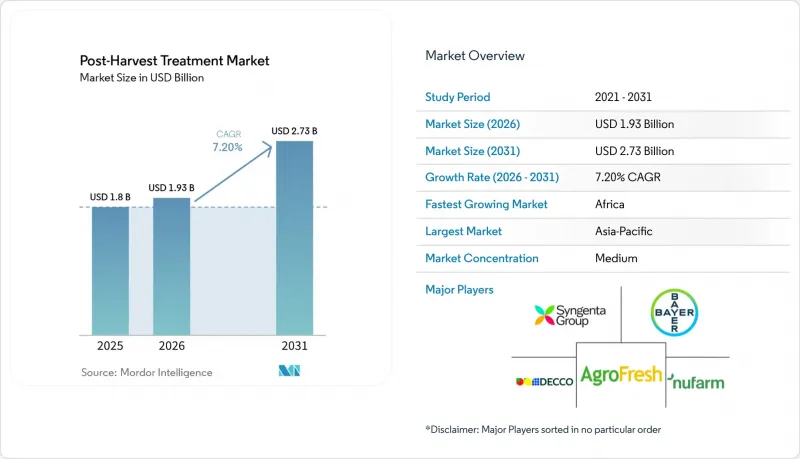
Mordor Intelligence에 의하면, 수확 후 처리 시장 규모는 2025년에 18억 달러로 평가되었습니다. 2026년 19억 3,000만 달러에서 2031년까지 27억 3,000만 달러로 성장하여 2026-2031년 CAGR은 7.20%를 나타낼 것으로 예측됩니다.
본 보고서는 처리 유형(코팅 및 필름, 세정제, 살균제, 에틸렌 억제제 등), 제형(액체, 분말, 가스), 작물 유형(과일, 채소, 곡물 등), 원료별(천연·합성), 지역별(북미, 남미, 유럽, 아시아태평양, 중동 및 아프리카)로 분류되어 있습니다. 시장 전망은 금액(달러) 기준으로 제시되어 있습니다.
세계의 수확 후 처리 시장 동향 및 인사이트
신흥 시장의 콜드체인 확대
부족한 냉장 인프라는 여전히 막대한 수확 후 손실을 초래하고 있으며, 콜드체인 구축의 필요성을 여실히 보여주고 있습니다. 유엔 식량농업기구(FAO)에 따르면, 세계 생산량의 약 12%에 해당하는 5억 2,600만 메트르톤의 식량이 부실한 냉장 시설로 인해 손실되고 있습니다. 이는 신선 농산물의 취급 개선을 위해 냉장 창고, 선과장, 물류 네트워크에 대한 투자가 필요함을 여실히 보여주고 있습니다. 이러한 투자는 살균제, 코팅제, 에틸렌 관리 기술 등의 수확 후 처리 솔루션 도입도 촉진하여, 결과적으로 시장 수요를 견인하게 될 것입니다.
슈퍼마켓의 엄격한 잔류 기준
주요 소매 시장의 엄격한 잔류 기준에 따라 생산자와 수출업체에 대한 규정 준수 요건이 강화되고 있습니다. 예를 들어, 유럽집행위원회는 규정(EU) 2025/1163에 따라 감자 내 클로르프로팜의 최대 잔류 허용 기준을 0.35 mg/kg에서 0.2 mg/kg으로 하향 조정했습니다. 이러한 인하는 더욱 엄격한 식품 안전 기준과 더 낮은 허용 수준으로 향하는 광범위한 규제 동향을 반영하고 있습니다. 그 결과, 생산자들은 소매업체의 요건을 충족하기 위해 정밀 살포 기술, 잔류 기준을 충족하는 살균제, 그리고 바이오 수확 후 처리를 도입하고 있으며, 이것이 수확 후 처리 시장의 성장을 견인하고 있습니다.
특정 살균제에 대한 규제 강화
당국이 보다 엄격한 안전 및 위험 저감 조치를 시행함에 따라, 합성 살균제에 대한 규제 당국의 감시가 강화되고 있습니다. 2025년 1월, 미국 환경보호청(EPA)은 클로로탈로닐, 티오파네이트메틸 및 카르벤다짐에 대한 잠정 등록 심사 결정을 발표하고, 인체 건강 및 환경에 대한 잠재적 위험을 완화하기 위한 새로운 규제를 도입했습니다. 이러한 조치는 농약 규제 강화 및 일반적으로 사용되고 있는 살균제의 재평가와 같은 보다 광범위한 추세에 부합하는 것입니다. 규제 요건이 더욱 엄격해지는 가운데, 제조업체들은 보다 안전한 제제 및 대체 솔루션에 대한 투자를 확대하고 있으며, 이는 제품 포트폴리오의 변화로 이어져 수확 후 처리 시장의 성장 양상에 영향을 미치고 있습니다.
부문별 분석
2025년, 코팅 및 필름 부문은 수확 후 처리 시장 점유율의 41.0%를 차지하며, 과일 및 채소의 신선도 유지 및 수분 손실 최소화에 있어 필수적인 역할을 하고 있음이 부각되었습니다. 이러한 솔루션은 기존 공급망과의 호환성과 수출 기준 준수 측면에서 널리 활용되고 있습니다. 잔류 기준을 충족하는 코팅 및 바이오 코팅에 대한 수요가 증가함에 따라, 특히 식품 안전 규제가 엄격하고 유기농 농산물 소비가 늘어나고 있는 지역에서 해당 제품 시장 입지가 더욱 공고해지고 있습니다.
발아 억제제 부문의 수확 후 처리 시장 규모는 감자나 양파 등 저장 기간이 긴 작물 수요 증가에 힘입어, 2026년부터 2031년에 걸쳐 연평균 성장률(CAGR) 10.8%라는 가장 높은 성장률을 기록하며 확대될 것으로 전망됩니다. 기존 화학 물질에 대한 규제상의 제약으로 인해, 보다 안전한 대체 발아 억제 방식으로의 전환이 가속화되고 있습니다. 또한, 에틸렌 억제제와 살균제는 저장 전략에서 여전히 중요한 역할을 하고 있는 반면, 세정제와 소독제는 수확 후 처리 시설 전체의 위생 기준을 확보하는 데 있어 그 중요성이 커지고 있습니다.
2025년 기준으로, 액상 제제 부문은 수확 후 처리 시장 점유율의 58.0%를 차지하며 최대 점유율을 유지했습니다. 이는 포장 시설 내에서의 분무 및 침지 용도로 광범위하게 사용된 데 따른 결과입니다. 이러한 제제는 적용이 용이하고 균일한 코팅이 가능하며, 기존 인프라와의 호환성이 높다는 점에서 선호되고 있습니다. 다양한 작물 유형과 처리 방법에 폭넓게 적용될 수 있다는 점이, 상업적인 수확 후 처리 업무에서 이 기술이 차지하는 지배적인 역할을 뒷받침하고 있습니다.
가스 제제 부문은 제어 분위기 저장 및 에틸렌 관리 시스템의 도입 확대에 힘입어, 2026년부터 2031년에 걸쳐 연평균 성장률(CAGR) 9.4%라는 가장 높은 성장률을 기록하며 확대될 것으로 전망됩니다. 이러한 제제는 숙성 및 부패 과정을 정밀하게 제어할 수 있기 때문에 장거리 무역에서 특히 가치가 높다고 여겨집니다. 한편, 분말 제제는 곡물 저장 분야에서 꾸준한 수요가 이어지고 있으며, 투여 메커니즘의 발전으로 그 효율성과 유효성이 더욱 향상되고 있습니다.
지역별 분석
2025년, 아시아태평양은 농업 생산량 확대와 콜드체인 인프라에 대한 투자 증가에 힘입어 수확 후 처리 시장 점유율에서 33.0%로 가장 높은 비중을 차지했습니다. 중국과 인도 등 여러 국가들은 식품 손실을 최소화하고 수출 경쟁력을 높이기 위해 수확 후 처리 시스템을 강화하고 있습니다. 코팅 및 제어 분위기 저장 등 첨단 보존 기술의 도입 확대가 지역 내 수요를 더욱 부추기고 있습니다. 또한, 급속한 도시화와 신선식품 소비 확대에 따라 공급망 전반에 걸쳐 수확 후 처리 솔루션의 통합이 진행되고 있습니다.
아프리카는 심각한 수확 후 손실 감축과 식량 안보 강화를 위한 노력에 힘입어, 2026년부터 2031년까지 연평균 성장률(CAGR) 9.7%라는 가장 높은 성장률을 나타낼 것으로 전망됩니다. 각국 정부와 국제 기구들은 저장 인프라에 대한 투자와 공급망의 현대화를 추진하고 있습니다. 원예 작물의 수출 확대와 보존 기술에 대한 인식 제고가 시장 성장에 기여하고 있습니다. 인프라 격차는 여전히 남아 있지만, 냉장 창고 및 취급 시설에 대한 접근성이 개선됨에 따라 지역 전체에서 수확 후 처리 솔루션의 도입이 점차 가능해지고 있습니다.
북미 역시 선진적인 농업 관행과 식품 안전에 관한 엄격한 규제 체계에 힘입어, 2025년에는 전 세계 매출에서 상당한 점유율을 차지했습니다. 잔류 농약 및 식품 안전 규정 준수에 대한 규제 당국의 관심이 높아짐에 따라, 생산자와 유통업체들은 보다 효과적인 보관 솔루션을 도입하기 위해 노력하고 있습니다. 이 지역의 잘 구축된 소매 및 수출 지향적 공급망에서는 유통 기한의 연장 및 일관된 제품 품질이 요구되고 있습니다. 이에 따라 국내 및 국제 시장에서 부패를 최소화하고, 저장 효율을 높이며, 엄격한 식품 안전 기준을 충족하기 위해 코팅제, 살균제 및 에틸렌 관리 기술의 도입이 증가하고 있습니다.
기타 혜택 :
- 엑셀 형식 시장 예측(ME) 시트
- 3개월간의 애널리스트 지원
자주 묻는 질문
목차
제1장 서론
제2장 조사 방법
제3장 주요 요약
제4장 시장 구도
제5장 시장 규모 및 성장 예측
제6장 경쟁 구도
제7장 시장 기회 및 향후 전망
KTH 26.06.24According to Mordor Intelligence, the post-harvest treatment market size was valued at USD 1.80 billion in 2025 and is projected to grow from USD 1.93 billion in 2026 to USD 2.73 billion by 2031, registering a CAGR of 7.20% between 2026 and 2031.
This report is Segmented by Treatment Type (Coatings and Films, Cleaners, Fungicides, Ethylene Blockers, and More), by Formulation (Liquid, Powder, and Gas), by Crop Type (Fruits, Vegetables, Grains, and More), by Origin (Natural and Synthetic), and by Geography (North America, South America, Europe, Asia-Pacific, Middle East, and Africa). The Market Forecasts are Provided in Terms of Value (USD).
Global Post-Harvest Treatment Market Trends and Insights
Cold-chain Expansion in Emerging Markets
Inadequate refrigeration infrastructure continues to result in substantial post-harvest losses, emphasizing the need for cold-chain development. According to the Food and Agriculture Organization (FAO), 526 million metric tons of food, accounting for approximately 12% of global production, are lost due to insufficient refrigeration. This highlights the necessity of investing in cold storage facilities, packhouses, and logistics networks to improve the handling of perishable produce. Such investments also facilitate the adoption of post-harvest treatment solutions, including fungicides, coatings, and ethylene management technologies, thereby driving market demand.
Stringent Supermarket Residue Specifications
Stringent residue specifications in major retail markets are increasing compliance demands on growers and exporters. For instance, the European Commission has reduced the maximum residue level for chlorpropham in potatoes from 0.35 mg/kg to 0.2 mg/kg under Regulation (EU) 2025/1163. This reduction reflects a broader regulatory trend toward stricter food safety standards and lower tolerance levels. Consequently, producers are adopting precision application technologies, residue-compliant fungicides, and bio-based post-harvest treatments to meet retailer requirements, driving growth in the post-harvest treatment market.
Regulatory Tightening on Certain Fungicides
Regulatory scrutiny of synthetic fungicides is increasing as authorities enforce stricter safety and risk mitigation measures. In January 2025, the United States Environmental Protection Agency issued interim registration review decisions for chlorothalonil, thiophanate-methyl, and carbendazim, introducing updated controls to mitigate potential risks to human health and the environment. These measures align with a broader trend of tightening pesticide regulations and reassessing commonly used fungicides. As compliance requirements grow more stringent, manufacturers are investing in safer formulations and alternative solutions, leading to changes in product portfolios and influencing growth patterns in the post-harvest treatment market.
Other drivers and restraints analyzed in the detailed report include:
- Proliferation of Controlled-Atmosphere Packaging Lines
- Increasing Adoption of Edible Antimicrobial Coatings
- Growing Consumer Resistance to Synthetic Chemicals
For complete list of drivers and restraints, kindly check the Table Of Contents.
Segment Analysis
The coatings and films segment accounted for the largest 41.0% of the post-harvest treatment market share in 2025, highlighting their essential role in maintaining freshness and minimizing moisture loss in fruits and vegetables. These solutions are widely utilized due to their compatibility with existing supply chains and compliance with export standards. The growing demand for residue-compliant and bio-based coatings is further reinforcing their market position, particularly in regions with stringent food safety regulations and increasing consumption of organic produce.
The post-harvest treatment market size for the sprout inhibitors segment is projected to grow at the fastest CAGR of 10.8% from 2026 to 2031, driven by increasing demand in storage-intensive crops such as potatoes and onions. Regulatory limitations on traditional chemicals are accelerating the shift toward safer and alternative sprout control methods. Additionally, ethylene blockers and fungicides continue to play a key role in preservation strategies, while cleaners and disinfectants are gaining significance in ensuring hygiene standards across post-harvest handling facilities.
The liquid formulations segment held the largest 58.0% of the post-harvest treatment market share in 2025, driven by their extensive use in spray and dip applications within pack-houses. These formulations are favored for their ease of application, uniform coverage, and compatibility with existing infrastructure. Their versatility across various crop types and treatment methods supports their dominant role in commercial post-harvest operations.
The gas segment is projected to grow at the fastest CAGR of 9.4% from 2026 to 2031, fueled by the increasing adoption of controlled atmosphere storage and ethylene management systems. These formulations allow precise control over ripening and spoilage processes, making them particularly valuable in long-distance trade. Meanwhile, powder formulations continue to see steady demand in grain storage applications, with advancements in delivery mechanisms further improving their efficiency and effectiveness.
Geography Analysis
Asia-Pacific accounted for the largest 33.0% of the post-harvest treatment market share in 2025, driven by expanding agricultural output and increased investment in cold-chain infrastructure. Countries such as China and India are enhancing post-harvest handling systems to minimize food losses and boost export competitiveness. The growing adoption of advanced preservation technologies, such as coatings and controlled atmosphere storage, is further driving regional demand. Additionally, rapid urbanization and rising consumption of fresh produce are fostering the integration of post-harvest treatment solutions across supply chains.
Africa is projected to grow at the fastest CAGR of 9.7% from 2026 to 2031, supported by initiatives to reduce significant post-harvest losses and enhance food security. Governments and international organizations are investing in storage infrastructure and modernizing supply chains. The expansion of horticulture exports and increasing awareness of preservation technologies are contributing to market growth. While infrastructure gaps remain, improved access to cold storage and handling facilities is gradually enabling the adoption of post-harvest treatment solutions across the region.
North America also accounted for a significant share of global revenue in 2025, driven by advanced agricultural practices and strict regulatory frameworks related to food safety. Heightened regulatory focus on pesticide residues and food safety compliance is encouraging growers and distributors to implement more effective preservation solutions. The region's well-structured retail and export-oriented supply chains demand extended shelf life and consistent product quality. This has led to increased adoption of coatings, fungicides, and ethylene management technologies to minimize spoilage, enhance storage efficiency, and meet stringent food safety standards in both domestic and international markets.
- Syngenta AG
- AgroFresh Solutions, Inc.
- Bayer AG
- Decco Post-Harvest Inc. (UPL Limited)
- Nufarm Limited
- John Bean Technologies Corporation
- Xeda International S.A.
- Citrosol, S.A.
- Fomesa Fruitech, S.L.U.
- bio-ferm GmbH (Andermatt Group AG)
- Lytone Enterprise, Inc.
- Janssen PMP (Janssen Pharmaceutica NV)
Additional Benefits:
- The market estimate (ME) sheet in Excel format
- 3 months of analyst support
TABLE OF CONTENTS
1 Introduction
- 1.1 Study Assumptions and Market Definition
- 1.2 Scope of the Study
2 Research Methodology
3 Executive Summary
4 Market Landscape
- 4.1 Market Overview
- 4.2 Market Drivers
- 4.2.1 Cold-chain expansion in emerging markets
- 4.2.2 Stringent supermarket residue specifications
- 4.2.3 Proliferation of controlled-atmosphere packaging lines
- 4.2.4 Increasing adoption of edible antimicrobial coatings
- 4.2.5 Rise of e-commerce grocery fulfillment centers
- 4.2.6 AI-enabled shelf-life prediction analytics
- 4.3 Market Restraints
- 4.3.1 Regulatory tightening on certain fungicides
- 4.3.2 Growing consumer resistance to synthetic chemicals
- 4.3.3 Price volatility of bio-based raw materials
- 4.3.4 Post-harvest mechanization gaps in developing countries
- 4.4 Regulatory Landscape
- 4.5 Technological Outlook
- 4.6 Porter's Five Forces Analysis
- 4.6.1 Threat of New Entrants
- 4.6.2 Bargaining Power of Suppliers
- 4.6.3 Bargaining Power of Buyers
- 4.6.4 Threat of Substitutes
- 4.6.5 Intensity of Competitive Rivalry
5 Market Size and Growth Forecasts (Value, USD)
- 5.1 By Treatment Type
- 5.1.1 Coatings and Films
- 5.1.2 Cleaners
- 5.1.3 Fungicides
- 5.1.4 Ethylene Blockers
- 5.1.5 Sprout Inhibitors
- 5.1.6 Others
- 5.2 By Formulation
- 5.2.1 Liquid
- 5.2.2 Powder
- 5.2.3 Gas
- 5.3 By Crop Type
- 5.3.1 Fruits
- 5.3.2 Vegetables
- 5.3.3 Grains
- 5.3.4 Flowers and Ornamentals
- 5.4 By Origin
- 5.4.1 Natural
- 5.4.2 Synthetic
- 5.5 By Geography
- 5.5.1 North America
- 5.5.1.1 United States
- 5.5.1.2 Canada
- 5.5.1.3 Mexico
- 5.5.1.4 Rest of North America
- 5.5.2 South America
- 5.5.2.1 Brazil
- 5.5.2.2 Argentina
- 5.5.2.3 Rest of South America
- 5.5.3 Europe
- 5.5.3.1 Germany
- 5.5.3.2 United Kingdom
- 5.5.3.3 France
- 5.5.3.4 Italy
- 5.5.3.5 Spain
- 5.5.3.6 Russia
- 5.5.3.7 Rest of Europe
- 5.5.4 Asia-Pacific
- 5.5.4.1 China
- 5.5.4.2 India
- 5.5.4.3 Japan
- 5.5.4.4 Australia
- 5.5.4.5 South Korea
- 5.5.4.6 Rest of Asia-Pacific
- 5.5.5 Middle East
- 5.5.5.1 Saudi Arabia
- 5.5.5.2 United Arab Emirates
- 5.5.5.3 Rest of Middle East
- 5.5.6 Africa
- 5.5.6.1 South Africa
- 5.5.6.2 Egypt
- 5.5.6.3 Rest of Africa
- 5.5.1 North America
6 Competitive Landscape
- 6.1 Market Concentration
- 6.2 Strategic Moves
- 6.3 Market Share Analysis
- 6.4 Company Profiles (Includes Global Level Overview, Market Level Overview, Core Segments, Financials as Available, Strategic Information, Market Rank/Share for Key Companies, Products and Services, and Recent Developments)
- 6.4.1 Syngenta AG
- 6.4.2 AgroFresh Solutions, Inc.
- 6.4.3 Bayer AG
- 6.4.4 Decco Post-Harvest Inc. (UPL Limited)
- 6.4.5 Nufarm Limited
- 6.4.6 John Bean Technologies Corporation
- 6.4.7 Xeda International S.A.
- 6.4.8 Citrosol, S.A.
- 6.4.9 Fomesa Fruitech, S.L.U.
- 6.4.10 bio-ferm GmbH (Andermatt Group AG)
- 6.4.11 Lytone Enterprise, Inc.
- 6.4.12 Janssen PMP (Janssen Pharmaceutica NV)


