
|
시장보고서
상품코드
2065523
미국의 안과 치료 시장 : 시장 점유율 분석, 업계 동향 및 통계, 성장 예측(2026-2031년)U.S. Eye Care - Market Share Analysis, Industry Trends & Statistics, Growth Forecasts (2026 - 2031) |
||||||
 Mordor Intelligence
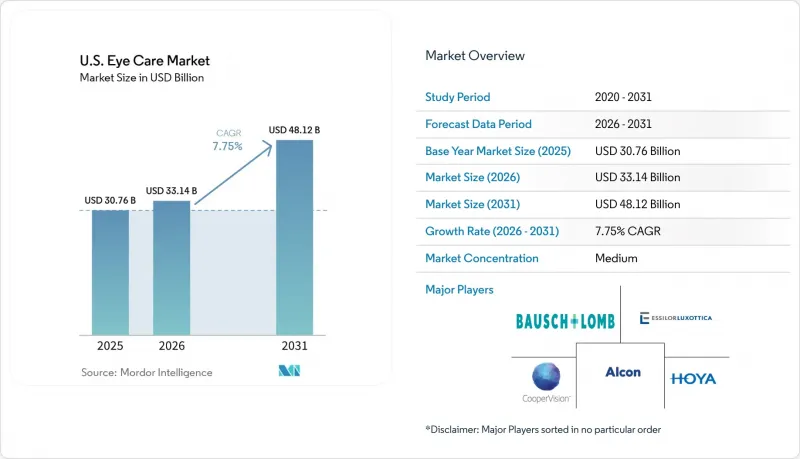
Mordor Intelligence에 의하면, 미국의 안과 치료 시장 규모는 2025년 307억 6,000만 달러로 평가되었고, 2026년에는 331억 4,000만 달러로 추정되며, 2031년까지 481억 2,000만 달러에 이를 것으로 예상되며, 2026-2031년 CAGR 7.75%로 성장할 전망입니다.
본 보고서는 제품 카테고리별(시력 교정, 눈 건강, 외과용 및 이식형, 진단), 구매 형태별(처방약(Rx), OTC), 유통 채널별(안경 소매 체인, 안과 및 검안 클리닉, 외래수술센터(ASC), 병원, 소매 약국, 온라인), 인구 통계별(소아 및 청소년, 성인, 고령자)로 분류되어 있습니다. 시장 전망은 금액(달러) 기준으로 제시되어 있습니다.
미국의 안과 시장 동향 및 인사이트
노화에 따른 안과 질환의 부담이 다양한 분야 수요를 뒷받침하고 있습니다.
인구 고령화가 계속해서 미국의 안과 치료 시장을 견인하고 있습니다. 2024년에는 422만 명의 성인이 녹내장을 앓고 있었으며, 고령자 인구는 5,400만 명을 넘어섰습니다. 백내장, 당뇨병성 망막병증, 노인성 황반변성 등의 질환도 나이가 들면서 증가하며, 지속적인 치료가 필요합니다. 여러 질환 분야에 걸쳐 다양한 제품 포트폴리오를 보유한 기업은 단일 카테고리에 특화된 기업에 비해, 보험 급여 제도의 변경으로 인한 위험을 완화하기 쉬운 입장에 있습니다.
스크린 사용 시간 증가가 안구건조증 및 시력 교정 시장의 잠재적 규모를 확대
스크린 노출은 미국 안과 시장의 중요한 촉진요인으로 작용하고 있습니다. 2025년, 정규직 직원의 주당 화면 사용 시간은 평균 97시간에 달했으며, 68%가 디지털 눈 피로를 호소하고, 63%가 눈의 불편함을 경험하고 있는데, 이는 전년의 50%에서 증가한 수치입니다. 이러한 추세는 블루라이트 차단 렌즈, 도수 안경, 콘택트렌즈, 안구건조증 치료 제품에 대한 수요를 뒷받침하는 한편, 근시 관리 및 관련 치료를 통한 소아 관리 분야로까지 시장을 확대되고 있습니다.
보험 적용 범위의 미비점과 본인 부담금으로 인해 이용이 제한됨
보험 적용 범위의 설계는 미국 안과 의료 시장에서 여전히 큰 과제로 남아 있습니다. 2024년에는 650만 명의 메디케이드 가입자(12%)가 성인의 정기적인 안과 검진이 보험 적용 대상에서 제외된 주에 거주하고 있었으며, 1,460만 명(27%)은 안경에 대한 보험 혜택을 받지 못하고 있었습니다. 안과 의료 급여는 대부분의 경우 보완적인 성격으로 취급되기 때문에 급여 범위가 좁아 네트워크의 사각지대가 발생하기 쉬운 경향이 있습니다. 이로 인해 저소득층 환자나 고령자의 접근이 제한되어 검진, 안경 구입 및 경과 관찰이 지연되고 있으며, 수요의 상당 부분이 충족되지 못한 채 남아 있습니다.
부문별 분석
2025년, 시력 교정 제품은 매출의 51.44%를 차지했으며, 미국 안과 관리 시장에서 가장 큰 제품 카테고리가 되었습니다. 이는 정기적인 교체, 화면 사용으로 인한 시력 문제, 그리고 임상 현장과 소매점에서의 폭넓은 접근성이 뒷받침되어 안경, 콘택트렌즈, 굴절 교정이 널리 이용되고 있음을 반영합니다. 가장 빠르게 성장하고 있는 부문인 ‘눈 건강 제품’은 안구건조증 치료제, 항-VEGF 치료제 및 프리미엄 눈 건강 보조제에 대한 수요에 힘입어 2031년까지 연평균 성장률(CAGR) 8.10%로 확대될 것으로 전망됩니다.
시장은 일시적인 시력 교정에서 지속적인 질환 관리로 전환되고 있습니다. 외과용 및 이식형 제품이 주목을 받고 있는 가운데, RxSight사는 2026년 4월까지 광조절형 렌즈 이식 건수를 30만 건으로 달성할 예정이며, Glaukos사는 2026년 1분기에 Epioxa의 상용화를 추진할 계획입니다. 또한, AI 도구를 통해 선별 검사에 대한 접근성이 향상됨에 따라 진단 및 모니터링 시스템 시장도 성장하고 있으며, 강력한 규제 대응 능력과 종합적인 제품 포트폴리오를 갖춘 기업이 유리한 입지를 점하고 있습니다.
2025년 구매액 중 처방전이 필요한 제품이 73.22%를 차지했으며, 미국 안과 치료 시장에서 임상 주도형 카테고리가 지배적임을 여실히 보여주고 있습니다. 처방 안경, 특수 콘택트렌즈, 외과용 임플란트, 망막 치료는 면허를 소지한 의료 종사자에 의존하고 있기 때문에 처방 채널이 여전히 중심적인 역할을 하고 있습니다. 시판 제품은 고령화 및 예방적 자가 관리 트렌드의 뒷받침을 받아, 안구건조증용 점안액, 안구용 비타민제, 알레르기 관련 안구 관리 제품에 대한 소비자 지출에 힘입어 2031년까지 연평균 성장률(CAGR) 8.40%로 성장할 것으로 전망됩니다.
2024년 9월 FTC 안경 규정 개정에 따라 처방전의 이동성이 향상되어, 각 판매 채널 간의 전환이 용이해졌습니다. 원격 검안 플랫폼은 디지털 처방 워크플로우를 한층 더 강화하고 있습니다. 고부가가치 부문에서는 처방전 채널이 여전히 중요하지만, 디지털 처방전의 이동성은 일반의약품(OTC) 및 온라인 처방전 판매를 모두 뒷받침하고 있으며, 처방전에 따른 구매와 소비자 주도형 구매의 경계를 모호하게 만들고 있습니다.
기타 혜택 :
- 엑셀 형식 시장 예측(ME) 시트
- 3개월간의 애널리스트 지원
자주 묻는 질문
목차
제1장 서론
제2장 조사 방법
제3장 주요 요약
제4장 시장 구도
제5장 시장 규모 및 성장 예측
제6장 경쟁 구도
제7장 시장 기회 및 향후 전망
LSH 26.06.24According to Mordor Intelligence, the u.S. eye care market size is expected to increase from USD 30.76 billion in 2025 to USD 33.14 billion in 2026 and reach USD 48.12 billion by 2031, growing at a CAGR of 7.75% over 2026-2031.
This report is Segmented by Product Category (Vision Correction, Ocular Health, Surgical & Implantable, Diagnostics), Mode of Purchase (Prescribed (Rx), OTC), Distribution Channel (Optical Retail Chains, Ophthalmology & Optometry Clinics, Ambulatory Surgery Centers, Hospitals, Retail Pharmacies, Online), Demographic (Children & Adolescents, Adults, Geriatric). The Market Forecasts are Provided in Terms of Value (USD).
U.S. Eye Care Market Trends and Insights
Aging-Linked Ocular Disease Burden Sustains Multi-Category Demand
The aging population continues to drive the United States eye care market. In 2024, 4.22 million adults were affected by glaucoma, with the older population exceeding 54 million. Conditions like cataracts, diabetic retinopathy, and age-related macular degeneration also rise with age, requiring ongoing treatment. Companies with diverse portfolios across multiple disease areas are better positioned to mitigate risks from reimbursement changes compared to single-category players.
Screen Time Expands the Dry-Eye and Vision Correction Addressable Market
Screen exposure has become a significant driver for the United States eye care market. Full-time employees averaged 97 hours of weekly screen time in 2025, with 68% reporting digital eye strain and 63% experiencing eye issues, up from 50% the previous year. This trend sustains demand for blue-light-filtering lenses, prescription eyewear, contact lenses, and dry-eye products, while expanding the market to include pediatric care through myopia management and related treatments.
Coverage Gaps and Cash-Pay Affordability Constrain Utilization
Coverage design remains a significant challenge for the United States eye care market. In 2024, 6.5 million Medicaid enrollees (12%) lived in states without routine adult eye exam coverage, while 14.6 million (27%) lacked coverage for glasses. Vision benefits are often treated as supplemental, making them narrower and prone to network gaps. This limits access for lower-income patients and older adults, delaying exams, eyewear purchases, and follow-ups, leaving a substantial portion of demand unmet.
Other drivers and restraints analyzed in the detailed report include:
- Omnichannel Access and Managed Vision Care Deepen Market Penetration
- Primary-Care AI Retinal Screening Expands the Diagnostic Funnel
- Ophthalmology and Subspecialty Workforce Bottleneck Caps Service Throughput
For complete list of drivers and restraints, kindly check the Table Of Contents.
Segment Analysis
In 2025, Vision Correction Products accounted for 51.44% of revenue, making it the largest product category in the United States eye care market. This reflects the widespread use of spectacles, contact lenses, and refractive corrections, supported by routine replacements, screen-related vision issues, and broad clinical and retail access. Ocular Health Products, the fastest-growing segment, is projected to expand at an 8.10% CAGR through 2031, driven by demand for dry-eye therapeutics, anti-VEGF treatments, and premium ocular supplements.
The market is shifting from episodic corrections to recurring disease management. Surgical and Implantable Products are gaining traction, with RxSight achieving 300,000 Light Adjustable Lens implants by April 2026 and Glaukos advancing Epioxa commercialization in Q1 2026. Diagnostics and Monitoring Systems are also growing as AI tools enhance screening access, favoring companies with strong regulatory capabilities and comprehensive portfolios.
Prescribed products represented 73.22% of purchases in 2025, highlighting the dominance of clinically directed categories in the United States eye care market. Prescription eyewear, specialty contact lenses, surgical implants, and retinal therapies rely on licensed practitioners, keeping the Rx channel central. Over-the-Counter products are forecast to grow at an 8.40% CAGR through 2031, driven by consumer spending on dry-eye drops, ocular vitamins, and allergy-related eye care, supported by aging demographics and preventive self-care trends.
The FTC Eyeglass Rule update in September 2024 improved prescription portability, enabling easier transitions across fulfillment channels. Tele-optometry platforms are further enhancing digital prescription workflows. While the Rx channel remains critical for high-value categories, digital prescription mobility supports both OTC and online Rx fulfillment, blurring the lines between prescribed and consumer-directed purchases.
List of Companies Covered in this Report:
- AbbVie Inc. (Allergan Eye Care)
- Alcon
- Bausch + Lomb Corporation
- Carl Zeiss
- The Cooper Companies
- EssilorLuxottica
- Glaukos
- Harrow, Inc.
- HOYA
- Johnson & Johnson Vision Care, Inc.
- National Vision Holdings, Inc.
- NIDEK Inc.
- Regeneron Pharmaceuticals
- RxSight, Inc.
- Santen Pharmaceuticals
- Sight Sciences, Inc.
- STAAR Surgical
- Topcon Healthcare, Inc.
- VSP Vision
- Warby Parker Inc.
Additional Benefits:
- The market estimate (ME) sheet in Excel format
- 3 months of analyst support
TABLE OF CONTENTS
1 Introduction
- 1.1 Study Assumptions & Market Definition
- 1.2 Scope of the Study
2 Research Methodology
3 Executive Summary
4 Market Landscape
- 4.1 Market Overview
- 4.2 Market Drivers
- 4.2.1 Aging-Linked Ocular Disease Burden
- 4.2.2 Screen-Time-Driven Vision Correction and Dry-Eye Demand
- 4.2.3 Omnichannel Access and Managed Vision Care Utilization
- 4.2.4 Primary-Care AI Retinal Screening Expansion
- 4.2.5 Durable Myopia-Management Outcomes Improve Clinician Confidence
- 4.3 Market Restraints
- 4.3.1 Coverage Gaps and Cash-Pay Affordability Pressure
- 4.3.2 Ophthalmology and Subspecialty Workforce Bottlenecks
- 4.3.3 Tariff-Led Cost Inflation Across Frames, Lenses, and Equipment
- 4.4 Value / Supply-Chain Analysis
- 4.5 Regulatory Landscape
- 4.6 Technological Outlook
- 4.7 Porter's Five Forces Analysis
- 4.7.1 Bargaining Power of Suppliers
- 4.7.2 Bargaining Power of Buyers
- 4.7.3 Threat of New Entrants
- 4.7.4 Threat of Substitutes
- 4.7.5 Intensity of Competitive Rivalry
5 Market Size & Growth Forecasts (Value, USD)
- 5.1 By Product Category
- 5.1.1 Vision Correction Products
- 5.1.2 Ocular Health Products
- 5.1.3 Surgical & Implantable Products
- 5.1.4 Diagnostics & Monitoring Systems
- 5.1.5 Others
- 5.2 By Mode of Purchase
- 5.2.1 Prescribed (Rx) Products
- 5.2.2 Over-the-Counter Products
- 5.3 By Distribution Channel
- 5.3.1 Optical Retail Chains & Independent Optical Stores
- 5.3.2 Ophthalmology Clinics & Optometry Stores
- 5.3.3 Ambulatory Surgery Centers
- 5.3.4 Hospitals
- 5.3.5 Retail Pharmacies
- 5.3.6 Online Channel
- 5.4 By Demographic
- 5.4.1 Children & Adolescents
- 5.4.2 Adults
- 5.4.3 Geriatric
6 Competitive Landscape
- 6.1 Market Concentration
- 6.2 Market Share Analysis
- 6.3 Company Profiles (includes Global level Overview, Market level overview, Core Segments, Financials as available, Strategic Information, Market Rank/Share for key companies, Products & Services, and Recent Developments)
- 6.3.1 AbbVie Inc. (Allergan Eye Care)
- 6.3.2 Alcon Inc.
- 6.3.3 Bausch + Lomb Corporation
- 6.3.4 Carl Zeiss Meditec AG
- 6.3.5 CooperVision, Inc.
- 6.3.6 EssilorLuxottica SA
- 6.3.7 Glaukos Corporation
- 6.3.8 Harrow, Inc.
- 6.3.9 HOYA Corporation
- 6.3.10 Johnson & Johnson Vision Care, Inc.
- 6.3.11 National Vision Holdings, Inc.
- 6.3.12 NIDEK Inc.
- 6.3.13 Regeneron Pharmaceuticals, Inc.
- 6.3.14 RxSight, Inc.
- 6.3.15 Santen Pharmaceutical Co., Ltd.
- 6.3.16 Sight Sciences, Inc.
- 6.3.17 STAAR Surgical Company
- 6.3.18 Topcon Healthcare, Inc.
- 6.3.19 VSP Vision
- 6.3.20 Warby Parker Inc.
7 Market Opportunities & Future Outlook
- 7.1 White-space & Unmet-need Assessment