|
시장보고서
상품코드
2073078
아프리카의 사료용 마이코톡신 해독제 시장 : 점유율 분석, 업계 동향과 통계, 성장 예측(2026-2031년)Africa Feed Mycotoxin Detoxifiers - Market Share Analysis, Industry Trends & Statistics, Growth Forecasts (2026 - 2031) |
||||||
 Mordor Intelligence
Mordor Intelligence에 의하면, 아프리카 사료용 마이코톡신 해독제시장은 2025년에 1억 1,391만 달러 규모가 되어, 2026년 1억 1,836만 달러에서 2031년까지 1억 4,359만 달러로 성장하여 2026-2031년까지 예측 기간에서 CAGR 3.94%를 나타낼 전망입니다.
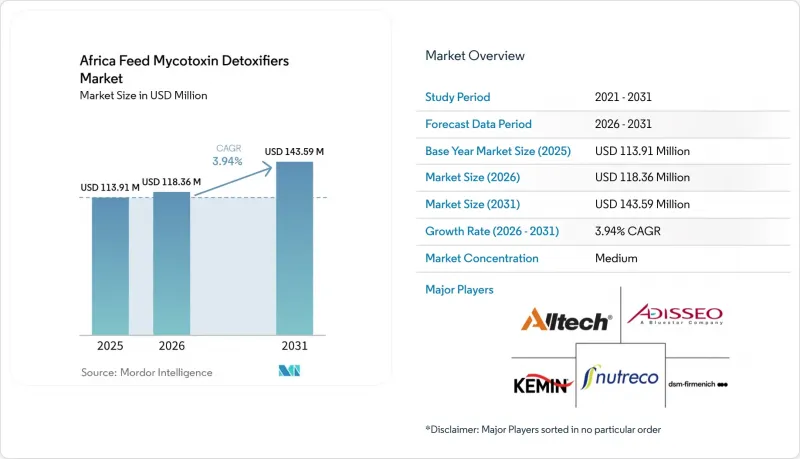
본 보고서는 부가 첨가제(결합제 및 생체 변환제), 동물 유형(가금류, 반추동물, 돼지, 수산 양식, 기타 동물), 지역(이집트, 케냐, 남아프리카공화국, 기타 아프리카 국가)별로 분류되어 있습니다. 시장 전망은 금액(달러)과 수량(톤)으로 제시되어 있습니다.
아프리카 사료용 마이코톡신 해독제 시장 동향 및 인사이트
아프리카 사료용 곡물에서 검출된 고농도의 아플라톡신과 푸모니신
아프리카의 사료용 마이코톡신 해독제 시장은 사료용 곡물, 특히 해당 지역 전체 축산업에서 주류를 이루고 있는 옥수수 기반 사료 시스템에서 발생하는 지속적인 마이코톡신 오염 위험에 힘입어 성장하고 있습니다. DSM-Firmenich의 세계 마이코톡신 조사(2025년 1월-12월)에 따르면, 사하라 이남 아프리카는 마이코톡신 오염 위험이 매우 높은 지역으로 지목되었으며, 사료 안전성에 영향을 미치는 주요 독소로는 아플라톡신과 푸모니신이 꼽혔습니다. 또한, 이 조사에 따르면, 마이코톡신 오염은 단일 독소에 의한 사례라기보다는 여러 독소가 혼재하는 ‘ 혼합 오염”로 발생하는 경우가 많으며, 이로 인해 상업용 사료 제조업체와 축산 농업 종사자들에게 사료 품질 관리가 복잡해지고 있다는 점이 지적되었습니다. 이러한 오염 양상으로 인해 여러 독소를 동시에 처리할 수 있는 고성능 마이코톡신 해독제에 대한 수요가 증가하고 있으며, 이를 통해 아프리카 사료 산업에서 동물의 건강, 생산성 및 사료 안전 기준의 유지가 뒷받침되고 있습니다.
상업용 배합사료 생산 능력 확대
아프리카의 사료용 마이코톡신 해독제 시장은 해당 지역의 정식 배합 사료 제조가 급속히 확대됨에 따라 성장세를 보이고 있습니다. 『Alltech Agri-Food Outlook 2025』에 따르면, 아프리카에서는 2025년에 6,420만 톤의 사료가 생산되어 2024년 대비 11.5% 증가했습니다. 이러한 성장에 힘입어 아프리카는 2년 연속으로 세계에서 가장 빠르게 성장하는 사료 생산 지역으로서의 입지를 확고히 했습니다. 사료 생산의 상업화가 진행됨에 따라, 각 제조업체는 사료의 품질, 안정성, 리스크 관리를 최우선으로 삼고 있습니다. 대량의 곡물을 조달하고 보다 엄격한 품질 보증 기준을 준수하는 대규모 사료 공장이 오염 위험에 대처하고 가축의 최적의 생산성을 확보하기 위해 마이코톡신 해독제에 대한 수요를 주도하고 있습니다. 그 결과, 산업적 사료 생산의 지속적인 성장이 아프리카 사료 시장에서 마이코톡신 관리 솔루션에 대한 수요를 뒷받침하고 있습니다.
고가 제품과 저비용 점토계 대체품의 비교
이 시장은 기존 점토계 흡착제와 비교했을 때, 고도 해독 솔루션의 비용이 상대적으로 높다는 제약에 직면해 있습니다. 특히 비공식적이고 소규모인 생산 시스템에서 비용에 민감한 축산 농업 종사자나 사료 혼합업자들은 사료 첨가물을 선택할 때 합리적인 가격을 우선시하는 경우가 많습니다. 이 문제는 2024년 11월 ECOWAS 지역 농업·식량 기구(RAAF/ARAA)가 실시한 조사에서 드러났습니다. 해당 조사에서는 신속한 아플라톡신 검사를 위한 시약의 높은 비용이 해당 지역의 사료 안전 관리에 있어 중대한 과제라고 지적하고 있습니다. 이러한 비용 관련 장벽은 종합적인 마이코톡신 대책에 대한 투자를 저해하고 있으며, 아프리카 사료 산업에서 가격에 민감한 부문에 고품질 해독제의 도입을 지연시키고 있습니다.
부문별 분석
2025년 아프리카 사료용 마이코톡신 해독제 시장에서 바인더 시장 점유율은 65.0%로 가장 높은 비중을 차지했습니다. 바인더는 상업용 사료 생산에서 확립된 역할과 마이코톡신 위험 관리에 있어 그 효과 덕분에 여전히 수요의 기반을 이루고 있습니다. 이러한 광범위한 입수 가능성, 사료 제조업체들 사이에서 높은 인지도, 기존 사료 배합과의 호환성이 다양한 축산 분야에서 지속적인 채택에 기여하고 있습니다. 특히, 오염에 대한 우려가 구매 결정에 큰 영향을 미치는 옥수수 기반 사료 시스템에서 수요는 견조합니다. 또한, 이러한 비용 효율성과 사료 제조 공정에 쉽게 통합될 수 있다는 점은 일상적인 사료 안전 프로그램에서 바인더의 역할을 더욱 공고히 하고 있습니다.
아프리카 사료용 마이코톡신 해독제 시장에서 바이오트랜스포머 부문 시장 규모는 2026년부터 2031년까지 연평균 성장률(CAGR) 3.9%라는 가장 높은 성장률을 기록하며 확대될 것으로 전망됩니다. 이러한 성장은 기존 흡착법으로는 충분히 대처할 수 없는 복잡한 오염 프로파일에 대응할 수 있는 솔루션에 대한 필요성에 대한 인식이 높아지고 있는 데 기인합니다. 바이오트랜스포머는 생물학적 전환 과정을 통해 더 광범위한 마이코톡신을 대상으로 할 수 있기 때문에 기존 해독 전략을 보완하는 수단으로서 주목받고 있습니다. 이러한 도입은 사료의 안전성 향상과 성능 개선을 목표로 하는 첨단 사료 제조 사업에서 특히 중요합니다. 품질 기준이 엄격해짐에 따라, 상업 생산 시스템 전반에 걸쳐 다기능 해독 기술에 대한 관심이 높아지고 있습니다.
기타 혜택
- 엑셀 형식 시장 예측(ME) 시트
- 3개월간의 애널리스트 지원
자주 묻는 질문
목차
제1장 서론
제2장 개 보고서의 내용
제3장 주요 요약과 주요 조사 결과
제4장 주요 산업 동향
제5장 시장 규모와 성장 예측
제6장 경쟁 구도
제7장 CEO에 대한 주요 전략적 질문
JHS 26.07.07According to Mordor Intelligence, the africa feed mycotoxin detoxifiers market was valued at USD 113.91 million in 2025 and is projected to grow from USD 118.36 million in 2026 to USD 143.59 million by 2031, registering a CAGR of 3.94% during the forecast period of 2026-2031.
This report is Segmented by Sub-Additive (Binders and Biotransformers), by Animal Type (Poultry, Ruminants, Swine, Aquaculture, and Other Animals), and by Geography (Egypt, Kenya, South Africa, Rest of Africa). The Market Forecasts are Provided in Terms of Value (USD) and Volume (Metric Tons).
Africa Feed Mycotoxin Detoxifiers Market Trends and Insights
High Aflatoxin and Fumonisin Load in African Feed Grains
The Africa feed mycotoxin detoxifiers market is driven by the ongoing risk of mycotoxin contamination in feed grains, particularly in maize-based feed systems, which are predominant in livestock production across the region. The DSM-Firmenich World Mycotoxin Survey (January-December 2025) identified Sub-Saharan Africa as an extreme-risk region for mycotoxin contamination, with aflatoxins and fumonisins being the primary toxins impacting feed safety. The survey also noted that mycotoxin contamination often occurs as co-contamination rather than isolated toxin events, complicating feed quality management for commercial feed manufacturers and livestock producers. This contamination pattern is increasing the demand for advanced mycotoxin detoxifiers capable of addressing multiple toxins simultaneously, thereby supporting animal health, productivity, and feed safety standards in the African feed industry.
Expansion of Commercial Compound Feed Capacity
The Africa feed mycotoxin detoxifiers market is experiencing growth due to the rapid expansion of formal compound feed manufacturing in the region. According to the Alltech Agri-Food Outlook 2025, Africa produced 64.2 million metric tons of compound feed in 2025, marking an 11.5% increase from 2024. This growth positioned Africa as the fastest-growing feed-producing region globally for the second consecutive year. As feed production becomes more commercialized, manufacturers are prioritizing feed quality, consistency, and risk management. Larger feed mills, which procure grain in bulk and adhere to stricter quality assurance standards, are driving the demand for mycotoxin detoxifiers to address contamination risks and ensure optimal animal performance. As a result, the continued growth of industrial feed production is sustaining the demand for mycotoxin management solutions in the African feed market.
Premium Pricing Versus Low-Cost Clay Alternatives
The market is constrained by the relatively high cost of advanced detoxification solutions compared to conventional clay-based binders. Cost-sensitive livestock producers and feed mixers, particularly in informal and small-scale production systems, often prioritize affordability when choosing feed additives. This issue was highlighted in a November 2024 mission by the ECOWAS Regional Agency for Agriculture and Food (RAAF/ARAA), which identified the high cost of reagents for rapid aflatoxin tests as a significant challenge to feed safety management in the region. These cost-related barriers hinder investment in comprehensive mycotoxin control measures and slow the adoption of premium detoxifiers in price-sensitive segments of the African feed industry.
Other drivers and restraints analyzed in the detailed report include:
- Poultry Sector Intensification and Food-Safety Scrutiny
- African Union and National Aflatoxin Control Programs
- Fragmented Enforcement Outside Formal Feed Channels
For complete list of drivers and restraints, kindly check the Table Of Contents.
Segment Analysis
The Africa feed mycotoxin detoxifiers market share for binders held the largest 65.0% in 2025. Binders remain a cornerstone of demand due to their established role in commercial feed production and their effectiveness in managing mycotoxin risks. Their widespread availability, familiarity among feed manufacturers, and compatibility with existing feed formulations contribute to their continued adoption across various livestock sectors. Demand is particularly robust in maize-based feed systems, where contamination concerns significantly influence purchasing decisions. Additionally, their cost efficiency and ease of integration into feed manufacturing processes further solidify their role in routine feed safety programs.
The Africa feed mycotoxin detoxifiers market size for biotransformers is forecast to grow at the fastest CAGR of 3.9% from 2026 to 2031. This growth is driven by increasing recognition of the need for solutions that address complex contamination profiles beyond traditional adsorption methods. Biotransformers are gaining traction due to their ability to target a broader range of mycotoxins through biological conversion processes, complementing conventional detoxification strategies. Their adoption is particularly significant in advanced feed operations aiming for enhanced feed safety and improved performance outcomes. As quality standards become more stringent, interest in multifunctional detoxification technologies is expanding across commercial production systems.
Complete Report Scope:
- By Sub-Additive
- Binders
- Biotransformers
- By Animal Type
- Aquaculture
- Fish
- Shrimp
- Other Aquaculture Species
- Poultry
- Broiler
- Layer
- Other Poultry Birds
- Ruminants
- Beef Cattle
- Dairy Cattle
- Other Ruminants
- Swine
- Other Animals
- Aquaculture
- By Geography
- Egypt
- Kenya
- South Africa
- Rest of Africa
List of Companies Covered in this Report:
- DSM-Firmenich AG
- Kemin Industries, Inc.
- Nutreco N.V. (SHV Holdings N.V.)
- Alltech, Inc.
- Bluestar Adisseo Company (China National BlueStar (Group) Co., Ltd.)
- Impextraco NV
- Anpario plc
- Norel, S.A.
- Orffa International Holding B.V. (Marubeni Corporation)
- Olmix S.A. (Olmix Group)
- Perstorp Holding AB (PETRONAS Chemicals Group Berhad)
- VisscherHolland B.V.
- Micron Bio-Systems Ltd (Volac International Limited)
- Special Nutrients, Inc.
- Novonesis A/S
Additional Benefits:
- The market estimate (ME) sheet in Excel format
- 3 months of analyst support
TABLE OF CONTENTS
1 INTRODUCTION
- 1.1 Study Assumptions and Market Definition
- 1.2 Scope of the Study
- 1.3 Research Methodology
2 REPORT OFFERS
3 EXECUTIVE SUMMARY AND KEY FINDINGS
4 KEY INDUSTRY TRENDS
- 4.1 Animal Headcount
- 4.1.1 Poultry
- 4.1.2 Ruminants
- 4.1.3 Swine
- 4.2 Feed Production
- 4.2.1 Aquaculture
- 4.2.2 Poultry
- 4.2.3 Ruminants
- 4.2.4 Swine
- 4.3 Regulatory Framework
- 4.3.1 Egypt
- 4.3.2 Kenya
- 4.3.3 South Africa
- 4.3.4 Rest of Africa
- 4.4 Value Chain and Distribution Channel Analysis
- 4.5 Market Drivers
- 4.5.1 High aflatoxin and fumonisin load in African feed grains
- 4.5.2 Expansion of commercial compound feed capacity
- 4.5.3 Poultry sector intensification and food-safety scrutiny
- 4.5.4 African Union and national aflatoxin control programs
- 4.5.5 Rapid uptake of low-infrastructure aflatoxin testing
- 4.5.6 Rising use of variable by-products and distressed grains in feed
- 4.6 Market Restraints
- 4.6.1 Premium pricing versus low-cost clay alternatives
- 4.6.2 Low awareness among smallholders and on-farm mixers
- 4.6.3 Sparse in-country efficacy validation for local toxin profiles
- 4.6.4 Fragmented enforcement outside formal feed channels
5 MARKET SIZE AND GROWTH FORECASTS (VALUE AND VOLUME)
- 5.1 By Sub-Additive
- 5.1.1 Binders
- 5.1.2 Biotransformers
- 5.2 By Animal Type
- 5.2.1 Aquaculture
- 5.2.1.1 Fish
- 5.2.1.2 Shrimp
- 5.2.1.3 Other Aquaculture Species
- 5.2.2 Poultry
- 5.2.2.1 Broiler
- 5.2.2.2 Layer
- 5.2.2.3 Other Poultry Birds
- 5.2.3 Ruminants
- 5.2.3.1 Beef Cattle
- 5.2.3.2 Dairy Cattle
- 5.2.3.3 Other Ruminants
- 5.2.4 Swine
- 5.2.5 Other Animals
- 5.2.1 Aquaculture
- 5.3 By Geography
- 5.3.1 Egypt
- 5.3.2 Kenya
- 5.3.3 South Africa
- 5.3.4 Rest of Africa
6 COMPETITIVE LANDSCAPE
- 6.1 Market Concentration
- 6.2 Strategic Moves
- 6.3 Market Share Analysis
- 6.4 Company Profiles (Includes Global Level Overview, Market Level Overview, Core Segments, Financials as Available, Strategic Information, Market Rank/Share for Key Companies, Products and Services, and Recent Developments)
- 6.4.1 DSM-Firmenich AG
- 6.4.2 Kemin Industries, Inc.
- 6.4.3 Nutreco N.V. (SHV Holdings N.V.)
- 6.4.4 Alltech, Inc.
- 6.4.5 Bluestar Adisseo Company (China National BlueStar (Group) Co., Ltd.)
- 6.4.6 Impextraco NV
- 6.4.7 Anpario plc
- 6.4.8 Norel, S.A.
- 6.4.9 Orffa International Holding B.V. (Marubeni Corporation)
- 6.4.10 Olmix S.A. (Olmix Group)
- 6.4.11 Perstorp Holding AB (PETRONAS Chemicals Group Berhad)
- 6.4.12 VisscherHolland B.V.
- 6.4.13 Micron Bio-Systems Ltd (Volac International Limited)
- 6.4.14 Special Nutrients, Inc.
- 6.4.15 Novonesis A/S