|
시장보고서
상품코드
2073200
오염 방지 비강 스프레이 시장 : 점유율 분석, 업계 동향과 통계, 성장 예측(2026-2031년)Anti-Pollution Nasal Spray - Market Share Analysis, Industry Trends & Statistics, Growth Forecasts (2026 - 2031) |
||||||
 Mordor Intelligence
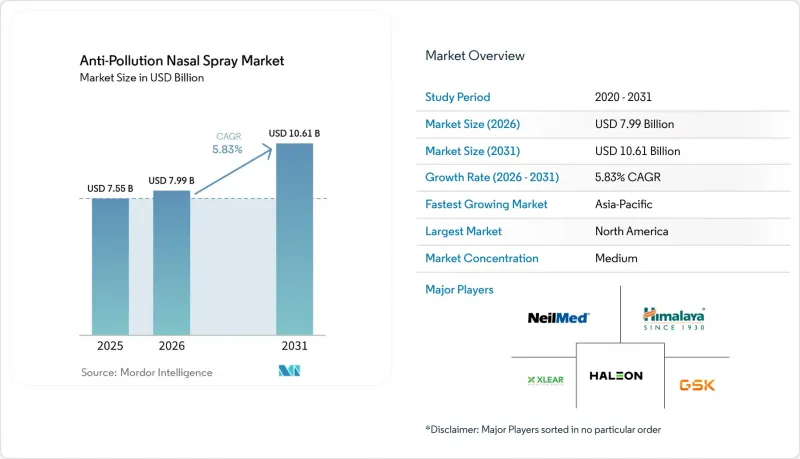
Mordor Intelligence에 의하면, 오염 방지 비강 스프레이 시장 규모는 2025년 75억 5,000만 달러에서 2026년에는 79억 9,000만 달러로 확대되어 2031년까지 106억 1,000만 달러에 이를 것으로 예상되고 있어 2026년부터 2031년까지 CAGR 5.83%로 성장할 전망입니다.
본 보고서는 제품 유형(오염 방지, 생리식염수, 허브/천연 성분, 증상 완화, 세정, 보습), 판매 채널(소매 약국, 온라인, 슈퍼마켓, 병원 약국), 최종 사용자(일반 가정, 헬스케어, 여행/아웃도어, 직업/산업), 지역(북미, 유럽, 아시아태평양, 중동 및 아프리카, 남미)별로 분류되어 있습니다. 예상치는 금액(달러)으로 표시되어 있습니다.
전 세계 오염 방지 비강 스프레이 시장 동향 및 인사이트
도시 지역의 대기 오염 및 스모그 노출 증가
도시 지역의 대기질 악화에 따라 대기오염 대책용 비강 스프레이에 대한 수요는 계속해서 증가하고 있습니다. 코는 오염된 공기가 체내로 들어오는 주요 통로이기 때문에 미세 입자의 영향을 크게 받기 쉬운 부위입니다. 2025년에 발표된 조사에 따르면, 도시 지역에서 미세먼지 노출은 상기도의 미생물 군집을 교란시켜 알레르기성 비염이나 비부비동염 등의 질환 발병 위험을 높이는 것으로 밝혀졌습니다. PM10 및 이와 유사한 미세 입자는 비강 내에 대량으로 침착되므로, 예방 차원의 코 보호의 필요성이 강조되고 있습니다. 또한, 2025년에 발표된 또 다른 연구에 따르면, 학령기 아동들은 겨울철에 오염 물질에 2-3배 더 많이 노출되고 있으며, 그 결과 코의 미생물군집 다양성이 감소하고 있는 것으로 지적되었습니다. 이러한 연구 결과를 바탕으로, 특히 상기도 노출이 여전히 공중보건상의 우려 사항으로 남아 있는 아시아태평양과 유럽에서 오염 방지 비강 스프레이의 도입이 확대되고 있습니다.
전자상거래의 확대와 옴니채널을 통한 약국 이용
온라인 플랫폼은 오염 방지 비강 스프레이 시장에서 가장 빠르게 성장하고 있는 유통 채널로, 2031년까지 8.25%의 성장률을 보일 것으로 전망됩니다. 디지털 약국 플랫폼은 정기적인 주문과 택배 배송 절차를 간소화하여, 이러한 비강 스프레이의 일상적인 예방적 사용에 적합합니다. 또한, 비강 치료제 제조업체들도 소비자의 구매 및 재구매 행동을 관리하기 위해 직접 판매 방식으로 전환하고 있습니다. 예를 들어, 글렌마크사가 2026년에 미국에서 "RYALTRIS"의 직접 판매를 시작하고, BlinkRx사의 택배 서비스와 연계하는 움직임은 이러한 추세를 반영하고 있습니다. 이러한 접근 방식이 확대됨에 따라, 재구매 습관이 약한 오프라인 매장에 비해 온라인 채널에서는 보다 견고한 재구매가 예상됩니다.
매일 예방적 사용에 관한 장기적인 임상적 근거의 부족
대기오염 대책용 비강 스프레이 시장은 연중 매일 사용을 뒷받침할 수 있는 장기적인 임상적 근거가 제한적이라는 점에서 중요한 과제에 직면해 있습니다. 대부분의 연구는 단기적인 효능에 초점을 맞추고 있어, 만성적인 노출 조건 하에서 습관적으로 사용할 경우의 문제점은 여전히 해결되지 않은 채 남아 있습니다. 이러한 격차는 건강에 대한 의식이 높은 시장에서 예방책을 찾는 소비자들에게 매우 중요한 의사의 권고에 영향을 미치고 있습니다. 또한, 이 시장은 복잡한 규제 체계 하에서 운영되고 있으며, 제품의 분류는 화장품, 웰니스 제품, 또는 의료기기로 분류되는지에 따라 달라집니다. 일관된 근거와 규제상의 명확성이 부족할 경우, 일부 브랜드는 1차 진료 현장에서의 도입이나 의료진의 신중한 권유를 얻는 데 어려움을 겪을 수 있습니다.
부문별 분석
2025년, 오염 방지 제품은 항오염 코 스프레이 시장에서 28.40%의 점유율을 차지하며, 생리식염수 기반, 허브·천연 유래, 증상 완화, 세정, 보습 스프레이 등 6개 카테고리로 구성된 제품 시장을 주도했습니다. 도시 지역의 소비자들은 당초, 광의의 코 건강 유지보다는 눈에 보이는 오염이나 미세 입자에 대한 노출에 초점을 맞추어 이러한 제품들을 채택했습니다. 북미와 유럽에서는 통근, 스모그, 야외 활동 등 도시 지역의 과제와 부합하는 방호 기능에 중점을 둔 명확한 포지셔닝 덕분에 이러한 제품들이 호응을 얻고 있습니다. 폴리머 필름 배리어, 벤토나이트 기반 젤, 카라기난이 함유된 제품은 명확한 초기 이용 사례가 있어 지지를 넓혀가고 있습니다.
증상 완화용 코 스프레이 시장은 2031년까지 연평균 성장률(CAGR) 7.80%를 기록하며 성장할 것으로 예상되며, 가장 빠르게 성장하는 부문이 될 전망입니다. 이러한 성장은 소비자들의 관심이 단순히 보호라는 단일 목적에서 오염 노출로 인해 유발되는 자극, 코막힘, 염증과 같은 문제 해결로 옮겨가고 있음을 반영합니다. 2024년 연구에서는 PM2.5 노출과 염증성 질환 간의 연관성이 지적되면서, 단순한 세정 기능을 넘어선 제품에 대한 수요가 부각되었습니다. 아시아태평양과 중동에서는 자일리톨, 알로에 베라, 유칼립투스 등 식물 유래 성분을 선호하는 소비자가 늘어나고 있어, 허브나 천연 유래 제품이 인기를 끌고 있습니다. 업계는 성능, 쾌적성 및 배합 투명성을 중시하는 다양한 제품 구성으로 진화하고 있습니다.
지역별 분석
2025년, 북미는 항오염용 비강 스프레이 시장을 독점하며 38.07%의 점유율을 차지했습니다. 이 지역의 성공은 확립된 OTC(일반의약품) 인프라, 광범위한 약국 네트워크, 그리고 호흡기 질환 자가 관리에 투자하려는 의지가 있는 소비자층 덕분입니다. 미국은 브랜드 인지도, 뿌리 깊은 알레르기 관리 습관, 그리고 비강 치료의 성장을 뒷받침하는 규제 환경 덕분에 여전히 주요 수익원으로 자리 잡고 있습니다. 캐나다와 멕시코도 지역 시장 규모를 확대하고 있지만, 소매점 밀도가 낮고 카테고리 인지도도 낮은 탓에 미국 이외 지역의 소비자 보급 현황에는 편차가 나타나고 있습니다. 또한, 실내 공기질과 직업적 호흡기 건강에 대한 관심이 높아지는 가운데, 의료기관에서의 사용도 확대되고 있습니다.
유럽은 약국 중심의 의료 관행과 알레르기성 비염의 높은 유병률에 힘입어, 대기 오염 대책용 비강 스프레이에 있어 여전히 중요한 시장입니다. 다만, EU 의료기기 규정(MDR)에 따라 더욱 엄격한 규정 준수 요건이 부과되고 있습니다. 프랑스에서는 약국의 권고에 대한 소비자의 신뢰가 '배리어 스프레이'라는 콘셉트와 부합하기 때문에 강력한 성장이 기대되고 있습니다. 또 다른 주요 시장인 독일에서는 2026년 3월, 알레르기 시즌을 앞두고 헥살사가 아젤라스틴·플루티카손 복합제를 출시하면서 샌즈사와의 경쟁이 격화되었습니다. 규제 준수와 임상적으로 입증된 제제 개발 간의 균형을 유지할 수 있는 기업이 이 시장에서 성공할 가능성이 높을 것입니다.
아시아태평양은 대기 오염 대책용 비강 스프레이 시장에서 가장 빠르게 성장하고 있는 지역으로, 2031년까지 연평균 성장률(CAGR)이 7.45%를 나타낼 것으로 전망됩니다. 중국과 인도는 도시 지역의 대기 오염, 가처분 소득 증가, 약국 접근성 확대에 힘입어 성장을 주도하고 있으며, 이러한 요인들이 제품에 대한 인식을 정기적인 사용으로 전환시키고 있습니다. 2025년 12월, 알타미라사가 중국 본토에서 “벤트리오”에 대한 승인을 획득한 것은 해당 지역이 규제 및 상업적 거점으로서 갖는 중요성을 여실히 보여주고 있습니다. 이 시장은 조직화된 약국 체인의 인지도 향상과 호흡기 관리 제품 구매에서 전자상거래의 역할 확대에 힘입어 성장하고 있습니다. 중동 및 아프리카, 남미, 브라질, 아르헨티나 등의 소규모 시장도 오염에 대한 인식이 높아지고 약국 주도의 예방 관리 캠페인이 전개됨에 따라 그 중요성이 커지고 있습니다.
기타 혜택:
- 엑셀 형식 시장 예측(ME) 시트
- 3개월간의 애널리스트 지원
자주 묻는 질문
목차
제1장 서론
제2장 조사 방법
제3장 주요 요약
제4장 시장 구도
제5장 시장 규모와 성장 예측
제6장 경쟁 구도
제7장 시장 기회와 향후 전망
JHS 26.07.03According to Mordor Intelligence, the anti-Pollution nasal spray market size is expected to increase from USD 7.55 billion in 2025 to USD 7.99 billion in 2026 and reach USD 10.61 billion by 2031, growing at a CAGR of 5.83% over 2026-2031.
This report is Segmented by Product Type (Pollution Defense, Saline, Herbal/Natural, Symptomatic Relief, Cleansing, Hydrating), Distribution Channel (Retail Pharmacies, Online, Supermarkets, Hospital Pharmacies), End User (Household, Healthcare, Travel/Outdoor, Occupational/Industrial), and Geography (North America, Europe, Asia-Pacific, MEA, South America). Forecasts are in Terms of Value (USD).
Global Anti-Pollution Nasal Spray Market Trends and Insights
Rising Urban Air Pollution and Smog Exposure
As cities face worsening air quality, the demand for anti-pollution nasal sprays continues to rise. The nose, being the primary entry point for polluted air, is highly susceptible to fine particles. Research published in 2025 revealed that urban particulate exposure disrupts the upper respiratory tract microbiome, increasing vulnerability to conditions like allergic rhinitis and rhinosinusitis. PM10 and similar particles heavily deposit in the nasal cavity, emphasizing the need for preventive nasal protection. Another 2025 study highlighted that school-age children face 2-3 times higher pollutant exposure in winter, reducing nasal microbiome diversity. These findings drive the adoption of anti-pollution nasal sprays, particularly in Asia-Pacific and Europe, where upper airway exposure remains a public health concern.
Expansion of E-Commerce and Omnichannel Pharmacy Access
Online platforms are the fastest-growing distribution channel for anti-pollution nasal sprays, with an 8.25% growth rate projected through 2031. Digital pharmacy platforms simplify repeat orders and home delivery, aligning with the daily preventive use of these sprays. Nasal therapy brands are also shifting to direct commercialization to control consumer acquisition and refill behavior. For instance, Glenmark's 2026 direct commercialization of RYALTRIS in the U.S., coupled with BlinkRx's home delivery, reflects this trend. As this approach expands, online channels are expected to see stronger repeat consumption compared to physical stores, where refill discipline is weaker.
Limited Long-Term Clinical Evidence for Daily Prophylactic Use
The anti-pollution nasal spray market faces a key challenge due to limited long-term clinical evidence supporting year-round daily use. Most studies focus on short-term efficacy, leaving questions about habitual use in chronic exposure conditions unanswered. This gap impacts physician endorsements, which are crucial for consumers seeking preventive solutions in health-conscious markets. Additionally, the market operates within a complex regulatory framework, where product classification varies based on its positioning as a cosmetic, wellness product, or medical device. Without consistent evidence and regulatory clarity, some brands may struggle with adoption in primary care and cautious recommendations from healthcare professionals.
Other drivers and restraints analyzed in the detailed report include:
- Growing Demand for Natural, Herbal, and Drug-Free Formulations
- Wider Acceptance of Barrier-Forming and Microfilm Technologies
- Consumer Substitution From Masks, Air Purifiers, and Saline Rinses
For complete list of drivers and restraints, kindly check the Table Of Contents.
Segment Analysis
In 2025, Pollution Defense Products held a 28.40% share of the anti-pollution nasal spray market, leading a six-part product landscape that includes saline-based, herbal and natural, symptomatic relief, cleansing, and hydrating sprays. Urban consumers initially adopted these products, focusing on visible pollution and particulate exposure rather than broader nasal wellness. North America and Europe have favored these products due to their clear barrier-led positioning, which aligns with urban challenges like commuting, smog, and outdoor activities. Products using polymer-film barriers, bentonite-based gels, and carrageenan formats have gained traction due to their defined first-use cases.
Symptomatic Relief Nasal Sprays are projected to grow at a 7.80% CAGR through 2031, making them the fastest-growing segment. This growth reflects a shift from single-purpose protection to addressing issues like irritation, congestion, and inflammation caused by pollution exposure. A 2024 study linked PM2.5 exposure to inflammatory conditions, highlighting the need for products beyond cleansing. Herbal and natural variants are gaining popularity in Asia-Pacific and the Middle East, where consumers prefer botanical ingredients like xylitol, aloe vera, and eucalyptus. The industry is evolving toward a diverse product mix emphasizing performance, comfort, and formulation transparency.
Complete Report Scope:
- By Product Type
- Pollution Defense Products
- Saline-Based Nasal Sprays
- Herbal and Natural Nasal Sprays
- Symptomatic Relief Nasal Sprays
- Cleansing Nasal Sprays
- Hydrating Nasal Sprays
- By Distribution Channel
- Retail Pharmacies
- Online Channels
- Supermarkets and General Retail Stores
- Hospital and Clinic Pharmacies
- By End User
- Household Consumers
- Healthcare Institutions
- Travel and Outdoor Users
- Occupational and Industrial Users
- By Geography
- North America
- United States
- Canada
- Mexico
- Europe
- Germany
- United Kingdom
- France
- Italy
- Spain
- Rest of Europe
- Asia-Pacific
- China
- India
- Japan
- Australia
- South Korea
- Rest of Asia-Pacific
- Middle East and Africa
- GCC
- South Africa
- Rest of Middle East and Africa
- South America
- Brazil
- Argentina
- Rest of South America
- North America
Geography Analysis
In 2025, North America dominated the anti-pollution nasal spray market, capturing 38.07% of the share. The region's success is attributed to its established OTC infrastructure, extensive pharmacy network, and a consumer base willing to invest in respiratory self-care. The U.S. remains the primary revenue hub due to brand visibility, ingrained allergy care habits, and a regulatory environment that supports growth in nasal therapies. Canada and Mexico add regional depth, though consumer adoption outside the U.S. is uneven due to lower retail intensity and category awareness. The market is also witnessing growth in institutional use, driven by increased focus on indoor air quality and occupational respiratory health.
Europe remains a significant market for anti-pollution nasal sprays, supported by pharmacy-led healthcare practices and high allergic rhinitis prevalence. However, the EU MDR imposes stricter compliance requirements. France is positioned for strong growth as consumer trust in pharmacy recommendations aligns with the barrier-spray concept. Germany, another key market, saw Sandoz intensify competition in March 2026 with the Hexal launch of an azelastine-fluticasone combination product ahead of allergy season. Companies that balance regulatory compliance with clinically supported formulations are likely to succeed in this market.
Asia-Pacific is the fastest-growing region for anti-pollution nasal sprays, with a projected 7.45% CAGR through 2031. China and India drive growth due to urban pollution, rising disposable incomes, and expanding pharmacy access, which are converting awareness into regular product use. Altamira's December 2025 approval of Bentrio in Mainland China highlights the region's importance as a regulatory and commercial destination. The market benefits from increased visibility in organized pharmacy chains and the growing role of digital commerce in respiratory care purchases. Smaller markets like the Middle East, Africa, South America, Brazil, and Argentina are gaining relevance due to rising pollution awareness and pharmacy-led preventive care campaigns.
- Altamira Therapeutics Ltd.
- Aurena Laboratories AB
- B.F. Ascher and Company, Inc.
- Bausch Health
- Bayer
- Church and Dwight Co., Inc.
- Cipla
- Dr. Reddy's Laboratories
- GlaxoSmithKline
- Haleon plc
- Himalaya
- Jadran-Galenski laboratorij d.d.
- Kenvue Inc.
- Merck
- Nasaleze International Limited
- NeilMed Pharmaceuticals, Inc.
- Novartis
- Procter and Gamble Co.
- Reckitt Benckiser Group
- Sandoz Group AG
- Sun Pharmaceuticals Industries
- The Arm and Hammer Company
- Xlear, Inc.
Additional Benefits:
- The market estimate (ME) sheet in Excel format
- 3 months of analyst support
TABLE OF CONTENTS
1 INTRODUCTION
- 1.1 Study Assumptions and Market Definition
- 1.2 Scope of the Study
2 RESEARCH METHODOLOGY
3 EXECUTIVE SUMMARY
4 MARKET LANDSCAPE
- 4.1 Market Overview
- 4.2 Market Drivers
- 4.2.1 Rising Urban Air Pollution and Smog Exposure
- 4.2.2 Rising Consumer Preference for Preventive Nasal Care
- 4.2.3 Expansion of E-Commerce and Omnichannel Pharmacy Access
- 4.2.4 Growing Demand for Natural, Herbal, and Drug-Free Formulations
- 4.2.5 Rising Product Positioning Around Allergy and Pollution Co-Protection
- 4.2.6 Wider Acceptance of Barrier-Forming and Microfilm Technologies
- 4.3 Market Restraints
- 4.3.1 Limited Long-Term Clinical Evidence for Daily Prophylactic Use
- 4.3.2 Regulatory Ambiguity Around Claims, Classification, and Labeling
- 4.3.3 Consumer Substitution From Masks, Air Purifiers, and Saline Rinses
- 4.3.4 Trust Gap From Inconsistent Formulation Quality Across Brands
- 4.4 Supply/Value Chain Analysis
- 4.5 Regulatory Landscape
- 4.6 Technological Outlook
- 4.7 Porter's Five Forces Analysis
- 4.7.1 Threat of New Entrants
- 4.7.2 Bargaining Power of Suppliers
- 4.7.3 Bargaining Power of Buyers
- 4.7.4 Threat of Substitutes
- 4.7.5 Competitive Rivalry
5 MARKET SIZE AND GROWTH FORECASTS (VALUE, USD)
- 5.1 By Product Type
- 5.1.1 Pollution Defense Products
- 5.1.2 Saline-Based Nasal Sprays
- 5.1.3 Herbal and Natural Nasal Sprays
- 5.1.4 Symptomatic Relief Nasal Sprays
- 5.1.5 Cleansing Nasal Sprays
- 5.1.6 Hydrating Nasal Sprays
- 5.2 By Distribution Channel
- 5.2.1 Retail Pharmacies
- 5.2.2 Online Channels
- 5.2.3 Supermarkets and General Retail Stores
- 5.2.4 Hospital and Clinic Pharmacies
- 5.3 By End User
- 5.3.1 Household Consumers
- 5.3.2 Healthcare Institutions
- 5.3.3 Travel and Outdoor Users
- 5.3.4 Occupational and Industrial Users
- 5.4 By Geography
- 5.4.1 North America
- 5.4.1.1 United States
- 5.4.1.2 Canada
- 5.4.1.3 Mexico
- 5.4.2 Europe
- 5.4.2.1 Germany
- 5.4.2.2 United Kingdom
- 5.4.2.3 France
- 5.4.2.4 Italy
- 5.4.2.5 Spain
- 5.4.2.6 Rest of Europe
- 5.4.3 Asia-Pacific
- 5.4.3.1 China
- 5.4.3.2 India
- 5.4.3.3 Japan
- 5.4.3.4 Australia
- 5.4.3.5 South Korea
- 5.4.3.6 Rest of Asia-Pacific
- 5.4.4 Middle East and Africa
- 5.4.4.1 GCC
- 5.4.4.2 South Africa
- 5.4.4.3 Rest of Middle East and Africa
- 5.4.5 South America
- 5.4.5.1 Brazil
- 5.4.5.2 Argentina
- 5.4.5.3 Rest of South America
- 5.4.1 North America
6 COMPETITIVE LANDSCAPE
- 6.1 Market Concentration
- 6.2 Market Share Analysis
- 6.3 Company Profiles (includes Global Level Overview, Market Level Overview, Core Segments, Financials as available, Strategic Information, Market Rank/Share, Products and Services, Recent Developments)
- 6.3.1 Altamira Therapeutics Ltd.
- 6.3.2 Aurena Laboratories AB
- 6.3.3 B.F. Ascher and Company, Inc.
- 6.3.4 Bausch Health Companies Inc.
- 6.3.5 Bayer AG
- 6.3.6 Church and Dwight Co., Inc.
- 6.3.7 Cipla Limited
- 6.3.8 Dr. Reddy's Laboratories Ltd.
- 6.3.9 GSK plc
- 6.3.10 Haleon plc
- 6.3.11 Himalaya Wellness Company
- 6.3.12 Jadran-Galenski laboratorij d.d.
- 6.3.13 Kenvue Inc.
- 6.3.14 Merck and Co., Inc.
- 6.3.15 Nasaleze International Limited
- 6.3.16 NeilMed Pharmaceuticals, Inc.
- 6.3.17 Novartis AG
- 6.3.18 Procter and Gamble Co.
- 6.3.19 Reckitt Benckiser Group plc
- 6.3.20 Sandoz Group AG
- 6.3.21 Sun Pharmaceutical Industries Limited
- 6.3.22 The Arm and Hammer Company
- 6.3.23 Xlear, Inc.
7 MARKET OPPORTUNITIES AND FUTURE OUTLOOK
- 7.1 White-Space and Unmet-Need Assessment