|
시장보고서
상품코드
2073304
미국의 동물 사료용 유기 미량 미네랄 : 시장 점유율 분석, 업계 동향 및 통계, 성장 예측(2026-2031년)United States Animal Feed Organic Trace Minerals - Market Share Analysis, Industry Trends & Statistics, Growth Forecasts (2026 - 2031) |
||||||
 Mordor Intelligence
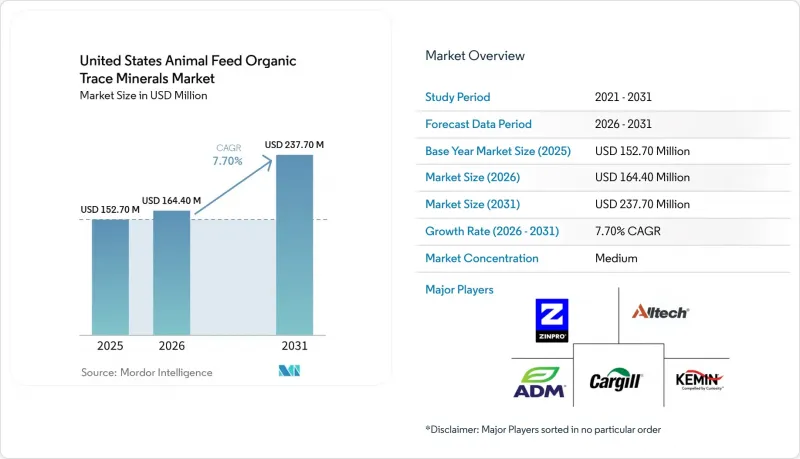
Mordor Intelligence에 의하면, 미국의 동물 사료용 유기 미량 미네랄 시장 규모는 2025년에 1억 5,270만 달러로 평가되었습니다. 예측 기간(2026-2031년) 연평균 성장률(CAGR) 7.70%로 성장을 지속하여, 2026년 1억 6,440만 달러에서 2031년에는 2억 3,770만 달러에 이를 것으로 예측됩니다.
본 보고서는 미량 미네랄의 유형(아연, 철, 구리, 망간, 셀레늄 등), 가축의 유형(젖소, 육우, 가금류 등), 킬레이트화 방식(아미노산 킬레이트, 단백산염 등) 및 형태(건조 프리믹스 및 분말 등)별로 분류되어 있습니다. 시장 전망은 금액(달러) 기준으로 제시되어 있습니다.
미국의 동물 사료용 유기 미량 미네랄 시장 동향 및 인사이트
유기농 육류, 우유, 달걀에 대한 수요 증가
미국의 동물 사료용 유기 미량 미네랄 시장은 인증된 유기 축산물에 대한 수요가 증가함에 따라 계속해서 혜택을 보고 있습니다. 농업 마케팅 서비스(AMS)는 2026년 3월 액체 제품의 추정 판매량을 보고했습니다. 미국 내 유기농 유제품의 총 판매량은 2억 7,200만 파운드에 달하고, 전년 대비 5.6% 증가했습니다. 인증된 유기 사료는 승인된 투입물 목록 및 유기 조달 규정을 준수해야 하므로, 소비자 수요 증가는 기존 시스템에 비해 사료 첨가제 시장 수요를 안정화시키는 결과를 가져옵니다. 따라서 미국의 동물 사료용 유기 미량 미네랄 시장은 생산량 증가뿐만 아니라, 규정 준수, 가축 생산성 및 사료 배합의 엄격성과의 더욱 긴밀한 연관성 덕분에 혜택을 보고 있습니다.
미네랄 흡수율 향상 및 배설량 감소
미국의 동물 사료용 유기 미량 미네랄 시장은 유기 형태가 미네랄의 이용 효율을 높일 수 있다는 증거에 의해서도 뒷받침되고 있습니다. 흡수율 향상은 가축의 반응을 저해하지 않으면서 배합 비율을 낮출 수 있다는 근거를 강화해 주므로, 사료 구매자에게 중요한 의미를 지닙니다. 또한, 환경 규제가 강화되는 가운데 가축 배설물의 영양분을 관리하는 경영에서는 특히 아연이나 구리의 부하를 주의 깊게 모니터링해야 하는 경우, 배설량 감축도 중요한 요소가 됩니다. 미국의 동물 사료용 유기 미량 미네랄 시장은 이러한 추세의 혜택을 받고 있습니다. 왜냐하면 소화·흡수율의 향상은 단일 가치 제안 내에서 비용 측면의 타당성과 규정 준수 관련 메시지를 모두 뒷받침해 주기 때문입니다.
고비용 대 무기염
미국의 동물 사료용 유기 미량 미네랄 시장은 구매자들이 유기 형태와 기존의 무기염을 비교할 때 여전히 비용 장벽에 직면해 있습니다. 이러한 비용 차이는 사료 프로그램이 프리미엄 가격의 우유, 달걀, 육류 판매를 뒷받침하는 유기농 인증 시스템에서는 정당화하기 쉽지만, 단기적인 수익성을 중시하는 경영에서는 여전히 어려운 문제입니다. 아미노산이나 킬레이트제의 투입 비용이 사료 원료 공급망을 통해 예측할 수 없을 정도로 변동할 경우, 이 문제는 더욱 심각해집니다. 대규모 경영체의 경우, 측정된 실적이나 규정 준수 측면에서 프리미엄 가격을 정당화할 수 있는 경우가 많지만, 소규모 농장의 경우 동일한 수준의 정확도로 이와 같은 투자 회수 효과를 입증하기 어려운 경우가 있습니다. 이러한 비용 측면의 긴장 관계로 인해, 미국의 동물 사료용 유기 미량 미네랄 시장은 매력적이면서도 여전히 선별적인 시장으로 남아 있습니다.
부문별 분석
2025년 미국의 동물 사료용 유기 미량 미네랄 시장에서 아연은 35.6%라는 가장 높은 점유율을 차지하며, 본 보고서에서 가장 큰 미량 미네랄 카테고리가 되었습니다. 이 1위는 젖소, 육우, 돼지, 가금류 각 사육 프로그램에서 발굽 건강, 피부 상태, 면역력 유지, 번식 능력이 모두 일상적인 군 관리에서 중요하게 여겨지기 때문에 일상적인 수요를 반영한 결과입니다. 또한, 사용자들의 리뷰에 따르면, 방목 기반의 유기농 시스템에서는 사료만으로는 이러한 요구 사항을 일관되게 충족시킬 수 없기 때문에 아연이 여전히 상업적으로 선호되고 있는 것으로 나타났습니다.
셀렌은 성장세가 가장 두드러지는 분야로, 2026년부터 2031년까지 연평균 성장률(CAGR) 7.7%로 확대될 것으로 전망됩니다. 이는 무기 셀레늄에 비해 조직 내 유지율을 높이는 동시에 미국 식품의약국(FDA)의 기준치 이내를 유지하는 유기 셀레늄 형태가 선호되고 있기 때문입니다. 크롬, 코발트, 요오드는 여전히 소규모 범주에 머물러 있지만, 케민(Kemin)사가 미국에서 프로피온산 크롬의 이용 사례에 대해 미국 식품의약국(FDA)으로부터 보다 광범위한 범주별 승인을 완료함에 따라 크롬에 대한 관심이 높아졌습니다. 미국의 동물 사료용 유기 미량 미네랄 업계에서 이 부문은 한편으로는 일일 영양 요구량, 다른 한편으로는 엄격한 규제에 의해 지속적으로 형성되고 있습니다.
2025년, 미국의 동물 사료용 유기 미량 미네랄 시장에서 가금류가 32.5%를 차지하며 가장 큰 점유율을 기록했습니다. 가금류가 가장 큰 동물 종으로 남아 있는 이유는 상업용 사료에 대한 수요가 광범위하고, 배합 관리가 엄격하며, 대규모 사료 공장 네트워크 전체에서 미네랄 공급을 표준화할 수 있기 때문입니다. 또한, 이 부문은 산란계 및 육계 시스템 전반에 걸쳐 가금류의 건강, 껍질 품질, 생산의 일관성을 위해 아연과 망간에 대한 수요가 확대되고 있는 점에서도 혜택을 보고 있습니다. 따라서 미국의 유기 사료용 미량 미네랄 산업은 가금류 등 대규모로 자리 잡은 사용자층과, 추적성 및 사료 효율이 중시되는 급성장 중인 용도 사이에서 양극화 현상이 나타나고 있습니다.
수산물 양식은 가장 빠르게 성장하고 있는 동물 종으로, 2026년부터 2031년까지 연평균 성장률(CAGR)이 8.9%로 가장 높은 수준을 유지할 것으로 전망됩니다. 수산물 양식이 급속히 성장하고 있는 배경에는 구매자들이 추적 가능성이 보장된 미네랄 원료와 폐기물이 적은 사료 공급 전략을 더욱 중요하게 여기고 있다는 점이 있습니다. 이러한 추세는 더 적은 양으로도 깨끗한 영양소를 공급할 수 있게 해주는 유기 미네랄 형태와 잘 부합합니다. 2025년 『Biology』지에 게재된 연구에 따르면, 표준 무기 미네랄 투여량의 50%에 해당하는 유기 미량 미네랄 프리믹스를 투여함으로써 흰새우의 미네랄 생체 축적, 항산화 능력, 장내 미생물 군집이 개선된 것으로 밝혀졌으며, 이는 수산 사료 배합 담당자들에게 투여량의 효율성이라는 점이 입증되었습니다.
기타 혜택 :
- 엑셀 형식 시장 예측(ME) 시트
- 3개월간의 애널리스트 지원
자주 묻는 질문
목차
제1장 서론
제2장 조사 방법
제3장 주요 요약
제4장 시장 구도
제5장 시장 규모 및 성장 예측
제6장 경쟁 구도
제7장 시장 기회 및 향후 전망
KTH 26.07.08According to Mordor Intelligence, the united states animal feed organic trace minerals market size was valued at USD 152.70 million in 2025 and estimated to grow from USD 164.40 million in 2026 to reach USD 237.70 million by 2031, at a CAGR of 7.70% during the forecast period (2026-2031).
This report is Segmented by Trace Mineral Type (Zinc, Iron, Copper, Manganese, Selenium, and More), by Animal Type (Dairy Cattle, Beef Cattle, Poultry, and More), by Chelation Type (Amino-Acid Chelates, Proteinates, and More), and by Form (Dry Premixes and Powders, and More). The Market Forecasts are Provided in Terms of Value (USD).
United States Animal Feed Organic Trace Minerals Market Trends and Insights
Rising Organic Meat, Milk, and Egg Demand
The United States organic trace minerals market for animal feed continues to benefit from stronger demand for certified organic animal products. The Agricultural Marketing Service (AMS) reported estimated fluid product sales for March 2026. Total organic milk product sales in the United States reached 272 million pounds, a 5.6% increase from the previous year. Because certified-organic feed must comply with approved input lists and organic sourcing rules, rising consumer demand translates into a more captive feed additive market than in conventional systems. The United States organic trace minerals market for animal feed therefore gains not only from larger output volumes but also from a tighter link between compliance, animal productivity, and feed formulation discipline.
Higher Mineral Uptake and Lower Excretion
The United States organic trace minerals market for animal feed is also supported by evidence that organic forms can improve mineral use efficiency. The absorption gains matter for feed buyers because they improve the case for lower inclusion rates without sacrificing animal response. Lower excretion also matters in operations managing manure nutrients under tighter environmental scrutiny, especially where zinc and copper loading must be watched closely. The United States animal feed organic trace minerals market benefits from this dynamic because better digestibility supports both cost justification and compliance messaging in a single value proposition.
High Cost Versus Inorganic Salts
The United States organic trace mineral market for animal feed still faces a cost barrier when buyers compare organic forms with conventional inorganic salts. That gap is easier to defend in certified-organic systems where feed programs support premium milk, egg, and meat pricing, but it remains difficult in operations focused on tight short-cycle returns. The challenge becomes sharper when amino acid or chelating input costs move unpredictably through the feed ingredient chain. Larger operations can often justify the premium through measured performance and compliance logic, while smaller farms may struggle to document the same payback with the same precision. This cost tension keeps the United States organic trace minerals market for animal feed attractive but still selective.
Other drivers and restraints analyzed in the detailed report include:
- Antibiotic-Free Herd Management Needs
- Precision Nutrition Adoption in Feed Mills
- Small Certified-Organic Demand Base
For complete list of drivers and restraints, kindly check the Table Of Contents.
Segment Analysis
Trace mineral type zinc accounted for the largest share, 35.6%, of the United States animal feed organic trace minerals market in 2025, which made it the largest trace mineral category in the report. Its lead position reflects routine demand across dairy, beef, swine, and poultry programs where hoof integrity, skin condition, immune support, and reproductive performance all matter in day-to-day herd management. The user-supplied review also shows that zinc remains commercially favored because pasture-based organic systems do not consistently cover these needs through forage alone.
Selenium is the fastest-growing type, forecast to expand at a 7.7% CAGR through 2026 to 2031, supported by organic selenium forms that improve tissue retention relative to inorganic alternatives while remaining within Food and Drug Administration (FDA) limits. Chromium, cobalt, and iodine remained smaller categories, although chromium gained visibility after Kemin completed broader Food and Drug Administration (FDA) species approvals for chromium propionate use cases in the United States. Within the United States animal feed organic trace minerals industry, this segment remains shaped by everyday nutritional need on one end and regulatory precision on the other.
Poultry accounted for the largest share of the United States animal organic trace minerals market for animal feed in 2025, at 32.5%. Poultry remained the largest animal type because commercial feed demand is broad, ration control is high, and mineral supplementation can be standardized across large feed mill networks. The segment also benefits from the wider need for zinc and manganese in bird health, shell quality, and production consistency across layer and broiler systems. The United States organic animal feed trace minerals industry, therefore, shows a split between large, established users, such as poultry, and faster-growing applications where traceability and feed efficiency are gaining ground.
Aquaculture is the fastest-growing animal type, projected to record the highest CAGR at 8.9% through 2026 to 2031. Aquaculture has grown rapidly because buyers are placing greater value on traceable mineral inputs and lower-waste feeding strategies. That trend aligns well with organic mineral forms that support cleaner nutrient delivery at lower dosages. A 2025 study published in Biology found that an organic trace mineral premix at 50% of the standard inorganic dose improved mineral bioaccumulation, antioxidant capacity, and gut microbiota in white shrimp, reinforcing the dose-efficiency case for aquafeed formulators.
Complete Report Scope:
- By Trace Mineral Type
- Zinc
- Copper
- Manganese
- Iron
- Selenium
- Chromium
- Cobalt
- Iodine
- By Animal Type
- Poultry
- Dairy Cattle
- Beef Cattle
- Swine
- Aquaculture
- Equine
- Companion Animals
- By Chelation Type
- Amino Acid Chelates
- Amino Acid Complexes
- Proteinates
- Polysaccharide Complexes
- Selenium Yeast
- Propionates
- By Form
- Dry Premixes and Powders
- Liquid Supplements
- Free-choice Minerals and Blocks
- Water-soluble Feed Additives
List of Companies Covered in this Report:
- Zinpro Corporation
- Alltech, Inc.
- ADM
- Kemin Industries, Inc.
- Cargill, Incorporated
- Novus International, Inc.
- dsm-firmenich
- Nutreco N.V.
- Trouw Nutrition USA, LLC
- Selko USA, Inc.
- Micronutrients USA LLC
- Phibro Animal Health Corporation
- Balchem Corporation
- QualITech, Inc.
- BioZyme, Inc.
- Adisseo Group (A Bluestar Company)
- Orffa USA Inc.
- Biochem Zusatzstoffe Handels- und Produktionsgesellschaft mbH
- Pancosma S.A.
- Prince Agri Products, Inc.
Additional Benefits:
- The market estimate (ME) sheet in Excel format
- 3 months of analyst support
TABLE OF CONTENTS
1 Introduction
- 1.1 Study Assumption and Market Definition
- 1.2 Scope of the Study
2 Research Methodology
3 Executive Summary
4 Market Landscape
- 4.1 Market Overview
- 4.2 Market Drivers
- 4.2.1 Rising Organic Meat, Milk, and Egg Demand
- 4.2.2 Higher Mineral Uptake and Lower Excretion
- 4.2.3 Antibiotic-Free Herd Management Needs
- 4.2.4 Precision Nutrition Adoption in Feed Mills
- 4.2.5 Pasture Antagonism in Organic Ruminant Diets
- 4.2.6 Premix Vitamin Stability Benefits
- 4.3 Market Restraints
- 4.3.1 High Cost Versus Inorganic Salts
- 4.3.2 Small Certified-Organic Demand Base
- 4.3.3 Organic Carrier and Certifier Complexity
- 4.3.4 Narrow Mineral Safety and Inclusion Limits
- 4.4 Regulatory Landscape
- 4.5 Technological Outlook
- 4.6 Porter's Five Forces Analysis
- 4.6.1 Bargaining Power of Suppliers
- 4.6.2 Bargaining Power of Buyers
- 4.6.3 Threat of New Entrants
- 4.6.4 Threat of Substitute Products
- 4.6.5 Intensity of Competitive Rivalry
5 Market Size and Growth Forecasts (Value)
- 5.1 By Trace Mineral Type
- 5.1.1 Zinc
- 5.1.2 Copper
- 5.1.3 Manganese
- 5.1.4 Iron
- 5.1.5 Selenium
- 5.1.6 Chromium
- 5.1.7 Cobalt
- 5.1.8 Iodine
- 5.2 By Animal Type
- 5.2.1 Poultry
- 5.2.2 Dairy Cattle
- 5.2.3 Beef Cattle
- 5.2.4 Swine
- 5.2.5 Aquaculture
- 5.2.6 Equine
- 5.2.7 Companion Animals
- 5.3 By Chelation Type
- 5.3.1 Amino Acid Chelates
- 5.3.2 Amino Acid Complexes
- 5.3.3 Proteinates
- 5.3.4 Polysaccharide Complexes
- 5.3.5 Selenium Yeast
- 5.3.6 Propionates
- 5.4 By Form
- 5.4.1 Dry Premixes and Powders
- 5.4.2 Liquid Supplements
- 5.4.3 Free-choice Minerals and Blocks
- 5.4.4 Water-soluble Feed Additives
6 Competitive Landscape
- 6.1 Market Concentration
- 6.2 Strategic Moves
- 6.3 Market Share Analysis
- 6.4 Company Profiles (Includes Global Level Overview, Market-Level Overview, Core Segments, Financials as Available, Strategic Information, Market Rank/Share for Key Companies, Products and Services, and Recent Developments)
- 6.4.1 Zinpro Corporation
- 6.4.2 Alltech, Inc.
- 6.4.3 ADM
- 6.4.4 Kemin Industries, Inc.
- 6.4.5 Cargill, Incorporated
- 6.4.6 Novus International, Inc.
- 6.4.7 dsm-firmenich
- 6.4.8 Nutreco N.V.
- 6.4.9 Trouw Nutrition USA, LLC
- 6.4.10 Selko USA, Inc.
- 6.4.11 Micronutrients USA LLC
- 6.4.12 Phibro Animal Health Corporation
- 6.4.13 Balchem Corporation
- 6.4.14 QualiTech, Inc.
- 6.4.15 BioZyme, Inc.
- 6.4.16 Adisseo Group (A Bluestar Company)
- 6.4.17 Orffa USA Inc.
- 6.4.18 Biochem Zusatzstoffe Handels- und Produktionsgesellschaft mbH
- 6.4.19 Pancosma S.A.
- 6.4.20 Prince Agri Products, Inc.