

|
시장보고서
상품코드
2097120
북미의 자궁암 치료 및 진단 : 시장 점유율 분석, 업계 동향과 통계, 성장 예측(2026-2031년)North America Uterine Cancer Therapeutics and Diagnostics - Market Share Analysis, Industry Trends & Statistics, Growth Forecasts (2026 - 2031) |
||||||
 Mordor Intelligence
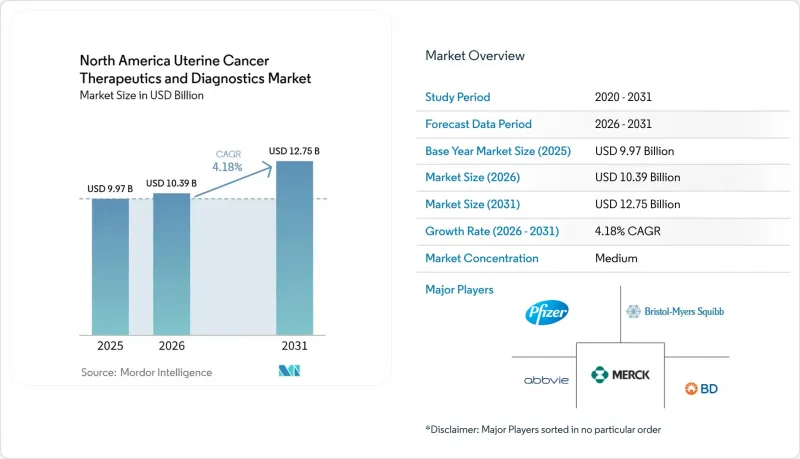
Mordor Intelligence에 의하면, 북미의 자궁암 치료 및 진단 시장 규모는 2025년에 99억 7,000만 달러로 평가되었고, 2026년 103억 9,000만 달러에서 2031년까지 127억 5,000만 달러에 이를 것으로 예측되며, 예측 기간(2026-2031년) CAGR은 4.18%를 나타낼 전망입니다.
본 보고서는 암 유형(자궁내막암, 자궁육종), 시술(치료(수술 등), 진단(생검 등)), 최종 사용자(병원, 진단 검사 기관, 전문 암 센터, 외래수술센터(ASC) 등), 국가(미국, 캐나다, 멕시코)별로 분류되어 있습니다. 시장 전망은 금액(달러)으로 표시되어 있습니다.
북미의 자궁암 치료 및 진단 시장 동향과 인사이트
의료비 증가와 암 치료 예산 확대
북미의 자궁암 치료 및 진단 시장은 암 치료비 증가의 혜택을 받고 있습니다. 이는 새로운 자궁암 치료법이나 고부가가치 시술이 기존의 표준 치료에 비해 환자 1인당 비용이 훨씬 높기 때문입니다. 이러한 영향은 진행성 자궁내막암에서 가장 두드러지며, 면역요법에 기반한 치료 요법으로 인해 병원 및 공공 의약품 보험 제도 전반에 걸쳐 치료 강도가 높아지면서 예산 부담이 증가하고 있습니다. 또한, 병원들은 로봇 수술 체계 구축에도 더 많은 투자를 하고 있으며, 이는 북미의 자궁암 치료 및 진단 시장 전체의 수술 수익, 서비스 계약 및 관련 진단 검사 매출을 뒷받침하고 있습니다.
의약품 개발 분야의 혁신과 기술 발전
북미의 자궁암 치료 및 진단 시장에서는 2024년 FDA가 진행성 또는 재발성 자궁내막암에 대한 펨브롤리주맙, 듀르발맙, 도스탈리맙을 승인함에 따라 치료 방침에 큰 전환이 나타났습니다. 이러한 승인으로 인해 체크포인트 억제제의 사용이 환자 치료 경로의 더 초기 단계에서 확립되었으며, 바이오마커 검사가 임상적 의사 결정에서 더욱 중심적인 역할을 하게 되었습니다. 2024년 8월 도스탈리맙의 적응증 확대는 MMR 상태와 관계없이 성인 환자에 대한 1차 치료제로서의 적격성을 넓혀, 훨씬 더 규모가 큰 MMRp 및 MSS 환자 집단을 포괄했다는 점에서 특히 중요했습니다.
진단 기술의 혁신도 병행하여 진행되고 있으며, 2025년 문헌에서는 체액 생검, ctDNA 분석, AI를 활용한 소견 해석이 더 조기적이고 비침습적인 검출을 가능하게 하는 도구로 주목받고 있습니다.
자궁 질환 및 이용 가능한 치료법에 대한 인식 제고
폐경 후 출혈에 대한 인식은 조기 내원을 촉진하고, 북미의 자궁암 치료 및 진단 시장 전체에서 진단 건수를 높은 수준으로 유지하는 데 여전히 중요합니다. 각국의 감시 데이터에 따르면, 자궁체부암 사례의 대부분은 여전히 국소 단계에서 발견되고 있으며, 이로 인해 치료 시기가 최적화되고 생검, 영상 진단, 병리 검사 및 경과 관찰 서비스에 대한 안정적인 수요가 발생하고 있습니다.
멕시코에서는 2025년 ‘제2차 멕시코 자궁내막암 합의(Segundo Consenso Mexicano de Cancer de Endometrio)’에서 대도시권 이외 지역에서 진행된 단계에서 진료를 받는 주된 이유로, 초기 증상에 대한 일반 시민의 인식이 낮다는 점이 지적되었습니다. 인식이 높아짐에 따라 북미의 자궁암 치료 및 진단 시장에서는 증상 인식부터 전문의의 검사, 치료 개시에 이르기까지 더욱 종합적인 환자 여정이 계속해서 나타날 것으로 보입니다.
부문 분석
2025년 북미의 자궁암 치료 및 진단 시장 규모의 88.23%를 자궁내막암이 차지하고 있으며, 이는 해당 지역 내 환자 수 및 일상적인 의료 수요 측면에서 이 질환이 압도적인 비중을 차지하고 있음을 반영합니다. 이 부문의 규모는 미국암협회(American Cancer Society)가 2026년 미국의 자궁체부암 신규 환자 수를 6만 8,270건으로 추정하고 있다는 점과, 캐나다 보건부(Health Canada)의 승인 자료에서 캐나다의 연간 자궁암 진단 건수가 8,600건에 육박한다고 언급된 점에서도 뒷받침되고 있습니다. 비만과 당뇨병의 유병률 상승은 이 두 가지 모두 확립된 위험 요인이며, 시간이 지남에 따라 위험에 노출되는 환자층을 지속적으로 확대하고 있기 때문에 수요가 견조하게 유지될 것으로 전망됩니다.
자궁육종은 2031년까지 연평균 성장률(CAGR) 8.82%로 확대될 것으로 예측되며, 절대 환자 수는 자궁내막암에 비해 훨씬 적지만 암 유형 중에서는 가장 빠르게 성장할 것으로 전망됩니다. 이 부문의 성장은 분자 수준의 특성 분석 심화에 의해 주도되고 있습니다. 이는 현재 진행 중인 연구를 통해 임상적으로 관련성이 높은 유전자 융합 및 생물학적 경로가 규명되고 있으며, 이러한 발견들이 향후 더욱 개인화된 치료법 개발을 뒷받침할 가능성이 있기 때문입니다. 『International Journal of Gynecological Cancer』 저널의 2026년 총설에서는 진행성 자궁육종의 치료와 관련하여 전신 요법 옵션이 진화하고 있으며, 항체-약물 복합체(ADC)에 대한 관심이 지속되고 있는 분야라고 언급하고 있는데, 이는 치료 강도가 극히 제한된 수준에서 점차 높아지고 있다는 견해를 뒷받침하는 것입니다.
기타 혜택:
- 엑셀 형식 시장 예측(ME) 시트
- 3개월간의 애널리스트 지원
자주 묻는 질문
목차
제1장 서론
제2장 조사 방법
제3장 주요 요약
제4장 시장 구도
제5장 시장 규모와 성장 예측
제6장 경쟁 구도
제7장 시장 기회와 향후 전망
KTH 26.08.06According to Mordor Intelligence, the North America uterine cancer therapeutics and diagnostics market size was valued at USD 9.97 billion in 2025 and is estimated to grow from USD 10.39 billion in 2026 to reach USD 12.75 billion by 2031, at a CAGR of 4.18% during the forecast period (2026-2031).
This report is Segmented by Cancer Type (Endometrial Cancer, Uterine Sarcoma), Procedure (Treatment [Surgery and More], Diagnostics [Biopsy and More]), End User (Hospitals, Diagnostic Laboratories, Specialty Cancer Centers, Ambulatory Surgical Centers, and More), and Country (United States, Canada, and Mexico). Market Forecasts is Given in Values (USD).
North America Uterine Cancer Therapeutics and Diagnostics Market Trends and Insights
Increasing Healthcare Expenditure Expanding Oncology Budgets
The North American uterine cancer therapeutics and diagnostics market benefits from rising oncology spending because newer uterine cancer therapies and high-value procedures cost much more per patient than older standards of care. This effect is most visible in advanced endometrial cancer, where immunotherapy-based regimens have raised treatment intensity and budget exposure across hospitals and public drug plans.Hospitals are also investing more in robotic surgery capacity, and that supports procedure revenue, service contracts, and associated diagnostic workups across the North American uterine cancer therapeutics and diagnostics market.
Innovation in Drug Development and Technological Advancements
The North American uterine cancer therapeutics and diagnostics market saw a major treatment shift in 2024 when the FDA approved pembrolizumab, durvalumab, and dostarlimab for advanced or recurrent endometrial cancer. These approvals established checkpoint inhibitor use much earlier in the patient pathway and made biomarker testing more central to clinical decision-making. The August 2024 dostarlimab expansion was especially important because it widened first-line eligibility to adult patients regardless of MMR status and covered the much larger MMRp and MSS population.
Diagnostic innovation is moving in parallel, with 2025 literature highlighting liquid biopsy, ctDNA analysis, and AI supported interpretation as tools that may improve earlier and less invasive detection.
Rising Awareness About Uterine Diseases and Available Therapies
Awareness of postmenopausal bleeding remains important because it supports earlier presentation and keeps diagnostic throughput high across the North American uterine cancer therapeutics and diagnostics market. National surveillance data show that a large share of uterine corpus cancer cases are still detected at the localized stage, which supports better treatment timing and creates steady demand for biopsy, imaging, pathology, and follow-up services.
In Mexico, the 2025 Segundo Consenso Mexicano de Cancer de Endometrio identified low public awareness of early symptoms as a key reason for later stage presentation outside large urban centers. As awareness improves, the North American uterine cancer therapeutics and diagnostics market should continue to see more complete patient journeys from symptom recognition to specialist workup and treatment initiation.
Other drivers and restraints analyzed in the detailed report include:
- Underdiagnosis in High-Risk Populations Creates Unmet Demand for Screening and Diagnostic Reach
- Low Success Rate in Clinical Trials and High Cost of Research and Development
- High Treatment Cost Creating Access Barriers Across the Region
For complete list of drivers and restraints, kindly check the Table Of Contents.
Segment Analysis
Endometrial cancer accounted for 88.23% of the North America uterine cancer therapeutics and diagnostics market size in 2025, reflecting its overwhelming weight in regional case volumes and routine care demand. The segment's scale is supported by the American Cancer Society estimate of 68,270 new uterine corpus cancer cases in the United States in 2026 and by Health Canada approval materials that referenced close to 8,600 annual uterine cancer diagnoses in Canada. Rising obesity and diabetes prevalence should keep demand firm because both conditions remain established risk factors and continue to enlarge the exposed patient base over time.
Uterine sarcoma is projected to expand at an 8.82% CAGR through 2031, making it the faster-moving cancer type even though its absolute patient base remains much smaller than that of endometrial cancer. Growth in this segment is being driven by deeper molecular characterization, because current research has identified clinically relevant gene fusions and biological pathways that may support more tailored treatment development over time. A 2026 review in the International Journal of Gynecological Cancer described the management of advanced uterine sarcoma as an area with evolving systemic options and with ongoing interest in antibody-drug conjugates, which supports the view that therapeutic intensity is rising from a very limited base.
Complete Report Scope:
- By Cancer Type
- Endometrial Cancer
- Uterine Sarcoma
- By Procedure
- Treatment
- Surgery
- Immunotherapy
- Radiation Therapy
- Chemotherapy
- Other Treatments
- Diagnostics
- Biopsy
- Ultrasound
- Hysteroscopy
- Dilation and Curettage
- Other Diagnostics
- Treatment
- By End User
- Hospitals
- Diagnostic Laboratories
- Specialty Cancer Centers
- Ambulatory Surgical Centers
- Other End Users
- By Country
- United States
- Canada
- Mexico
List of Companies Covered in this Report:
- Abbvie
- AstraZeneca
- Bristol Myers Squibb (BMS)
- Eli Lilly and Company
- Exact Sciences
- GlaxoSmithKline
- Guardant Health, Inc.
- Guardant Health, Inc.
- Illumina
- Johnson & Johnson
- Merck
- Myriad Genetics
- Novartis
- Pfizer
- Pfizer
- Quest Diagnostics
- Roche
- Thermo Fisher Scientific
Additional Benefits:
- The market estimate (ME) sheet in Excel format
- 3 months of analyst support
TABLE OF CONTENTS
1 Introduction
- 1.1 Study Assumptions & Market Definition
- 1.2 Scope of the Study
2 Research Methodology
3 Executive Summary
4 Market Landscape
- 4.1 Market Overview
- 4.2 Market Drivers
- 4.2.1 Rising Awareness about Uterine Diseases and the Available Therapies
- 4.2.2 Increasing Healthcare Expenditure Expanding Oncology Budgets
- 4.2.3 Innovation in drug development and subsequent technological advancements
- 4.2.4 Underdiagnosis in High-Risk Populations Creates Unmet Demand for Screening and Diagnostic Reach
- 4.2.5 Multidisciplinary Gynecologic Oncology Referral Networks Increase Therapy and Testing Volumes
- 4.2.6 Real-World Evidence Demand for Treatment Selection and Molecular Stratification
- 4.3 Market Restraints
- 4.3.1 Low Success Rate in Clinical Trials for Cancer Drugs and High Cost of Research and Development
- 4.3.2 High Cost Associated with Treatment Constraining Real-world Access and Uptake
- 4.3.3 Uneven Access to Specialty Care Outside Major Metro Cancer Centers
- 4.3.4 Fragmented Diagnostic Pathways and Tissue Logistics Delays
- 4.4 Supply-Chain Analysis
- 4.5 Regulatory Landscape
- 4.6 Technological Outlook
- 4.7 Porter's Five Forces
- 4.7.1 Threat of New Entrants
- 4.7.2 Bargaining Power of Suppliers
- 4.7.3 Bargaining Power of Buyers
- 4.7.4 Threat of Substitutes
- 4.7.5 Industry Rivalry
5 Market Size & Growth Forecasts (Value, USD)
- 5.1 By Cancer Type
- 5.1.1 Endometrial Cancer
- 5.1.2 Uterine Sarcoma
- 5.2 By Procedure
- 5.2.1 Treatment
- 5.2.1.1 Surgery
- 5.2.1.2 Immunotherapy
- 5.2.1.3 Radiation Therapy
- 5.2.1.4 Chemotherapy
- 5.2.1.5 Other Treatments
- 5.2.2 Diagnostics
- 5.2.2.1 Biopsy
- 5.2.2.2 Ultrasound
- 5.2.2.3 Hysteroscopy
- 5.2.2.4 Dilation and Curettage
- 5.2.2.5 Other Diagnostics
- 5.2.1 Treatment
- 5.3 By End User
- 5.3.1 Hospitals
- 5.3.2 Diagnostic Laboratories
- 5.3.3 Specialty Cancer Centers
- 5.3.4 Ambulatory Surgical Centers
- 5.3.5 Other End Users
- 5.4 By Country
- 5.4.1 United States
- 5.4.2 Canada
- 5.4.3 Mexico
6 Competitive Landscape
- 6.1 Market Concentration
- 6.2 Market Share Analysis
- 6.3 Company Profiles {(includes Global level Overview, Market level overview, Core Segments, Financials as available, Strategic Information, Market Rank/Share for key companies, Products & Services, and Recent Developments)}
- 6.3.1 AbbVie Inc.
- 6.3.2 AstraZeneca PLC
- 6.3.3 Bristol Myers Squibb (BMS)
- 6.3.4 Eli Lilly and Company
- 6.3.5 Exact Sciences Corporation
- 6.3.6 GSK plc
- 6.3.7 Guardant Health, Inc.
- 6.3.8 Guardant Health, Inc.
- 6.3.9 Illumina, Inc.
- 6.3.10 Johnson & Johnson
- 6.3.11 Merck & Co., Inc.
- 6.3.12 Myriad Genetics, Inc.
- 6.3.13 Novartis AG
- 6.3.14 Pfizer Inc.
- 6.3.15 Pfizer Inc.
- 6.3.16 Quest Diagnostics Incorporated
- 6.3.17 Roche Holding AG
- 6.3.18 Thermo Fisher Scientific Inc.
7 Market Opportunities & Future Outlook
- 7.1 White-space & unmet-need assessment


