
|
시장보고서
상품코드
2097223
영국의 맘모그래피 : 시장 점유율 분석, 업계 동향 및 통계, 성장 예측(2026-2031년)United Kingdom Mammography - Market Share Analysis, Industry Trends & Statistics, Growth Forecasts (2026 - 2031) |
||||||
 Mordor Intelligence
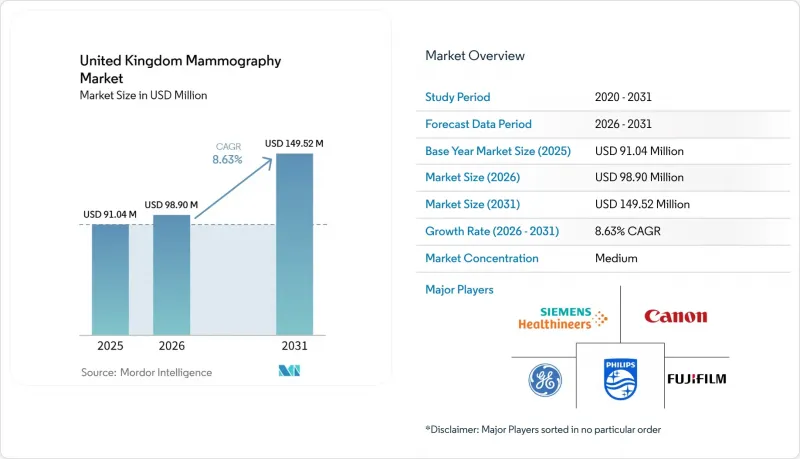
Mordor Intelligence에 의하면, 영국의 맘모그래피 시장 규모는 2025년 9,104만 달러로 평가되었습니다. 2026년 9,890만 달러에서 2031년까지 1억 4,952만 달러로 확대되고 2026년부터 2031년까지 연평균 복합 성장률(CAGR)은 8.63%를 나타낼 전망입니다.
본 보고서는 제품 유형(디지털 유방촬영 시스템, 아날로그 유방촬영 시스템, 유방 토모신테시스 시스템, 기타 제품 유형), 기술(2D 유방촬영, 3D 유방촬영) 및 최종 사용자(병원, 전문 클리닉, 영상진단센터)별로 분류되어 있습니다. 시장 전망은 금액(달러) 기준으로 제시되어 있습니다.
영국의 맘모그래피 시장 동향 및 인사이트
영국 내 유방암 발병률 증가
발병률은 계속 상승하고 있으며, 2040년까지 8분마다 1건의 신규 진단이 내려질 것으로 예측됩니다. 50세 이상 여성으로의 인구 구성 편중은 NHS(국민보건서비스)의 검진 대상 기준과 직접적으로 일치하며, 디지털 장비 도입 대수를 늘리는 안정적인 검사 건수를 창출하고 있습니다. 고밀도 유방을 가진 여성의 암 발병 위험 증가로 인해, 유방촬영술 워크플로우를 보완하는 분자 유방 영상과 같은 첨단 영상 진단 기술에 대한 수요가 높아지고 있습니다. 비용 추정에 따르면, 유방암 관리 비용은 2034년까지 36억 파운드에 달할 가능성이 있어, 조기 발견에 대한 투자의 경제적 타당성이 더욱 뒷받침되고 있습니다. 인구 밀도가 높은 도시 지역에서는 증가하는 환자 수를 관리하기 위해 고처리량 시스템이 필요하며, 이를 통해 재검사 주기를 단축하고 검출률을 향상시키는 프리미엄 3D 장비의 도입이 더욱 정당화됩니다. 런던 대학교(University College London)의 임상 연구진은 현재 고밀도 유방용 영상 진단 기술의 시제품을 시험 중이며, 이는 향후 조달 요건으로 이어질 것으로 예측됩니다.
NHS 유방암 검진 프로그램의 대상 범위 확대
NHS 전략에 따르면, 검진 대상 연령을 70세 이상으로 확대하고, 서비스가 미치지 못하는 지역에 이동식 검진 서비스 도입을 추진하고 있으며, 이로 인해 유방촬영술 검사의 연간 수요가 즉시 증가하여 기존 검진 수용 능력에 부담이 가중되고 있습니다. 성과 벤치마크에서는 70%의 검진율 목표가 설정되어 있으며, 지역 진단센터의 초기 결과에 따르면 이동식 검진 차량이 운영되는 지역에서는 검진율이 50% 가까이 상승한 것으로 나타났습니다. 이러한 정책 전환으로 인해 각 트러스트는 더 많은 환자를 처리할 수 있는 추가 시스템 조달이나 기존 플랫폼 업그레이드를 불가피하게 추진하고 있습니다. 프로그램 관리자가 개별 위험도에 맞추어 검진 빈도를 조정하는 유연한 재검사 간격을 시범적으로 도입함에 따라, AI 기반 위험도 계층화 소프트웨어와의 통합이 필수적이어지고 있습니다. NHS Digital의 데이터 보안 요건에 따라, 안전한 클라우드 연결과 엄격한 GDPR(EU 개인정보보호규정) 준수를 제공하는 플랫폼으로의 조달이 진행되고 있습니다.
누적 방사선 피폭에 대한 환자의 우려
1회 검사당 평균 유방 피폭 선량은 1 mGy에서 10 mGy 사이이며, 조영제 검사의 경우 11.84 mGy에 달하기도 하여 안전성에 대한 우려가 제기되고, 이로 인해 재검률이 감소하고 있습니다. 조사에 따르면, 검사를 받지 않은 환자의 27%가 통증이나 방사선에 대한 두려움을 주요 검사 기피 요인으로 꼽았습니다. 현재 각 제조업체들은 유방 두께에 따라 선량을 동적으로 조정하는 자동 피폭 제어 시스템을 판매하고 있으며, 이를 통해 환자의 불안을 완화하고 재검진율 향상을 도모하고 있습니다. 일반인을 대상으로 한 NHS 캠페인에서는 신뢰를 구축하기 위해 UNSCEAR가 제시한 표준 검진 시 빈도 가중 실효 선량 0.22 mSv를 인용하며, 선량의 투명성을 강조하고 있습니다.
부문 분석
2025년 기준, 디지털 유방촬영술은 영국의 맘모그래피 시장 점유율의 67.90%를 차지하며, NHS 검진 인프라의 핵심으로 자리 잡았습니다. 필름에서 디지털로의 전환으로 인해 영상 선명도가 향상되고 재검사율이 감소함에 따라 총비용 절감이 실현되어, 도입 시 발생하는 추가 비용을 상쇄하는 데 기여하고 있습니다. 2026년, 영국의 디지털 유방촬영술 시장 규모는 확대되었습니다. 이는 각 트러스트가 노후화된 검출기를 무선 압박 패드와 AI 지원 워크스테이션을 통합한 모델로 교체했기 때문입니다. 각 벤더사는 가동률 99% 이상을 보장하고, 현장 방문을 줄이기 위한 원격 진단을 포함한 서비스 계약을 묶어 제공합니다.
유방 토모신테시스 시스템은 임상적 유효성 검증과 규제 당국의 승인을 바탕으로 2031년까지 연평균 성장률(CAGR) 9.29%라는 가장 높은 성장률을 기록하고 있습니다. 토모신테시스는 2차원 유방촬영술에 비해 침윤성 유방암 검출률을 최대 65% 향상시키고, 재검사율을 40% 감소시킵니다. 영국의 맘모그래피 시장에서 토모신테시스 시장 규모는 확대되고 있습니다. 이는 NHS 공급망의 프레임워크 계약으로 인해 입찰 주기가 단축되고 일괄 조달이 촉진되고 있기 때문입니다. 아날로그 솔루션은 단계적으로 폐지되고 있지만, 전력 제한이나 이용률이 낮아 3D로의 투자가 정당화되지 않는 일부 지방의 이동 진료 차량에서는 여전히 사용되고 있습니다. 또한, 생검 유도 검사대나 조영제 강화 플랫폼과 같은 추가 카테고리는 의료 기관들이 원스톱형 유방 진료 클리닉을 추구하는 가운데 틈새 시장의 관심을 끌고 있습니다.
기타 혜택 :
- 엑셀 형식 시장 예측(ME) 시트
- 3개월간의 애널리스트 지원
목차
제1장 서론
제2장 조사 방법
제3장 주요 요약
제4장 시장 구도
제5장 시장 규모 및 성장 예측
제6장 경쟁 구도
제7장 시장 기회 및 향후 전망
KTHAccording to Mordor Intelligence, the United Kingdom mammography market size is projected to expand from USD 91.04 million in 2025 and USD 98.90 million in 2026 to USD 149.52 million by 2031, registering a CAGR of 8.63% between 2026 to 2031.
This report is Segmented by Product Type (Digital Mammography Systems, Analog Mammography Systems, Breast Tomosynthesis Systems, Other Product Types), Technology (2-D Mammography, 3-D Mammography), and End User (Hospitals, Specialty Clinics, Diagnostic Imaging Centers). The Market Forecasts are Provided in Terms of Value (USD).
United Kingdom Mammography Market Trends and Insights
Growing Incidence of Breast Cancer in the UK
Incidence continues to rise and is projected to reach one new diagnosis every eight minutes by 2040 . The demographic skew toward women older than 50 aligns directly with NHS screening eligibility, creating reliable procedure volumes that refresh the installed base of digital units. Higher cancer risk in women with dense tissue elevates demand for advanced imaging such as molecular breast imaging that complements mammography workflows. Cost estimates show breast cancer management could climb to GBP 3.6 billion by 2034, reinforcing the financial logic of early detection investments. Urban hubs with dense populations require high-throughput systems to manage growing caseloads, which strengthens the purchasing case for premium 3-D equipment that shortens recall cycles and improves detection rates. Clinical researchers at University College London are now trialing prototype dense-breast imaging technologies that will likely feed future procurement requirements.
Expansion of NHS Breast Screening Programme Coverage
The NHS strategy extends screening invitations beyond age 70 and pushes mobile services into underserved regions, instantly increasing annual mammogram demand and straining installed capacity . Performance benchmarks set a 70% coverage target, and early results from community diagnostic centers show uptake rising by nearly 50% where mobile units operate. The policy shift obliges trusts to procure additional systems or upgrade existing platforms capable of higher patient throughput. Integration with AI-based risk stratification software is becoming vital as program managers test adaptable recall intervals that tailor screening frequency to individual risk. NHS Digital data-security mandates drive procurement toward platforms offering secure cloud connections and airtight GDPR compliance.
Patient Concerns Over Cumulative Radiation Exposure
Average glandular dose ranges from 1 mGy to 10 mGy per exam, and contrast-enhanced studies can reach 11.84 mGy, prompting safety questions that lower repeat attendance. Surveys show 27% of non-attendees cite fear of pain and radiation as key deterrents. Manufacturers now market automatic exposure control systems that dynamically tailor dose by breast thickness, lowering patient anxiety and improving re-screen rates. Public-facing NHS campaigns emphasize dose transparency, quoting UNSCEAR's frequency-weighted effective dose of 0.22 mSv for standard screening to build trust.
Other drivers and restraints analyzed in the detailed report include:
- Technological Advances in 3-D Breast Tomosynthesis
- Rapid Adoption of AI-Enabled CAD Solutions
- Cuts to NHS Capital Equipment Budgets
For complete list of drivers and restraints, kindly check the Table Of Contents.
Segment Analysis
Digital mammography accounts for 67.90% of United Kingdom mammography market share in 2025 and remains the backbone of NHS screening infrastructure. Conversion from film to digital has improved image clarity and lowered repeat rates, generating total cost savings that help offset acquisition premiums. The United Kingdom mammography market size for digital systems increased in 2026 as trusts replaced aging detectors with models that integrate wireless compression paddles and AI-ready workstations. Vendors are bundling service contracts that guarantee uptime above 99% and include remote diagnostics to reduce site visits.
Breast tomosynthesis systems post the fastest growth at 9.29% CAGR to 2031, fueled by clinical validation and regulatory endorsement. Tomosynthesis improves invasive-cancer detection by up to 65% versus 2-D and lowers recall rates by 40%. The United Kingdom mammography market size for tomosynthesis is expanding as framework agreements under NHS Supply Chain shorten tender cycles and encourage bulk procurement. Analog solutions continue to phase out, yet remain in select rural vans where power constraints and low utilization do not justify 3-D investment. Additional categories such as biopsy-guided tables and contrast-enhanced platforms are gaining niche interest as trusts pursue one-stop breast clinics.
Complete Report Scope:
- By Product Type
- Digital Mammography Systems
- Analog Mammography Systems
- Breast Tomosynthesis Systems
- Other Product Types
- By Technology
- 2-D Mammography
- 3-D Mammography
- By End User
- Hospitals
- Specialty Clinics
- Diagnostic Imaging Centers
List of Companies Covered in this Report:
- Hologic
- Siemens Healthineers
- GE HealthCare Technologies Inc.
- Fujifilm Holdings Corp.
- Koninklijke Philips
- Canon
- Carestream Health
- Planmed
- Metaltronica
- IMS Giotto S.p.A.
- General Medical Merate
- Lunit
- ScreenPoint Medical B.V.
- Volpara Health Technologies Ltd.
- iCAD Inc.
- Sectra
- Agfa-Gevaert
- Densitas Inc.
- Medtronic
- SmartBreast Corp.
Additional Benefits:
- The market estimate (ME) sheet in Excel format
- 3 months of analyst support
TABLE OF CONTENTS
1 Introduction
- 1.1 Study Assumptions & Market Definition
- 1.2 Scope of the Study
2 Research Methodology
3 Executive Summary
4 Market Landscape
- 4.1 Market Overview
- 4.2 Market Drivers
- 4.2.1 Growing Incidence Of Breast Cancer In The UK
- 4.2.2 Expansion Of NHS Breast Screening Programme Coverage
- 4.2.3 Technological Advances In 3-D Breast Tomosynthesis
- 4.2.4 Rapid Adoption Of AI-Enabled Cad Solutions
- 4.2.5 Deployment Of Mobile Mammography Vans In Rural UK
- 4.2.6 ESG-Linked Capital Driving Low-Dose System Upgrades
- 4.3 Market Restraints
- 4.3.1 Patient Concerns Over Cumulative Radiation Exposure
- 4.3.2 Cuts To Nhs Capital-Equipment Reimbursement Budgets
- 4.3.3 Shortage Of Trained Radiographers & Radiologists
- 4.3.4 GDPR Limits On Cloud-Based AI Data Sharing
- 4.4 Value / Supply-Chain Analysis
- 4.5 Regulatory Landscape
- 4.6 Technological Outlook
- 4.7 Porter's Five Forces Analysis
- 4.7.1 Threat of New Entrants
- 4.7.2 Bargaining Power of Buyers
- 4.7.3 Bargaining Power of Suppliers
- 4.7.4 Threat of Substitutes
- 4.7.5 Competitive Rivalry
5 Market Size & Growth Forecasts
- 5.1 By Product Type
- 5.1.1 Digital Mammography Systems
- 5.1.2 Analog Mammography Systems
- 5.1.3 Breast Tomosynthesis Systems
- 5.1.4 Other Product Types
- 5.2 By Technology
- 5.2.1 2-D Mammography
- 5.2.2 3-D Mammography
- 5.3 By End User
- 5.3.1 Hospitals
- 5.3.2 Specialty Clinics
- 5.3.3 Diagnostic Imaging Centers
6 Competitive Landscape
- 6.1 Market Concentration
- 6.2 Market Share Analysis
- 6.3 Company Profiles (includes Global level Overview, Market level overview, Core Segments, Financials as available, Strategic Information, Market Rank/Share for key companies, Products & Services, and Recent Developments)
- 6.3.1 Hologic Inc.
- 6.3.2 Siemens Healthineers AG
- 6.3.3 GE HealthCare Technologies Inc.
- 6.3.4 Fujifilm Holdings Corp.
- 6.3.5 Koninklijke Philips N.V.
- 6.3.6 Canon Medical Systems Corp.
- 6.3.7 Carestream Health Inc.
- 6.3.8 Planmed Oy
- 6.3.9 Metaltronica SpA
- 6.3.10 IMS Giotto S.p.A.
- 6.3.11 General Medical Merate SpA
- 6.3.12 Lunit Inc.
- 6.3.13 ScreenPoint Medical B.V.
- 6.3.14 Volpara Health Technologies Ltd.
- 6.3.15 iCAD Inc.
- 6.3.16 Sectra AB
- 6.3.17 Agfa-Gevaert N.V.
- 6.3.18 Densitas Inc.
- 6.3.19 Medtronic plc
- 6.3.20 SmartBreast Corp.
7 Market Opportunities & Future Outlook
- 7.1 White-space & Unmet-need Assessment