

|
시장보고서
상품코드
2097283
산업용 사물인터넷(IIoT) 보안 시장 : 점유율 분석, 업계 동향 및 통계, 성장 예측(2026-2031년)Industrial Internet Of Things (IIoT) Security - Market Share Analysis, Industry Trends & Statistics, Growth Forecasts (2026 - 2031) |
||||||
 Mordor Intelligence
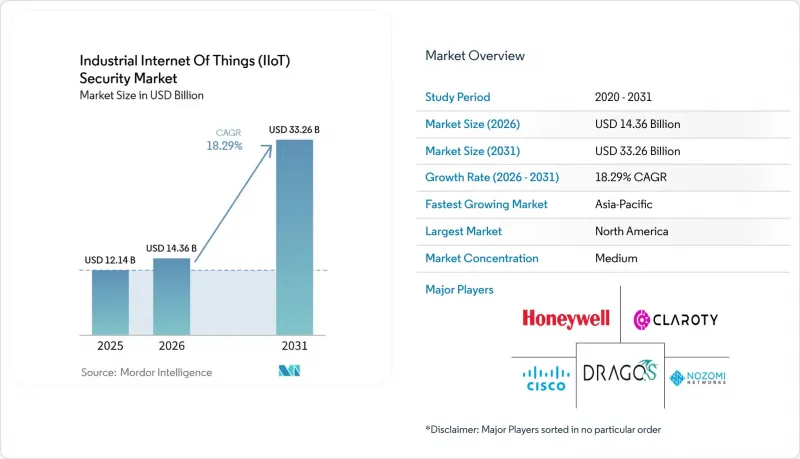
Mordor Intelligence에 의하면, 산업용 사물인터넷(IIoT) 보안 시장 규모는 2025년에 121억 4,000만 달러, 2026년에 143억 6,000만 달러가 되고, 2031년까지 332억 6,000만 달러에 이를 것으로 예측되며, 2026년부터 2031년까지 CAGR 18.29%로 성장할 전망입니다.
본 보고서는 구성 요소별(솔루션 및 서비스), 보안 유형별(네트워크 보안, 디바이스 및 엔드포인트 보안, 용도 및 API 보안 등), 배포 모드별(On-Premise 등), 최종 사용 산업별(산업 제조, 에너지 및 유틸리티, 석유 및 가스 등) 및 지역별로 분류되어 있습니다. 시장 전망은 금액(달러) 기준으로 제시되어 있습니다.
전 세계 산업용 사물인터넷(IIoT) 보안 시장 동향 및 인사이트
IT와 OT의 융합이 공격 표면을 확대
산업용 사물인터넷(IIoT) 보안 시장이 확대되고 있는 배경에는 대부분의 산업 환경에서 엔터프라이즈 시스템과 플랜트 시스템이 더 이상 완전히 분리되어 있지 않다는 단순한 사실이 있습니다. Palo Alto Networks, Siemens 및 아이다호 국립 연구소의 조사에 따르면, 2024년에는 2,000만 대의 고유한 산업용 기기가 공용 인터넷에 노출될 것으로 밝혀졌습니다. 이는 현재 운영 환경의 얼마나 많은 부분이 플랜트 경계 외부에서 접근 가능하게 되었는지를 보여줍니다. 동 조사에서는 공격자가 실제로 악용을 실행하기 전에 장기간에 걸쳐 감시를 지속하는 경우가 많다는 사실도 밝혀졌습니다. 이는 산업용 사물인터넷(IIoT) 보안 시장에서 감시 사각지대가 경계 제어만큼 중요해지고 있음을 의미합니다. 따라서 구매자들은 IT 시스템, OT 구역, 하이브리드 클라우드 연결을 가로질러 자산을 추적할 수 있는 도메인 간 가시성, ID 제어 및 세분화 정책을 더욱 중시하게 되었습니다. 또한, 사무실 네트워크에서 엔지니어링용 워크스테이션을 거쳐 제어 자산에 이르는 흐름을 추적할 수 있는 통합적인 보호 계층을 사업자들이 점점 더 선호함에 따라 구매 결정 기준도 변화하고 있습니다. 그 결과, 산업용 사물인터넷(IIoT) 보안 시장에서는 단일 운영 모델 내에서 프로토콜 지원 능력, 신속한 자산 매핑, 지속적인 위협 모니터링을 입증할 수 있는 벤더가 지지를 받고 있습니다.
연결된 플랜트 전체에서 IIoT 기기의 밀도 증가
산업용 사물인터넷(IIoT) 보안 시장은 생산 환경 전반에 걸친 센서, 게이트웨이 및 연결된 엣지 기기의 급속한 보급으로부터도 혜택을 받고 있습니다. Palo Alto Networks와 아이다호 국립 연구소는 2024년에 인터넷에 노출된 OT 기기의 관측 건수가 1억 1,000만 건 이상에 달한 것으로 기록했습니다. 이는 제조, 에너지, 공공 서비스 분야에서 연결된 자산이 얼마나 빠르게 축적되고 있는지를 반영합니다. 이러한 디바이스 기반의 확장으로 인해 운영 현장 근처에 많은 자산이 추가되는 반면, 중앙 IT 및 보안 팀이 가시화 도구를 같은 속도로 업데이트하지 못할 수 있어 지속적인 자산 관리에 공백이 발생하고 있습니다. TXOne Networks의 보고서에 따르면, 2025년에는 조직의 60%가 적어도 한 건의 OT 보안 사고를 경험할 것이며, 88%는 OT 보안에 대한 지출을 10% 이상 늘릴 것으로 나타났습니다. 이는 디바이스의 무분별한 증가가 산업용 사물인터넷(IIoT) 보안 시장에서의 구매 시급성으로 직접 이어지고 있음을 보여줍니다. 또한 Rockwell Automation은 2025년 조사에서 제조업체의 38%가 사이버 보안 강화를 위해 기존 운영 데이터를 활용할 계획이라고 밝혔습니다. 이는 자산 인텔리전스가 사후 개선 조치가 아닌 방어 설계의 출발점이 되고 있음을 시사합니다. 그 결과, 산업용 사물인터넷(IIoT) 보안 시장은 고립된 단일 제품에서 벗어나, 끊임없이 변화하는 플랜트 자산 지도에 대응할 수 있는 보다 광범위한 감지, 모니터링 및 대응 도구로 전환되고 있습니다.
레거시 컨트롤러 및 필드 디바이스의 개조 비용이 높다는 점
산업용 사물인터넷(IIoT) 보안 시장은 여전히 근본적인 과제에 직면해 있습니다. 그 이유는 많은 산업 현장이 긴 수명을 전제로 설계되어 기본 보안 기능이 제한적인 장비에 계속 의존하고 있기 때문입니다. TXOne Networks가 2026년에 실시한 조사에 따르면, 산업 조직의 54%가 보안 도입의 가장 큰 장벽으로 레거시 장비와의 호환성을 꼽았으며, 38%는 여전히 높은 교체 비용을 제약 요인으로 지적했습니다. 이는 특히 생산 라인이 장기간의 중단을 허용할 수 없는 경우, 많은 운영자가 컨트롤러의 전면 교체보다는 ‘현상 유지형’ 보호 전략을 선호하는 이유를 설명하는 한 요인이 되고 있습니다. 또한 조사 데이터에 따르면, PLC 전면 교체 비용은 3만 유로에서 15만 유로(3만 3,000달러에서 16만 5,000달러)이며, 생산 라인 전체의 개조 비용은 라인당 300만 유로(330만 달러)에 달하는 것으로 나타났으며, 가동 중단 시간을 고려하기 전부터 비용 측면의 압박은 여전히 크다고 할 수 있습니다. 또한 TXOne은 2025년에 전략적인 수명 연장을 통해 레거시 시스템 1대당 200만-500만 달러의 비용을 절감할 수 있다고 지적하고 있습니다. 이것이 바로 산업용 사물인터넷(IIoT) 보안 시장의 구매자들이 하드웨어 교체보다 가상 패치 적용, 네트워크 제어 및 격리 도구를 우선적으로 선택하는 이유입니다. 그 결과, 경영진이 ‘보안 설계(Security by Design)’가 적용된 신규 사이트와 비교하여 레거시 시스템의 취약성이 확대되고 있음을 인식하고 있더라도, 기존 시설(브라운필드)에서의 도입은 지연되고 있습니다.
부문 분석
2025년, 솔루션 부문은 매출의 57.35%를 차지하며, 이 부문은 산업용 사물인터넷(IIoT) 보안 시장의 중심적인 위치를 계속 차지하고 있습니다. 그 이유는 대부분의 프로그램이 여전히 가시화, 세분화, 감지 및 취약점 관리 도구에서 시작되기 때문입니다. 구매자는 일반적으로 핵심 제어 기능부터 착수합니다. 이는 브라운필드 시설에서 정책을 설정하거나, 경보를 조정하거나, 기업 네트워크와 플랜트 시스템 간의 고위험 경로를 격리하기 전에 무엇이 연결되어 있는지 즉시 파악해야 하기 때문입니다. 산업용 사물인터넷(IIoT) 사이버 보안 업계에서 초기 투자는 여전히 자산 감지 플랫폼, 프로토콜 기반 모니터링 및 산업용 침입 감지에 집중되고 있습니다. 이는 이러한 도구들이 향후 서비스가 의존하게 될 운영 현황의 전체적인 그림을 확립하기 때문입니다. 또한, 많은 규제 대상 사업자들은 중요 시설 내 아키텍처 결정이나 도구 배치에 대해 여전히 직접적인 통제를 원하기 때문에 솔루션 기반도 계속해서 중요한 위치를 차지하고 있습니다.
서비스 시장은 2031년까지 연평균 성장률(CAGR) 20.21%로 확대될 것으로 예측되며, 이러한 강력한 성장세는 관리형 감지, 사고 대응, 규정 준수 지원 및 원격 SOC 대응에 대한 수요 증가를 반영합니다. Dragos는 2026년 보고서에서 종합적인 OT 가시화를 통해 사고 처리 시간이 업계 평균 42일에서 5일로 단축되었다고 보고했습니다. 이는 사업자가 더 신속한 성과를 요구할 때 서비스 주도형 모델이 명확한 성과상의 우위를 보여주는 근거가 됩니다. 이에 따라 산업용 사물인터넷(IIoT) 보안 시장은 기술, 모니터링, 대응을 결합한 지속적인 서비스 계약 형태로 꾸준히 전환되고 있습니다. 산업용 IoT 사이버 보안 업계에서 이러한 변화는 제품만을 제공하는 벤더들에게도 압박을 가하고 있습니다. 구매자들이 단순히 제어 수단이 도입되어 있을 뿐만 아니라, 이를 효과적으로 운영할 수 있다는 증거를 점점 더 요구하고 있기 때문입니다. 장기적으로는 솔루션이 여전히 매출의 대부분을 차지할 전망이지만, 인력 확보 압박과 설명 책임 요구가 계속 높아지고 있어 신규 지출 중 서비스가 차지하는 비중은 증가할 가능성이 높습니다.
2025년에는 네트워크 보안이 41.69%의 점유율을 차지하며, 산업용 사물인터넷(IIoT) 보안 시장 전체의 41.69%를 차지했습니다. 이는 산업 운영자들이 여전히 다른 많은 제어 계층보다 세분화, 방화벽, 내부 트래픽 가시성을 여전히 우선시하고 있기 때문입니다. 이러한 상황은 레거시 OT 환경의 구조를 반영한 것으로, IT 시스템에서 제어 네트워크로의 이동을 제한하기 위해서는 구역 분리 및 동서 방향 트래픽 모니터링이 여전히 필수적입니다. Palo Alto Networks와 그 조사 파트너가 실시한 조사에 따르면, 2024년에도 전체 산업용 기기의 공용 인터넷 노출도가 여전히 높은 것으로 나타났으며, 이는 산업용 사물인터넷(IIoT) 보안 시장에서 네트워크 중심의 방어 전략에 대한 지속적인 투자를 뒷받침하는 것입니다. 또한, 네트워크 보안은 엔지니어링용 워크스테이션부터 원격 액세스 경로, 엣지 게이트웨이에 이르기까지 다양한 자산 클래스에 걸친 위험을 한 번에 줄일 수 있기 때문에 예산상 우선순위를 유지하고 있습니다.
클라우드 보안은 2031년까지 연평균 성장률(CAGR) 21.26%를 나타낼 것으로 예측되며, 이는 산업용 사물인터넷(IIoT) 보안 시장이 클라우드 연결형 SCADA, 원격 모니터링, ID 서비스, 호스팅형 분석으로 얼마나 전환되고 있는지를 보여줍니다. 사업자가 더 많은 모니터링 및 관리 기능을 하이브리드 환경으로 이전함에 따라, 플랜트 경계 외부의 데이터 흐름, 인증 정보, 용도 링크를 보호할 수 있는 제어 수단이 필요해집니다. 드라고스(Dragos)는 2026년에 공격자들이 엔지니어링 워크스테이션이나 구성 데이터 등 더 깊은 운영 계층을 적극적으로 표적으로 삼고 있다고 지적했습니다. 이는 연결된 환경 전반에서 ID와 워크로드를 추적할 수 있는 제어 수단에 대한 수요가 증가하고 있음을 뒷받침합니다. 또한 구매자들이 단일 방어 지점이 아닌 다층적인 제어를 점점 더 요구함에 따라, 용도 보안, ID 및 액세스 관리, 데이터 보안, 지속적인 위협 모니터링도 탄력을 받고 있습니다. 따라서 산업용 사물인터넷(IIoT) 보안 시장에서는 기준 연도에는 여전히 네트워크 보안이 주류를 이루고 있지만, 클라우드 도입이 가속화됨에 따라 신규 지출은 분산형 방어 모델로 전환되고 있습니다.
지역별 분석
2025년, 북미는 산업용 사물인터넷(IIoT) 보안 시장 점유율의 38.25%를 차지하며 계속해서 가장 규모가 큰 지역 기여자로 자리매김했습니다. 이 지역은 중요 인프라의 도입 기반이 밀집해 있다는 점과, 산업 시설 소유주들이 이미 OT 전용 도구나 관리형 보안 서비스에 익숙한 조달 환경의 혜택을 받고 있습니다. 2025년 7월 FERC가 CIP-015-1을 승인함에 따라 의무화된 내부 모니터링 요건이 확대되었으며, 전력 및 관련 중요 시스템 전반에 걸친 지속적인 지출에 대한 규정 준수 근거가 강화되었습니다. 또한, FERC는 2025년 9월 공급망 보호 확대를 추진함으로써, 더 광범위한 사이버 자산에 대한 강력한 관리의 필요성이 높아졌습니다. Dragos는 또한 북미가 산업용 OT 사이버 위험에 대한 재무적 노출이 가장 집중된 지역이라고 지적했으며, 이것이 산업용 사물인터넷(IIoT) 보안 시장의 구매자들이 감지 깊이, 대응 지원 및 벤더 통합을 우선시하는 주된 이유 중 하나입니다.
아시아태평양은 2031년까지 연평균 성장률(CAGR) 23.87%로 확대될 것으로 예상되며, 산업용 사물인터넷(IIoT) 보안 시장 규모 측면에서 가장 빠르게 성장하는 지역 블록이 될 것입니다. 이러한 성장은 산업의 급속한 디지털화, 대규모 제조 거점, 그리고 많은 공장이 전문 OT 보안 팀을 구축하는 속도를 능가하는 속도로 연결성을 높이고 있는 운영 환경에 의해 뒷받침되고 있습니다. 일본에서는 경제산업성(METI)이 2025년에 반도체 디바이스 공장을 위한 'OT 보안 가이드라인'을 공표했습니다. 이를 통해 공장 보안이 공인된 기준과 더욱 밀접하게 연계되었으며, 전략적 제조 부문에서 OT 사이버 보안 요건의 중요성이 한층 더 높아졌습니다. 이러한 산업별 규제 제정은 더 광범위한 생산 네트워크 전반에 걸친 조달 조건, 감사 요건 및 공급업체의 대응 준비 태세에 영향을 미치기 때문에 중요한 의미를 지닙니다. 그 결과, 아시아태평양은 산업용 사물인터넷(IIoT) 보안 시장에서 고성장 분야로 부상하고 있습니다. 이는 위험 노출이 증가하고 있을 뿐만 아니라, 사업자들이 보안 요건을 공식적으로 규정하고 있는 한편, 관리형 서비스에 대한 수요도 지속적으로 증가하고 있기 때문입니다.
유럽은 에너지, 제조, 운송, 디지털 인프라 사업자들이 광범위한 보안 및 보고 의무를 지고 있기 때문에 산업용 사물인터넷(IIoT) 보안 시장에서 또 다른 주요 수요 거점으로 자리 잡고 있습니다. 독일은 산업 기반이 OT의 가시화, 세분화 및 제어 시스템을 고려한 모니터링에 대한 지속적인 수요를 창출하고 있어, 유럽 내에서 계속해서 두드러진 위치를 차지하고 있습니다. 영국도 중요한 시장입니다. OT 보안 지침이 국제적으로 인정받는 관리 프레임워크에 가까워짐에 따라, 산업 사업자 전반에 걸쳐 보다 표준화된 구매 기준이 지지받게 되었기 때문입니다. 남미, 중동 및 아프리카는 여전히 매출 규모는 작지만, 국영 에너지 및 유틸리티 사업자들이 사내 전문 인력이 제한적임에도 불구하고 높은 위험에 노출되어 있는 경우가 많기 때문에 중요한 성장 지역으로 남아 있습니다. 이러한 추세에 따라, 해당 지역, 특히 인프라를 전면적으로 갱신하지 않고 기존 시설(브라운필드)을 실용적으로 보호해야 하는 경우, 산업용 사물인터넷(IIoT) 보안 시장에서는 매니지드 서비스 모델에 대한 수요가 계속될 것으로 예측됩니다.
기타 혜택:
- 엑셀 형식 시장 예측(ME) 시트
- 3개월간의 애널리스트 지원
자주 묻는 질문
목차
제1장 서론
제2장 조사 방법
제3장 주요 요약
제4장 시장 구도
제5장 시장 규모와 성장 예측
제6장 경쟁 구도
제7장 시장 기회와 향후 전망
JHS 26.08.07According to Mordor Intelligence, the industrial internet of things (IIoT) security market size is projected to be USD 12.14 billion in 2025, USD 14.36 billion in 2026, and reach USD 33.26 billion by 2031, growing at a CAGR of 18.29% from 2026 to 2031.
This report is Segmented by Component (Solutions and Services), Security Type (Network Security, Device and Endpoint Security, Application and API Security, and More), Deployment Mode (On-Premises, and More), End-User Industry (Industrial Manufacturing, Energy and Utilities, Oil and Gas, and More), and Geography. The Market Forecasts are Provided in Terms of Value (USD).
Global Industrial Internet Of Things (IIoT) Security Market Trends and Insights
IT and OT Convergence Expanding the Attack Surface
The industrial internet of things (IIoT) security market is being pushed higher by the simple fact that most industrial environments no longer keep enterprise systems and plant systems fully separate. Palo Alto Networks, Siemens, and Idaho National Laboratory documented 20 million unique industrial devices exposed to the public internet in 2024, which shows how much of the operating environment is now reachable from outside the plant boundary. The same research found that adversaries often remained in view for extended periods before active exploitation, which means monitoring gaps now matter as much as perimeter controls in the industrial internet of things (IIoT) security market. Buyers are therefore putting more weight on cross-domain visibility, identity controls, and segmentation policies that can follow assets across IT systems, OT zones, and hybrid cloud links. This is also changing purchase logic because operators increasingly prefer unified protection layers that can track movement from office networks into engineering workstations and then toward control assets. As a result, the industrial internet of things (IIoT) security market is favoring vendors that can show protocol awareness, rapid asset mapping, and continuous threat monitoring in one operating model.
Rising IIoT Device Density Across Connected Plants
The industrial internet of things (IIoT) security market is also benefiting from the fast spread of sensors, gateways, and connected edge devices across production environments. Palo Alto Networks and Idaho National Laboratory recorded more than 110 million observations of OT devices exposed to the internet in 2024, which reflected how quickly connected assets were accumulating across manufacturing, energy, and utilities. This growing device base creates persistent inventory gaps because many assets are added close to operations, while central IT and security teams may not update visibility tools at the same pace. TXOne Networks reported that 60% of organizations experienced at least 1 OT security incident in 2025, and 88% increased OT security spending by more than 10%, which shows how device sprawl is turning directly into buying urgency for the industrial internet of things (IIoT) security market. Rockwell Automation also found in 2025 that 38% of manufacturers planned to use existing operational data to improve cybersecurity, which suggests that asset intelligence is becoming a starting point for defense design rather than a later improvement step. The result is that the industrial internet of things (IIoT) security market is moving beyond isolated point products and toward broader discovery, monitoring, and response tools that can keep pace with changing plant asset maps.
High Retrofit Costs for Legacy Controllers and Field Devices
The industrial internet of things (IIoT) security market still faces a basic obstacle because many industrial sites continue to rely on equipment designed for long service lives and limited native security. TXOne Networks found in 2026 that 54% of industrial organizations cited compatibility with legacy equipment as the leading barrier to security adoption, while 38% still pointed to high replacement costs as a constraint. This helps explain why many operators prefer protection-in-place strategies instead of full controller replacement, especially where production lines cannot tolerate prolonged shutdowns. The input data also showed full PLC replacement costs of EUR 30,000 to EUR 150,000 (USD 33,000 to USD 165,000) and complete production line retrofits at EUR 3 million (USD 3.3 million) per line, so cost pressure remains substantial even before downtime is factored in. TXOne also noted in 2025 that strategic life extension can avoid USD 2 million to USD 5 million in costs per legacy system, which is why buyers in the industrial internet of things (IIoT) security market often choose virtual patching, network controls, and isolation tools before they choose hardware renewal. The result is slower adoption in brownfield facilities, even when management recognizes that legacy exposure is widening relative to newer, security-by-design sites.
Other drivers and restraints analyzed in the detailed report include:
- Regulatory Pressure on Critical Infrastructure Security
- Cyber Insurance Underwriting Requiring Stronger OT Controls
- OT Cybersecurity Skills Shortage
For complete list of drivers and restraints, kindly check the Table Of Contents.
Segment Analysis
Solutions held 57.35% of revenue in 2025, which kept this segment at the center of the industrial internet of things (IIoT) security market because most programs still begin with visibility, segmentation, detection, and vulnerability management tools. Buyers usually start with core controls because brownfield facilities need an immediate view of what is connected before they can set policy, tune alerts, or isolate risky paths between enterprise networks and plant systems. In the cybersecurity for industrial IoT industry, early spend continues to favor asset-discovery platforms, protocol-aware monitoring, and industrial intrusion detection because these tools establish the operating picture that later services depend on. The solutions base also remains important because many regulated operators still want direct control over architecture decisions and tool placement inside critical facilities.
Services are projected to expand at a 20.21% CAGR through 2031, and that stronger pace reflects the growing need for managed detection, incident response, compliance support, and remote SOC coverage. Dragos reported in 2026 that comprehensive OT visibility reduced incident dwell time from an industry average of 42 days to 5 days, which gives service-led models a clear performance argument when operators need faster outcomes. This is why the industrial internet of things (IIoT) security market is steadily moving toward contracts that combine technology, monitoring, and response into a recurring service relationship. In the cybersecurity for industrial IoT industry, that shift also puts pressure on product-only vendors because buyers increasingly want proof that controls can be operated effectively, not just installed. Over time, solutions should remain the larger revenue base, but services are likely to capture a rising share of new spending because staffing pressure and accountability demands continue to grow.
Network security held 41.69% share in 2025, and it accounted for 41.69% of the industrial internet of things (IIoT) security market share because industrial operators still prioritize segmentation, firewalling, and internal traffic visibility before many other control layers. That position reflects the structure of legacy OT environments, where separating zones and monitoring east-west traffic remains essential to limit movement from IT systems into control networks. Palo Alto Networks and its research partners showed that public internet exposure across industrial devices remained large in 2024, which supports continued spending on network-aware defenses in the industrial internet of things (IIoT) security market. Network security also retains budget priority because it can reduce risk across many asset classes at once, from engineering workstations to remote access paths and edge gateways.
Cloud security is projected to grow at a 21.26% CAGR through 2031, which shows how much the industrial internet of things (IIoT) security market is shifting toward cloud-connected SCADA, remote monitoring, identity services, and hosted analytics. As operators move more monitoring and management functions into hybrid environments, they need controls that can protect data flows, credentials, and application links outside the plant boundary. Dragos noted in 2026 that adversaries were actively targeting deeper operational layers, including engineering workstations and configuration data, which supports a stronger demand for controls that can follow identities and workloads across connected environments. Application security, identity and access management, data security, and continuous threat monitoring are also gaining ground because buyers increasingly want layered control rather than single-point defenses. The industrial internet of things (IIoT) security market, therefore, continues to favor network security in the base year, while faster cloud adoption is pulling newer spending toward distributed defense models.
Complete Report Scope:
- By Component
- Solutions
- Services
- By Security Type
- Network Security
- Device and Endpoint Security
- Application and API Security
- Identity and Access Security
- Data Security and Privacy
- Security Monitoring and Threat Detection
- By Deployment Mode
- On-Premises
- Cloud
- Hybrid
- By End-User Industry
- Industrial Manufacturing
- Energy and Utilities
- Oil and Gas
- Transportation and Logistics
- Healthcare and Life Sciences
- Other End-User Industries
- By Geography
- North America
- United States
- Canada
- Mexico
- South America
- Brazil
- Argentina
- Rest of South America
- Europe
- Germany
- United Kingdom
- France
- Italy
- Spain
- Russia
- Rest of Europe
- Asia-Pacific
- China
- Japan
- India
- South Korea
- Australia and New Zealand
- Rest of Asia-Pacific
- Middle East
- Saudi Arabia
- United Arab Emirates
- Turkey
- Rest of the Middle East
- Africa
- South Africa
- Egypt
- Rest of Africa
- North America
Geography Analysis
North America held 38.25% of the industrial internet of things (IIoT) security market share in 2025, which kept it as the largest regional contributor. The region benefits from a dense installed base of critical infrastructure and a procurement environment where industrial owners are already familiar with OT-specific tools and managed security services. FERC approval of CIP-015-1 in July 2025 widened mandatory internal monitoring requirements, which strengthened the compliance case for continued spending across electricity and related critical systems. FERC also pushed for broader supply chain protections in September 2025, which added to the need for stronger control across a wider set of cyber assets. Dragos also identified North America as carrying the highest concentration of industrial OT cyber financial exposure, which helps explain why buyers in the industrial internet of things (IIoT) security market often prioritize detection depth, response support, and vendor consolidation.
Asia-Pacific is projected to expand at a 23.87% CAGR through 2031, which makes it the fastest-growing regional block in the industrial internet of things (IIoT) security market size. Growth is being supported by rapid industrial digitalization, a large manufacturing base, and an operating environment where many plants are increasing connectivity faster than they can build specialized OT security teams. In Japan, METI published OT Security Guidelines for semiconductor device factories in 2025, which tied plant security more closely to recognized standards and raised the profile of OT cyber requirements in a strategic manufacturing sector. This kind of sector-specific rulemaking matters because it influences procurement language, audit expectations, and supplier readiness across wider production networks. The result is that Asia-Pacific is becoming a high-growth part of the industrial internet of things (IIoT) security market, not only because of rising exposure, but also because operators are formalizing security requirements while managed service demand continues to increase.
Europe remains another major demand center in the industrial internet of things (IIoT) security market because energy, manufacturing, transport, and digital infrastructure operators face broad security and reporting obligations. Germany continues to stand out within Europe because its industrial base creates sustained demand for OT visibility, segmentation, and control-system-aware monitoring. The United Kingdom is also relevant because OT security guidance has moved closer to internationally recognized control frameworks, which supports more standardized buying criteria across industrial operators. South America, the Middle East, and Africa still represented smaller revenue pools, but they remained important growth areas where state-owned energy and utilities operators often carry high exposure with limited internal specialist capacity. That pattern keeps the industrial internet of things (IIoT) security market open to managed service models in those regions, especially where brownfield facilities need practical protection without full infrastructure replacement.
- Claroty Ltd.
- Nozomi Networks Inc.
- Dragos Inc.
- Cisco Systems, Inc.
- Honeywell International Inc.
- Siemens AG
- Schneider Electric SE
- Rockwell Automation, Inc.
- ABB Ltd.
- Fortinet, Inc.
- Palo Alto Networks, Inc.
- Forescout Technologies, Inc.
- Tenable Holdings, Inc.
- IBM Corporation
- Armis, Inc.
- TXOne Networks Inc.
- Radiflow Ltd.
- Waterfall Security Solutions Ltd.
- Microsoft Corporation
- Check Point Software Technologies Ltd.
Additional Benefits:
- The market estimate (ME) sheet in Excel format
- 3 months of analyst support
TABLE OF CONTENTS
1 INTRODUCTION
- 1.1 Study Assumptions and Market Definition
- 1.2 Scope of the Study
2 RESEARCH METHODOLOGY
3 EXECUTIVE SUMMARY
4 MARKET LANDSCAPE
- 4.1 Market Overview
- 4.2 Market Drivers
- 4.2.1 IT and OT Convergence Expanding the Attack Surface
- 4.2.2 Rising IIoT Device Density Across Connected Plants
- 4.2.3 Regulatory Pressure on Critical Infrastructure Security
- 4.2.4 Cyber Insurance Underwriting Requiring Stronger OT Controls
- 4.2.5 Securing Vendor Remote Access to Industrial Assets
- 4.2.6 Asset Discovery Gaps Created by Unmanaged Edge Sensors
- 4.3 Market Restraints
- 4.3.1 High Retrofit Costs for Legacy Controllers and Field Devices
- 4.3.2 OT Cybersecurity Skills Shortage
- 4.3.3 Downtime Risk During Security Deployment
- 4.3.4 Fragmented Ownership Between Operations, IT, and Engineering
- 4.4 Industry Value-Chain Analysis
- 4.5 Supply Chain and Ecosystem Analysis
- 4.6 Regulatory Landscape
- 4.7 Technological Outlook
- 4.8 Porter's Five Forces Analysis
- 4.8.1 Threat of New Entrants
- 4.8.2 Bargaining Power of Suppliers
- 4.8.3 Bargaining Power of Buyers
- 4.8.4 Threat of Substitutes
- 4.8.5 Intensity of Competitive Rivalry
- 4.9 Impact of Macroeconomic Factors on the Market
5 MARKET SIZE AND GROWTH FORECASTS (VALUE)
- 5.1 By Component
- 5.1.1 Solutions
- 5.1.2 Services
- 5.2 By Security Type
- 5.2.1 Network Security
- 5.2.2 Device and Endpoint Security
- 5.2.3 Application and API Security
- 5.2.4 Identity and Access Security
- 5.2.5 Data Security and Privacy
- 5.2.6 Security Monitoring and Threat Detection
- 5.3 By Deployment Mode
- 5.3.1 On-Premises
- 5.3.2 Cloud
- 5.3.3 Hybrid
- 5.4 By End-User Industry
- 5.4.1 Industrial Manufacturing
- 5.4.2 Energy and Utilities
- 5.4.3 Oil and Gas
- 5.4.4 Transportation and Logistics
- 5.4.5 Healthcare and Life Sciences
- 5.4.6 Other End-User Industries
- 5.5 By Geography
- 5.5.1 North America
- 5.5.1.1 United States
- 5.5.1.2 Canada
- 5.5.1.3 Mexico
- 5.5.2 South America
- 5.5.2.1 Brazil
- 5.5.2.2 Argentina
- 5.5.2.3 Rest of South America
- 5.5.3 Europe
- 5.5.3.1 Germany
- 5.5.3.2 United Kingdom
- 5.5.3.3 France
- 5.5.3.4 Italy
- 5.5.3.5 Spain
- 5.5.3.6 Russia
- 5.5.3.7 Rest of Europe
- 5.5.4 Asia-Pacific
- 5.5.4.1 China
- 5.5.4.2 Japan
- 5.5.4.3 India
- 5.5.4.4 South Korea
- 5.5.4.5 Australia and New Zealand
- 5.5.4.6 Rest of Asia-Pacific
- 5.5.5 Middle East
- 5.5.5.1 Saudi Arabia
- 5.5.5.2 United Arab Emirates
- 5.5.5.3 Turkey
- 5.5.5.4 Rest of the Middle East
- 5.5.6 Africa
- 5.5.6.1 South Africa
- 5.5.6.2 Egypt
- 5.5.6.3 Rest of Africa
- 5.5.1 North America
6 COMPETITIVE LANDSCAPE
- 6.1 Market Concentration
- 6.2 Strategic Moves
- 6.3 Market Share Analysis
- 6.4 Company Profiles (includes Global Level Overview, Market Level Overview, Core Segments, Financials as available, Strategic Information, Market Rank/Share, Products and Services, Recent Developments)
- 6.4.1 Claroty Ltd.
- 6.4.2 Nozomi Networks Inc.
- 6.4.3 Dragos Inc.
- 6.4.4 Cisco Systems, Inc.
- 6.4.5 Honeywell International Inc.
- 6.4.6 Siemens AG
- 6.4.7 Schneider Electric SE
- 6.4.8 Rockwell Automation, Inc.
- 6.4.9 ABB Ltd.
- 6.4.10 Fortinet, Inc.
- 6.4.11 Palo Alto Networks, Inc.
- 6.4.12 Forescout Technologies, Inc.
- 6.4.13 Tenable Holdings, Inc.
- 6.4.14 IBM Corporation
- 6.4.15 Armis, Inc.
- 6.4.16 TXOne Networks Inc.
- 6.4.17 Radiflow Ltd.
- 6.4.18 Waterfall Security Solutions Ltd.
- 6.4.19 Microsoft Corporation
- 6.4.20 Check Point Software Technologies Ltd.
7 MARKET OPPORTUNITIES AND FUTURE OUTLOOK
- 7.1 White-Space and Unmet-Need Assessment
- 7.2 Emerging Use Cases in Industrial IoT Security
- 7.3 Investment and Partnership Outlook


