

|
시장보고서
상품코드
2097350
자동차 부품 및 애프터마켓용 포장 시장 : 시장 점유율 분석, 산업 동향 및 통계 데이터, 성장 예측(2025-2030년)Automotive Parts and Aftermarket Packaging - Market Share Analysis, Industry Trends & Statistics, Growth Forecasts (2025 - 2030) |
||||||
 Mordor Intelligence
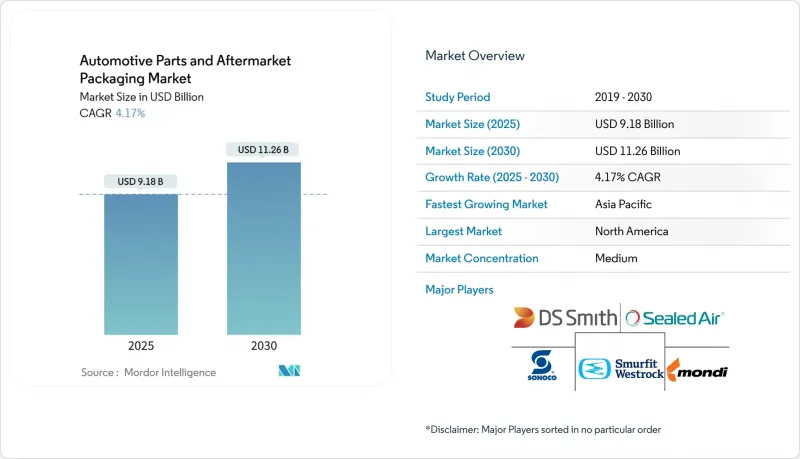
Mordor Intelligence에 의하면, 자동차 부품 및 애프터마켓용 포장 시장 규모는 2025년에 91억 8,000만 달러로 평가되었고, 2030년까지 112억 6,000만 달러에 이를 것으로 예측되며, 이 기간 CAGR은 4.17%를 나타낼 전망입니다.
본 보고서는 포장 유형별(상자 및 카톤, 클램쉘, 라벨 등), 소재별(판지, 골판지, 플라스틱 등), 부품 유형별(엔진 부품, 전기 부품, 내장 부품 등), 차종별(승용차, 소형 상용차 등) 및 지역별로 분류되어 있습니다. 시장 전망은 금액(달러) 기준으로 제시되어 있습니다.
세계의 자동차 부품 및 애프터마켓용 포장 시장 동향 및 인사이트
E-Commerce 애프터마켓에서의 SKU 급증
온라인 부품 플랫폼에서는 수십만 개의 SKU가 취급되고 있으며, 이는 오프라인 매장의 상품 구색을 훨씬 능가합니다. 이에 따라 포장 공급업체들은 맞춤형 금형 없이도 매우 다양한 형상에 대응할 수 있는 모듈식 키트 개발을 요구받고 있습니다. 퀵 체인지 다이 커팅, 디지털 인쇄, 온디맨드 재고 관리와 같은 워크플로우를 통해 리드 타임이 단축되고 소량 생산에서도 경제성을 유지할 수 있으므로, 유통업체는 SKU 합리화를 피하면서도 비용 목표를 달성할 수 있게 됩니다. 이러한 추세는 특히 고정된 벽면을 가진 골판지 상자보다 불규칙한 형태의 상품을 유연하게 감싸는 보호 필름이나 테이프에 유리하게 작용하고 있습니다. 다국어 지원에 따른 라벨의 다양성 증가는 제조 공정의 최종 단계에서 ‘상자에 직접 인쇄’하는 기술로 해결되고 있어, 미리 인쇄된 과잉 재고의 필요성이 사라지고 있습니다. 현재 전자상거래는 애프터마켓 채널 중 가장 빠르게 성장하는 분야이므로, 포장 디자인은 택배 업체에 최적화되어 있으며, 풀필먼트 소프트웨어와 연동하여 실시간 재고 대조를 수행하는 스캔 가능한 코드가 내장되어 있습니다. 이러한 기능을 통해 판매자는 운송 중 파손으로 인한 반품을 최소화하고, 판매자 평점을 유지하며, 재구매를 촉진하는 익일 배송 약속을 확실하게 이행할 수 있게 됩니다.
반환 가능한 친환경 포장에 대한 OEM 요구 사항
세계 자동차 제조업체들은 순환 경제 목표 달성을 위해 노력하고 있으며, 공급업체들에게 일회용 골판지 상자에서 견고하고 추적 가능하며 여러 번 재사용할 수 있는 토트 용기로의 전환을 요구하고 있습니다. BMW는 2025년까지 생산용 부품 입고의 95%를 반환 가능한 컨테이너로 처리하는 것을 목표로 하고 있으며, 다른 브랜드들도 곧 뒤따를 것으로 예상되는 조달 분야의 선례를 만들고 있습니다. 이 요건으로 인해 자본 비용은 증가합니다. 설계된 플라스틱 토트 컨테이너는 일회용 포장재보다 약 3배의 비용이 들기 때문입니다. 그러나 폐기물 감축과 처리 비용 제거를 통해 3-5회 사용 주기를 거치는 동안 총 소유 비용은 개선됩니다. CHEP과 같은 풀링 전문 업체가 자산 순환, 세척 및 수리 작업, IoT를 통한 추적을 관리함으로써, 티어 공급업체는 물류의 복잡성을 외부에 위탁하면서도 OEM의 스코어카드 목표를 달성할 수 있게 됩니다. 재사용 프로그램은 성형 펄프 코너 블록 및 금속 보강재에 대한 수요를 촉진합니다. 이러한 요소들은 토트 박스의 수명을 연장하고, 여러 차량 프로그램에 걸쳐 공급업체와의 협력을 강화합니다.
수지 가격 변동성 심화
폴리프로필렌 및 폴리에틸렌의 현물 가격은 분기마다 두 자릿수 비율로 급등락하고 있어, 고정 가격 포장 계약의 이익률을 압박하고 중소 가공업체의 설비 투자 프로젝트를 지연시키고 있습니다. 헤지 수단은 존재하지만, 많은 중견 기업이 갖추지 못한 강력한 재무 건전성이 요구되기 때문에 이들 기업은 비용 전가 조항을 도입하거나 수익 변동을 수용할 수밖에 없습니다. 또한 이러한 불확실성으로 인해 ROI(투자 수익률) 산정이 불투명해지면서, 장기적인 혁신 예산 수립에도 차질을 빚고 있습니다. 전년 대비 비용 절감을 당연시하는 OEM 기업들은 분기별 추가 요금에 난색을 표하는 경우가 많아, 이로 인해 조달 과정의 마찰이 증가하고 조달 주기가 장기화되고 있습니다. 이러한 변동이 장기화되면, 구매자들은 수지 가격의 리스크를 완화하기 위해 반환 가능한 자산과 일회용 골판지를 결합한 하이브리드형 프로그램으로 전환하는 경향을 보이며, 원자재 시장이 안정될 때까지 플라스틱의 보급 속도가 둔화될 가능성이 있습니다.
부문별 분석
2024년 매출액 중 상자 및 카톤이 38.54%를 차지했으며, 엔진, 필터, 브레이크 패드 분야에서 그 보급세가 입증되었습니다. 그러나 부품 판매업체들이 더 가볍고 맞춤형 형식을 추구함에 따라 그 점유율은 서서히 감소하고 있습니다. 보호 필름 및 테이프는 2030년까지 연평균 성장률(CAGR) 6.91%라는 가장 높은 성장률을 달성할 것으로 예측됩니다. 이는 단일 부품을 여러 차례의 수거 과정을 거쳐 출하하는 전자상거래 거래량이 급증하고 있기 때문이며, 이 과정에서 긁힘, 습기, 정전기가 중대한 위험 요소로 작용합니다. 필름 기판에 대한 디지털 인쇄는 SKU 적합성과 브랜드 보호를 강화하는 동시에 최소 주문 수량을 500장으로 낮춥니다. 이는 애프터마켓의 SKU 수가 50만 개를 넘는 상황에서 매우 중요한 진전입니다. 클램쉘이나 블리스터는 진열대에서의 가시성을 중시하는 소매 채널에 적합하지만, 매장 진열대를 거치지 않는 직배송이 보편화됨에 따라 그 도입 속도는 둔화되고 있습니다. 라벨은 기본적인 식별 정보에서 시작해, 착용 시연 동영상용 QR 코드를 삽입하고 위조 방지 스티커를 갖춘 다층 소책자로 진화하고 있습니다. 액체용 파우치에는 윤활유를 견디면서도 유엔 위험물 규정을 충족하는 배리어 필름이 사용되고 있어, 이 카테고리의 기술적 복잡성을 여실히 드러내고 있습니다. 위험물인 배터리나 에어백용 틈새 시장용 용기는 계속해서 프리미엄 제품으로 제공되고 있습니다.
보호 필름은 저밀도이며 보관 공간을 거의 차지하지 않는 특성을 활용하여, 풀필먼트 센터에서 포장대 아래에 수납할 수 있는 마이크로 롤을 재고로 보관하고, 적시(JIT)로 사용할 수 있도록 하고 있습니다. 이 필름의 신축성과 밀착성 덕분에 불규칙한 모양의 제품도 추가적인 종이 완충재 없이 단단히 감쌀 수 있어, 골판지 상자의 크기와 운송 비용을 절감합니다. 인쇄 가능한 영역이 있는 접착 테이프는 별도의 스티커 없이도 규정 준수 라벨을 부착할 수 있어, 1팩당 자재를 더 효율적으로 사용할 수 있습니다. 시장에 대한 인식 제고가 핵심입니다. 기술자들은 익숙한 골판지 상자를 신뢰하기 때문에 공급업체는 낙하 시험 데이터를 제시하여 자사 필름의 내구성을 입증하고 있습니다. 대량 구매자들은 필름과 자동 포장기를 세트로 구성한 다년 계약을 체결함으로써, 단순한 소모품 판매에 그치지 않는 공급업체와의 관계를 공고히 하고 있습니다. 이러한 동향들이 맞물려 자동차 부품 및 애프터마켓용 포장 시장을 더 높은 수익률을 내는 보호 솔루션으로 이끌고 있습니다.
2024년 출하량에서 골판지가 차지하는 비중은 여전히 42.11%이었지만, 플라스틱은 경량화, 방습성, 정전기 방지 성능의 장점을 살려 연평균 성장률(CAGR) 6.39%로 다른 모든 경쟁 소재를 능가하는 성장이 예상됩니다. 사출 성형 토트백에는 RFID가 내장되어 폐쇄형 추적(closed-loop tracking)이 가능하며, 얇은 두께의 열성형 제품은 부피를 차지하지 않으면서 센서를 보호합니다. 벌크 마스터 카톤으로 출하되는 필터 및 개스킷 분야에서는 판지가 여전히 가격 면에서 우위를 점하고 있지만, 지속가능성에 대한 요구가 높아짐에 따라 제지 제조업체들은 인증된 산림 관리 프로그램에서 원료를 조달해야 하는 압박을 받고 있습니다. 성형 펄프는 단일 소재 공정으로 완충성과 재활용성을 겸비한 다목적 중간 대안으로 부상하고 있으며, 이를 통해 별도의 발포 인서트가 필요 없어집니다. 금속은 전자기 차폐나 난연성이 요구되는 고부가가치 정밀 공구 및 배터리 모듈에서 여전히 중요한 역할을 하고 있습니다.
플라스틱 공급업체들은 기계적 특성을 저해하지 않으면서 OEM의 탄소 감축 목표를 충족하는 바이오 수지 블렌드에 투자하고 있습니다. 전도성 마스터배치를 통해 정전기 방지 트레이의 단가는 알루미늄 제 단네지보다 훨씬 낮아지며, 전자 부품을 많이 포함하는 부품 분야에서 플라스틱 포장 시장 규모 전망이 자동차 부품 및 애프터마켓용 포장 전망을 상회할 것으로 예측됩니다. 그러나 REACH 규정을 준수하려면 엄격한 화학 물질 공개가 요구되어 제품 출시 일정이 지연될 가능성이 있습니다. 이에 반해 골판지 제조업체들은 사탕수수 유래의 내수성 코팅을 라미네이팅하여 대응함으로써 종이의 친환경적 이미지를 유지하고 있습니다. 생명주기 평가(LCA)가 소재 선정에 점점 더 큰 영향을 미치게 되면서, 고객들은 단순한 판매 가격뿐만 아니라 ‘제조 시작부터 출하 전까지의 배출량(cradle-to-gate)’을 비교하고 있습니다. 이러한 데이터를 바탕으로 한 면밀한 검토를 통해, 재활용 경로를 검증할 수 있는 소재로의 대체 사이클이 촉진되고 있습니다.
지역별 분석
2024년 매출액 중 북미가 28.42%를 차지했습니다. 이는 성숙한 애프터마켓 네트워크, 당일 배송 서비스, 그리고 검증된 포장 프로토콜을 우선시하는 엄격한 위험물 규제의 뒷받침 덕분입니다. 미국에서는 겨울철 도로에 살포되는 제설제로 인해 부품의 마모가 가속화되므로, 내식성이 뛰어난 내부 라이너에 대한 수요가 증가하고 있습니다. 한편, 캐나다에서는 기온 변동이 심하기 때문에 재료의 취성을 방지하기 위해 -40°C에서 40°C에 이르는 온도 범위에서의 시험이 필수적입니다. 멕시코와의 국경을 넘는 물류는 마키라도라 공장에서 발생하는 매립 처리 추가 비용을 피하기 위해 반환 가능한 랙 프로그램의 도입을 촉진하고 있습니다. 미국 환경보호청(EPA)의 휘발성 유기 화합물(VOC) 규제로 인해 인쇄업체들은 수성 잉크로의 전환을 강요받고 있으며, 이를 조기에 도입한 컨버터들은 규정 준수 측면에서 우위를 점하고 있습니다.
아시아태평양은 인도와 태국의 자동차 보유 대수 증가 및 전자상거래의 급속한 확산에 힘입어, 세계 최고 수준인 연평균 성장률(CAGR) 6.61%를 나타낼 것으로 예측됩니다. 중국의 메가 허브에서는 주문형 라벨 인쇄가 가능하며 세관 데이터베이스와 연동되는 완전 자동화된 풀필먼트 센터가 가동 중이며, 이는 크로스보더 판매업체의 수출 업무를 원활하게 하고 있습니다. 일본에서는 하이브리드 차량용 전자기기를 위한 전도성 바이오플라스틱 개발이 선도적으로 진행되고 있으며, 이 틈새 시장에 지역 공급업체들이 빠르게 진입하고 있습니다. 싱가포르의 전기기기 폐기물 재활용 의무화부터 인도의 초기 단계 규제에 이르기까지, 다양한 재활용 의무로 인해 사용 후 여러 처리 경로를 고려한 포장 설계가 요구되고 있습니다. 현지 언어 요건이 20개 이상의 방언에 달하기 때문에 제조 공정의 최종 단계에서 인쇄 능력이 필수적입니다.
유럽은 여전히 지속가능성의 지표로 자리 잡고 있으며, 정책을 활용하여 소재 포트폴리오를 폐쇄형 순환 솔루션으로 전환하고 있습니다. 독일의 포장법에서는 회수 비용이 제조업체에 직접 부과되므로, 기존의 지자체 회수 시스템에 적합한 단일 소재 섬유판이나 성형 펄프로의 전환이 가속화되고 있습니다. 프랑스의 순환 경제 로드맵은 환경 부하가 낮은 포장에 보상을 제공하는 ‘에코모듈레이션 요금’을 추진하고 있으며, 이는 EU 내 설계 지침에 영향을 미치고 있습니다. 브렉시트 이후 영국에서는 버진 폴리머 함량에 대해 독자적인 플라스틱 세금이 부과되고 있으며, 이로 인해 유통업체들은 애프터마켓용 전자기기에 재활용 소재가 포함된 클램쉘 용기를 수입하도록 장려받고 있습니다. 지중해 지역에서 북아프리카로 수출되는 상품은 운임을 절감하기 위해 자유무역지역에서 더 가벼운 골판지 상자로 재포장되는 경우가 많으며, 이는 해당 지역이 대륙 간 물류의 가교 역할을 하고 있음을 여실히 보여줍니다.
기타 혜택 :
- Excel 형식 시장 예측(ME) 시트
- 3개월간의 애널리스트 지원
자주 묻는 질문
목차
제1장 서론
제2장 분석 방법
제3장 주요 요약
제4장 시장 구도
제5장 시장 규모 및 성장률 예측
제6장 경쟁 구도
제7장 시장 기회 및 향후 전망
AJY 26.08.07According to Mordor Intelligence, the automotive parts and aftermarket packaging market size stands at USD 9.18 billion in 2025 and is forecast to reach USD 11.26 billion by 2030, reflecting a 4.17% CAGR during the period.
This report is Segmented by Packaging Type (Boxes and Cartons, Clamshells, Labels, and More), Material (Paperboard, Corrugated Fiberboard, Plastics, and More), Component Type (Engine Parts, Electrical Components, Interior Components, and More), Vehicles (Passenger Cars, Light Commercial Vehicles, and More), and Geography. The Market Forecasts are Provided in Terms of Value (USD).
Global Automotive Parts and Aftermarket Packaging Market Trends and Insights
Aggressive SKUs Proliferation in E-Commerce Aftermarket
Online parts platforms stock hundreds of thousands of SKUs, dwarfing the assortments of brick-and-mortar stores and forcing packaging suppliers to engineer modular kits that fit dramatically varied geometries without requiring bespoke tooling. Quick-change die-cutting, digital printing, and inventory-on-demand workflows compress lead times and keep small volumes economical, letting distributors avoid SKU rationalization while still meeting cost targets. The trend especially favors protective films and tapes that wrap irregular items more flexibly than fixed-wall cartons. Increased labeling variations for multilingual compliance are handled by late-stage, print-on-box technology, eliminating the need for pre-printed overstock. As e-commerce now represents the fastest-growing aftermarket channel, pack designs are optimized for parcel carriers, integrating scannable codes that interface with fulfillment software for real-time inventory reconciliation. These capabilities enable sellers to minimize damage-in-transit returns, preserve seller ratings, and accelerate next-day shipping promises that drive repeat purchase behavior.
OEM Mandates on Returnable Eco-Packaging
Global automakers commit to circular-economy targets that require suppliers to shift away from one-way corrugate toward rigid, trackable, multi-cycle totes. BMW expects 95% of inbound production parts to be in returnable containers by 2025, setting a procurement precedent that other brands will likely quickly emulate. The mandate increases capital costs because engineered plastic totes cost roughly three times more than one-time packs; however, the total cost of ownership improves over three to five cycles through lower scrap and the elimination of disposal fees. Pooling specialists such as CHEP manage asset rotation, clean-and-repair operations, and IoT tracking, allowing tier suppliers to outsource logistics complexity while meeting OEM scorecard targets. Returnable programs stimulate demand for molded pulp corner blocks and metal reinforcements, which extend tote life and deepen supplier engagement across multiple vehicle programs.
Rising Resin Price Volatility
Polypropylene and polyethylene spot prices have whipsawed by double-digit percentages quarter-to-quarter, eroding margins on fixed-price packaging contracts and delaying capital projects at smaller converters. Hedging instruments exist but require balance-sheet strength that many mid-tier players lack, forcing them to introduce pass-through clauses or accept income volatility. The uncertainty also hampers long-term innovation budgets because ROI calculations become cloudy. OEMs accustomed to year-over-year cost-down expectations often balk at quarterly surcharges, which add procurement friction and lengthen sourcing cycles. Over time, the turbulence nudges buyers toward hybrid programs that blend returnable assets with single-use corrugate to temper resin exposure, potentially slowing plastics penetration until feedstock markets stabilize.
Other drivers and restraints analyzed in the detailed report include:
- Tightening Extended Producer-Responsibility Laws
- Surge in Thermoplastics with Anti-Static Additives
- Weight-Adding Impact on Freight Cost for Heavy Corrugates
For complete list of drivers and restraints, kindly check the Table Of Contents.
Segment Analysis
Boxes and cartons accounted for 38.54% of 2024 revenue, confirming their ubiquity for engines, filters, and brake pads; however, their share is edging downward as parts sellers chase lighter, tailor-fit formats. Protective films and tapes are expected to achieve the fastest 6.91% CAGR by 2030, driven by the ballooning e-commerce volumes that ship single parts across multiple hand-offs, where scuff, moisture, and static are significant risks. Digital printing on film substrates enhances SKU matching and brand security while reducing the minimum order quantity to 500 sheets, a crucial step when aftermarket SKUs exceed half a million. Clamshells and blisters remain aligned with retail channels that value shelf visibility, but their uptake slows as direct shipping bypasses store fixtures. Labels evolve from basic ID to multi-layer booklets that embed QR codes for fitting videos and include tamper-evident seals. Fluid pouches utilize barrier films that withstand lubricants while meeting UN hazardous goods regulations, underscoring the category's technical complexity. Niche containers for hazardous batteries and airbags continue to be premium offerings.
Protective films capitalize on low density and small storage footprints, empowering fulfillment centers to stock micro-rolls that fit under packing benches for just-in-time usage. Their stretch and cling technology enables secure wraps around irregular shapes without the need for additional paper void fill, reducing carton sizes and freight costs. Adhesive tapes with printable zones offer compliance labeling without the need for extra stickers, allowing for a more efficient use of material per pack. Market education is key: technicians trust familiar cartons, so suppliers demonstrate drop-test data to prove the resilience of their films. Volume buyers lock in multi-year contracts that bundle films with automated wrapper machines, thereby cementing supplier relationships that extend far beyond the sale of consumables alone. These trends meld to push the automotive parts and aftermarket packaging market toward higher-margin protective solutions.
Corrugated fiberboard still accounts for 42.11% of the 2024 volume, but plastics are projected to outgrow all rivals at a 6.39% CAGR, benefiting from weight savings, moisture barriers, and anti-static performance. Injection-molded totes integrate RFID for closed-loop tracking while thin-wall thermoforms shield sensors without adding bulk. Paperboard remains a price leader for filters and gaskets shipped in bulk master cartons, although sustainability demands are pushing mills to derive fibers from certified forestry programs. Molded pulp emerges as a versatile middle ground, combining cushioning with recyclability in a single material pass, thereby avoiding the need for separate foam inserts. Metals keep relevance for high-value precision tools or battery modules that need electromagnetic shielding and flame resistance.
Plastics suppliers invest in bio-resin blends that meet OEM carbon goals without compromising mechanical properties. Conductive masterbatches reduce per-unit costs for anti-static trays significantly below those of aluminum dunnage, enabling electronics-heavy parts to surpass automotive parts and aftermarket packaging market size forecasts for plastics. However, REACH compliance requires rigorous chemical disclosures, which can stretch product-launch timelines. Corrugate producers counter by laminating water-resistant coatings derived from sugarcane, thereby preserving the eco-image of paper. Life-cycle assessments are increasingly dictating material choices, and customers are comparing cradle-to-gate emissions rather than sticker prices alone. This data-driven scrutiny encourages substitution cycles in favor of materials with verifiable recycling streams.
Complete Report Scope:
- By Packaging Type
- Boxes and Cartons
- Blister Packs
- Clamshells
- Bags and Pouches
- Protective Films and Tapes
- Labels
- Other Packaging Types
- By Material
- Paperboard
- Corrugated Fiberboard
- Plastics
- Metals
- Molded Pulp
- Other Materials
- By Component Type
- Engine Parts
- Electrical Components
- Suspension and Braking
- Body Parts
- Fluids and Lubricants
- Interior Components
- Accessories
- Other Component Types
- By Vehicle
- Passenger Cars
- Light Commercial Vehicles
- Heavy Commercial Vehicles
- Two Wheelers
- Off-Highway Vehicles
- By Geography
- North America
- United States
- Canada
- Mexico
- South America
- Brazil
- Argentina
- Rest of South America
- Europe
- Germany
- United Kingdom
- France
- Italy
- Spain
- Russia
- Rest of Europe
- Asia-Pacific
- China
- Japan
- India
- South Korea
- South-East Asia
- Rest of Asia-Pacific
- Middle East and Africa
- Middle East
- Saudi Arabia
- United Arab Emirates
- Turkey
- Rest of Middle East
- Africa
- South Africa
- Nigeria
- Rest of Africa
- Middle East
- North America
Geography Analysis
North America accounted for 28.42% of the revenue in 2024, driven by a mature aftermarket network, same-day courier services, and stringent hazmat regulations that prioritize tested packaging protocols. U.S. winter-salted roads accelerate part wear, thereby increasing demand for corrosion-resistant inner liners. Meanwhile, Canadian temperature swings necessitate material testing from -40 °C to 40 °C to prevent brittleness. Cross-border flows with Mexico incentivize returnable rack programs that circumnavigate landfill surcharges at maquiladora plants. Environmental Protection Agency rules on volatile organic compounds are pushing printers toward water-based inks, giving early-adopting converters a compliance edge.
The Asia-Pacific region is forecast to post a 6.61% CAGR, the fastest worldwide, driven by the expansion of the vehicle parc in India and Thailand, as well as steep e-commerce penetration. Chinese megahubs operate fully automated fulfillment centers that print labels on demand and synchronize with customs databases, easing exports for cross-border sellers. Japan pioneers conductive bioplastics for hybrid-vehicle electronics, a niche that regional suppliers are rapidly adopting. Varied recycling mandates, from Singapore's mandatory waste-electrical recycling to India's nascent regulations, compel packaging designs that accommodate multiple end-of-life pathways. Local language requirements encompass 20-plus dialects, making late-stage printing capacity indispensable.
Europe remains a sustainability bellwether, leveraging policy to steer material portfolios toward closed-loop solutions. Germany's Packaging Act charges producers directly for collection costs, accelerating the transition to mono-material fiberboard and molded pulp that fit within existing municipal streams. France's circular-economy roadmap promotes eco-modulation fees that reward lower-impact packages, influencing design guidelines across the trading bloc. Post-Brexit United Kingdom enforces its own plastic tax on virgin polymer content, nudging distributors to import recycled-content clamshells for aftermarket electronics. Mediterranean exports to North Africa are often repackaged into lighter cartons in free-trade zones to shave freight bills, underscoring the region's role as a logistics bridge between continents.
- Sealed Air Corporation
- DS Smith plc
- Smurfit Westrock plc
- Sonoco Products Company
- Mondi Group
- Amcor plc
- Crown Holdings Inc.
- Huhtamaki Oyj
- Pregis LLC
- Signode Industrial Group LLC
- Orbis Corporation (Menasha)
- Nefab AB
- UFP Industrial Packaging
- JIT Packaging Inc.
- Alpha Packaging
- RPC M&H Plastics
- Greif Inc.
- PalletOne Inc.
- Mauser Packaging Solutions
- Mpact Limited
- Shorr Packaging Corp.
- Kompak Packaging Solutions Pvt. Ltd.
- Flexcon Company Inc.
- Advanced Protective Packaging Ltd.
Additional Benefits:
- The market estimate (ME) sheet in Excel format
- 3 months of analyst support
TABLE OF CONTENTS
1 INTRODUCTION
- 1.1 Study Assumptions and Market Definition
- 1.2 Scope of the Study
2 RESEARCH METHODOLOGY
3 EXECUTIVE SUMMARY
4 MARKET LANDSCAPE
- 4.1 Market Overview
- 4.2 Market Drivers
- 4.2.1 Aggressive SKUs Proliferation in E-Commerce Aftermarket
- 4.2.2 OEM Mandates on Returnable Eco-Packaging
- 4.2.3 Tightening Extended Producer-Responsibility Laws
- 4.2.4 Surge in Thermoplastics with Anti-Static Additives
- 4.2.5 Digital Printing Lowering MOQ for Customized Kits
- 4.2.6 Growth of Over-the-Air Software Updates Reducing On-Site Servicing Demand
- 4.3 Market Restraints
- 4.3.1 Rising Resin Price Volatility
- 4.3.2 Weight-Adding Impact on Freight Cost for Heavy Corrugates
- 4.3.3 Complex Recyclability Certification across Regions
- 4.3.4 Counterfeit Spare Parts Channels Bypassing Formal Packaging
- 4.4 Industry Value Chain Analysis
- 4.5 Regulatory Landscape
- 4.6 Technological Outlook
- 4.7 Impact of Macroeconomic Factors
- 4.8 Porter's Five Forces Analysis
- 4.8.1 Threat of New Entrants
- 4.8.2 Bargaining Power of Suppliers
- 4.8.3 Bargaining Power of Buyers
- 4.8.4 Threat of Substitute Products
- 4.8.5 Competitive Rivalry
5 MARKET SIZE AND GROWTH FORECASTS (VALUE)
- 5.1 By Packaging Type
- 5.1.1 Boxes and Cartons
- 5.1.2 Blister Packs
- 5.1.3 Clamshells
- 5.1.4 Bags and Pouches
- 5.1.5 Protective Films and Tapes
- 5.1.6 Labels
- 5.1.7 Other Packaging Types
- 5.2 By Material
- 5.2.1 Paperboard
- 5.2.2 Corrugated Fiberboard
- 5.2.3 Plastics
- 5.2.4 Metals
- 5.2.5 Molded Pulp
- 5.2.6 Other Materials
- 5.3 By Component Type
- 5.3.1 Engine Parts
- 5.3.2 Electrical Components
- 5.3.3 Suspension and Braking
- 5.3.4 Body Parts
- 5.3.5 Fluids and Lubricants
- 5.3.6 Interior Components
- 5.3.7 Accessories
- 5.3.8 Other Component Types
- 5.4 By Vehicle
- 5.4.1 Passenger Cars
- 5.4.2 Light Commercial Vehicles
- 5.4.3 Heavy Commercial Vehicles
- 5.4.4 Two Wheelers
- 5.4.5 Off-Highway Vehicles
- 5.5 By Geography
- 5.5.1 North America
- 5.5.1.1 United States
- 5.5.1.2 Canada
- 5.5.1.3 Mexico
- 5.5.2 South America
- 5.5.2.1 Brazil
- 5.5.2.2 Argentina
- 5.5.2.3 Rest of South America
- 5.5.3 Europe
- 5.5.3.1 Germany
- 5.5.3.2 United Kingdom
- 5.5.3.3 France
- 5.5.3.4 Italy
- 5.5.3.5 Spain
- 5.5.3.6 Russia
- 5.5.3.7 Rest of Europe
- 5.5.4 Asia-Pacific
- 5.5.4.1 China
- 5.5.4.2 Japan
- 5.5.4.3 India
- 5.5.4.4 South Korea
- 5.5.4.5 South-East Asia
- 5.5.4.6 Rest of Asia-Pacific
- 5.5.5 Middle East and Africa
- 5.5.5.1 Middle East
- 5.5.5.1.1 Saudi Arabia
- 5.5.5.1.2 United Arab Emirates
- 5.5.5.1.3 Turkey
- 5.5.5.1.4 Rest of Middle East
- 5.5.5.2 Africa
- 5.5.5.2.1 South Africa
- 5.5.5.2.2 Nigeria
- 5.5.5.2.3 Rest of Africa
- 5.5.5.1 Middle East
- 5.5.1 North America
6 COMPETITIVE LANDSCAPE
- 6.1 Market Concentration
- 6.2 Strategic Moves
- 6.3 Market Share Analysis
- 6.4 Company Profiles (includes Global level Overview, Market level overview, Core Segments, Financials as available, Strategic Information, Market Rank/Share for key companies, Products and Services, and Recent Developments)
- 6.4.1 Sealed Air Corporation
- 6.4.2 DS Smith plc
- 6.4.3 Smurfit Westrock plc
- 6.4.4 Sonoco Products Company
- 6.4.5 Mondi Group
- 6.4.6 Amcor plc
- 6.4.7 Crown Holdings Inc.
- 6.4.8 Huhtamaki Oyj
- 6.4.9 Pregis LLC
- 6.4.10 Signode Industrial Group LLC
- 6.4.11 Orbis Corporation (Menasha)
- 6.4.12 Nefab AB
- 6.4.13 UFP Industrial Packaging
- 6.4.14 JIT Packaging Inc.
- 6.4.15 Alpha Packaging
- 6.4.16 RPC M&H Plastics
- 6.4.17 Greif Inc.
- 6.4.18 PalletOne Inc.
- 6.4.19 Mauser Packaging Solutions
- 6.4.20 Mpact Limited
- 6.4.21 Shorr Packaging Corp.
- 6.4.22 Kompak Packaging Solutions Pvt. Ltd.
- 6.4.23 Flexcon Company Inc.
- 6.4.24 Advanced Protective Packaging Ltd.
7 MARKET OPPORTUNITIES AND FUTURE OUTLOOK
- 7.1 White-space and unmet-need assessment


