

|
시장보고서
상품코드
2097368
중동 및 아프리카의 IT 디바이스 : 시장 점유율 분석, 업계 동향 및 통계, 성장 예측(2025-2030년)Middle East and Africa IT Device - Market Share Analysis, Industry Trends & Statistics, Growth Forecasts (2025 - 2030) |
||||||
 Mordor Intelligence
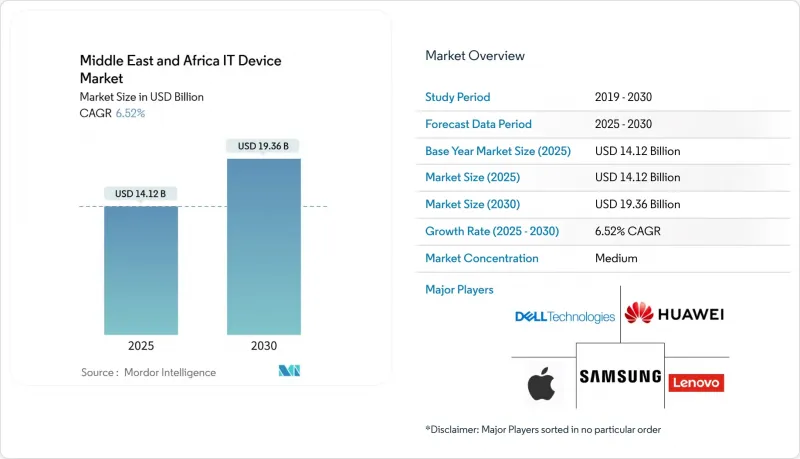
Mordor Intelligence에 의하면, 중동 및 아프리카의 IT 디바이스 시장 규모는 2025년에 141억 2,000만 달러로 평가되었고, 2030년까지 193억 6,000만 달러에 이를 것으로 예상되며, 예측 기간 CAGR 6.52%를 기록할 전망입니다.
본 보고서는 기기 유형(스마트폰, 피처폰 등), 최종 사용자(일반 소비자, 기업, 정부·국방, 교육, 의료), 운영 체제(Android, iOS, Windows, Linux, Chrome OS, HarmonyOS 등), 유통 채널(오프라인 소매, 온라인 소매·마켓플레이스 등)별로 분류되어 있으며, 시장 전망은 금액(달러) 기준으로 제시되어 있습니다.
중동 및 아프리카의 IT 디바이스 시장 동향 및 인사이트
젊은 층의 스마트폰 보급률 상승
젊은 층은 은행 거래, 엔터테인먼트, 교육에 대한 기본적인 접근 수단으로 휴대전화를 활용함으로써 보급 곡선을 새롭게 그려가고 있습니다. 사하라 이남 아프리카의 모바일 인터넷 보급률은 2024년에 28%에 도달했으나, 16포인트의 성별 격차가 존재하기 때문에 수천만 명의 첫 구매자가 여전히 미개척 상태로 남아 있습니다. 중동의 출하 대수는 2024년 3분기에 전년 동기 대비 2% 증가했습니다. 이는 AI 사진 기능과 게임 기능을 강조함으로써 해당 지역에서 66%의 성장을 기록한 HONOR 등의 브랜드에 힘입은 결과입니다. 소프트웨어를 중심으로 한 차별화를 통해 하드웨어의 발전이 점진적인 경우에도 업그레이드 주기가 단축되고 있습니다. 애플이 2025년에 사우디아라비아에 온라인 스토어를 개설할 계획이라는 점은 젊은 층의 프리미엄 수요와 가격 민감도가 공존할 수 있음을 시사합니다. 이러한 동향들이 맞물려 중동 및 아프리카의 IT 디바이스 시장에 지속적인 수요를 창출하고 있습니다.
확대되는 FTTH(Fiber-To-The-Home) 백본이 기기 생태계를 가능하게 합니다.
걸프 지역 주요 도시의 광섬유 보급률은 70%를 넘어섰으며, 저지연 고정 네트워크의 혜택을 받는 노트북, 데스크톱 PC, 스마트 TV에 대한 수요를 뒷받침하고 있습니다. 사우디아라비아의 5G 고정 무선 접속은 2024년 중반 기준 140만 명의 가입자를 기록하며, 재택근무 및 원격 교육을 위한 대형 화면 기기의 판매를 견인하고 있습니다. 케냐의 백본 네트워크 확장은 이미 인텔 코어 울트라 프로세서를 탑재한 고성능 워크스테이션의 공공 부문 입찰을 촉발하고 있습니다. 저렴하고 신뢰성 높은 광대역 덕분에 여러 엔드포인트를 운영하는 한계 비용이 절감되면서, 각 가정에서는 다양한 기기 구성으로의 전환이 진행되고 있습니다. 이러한 파급 효과로 인해 사용자 1인당 평균 수익(ARPU)이 상승하여, 스마트폰 교체 수요를 넘어 중동 및 아프리카의 IT 디바이스 시장이 지속적으로 성장하고 있습니다.
환율 변동이 수입 비용을 끌어올리고
2024년, 나이라화 가치가 달러 대비 69.9% 하락하면서 스마트폰 수입 비용이 상승했고, 이로 인해 보급형 모델의 가격이 저소득층이 감당하기 어려운 수준까지 치솟았습니다. 이집트 파운드의 평가절하도 유사한 가격 급등을 초래하여, 부가가치세(VAT)를 회피하기 위한 밀수를 조장하고 있습니다. 케냐 실링의 변동으로 인해 단말기 가격에 최대 15%의 추가 비용이 발생하여, 교체 주기가 3년 이상으로 길어지고 있습니다. 각 제조업체들은 현재 현지 조립 생산을 통해 리스크 헤지를 도모하고 있습니다. 레노버가 20억 달러를 투자해 건설한 사우디아라비아 공장에서는 리얄화로 청구되지만, 사하라 이남 아프리카 시장에서는 이에 상응하는 규모의 공장이 부족합니다. 따라서 환율 리스크가 중동 및 아프리카의 IT 디바이스 시장의 단기 판매량 잠재력을 억제하는 요인으로 작용하고 있습니다.
부문 분석
중동 및 아프리카의 IT 디바이스 시장에서 웨어러블 기기의 점유율은 2024년 스마트폰이 매출의 46.28%를 차지했음에도 불구하고, 연평균 성장률(CAGR) 18.46%를 기록하며 다른 모든 카테고리를 상회할 것으로 예측됩니다. 사우디아라비아가 Orion Health와 제휴하여 5,000개의 의료 기관을 네트워크로 연결하고, 케냐에서 AliveCor사의 심전도 측정 단말기를 도입한 것은 지속적인 모니터링에 대한 임상 현장 수요를 여실히 보여주고 있습니다. 상환 모델에 원격 환자 모니터링 기기가 포함됨에 따라 병원들은 기업 규모로 조달을 진행하고 있으며, 보안 및 HL7 준수 요건이 반영됨에 따라 의료 인증을 획득한 브랜드가 우위를 점하고 있습니다.
원격의료 포털이나 전자 처방전 시스템에서 더 큰 화면이 필요해짐에 따라, 노트북이나 태블릿에서도 시너지 효과를 동반한 수요 증가가 나타나고 있습니다. 한편, 모바일 결제 플랫폼이 안드로이드 또는 iOS를 필수로 요구함에 따라 피처폰의 점유율은 계속 하락하고 있으며, 이러한 추세는 50달러 미만의 4G 스마트폰을 판매하는 업체에 혜택을 주고 있습니다. 데스크톱 PC는 틈새 시장에 머물러 있으며, 석유 엔지니어링 분야의 CAD 작업이나 걸프 지역 금융 허브에서의 고빈도 거래 등에 활용되고 있습니다. 광섬유 지원 스마트 TV의 보급은 서서히 진행되고 있지만, 아프리카 대부분의 가정에서는 10% 미만에 그치고 있습니다. 이러한 동향은 현재 기기 시장의 성장이 단순한 자발적 교체보다는 산업별 요구 사항에 좌우되고 있으며, 각 부문의 전략에 연동되어 중동 및 아프리카의 IT 디바이스 시장 규모 전체가 확대되고 있음을 보여줍니다.
2024년 매출의 68.46%는 일반 소비자가 차지했으나, 병원, 진료소, 보험사는 2030년까지 연평균 성장률(CAGR) 12.18%를 나타낼 것으로 예측되며, 이는 최종 사용자 중 가장 높은 성장률입니다. 사우디아라비아의 디지털 헬스 분야만 해도 150억-270억 달러의 시스템 비용 절감이 예상되며, 이는 병상용 태블릿 및 커넥티드 웨어러블 기기의 대량 발주를 뒷받침하고 있습니다. 나이지리아의 디지털 헬스 시장은 2024년에 12억 7,000만 달러에 달할 것으로 보이며, 2029년까지 20억 달러에 육박할 전망입니다. 이에 따라 진단용 하드웨어가 지방 진료소에도 도입되고 있습니다.
정부 및 국방 분야의 계약 건수는 안전한 엔드포인트가 필요한 전자 서비스 포털에 힘입어 견조한 추세를 보이고 있습니다. 하이브리드 근무 방식이 정착됨에 따라 기업들은 기기 교체를 진행하고 있으나, 조달 속도는 거시경제 사이클에 따라 좌우됩니다. 교육 분야의 도입은 공공 예산 제약으로 인해 산발적이지만, 케냐와 남아프리카공화국에서는 교육 과정용 앱을 위한 태블릿 도입 시범 사업이 진행되고 있습니다. 결국, 의료 분야의 자본 지출(Capex)에서 구독형 패키지로의 전환이 수익을 안정화시켜, 중동 및 아프리카의 IT 디바이스 시장의 주요 견인차로서의 입지를 공고히할 것입니다.
기타 혜택 :
- 엑셀 형식 시장 예측(ME) 시트
- 3개월간의 애널리스트 지원
자주 묻는 질문
목차
제1장 서론
제2장 조사 방법
제3장 주요 요약
제4장 시장 구도
제5장 시장 규모 및 성장 예측
제6장 경쟁 구도
제7장 시장 기회 및 향후 전망
KTH 26.08.05According to Mordor Intelligence, the Middle East and Africa IT Device market size stands at USD 14.12 billion in 2025 and is projected to reach USD 19.36 billion by 2030, registering a 6.52% CAGR during the forecast period.
This report is Segmented by Device Type (Smartphones, Feature Phones, and More), End User (Consumer, Enterprise, Government and Defense, Education, Healthcare), Operating System (Android, IOS, Windows, Linux and ChromeOS, Harmonyos, and More), Distribution Channel (Offline Retail, Online Retail and Marketplaces, and More), The Market Forecasts are Provided in Terms of Value (USD).
Middle East and Africa IT Device Market Trends and Insights
Rising Smartphone Penetration Among Youth
Youth cohorts are rewriting adoption curves by using handsets as the default gateway to banking, entertainment, and education. Mobile-internet reach in sub-Saharan Africa hit 28% in 2024, yet a 16-point gender gap means tens of millions of first-time buyers are still untapped. Middle East shipments climbed 2% year-on-year in Q3 2024, propelled by brands such as HONOR that posted 66% regional growth by emphasizing AI photography and gaming. Software-centric differentiation is shortening upgrade cycles even when hardware advances are incremental. Apple's planned 2025 Saudi online store suggests premium youth demand can coexist with price sensitivity. Collectively, these dynamics funnel sustained volume into the Middle East and Africa IT Device market.
Expanding Fiber-To-The-Home Backbones Enabling Device Ecosystems
Gulf fiber penetration surpasses 70% in major cities, catalyzing demand for laptops, desktops, and smart TVs that benefit from low-latency fixed networks. Saudi 5G fixed-wireless access counted 1.4 million subscribers by mid-2024, driving sales of larger-screen devices for remote work and schooling. Kenya's backbone expansion has already triggered public-sector tenders for advanced workstations equipped with Intel Core Ultra processors. Cheaper, dependable broadband reduces the marginal cost of running multiple endpoints, shifting households toward diversified device portfolios. The halo effect raises average revenue per user, sustaining the Middle East and Africa IT Device market beyond smartphone refreshes.
Foreign-Exchange Volatility Inflating Import Costs
The naira lost 69.9% versus the dollar in 2024, lifting smartphone landing costs and pushing entry-level models beyond low-income reach. Egypt's pound devaluation sparked similar price jumps, encouraging smuggling to bypass VAT. Kenyan shilling swings added up to 15% to device tags, extending replacement cycles past three years. Vendors now hedge by localizing assembly. Lenovo's USD 2 billion Saudi plant will invoice in riyals, yet sub-Saharan markets lack comparable scale. Currency risk, therefore, tempers the Middle East and Africa IT Device market's near-term volume potential.
Other drivers and restraints analyzed in the detailed report include:
- Government-Led Digital Transformation Initiatives
- Rapid Growth of Fintech and Super-App Models Driving Mobile Device Upgrades
- Sub-Optimal After-Sales Service Infrastructure Across Rural Areas
For complete list of drivers and restraints, kindly check the Table Of Contents.
Segment Analysis
The wearables slice of the Middle East and Africa IT Device market is forecast to post an 18.46% CAGR, outstripping every other category, even as smartphones retained 46.28% revenue in 2024. Saudi partnerships with Orion Health to link 5,000 institutions and Kenya's rollout of AliveCor ECG handsets exemplify clinical demand for continuous monitoring. As reimbursement models include remote-patient devices, hospitals procure at enterprise scale, embedding security and HL7 compliance requirements that favor medically certified brands.
Complementary upticks appear in laptops and tablets when telehealth portals and e-prescription systems require larger screens. Feature phones continue sliding as mobile-money platforms mandate Android or iOS, a trend that benefits vendors hawking sub-USD 50 4G smartphones. Desktops stay niche, serving CAD workloads in oil engineering or high-frequency trading in Gulf financial hubs. Fiber-enabled smart-TV adoption inches forward, though below 10% in most African homes. These dynamics illustrate how device growth now tracks vertical mandates more than discretionary refreshes, expanding the total Middle East and Africa IT Device market size linked to sector playbooks.
Consumers generated 68.46% of 2024 revenue, yet hospitals, clinics, and insurers are expected to deliver a 12.18% CAGR to 2030, the fastest among end users. Saudi digital health alone could unlock USD 15-27 billion in system savings, underpinning bulk orders for bedside tablets and connected wearables. Nigeria's digital-health arena reached USD 1.27 billion in 2024 and approaches USD 2 billion by 2029, pulling diagnostic hardware into rural wards.
Government and defense deal flows remain steady, anchored by e-service portals demanding secure endpoints. Enterprises refresh fleets as hybrid work normalizes, yet procurement cadence hinges on macro cycles. Education adoption is sporadic, constrained by public budgets, though pilots in Kenya and South Africa deploy tablets for curriculum apps. Ultimately, healthcare's shift from capex to subscription bundles stabilizes revenue, cementing its role as a lead driver of the Middle East and Africa IT Device market.
Complete Report Scope:
- By Device Type
- Smartphones
- Feature Phones
- Tablets
- Laptops and Notebooks
- Desktops and Workstations
- Wearables
- Smart TVs and OTT Devices
- By End User
- Consumer
- Enterprise
- Government and Defense
- Education
- Healthcare
- By Operating System
- Android
- iOS
- Windows
- Linux and ChromeOS
- HarmonyOS and Others
- By Distribution Channel
- Offline Retail
- Online Retail and Marketplaces
- Direct Enterprise Sales
- Telco-Led Bundled Sales
- By Geography
- Middle East
- Saudi Arabia
- United Arab Emirates
- Turkey
- Rest of Middle East
- Africa
- South Africa
- Kenya
- Rest of Africa
- Middle East
List of Companies Covered in this Report:
- Samsung Electronics Co., Ltd.
- Apple Inc.
- Huawei Technologies Co., Ltd.
- Lenovo Group Limited
- Dell Technologies Inc.
- HP Inc.
- AsusTek Computer Inc.
- Acer Inc.
- Xiaomi Corporation
- Transsion Holdings
- Oppo Mobile Telecommunications Corp., Ltd.
- Vivo Communication Technology Co., Ltd.
- Sony Group Corporation
- LG Electronics Inc.
- Microsoft Corporation
- Realme
- Tecno Mobile (Transsion Holdings)
- HONOR
- Hewlett Packard Enterprise Company
Additional Benefits:
- The market estimate (ME) sheet in Excel format
- 3 months of analyst support
TABLE OF CONTENTS
1 INTRODUCTION
- 1.1 Study Assumptions and Market Definition
- 1.2 Scope of the Study
2 RESEARCH METHODOLOGY
3 EXECUTIVE SUMMARY
4 MARKET LANDSCAPE
- 4.1 Market Overview
- 4.2 Market Drivers
- 4.2.1 Rising Smartphone Penetration Among Youth
- 4.2.2 Expanding Fiber-To-The-Home Backbones Enabling Device Ecosystems
- 4.2.3 Government-Led Digital Transformation Initiatives (e.g., Saudi Vision 2030, Egypt Digital Strategy)
- 4.2.4 Rapid Growth of Fintech and Super-App Models Driving Mobile Device Upgrades
- 4.2.5 Uptake of Private 5G Networks in Oil and Gas Facilities
- 4.2.6 Emergence of Home-Grown ODMs Serving Ultra-Low-Cost Segments
- 4.3 Market Restraints
- 4.3.1 Foreign-Exchange Volatility Inflating Import Costs
- 4.3.2 Sub-Optimal After-Sales Service Infrastructure Across Rural Areas
- 4.3.3 Persistent Grey-Market and Counterfeit Device Influx
- 4.3.4 Geopolitical Instability Dampening ICT Capital Expenditure
- 4.4 Industry Value Chain Analysis
- 4.5 Regulatory Landscape
- 4.6 Technological Outlook
- 4.7 Impact of Macroeconomic Factors on the Market
- 4.8 Porter's Five Forces Analysis
- 4.8.1 Threat of New Entrants
- 4.8.2 Bargaining Power of Suppliers
- 4.8.3 Bargaining Power of Buyers
- 4.8.4 Threat of Substitutes
- 4.8.5 Intensity of Competitive Rivalry
5 MARKET SIZE AND GROWTH FORECASTS (VALUE)
- 5.1 By Device Type
- 5.1.1 Smartphones
- 5.1.2 Feature Phones
- 5.1.3 Tablets
- 5.1.4 Laptops and Notebooks
- 5.1.5 Desktops and Workstations
- 5.1.6 Wearables
- 5.1.7 Smart TVs and OTT Devices
- 5.2 By End User
- 5.2.1 Consumer
- 5.2.2 Enterprise
- 5.2.3 Government and Defense
- 5.2.4 Education
- 5.2.5 Healthcare
- 5.3 By Operating System
- 5.3.1 Android
- 5.3.2 iOS
- 5.3.3 Windows
- 5.3.4 Linux and ChromeOS
- 5.3.5 HarmonyOS and Others
- 5.4 By Distribution Channel
- 5.4.1 Offline Retail
- 5.4.2 Online Retail and Marketplaces
- 5.4.3 Direct Enterprise Sales
- 5.4.4 Telco-Led Bundled Sales
- 5.5 By Geography
- 5.5.1 Middle East
- 5.5.1.1 Saudi Arabia
- 5.5.1.2 United Arab Emirates
- 5.5.1.3 Turkey
- 5.5.1.4 Rest of Middle East
- 5.5.2 Africa
- 5.5.2.1 South Africa
- 5.5.2.2 Kenya
- 5.5.2.3 Rest of Africa
- 5.5.1 Middle East
6 COMPETITIVE LANDSCAPE
- 6.1 Market Concentration
- 6.2 Strategic Moves
- 6.3 Market Share Analysis
- 6.4 Company Profiles (includes Global level Overview, Market level overview, Core Segments, Financials as available, Strategic Information, Market Rank/Share for key companies, Products and Services, and Recent Developments)
- 6.4.1 Samsung Electronics Co., Ltd.
- 6.4.2 Apple Inc.
- 6.4.3 Huawei Technologies Co., Ltd.
- 6.4.4 Lenovo Group Limited
- 6.4.5 Dell Technologies Inc.
- 6.4.6 HP Inc.
- 6.4.7 AsusTek Computer Inc.
- 6.4.8 Acer Inc.
- 6.4.9 Xiaomi Corporation
- 6.4.10 Transsion Holdings
- 6.4.11 Oppo Mobile Telecommunications Corp., Ltd.
- 6.4.12 Vivo Communication Technology Co., Ltd.
- 6.4.13 Sony Group Corporation
- 6.4.14 LG Electronics Inc.
- 6.4.15 Microsoft Corporation
- 6.4.16 Realme
- 6.4.17 Tecno Mobile (Transsion Holdings)
- 6.4.18 HONOR
- 6.4.19 Hewlett Packard Enterprise Company
7 MARKET OPPORTUNITIES AND FUTURE OUTLOOK
- 7.1 White-Space and Unmet-Need Assessment


