

|
시장보고서
상품코드
2097474
SOFT 프레임워크 구현 소프트웨어 : 시장 점유율 분석, 업계 동향 및 통계, 성장 예측(2026-2031년)SOFT Framework Implementation Software - Market Share Analysis, Industry Trends & Statistics, Growth Forecasts (2026 - 2031) |
||||||
 Mordor Intelligence
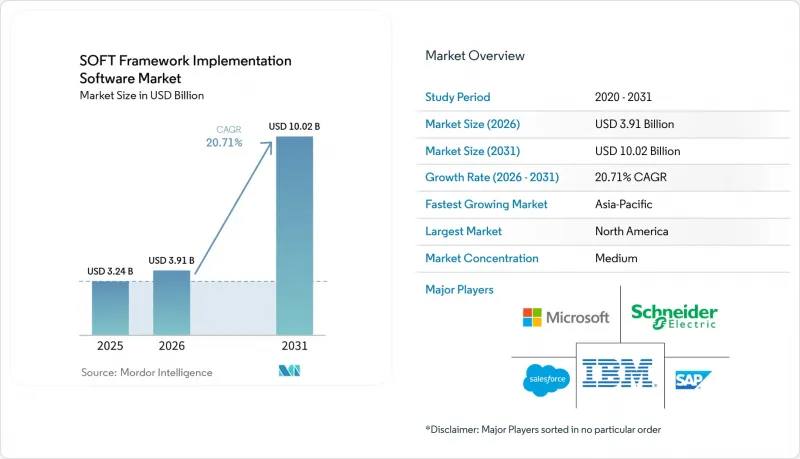
Mordor Intelligence에 의하면, SOFT 프레임워크 구현 소프트웨어 시장 규모는 2025년에 32억 4,000만 달러로 평가되었습니다. 2026년 39억 1,000만 달러에서 2031년까지 100억 2,000만 달러에 이를 것으로 예상되며, 예측 기간(2026-2031년) CAGR은 20.71%를 나타낼 전망입니다.
본 보고서는 구성 요소(소프트웨어 플랫폼 및 서비스), 도입 형태(클라우드 기반, On-Premise형, 하이브리드형), 조직 규모(대기업 및 중소기업), 기능(지속가능성 전략 및 거버넌스 등), 최종 사용자 산업(BFSI 등), 그리고 지역별로 분류되어 있습니다. 시장 전망은 금액(달러) 기준으로 제시되어 있습니다.
세계의 SOFT 프레임워크 구현 소프트웨어 시장 동향 및 인사이트
프레임워크 주도형 지속가능성 거버넌스에 대한 기업 수요 증가
2025년 11월 SOFT 프레임워크의 비준으로, SOFT 프레임워크 구현 소프트웨어 시장에서 기업의 채택 및 조달을 위한 보다 명확한 틀이 확립되었습니다. 이 프레임워크는 전략, 도입, 운영, 규정 준수 등 각 영역에 걸친 지속가능성 활동을 체계화하여, 구매자가 단편적인 사내 요건에 의존하지 않고 소프트웨어 요구 사항을 평가할 수 있는 공통의 틀을 제공합니다. 이는 소프트웨어 선정이 더 이상 탄소 회계나 공시 도구에만 초점을 맞추는 것이 아니라, 거버넌스, 실행, 규정 준수를 통합적으로 지원하는 보다 광범위한 프로그램으로 전환되고 있기 때문에 중요한 의미를 지닙니다. 또한, 이 프레임워크는 주요 기업 참여자들의 의견을 반영하여 수립되었기 때문에 조달 협의에서의 신뢰성이 높아졌으며, 대규모 조직이 공급업체 요건을 표준화해 나가는 과정에서 SOFT 프레임워크 기반 소프트웨어 시장을 뒷받침하고 있습니다. 전 세계 기업을 대상으로 한 실증 테스트를 거쳐 계획되고 있는 SOFT v2.0의 개발 역시, 시장이 프레임워크 구현 단계에서 보다 상업적인 구현 단계로 전환되고 있음을 시사합니다.
감사 대응이 가능한 ESG 및 탄소 보고에 대한 규제적 압력
SOFT 프레임워크 구현 소프트웨어 시장은 규제 역시 뒷받침하고 있습니다. 보고 의무로 인해 보다 일관된 데이터, 보다 강력한 통제, 그리고 보다 명확한 감사 추적이 요구되기 때문입니다. 유럽연합(EU)은 2024 회계연도부터 대규모 공익 기업을 대상으로 CSRD를 시행하고, 2025년에 보고서 공표를 의무화했습니다. 이에 따라 많은 조직이 지속가능성 보고 체계를 강화해야 하는 상황에 직면해 있습니다. 2025년 미국 증권거래위원회(SEC)의 입장 변화로 인해 미국 내 연방 정부의 압박 요인 중 하나는 완화되었지만, 대기업들은 여전히 투자자, 고객 및 주 정부 차원의 공시 요구에 직면하고 있으므로 체계적인 보고 도구의 필요성이 사라지는 것은 아닙니다. SOFT 프레임워크 구현 소프트웨어 시장은 조사 방법의 문서화, 데이터 계보, 버전 관리를 더욱 중시하는 ‘제한적 보증형’ 요건의 혜택을 받고 있습니다. 이러한 요소들은 스프레드시트 기반의 워크플로우로는 관리하기 어려운 부분입니다. 그 결과, 많은 구매자들이 감사 대응 준비를 소프트웨어 도입의 출발점으로 삼고 있으며, 이것이 SOFT 프레임워크 구현 소프트웨어 시장의 단기적인 수요를 지속적으로 뒷받침하고 있습니다.
분산된 기업 데이터와 일관성 없는 배출량 조사 방법
지속가능성 정보는 ERP 시스템, 조달 도구, 인사 시스템, 공과금 기록, 시설 관리 플랫폼 등 다양한 곳에 분산되어 존재하는 경우가 많기 때문에 데이터의 파편화는 소프트웨어 시장에서 SOFT 프레임워크 구현에 있어 여전히 큰 장벽으로 작용하고 있습니다. 기업이 소프트웨어에 투자하더라도 신뢰할 수 있는 결과를 얻기 위해서는 소스 시스템, 경계, 계산 규칙, 거버넌스 관행을 조화시켜야 합니다. 이 과제는 보고 대상이 스코프 1이나 스코프 2를 넘어 공급업체와 관련된 스코프 3 범주까지 확대될 경우 더욱 심각해집니다. 스코프 3 범주에서는 1차 데이터가 누락되거나 일관성이 부족한 경우가 많기 때문입니다. SOFT 프레임워크는 도입 및 규정 준수 요건을 충족하지만, 그 지침을 레거시 시스템 전반에 걸친 표준화된 운영 데이터로 변환하기 위해서는 여전히 시간과 전문가의 노력이 필요합니다. 이로 인해 도입 속도가 느려지고 제공의 복잡성이 증가하여, SOFT 프레임워크 구현 소프트웨어 시장의 성장 단계가 지연될 가능성이 있습니다.
부문 분석
2025년, SOFT 프레임워크 구현 소프트웨어 시장의 71.73%를 소프트웨어 플랫폼이 차지했습니다. 이는 대기업들이 지속가능성의 핵심인 데이터 관리 및 보고 인프라에 조기에 투자해 온 것을 반영합니다. 소프트웨어 플랫폼이 주도적인 역할을 하고 있는 것은 여러 프레임워크에 대한 지원, 통합된 데이터 모델, 그리고 전략, 도입, 운영, 규정 준수 각 기능에 걸친 일관된 워크플로우에 대한 요구와 밀접한 관련이 있습니다. SOFT 프레임워크 구현 소프트웨어 시장에서는 구매자들이 보고, 탄소 회계, 거버넌스 활동에서의 중복을 줄이려고 하기 때문에 더 광범위한 플랫폼을 선호하는 추세입니다. 기업이 여러 관할 구역에서 사업을 전개하고, 여러 사내 팀을 지원하는 단일 시스템이 필요한 경우, 이러한 경향은 더욱 강해집니다.
서비스 부문은 2026년부터 2031년까지 연평균 성장률(CAGR) 24.67%를 나타낼 것으로 예측되며, SOFT 프레임워크 구현 소프트웨어 시장에서 가장 빠르게 확대될 분야가 될 전망입니다. 이는 프로그램이 복잡해짐에 따라, 초기 라이선스 도입에서 도입 지원, 교육, 관리형 서비스 및 가이드형 롤아웃 업무로 중점이 이동하고 있음을 반영합니다. IFS는 2026년 5월, 자산 집약형 부문을 위해 구축된 배출량 관리 운영 체제 ‘IFS Zero’를 출시하며 이러한 방향성을 뒷받침했습니다. 이는 벤더가 소프트웨어 기능과 보다 심층적인 이용 사례를 어떻게 결합하고 있는지를 보여주는 좋은 사례입니다. SOFT 프레임워크 구현 소프트웨어 업계는 장기적인 가치가 제품의 폭넓은 범위뿐만 아니라 실제 기업 환경 전반에서의 실행을 지원하는 능력에도 달려 있는 모델로 전환되고 있습니다.
2025년에는 클라우드 기반 도입이 시장의 74.15%를 차지했으며, SOFT 프레임워크 구현 소프트웨어 시장의 구매자 대다수가 여전히 확장 가능하고 중앙 집중식으로 관리되는 시스템을 선호하는 것으로 나타났습니다. 클라우드 도입은 자회사 전체에 걸친 신속한 배포, 업데이트의 용이성, 그리고 서로 다른 거점에서 근무하는 팀의 광범위한 접근을 가능하게 합니다. 또한, 별도의 로컬 인프라를 유지 관리할 필요 없이 보고, 분석, 공급업체와의 협업을 위한 단일 기록 시스템이 필요한 조직에도 적합합니다. 많은 기업에게 클라우드는 도입 기간을 단축하고 여러 사업체에 걸친 보다 효율적인 보고를 가능하게 하므로 여전히 기본 선택지로 자리 잡고 있습니다.
On-Premise 배포는 2031년까지 연평균 성장률(CAGR) 18.83%를 나타낼 것으로 예측되며, 이는 SOFT Framework 도입 소프트웨어 시장이 클라우드 전용 모델로만 전환되고 있는 것은 아님을 보여줍니다. 정부, 유틸리티, 금융 등 규제 대상 부문의 데이터 주권 요건, 사이버 보안에 대한 우려, 그리고 조달상의 선호도가 수요를 뒷받침하고 있습니다. 또한 일부 조직에서는 분석 및 보고서 작성 워크플로우에는 클라우드 환경을 활용하면서도, 기밀성이 높은 업무 데이터에 대해서는 보다 엄격한 On-Premise 관리 하에 두기를 원하기 때문에 하이브리드 아키텍처도 여전히 중요하게 여겨지고 있습니다. 이로 인해 도입 형태는 더욱 다층적으로 변하고 있으며, SOFT Framework 도입 소프트웨어 시장의 벤더들은 기업 전체의 비즈니스 기회를 최대한 포착하기 위해 클라우드, On-Premise, 하이브리드 각 모델에 걸친 유연성을 갖추어야 합니다.
지역별 분석
2025년, 북미는 SOFT 프레임워크 구현 소프트웨어 시장 점유율의 36.64%를 차지하며, 현재 매출액 기준 지역별 최대 부문으로 자리매김했습니다. 이 지역은 대기업의 성숙한 기반, 지속가능성 소프트웨어 분야에 대한 높은 인지도, 그리고 도입을 지원할 수 있는 탄탄한 전문 서비스 생태계와 같은 강점을 활용하고 있습니다. 미국이 여전히 중심적인 위치를 차지하고 있는 이유는 많은 대기업이 이미 거버넌스 프로그램을 구축해 놓았으며, 이를 SOFT 준수 소프트웨어 도입으로 확대할 수 있기 때문입니다. 또한 캘리포니아주의 관련 공시 요건으로 인해, 2025년 SEC가 기후 변화 공시 규정 옹호에서 한 발 물러난 후에도 구조화된 보고 및 배출량 관리에 대한 수요가 유지되고 있습니다. 이 때문에 SOFT 프레임워크 구현 소프트웨어 시장에서 특히 규정 준수 영향 범위가 넓고 사업 전개가 복잡한 기업들 사이에서 북미는 비교적 앞선 도입 곡선을 보이고 있습니다.
유럽은 공시 요건이 계속해서 기업의 조달 행태를 형성하고 있기 때문에 SOFT 프레임워크 구현 소프트웨어 시장에서 구조적으로 중요한 지역으로 남아 있습니다. 2025년에 2024 회계연도 데이터를 보고하는 대규모 공익 기업에 대한 CSRD 적용으로 인해, 보다 견고한 공시 시스템, 문서화, 그리고 감사에 대응 가능한 워크플로우에 대한 직접적인 수요가 발생했습니다. 이러한 수요는 최대 규모 기업에만 국한되지 않습니다. 기업의 보고 체인에 연계된 광범위한 지속가능성 정보 요건의 영향을 소규모 공급업체 네트워크도 받고 있기 때문입니다. 독일은 규제 대상 부문과 산업 공급망 모두에서 보다 체계적이고 현지에서 신뢰받는 보고 인프라가 필요하기 때문에 도입 환경으로서 두드러집니다. 남미는 아직 초기 단계에 있지만, 유럽의 보고 요건에 대한 다국적 기업의 참여가 SOFT 프레임워크 구현 소프트웨어 시장으로의 점진적인 진입을 뒷받침할 준비된 수요를 창출하고 있습니다.
아시아태평양은 2031년까지 연평균 성장률(CAGR) 23.17%로 성장할 것으로 예측되며, SOFT 프레임워크 구현 소프트웨어 시장에서 가장 높은 지역 성장률을 보일 것으로 전망됩니다. 일본은 공시 기준, 기업의 디지털화, 그리고 기술 주도형 지속가능성 프로그램이 병행하여 발전하고 있어 주요 추진력으로 작용하고 있습니다. NTT가 2026년 3월에 발표한 소프트웨어 제품의 CO₂ 산정 규칙에 관한 조치는 일본의 지속가능성 관리 환경에서 현재 운영 측면에 대한 집중도가 높아지고 있음을 보여줍니다. 또한, ASUENE의 2026년 서비스 개시는 국내 플랫폼이 국내 및 국제적인 공시 요건에 맞추어 제공 내용을 조정하고 있음을 보여주며, 이는 중견 기업에서의 보다 광범위한 도입을 뒷받침하고 있습니다. 더 광범위한 지역 전체를 보면, 싱가포르, 호주, 한국 등 시장에서 ISSB 준수 공개 노력이 SOFT 프레임워크 구현 소프트웨어 시장의 보다 견고한 장기적 기반 구축에 기여하고 있습니다. 중동 및 아프리카는 여전히 초기 단계의 기회에 머물러 있지만, 각국의 지속가능성 프레임워크와 거버넌스 주도형 공시 기대에 힘입어 일부 국가에서는 수요가 형성되기 시작하고 있습니다. 이로 인해 지역별 성숙도에는 여전히 큰 차이가 있지만, 지리적 전망은 계속해서 확대되고 있습니다.
기타 혜택 :
- 엑셀 형식 시장 예측(ME) 시트
- 3개월간의 애널리스트 지원
자주 묻는 질문
목차
제1장 서론
제2장 조사 방법
제3장 주요 요약
제4장 시장 구도
제5장 시장 규모 및 성장 예측
제6장 경쟁 구도
제7장 시장 기회 및 향후 전망
KTH 26.08.05According to Mordor Intelligence, the SOFT framework implementation software market size was valued at USD 3.24 billion in 2025 and estimated to grow from USD 3.91 billion in 2026 to reach USD 10.02 billion by 2031, at a CAGR of 20.71% during the forecast period (2026-2031).
This report is Segmented by Component (Software Platform, and Services), Deployment Mode (Cloud-Based, On-Premise, and Hybrid), Organization Size (Large Enterprises, and Small and Medium Enterprises), Functionality (Sustainability Strategy and Governance, and More), End-User Industry Vertical (BFSI, and More), and Geography. The Market Forecasts are Provided in Terms of Value (USD).
Global SOFT Framework Implementation Software Market Trends and Insights
Rising Enterprise Demand for Framework-Led Sustainability Governance
The November 2025 ratification of the SOFT framework has given the SOFT Framework implementation software market a clearer structure for enterprise adoption and procurement. The framework organizes sustainability work across strategy, implementation, operations, and compliance domains, providing buyers with a common structure for evaluating software needs rather than relying on fragmented internal requirements. This matters because software selection is no longer centered only on carbon accounting or disclosure tools, and it is moving toward broader programs that support governance, execution, and compliance together. The framework was also shaped with input from major enterprise participants, which improves its credibility in procurement discussions and supports the SOFT Framework implementation software market as larger organizations standardize vendor requirements. The planned development of SOFT v2.0, following live pilots at global organizations, also points to a market moving from framework introduction into a more commercial implementation phase
Regulatory Pressure for Audit-Ready ESG and Carbon Reporting
The SOFT Framework implementation software market is also being boosted by regulation, as reporting obligations now require more consistent data, stronger controls, and clearer audit trails. The European Union brought CSRD into force for large public-interest entities for the 2024 financial year, with reporting published in 2025, which pushed many organizations to strengthen their sustainability reporting systems. The 2025 shift in the SEC position reduced one source of federal pressure in the United States, but it did not remove the need for structured reporting tools because large enterprises still face investor, customer, and state-level disclosure demands. The SOFT Framework implementation software market is benefiting from limited-assurance-style requirements that place greater weight on methodology documentation, data lineage, and version control, which are difficult to manage in spreadsheet-based workflows. The result is that many buyers are treating audit readiness as the starting point for software adoption, and that continues to support near-term demand in the SOFT Framework implementation software market.
Fragmented Enterprise Data and Inconsistent Emissions Methodologies
Data fragmentation remains a significant brake on the implementation of the SOFT Framework in software markets because sustainability information often resides across ERP systems, procurement tools, HR systems, utility records, and facility platforms. Even when enterprises invest in software, they still need to harmonize source systems, boundaries, calculation rules, and governance practices before outputs are reliable. The challenge becomes more serious when reporting moves beyond Scope 1 and Scope 2 into supplier-related Scope 3 categories, where primary data is often missing or inconsistent. The SOFT framework addresses implementation and compliance requirements, but turning that guidance into standardized operating data across legacy systems still takes time and specialist effort. This slows deployment speed, raises delivery complexity, and can delay expansion phases in the SOFT Framework implementation software market.
Other drivers and restraints analyzed in the detailed report include:
- Integration of Sustainability Metrics into Core Business Workflows
- Shift Toward Automated Data Collection and Continuous Monitoring
- Limited Internal Ownership Across Sustainability, Finance, and IT Teams
For complete list of drivers and restraints, kindly check the Table Of Contents.
Segment Analysis
Software platforms accounted for 71.73% of the SOFT Framework implementation software market in 2025, reflecting earlier investment by large enterprises in core sustainability data management and reporting infrastructure. The leading role of software platforms is tied to the need for multi-framework support, centralized data models, and consistent workflows across strategy, implementation, operational, and compliance functions. The SOFT Framework implementation software market has favored broader platforms, as buyers seek to reduce duplication across reporting, carbon accounting, and governance activities. That preference becomes even stronger when enterprises operate across multiple jurisdictions and need a single system that supports multiple internal teams.
Services are projected to grow at a 24.67% CAGR between 2026 and 2031, making them the fastest-expanding part of the SOFT Framework implementation software market. This reflects a shift from initial license deployment toward implementation support, training, managed services, and guided rollout work as programs become more complex. IFS supported this direction in May 2026 with the launch of IFS Zero, an emissions operating system built for asset-intensive sectors, demonstrating how vendors are combining software capabilities with deeper operational use cases. The SOFT Framework implementation software industry is moving toward a model in which long-term value depends not only on product breadth but also on the ability to support execution across live enterprise environments.
Cloud-based deployment accounted for 74.15% of the market in 2025, indicating that most buyers in the SOFT Framework implementation software market still prefer scalable, centrally managed systems. Cloud deployment supports faster rollout across subsidiaries, easier updates, and wider access for teams working across different locations. It also aligns well with organizations that need a single record system for reporting, analytics, and supplier collaboration, without maintaining separate local infrastructure. For many enterprises, cloud remains the default starting point because it shortens implementation time and enables more efficient multi-entity reporting.
On-premise deployment is projected to grow at a 18.83% CAGR through 2031, indicating that the SOFT Framework implementation software market is not moving toward a cloud-only model. Data sovereignty requirements, cybersecurity concerns, and procurement preferences in regulated sectors such as government, utilities, and finance are supporting demand. Hybrid architectures also remain relevant because some organizations want sensitive operational data under tighter local control while using cloud environments for analytics and reporting workflows. This creates a more layered deployment picture, and it means vendors in the SOFT Framework implementation software market need flexibility across cloud, on-premises, and hybrid models to address the full enterprise opportunity.
Complete Report Scope:
- By Component
- Software Platform
- Services
- By Deployment Mode
- Cloud-Based
- On-Premise
- Hybrid
- By Organization Size
- Large Enterprises
- Small and Medium Enterprises
- By Functionality
- Sustainability Strategy and Governance
- Data Management and Collection
- Carbon and Environmental Accounting
- Reporting and Disclosure Management
- Workflow and Performance Management
- Platform Integration and Analytics
- By End-User Industry Vertical
- Energy and Utilities
- Manufacturing
- BFSI
- IT and Telecommunications
- Retail and Consumer Goods
- Healthcare and Life Sciences
- Transportation and Logistics
- Government and Public Sector
- Other End-User Industry Verticals
- By Geography
- North America
- United States
- Canada
- Mexico
- South America
- Brazil
- Argentina
- Chile
- Rest of South America
- Europe
- Germany
- United Kingdom
- France
- Italy
- Spain
- Rest of Europe
- Asia-pacific
- China
- Japan
- India
- Australia
- South Korea
- Singapore
- Rest of Asia-pacific
- Middle East
- Saudi Arabia
- United Arab Emirates
- Turkey
- Rest of Middle East
- Africa
- South Africa
- Egypt
- Rest of Africa
- North America
Geography Analysis
North America held 36.64% of the SOFT Framework implementation software market share in 2025, making it the leading regional segment by current revenue. The region benefits from a mature base of large enterprises, stronger familiarity with sustainability software categories, and a deeper professional services ecosystem that can support implementation. The United States remains central because many large organizations have already built governance programs that can be extended into broader SOFT-aligned software deployment. California-related disclosure requirements also help sustain demand for structured reporting and emissions management even after the SEC stepped back from defending its climate disclosure rule in 2025. This leaves North America with a relatively advanced adoption curve in the SOFT Framework implementation software market, especially among enterprises with broad compliance exposure and complex operating footprints.
Europe remains a structurally important region in the SOFT Framework implementation software market because disclosure requirements continue to shape enterprise procurement behavior. CSRD application for large public-interest entities reporting financial year 2024 data in 2025 created a direct need for stronger disclosure systems, documentation, and audit-ready workflows. That demand is not limited to the largest companies, because smaller supplier networks are also being affected by broader sustainability information requirements tied to enterprise reporting chains. Germany stands out as a strong deployment environment because regulated sectors and industrial supply chains both require more structured and locally trusted reporting infrastructure. South America is at an earlier stage, but multinational exposure to European reporting expectations is creating preparatory demand that supports gradual entry into the SOFT Framework implementation software market.
Asia-Pacific is projected to expand at a 23.17% CAGR through 2031, giving it the fastest regional growth rate in the SOFT Framework implementation software market. Japan is a key driver because disclosure standards, enterprise digitalization, and technology-led sustainability programs are advancing in parallel. NTT's March 2026 work on software product CO2 calculation rules shows the depth of operational focus that is now emerging in Japan's sustainability management environment. ASUENE's 2026 service launch also indicates that domestic platforms are aligning offerings to local and international disclosure expectations, which supports wider adoption among mid-sized enterprises. Across the broader region, ISSB-aligned disclosure efforts in markets such as Singapore, Australia, and South Korea are helping create a stronger long-term base for the SOFT Framework implementation software market. The Middle East and Africa remain earlier-stage opportunities, but national sustainability frameworks and governance-led disclosure expectations are beginning to build demand in selected countries. This keeps the geographic outlook broadening even though regional maturity still differs widely.
- Microsoft Corporation
- SAP SE
- International Business Machines Corporation
- Salesforce, Inc.
- Schneider Electric SE
- ServiceNow, Inc.
- Workiva Inc.
- Sphera Solutions, Inc.
- Persefoni AI, Inc.
- Watershed Technology, Inc.
- Plan A
- Normative AB
- Greenly
- Position Green AB
- Enablon North America Corporation
- Cority Software Inc.
- Inogen Alliance, LLC
- Diligent Corporation
- OneTrust, LLC
- Measurabl, Inc.
Additional Benefits:
- The market estimate (ME) sheet in Excel format
- 3 months of analyst support
TABLE OF CONTENTS
1 INTRODUCTION
- 1.1 Study Assumptions and Market Definition
- 1.2 Scope of the Study
2 RESEARCH METHODOLOGY
3 EXECUTIVE SUMMARY
4 MARKET LANDSCAPE
- 4.1 Market Overview
- 4.2 Market Drivers
- 4.2.1 Rising Enterprise Demand for Framework-Led Sustainability Governance
- 4.2.2 Regulatory Pressure for Audit-Ready ESG and Carbon Reporting
- 4.2.3 Integration of Sustainability Metrics Into Core Business Workflows
- 4.2.4 Shift Toward Automated Data Collection and Continuous Monitoring
- 4.2.5 Expansion of Procurement-Led Scope 3 Accountability
- 4.2.6 Need for Cross-Functional Decarbonization Planning Across IT and Operations
- 4.3 Market Restraints
- 4.3.1 Fragmented Enterprise Data and Inconsistent Emissions Methodologies
- 4.3.2 Limited Internal Ownership Across Sustainability, Finance, and IT Teams
- 4.3.3 High Integration Effort With Legacy ERP and Workflow Systems
- 4.3.4 Budget Scrutiny for Non-Revenue Software Programs
- 4.4 Industry Value-Chain Analysis
- 4.5 Impact of Macroeconomic Factors on the Market
- 4.6 Regulatory Landscape
- 4.7 Technological Outlook
- 4.8 Porter's Five Forces Analysis
- 4.8.1 Bargaining Power of Suppliers
- 4.8.2 Bargaining Power of Buyers
- 4.8.3 Threat of New Entrants
- 4.8.4 Threat of Substitutes
- 4.8.5 Industry Rivalry
5 MARKET SIZE AND GROWTH FORECASTS (VALUE)
- 5.1 By Component
- 5.1.1 Software Platform
- 5.1.2 Services
- 5.2 By Deployment Mode
- 5.2.1 Cloud-Based
- 5.2.2 On-Premise
- 5.2.3 Hybrid
- 5.3 By Organization Size
- 5.3.1 Large Enterprises
- 5.3.2 Small and Medium Enterprises
- 5.4 By Functionality
- 5.4.1 Sustainability Strategy and Governance
- 5.4.2 Data Management and Collection
- 5.4.3 Carbon and Environmental Accounting
- 5.4.4 Reporting and Disclosure Management
- 5.4.5 Workflow and Performance Management
- 5.4.6 Platform Integration and Analytics
- 5.5 By End-User Industry Vertical
- 5.5.1 Energy and Utilities
- 5.5.2 Manufacturing
- 5.5.3 BFSI
- 5.5.4 IT and Telecommunications
- 5.5.5 Retail and Consumer Goods
- 5.5.6 Healthcare and Life Sciences
- 5.5.7 Transportation and Logistics
- 5.5.8 Government and Public Sector
- 5.5.9 Other End-User Industry Verticals
- 5.6 By Geography
- 5.6.1 North America
- 5.6.1.1 United States
- 5.6.1.2 Canada
- 5.6.1.3 Mexico
- 5.6.2 South America
- 5.6.2.1 Brazil
- 5.6.2.2 Argentina
- 5.6.2.3 Chile
- 5.6.2.4 Rest of South America
- 5.6.3 Europe
- 5.6.3.1 Germany
- 5.6.3.2 United Kingdom
- 5.6.3.3 France
- 5.6.3.4 Italy
- 5.6.3.5 Spain
- 5.6.3.6 Rest of Europe
- 5.6.4 Asia-pacific
- 5.6.4.1 China
- 5.6.4.2 Japan
- 5.6.4.3 India
- 5.6.4.4 Australia
- 5.6.4.5 South Korea
- 5.6.4.6 Singapore
- 5.6.4.7 Rest of Asia-pacific
- 5.6.5 Middle East
- 5.6.5.1 Saudi Arabia
- 5.6.5.2 United Arab Emirates
- 5.6.5.3 Turkey
- 5.6.5.4 Rest of Middle East
- 5.6.6 Africa
- 5.6.6.1 South Africa
- 5.6.6.2 Egypt
- 5.6.6.3 Rest of Africa
- 5.6.1 North America
6 COMPETITIVE LANDSCAPE
- 6.1 Market Concentration
- 6.2 Strategic Moves
- 6.3 Market Share Analysis
- 6.4 Company Profiles (includes Global Level Overview, Market Level Overview, Core Segments, Financials as available, Strategic Information, Market Rank/Share, Products and Services, Recent Developments)
- 6.4.1 Microsoft Corporation
- 6.4.2 SAP SE
- 6.4.3 International Business Machines Corporation
- 6.4.4 Salesforce, Inc.
- 6.4.5 Schneider Electric SE
- 6.4.6 ServiceNow, Inc.
- 6.4.7 Workiva Inc.
- 6.4.8 Sphera Solutions, Inc.
- 6.4.9 Persefoni AI, Inc.
- 6.4.10 Watershed Technology, Inc.
- 6.4.11 Plan A
- 6.4.12 Normative AB
- 6.4.13 Greenly
- 6.4.14 Position Green AB
- 6.4.15 Enablon North America Corporation
- 6.4.16 Cority Software Inc.
- 6.4.17 Inogen Alliance, LLC
- 6.4.18 Diligent Corporation
- 6.4.19 OneTrust, LLC
- 6.4.20 Measurabl, Inc.
7 MARKET OPPORTUNITIES AND FUTURE OUTLOOK
- 7.1 White-Space and Unmet-Need Assessment


