|
시장보고서
상품코드
2097477
중소기업용 그린 IT SaaS 플랫폼 : 시장 점유율 분석, 업계 동향 및 통계, 성장 예측(2026-2031년)SME Green IT SaaS Platform - Market Share Analysis, Industry Trends & Statistics, Growth Forecasts (2026 - 2031) |
||||||
 Mordor Intelligence
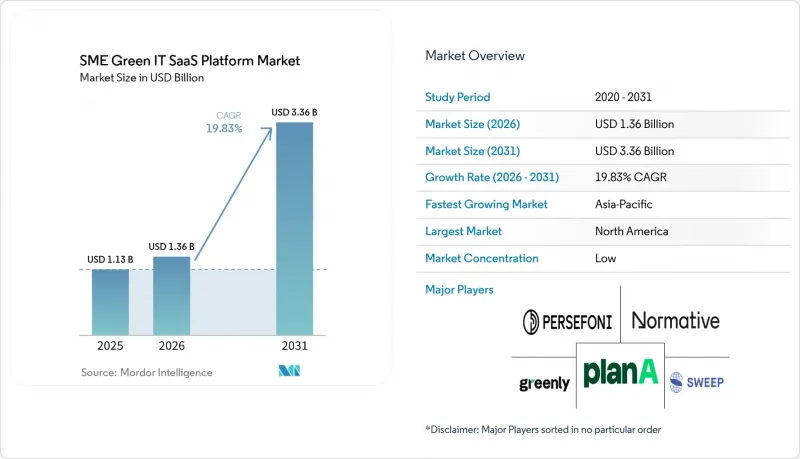
Mordor Intelligence에 의하면, 중소기업용 그린 IT SaaS 플랫폼 시장 규모는 2025년에 11억 3,000만 달러로 평가되었습니다. 2026년 13억 6,000만 달러에서 2031년까지 33억 6,000만 달러에 이를 것으로 예상되며, 예측 기간(2026-2031년) CAGR은 19.83%를 나타낼 전망입니다.
본 보고서는 솔루션 유형(소프트웨어 및 서비스), 도입 모델(클라우드 SaaS, 하이브리드, On-Premise), 용도(탄소 발자국 및 환경 발자국 관리, 에너지 모니터링·최적화, ESG 보고 및 규정 준수 관리 등), 최종 사용자 산업(IT 및 통신, BFSI 등), 지역별로 분류되어 있습니다. 시장 전망은 금액(달러) 기준으로 제시되어 있습니다.
세계의 중소기업용 그린 IT SaaS 플랫폼 시장 동향 및 인사이트
스코프 3 공급업체 데이터에 대한 압박이 커지면서 중소기업의 SaaS 도입을 촉진
현재 대기업들은 중소 공급업체들에게 1차 배출량 데이터 제공을 더욱 일관되게 요구하고 있으며, 이로 인해 중소기업용 그린 IT SaaS 플랫폼 시장은 공식적인 보고 규정이라기보다는 조달 워크플로우와 밀접하게 연계되어 있습니다. 2025년 VSME 권고에 따라 비상장 중소기업을 위한 명확한 공시 형식이 제공되어, 공급업체 대상 설문조사를 공통 템플릿에 맞추기가 더 쉬워졌습니다. EcoVadis는 2026년 5월, 자사 네트워크 전체에서 2조 5,000억 달러를 초과하는 조달 지출이 지속가능성 리스크 분석을 바탕으로 관리되고 있다고 발표했습니다. 이는 구매자 주도형 데이터 요청이 현재 공급망에 어느 정도 깊이 침투해 있는지를 보여줍니다. 이러한 압박은 제조, 소매, 의료 분야에서 가장 강하게 나타나며, 공급업체는 실질적인 탄소 배출량이나 ESG 데이터에 신속하게 대응하지 못할 경우 우선 공급업체로서의 지위를 잃을 위험에 직면해 있습니다. 중소기업용 그린 IT SaaS 플랫폼 시장에서는 공공 정책의 진전이 완만하더라도 도입이 견조한 추세를 이어갈 가능성이 있습니다. 그 이유는 도입의 직접적인 계기가 많은 경우 상업 계약 내에 존재하기 때문입니다.
CSRD, ISSB 및 관련 보고를 위한 템플릿 중심의 규정 준수
중소기업용 그린 IT SaaS 플랫폼 시장은 첫 보고에 필요한 노력을 경감시켜 주는 보다 명확한 공시 템플릿의 도입으로부터도 혜택을 받고 있습니다. 2025년 7월 EU 집행위원회가 EFRAG VSME 기준에 대해 제시한 권고에 따라, 벤더가 온보딩 및 보고 워크플로우에 직접 통합할 수 있는 46개 항목의 구조가 마련되었습니다. 또한, IFRS는 2025년 12월 IFRS S2에 대한 대상 한정 개정을 발표하여 스코프 3 보고의 부담을 경감함으로써, 소규모 작성자의 진입 장벽을 낮췄습니다. 규칙이 체계화된 형태로 제시됨에 따라, 중소기업은 보고 프로세스를 처음부터 설계하는 대신 가이드에 따라 데이터 수집부터 시작할 수 있습니다. 이로 인해 VSME, ESRS 및 IFRS에 기반한 요건을 충족하는 라이브러리를 항상 최신 상태로 유지하는 플랫폼이 유리해졌으며, 중소기업용 그린 IT SaaS 시장은 규정 준수 유지 기능이 더욱 충실한 제품으로 나아가고 있습니다.
중소기업의 데이터 관리 체계 취약성과 스프레드시트 의존도
많은 중소기업이 여전히 업무 데이터를 스프레드시트, PDF 또는 연동되지 않은 시스템에 저장하고 있기 때문에 사내 데이터 관리 체제의 취약성은 중소기업용 그린 IT SaaS 플랫폼 시장에 있어 가장 시급한 걸림돌이 되고 있습니다. 지속가능성 플랫폼은 광열비, 출장, 조달, 자산 기록이 일관된 형식으로 관리될 때 가장 큰 효과를 발휘하지만, 많은 소규모 기업에는 그러한 기반이 부족합니다. VSME 프레임워크는 비상장 중소기업의 보고 부담을 경감시켰지만, 원본 데이터의 파편화라는 근본적인 문제를 해결하지는 못했습니다. 이러한 격차로 인해 도입까지의 기간이 길어지고, 보고 결과에 대한 신뢰성이 떨어지며, 초기 도입 후 사용자가 다시 수작업으로 돌아갈 수밖에 없는 상황이 발생할 수 있습니다. 청구서, 선하증권, 검침 데이터에서 최소한의 데이터 정제만으로 데이터를 추출할 수 있는 벤더는 데이터가 불충분한 고객층에서도 중소기업용 그린 IT SaaS 플랫폼 시장의 성장을 주도하는 데 유리한 입장에 있습니다.
부문 분석
2025년, 중소기업용 그린 IT SaaS 플랫폼 시장에서 소프트웨어는 58.30%를 차지하며, 정기적인 SaaS 구독 및 확장 가능한 도입을 통해 최대 수익원을 유지했습니다. 이 시장 부문은 VSME, CSRD, ISSB, CDP를 위한 기성 템플릿이 초보 사용자의 설정 시간을 단축해 주기 때문에 계속해서 신규 프로젝트를 확보하고 있습니다. 또한 구매자들은 데이터 수집, 배출량 산정 및 정기적인 공시 업무를 위한 명확한 운영 체계를 요구할 때 소프트웨어를 우선적으로 도입하는 경향을 보입니다. 이러한 경향으로 인해 부가 서비스의 수익이 확대되고 있음에도 불구하고, 핵심 플랫폼은 벤더 전략의 중심에 계속 자리 잡고 있습니다.
서비스 분야는 2031년까지 연평균 성장률(CAGR) 22.67%로 성장할 것으로 예측되며, 이 분야에서는 중소기업 대상 그린 IT SaaS 플랫폼 시장이 가장 빠른 성장 속도를 보이고 있습니다. 중소기업이 여러 프레임워크를 동시에 지원해야 하는 경우, 도입 지원, 관리형 보고(Managed Reporting), 자문 서비스에 대한 수요가 높아집니다. IFRS는 2025년 12월 IFRS S2 개정이 스코프 3와 관련된 초기 부담을 완화하는 것을 목적으로 했다고 밝혔으나, 기업들은 여전히 규정을 실무에 적용하기 위한 지원이 필요합니다. 중소기업용 지속가능성 소프트웨어 업계는 소프트웨어 접근성과 전문 지식, 파트너를 통한 제공을 결합한 번들형 서비스로 전환되고 있습니다. 인증된 서비스 생태계를 구축하는 벤더는 보고 프로세스와 자문 지원이 통합되면 고객이 플랫폼 전환을 주저하게 되므로 고객 유지율을 높일 수 있습니다.
2025년 중소기업용 그린 IT SaaS 플랫폼 시장에서 클라우드 SaaS는 59.78%의 점유율을 차지했으며, 구독형 제공 방식이 현재 신규 구매자의 대다수에게 표준 모델로 자리 잡았음을 보여줍니다. 그 장점은 인프라 부담이 경감되고, 업데이트가 신속하며, 대규모 사내 IT 팀을 보유하지 않은 기업도 이용하기 쉽다는 점에 있습니다. 이러한 상황은 중소기업용 그린 IT SaaS 플랫폼 시장이 중견 기업의 광범위한 SaaS 구매 경향과 일치하고 있음을 반영합니다. 많은 중소기업에게 클라우드 도구는 스프레드시트를 통한 추적에서 재현 가능한 보고서 작성으로 전환하기 위한 가장 빠른 수단입니다.
하이브리드 배포는 2031년까지 연평균 성장률(CAGR) 20.42%를 나타낼 것으로 예측되며, 배포 방식의 선택지로서 중소기업용 그린 IT SaaS 플랫폼 시장에서 가장 빠르게 성장하고 있는 모델입니다. 이러한 성장은 개인정보 보호 규정, 내부 통제 요건 또는 데이터 소재지 문제로 인해 퍼블릭 클라우드의 완전한 도입이 제한되는 의료, 금융 서비스 및 공공 부문 분야에 집중되어 있습니다. 마이크로소프트는 2026년에 Dynamics 365 Business Central에서 지속가능성 데이터의 연결성을 확대했으며, 이러한 통합 지원 덕분에 소규모 조직에게 하이브리드 아키텍처가 더욱 실용적인 선택지가 되었습니다. On-Premise 시스템은 사우디아라비아나 튀르키예의 데이터 현지화 규정과 같이 규제 대상 운영 데이터에 대해 로컬 스토리지가 여전히 더 안전한 선택지인 상황에서 일정한 역할을 유지하고 있습니다. 중소기업용 지속가능성 소프트웨어 업계에서는 고객에게 전면적인 재설계를 강요하지 않으면서 퍼블릭 클라우드, 프라이빗 클라우드 및 On-Premise 배포를 모두 지원할 수 있는 단일 제품 스택을 제공할 수 있는 벤더가 여전히 지지를 받고 있습니다.
지역별 분석
2025년, 북미는 중소기업용 그린 IT SaaS 플랫폼 시장 점유율의 37.64%를 차지하며 최대 지역 시장이 되었습니다. 2026년에도 이 지역이 선두를 유지할 것으로 예상되는 이유는 중견 기업들이 이미 SaaS 도입에 익숙해져 있을 뿐만 아니라, 캘리포니아주의 SB 253이나 캐나다의 공시 요건과 같은 주 차원의 규제, 나아가 기업공급망을 통해 기후 변화 정보 공시 압력이 확산되고 있기 때문입니다. 또한, SAP, Oracle, Microsoft 환경의 도입 기반이 광범위하게 존재하기 때문에 중소기업용 그린 IT SaaS 플랫폼 시장에서는 지속가능성 모듈의 통합 및 교차 판매 가속화를 위한 기반이 이미 마련되어 있습니다. 이러한 요인들이 복합적으로 작용하여, 북미는 도입 주기의 단축과 기능 면에서의 높은 기대를 요구하는 벤더들에게 까다로우면서도 매력적인 실증의 장이 되고 있습니다.
2025년, 유럽은 중소기업용 그린 IT SaaS 플랫폼 시장에서 여전히 2위의 지역 점유율을 유지했으며, 이는 공식적인 공시 규정이 가장 집중되어 있다는 점이 뒷받침하고 있습니다. EU는 2026년에 CSRD의 의무 적용 범위를 축소했지만, 대규모 보고 기업들은 계속해서 공급업체로부터 데이터 제공을 요구하고 있으며, 또한 VSME 프레임워크가 비상장 중소기업에게 실용적인 진입점이 되고 있기 때문에 중소기업용 그린 IT SaaS 플랫폼 시장은 여전히 혜택을 받고 있습니다. 독일과 프랑스는 여전히 핵심 수요 거점이며, 영국도 광범위한 기업 보고 및 공급망 규정 준수 활동을 통해 기여하고 있습니다. 유럽의 구매자들은 ESRS 및 VSME 워크플로우가 사전 설정된 공급업체를 계속해서 높이 평가했습니다. 이는 사내 지속가능성 팀이 소규모인 경우, 첫 보고까지 소요되는 시간을 단축할 수 있다는 점이 더욱 중요해지기 때문입니다.
아시아태평양은 2031년까지 연평균 성장률(CAGR) 23.17%를 나타낼 것으로 예측되며, 지역별로는 중소기업용 그린 IT SaaS 플랫폼 시장에서 가장 두드러진 성장을 보일 전망입니다. 이러한 성장은 일본, 중국, 인도에서 도입된 공시 요건에 기인하며, 이는 상장 기업과 그 공급업체들에게 보다 공식적인 ESG 데이터 수집을 촉진하고 있습니다. 또한, 일본의 중소기업용 그린 IT SaaS 플랫폼 시장에서는 국내 벤더들이 현지 언어 및 규제상의 요구 사항을 충족하는 보고 기능을 추가함에 따라, 지역 밀착형 경쟁이 활발해지고 있습니다. 남미는 여전히 도입 초기 단계에 있지만, 상장 기업을 대상으로 한 기후 변화 공시 규정이 발전함에 따라 브라질은 이 지역 내에서 가장 뚜렷한 성장 조짐을 보이고 있습니다. 중동 및 아프리카는 절대적인 규모 면에서는 여전히 작지만, 사우디아라비아, 아랍에미리트, 남아프리카공화국에서는 각국의 공시 정책과 확립된 보고 관행이 정착됨에 따라 장기적인 확장의 기반이 형성되고 있습니다.
기타 혜택 :
- 엑셀 형식 시장 예측(ME) 시트
- 3개월간의 애널리스트 지원
자주 묻는 질문
목차
제1장 서론
제2장 조사 방법
제3장 주요 요약
제4장 시장 구도
제5장 시장 규모 및 성장 예측
제6장 경쟁 구도
제7장 시장 기회 및 향후 전망
KTH 26.08.05According to Mordor Intelligence, the SME green IT SaaS platform market size was valued at USD 1.13 billion in 2025 and estimated to grow from USD 1.36 billion in 2026 to reach USD 3.36 billion by 2031, at a CAGR of 19.83% during the forecast period (2026-2031).
This report is Segmented by Solution Type (Software, and Services), Deployment Model (Cloud SaaS, Hybrid, and On-Premise), Application (Carbon and Environmental Footprint Management, Energy Monitoring and Optimization, ESG Reporting and Compliance Management, and More), End-User Industry (IT and Telecom, BFSI, and More), and Geography. The Market Forecasts are Provided in Terms of Value (USD).
Global SME Green IT SaaS Platform Market Trends and Insights
Rising Scope 3 Supplier Data Pressure on SME SaaS Adoption
Large companies now ask smaller suppliers for primary emissions data more consistently, keeping the SME green IT SaaS platform market tied to procurement workflows rather than to formal reporting rules. The 2025 VSME recommendation provided non-listed SMEs with a defined disclosure format, making supplier questionnaires easier to align with a common template. EcoVadis said in May 2026 that more than USD 2.5 trillion in procurement spend across its network is governed through sustainability risk insights, which shows how deeply buyer-led data requests now run through supply chains. This pressure is strongest in manufacturing, retail, and healthcare, where suppliers risk losing preferred status when they cannot respond quickly with usable carbon and ESG data. In the SME green IT SaaS platform market, that means adoption can remain firm even when public policy moves more slowly, because the immediate trigger often lies within commercial contracts.
Template-Driven Compliance for CSRD, ISSB, and Related Reporting
The SME green IT SaaS platform market is also benefiting from clearer disclosure templates that reduce the effort needed for first-time reporting. The EU Commission recommendation around the EFRAG VSME standard in July 2025 created a 46-point structure that vendors can build directly into onboarding and reporting workflows. IFRS issued targeted amendments to IFRS S2 in December 2025 to ease Scope 3 reporting burdens, which lowered the entry barrier for smaller preparers. When rules arrive in structured form, SMEs can start with guided data collection instead of designing their reporting process from scratch. This favors platforms that keep libraries updated across VSME, ESRS, and IFRS-based requirements, and it pushes the SME green IT SaaS platform market toward products with stronger compliance maintenance features.
Weak SME Data Discipline and Spreadsheet Dependence
Weak internal data discipline remains the most immediate brake on the SME green IT SaaS platform market, as many SMEs still store operational data in spreadsheets, PDFs, and disconnected systems. Sustainability platforms work best when utility, travel, procurement, and asset records are structured consistently, but many smaller firms lack that baseline. The VSME framework lowered the reporting burden for non-listed SMEs, but it did not solve the underlying problem of fragmented source data. This gap stretches onboarding timelines, reduces confidence in reported outputs, and can send users back to manual work after initial deployment. Vendors that can extract data from invoices, bills of lading, and meter readings with limited cleanup are better positioned to keep the SME green IT SaaS platform market moving in data-poor customer groups.
Other drivers and restraints analyzed in the detailed report include:
- AI-Assisted Carbon and Energy Workflows Reduce SME Admin Burden
- Lower Total Cost of Ownership Versus Legacy On-Premise Tools
- High Switch Friction From Fragmented Utility, ERP, and Asset Data
For complete list of drivers and restraints, kindly check the Table Of Contents.
Segment Analysis
Software accounted for 58.30% of the SME green IT SaaS platform market in 2025, maintaining the largest revenue pool through recurring SaaS subscriptions and scalable deployment. This part of the SME green IT SaaS platform market continues to win new projects because pre-built templates for VSME, CSRD, ISSB, and CDP reduce setup time for first-time users. Buyers also favor software-first rollouts when they want a clear operating system for data collection, emissions calculation, and recurring disclosure tasks. That pattern keeps core platforms at the center of vendor strategy even as surrounding service revenue expands.
Services are projected to expand at 22.67% CAGR through 2031, giving the segment the fastest pace in this part of the SME green IT SaaS platform market. The need for implementation support, managed reporting, and advisory services increases when SMEs must respond to multiple frameworks simultaneously. IFRS said its December 2025 amendments to IFRS S2 were intended to reduce the early Scope 3 burden, but companies still need support in translating the rules into operating practice. The SME sustainability software industry is shifting toward bundled offers that combine software access with domain expertise and partner delivery. Vendors that build certified service ecosystems can improve retention because customers are less willing to replace a platform once reporting processes and advisory support are integrated.
Cloud SaaS held 59.78% of the SME green IT SaaS platform market in 2025, showing that subscription delivery is now the default model for most new buyers. Its advantage rests on lower infrastructure burden, faster updates, and easier access for firms that do not maintain large internal IT teams. This position also reflects the way the SME green IT SaaS platform market aligns with broader SaaS buying habits in mid-market companies. For many SMEs, a cloud tool is the fastest route from spreadsheet-based tracking to repeatable reporting.
Hybrid deployment is forecast to grow at 20.42% CAGR through 2031, which makes it the fastest-growing model within the SME green IT SaaS platform market size for deployment choices. Growth is concentrated in healthcare, financial services, and public sector settings where privacy rules, internal control requirements, or data residency concerns limit full public cloud adoption. Microsoft expanded sustainability data connectivity in Dynamics 365 Business Central in 2026, and that kind of integration support makes mixed architecture more practical for smaller organizations. On-premise systems keep a residual role where local storage remains the safer path for regulated operating data, including settings shaped by data localization rules in Saudi Arabia and Turkey. The SME sustainability software industry still favors vendors that can deliver one product stack across public cloud, private cloud, and local deployment without forcing customers into a full redesign.
Complete Report Scope:
- By Solution Type
- Software
- Services
- By Deployment Model
- Cloud SaaS
- Hybrid
- On-Premise
- By Application
- Carbon and Environmental Footprint Management
- Energy Monitoring and Optimization
- ESG Reporting and Compliance Management
- IT Asset Lifecycle and Circularity Management
- Supplier Sustainability and Value Chain Management
- By End-User Industry
- IT and Telecom
- BFSI
- Manufacturing
- Retail and E-Commerce
- Healthcare and Life Sciences
- Government and Public Sector
- Energy and Utilities
- Professional Services
- Other End-user Industries
- By Geography
- North America
- United States
- Canada
- Mexico
- South America
- Brazil
- Argentina
- Rest of South America
- Europe
- Germany
- United Kingdom
- France
- Italy
- Spain
- Russia
- Rest of Europe
- Asia-Pacific
- China
- Japan
- India
- South Korea
- Australia
- Rest of Asia-Pacific
- Middle East
- Turkey
- Saudi Arabia
- United Arab Emirates
- Qatar
- Rest of Middle East
- Africa
- South Africa
- Egypt
- Nigeria
- Rest of Africa
- North America
Geography Analysis
North America held 37.64% of the SME green IT SaaS platform market share in 2025, making it the largest regional market. The region maintains its lead in 2026 because mid-market firms are already accustomed to SaaS procurement, and climate disclosure pressure extends through state rules such as California SB 253 and Canadian disclosure requirements, as well as enterprise supply chains. A large installed base of SAP, Oracle, and Microsoft environments also gives the SME green IT SaaS platform market a ready path for embedded sustainability modules and faster cross-sell. That combination makes North America a demanding yet attractive proving ground for vendors seeking shorter implementation cycles and higher feature expectations.
Europe remained the second-largest regional position in the SME green IT SaaS platform market in 2025, supported by the strongest concentration of formal disclosure rules. The EU narrowed the mandatory CSRD scope in 2026, yet the SME green IT SaaS platform market still benefits, as large reporting companies continue to request supplier data, and the VSME framework provides a practical entry point for non-listed SMEs. Germany and France remain core demand centers, and the United Kingdom also contributes through broad corporate reporting and supply-chain compliance activity. European buyers continue to reward vendors that pre-configure ESRS and VSME workflows because faster time to first report matters more when internal sustainability teams are small.
Asia-Pacific is projected to grow at a 23.17% CAGR through 2031, making it the fastest-growing region in the SME green IT Saas platform market by geography. Growth comes from disclosure rollouts in Japan, China, and India, which are pushing listed companies and their suppliers toward more formal ESG data collection. The SME green IT Saas platform market in Japan also has a strong local layer of competition, as domestic vendors have added reporting features that meet local language and regulatory needs. South America is still at an earlier adoption stage, but Brazil stands out as the clearest regional opening as climate disclosure rules move forward for listed companies. The Middle East and Africa remain smaller in absolute terms, yet Saudi Arabia, the United Arab Emirates, and South Africa provide a base for longer-term expansion as national disclosure agendas and established reporting practices deepen.
- Greenly SAS
- Normative AB
- Plan A Earth GmbH
- Sweep SAS
- Persefoni, Inc.
- Watershed Technology, Inc.
- EcoVadis SAS
- Cority Software Inc.
- International Business Machines Corporation
- SAP SE
- Microsoft Corporation
- Salesforce, Inc.
- Oracle Corporation
- Schneider Electric SE
- Siemens AG
- ENGIE Impact (subsidiary of ENGIE SA)
- GreenStone+ (Private Company)
- Emitwise Ltd.
- FigBytes Inc.
- Diligent Corporation
Additional Benefits:
- The market estimate (ME) sheet in Excel format
- 3 months of analyst support
TABLE OF CONTENTS
1 INTRODUCTION
- 1.1 Study Assumptions and Market Definition
- 1.2 Scope of the Study
2 RESEARCH METHODOLOGY
3 EXECUTIVE SUMMARY
4 MARKET LANDSCAPE
- 4.1 Market Overview
- 4.2 Market Drivers
- 4.2.1 Rising Scope 3 Supplier Data Pressure on SME SaaS Adoption
- 4.2.2 Lower Total Cost of Ownership Versus Legacy On-Premise Tools
- 4.2.3 AI Assisted Carbon and Energy Workflows Reduce SME Admin Burden
- 4.2.4 Embedded Sustainability Requirements in B2B Procurement Portals
- 4.2.5 Template Driven Compliance for CSRD, ISSB, and Related Reporting
- 4.2.6 Margin Expansion Through Modular Cross-Sell of IT, Energy, and ESG Modules
- 4.3 Market Restraints
- 4.3.1 Weak SME Data Discipline and Spreadsheet Dependence
- 4.3.2 High Switch Friction from Fragmented Utility, ERP, and Asset Data
- 4.3.3 Data Residency and Privacy Concerns in Regulated Verticals
- 4.3.4 Sustainability Budget Volatility in Price Sensitive Micro Enterprises
- 4.4 Industry Value-Chain Analysis
- 4.5 Impact of Macroeconomic Factors on the Market
- 4.6 Regulatory Landscape
- 4.7 Technological Outlook
- 4.8 Pricing Analysis
- 4.9 Porter's Five Forces Analysis
- 4.9.1 Bargaining Power of Suppliers
- 4.9.2 Bargaining Power of Buyers
- 4.9.3 Threat of New Entrants
- 4.9.4 Threat of Substitutes
- 4.9.5 Intensity of Competitive Rivalry
5 MARKET SIZE AND GROWTH FORECASTS (VALUE)
- 5.1 By Solution Type
- 5.1.1 Software
- 5.1.2 Services
- 5.2 By Deployment Model
- 5.2.1 Cloud SaaS
- 5.2.2 Hybrid
- 5.2.3 On-Premise
- 5.3 By Application
- 5.3.1 Carbon and Environmental Footprint Management
- 5.3.2 Energy Monitoring and Optimization
- 5.3.3 ESG Reporting and Compliance Management
- 5.3.4 IT Asset Lifecycle and Circularity Management
- 5.3.5 Supplier Sustainability and Value Chain Management
- 5.4 By End-User Industry
- 5.4.1 IT and Telecom
- 5.4.2 BFSI
- 5.4.3 Manufacturing
- 5.4.4 Retail and E-Commerce
- 5.4.5 Healthcare and Life Sciences
- 5.4.6 Government and Public Sector
- 5.4.7 Energy and Utilities
- 5.4.8 Professional Services
- 5.4.9 Other End-user Industries
- 5.5 By Geography
- 5.5.1 North America
- 5.5.1.1 United States
- 5.5.1.2 Canada
- 5.5.1.3 Mexico
- 5.5.2 South America
- 5.5.2.1 Brazil
- 5.5.2.2 Argentina
- 5.5.2.3 Rest of South America
- 5.5.3 Europe
- 5.5.3.1 Germany
- 5.5.3.2 United Kingdom
- 5.5.3.3 France
- 5.5.3.4 Italy
- 5.5.3.5 Spain
- 5.5.3.6 Russia
- 5.5.3.7 Rest of Europe
- 5.5.4 Asia-Pacific
- 5.5.4.1 China
- 5.5.4.2 Japan
- 5.5.4.3 India
- 5.5.4.4 South Korea
- 5.5.4.5 Australia
- 5.5.4.6 Rest of Asia-Pacific
- 5.5.5 Middle East
- 5.5.5.1 Turkey
- 5.5.5.2 Saudi Arabia
- 5.5.5.3 United Arab Emirates
- 5.5.5.4 Qatar
- 5.5.5.5 Rest of Middle East
- 5.5.6 Africa
- 5.5.6.1 South Africa
- 5.5.6.2 Egypt
- 5.5.6.3 Nigeria
- 5.5.6.4 Rest of Africa
- 5.5.1 North America
6 COMPETITIVE LANDSCAPE
- 6.1 Market Concentration
- 6.2 Strategic Moves
- 6.3 Market Share Analysis
- 6.4 Company Profiles (includes Global Level Overview, Market Level Overview, Core Segments, Financials as available, Strategic Information, Market Rank/Share, Products and Services, Recent Developments)
- 6.4.1 Greenly SAS
- 6.4.2 Normative AB
- 6.4.3 Plan A Earth GmbH
- 6.4.4 Sweep SAS
- 6.4.5 Persefoni, Inc.
- 6.4.6 Watershed Technology, Inc.
- 6.4.7 EcoVadis SAS
- 6.4.8 Cority Software Inc.
- 6.4.9 International Business Machines Corporation
- 6.4.10 SAP SE
- 6.4.11 Microsoft Corporation
- 6.4.12 Salesforce, Inc.
- 6.4.13 Oracle Corporation
- 6.4.14 Schneider Electric SE
- 6.4.15 Siemens AG
- 6.4.16 ENGIE Impact (subsidiary of ENGIE SA)
- 6.4.17 GreenStone+ (Private Company)
- 6.4.18 Emitwise Ltd.
- 6.4.19 FigBytes Inc.
- 6.4.20 Diligent Corporation
7 MARKET OPPORTUNITIES AND FUTURE OUTLOOK
- 7.1 White-Space and Unmet-Need Assessment