

|
시장보고서
상품코드
2097478
의료 IT 지속가능성 소프트웨어 시장 : 시장 점유율 분석, 업계 동향 및 통계, 성장 예측(2026-2031년)Healthcare IT Sustainability Software - Market Share Analysis, Industry Trends & Statistics, Growth Forecasts (2026 - 2031) |
||||||
 Mordor Intelligence
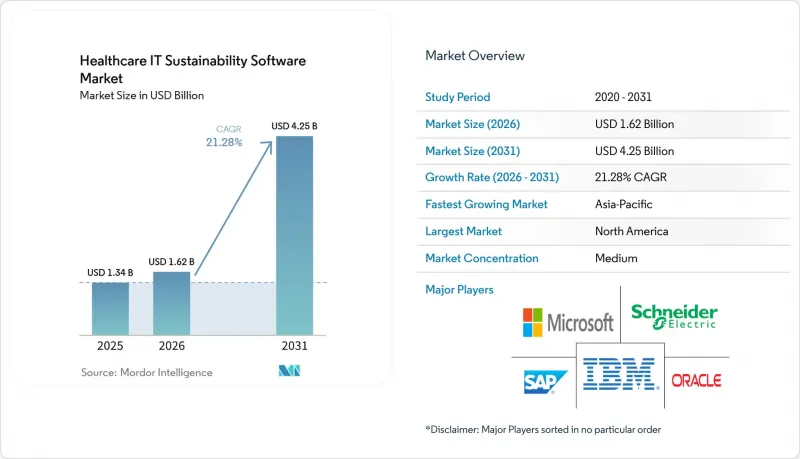
Mordor Intelligence에 의하면, 의료 IT 지속가능성 소프트웨어 시장 규모는 2025년 13억 4,000만 달러로 평가되었고, 2026년에는 16억 2,000만 달러로 확대될 것으로 추정되고, 2031년까지 42억 5,000만 달러에 이를 것으로 예상되며, 2026-2031년 CAGR 21.28%로 성장할 전망입니다.
본 보고서는 컴포넌트별(소프트웨어 및 서비스), 배포 방식별(클라우드 기반, 온프레미스형, 하이브리드형), 용도별(에너지 및 유틸리티 최적화 관리, 탄소 배출량 산정 및 보고, ESG 및 규제 준수 관리 등), 최종 사용자 산업별(병원 등), 지역별로 분류되어 있습니다. 시장 전망은 금액(달러) 기준으로 제시되어 있습니다.
세계의 의료 IT 지속가능성 소프트웨어 시장 동향 및 인사이트
병원의 넷제로 추진 노력 및 탈탄소화 의무화 진전
병원의 탈탄소화 목표는 대략적인 정책 선언에서 구체적인 이행 기한으로 전환되고 있으며, 이에 따라 의료 IT 지속가능성 소프트웨어 시장이 가속화되고 있습니다. 잉글랜드 국민보건서비스(NHS England)는 2028년부터 2032년까지 직접 관리 하의 배출량을 80% 감축하고, 2040년까지 완전한 넷제로를 달성하는 것을 목표로 하는 ‘넷제로 패스웨이’를 통해 이러한 변화를 지속적으로 주도하고 있습니다. 미국에서는 HHS(미국 보건복지부)의 ‘탈탄소화 및 회복탄력성 이니셔티브’를 통해 연간 배출량 보고에 대한 공식적인 인정을 요구하는 병원을 위한 보다 명확한 프레임워크가 수립되었으며, 이에 따라 보다 체계적인 데이터 수집에 평판적 중요성이 더해지고 있습니다. 따라서 의료용 IT 지속가능성 소프트웨어 시장에서는 조달 기간이 단축되고 있습니다. 이는 단기적인 탈탄소화 목표를 가진 조직이 수작업에 의한 기준선 산정에 오랜 시간을 할애할 여유가 없기 때문입니다. 또한, 의료시설이 전 세계 온실가스 배출량의 4.4%를 차지하고 있다는 점에서 의료 시스템은 더 광범위한 압박에 직면해 있으며, 배출량 관리는 이사회, 규제 당국 및 이해관계자들로부터 지속적으로 주목받고 있습니다. 그 결과, 의료 IT 지속가능성 소프트웨어 시장은 자본 계획 주기, 거버넌스 재검토 및 시스템 전반의 운영 목표와 더욱 밀접하게 연계되고 있습니다.
스코프 1, 스코프 2 및 스코프 3 배출량 보고 요건의 확대
스코프 1, 스코프 2 및 스코프 3 보고 규정의 확대는 의료 IT 지속가능성 소프트웨어 시장 수요를 견인하는 가장 명확한 요인 중 하나입니다. 미국 보건복지부(HHS)는 의료 기관의 스코프 3 배출량이 의약품, 의료기기, 운송 및 기타 외부 공급망 활동을 포함하기 때문에 스코프 1과 스코프 2 배출량의 합계를 초과하는 경우가 많다고 지적하고 있습니다. WHO 또한 GHG 프로토콜을 준수하는 측정 프레임워크를 발표했습니다. 이를 통해 배출량 산정은 막연한 목표에서 의료 시스템 내의 명확한 내부 역량으로 전환되었습니다. 이러한 변화는 소프트웨어 구매 행동에도 영향을 미치고 있습니다. 스코프 3 이니셔티브에 착수하는 병원에는 공급업체와의 협업 도구, 데이터 자동 수집, 정기적인 조사 방법론 업데이트가 필요하지만, 이는 기본적인 스프레드시트 시스템으로는 충분히 처리할 수 없기 때문입니다. 매사추세츠주의 급성기 병원에서는 2025년 6월까지 검증된 스코프 1 및 스코프 2 배출량 보고서 제출이 이미 의무화되어 있으며, 이는 보고에 대한 기대가 자발적인 공개에서 보다 공식적인 감독으로 전환되고 있음을 보여줍니다. 이러한 요건으로 인해 견고한 보고 체계 구축을 더 이상 미룰 수 없게 되면서, 의료 IT 지속가능성 소프트웨어 시장이 혜택을 보고 있습니다.
분산된 시설 및 임상 데이터 아키텍처
의료용 IT 지속가능성 소프트웨어 시장의 주요 장벽 중 하나는 병원이 시설 데이터, 임상 시스템, 조달 기록 및 유틸리티 정보를 분산된 방식으로 관리하고 있다는 점입니다. 『Frontiers in Health Services』지에 게재된 2025년 체계적 문헌 고찰에 따르면, 의료 데이터 생태계는 표준화된 통합 구조를 갖추지 못한, 고립된 이종 혼합 소프트웨어 환경으로 기능하는 경우가 많다는 사실이 밝혀졌습니다. 또한, 미국 의학 아카데미(National Academy of Medicine)도 전국적인 의료 디지털 데이터 아키텍처의 필요성을 강조하며, 이 분야 전반에 걸쳐 상호 운용성이 여전히 불충분하다는 점을 부각시키고 있습니다. 실무적으로 이는 지속가능성 플랫폼이 데이터를 원활하게 교환하도록 설계되지 않은 건물 관리 시스템, 전자의무기록, 계량기, 조달 도구 등에 연결되어야 하는 경우가 많음을 의미합니다. 의료 IT 지속가능성 소프트웨어 시장은 이러한 상황 속에서 계속 발전하고 있지만, 중견 기업들에게는 도입 작업이 장기화되고, 서비스에 대한 의존도가 높아지며, 예측이 어려워지고 있습니다. 많은 조직이 현재의 데이터 아키텍처로는 대응할 수 없을 정도로 신속한 보고서 작성을 요구하고 있어, 이것이 도입 지연으로 이어지고 있습니다.
부문 분석
2025년에는 소프트웨어가 시장의 68.32%를 차지했으나, 서비스 부문은 2031년까지 연평균 성장률(CAGR) 21.97%를 나타낼 것으로 예측됩니다. 의료 IT 지속가능성 소프트웨어 시장에서 이러한 구성 비율은 보고 규정이나 탄소 회계 기법이 변경될 때 일원적으로 업데이트할 수 있는 플랫폼을 구매자들이 여전히 선호하고 있음을 보여줍니다. 병원 그룹은 일회성 컨설팅 업무가 아닌, 데이터 수집, 감사 추적 및 전사적 보고서 작성을 위한 재현 가능한 워크플로우를 원하기 때문에 소프트웨어 부문이 여전히 핵심을 이루고 있습니다. 동시에, 의료 지속가능성 소프트웨어 업계에서는 도입이 단순한 설치로 끝나는 경우가 드물기 때문에 서비스 분야가 급속히 확대되고 있습니다. 조사 범위, 공급업체 데이터 요건 또는 사업 규모의 변경이 있을 때마다 설정, 통합 및 지원에 대한 새로운 수요가 발생하는 경향이 있습니다.
이러한 관계로 인해 의료 IT 지속가능성 소프트웨어 시장에서는 소프트웨어가 장기적인 ‘시스템 오브 레코드(System of Record)’를 확보하고, 서비스가 의료 기관이 그 유용성을 유지할 수 있도록 지원하는 수익 모델이 형성되고 있습니다. 또한, 이 분석 결과는 벤더의 포지셔닝 변화도 시사하고 있으며, 엔터프라이즈 제공업체들은 대규모 소프트웨어 계약을 다년간의 서비스 계약으로 전환하려고 하고 있습니다. ISG는 지속가능성 관리, 지속가능성 인사이트, 지속가능성 규정 준수 각 부문에 걸쳐 20개 공급업체를 평가한 결과, Workiva, Salesforce, Oracle을 종합 리더로 선정했습니다. 이는 풀 스위트형 벤더들이 기능 면뿐만 아니라 제공 범위의 폭에서도 경쟁하고 있다는 관점을 뒷받침하는 것입니다. SAP가 지속가능성 AI 에이전트를 발표한 것도, 규정 준수 심사 시간을 50% 이상 단축하고 시나리오 시뮬레이션 시간을 1일에서 20분으로 단축하겠다고 약속하고 있는 점에서 서비스 의존도가 높은 업무의 일부가 향후 자동화될 가능성을 시사합니다. 하지만 의료 IT의 지속가능성 소프트웨어 시장에서는 시설, 소유주, 규제 환경에 따라 의료 운영 환경이 여전히 크게 다르기 때문에 서비스에 대한 수요는 계속해서 높은 수준을 유지할 전망입니다.
2025년에는 클라우드 기반 도입이 72.92%의 점유율을 차지했으나, 하이브리드 도입은 2031년까지 연평균 성장률(CAGR) 22.83%로 확대될 것으로 예측됩니다. 주요 벤더들이 이미 재무, 인사, 조달, 공급망 기능에 사용되는 광범위한 클라우드 제품군에 지속가능성 모듈을 통합하고 있기 때문에 클라우드 도입 부문에서 의료용 IT 지속가능성 소프트웨어 시장 규모는 계속해서 선두를 유지하고 있습니다. 이로 인해 별도의 시스템을 도입하기보다는 기존 기술 파트너십을 확장하고자 하는 대규모 의료 시스템의 경우, 도입 장벽이 낮아집니다. 많은 조직이 모든 시설 데이터나 운영 데이터를 퍼블릭 클라우드 환경으로 이전하지 않으면서도 클라우드 규모의 분석 기능을 필요로 하기 때문에 하이브리드 도입은 여전히 가장 빠르게 성장하는 선택지입니다. 의료 IT 지속가능성 소프트웨어 시장에서 이는 기술적 선호의 문제라기보다는 규정 준수 체제에 대응해야 한다는 측면이 더 강하다고 할 수 있습니다.
또한, 의료 지속가능성 소프트웨어 업계에서는 여러 규제 관할 구역에 걸쳐 사업을 전개하는 의료 시스템들 사이에서 하이브리드 모델이 지지를 얻고 있습니다. 이러한 조직들은 복잡한 스코프 3 산정 및 시스템 전반의 벤치마킹을 지원하면서, 기밀성이 높은 운영 데이터에 대해 더욱 강력한 관리를 수행해야 합니다. 온프레미스 배포의 점유율은 계속해서 감소하고 있지만, 정부가 소유한 병원 네트워크나 주권 관련 요건이 더 엄격한 기타 환경에서는 여전히 중요한 위치를 차지하고 있습니다. 개인정보 보호를 중시하는 거버넌스 프레임워크 하에서는 데이터의 소재지, 보안 조치, 설계 요건에 관한 공급업체의 문서가 조달 평가의 정례적인 요소가 되고 있습니다. 따라서 의료 지속가능성 소프트웨어 시장에서는 규모 면에서 클라우드가 여전히 중심적인 위치를 차지하고 있지만, 하이브리드 모델은 규정 준수 요건과 고급 분석에 대한 열망을 연결하는 실용적인 가교 역할을 하고 있습니다.
지역별 분석
2025년, 북미는 시장 점유율의 37.64%를 차지했으며, 이러한 선두 위상은 규제 압력, 디지털화에 대한 준비 태세, 그리고 대규모 의료 사업자의 존재가 가장 강력하게 결합된 결과입니다. 북미의 의료 IT 지속가능성 소프트웨어 시장 점유율이 여전히 최고 수준을 유지하는 이유는 이 지역에 기업 전체의 보고 및 분석을 지원할 수 있는 통합 의료 시스템, IDN(통합 의료 네트워크), 그리고 대학 부속 의료 센터가 밀집해 있기 때문입니다. 미국에서는 배출량 보고에 대한 기대, 기후 변화에 관한 공약, 그리고 조달 체계의 성숙도가 높아짐에 따라 병원들은 소프트웨어를 활용한 보다 공식적인 지속가능성 관리로 나아가고 있습니다. 스코프 3 및 보다 광범위한 탈탄소화 계획에 관한 미국 보건복지부(HHS)의 지침 또한 수작업 보고에서 보다 체계화된 데이터 시스템으로의 전환을 촉진하고 있습니다. 캐나다 역시 코르텔루치 본 병원에서 주목받은 장기적인 디지털 병원 파트너십을 포함한 스마트 인프라 모델을 통해 의료용 IT 지속가능성 소프트웨어 시장에 기여하고 있습니다.
유럽에서는 보고 규정 및 정책, 건물 에너지 효율에 관한 의무가 시장을 형성하고 있으며, 이로 인해 의료용 IT 지속가능성 소프트웨어 시장은 구조적으로 정책 주도적인 양상을 띠고 있습니다. 독일이 두드러지는 이유는 업계 관계자들이 병원 대다수가 지속가능성 보고 의무의 대상이 될 것으로 예상하고 있으며, DKTIG가 CSRD 및 ESRS 요건을 준수하는 업계 특화 지속가능성 관리 소프트웨어 플랫폼 구축을 위해 협력하고 있기 때문입니다. 영국 또한 NHS의 탄소 중립 달성을 위한 로드맵과 에너지 모니터링 및 보고 시스템을 더욱 중시하는 트러스트 수준의 친환경 계획을 통해 진전을 이루고 있습니다. 남유럽에서는 리모델링 공사의 경제성이 두드러지고 있으며, 토스카나 주의 의료시설 리모델링 사례는 자동화에 대한 투자에서 측정 가능한 에너지 절감 및 배출량 감축에 이르는 실질적인 로드맵을 제시했습니다. 남미에서는 도입이 아직 초기 단계에 있지만, 외부 자본 시장이 ESG 대응을 중시하게 됨에 따라 브라질과 아르헨티나의 대형 민간 병원 그룹이 가장 유력한 진입 지점이 될 것입니다.
아시아태평양은 2031년까지 연평균 성장률(CAGR) 23.17%로 확대될 것으로 예측되며, 의료 IT 지속가능성 소프트웨어 시장에서 가장 두드러진 성장을 보일 것으로 전망됩니다. 이 지역은 정보 공개에 대한 기류가 고조되고, 디지털 병원에 대한 투자가 이루어지며, 기업 데이터 관리 역량을 강화하고 있는 대규모 의료 기관의 존재와 같은 요인들의 시너지 효과로 혜택을 보고 있습니다. 일본은 그 대표적인 사례로, 아스테라스는 CSRD 및 ESRS 관련 공시 업무에 IBM Envizi ESG Suite를 도입했으며, 후지쯔는 오사카 병원과 생성형 AI 및 지속 가능한 병원 경영에 관한 프로젝트를 시작했습니다. 인도에서는 광범위한 기후 변화 대응 노력과 병행하여 의료의 디지털화가 진행됨에 따라 관심이 높아지기 시작하고 있습니다. 중동 및 아프리카는 현재 시장 규모로는 아직 작지만, 특히 사우디아라비아에서 국가 변혁 의제 하에 ESG 인프라에 대한 투자가 증가하고 있어 전략적으로 중요한 지역이 되고 있습니다. 따라서 의료 IT 지속가능성 소프트웨어 시장은 지리적으로 확대되고 있으며, 도입 규모 면에서는 북미가, 정책 체계 면에서는 유럽이, 성장 속도 면에서는 아시아태평양이 각각 주도적인 역할을 하고 있습니다.
기타 혜택 :
- 엑셀 형식 시장 예측(ME) 시트
- 3개월간의 애널리스트 지원
자주 묻는 질문
목차
제1장 서론
제2장 조사 방법
제3장 주요 요약
제4장 시장 구도
제5장 시장 규모 및 성장 예측
제6장 경쟁 구도
제7장 시장 기회 및 향후 전망
AJY 26.08.07According to Mordor Intelligence, the healthcare IT sustainability software market size is expected to increase from USD 1.34 billion in 2025 to USD 1.62 billion in 2026 and reach USD 4.25 billion by 2031, growing at a CAGR of 21.28% over 2026-2031.
This report is Segmented by Component (Software, and Services), Deployment Mode (Cloud-Base, On-Premise, and Hybrid), Application (Energy and Utility Optimization Management, Carbon Emissions Accounting and Reporting, ESG and Regulatory Compliance Management, and More), End-User Industry (Hospitals, and More), and Geography. The Market Forecasts are Provided in Terms of Value (USD).
Global Healthcare IT Sustainability Software Market Trends and Insights
Rising Hospital Net Zero Commitments and Decarbonization Mandates
Hospital decarbonization targets have shifted from broad policy statements to operational deadlines, accelerating the healthcare IT sustainability software market. NHS England continued to anchor this shift with its net zero pathway, which targets an 80% reduction in directly controlled emissions by 2028-2032 and full net zero by 2040. In the United States, the HHS Decarbonization and Resilience Initiative created a clearer framework for hospitals that want public recognition for annual emissions reporting, which adds reputational weight to more structured data collection. The healthcare IT sustainability software market is, therefore, seeing shorter procurement windows because organizations with near-term decarbonization milestones cannot wait for long manual baseline exercises. Health systems also face wider pressure because healthcare facilities account for 4.4% of global greenhouse gas emissions, which keeps emissions management visible to boards, regulators, and institutional stakeholders. As a result, the healthcare IT sustainability software market is becoming more tied to capital planning cycles, governance reviews, and systemwide operating targets.
Growth of Scope 1, Scope 2, and Scope 3 Emissions Reporting Requirements
The expansion of Scope 1, Scope 2, and Scope 3 reporting rules is one of the clearest demand drivers for the healthcare IT sustainability software market. HHS noted that Scope 3 emissions for healthcare organizations often exceed Scope 1 and Scope 2 emissions combined because they include pharmaceuticals, devices, transport, and other external supply chain activities. WHO also published a measurement framework aligned with the GHG Protocol, which helped turn emissions accounting from a broad ambition into a defined internal capability for health systems. This changes software buying behavior because hospitals moving into Scope 3 work need supplier engagement tools, automated data ingestion, and regular methodology updates that basic spreadsheet systems do not handle well. Massachusetts acute hospitals were already required to submit verified Scope 1 and Scope 2 emissions reports by June 2025, which shows how reporting expectations are moving from voluntary disclosure into more formal oversight. The healthcare IT sustainability software market is benefiting because these requirements make robust reporting architecture harder to defer.
Fragmented Facility and Clinical Data Architecture
A major barrier for the healthcare IT sustainability software market is the fragmented way hospitals manage facility data, clinical systems, procurement records, and utility information. A 2025 systematic review in Frontiers in Health Services found that healthcare data ecosystems often operate as isolated and heterogeneous software environments without standardized integration structures. The National Academy of Medicine also highlighted the need for a national health digital and data architecture, underscoring the continued incompleteness of interoperability across the sector. In practical terms, this means sustainability platforms must often connect to building systems, electronic records, meters, and procurement tools that were never designed to exchange data smoothly. The healthcare IT sustainability software market continues to advance under those conditions, but implementation work becomes longer, more service-intensive, and less predictable for mid-tier operators. This slows adoption because many organizations want faster reporting than their current data architecture can support.
Other drivers and restraints analyzed in the detailed report include:
- Rising Energy Cost Pressure Across Acute Care and Campus Facilities
- Expansion of Digital Building Operations in Smart Hospitals
- Long Replacement Cycles for Legacy Building and IT Systems
For complete list of drivers and restraints, kindly check the Table Of Contents.
Segment Analysis
Software accounted for 68.32% of the market in 2025, while services are projected to grow at a 21.97% CAGR through 2031. In the healthcare IT sustainability software market, that mix shows that buyers still prefer platforms that can be updated centrally as reporting rules and carbon accounting methods change. The software layer remains the anchor because hospital groups want repeatable workflows for data capture, audit trails, and enterprise reporting instead of one-time advisory work. At the same time, services are expanding quickly because implementation rarely ends with installation in the healthcare sustainability software industry. Every change in reporting scope, supplier data needs, or operating footprint tends to create new demand for configuration, integration, and support.
This relationship gives the healthcare IT sustainability software market a revenue model where software secures the long-term system of record, and services help institutions keep it useful. The input also points to a shift in vendor positioning, with enterprise providers trying to turn large software contracts into multiyear service relationships. ISG assessed 20 providers across sustainability management, sustainability insights, and sustainability compliance categories, and named Workiva, Salesforce, and Oracle as overall leaders, which supports the view that full-suite vendors are competing on breadth as much as functionality. The announcement of SAP sustainability AI agents, with promised reductions of more than 50% in compliance review hours and a fall in scenario simulation time from one day to 20 minutes, also suggests that some service-heavy tasks may be automated over time. Even so, the healthcare IT sustainability software market is likely to keep meaningful services demand because healthcare operating environments remain highly varied across sites, owners, and regulatory contexts.
Cloud-based deployment held 72.92% share in 2025, while hybrid deployment is projected to expand at a 22.83% CAGR through 2031. The healthcare IT sustainability software market size in cloud deployment remained ahead because major vendors already embed sustainability modules into broader cloud suites used for finance, HR, procurement, and supply chain functions. This lowers adoption friction for large health systems that want to extend existing technology relationships rather than introduce a separate stack. Hybrid deployment is still the fastest growing option because many organizations need cloud-scale analytics without moving all facility and operational data into public cloud environments. In the healthcare IT sustainability software market, this is less a matter of technical taste and more a response to compliance architecture.
The healthcare sustainability software industry is also seeing hybrid models gain favor among health systems that operate across several regulatory jurisdictions. These organizations need stronger control over sensitive operational data while still supporting complex Scope 3 calculations and systemwide benchmarking. On-premise deployments continue to lose share, but they remain relevant in government owned hospital networks and other settings where sovereignty requirements are stricter. Vendor documentation on data residency, security controls, and design requirements is now a routine part of procurement evaluations under privacy-focused governance frameworks. The healthcare sustainability software market, therefore, keeps cloud at the center of scale, but hybrid models are becoming the practical bridge between compliance needs and the ambition for advanced analytics.
Complete Report Scope:
- By Component
- Software
- Services
- Implementation and Integration Services
- Support and Maintenance Services
- By Deployment Mode
- Cloud Based
- On Premise
- Hybrid
- By Application
- Energy and Utility Optimization Management
- Carbon Emissions Accounting and Reporting
- Environmental Resource Management (Water and Waste)
- ESG and Regulatory Compliance Management
- Sustainability Analytics and Performance Benchmarking
- By End-User Industry
- Hospitals (Standalone and Multi-specialty)
- Health Systems and IDNs
- Ambulatory Surgical Centers
- Clinics and Physician Practices
- Long-Term Care Facilities
- Academic and Teaching Medical Centers
- Other End-User Industries
- By Geography
- North America
- United States
- Canada
- Mexico
- Rest of North America
- South America
- Brazil
- Argentina
- Rest of South America
- Europe
- Germany
- United Kingdom
- France
- Italy
- Spain
- Russia
- Rest of Europe
- Asia-Pacific
- China
- Japan
- India
- South Korea
- Australia
- Rest of Asia-Pacific
- Middle East
- Saudi Arabia
- United Arab Emirates
- Turkey
- Rest of Middle East
- Africa
- South Africa
- Egypt
- Rest of Africa
- North America
Geography Analysis
North America held 37.64% share of the market in 2025, and that lead reflects the strongest combination of regulatory pressure, digital readiness, and large enterprise healthcare operators. The healthcare IT sustainability software market share in North America remained the highest because the region has a dense base of integrated health systems, IDNs, and academic medical centers that can support enterprise-wide reporting and analytics. In the United States, emissions reporting expectations, climate pledges, and procurement maturity are pushing hospitals toward more formal software-backed sustainability management. HHS guidance on Scope 3 and broader decarbonization planning also supports a shift from manual reporting to more structured data systems. Canada is also contributing to the healthcare IT sustainability software market through smart infrastructure models, including the long-term digital hospital partnership highlighted at Cortellucci Vaughan Hospital.
Europe is shaped by reporting regulation and building efficiency mandates, which gives the healthcare IT sustainability software market a structurally policy-led profile. Germany stands out because sector participants expect a large share of hospitals to fall under sustainability reporting obligations, and DKTIG has partnered on a sector-focused sustainability management software platform aligned with CSRD and ESRS requirements. The United Kingdom is also advancing through the NHS net zero pathway and trust-level green plans that place more emphasis on energy monitoring and reporting systems. Southern Europe is benefiting from retrofit economics, as the Tuscany healthcare building upgrade showed a practical path from automation investment to measurable energy savings and lower emissions. South America remains earlier in adoption, but large private hospital groups in Brazil and Argentina are the most likely entry point as external capital markets place more weight on ESG readiness.
Asia-Pacific is projected to expand at a 23.17% CAGR through 2031, making it the fastest-growing regional part of the healthcare IT sustainability software market size. The region benefits from a mix of disclosure momentum, digital hospital investment, and large healthcare organizations that are strengthening enterprise data capabilities. Japan offers a visible example, where Astellas adopted IBM Envizi ESG Suite for CSRD and ESRS-related disclosure work, and Fujitsu Japan started a project with Osaka Hospital around generative AI and sustainable hospital management. India is beginning to show interest as healthcare digitalization advances alongside broader climate commitments. The Middle East and Africa remain smaller in current value, but they are strategically relevant because ESG infrastructure investment is rising under national transformation agendas, especially in Saudi Arabia. The healthcare IT sustainability software market is therefore broadening geographically, with North America leading in installed scale, Europe in policy structure, and Asia-Pacific in growth speed.
- IBM Corporation
- SAP SE
- Microsoft Corporation
- Oracle Corporation
- Schneider Electric SE
- Salesforce, Inc.
- Johnson Controls International plc
- Honeywell International Inc.
- Siemens AG
- GE HealthCare Technologies Inc.
- Philips Koninklijke N.V.
- AWS, Inc.
- ServiceNow, Inc.
- Wolters Kluwer N.V.
- EcoOnline AS
- Cority Software Inc.
- Diligent Corporation
- FigBytes Inc.
- Intelex Technologies ULC
- UL Solutions Inc.
- Quentic GmbH
- EnergyCAP, LLC
Additional Benefits:
- The market estimate (ME) sheet in Excel format
- 3 months of analyst support
TABLE OF CONTENTS
1 INTRODUCTION
- 1.1 Study Assumptions and Market Definition
- 1.2 Scope of the Study
2 RESEARCH METHODOLOGY
3 EXECUTIVE SUMMARY
4 MARKET LANDSCAPE
- 4.1 Market Overview
- 4.2 Impact of Macroeconomic Factors on the Market
- 4.3 Market Drivers
- 4.3.1 Rising Hospital Net Zero Commitments and Decarbonization Mandates
- 4.3.2 Growth of Scope 1, Scope 2, and Scope 3 Emissions Reporting Requirements
- 4.3.3 Rising Energy Cost Pressure Across Acute Care and Campus Facilities
- 4.3.4 Expansion of Digital Building Operations in Smart Hospitals
- 4.3.5 Need for Automated ESG Data Consolidation Across Multi Site Health Systems
- 4.3.6 Rising Demand for Measurable Sustainability ROI in Healthcare Capital Planning
- 4.4 Market Restraints
- 4.4.1 Fragmented Facility and Clinical Data Architecture
- 4.4.2 Long Replacement Cycles for Legacy Building and IT Systems
- 4.4.3 Budget Constraints in Small and Mid Sized Healthcare Providers
- 4.4.4 Cybersecurity and Data Privacy Concerns in Cloud Based Sustainability Platforms
- 4.5 Industry Value Chain Analysis
- 4.6 Regulatory Landscape
- 4.7 Technological Outlook
- 4.8 Porter's Five Forces Analysis
- 4.8.1 Bargaining Power of Buyers
- 4.8.2 Bargaining Power of Suppliers
- 4.8.3 Threat of New Entrants
- 4.8.4 Threat of Substitutes
- 4.8.5 Industry Rivalry
5 MARKET SIZE AND GROWTH FORECASTS
- 5.1 By Component
- 5.1.1 Software
- 5.1.2 Services
- 5.1.2.1 Implementation and Integration Services
- 5.1.2.2 Support and Maintenance Services
- 5.2 By Deployment Mode
- 5.2.1 Cloud Based
- 5.2.2 On Premise
- 5.2.3 Hybrid
- 5.3 By Application
- 5.3.1 Energy and Utility Optimization Management
- 5.3.2 Carbon Emissions Accounting and Reporting
- 5.3.3 Environmental Resource Management (Water and Waste)
- 5.3.4 ESG and Regulatory Compliance Management
- 5.3.5 Sustainability Analytics and Performance Benchmarking
- 5.4 By End-User Industry
- 5.4.1 Hospitals (Standalone and Multi-specialty)
- 5.4.2 Health Systems and IDNs
- 5.4.3 Ambulatory Surgical Centers
- 5.4.4 Clinics and Physician Practices
- 5.4.5 Long-Term Care Facilities
- 5.4.6 Academic and Teaching Medical Centers
- 5.4.7 Other End-User Industries
- 5.5 By Geography
- 5.5.1 North America
- 5.5.1.1 United States
- 5.5.1.2 Canada
- 5.5.1.3 Mexico
- 5.5.1.4 Rest of North America
- 5.5.2 South America
- 5.5.2.1 Brazil
- 5.5.2.2 Argentina
- 5.5.2.3 Rest of South America
- 5.5.3 Europe
- 5.5.3.1 Germany
- 5.5.3.2 United Kingdom
- 5.5.3.3 France
- 5.5.3.4 Italy
- 5.5.3.5 Spain
- 5.5.3.6 Russia
- 5.5.3.7 Rest of Europe
- 5.5.4 Asia-Pacific
- 5.5.4.1 China
- 5.5.4.2 Japan
- 5.5.4.3 India
- 5.5.4.4 South Korea
- 5.5.4.5 Australia
- 5.5.4.6 Rest of Asia-Pacific
- 5.5.5 Middle East
- 5.5.5.1 Saudi Arabia
- 5.5.5.2 United Arab Emirates
- 5.5.5.3 Turkey
- 5.5.5.4 Rest of Middle East
- 5.5.6 Africa
- 5.5.6.1 South Africa
- 5.5.6.2 Egypt
- 5.5.6.3 Rest of Africa
- 5.5.1 North America
6 COMPETITIVE LANDSCAPE
- 6.1 Market Concentration
- 6.2 Strategic Moves
- 6.3 Market Share Analysis
- 6.4 Company Profiles (includes Global Level Overview, Market Level Overview, Core Segments, Financials as available, Strategic Information, Market Rank/Share, Products and Services, Recent Developments)
- 6.4.1 IBM Corporation
- 6.4.2 SAP SE
- 6.4.3 Microsoft Corporation
- 6.4.4 Oracle Corporation
- 6.4.5 Schneider Electric SE
- 6.4.6 Salesforce, Inc.
- 6.4.7 Johnson Controls International plc
- 6.4.8 Honeywell International Inc.
- 6.4.9 Siemens AG
- 6.4.10 GE HealthCare Technologies Inc.
- 6.4.11 Philips Koninklijke N.V.
- 6.4.12 AWS, Inc.
- 6.4.13 ServiceNow, Inc.
- 6.4.14 Wolters Kluwer N.V.
- 6.4.15 EcoOnline AS
- 6.4.16 Cority Software Inc.
- 6.4.17 Diligent Corporation
- 6.4.18 FigBytes Inc.
- 6.4.19 Intelex Technologies ULC
- 6.4.20 UL Solutions Inc.
- 6.4.21 Quentic GmbH
- 6.4.22 EnergyCAP, LLC
7 MARKET OPPORTUNITIES AND FUTURE OUTLOOK
- 7.1 White Space and Unmet Need Assessment
- 7.2 Future Growth Opportunities


