

|
시장보고서
상품코드
2099204
여드름 방지 화장품 시장 : 점유율 분석, 업계 동향 및 통계, 성장 예측(2026-2031년)Anti Acne Cosmetics - Market Share Analysis, Industry Trends & Statistics, Growth Forecasts (2026 - 2031) |
||||||
 Mordor Intelligence
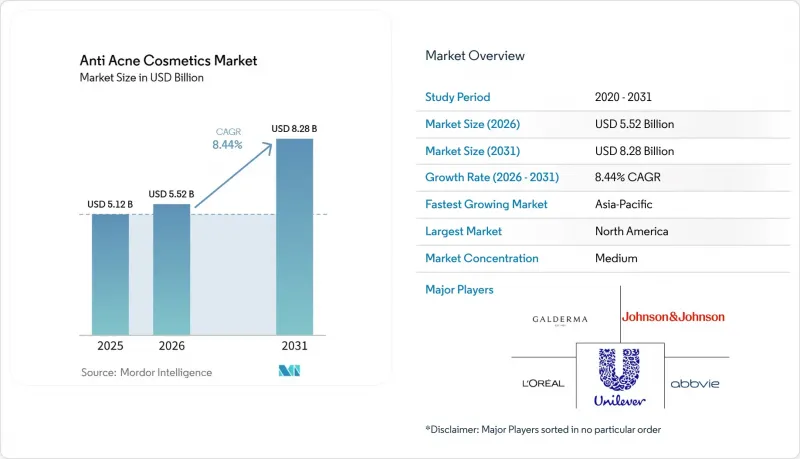
Mordor Intelligence에 의하면, 여드름 방지 화장품 시장 규모는 2025년에 51억 2,000만 달러로 평가되었고 2026년 55억 2,000만 달러에서 2031년까지 82억 8,000만 달러에 이를 것으로 예측되며, 예측 기간(2026-2031년) CAGR은 8.44%를 나타낼 전망입니다.
본 보고서는 제품 유형(클렌저, 크림, 마스크, 스팟 트리트먼트, 세럼, 토너), 유효 성분(살리실산, BPO, 레티노이드, 나이아신아마이드, AHA, 티트리 오일), 최종 사용자(개인용, 클리닉, 메디컬 스파), 성별(여성, 남성, 남녀 공용), 유통 채널(전자상거래, 약국, 전문점, 슈퍼마켓, 클리닉), 지역(북미, 유럽 등)별로 분류되어 있습니다. 시장 전망은 금액(달러)으로 표시되어 있습니다.
전 세계 여드름 방지 화장품 시장 동향과 인사이트
10대 및 성인층의 여드름 발생률 증가
여드름 관리가 필요한 인구의 규모와 연령 구성이 변화함에 따라 여드름 방지 화장품 시장은 확대되고 있습니다. ‘세계 질병 부담(Global Burden of Disease)’ 조사에 따르면, 2021년 10-24세 연령층의 연령 조정 여드름 유병률은 10만 명당 9,790.5로, 1990년의 8,563.4에서 증가했으며, 이 젊은 층의 유병자 수는 1억 8,430만 명에 달할 전망입니다. 25-49세 성인을 대상으로 한 또 다른 조사에서는 사춘기 이후에 발병하는 여드름이 증가 추세를 보이고 있으며, 2050년까지 증가세가 지속될 것으로 예측되었고, 전 연령대를 통틀어 여성이 더 큰 부담을 지고 있는 것으로 나타났습니다. 영국에서는 영국피부과학회(British Association of Dermatologists)의 보고에 따르면, 2021년 시점에서 사춘기 및 청소년층의 14.6%가 여드름으로 진단받았으며, 이는 1990년보다 7.4% 높은 수치였습니다. 이 추세가 중요한 이유는 성인 소비자들이 일반적으로 10대를 위한 기본적인 여드름 관리 제품이 아닌, 임상적으로 입증되고 자극이 적은 스킨케어 제품을 찾는 경향이 있기 때문입니다. 또한, 이러한 추세로 인해 성인 여드름이 이미 두드러진 국가들(성인 여드름 연구에서 세계 최고 수준의 연령 조정 유병률이 확인된 독일을 포함)에서 여드름 방지 화장품 시장은 더 폭넓은 프리미엄 고객층을 확보하게 될 것입니다.
임상적으로 입증된 더모코스메틱 처방의 프리미엄화
여드름 방지 화장품 시장은 또한 소비자에게 친숙한 형태이면서도 처방약 수준의 신뢰성을 보장하는 제품으로 전환되고 있습니다. 가르델마(Galderma)는 2026년 5월, 12세 이상 환자를 대상으로 한 ‘디페린 에피듀오 여드름 젤(Differin Epiduo Acne Gel)’의 일반의약품 사용에 대해 FDA 승인을 획득했습니다. 이로써 아다팔렌과 벤조일 퍼옥사이드가 함유된 이 복합제제로서는 미국에서 최초로 처방약에서 일반의약품으로의 전환이 실현되었습니다. 해당 회사에 따르면, 이 제품은 10건 이상의 임상시험과 3,200건 이상의 환자 데이터로 뒷받침되며, 월마트, 울타, 타겟, 아마존 등에서 판매가 시작되면 OTC 시장 전체의 효능 기준을 한 단계 높일 것으로 보입니다. 이러한 변화는 임상시험에 자금을 투자하고, 피부과 전문의의 지지를 얻으며, 오프라인 및 온라인 모두에서 유효 성분의 작용기전을 명확히 설명할 수 있는 브랜드에 유리하게 작용할 것입니다. 또한 소비자들이 대중용 화장품보다 피부과 치료에 더 가깝다고 느끼는 제품에 대해 더 높은 대가를 지불할 의향을 보이고 있는 만큼, 이러한 움직임은 여드름 방지 화장품 시장에서 고부가가치의 성장을 가속할 것입니다.
유효 성분에 의한 피부 자극 및 감작 위험
여드름 방지 화장품 시장은 여전히 명확한 내약성 문제에 직면해 있습니다. 더 높은 효능은 종종 건조, 자극, 혹은 사용 중단으로 이어지기 때문입니다. 이 문제는 2025년 3월, FDA가 95종의 벤조일 퍼옥사이드 제품을 검사한 결과, 그중 6개 제품에서 벤젠 농도 상승이 확인되어 소매 단계에서의 자발적 리콜로 이어지면서 더욱 두드러지게 나타났습니다. 이 사건은 리콜 대상 로트에 그치지 않고 소비자의 우려를 확산시키는 결과를 낳았으며, 여드름 방지 화장품 시장 전체에서 성분의 안정성, 보관 및 열화 위험에 대한 관심이 높아졌습니다. 2025년 『Frontiers in Pediatrics』지에 게재된 조사에서도 벤조일 퍼옥사이드의 열적 불안정성은 일회성 제조상의 문제가 아니라 제형 구조상의 문제라고 지적되고 있습니다. 이로 인해 제형에 관한 전문 지식의 중요성이 더욱 커졌으며, 유효 성분을 안정화시킬 수 있는 브랜드나, 자극이 적고 변질 위험도 낮다고 소비자에게 인식되는 효과적인 대안을 제시할 수 있는 브랜드가 유리해졌습니다.
부문 분석
2025년, 크림 및 로션은 여드름 방지 화장품 시장 규모의 43.13%를 차지하며, 매출 기준 최대 제품 유형이 되었습니다. 여드름 방지 화장품 시장에서는 이러한 ‘씻어내지 않는 유형’이 선호되고 있습니다. 이는 유효 성분이 피부와 장시간 접촉을 유지하며, 가끔씩 진행하는 치료보다 일상적인 스킨케어 습관에 접목하기 쉽기 때문입니다. 클렌저나 세안제는 매일 사용될 뿐만 아니라 약국, 대형 마트, 온라인 채널 등에서 널리 구할 수 있어 여전히 구매 빈도가 높습니다. 스팟 트리트먼트는 국소적인 사용에서 중요한 역할을 계속하고 있는 반면, 마스크나 토너는 여드름 관리 루틴 속에서 정기적으로 집중 관리를 원하는 소비자를 위한 추가 제품으로서의 역할을 계속하고 있습니다.
세럼은 2031년까지 연평균 성장률(CAGR) 8.78%를 나타낼 것으로 예측되며, 여드름 방지 화장품 시장에서 가장 빠르게 확대되고 있는 제품 형태입니다. 『Journal of Clinical and Aesthetic Dermatology』지에 게재된 2024년 임상 연구에 따르면, 멀티산 복합체와 나이아신아마이드를 함유한 더모코스메틱 세럼은 경미한 여드름을 가진 일본 여성에게 효과적이며, 내약성도 양호한 것으로 나타났습니다. 이 결과는 성인 여드름 관리와 민감성 피부용 스킨케어 루틴 모두에 적합하며, 산뜻한 사용감으로 겹쳐 바를 수 있고 임상적 근거를 갖춘 제품으로의 전환을 뒷받침합니다. 또한, 세럼이라는 제형은 브랜드가 여드름 관리에 특화된 유효 성분과 피부를 진정시키고 장벽 기능을 지원하는 성분을 조합할 수 있는 여지를 제공합니다. 이를 통해 모든 제품을 기존의 의약품과 같은 패키지에 국한하지 않고, 프리미엄 포지셔닝을 강화할 수 있게 됩니다.
살리실산은 2025년에 37.38%의 점유율을 차지하며, 유효 성분별 여드름 방지 화장품 시장에서 중심적인 위치를 유지했습니다. 이러한 위상은 오랜 상업적 역사와 모낭 침투력, 일상적인 사용 편의성이 중요한 지성 피부 및 코메도성 여드름에 대한 적합성을 반영합니다. 2025년 『Biosciences Biotechnology Research Asia』 저널에 게재된 논문에서는 여드름 후 색소 침착 관리에 있어 살리실산의 역할도 강조되었으며, 여드름 흉터를 걱정하는 소비자들에게 있어 그 가치는 단순히 병변 억제에 그치지 않는다는 점이 밝혀졌습니다. 벤조일 퍼옥사이드도 여전히 중요하지만, 2025년 FDA의 벤젠 관련 조사 결과는 단기적으로 신뢰성에 부담을 주게 되어, 일부 수요가 살리실산, 레티노이드 및 기타 대체 성분으로 이동할 가능성이 있습니다.
티트리 오일은 2031년까지 연평균 성장률(CAGR) 10.42%를 나타낼 것으로 예측되며, 여드름 방지 화장품 시장에서 가장 빠르게 성장하는 유효 성분이 될 전망입니다. 『Future Journal of Pharmaceutical Sciences』지의 2025년 총설에서는 티트리 오일, 프로폴리스, 버드나무 껍질 등 식물 유래 항균 물질이 여드름 관리 코스메슈티컬 제제의 과학적으로 입증된 후보로 소개되었습니다. 이는 특히 자극이 강한 합성 유효 성분에 대한 비판이 높아지는 가운데, 자극이 적고 자연스러운 사용감을 주는 여드름 관리 제품을 찾는 소비자가 늘어나고 있기 때문에 중요한 의미를 지닙니다. 이러한 변화로 인해 기존 유효 성분의 역할이 사라지는 것은 아니지만, 식물 유래 성분의 효능을 신뢰할 수 있는 일상용 제품으로 전환할 수 있는 브랜드에게는 여드름 방지 화장품 시장에서 활약할 수 있는 기회가 확대될 것입니다.
지역별 분석
2025년, 북미는 여드름 방지 화장품 시장 점유율의 45.63%를 차지하며, 계속해서 최대 지역 기여자로서의 지위를 유지했습니다. 이 지역은 잘 갖춰진 OTC(일반의약품) 시장 구조, 피부과 전문의와의 견고한 협력 관계, 그리고 임상 실적과 폭넓은 접근성을 갖춘 브랜드를 높이 평가하는 소매 환경의 혜택을 받고 있습니다. 갈데르마(Galderma)가 2026년 5월 ‘디페린·에피듀오(Differin·Epiduo)’의 OTC(일반의약품) 승인을 획득한 것은 북미 여드름 방지 화장품 시장에 특히 중요합니다. 이는 처방약으로서 실적이 입증된 제품을 주요 소매 체인 및 온라인 채널로 확대하는 계기가 되기 때문입니다. 캐나다는 지역의 안정성을 뒷받침하고 있는 반면, 멕시코에서는 스킨케어 지출과 온라인 접근성이 지속적으로 개선되고 있어 더 빠른 성장이 예상됩니다.
유럽은 높은 질병 부담과 약국 주도의 스킨케어에 대한 강력한 수요에 힘입어 여드름 방지 화장품 시장에서 여전히 2위 지역을 차지하고 있습니다. 성인 여드름의 부담은 독일에서 특히 두드러지며, 사춘기 이후 여드름에 관한 연구에 따르면 독일이 전 세계적으로 가장 높은 연령 조정 유병률을 보이는 것으로 밝혀졌습니다. 이러한 수요 특성은 임상적 입지를 강조한 제품을 뒷받침하고 있으며, 이 지역 시장 구성에서 전문가 및 약사의 추천이 지속적인 역할을 하는 이유 중 하나입니다. 또한 유럽에서는 효능 표시, 안전성 데이터, 분류에 관한 규제 요건이 엄격하기 때문에 규정 준수 체제가 잘 갖춰진 대기업이 유리합니다. 바이엘스도르프사가 2025년 일본에서 ‘유세린’을 출시한 사례는 유럽의 더모코스메틱 브랜드가 그 처방의 신뢰성을 바탕으로 본국 시장을 훨씬 뛰어넘어 성장하고 있음을 보여줍니다.
아시아태평양은 2031년까지 연평균 성장률(CAGR) 9.46%를 나타낼 것으로 예측되며, 여드름 방지 화장품 시장에서 가장 두드러진 성장을 보이는 지역이 될 것입니다. 이 지역은 방대한 소비자층, 도시 지역의 스트레스 요인 증가, 그리고 재구매를 뒷받침하는 높은 스킨케어 참여도라는 이점을 누리고 있습니다. 한국은 이 시장에서 비롯된 임상적 스킨케어 루틴과 더모코스메틱 미학이 지역 전체의 제품에 대한 기대에 지속적으로 영향을 미치고 있어 여전히 중요한 시장입니다. 로레알의 2024년 Dr.G 인수 및 2025년 Medik8 인수는 대형 그룹들이 임상적 스킨케어 역량과 아시아 관련 성장을 밀접하게 연관된 우선순위로 간주하고 있음을 보여줍니다. 인도는 디지털 소매에 대한 접근성 확대와 유효 성분 기반의 여드름 관리에 대한 인식 제고를 통해 피부과 전문의가 추천하는 제품이 더 많은 소비자에게 전달되고 있어, 이 지역의 전망을 더욱 공고히 하고 있습니다.
기타 혜택:
- 엑셀 형식 시장 예측(ME) 시트
- 3개월간의 애널리스트 지원
자주 묻는 질문
목차
제1장 서론
제2장 조사 방법
제3장 주요 요약
제4장 시장 구도
제5장 시장 규모와 성장 예측
제6장 경쟁 구도
제7장 시장 기회와 향후 전망
JHS 26.08.07According to Mordor Intelligence, the anti acne cosmetics market size was valued at USD 5.12 billion in 2025 and is estimated to grow from USD 5.52 billion in 2026 to reach USD 8.28 billion by 2031, at a CAGR of 8.44% during the forecast period (2026-2031).
This report is Segmented by Product Type (Cleansers, Creams, Masks, Spot Treatments, Serums, Toners), Ingredient (Salicylic Acid, BPO, Retinoids, Niacinamide, Ahas, Tea Tree Oil), End User (Individual Use, Clinics, Medspas), Gender (Women, Men, Unisex), Channel (E-Commerce, Pharmacies, Specialty, Supermarkets, Clinics), Geography (North America, Europe, and More). The Market Forecasts are Provided in Value (USD).
Global Anti Acne Cosmetics Market Trends and Insights
Rising Acne Incidence Across Teen and Adult Populations
The anti-acne cosmetics market is expanding because the acne care population is changing in both size and age profile. The Global Burden of Disease study reported an age-standardized acne prevalence rate of 9,790.5 per 100,000 among people aged 10-24 in 2021, up from 8,563.4 in 1990, with 184.3 million prevalent cases in that younger cohort. Separate research on adults aged 25-49 showed that post-adolescent acne is rising and is projected to continue increasing through 2050, with women carrying a higher burden across ages. In the United Kingdom, the British Association of Dermatologists reported that 14.6% of adolescents and young people had been diagnosed with acne by 2021, which was 7.4% higher than in 1990. This pattern matters because adult consumers usually look for clinically supported and lower-irritation routines rather than basic teenage spot care. It also gives the anti-acne cosmetics market a broader premium customer base in countries where persistent adult acne is already pronounced, including Germany, which the adult acne study identified as having the highest age-standardized prevalence rate globally.
Premiumization of Clinically Validated Dermocosmetic Formulas
The anti-acne cosmetics market is also moving toward products that promise prescription-like credibility in consumer-friendly formats. Galderma received FDA approval in May 2026 for Differin Epiduo Acne Gel for over-the-counter use in patients aged 12 and older, making it the first prescription-to-OTC switch for this adapalene and benzoyl peroxide combination in the United States. The company stated that the product is supported by more than 10 clinical studies and more than 3,200 patient data points, which raises the efficacy bar for the wider OTC aisle once the product reaches Walmart, Ulta, Target, and Amazon. This shift favors brands that can fund trials, secure dermatologist endorsement, and explain active systems in a clear way across both physical and digital shelves. It also supports higher value growth in the anti-acne cosmetics market because consumers are showing willingness to pay for products that feel closer to dermatology than to mass beauty.
Skin Irritation and Sensitization Risks from Active Ingredients
The anti-acne cosmetics market still faces a clear tolerability challenge because stronger efficacy is often associated with dryness, irritation, or user drop-off. This issue became more visible in March 2025 when the FDA tested 95 benzoyl peroxide products and found elevated benzene levels in 6 products, which led to voluntary retail-level recalls. The event widened consumer concern beyond the recalled lots and brought more attention to ingredient stability, storage, and degradation risk across the anti-acne cosmetics market. Research published in Frontiers in Pediatrics in 2025 also described the thermal instability of benzoyl peroxide as a structural formulation issue rather than a one-time manufacturing problem. This makes formulation expertise more important, and it favors brands that can stabilize actives or shift consumers toward effective options with lower perceived irritation and lower degradation risk.
Other drivers and restraints analyzed in the detailed report include:
- E-Commerce Discovery and Social Commerce Conversion
- Demand for Multi-Functional, Skin-Barrier Friendly Products
- Regulatory Scrutiny on Acne Claims and Ingredient Safety
For complete list of drivers and restraints, kindly check the Table Of Contents.
Segment Analysis
Creams and lotions accounted for 43.13% share of the anti-acne cosmetics market size in 2025, making them the leading product type by revenue. The anti-acne cosmetics market favors these leave-on formats because they keep active ingredients in contact with the skin for longer periods and fit daily routines more easily than occasional treatments. Cleansers and face wash still generate high purchase frequency because they are used every day and are widely available across pharmacies, mass retail, and online channels. Spot treatments remain important for targeted use, while masks and toners continue to serve as add-on products for consumers who want periodic intensification within a larger acne routine.
Serums are projected to grow at 8.78% CAGR through 2031, making them the fastest-expanding product format in the anti-acne cosmetics market. A 2024 clinical study in the Journal of Clinical and Aesthetic Dermatology showed that a dermocosmetic serum with a multi-acid complex and niacinamide was effective and well-tolerated in Japanese women with mild acne. That supports the shift toward lightweight, layerable, and clinically positioned products that fit both adult acne management and sensitive-skin routines. The serum format also gives brands room to combine acne-focused actives with calming and barrier-support ingredients, which strengthens premium positioning without forcing every product into a classic drug-style presentation.
Salicylic acid held 37.38% share in 2025, which kept it at the center of the anti-acne cosmetics market by active ingredient. Its position reflects a long commercial history and a good fit with oily and comedonal acne, where follicular penetration and routine-friendly use matter. A 2025 paper in Biosciences Biotechnology Research Asia also highlighted salicylic acid's role in post-acne hyperpigmentation management, which expands its value beyond lesion control for consumers who are also concerned about residual marks. Benzoyl peroxide remains important, but the FDA's 2025 benzene findings put short-term pressure on trust and may redirect some demand toward salicylic acid, retinoid, and other alternatives.
Tea tree oil is projected to grow at 10.42% CAGR through 2031, making it the fastest-growing active in the anti-acne cosmetics market. A 2025 review in Future Journal of Pharmaceutical Sciences described plant-derived antimicrobials such as tea tree oil, propolis, and willow bark as scientifically supported candidates for anti-acne cosmeceutical formulation. That matters because more consumers are looking for lower-irritation and more natural-feeling acne solutions, especially after heightened scrutiny around harsh synthetic actives. The shift does not remove the role of traditional actives, but it does widen the room in the anti-acne cosmetics market for brands that can translate plant-based efficacy into credible daily-use products.
Complete Report Scope:
- By Product Type
- Cleansers and Face Wash
- Creams and Lotions
- Masks
- Spot Treatments
- Serums
- Toners
- Other Product Types
- By Active Ingredient
- Salicylic Acid
- Benzoyl Peroxide
- Retinoids
- Niacinamide
- Alpha Hydroxy Acids
- Tea Tree Oil
- Other Active Ingredients
- By End User
- Individual Use
- Dermatology Clinics
- Medspas and Aesthetic Clinics
- Specialty Beauty Salons
- By Gender
- Women
- Men
- Unisex
- By Distribution Channel
- E-Commerce Platforms
- Pharmacies and Drugstores
- Specialty Stores
- Supermarkets and Hypermarkets
- Dermatology Clinics
- By Geography
- North America
- United States
- Canada
- Mexico
- Europe
- Germany
- United Kingdom
- France
- Italy
- Spain
- Rest of Europe
- Asia-Pacific
- China
- Japan
- India
- Australia
- South Korea
- Rest of Asia-Pacific
- Middle East & Africa
- GCC
- South Africa
- Rest of Middle East & Africa
- South America
- Brazil
- Argentina
- Rest of South America
- North America
Geography Analysis
North America held 45.63% of the anti-acne cosmetics market share in 2025, which kept it as the largest regional contributor. The region benefits from a deep OTC structure, strong dermatologist engagement, and a retail landscape that rewards brands with clinical stories and wide availability. Galderma's May 2026 approval for Differin Epiduo OTC use is especially important for the anti-acne cosmetics market in North America because it extends a prescription-heritage product into major retail chains and online channels. Canada supports regional stability, while Mexico adds a faster-growth angle as skincare spending and online access continue to improve.
Europe remained the second-largest region in the anti-acne cosmetics market, supported by a high disease burden and strong demand for pharmacy-led skincare. The adult acne burden is especially relevant in Germany, which the post-adolescent acne study identified as having the highest age-standardized prevalence rate globally. That demand profile supports clinically positioned products and helps explain the durable role of professional and pharmacist recommendations in the regional mix. Europe also favors larger players because regulatory expectations around claims, safety files, and classification reward companies with stronger compliance resources. Beiersdorf's 2025 Eucerin launch in Japan shows how European dermocosmetic brands are also using their formulation credibility to grow well beyond home markets.
Asia-Pacific is projected to grow at 9.46% CAGR through 2031, making it the fastest-growing region in the anti-acne cosmetics market. The region benefits from large consumer pools, rising urban stressors, and a high level of skincare engagement that supports repeat use. South Korea remains important because clinically styled skincare routines and dermocosmetic aesthetics from that market continue to influence product expectations across the region. L'Oreal's 2024 acquisition of Dr.G and its 2025 acquisition of Medik8 also show that major groups view clinical skincare capability and Asia-linked growth as closely connected priorities. India strengthens the regional outlook because dermatologist-approved products are reaching more consumers through expanding digital retail access and broader awareness of active-based acne care.
- Abbvie
- Amorepacific
- Beiersdorf
- Cardinal Health
- Colorescience, Inc.
- COSRX Inc.
- CP Skin Health Group, Inc.
- Galderma Laboratories, L.P.
- Glowbiotics LLC
- Honasa Consumer Limited
- Johnson & Johnson
- JMSR, Inc.
- L'Oreal S.A.
- Murad, LLC
- Obagi Cosmeceuticals
- Paula's Choice, LLC
- Perricone MD
- Phytomer
- Revision Skincare
- Rohto Pharmaceutical Co., Ltd.
- Sente Inc.
- Shiseido Company, Limited
- skinbetter science
- The Beauty Health Company
- The Estee Lauder Companies Inc.
- The Mentholatum Company, Inc.
- Unilever PLC
Additional Benefits:
- The market estimate (ME) sheet in Excel format
- 3 months of analyst support
TABLE OF CONTENTS
1 Introduction
- 1.1 Study Assumptions & Market Definition
- 1.2 Scope of the Study
2 Research Methodology
3 Executive Summary
4 Market Landscape
- 4.1 Market Overview
- 4.2 Market Drivers
- 4.2.1 Rising Acne Incidence Across Teen and Adult Populations
- 4.2.2 Premiumization of Clinically Validated Dermocosmetic Formulas
- 4.2.3 E-Commerce Discovery and Social Commerce Conversion
- 4.2.4 Demand for Multi-Functional, Skin-Barrier Friendly Products
- 4.2.5 Rising Male Grooming and Adult Acne Care Adoption
- 4.2.6 Urban Pollution, Mask Use, and Stress-Linked Breakouts
- 4.3 Market Restraints
- 4.3.1 Skin Irritation and Sensitization Risks from Active Ingredients
- 4.3.2 Regulatory Scrutiny on Acne Claims and Ingredient Safety
- 4.3.3 Price Sensitivity in Premium Dermocosmetic Tiers
- 4.3.4 Slow-Perceived Efficacy Versus Instant-Claim Alternatives
- 4.4 Value / Supply-Chain Analysis
- 4.5 Regulatory Landscape
- 4.6 Technological Outlook
- 4.7 Porter's Five Forces Analysis
- 4.7.1 Threat of New Entrants
- 4.7.2 Bargaining Power of Suppliers
- 4.7.3 Bargaining Power of Buyers
- 4.7.4 Threat of Substitutes
- 4.7.5 Industry Rivalry
5 Market Size & Growth Forecasts
- 5.1 By Product Type
- 5.1.1 Cleansers and Face Wash
- 5.1.2 Creams and Lotions
- 5.1.3 Masks
- 5.1.4 Spot Treatments
- 5.1.5 Serums
- 5.1.6 Toners
- 5.1.7 Other Product Types
- 5.2 By Active Ingredient
- 5.2.1 Salicylic Acid
- 5.2.2 Benzoyl Peroxide
- 5.2.3 Retinoids
- 5.2.4 Niacinamide
- 5.2.5 Alpha Hydroxy Acids
- 5.2.6 Tea Tree Oil
- 5.2.7 Other Active Ingredients
- 5.3 By End User
- 5.3.1 Individual Use
- 5.3.2 Dermatology Clinics
- 5.3.3 Medspas and Aesthetic Clinics
- 5.3.4 Specialty Beauty Salons
- 5.4 By Gender
- 5.4.1 Women
- 5.4.2 Men
- 5.4.3 Unisex
- 5.5 By Distribution Channel
- 5.5.1 E-Commerce Platforms
- 5.5.2 Pharmacies and Drugstores
- 5.5.3 Specialty Stores
- 5.5.4 Supermarkets and Hypermarkets
- 5.5.5 Dermatology Clinics
- 5.6 By Geography
- 5.6.1 North America
- 5.6.1.1 United States
- 5.6.1.2 Canada
- 5.6.1.3 Mexico
- 5.6.2 Europe
- 5.6.2.1 Germany
- 5.6.2.2 United Kingdom
- 5.6.2.3 France
- 5.6.2.4 Italy
- 5.6.2.5 Spain
- 5.6.2.6 Rest of Europe
- 5.6.3 Asia-Pacific
- 5.6.3.1 China
- 5.6.3.2 Japan
- 5.6.3.3 India
- 5.6.3.4 Australia
- 5.6.3.5 South Korea
- 5.6.3.6 Rest of Asia-Pacific
- 5.6.4 Middle East & Africa
- 5.6.4.1 GCC
- 5.6.4.2 South Africa
- 5.6.4.3 Rest of Middle East & Africa
- 5.6.5 South America
- 5.6.5.1 Brazil
- 5.6.5.2 Argentina
- 5.6.5.3 Rest of South America
- 5.6.1 North America
6 Competitive Landscape
- 6.1 Market Concentration
- 6.2 Market Share Analysis
- 6.3 Company Profiles (includes Global Level Overview, Market-level Overview, Core Segments, Financials, Strategic Information, Market Rank/Share, Products & Services, Recent Developments)
- 6.3.1 AbbVie Inc.
- 6.3.2 Amorepacific Corporation
- 6.3.3 Beiersdorf AG
- 6.3.4 Cardinal Health, Inc.
- 6.3.5 Colorescience, Inc.
- 6.3.6 COSRX Inc.
- 6.3.7 CP Skin Health Group, Inc.
- 6.3.8 Galderma Laboratories, L.P.
- 6.3.9 Glowbiotics LLC
- 6.3.10 Honasa Consumer Limited
- 6.3.11 Johnson and Johnson Inc.
- 6.3.12 JMSR, Inc.
- 6.3.13 L'Oreal S.A.
- 6.3.14 Murad, LLC
- 6.3.15 Obagi Cosmeceuticals LLC
- 6.3.16 Paula's Choice, LLC
- 6.3.17 Perricone MD
- 6.3.18 Phytomer
- 6.3.19 Revision Skincare
- 6.3.20 Rohto Pharmaceutical Co., Ltd.
- 6.3.21 Sente Inc.
- 6.3.22 Shiseido Company, Limited
- 6.3.23 skinbetter science
- 6.3.24 The Beauty Health Company
- 6.3.25 The Estee Lauder Companies Inc.
- 6.3.26 The Mentholatum Company, Inc.
- 6.3.27 Unilever PLC
7 Market Opportunities & Future Outlook
- 7.1 White-space & Unmet-need Assessment


