

|
시장보고서
상품코드
2099761
서아프리카의 시어버터 시장 : 시장 점유율 분석, 업계 동향 및 통계, 성장 예측(2026-2031년)West Africa Shea Butter - Market Share Analysis, Industry Trends & Statistics, Growth Forecasts (2026 - 2031) |
||||||
 Mordor Intelligence
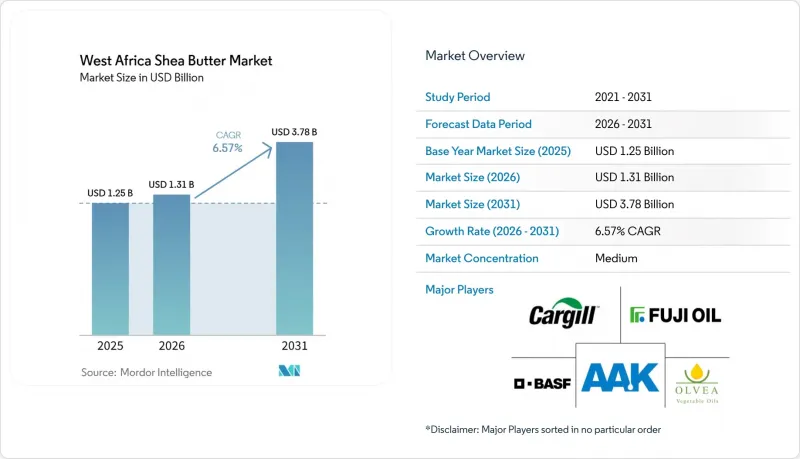
Mordor Intelligence에 의하면, 서아프리카의 시어버터 시장 규모는 2025년에 12억 5,000만 달러로 평가되었고, 2026년 13억 1,000만 달러에서 2031년까지 37억 8,000만 달러에 이를 것으로 예측되며, 예측 기간(2026-2031년) CAGR은 6.57%를 나타낼 전망입니다.
본 보고서는 유형별(생/미정제, 정제, 분획) 및 용도별(식품 및 음료, 화장품 및 퍼스널케어, 의약품, 산업용)로 분류되어 있습니다. 시장 전망은 금액(달러) 기준으로 제시되어 있습니다.
서아프리카의 시어버터 시장 동향 및 인사이트
클린 라벨 및 식물 유래 미용 제형의 확대
서아프리카 시어버터 시장은 스킨케어 및 헤어케어 브랜드들이 더욱 간결한 성분 목록과 식물 유래 원료로의 전환을 꾸준히 추진하고 있는 데서 혜택을 보고 있습니다. 유럽 및 북미의 바이어들이 시어버터 사용량을 늘리고 있는 이유는 미정제 원료에 트리테르펜 알코올, 토코페롤, 페놀 화합물이 포함되어 있어, 이들이 완제품의 보습 효과와 항염증 작용을 뒷받침하기 때문입니다. 따라서 브랜드가 기능적 성능과 천연 성분이라는 스토리 모두를 추구할 경우, 미정제 시어버터를 동등한 비용으로 합성 보습제로 대체하는 것은 어렵습니다. 또한, 이러한 변화는 구매 행동에도 영향을 미치고 있습니다. 각 브랜드가 표준적인 범용 등급의 원료가 아닌, 인증을 받고 추적 가능성이 확보된 공급을 요구하고 있기 때문에 일반 시장에서의 입수 가능성이 낮아지고, 계약에 기반한 조달 프로그램이 우선시되고 있습니다. 그 결과, 서아프리카 시어버터 시장에서는 수량 측면뿐만 아니라 지속가능성과 조달에 관한 명확한 실적을 갖춘 프리미엄 등급에 대한 수요도 증가하고 있습니다.
제과 및 식품 가공 분야의 코코아 버터 대체재 수요
서아프리카의 시어버터 시장은 제과 및 식품 가공 분야에서 시어 유래 코코아 버터 대체재의 부상에 의해서도 뒷받침되고 있습니다. 서아프리카의 코코아 공급 부족으로 인해 2024년과 2025년에 코코아 버터 가격이 급등하자, 각 제조업체들은 식감 및 제품 품질을 유지할 수 있는 기술적으로 신뢰할 수 있는 대체재를 찾아야만 했습니다. 『Food Biophysics』지에 게재된 연구에 따르면, 시어버터와 스테아린의 혼합물은 대체 비율을 적절히 조절함으로써 고형 지방 함량과 관능적 특성을 유지할 수 있는 것으로 나타났으며, 이는 초콜릿 용도에서의 더 대규모 상업적 활용을 뒷받침합니다. 또한, 2024년 7월 FDA가 시어스테아린에 대해 GRAS ‘무의문(No Question)’ 서한을 발급함에 따라 이러한 수요 전망은 더욱 확고해졌습니다. 이를 통해 오랜 공백기를 거쳐 북미 식품 용도 분야에서 규제 하의 성장 길이 다시 열리게 되었습니다. 서아프리카의 시어버터 시장은 식품 등급 기준에 따라 정제 및 분획 등급, 특히 스테아린을 생산할 수 있는 가공업체들의 이러한 변화로 인해 가장 큰 혜택을 보고 있습니다.
생 견과류 수출 규제가 무역 흐름을 혼란스럽게 하고 있습니다.
서아프리카의 시어버터 시장은 일부 국가에서 생너트 수출 규제 확대가 현지 가공 능력을 앞지르는 속도로 진행되고 있어 단기적인 혼란에 직면해 있습니다. 나이지리아의 수출 금지 조치는 이러한 주요 문제를 여실히 보여주고 있습니다. 이 정책은 국내 가공을 지원하기 위한 것이었으나, 조기 시행으로 인해 수확기에 많은 수집업자들이 즉시 구매자를 찾지 못하게 되었기 때문입니다. 이로 인해 기존에는 유연한 견과류 조달에 의존하며 지역 밖에서 가공을 진행하던 국제 바이어들에게 조달 리스크가 높아지고 있습니다. 또한, 구매자들은 공개 시장에서 견과류를 구매하는 대신 버터 공급을 위한 장기 계약을 필요로 하게 되었기 때문에 운전 자본 수요도 증가하고 있습니다. 서아프리카의 시어버터 시장은 새로운 추출 및 정제 능력이 현지 수확량의 더 큰 비율을 실시간으로 흡수할 수 있게 될 때까지 이러한 압박에 계속 노출될 것입니다.
부문 분석
2025년, 생·미정제 시어버터는 시장 가치의 58.42%를 차지했으며, 서아프리카의 시어버터 시장에서 가장 큰 카테고리가 되었습니다. 이러한 선두 위상은 고도의 가공 과정을 거치면 감소하게 되는 보습 효과, 항산화 효과 및 피부 장벽 기능을 유지하기 위해 완전한 비비누화 성분 구성을 요구하는 화장품 구매자들의 지속적인 수요를 반영한 것입니다. 정제 제품 또한 가장 빠르게 성장하는 유형으로, 서아프리카의 시어버터 시장에서 이 부문의 규모는 2031년까지 연평균 성장률(CAGR) 8.21%로 확대될 것으로 예측됩니다. 이러한 규모와 성장의 조합은 구매자들이 미정제 시어버터를 대량으로 사용되는 원료인 동시에, 천연 유래라는 포지셔닝과 추적 가능한 조달이 결합된 프리미엄 원료로 인식하고 있음을 보여줍니다.
정제 시어버터는 완전한 천연 성분 프로파일보다는 색상, 향, 식품 등급의 일관성이 중시되는 용도에 적합합니다. 따라서 제과류, 중성 화장품 베이스, 그리고 대규모 배치 전체에서 기술적 성능을 안정적으로 유지해야 하는 기타 용도에서 그 중요성은 여전히 높습니다. 분획 시어버터는 코코아 버터 대체 제형에서 스테아린이 더욱 적극적으로 사용되기 시작했고, 또한 발표된 연구를 통해 관리된 배합 비율에서의 기능적 적합성이 입증됨에 따라 그 중요성이 커지고 있습니다. 따라서 서아프리카의 시어버터 시장은 부가가치가 낮은 원료를 해외로 수출하는 대신, 산지 근처에서 추출, 정제, 분획 처리를 수행할 수 있는 가공업체에게 더 큰 가치를 창출하고 있습니다.
기타 혜택 :
- 엑셀 형식 시장 예측(ME) 시트
- 3개월간의 애널리스트 지원
자주 묻는 질문
목차
제1장 서론
제2장 조사 방법
제3장 주요 요약
제4장 시장 구도
제5장 시장 규모 및 성장 예측
제6장 경쟁 구도
제7장 시장 기회 및 향후 전망
AJY 26.08.07According to Mordor Intelligence, the west Africa shea butter market size was valued at USD 1.25 billion in 2025 and is estimated to grow from USD 1.31 billion in 2026 to reach USD 3.78 billion by 2031, at a CAGR of 6.57% during the forecast period (2026-2031).
This report is Segmented by Type (raw/Unrefined, Refined, and Fractionated), Application (food and Beverages, Cosmetics and Personal Care, Pharmaceuticals, and Industrial). The Market Forecasts are Provided in Terms of Value (USD).
West Africa Shea Butter Market Trends and Insights
Expansion Of Clean-Label And Plant-Based Beauty Formulations
The West Africa Shea Butter market is benefiting from a steady move by skincare and haircare brands toward simpler ingredient lists and plant-based inputs. Buyers in Europe and North America are using more shea butter because unrefined material retains triterpene alcohols, tocopherols, and phenolic compounds that support moisturization and anti-inflammatory performance in finished products. This makes unrefined shea harder to replace at the same cost with synthetic emollients when brands want both functional performance and a natural ingredient story. The shift is also changing buying behavior because brands are now asking for certified and traceable supply rather than standard commodity-grade material, which reduces open-market availability and favors contracted sourcing programs. The West Africa Shea Butter market is therefore seeing stronger demand not only for volume, but also for premium grades that carry clear sustainability and sourcing credentials.
Cocoa Butter Equivalent Demand In Confectionery And Food Processing
The West Africa Shea Butter market is also being supported by the rise in shea-based cocoa butter equivalents in confectionery and food processing. Cocoa supply stress in West Africa lifted cocoa butter prices sharply in 2024 and 2025, which pushed manufacturers to look for technically reliable alternatives that could hold texture and product quality. Research published in Food Biophysics showed that shea butter stearin blends can maintain solid fat content and sensory properties at controlled substitution ratios, which supports larger commercial use in chocolate applications. The FDA strengthened this demand path when it issued a GRAS "No Questions" letter in July 2024 for shea stearin, which reopened a regulated growth path in North American food use after a long gap. The West Africa Shea Butter market is gaining most from this shift in processors that can produce refined and fractionated grades, especially stearin, at food-grade standards.
Raw Nut Export Restrictions Disrupting Trade Flows
The West Africa Shea Butter market is facing short-term disruption because raw nut export restrictions are moving faster than local processing capacity in several countries. Nigeria's export ban shows the main problem clearly because the policy was meant to support domestic processing, but early implementation left many collectors with fewer immediate buyers during the harvest season. This raises procurement risk for international buyers that used to depend on flexible nut purchases and then process material outside the region. It also raises working capital needs because buyers now need longer-term contracts for butter supply instead of open-market nut purchases. The West Africa Shea Butter market will remain exposed to this pressure until new extraction and refining capacity can absorb a larger share of local harvests in real time.
Other drivers and restraints analyzed in the detailed report include:
- Processing Localization And Value Retention In Origin Markets
- Traceability Premium For Certified West African Supply
- Seasonal Supply Tightness And Long Shea Tree Maturity Cycles
For complete list of drivers and restraints, kindly check the Table Of Contents.
Segment Analysis
Raw and unrefined shea butter held 58.42% of market value in 2025, which made it the largest type in the West Africa Shea Butter market. This lead reflects sustained demand from cosmetics buyers that want the full unsaponifiable profile because it supports emollient, antioxidant, and skin barrier functions that are reduced by heavier processing. Refined material is also the fastest-growing type, with the West Africa Shea Butter market size for this segment projected to rise at an 8.21% CAGR through 2031. This combination of scale and growth shows that buyers are treating unrefined shea as both a volume material and a premium ingredient linked to natural positioning and traceable sourcing.
Refined shea butter serves applications where color, odor, and food-grade consistency matter more than a full natural profile. That keeps it relevant in confectionery, neutral cosmetic bases, and other uses where technical performance must remain stable across large batches. Fractionated shea has become more important because stearin is being used more actively in cocoa butter equivalent formulations, and published research supports its functional compatibility at controlled blend ratios. The West Africa Shea Butter market is therefore creating more value for processors that can handle extraction, refining, and fractionation close to origin rather than shipping lower-value raw material abroad.
Complete Report Scope:
- By Type
- Raw / Unrefined
- Refined
- Fractionated (stearin, olein)
- By Application
- Food and Beverages
- Cosmetics and Personal Care
- Pharmaceuticals
- Industrial (bio-lubes, candles, etc.)
List of Companies Covered in this Report:
- AAK AB
- Cargill, Incorporated
- Bunge Global SA
- Fuji Oil Holdings Inc.
- Olvea Group
- Savannah Fruits Company
- BASF SE
- Croda International Plc
- Clariant AG
- SOPHIM S.A.
- Ghana Nuts Company Ltd.
- Gombella Integrated Services Ltd.
- Manorama Industries Limited
- All Organic Treasures GmbH
- Shea Radiance LLC
- Suru Chemicals and Pharmaceuticals Pvt. Ltd.
- Natural Sourcing, LLC
- TegaGold Resources
- Right Shea Ltd.
- Pure Origins Ghana
Additional Benefits:
- The market estimate (ME) sheet in Excel format
- 3 months of analyst support
TABLE OF CONTENTS
1 INTRODUCTION
- 1.1 Study Assumptions & Market Definition
- 1.2 Scope of the Study
2 RESEARCH METHODOLOGY
3 EXECUTIVE SUMMARY
4 MARKET LANDSCAPE
- 4.1 Market Overview
- 4.2 Market Drivers
- 4.2.1 Expansion of Clean-Label and Plant-Based Beauty Formulations
- 4.2.2 Cocoa Butter Equivalent Demand in Confectionery and Food Processing
- 4.2.3 Traceability Premium for Certified West African Supply
- 4.2.4 Processing Localization and Value Retention in Origin Markets
- 4.2.5 Preference for sustainable and ethically sourced raw materials
- 4.2.6 Improved pit-fermentation & mechanised presses boosting supply quality
- 4.3 Market Restraints
- 4.3.1 Seasonal Supply Tightness and Long Shea Tree Maturity Cycles
- 4.3.2 Raw Nut Export Restrictions Disrupting Trade Flows
- 4.3.3 Quality Inconsistency and Adulteration in Fragmented Collection Networks
- 4.3.4 High Compliance Cost for Organic, Fairtrade, and Food-Safety Standards
- 4.4 Supply Chain Analysis
- 4.5 Regulatory Landscape
- 4.6 Technological Outlook
- 4.7 Porter's Five Forces
- 4.7.1 Threat of New Entrants
- 4.7.2 Bargaining Power of Buyers/Consumers
- 4.7.3 Bargaining Power of Suppliers
- 4.7.4 Threat of Substitute Products
- 4.7.5 Intensity of Competitive Rivalry
5 MARKET SIZE AND GROWTH FORECASTS (VALUE)
- 5.1 By Type
- 5.1.1 Raw / Unrefined
- 5.1.2 Refined
- 5.1.3 Fractionated (stearin, olein)
- 5.2 By Application
- 5.2.1 Food and Beverages
- 5.2.2 Cosmetics and Personal Care
- 5.2.3 Pharmaceuticals
- 5.2.4 Industrial (bio-lubes, candles, etc.)
6 COMPETITIVE LANDSCAPE
- 6.1 Market Concentration
- 6.2 Strategic Moves
- 6.3 Market Ranking Analysis
- 6.4 Company Profiles (includes Global level Overview, Market level overview, Core Segments, Financials as available, Strategic Information, Market Rank/Share for key companies, Products & Services, and Recent Developments)
- 6.4.1 AAK AB
- 6.4.2 Cargill, Incorporated
- 6.4.3 Bunge Global SA
- 6.4.4 Fuji Oil Holdings Inc.
- 6.4.5 Olvea Group
- 6.4.6 Savannah Fruits Company
- 6.4.7 BASF SE
- 6.4.8 Croda International Plc
- 6.4.9 Clariant AG
- 6.4.10 SOPHIM S.A.
- 6.4.11 Ghana Nuts Company Ltd.
- 6.4.12 Gombella Integrated Services Ltd.
- 6.4.13 Manorama Industries Limited
- 6.4.14 All Organic Treasures GmbH
- 6.4.15 Shea Radiance LLC
- 6.4.16 Suru Chemicals and Pharmaceuticals Pvt. Ltd.
- 6.4.17 Natural Sourcing, LLC
- 6.4.18 TegaGold Resources
- 6.4.19 Right Shea Ltd.
- 6.4.20 Pure Origins Ghana


