
|
시장보고서
상품코드
2100507
인도의 약물 전달 기기 시장 : 시장 점유율 분석, 업계 동향 및 통계, 성장 예측(2026-2031년)India Drug Delivery Devices - Market Share Analysis, Industry Trends & Statistics, Growth Forecasts (2026 - 2031) |
||||||
 Mordor Intelligence
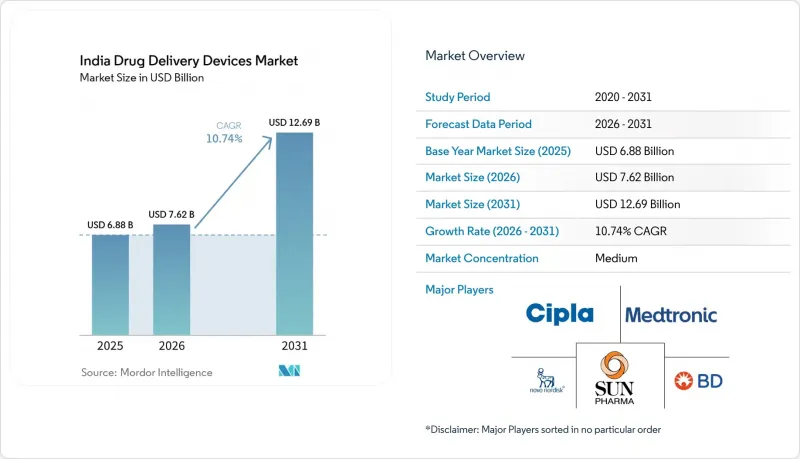
Mordor Intelligence에 의하면, 인도의 약물 전달 기기 시장 규모는 2025년에 68억 8,000만 달러로 평가되었고, 2026년 76억 2,000만 달러에서 2031년까지 126억 9,000만 달러에 이를 것으로 예측되며, 예측 기간(2026-2031년) CAGR은 10.74%를 나타낼 전망입니다.
본 보고서는 기기 유형별(주사용 투여 기기, 흡입용 투여 기기, 주입 펌프, 기타), 투여 경로별(주사, 흡입, 경피, 기타), 적응증별(암, 심혈관 질환, 당뇨병, 기타), 최종 사용자별(병원, 외래수술센터(ASC), 기타)로 분류되어 있습니다. 시장 규모 및 전망은 금액(달러) 기준으로 제시되어 있습니다.
인도의 약물 전달 기기 시장 동향 및 인사이트
의료 접근성을 지원하는 정부의 이니셔티브
2024-2025년도 연방 예산에서 의료에 대한 공공 지출은 8,928억 7,000만 루피로 증가했으며, 2·3급 도시의 1차 진료 및 의료기기 조달에 자금이 투입되었습니다. '2023년 국가 의료기기 정책'에 따른 승인 절차의 간소화로 인해 주사용 및 이식형 시스템의 승인이 가속화되었으며, 기존 소요 기간이 약 3분의 1로 단축되었습니다. 2025년에 설립된 의료기기 수출 촉진 협의회와 더불어, 현지 기업들은 수출 인증 취득을 신속하게 처리하고 시장 진입 지원을 받을 수 있게 되었습니다. 이러한 정책 조치로 인해 준도시 지역 병원에서 합리적인 가격의 자동 주사기 도입이 확대되어, 인도 전체 약물 전달 기기 시장 수요 증가를 뒷받침하고 있습니다. 자금 조달 증가는 임상 검증 연구를 더욱 뒷받침하며, 국내 신제품이 국제 기준을 충족하도록 보장합니다.
바이오시밀러 등 비용 대비 효과가 높은 의약품에 대한 높은 수요
Biocon과 Dr. Reddy's를 필두로 한 인도의 바이오시밀러 제조업체들은 전용 투여 형태가 필요한 생물학적 제제의 저비용 버전을 출시했습니다. Biocon의 릴라글루티드 제네릭은 2024년에 승인되어, 다회 투여 요법에 맞추어 설계된 재사용형 펜의 판매량 증가로 이어졌습니다. 또한 15종의 펩타이드 제제가 곧 승인될 예정인 만큼, 가정 환경에서 피하 투여가 가능한 소형 자동 주사기에 대한 수요가 급증하고 있습니다. 특히 도시 지역에서의 보급이 두드러지며, 임상의들은 총 치료비 절감을 목적으로 바이오시밀러를 처방하기 시작했고, 그 결과 투여 데이터를 전자 차트에 업로드하는 연결형 펜의 보급이 확대되고 있습니다. 바이오시밀러의 성장과 의료기기 혁신 간의 선순환이 인도 약물 투여 기기 시장에서 국내 기업 간의 경쟁을 심화시키고 있습니다.
고액의 본인 부담금이 첨단 이식형 시스템의 보급을 저해하고 있습니다.
인도 의료비 총액의 55%를 여전히 본인부담금이 차지하고 있어, 대당 2,000-5,000달러가 드는 이식형 펌프에 대한 접근이 제한되고 있습니다. 대형 민간 보험사를 제외한 곳에서는 보험 환급이 불충분하기 때문에 많은 환자들이 저비용의 외부 펌프나 기존 주사기를 선택할 수밖에 없는 상황입니다. 그 결과, 도입은 대도시권 병원에 집중되어 있어 인도 약물 전달 기기 시장 전체에 불균형한 분포가 나타나고 있습니다. 정부가 ' 프라단 만트리 잔 아로기야 요자나(Pradhan Mantri Jan Arogya Yojana)’의 적용 범위를 이식형 약물 전달 장치로 확대할 계획은 이러한 제약을 완화할 가능성이 있지만, 농촌 지역의 경제적 부담 격차로 인해 단기적인 보급에는 여전히 한계가 있습니다.
부문 분석
2025년, 인도 약물 투여 기기 시장에서 주사용 투여 기기는 44.30%를 차지했습니다. 이는 당뇨병, 종양학, 면역학 각 부문에서 펜형 주사기, 자동 주사기, 안전 주사기에 대한 수요가 높음을 반영합니다. 프리필드 주사기는 취급 실수를 최소화하며, 스프링식 자동 주사기는 특히 손재주가 부족한 고령 환자에게 자가 투여를 용이하게 합니다. 바이오시밀러의 수용이 확대됨에 따라 데드 스페이스가 적은 주사기 형태나 재사용형 펜형 플랫폼에 대한 수요가 증가하고 있습니다. 병원이 여전히 최대 고객이지만, 약국을 통한 자가 사용용 기기 조제가 증가하면서 소매 유통 모델을 뒷받침하고 있습니다.
이식형 의료기기는 2031년까지 연평균 성장률(CAGR) 11.62%로 성장할 전망입니다. 티타늄 합금이나 생체 흡수성 폴리머와 같은 소재는 진통제, 경련 완화제, 신경 활성 물질의 서방형 방출을 가능하게 합니다. 심부 뇌 내 펌프는 파킨슨병 및 간질 치료에 유망한 것으로 평가되며, 초기 임상 데이터에서는 증상의 지속적인 조절과 전신 노출 감소가 확인되었습니다. 인도 내 스타트업 기업들은 IIT(인도공과대학)와 협력하여 소형화된 에너지원을 개발하고 있으며, 이는 ‘메이크 인 인디아’ 목표에 부합하는 것입니다. 조달 비용이 낮아짐에 따라, 인도 약물 전달 기기 시장 전체 규모 전망에서 이식형 기기의 매출 점유율은 더욱 높아질 전망입니다.
2025년 시점에서 인도 약물 전달 기기 시장 규모 중 주사제 채널은 49.20%의 점유율을 차지했으며, 이는 경구 투여가 불가능한 생물학적 제제에 의해 뒷받침되고 있습니다. 스마트 펜은 투여 기록을 저장하고 암호화된 기록을 임상의에게 전송함으로써, 복약 순응도 미흡을 조기에 감지할 수 있게 해줍니다. 상변화 포장 등 콜드체인 기술의 혁신으로 라스트 마일 배송 중 제품의 품질이 보장되며, 지리적 공급 범위가 확대되고 있습니다.
비강 투여는 2031년까지 연평균 성장률(CAGR) 11.12%로 확대되고 있습니다. 점막 부착성 젤이나 계면활성제 강화 스프레이는 약물의 흡수를 향상시켜 후각 상피를 통과해 뇌에 도달할 가능성이 있습니다. 주요 부문으로는 편두통, 알츠하이머병, 나아가 무주사 백신 부스터 등이 포함됩니다. 인도 기업들은 막 투과 촉진제의 라이선스를 확보하여 개발 주기를 단축하고 있습니다. 3차 의료기관에서 진행된 파일럿 프로그램 결과, 환자들이 비강 내 요법을 매우 선호하는 것으로 나타났으며, 이에 따라 중추신경계 적응증 분야에서 인도 약물 전달 기기 시장의 향후 점유율 확대가 예상됩니다.
기타 혜택
- 엑셀 형식 시장 예측(ME) 시트
- 3개월간의 애널리스트 지원
자주 묻는 질문
목차
제1장 서론
제2장 조사 방법
제3장 주요 요약
제4장 시장 구도
제5장 시장 규모 및 성장 예측
제6장 경쟁 구도
제7장 시장 기회 및 향후 전망
AJY 26.08.11According to Mordor Intelligence, the India drug delivery devices market size was valued at USD 6.88 billion in 2025 and estimated to grow from USD 7.62 billion in 2026 to reach USD 12.69 billion by 2031, at a CAGR of 10.74% during the forecast period (2026-2031).
This report is Segmented by Device Type (Injectable Delivery Devices, Inhalation Delivery Devices, Infusion Pumps, and More), Route of Administration (Injectable, Inhalational, Trandermal and More), and Application (Cancer, Cardiovascular Diseases, Diabetes and More), End User (Hospitals, Ambulatory Surgical Centers and More). The Market and Forecasts are Provided in Terms of Value (USD).
India Drug Delivery Devices Market Trends and Insights
Government Initiatives To Support Healthcare Access
Public spending on health rose to INR 89,287 crore in the 2024-25 Union Budget, channeling capital into primary care and device procurement within Tier 2 and Tier 3 cities. A streamlined approval pathway under the National Medical Devices Policy 2023 now accelerates clearances for injectable and implantable systems, cutting previous timelines by nearly one-third. Coupled with the Export Promotion Council for Medical Devices established in 2025, local firms gain faster export certifications and market entry support. These policy moves have widened adoption of affordable autoinjectors in semi-urban hospitals, fueling incremental demand across the India drug delivery devices market. Increased funding further supports clinical validation studies, ensuring new domestic products meet international standards.
High Demand for Cost-Effective Drugs Such as Biosimilars
Indian biosimilar producers, led by Biocon and Dr. Reddy's, have launched low-cost versions of biologics that require dedicated delivery formats. Biocon's generic liraglutide received clearance in 2024, triggering higher volumes of reusable pens designed for multi-dose regimens. As 15 additional peptide formulations near approval, demand has surged for compact autoinjectors configured for subcutaneous delivery in home settings. Urban adoption is especially strong, where clinicians now prescribe biosimilars to lower total treatment expenses, thereby expanding penetration of connected pens that upload dosing data to electronic medical records. The virtuous cycle between biosimilar growth and device innovation strengthens competitiveness of domestic firms in the India drug delivery devices market.
High Out-of-Pocket Spending Restricting Adoption of Advanced Implantable Systems
Out-of-pocket payments still make up 55% of India's total health expenditure, limiting access to implantable pumps that cost USD 2,000-5,000 each. Reimbursement remains patchy outside large private insurers, pushing many patients toward lower-cost external pumps or conventional syringes. Uptake therefore concentrates in metro hospitals, creating uneven distribution across the India drug delivery devices market. Government plans to expand Pradhan Mantri Jan Arogya Yojana coverage to implantable drug platforms could ease this constraint, yet short-term adoption remains capped by affordability gaps in rural districts.
Other drivers and restraints analyzed in the detailed report include:
- High Burden of Chronic and Infectious Diseases Coupled with Aging Population
- Government and Market Players Initiatives for Boosting Domestic Manufacturing of Medical Devices
- Regulatory Uncertainty Around Classification of Combination Products Causing Approval Delays
For complete list of drivers and restraints, kindly check the Table Of Contents.
Segment Analysis
Injectable delivery devices represented 44.30% of the India drug delivery devices market in 2025, reflecting high demand for pens, autoinjectors, and safety syringes across diabetes, oncology, and immunology care. Prefilled syringes minimize handling errors, while spring-loaded autoinjectors improve self-administration, particularly for aging patients who face dexterity challenges. Growing acceptance of biosimilars has expanded volume requirements for low-dead-space syringe formats and reusable pen platforms. Hospitals remain the largest customers, yet pharmacies increasingly dispense self-use devices, spurring retail distribution models.
Implantable devices are on track for a 11.62% CAGR to 2031. Materials such as titanium alloys and bioresorbable polymers provide controlled release for analgesics, antispasmodics, and neuroactive compounds. Deep-brain pumps demonstrate promise for Parkinson's and epilepsy, with early clinical data showing sustained symptom control and lower systemic exposure. Domestic startups collaborate with IITs to refine miniaturized energy sources, aligning with Make-in-India objectives. As procurement costs fall, implantables will capture higher revenue share within the broader India drug delivery devices market size projections.
The injectable route held a 49.20% share of the India drug delivery devices market size in 2025, supported by biologicals that cannot be delivered orally. Smart pens store dosing logs, forwarding encrypted records to clinicians, and enable early detection of non-adherence. Cold-chain innovations, such as phase-change packaging, safeguard product integrity during last-mile delivery, widening geographic reach.
Nasal delivery is moving at an 11.12% CAGR through 2031. Mucoadhesive gels and surfactant-enhanced sprays improve drug absorption and can traverse the olfactory epithelium to reach the brain. Focus areas include migraine, Alzheimer's, and even needle-free vaccine boosters. Indian firms license membrane-permeation enhancers, shortening development cycles. Pilot programs in tertiary hospitals show strong patient preference for nasal therapies, likely to boost future India drug delivery devices market share in central nervous system indications.
Complete Report Scope:
- By Device Type
- Injectable Delivery Devices
- Inhalation Delivery Devices
- Infusion Pumps
- Transdermal Patches
- Implantable Drug Delivery Systems
- Ocular Inserts and Delivery Implants
- Nasal & Buccal Delivery Devices
- By Route of Administration
- Injectable
- Inhalation
- Transdermal
- Oral Mucosal (Buccal and Sublingual)
- Ocular
- Nasal
- By Application
- Cancer
- Cardiovascular Diseases
- Diabetes
- Respiratory and Infectious Diseases
- Neurological Disorders
- Others
- By End User
- Hospitals
- Ambulatory Surgical Centers
- Home Healthcare Settings
- Clinics and Others
List of Companies Covered in this Report:
- Sanofi
- Becton, Dickinson and Company (BD) India
- Cipla
- Novo Nordisk India Pvt Ltd
- Sun Pharmaceuticals Industries
- Biocon Ltd
- Dr. Reddy's Laboratories Ltd
- Lupin
- Meril Life Sciences
- Zydus Lifesciences Ltd
- Medtronic
- Terumo India Pvt Ltd
- Baxter India Pvt Ltd
- B. Braun Medical (India) Pvt Ltd
- Ysomed
- Bayer
- Pfizer Ltd (India)
- Johnson & Johnson Pvt Ltd (Janssen)
- Roche Products (India) Pvt Ltd
- Abbott India Ltd
Additional Benefits:
- The market estimate (ME) sheet in Excel format
- 3 months of analyst support
TABLE OF CONTENTS
1 Introduction
- 1.1 Study Assumptions and Market Definition
- 1.2 Scope of the Study
2 Research Methodology
3 Executive Summary
4 Market Landscape
- 4.1 Market Overview
- 4.2 Market Drivers
- 4.2.1 Government Initiatives To Support Healthcare Access
- 4.2.2 High Demand for Cost Effective Drugs Such as Biosimiliar
- 4.2.3 High Burden of Chrnoic and Infectious Diseases Coupled with Aging Population
- 4.2.4 Government and Market Players Initiatitives for Boosting Domestic Manufacruring of Medical Devices
- 4.2.5 Technological Advancement and Increased Awareness for Smart/ Connected Drug Delivery Devices
- 4.2.6 Rapid Expansion of Home-care and Tele-medicine Models Encouraging Self-administration Devices
- 4.3 Market Restraints
- 4.3.1 High Out-of-Pocket Spending Restricting Adoption of Advanced Implantable Systems
- 4.3.2 Regulatory Uncertainty Around Classification of Combination Products Causing Approval Delays
- 4.3.3 Skilled Healthcare Professional Shortage in Tier-2/3 Cities Impeding Safe Use of Infusion Pumps
- 4.3.4 Fragmented Cold-chain Logistics Limiting Reach of Temperature-Sensitive Injectable Devices
- 4.4 Value / Supply-Chain Analysis
- 4.5 Regulatory and Technological Outlook
- 4.6 Porter's Five Forces Analysis
- 4.6.1 Threat of New Entrants
- 4.6.2 Bargaining Power of Buyers/Consumers
- 4.6.3 Bargaining Power of Suppliers
- 4.6.4 Threat of Substitute Products
- 4.6.5 Intensity of Competitive Rivalry
5 Market Size and Growth Forecasts (Value-USD)
- 5.1 By Device Type
- 5.1.1 Injectable Delivery Devices
- 5.1.2 Inhalation Delivery Devices
- 5.1.3 Infusion Pumps
- 5.1.4 Transdermal Patches
- 5.1.5 Implantable Drug Delivery Systems
- 5.1.6 Ocular Inserts and Delivery Implants
- 5.1.7 Nasal & Buccal Delivery Devices
- 5.2 By Route of Administration
- 5.2.1 Injectable
- 5.2.2 Inhalation
- 5.2.3 Transdermal
- 5.2.4 Oral Mucosal (Buccal and Sublingual)
- 5.2.5 Ocular
- 5.2.6 Nasal
- 5.3 By Application
- 5.3.1 Cancer
- 5.3.2 Cardiovascular Diseases
- 5.3.3 Diabetes
- 5.3.4 Respiratory and Infectious Diseases
- 5.3.5 Neurological Disorders
- 5.3.6 Others
- 5.4 By End User
- 5.4.1 Hospitals
- 5.4.2 Ambulatory Surgical Centers
- 5.4.3 Home Healthcare Settings
- 5.4.4 Clinics and Others
6 Competitive Landscape
- 6.1 Market Concentration
- 6.2 Strategic Moves
- 6.3 Market Share Analysis
- 6.4 Company profiles (includes Global level Overview, Market level overview, Core Segments, Financials as available, Strategic Information, Market Rank/Share for key companies, Products and Services, and Recent Developments)
- 6.4.1 Sanofi
- 6.4.2 Becton, Dickinson and Company (BD) India
- 6.4.3 Cipla Ltd
- 6.4.4 Novo Nordisk India Pvt Ltd
- 6.4.5 Sun Pharmaceutical Industries Ltd
- 6.4.6 Biocon Ltd
- 6.4.7 Dr. Reddy's Laboratories Ltd
- 6.4.8 Lupin Ltd
- 6.4.9 Meril Life Sciences
- 6.4.10 Zydus Lifesciences Ltd
- 6.4.11 Medtronic Plc
- 6.4.12 Terumo India Pvt Ltd
- 6.4.13 Baxter India Pvt Ltd
- 6.4.14 B. Braun Medical (India) Pvt Ltd
- 6.4.15 Ysomed
- 6.4.16 Bayer Pharmaceuticals India Ltd
- 6.4.17 Pfizer Ltd (India)
- 6.4.18 Johnson & Johnson Pvt Ltd (Janssen)
- 6.4.19 Roche Products (India) Pvt Ltd
- 6.4.20 Abbott India Ltd
7 Market Opportunities and Future Outlook
- 7.1 White-space and Unmet-Need Assessment