

|
시장보고서
상품코드
2113639
스페인의 치과용 기기 : 시장 점유율 분석, 업계 동향 및 통계, 성장 예측(2026-2031년)Spain Dental Devices - Market Share Analysis, Industry Trends & Statistics, Growth Forecasts (2026 - 2031) |
||||||
 Mordor Intelligence
Mordor Intelligence에 의하면, 스페인 치과 기기 시장 규모는 2025년 2억 9,847만 달러에서 2026년에는 3억 856만 달러에 이르고, 2026-2031년 CAGR 3.38%로 성장을 지속하여 2031년까지 3억 6,442만 달러에 달할 것으로 예측됩니다.
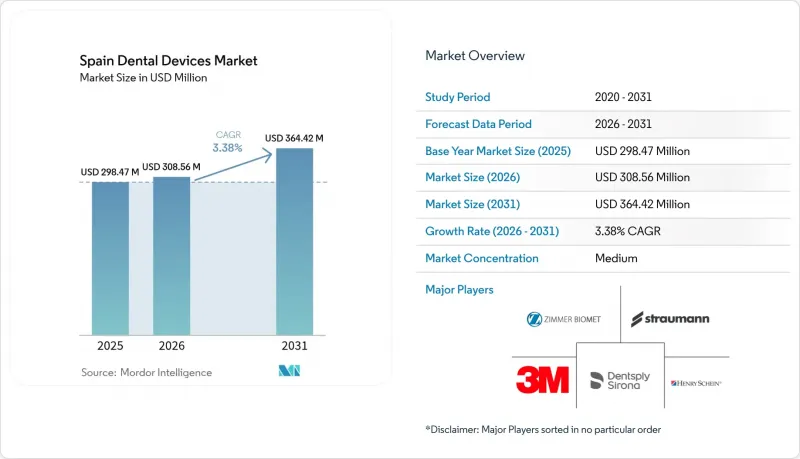
본 보고서는 제품 유형(일반 및 진단 기기, 치과용 소모품, 기타 치과 기기), 치료 분야(교정치과, 치내 치료, 치주질환, 보철 치과), 그리고 최종 사용자(병원, 클리닉, 기타 최종 사용자)별로 분류되어 있습니다. 본 보고서에서는 상기 각 부문 시장 규모(백만 달러)를 제시하고 있습니다.
스페인 치과 기기 시장 동향 및 인사이트
급속한 고령화가 진행되고 있는 스페인 인구가 보철 치료 수요를 끌어올리고 있습니다.
스페인의 65세 이상 인구는 2025년에 전체 인구의 20.2%를 나타낼 것이며, 2035년까지 26.5%를 넘어설 것으로 전망됩니다. 이 연령대는 젊은 층에 비해 여러 치아에 대한 보철 치료를 받는 빈도가 3.2배 더 높으며, 이로 인해 밀링 머신 및 구강 내 스캐너의 사용이 증가하고 있습니다. 임플란트 및 브릿지 치료는 이미 전체 치과 치료의 33.50%를 차지하고 있으며, 고령 인구가 주민의 25% 이상의 지역(아스투리아스 주 및 카스티야-레온 주)에서는 CAD/CAM 시스템 도입이 가장 빠르게 진행되고 있습니다. 노인 의료를 전문으로 하는 치과에서는 2024년부터 2025년에 걸쳐 설비 투자액이 18% 증가한 것으로 보고되었습니다. 보철 워크플로우와 체어사이드 3D 프린팅을 결합한 솔루션을 제공하는 업체는 납기 기간을 단축하고 치과 기공소에 의뢰하는 비용을 절감할 수 있어 지지를 얻고 있습니다.
아동 및 사회적 취약 계층 성인을 대상으로 한 공적 치과 의료 보험 확대
국가 구강 보건 계획은 2022년부터 2024년에 걸쳐 총 1억 8,000만 유로의 자금을 확보하여 공공 진료소에서의 진단 및 예방 치료를 우선시하고 있습니다. 이러한 지출로 인해 2024년에는 해당 시설의 연간 환자 수가 약 17% 증가했으며, 파노라마 X선 장비와 기본 치료용 치과 의자에 대한 수요가 높아졌습니다. 안달루시아나 카탈루냐와 같은 조기 도입 지역에서는 중앙 일괄 입찰을 통해 일괄 발주를 진행하여, 장비 가격을 12-18% 할인된 가격에 조달했습니다. 공공 의료 기관에서는 총 소유 비용이 낮고 내구성이 뛰어난 장비를 선호하기 때문에 공급업체들은 보증 기간 연장에 나서고 있습니다. 2027년까지 기본적인 치과 서비스 이용률은 인구의 72%에서 85%로 상승할 것으로 예측됩니다.
EU-MDR 준수 주기가 구형 장비 교체를 촉진
2024년 5월 유럽 의료기기 규정(MDR) 인증 마감에 따라, 스페인의 치과 장비에 대한 설비 투자액은 전년 대비 22% 급증했습니다. 구강 내 카메라 및 CBCT 장치와 같은 클래스 IIa 및 IIb 의료기기는 더욱 엄격한 증거 요건에 직면하여 신청의 11%가 기각됨에 따라 기기 교체가 불가피했습니다. 진료소에서는 서비스 중단을 피하기 위해 업그레이드를 가속화했으며, 규정 준수를 유지하기 위해 원격 펌웨어 업데이트가 가능한 시스템을 선호했습니다. 각 제조업체는 공인 대리점에 기술 문서 및 안전성 감시 보고서 관리 권한을 부여하고 있으며, 이는 사후 지원을 원하는 구매자에게 안심할 수 있는 요소가 되고 있습니다. 2026년까지 도입된 기기가 규정을 완전히 준수하게 되면 수요는 정상화될 것으로 예측됩니다.
부문 분석
2025년, 치료용 기기는 스페인 치과 의료기기 시장 점유율의 48.02%를 차지하여, 일상적인 시술 및 수익 창출에 중요한 역할을 하고 있음을 알 수 있습니다. CAD/CAM 시스템은 임상의들이 치과 기공소의 납기 단축을 위해 원내 밀링을 요청함에 따라 연간 도입률이 18% 증가했습니다. 매출의 약 28%를 차지하는 진단 기기는 EU-MDR(의료기기 규정)에 따른 갱신 수요의 혜택을 받아, 특히 구강 외 X선 장치의 수주가 가장 급격하게 증가했습니다. 치과용 소모품은 단가가 낮은 편이지만, 임플란트, 시멘트, 얼라이너의 지속적인 공급에 힘입어 연평균 성장률(CAGR) 3.75%라는 가장 높은 성장이 예상됩니다.
고령자 대상 보험 적용 범위가 확대된 이후, 임플란트 이용이 60.5% 증가했으며, 이는 인상재 및 생체 재료의 안정적인 보충 주기를 뒷받침하고 있습니다. 기기 공급업체들은 현재 장기적인 소모품 계약을 확보하기 위해 임플란트 구매 시 스타터 키트를 동봉하고 있습니다. 이와 동시에, 체어사이드 적층 조형으로 인해 납기 기간이 며칠에서 몇 시간으로 단축됨에 따라 3D 프린팅용 수지에 대한 수요가 증가하고 있습니다. 스페인의 학술 기관에서는 시뮬레이션 블록이나 팬텀 헤드의 조달 빈도가 높아지고 있으며, 이에 따라 소형 기구에 대한 관련 수요도 발생하고 있습니다. 전반적으로, 저침습 수술의 임상 적용 범위가 확대됨에 따라 스페인 치과 기기 시장에서 치료용 기구와 그 소모품은 서로 밀접하게 연계된 성장을 유지할 것으로 확실시되고 있습니다.
기타 혜택:
- 엑셀 형식 시장 예측(ME) 시트
- 3개월간의 애널리스트 지원
자주 묻는 질문
목차
제1장 서론
제2장 조사 방법
제3장 주요 요약
제4장 시장 구도
제5장 시장 규모와 성장 예측
제6장 경쟁 구도
제7장 시장 기회와 향후 전망
LSH 26.08.25According to Mordor Intelligence, the spain dental devices market size is expected to grow from USD 298.47 million in 2025 to USD 308.56 million in 2026 and is forecast to reach USD 364.42 million by 2031 at 3.38% CAGR over 2026-2031.
This report is Segmented by Product Type (General and Diagnostics Equipment, Dental Consumables, and Other Dental Devices), Treatment (Orthodontic, Endodontic, Periodontic, Prosthodontic), and End Users (Hospitals, Clinics, and Other End Users). The Market Provides the Value (in USD Million) for the Above-Mentioned Segments.
Spain Dental Devices Market Trends and Insights
Rapidly Ageing Spanish Population Raising Prosthodontic Demand
Spain's over-65 cohort reached 20.2% of total residents in 2025 and is on track to top 26.5% by 2035. This demographic uses multiple-tooth replacements 3.2 times more often than younger adults, elevating equipment usage for milling machines and intraoral scanners. Implant and bridge procedures already represent 33.50% of all dental treatments, and regions where seniors exceed 25% of inhabitants-Asturias and Castile and Leon-demonstrate the fastest uptake of CAD/CAM systems. Practices specialising in geriatric care reported 18% higher capital spending during 2024-2025. Vendors that bundle prosthetic workflows with chairside 3D printing gain traction because they reduce turnaround time and laboratory fees.
Expansion of Public Oral-Health Coverage for Children & Vulnerable Adults
The national oral-health plan secured total funding of EUR 180 million between 2022 and 2024 and prioritises diagnostics and preventive care in public clinics. Spending boosted annual patient volume in those facilities by near 17% in 2024, which translated into higher demand for panoramic X-ray units and basic treatment chairs. Early adopter regions such as Andalusia and Catalonia placed bulk orders via central tenders that capture equipment discounts of 12-18%. Public centres favour robust devices with low total cost of ownership, prompting suppliers to extend warranty periods. By 2027, basic dental service access is forecast to climb from 72% to 85% of the population.
EU-MDR Compliance Cycle Triggering Replacement of Legacy Equipment
The May 2024 cut-off for European Medical Device Regulation certification drove a 22% year-on-year spike in Spanish capital expenditure on dental equipment. Class IIa and IIb devices such as intraoral cameras and CBCT units faced stricter evidence requirements; 11% of submissions were rejected, forcing replacement purchases. Practices accelerated upgrades to avoid service gaps, favouring systems with remote firmware updates to stay compliant. Manufacturers equipped authorised reps to manage technical files and vigilance reporting, which reassures buyers seeking post-sale support. Demand is expected to normalise once the installed base conforms fully by 2026.
Other drivers and restraints analyzed in the detailed report include:
- Dental-Tourism Inflow Boosting High-End Implant Sales
- Private-Equity Roll-ups of Spanish Clinic Chains Driving Bulk Procurement
- Import Tariffs on Non-EU Devices Inflating End-User Prices
- High Cost of Dental Procedures
For complete list of drivers and restraints, kindly check the Table Of Contents.
Segment Analysis
Therapeutic equipment retained 48.02% of spain dental devices market share in 2025, reflecting its vital role in everyday procedures and revenue generation. CAD/CAM systems posted an 18% annual adoption jump as clinicians demanded in-house milling to cut laboratory turnaround. Diagnostic equipment, which accounted for roughly 28% of revenue, benefited from EU-MDR driven replacement, with extra-oral radiology units showing the sharpest order growth. Dental consumables contributed smaller ticket values yet recorded the fastest 3.75% CAGR outlook, propelled by recurring implants, cements, and aligner supplies.
Growing implant utilisation-up 60.5% since insurance broadened coverage for seniors-supports steady refill cycles for impression materials and biomaterials. Equipment vendors now bundle starter kits with implant purchases to secure long-term consumable contracts. In parallel, 3D printing resins gain traction because chairside additive manufacturing shortens delivery from days to hours. Spain's academic institutes procure simulation blocks and phantom heads at higher cadence, creating adjacent demand for small instruments. Overall, widening clinical indications for minimally invasive surgery ensure that therapeutic tools and their consumables maintain intertwined growth in the spain dental devices market.
Complete Report Scope:
- By Product
- Diagnostics Equipment
- Dental Laser
- Soft Tissue Lasers
- Hard Tissue Lasers
- Radiology Equipment
- Extra Oral Radiology Equipment
- Intra-oral Radiology Equipment
- Dental Chair and Equipment
- Dental Laser
- Therapeutic Equipment
- Dental Hand Pieces
- Electrosurgical Systems
- CAD/CAM Systems
- Milling Equipment
- Casting Machine
- Other Therapeutic Equipments
- Dental Consumables
- Dental Biomaterial
- Dental Implants
- Crowns and Bridges
- Other Dental Consumables
- Other Dental Devices
- Diagnostics Equipment
- By Treatment
- Orthodontic
- Endodontic
- Peridontic
- Prosthodontic
- By End User
- Dental Hospitals
- Dental Clinics
- Academic & Research Institutes
List of Companies Covered in this Report:
- Dentsply Sirona
- Straumann Group
- Envista Holdings (Kerr, Nobel Biocare)
- Align Technology
- Henry Schein
- Planmeca
- 3M ESPE
- GC Corporation
- Ivoclar Vivadent
- Coltene Holding
- VDW GmbH
- Septodont
- Carestream Dental
- Acteon Group
- Bego GmbH
- Zirkonzahn GmbH
- Biotech Dental SAS
- Acteon Group
- Klockner Implant System
- W&H Iberica
Additional Benefits:
- The market estimate (ME) sheet in Excel format
- 3 months of analyst support
TABLE OF CONTENTS
1 Introduction
- 1.1 Study Assumptions & Market Definition
- 1.2 Scope of the Study
2 Research Methodology
3 Executive Summary
4 Market Landscape
- 4.1 Market Overview
- 4.2 Market Drivers
- 4.2.1 Rapidly Ageing Spanish Population Raising Prosthodontic Demand
- 4.2.2 Expansion of Public Oral-Health Coverage for Children & Vulnerable Adults
- 4.2.3 Dental-Tourism Inflow to Boosting High-End Implant Sales
- 4.2.4 Private-Equity Roll-ups of Spanish Clinic Chains Driving Bulk Procurement
- 4.2.5 EU-MDR Compliance Cycle Triggering Replacement of Legacy Equipment
- 4.3 Market Restraints
- 4.3.1 Import Tariffs on Non-EU Devices Inflating End-User Prices
- 4.3.2 High Cost of Dental Procedures
- 4.4 Value / Supply-Chain Analysis
- 4.5 Regulatory & Technological Outlook
- 4.6 Porter's Five Forces
- 4.6.1 Threat of New Entrants
- 4.6.2 Bargaining Power of Suppliers
- 4.6.3 Bargaining Power of Buyers
- 4.6.4 Threat of Substitutes
- 4.6.5 Competitive Rivalry
5 Market Size & Growth Forecasts (Value)
- 5.1 By Product
- 5.1.1 Diagnostics Equipment
- 5.1.1.1 Dental Laser
- 5.1.1.1.1 Soft Tissue Lasers
- 5.1.1.1.2 Hard Tissue Lasers
- 5.1.1.2 Radiology Equipment
- 5.1.1.2.1 Extra Oral Radiology Equipment
- 5.1.1.2.2 Intra-oral Radiology Equipment
- 5.1.1.3 Dental Chair and Equipment
- 5.1.1.1 Dental Laser
- 5.1.2 Therapeutic Equipment
- 5.1.2.1 Dental Hand Pieces
- 5.1.2.2 Electrosurgical Systems
- 5.1.2.3 CAD/CAM Systems
- 5.1.2.4 Milling Equipment
- 5.1.2.5 Casting Machine
- 5.1.2.6 Other Therapeutic Equipments
- 5.1.3 Dental Consumables
- 5.1.3.1 Dental Biomaterial
- 5.1.3.2 Dental Implants
- 5.1.3.3 Crowns and Bridges
- 5.1.3.4 Other Dental Consumables
- 5.1.4 Other Dental Devices
- 5.1.1 Diagnostics Equipment
- 5.2 By Treatment
- 5.2.1 Orthodontic
- 5.2.2 Endodontic
- 5.2.3 Peridontic
- 5.2.4 Prosthodontic
- 5.3 By End User
- 5.3.1 Dental Hospitals
- 5.3.2 Dental Clinics
- 5.3.3 Academic & Research Institutes
6 Competitive Landscape
- 6.1 Market Concentration
- 6.2 Strategic Moves
- 6.3 Market Share Analysis
- 6.4 Company Profiles (includes Global Level Overview, Market Level Overview, Core Segments, Financials as available, Strategic Information, Market Rank/Share, Products & Services, Recent Developments)
- 6.4.1 Dentsply Sirona
- 6.4.2 Straumann Group
- 6.4.3 Envista Holdings (Kerr, Nobel Biocare)
- 6.4.4 Align Technology Inc.
- 6.4.5 Henry Schein Inc.
- 6.4.6 Planmeca Oy
- 6.4.7 3M ESPE
- 6.4.8 GC Corporation
- 6.4.9 Ivoclar Vivadent
- 6.4.10 Coltene Holding AG
- 6.4.11 VDW GmbH
- 6.4.12 Septodont Holding
- 6.4.13 Carestream Dental
- 6.4.14 Acteon Group
- 6.4.15 Bego GmbH
- 6.4.16 Zirkonzahn GmbH
- 6.4.17 Biotech Dental SAS
- 6.4.18 ACTEON Group
- 6.4.19 Klockner Implant System
- 6.4.20 W&H Iberica
7 Market Opportunities & Future Outlook
- 7.1 White-space & Unmet-Need Assessment


