

|
시장보고서
상품코드
2114169
스마트 의료기기 시장 : 시장 점유율 분석, 업계 동향 및 통계, 성장 예측(2026-2031년)Global Smart Medical Devices - Market Share Analysis, Industry Trends & Statistics, Growth Forecasts (2026 - 2031) |
||||||
 Mordor Intelligence
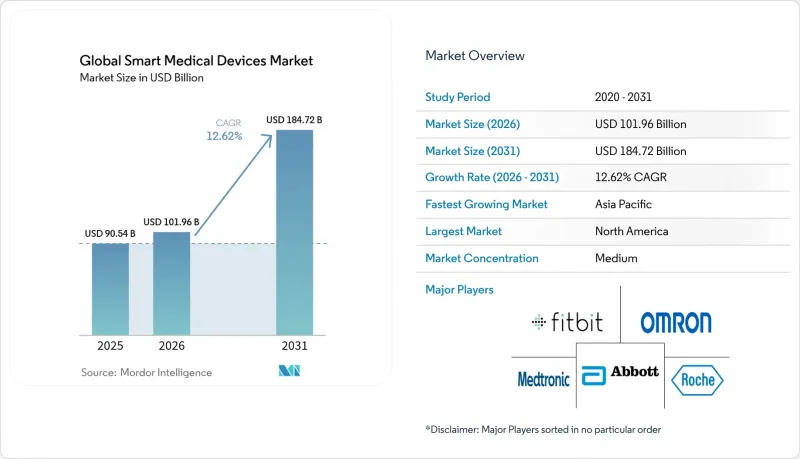
Mordor Intelligence에 의하면, 스마트 의료기기 시장 규모는 2025년에 905억 4,000만 달러로 평가되었고, 2026년 1,019억 6,000만 달러에서 2031년까지 1,847억 2,000만 달러에 이를 것으로 예측되며, 예측 기간(2026-2031년) CAGR은 12.62%를 나타낼 전망입니다.
본 보고서는 제품 유형별(진단·모니터링 기기 및 치료 기기), 최종 사용자별(병원 및 진료소, 재택 간호 환경 등), 연결 방식별(블루투스, Wi-Fi 등), 유통 채널별(오프라인 및 온라인), 그리고 지역별로 분류되어 있습니다. 본 보고서에서는 상기 각 부문별 시장 규모(단위 : 백만 달러)를 제시하고 있습니다.
세계의 스마트 의료기기 시장 동향 및 인사이트
스마트폰 연동형 및 무선 기기의 보급이 급속히 확대
2024년에는 미국 성인의 44.5%가 웨어러블 기기를 소유하게 될 것으로 예상되며, 이는 일상생활에 자연스럽게 녹아드는 모바일 연동형 헬스케어 기기의 매력을 반영하고 있습니다. 현재 기기 제조업체들은 HIPAA 준수 암호화 기능을 사전 설치하고, 데이터를 클라우드 대시보드로 직접 전송함으로써 임상의가 거의 실시간으로 감사할 수 있도록 하고 있습니다. 애플의 FDA 승인 부정맥 추적 기능 및 응급 심장 경보 기능은 소비자용 전자기기 제조업체들이 주류 디자인을 어떻게 임상적 이점으로 전환하고 있는지를 보여줍니다. 이러한 연결형 센서의 주류화로 인해 의료 서비스는 단편적인 진료에서 상시 연결형 모델로 전환되고 있으며, 이는 환자의 참여도를 높이는 동시에 비응급 진료소 방문을 줄이고 있습니다. 보험사들은 입원율 감소를 입증한 스마트 워치를 활용한 심방세동 프로그램에 대한 보험 급여를 시작하고 있으며, 이를 통해 무선 모니터링의 경제적 가치가 입증되고 있습니다.
센서 및 AI 분야의 급속한 기술 발전
미국 식품의약국(FDA)은 2024년 중반까지 801건의 AI 탑재 기기를 승인했으며, 이는 2년 전 승인 건수의 3배에 해당합니다. 메드트로닉(Medtronic)사의 ‘BrainSense Adaptive’ 심부 뇌 자극 장치와 같은 기술은 환자 고유의 신경 신호를 읽어내어 자극 매개변수를 동적으로 조정함으로써, 배터리 수명을 절약하면서도 파킨슨병의 증상 조절을 개선합니다. 한편, 5G 연결 심전도 패치는 110밀리초 미만의 지연 시간을 실현하고 있으며, 이는 심근 사건이 발생했을 때 자동 응급 출동을 유발하기에 충분한 속도입니다. 또한, 연구 기관에서는 AI 추론과 엣지 에너지 수확을 결합한 만성 통증 치료용 배터리 불필요 초음파 임플란트의 시범 운영도 진행되고 있어, 정기적인 교체 수술이 필요 없게 됩니다. 이러한 발전들이 결합되어 진단 정확도 향상, 시술 시간 단축, 그리고 과거에는 전문 장비가 부족했던 1차 진료 환경으로의 도입 확대가 이루어지고 있습니다.
높은 기기 도입 및 유지 비용
지속 혈당 모니터나 이식형 심장 기기에는 여전히 고액의 초기 비용이 들기 때문에 예산에 제약이 있는 병원에게는 큰 과제가 되고 있습니다. 반도체 부족으로 인해 부품 리드타임이 최장 52주까지 늘어났으며, 이는 부품 원가를 상승시키고 제품 업데이트 주기를 늦추고 있습니다. 의료용 부품은 전 세계 산업용 반도체 수요의 불과 11%만을 차지하기 때문에 파운드리 업체가 소비자용 전자기기를 우선시할 경우 디바이스 제조업체의 협상력은 제한적입니다. 현재 구독 모델에서는 하드웨어, 소프트웨어, 소모품이 월 이용료에 포함되어 있어, 이로 인해 자본 지출이 운영비로 전환됨에 따라 중규모 의료 서비스 제공업체 시장 진입이 용이해지고 있습니다. 그러나 메디케어의 과도기 적용 규칙에 따라, 여전히 환급이 시판 후 증거 연구의 완료와 연계되어 있어 획기적인 의료기기의 수익화가 지연되고 있습니다.
부문 분석
2025년, 스마트 의료기기 시장 점유율의 63.02%를 진단 및 모니터링 기기가 차지했습니다. 이는 연속 혈당 모니터와 심박 리듬 모니터의 임상적 유용성이 입증된 데 기인합니다. DermaSensor와 같은 AI 탑재 피부과용 스캐너는 일반적인 피부암에 대해 96%의 민감도를 보여, 전문의에게의 의뢰를 신속하게 하고 질병의 초기 단계에서 치료를 시작할 수 있게 해줍니다. 부정맥 데이터를 심장 전문의에게 직접 스트리밍하는 이식형 루프 레코더는 환자 고유의 신호 패턴을 학습하여 위양성률을 낮추는 스마트 알림 계층 기능을 갖추게 되었습니다. 원격의료에 대한 보험 급여가 정착되고, 간헐적인 생체 신호 측정이 일상화되는 가운데, 혈압계와 맥박 산소 측정기는 급성기 의료 현장과 재택치료 모두에서 계속해서 수요를 유지하고 있습니다.
치료용 기기는 수익 기반으로는 비교적 소규모이지만, 적응형 투여 및 폐쇄 루프 피드백 기능을 통합하여 인슐린 요법, 신경 조절, 재활 정형외과 분야의 치료 성과를 향상시키고 있습니다. Simplera CGM과 MiniMed 780G 인슐린 펌프의 원활한 통합은 기업이 진단 정보와 자동 치료를 단일 생태계로 통합하는 방법을 보여줍니다. AI가 내장된 척수 자극 장치는 통증의 특징을 실시간으로 분류하여, 임상의가 반복적으로 내원하지 않고도 신호 주파수를 조정할 수 있게 해줍니다. 스마트 보청기는 주변 음향 환경을 분석하여 게인을 즉시 조정합니다. 이 기능 덕분에 복잡한 음향 환경에서도 음성 명료도가 향상되며, 인구 고령화 추세에도 대응하고 있습니다.
2025년 스마트 의료기기 시장 규모 중 병원 및 진료소가 45.74%를 차지했으며, 기존 원격 측정 인프라와 전문 진료팀을 활용하고 있습니다(hhs.gov). 중국의 스마트 병원 청사진에서는 IoT 센서, 자동 조제, AI 분류 알고리즘을 통합된 지휘 센터에 통합하여 관리 업무 소요 시간을 30% 단축하고 있습니다. 미국의 책임의료기관(ACO)에서는 퇴원 시 원격 모니터링 키트를 도입하여 30일 이내 재입원율을 낮추고 있습니다. 이러한 노력을 통해 2024년 프로그램 참가자 전체에서 3억 9,000만 달러의 비용 절감 효과가 확인되었습니다.
재택 간호 분야는 고령화의 진행과 원격 의료에 대한 보험 급여의 균등화로 인해 ‘리모트 퍼스트’ 간호 경로가 확대되며, 13.72%라는 가장 높은 연평균 성장률(CAGR)을 기록하고 있습니다. 호흡 모니터가 내장된 조절 가능한 침대에서 클라우드 대시보드로 데이터가 전송되어, 간호사는 가정 방문 없이도 CPAP 설정을 조정할 수 있습니다. 모바일 심전도 패치를 환자에게 직접 발송함으로써, 기존의 의료용 내구성 기기 도매업체를 거치지 않고 치료 시작을 신속하게 진행하고 있습니다. 외래 진료 센터와 응급 의료 서비스에서도 휴대용 초음파 진단 장치와 혈액가스 분석 장치가 도입되어, 환자가 병원 진료 구역에 도착하기 전에 전자 차트와 동기화되므로 ‘도착부터 처치 시작까지의 시간’이 단축되고 있습니다.
지역별 분석
2025년, 북미는 스마트 의료기기 시장의 43.02%를 차지했습니다. 이는 선진적인 보험 환급 제도에 더해, 공공 부문 조달 및 알고리즘 공정성 감사를 지도하는 AI 전략 계획(hhs.gov)에 힘입은 결과입니다. 2025년 1분기 디지털 헬스 투자 총액은 30억 달러에 달했으며, 이는 대학 부속 의료 센터와 직접 제휴하는 스타트업 액셀러레이터에 투입되었습니다. 캐나다의 ‘범캐나다 AI 헬스 전략’은 주를 초월한 표준 기반 데이터 교환을 추진하고 있는 반면, 멕시코의 의료기기 수출 회랑은 비용 대비 효율이 높은 조립 자원을 제공하는 동시에 USMCA(미국-멕시코-캐나다 협정)에 따라 관세 면제 지위를 유지하고 있습니다.
아시아태평양은 2026-2031년 15.12%라는 가장 높은 연평균 성장률(CAGR)을 기록할 전망입니다. 중국의 ‘트리니티’ 스마트 병원 프로그램은 통합 디지털 등록 시스템과 5G 지원 병상용 단말기 도입을 의무화함으로써, 국가 자금 지원을 환자 처리 능력의 정량적 개선과 연계하고 있습니다. 인도의 ‘아유슈만 바라트 디지털 미션’은 고유 건강 ID를 발급하고 종단적 기록이 가능하도록 함으로써, 의료기기에서 생성된 데이터를 국가 플랫폼으로 통합하는 과정을 간소화하고 있습니다. 일본의 ‘의료 DX’ 이니셔티브는 4,000개 병원에 걸친 전자 건강 기록을 표준화하고, 전국 규모의 온라인 자격 확인을 시작하는 한편, 의료기기의 상호 운용성 프로토콜을 국제적인 FHIR 사양에 부합하도록 하고 있습니다. 싱가포르의 Synapxe는 공공 기관과 지역 진료소를 연계하여 고령자용 낙상 감지 웨어러블 기기의 시범 운영을 진행하고 있으며, 2024년 시범 운영 기간 동안 2,300건의 적시 개입을 가능하게 했습니다.
유럽에서는 의료기기 규정(MDR)의 시판 후 감시 규정과 환자의 신뢰를 높이는 GDPR(EU 개인정보보호규정)의 엄격한 동의 체계 덕분에 꾸준한 도입이 진행되고 있습니다. 각국의 원격 의료 기관은 원격 모니터링 프로그램을 순위별로 평가하고, 그에 따라 인센티브를 배분하는 성과 대시보드를 통합하고 있습니다. 중동 및 아프리카 및 남미는 도입 대수 면에서는 뒤처져 있지만, 인프라 프로젝트를 통한 광대역 네트워크 확대와 민간 보험 상품 증가에 힘입어 두 자릿수 성장을 보이고 있습니다. 개발 은행은 공급의 현지화와 환율 리스크 감소를 목표로 지역 OEM 조립 공장에 우대 대출을 제공합니다.
기타 혜택 :
- 엑셀 형식 시장 예측(ME) 시트
- 3개월간의 애널리스트 지원
자주 묻는 질문
목차
제1장 서론
제2장 조사 방법
제3장 주요 요약
제4장 시장 구도
제5장 시장 규모 및 성장 예측
제6장 경쟁 구도
제7장 시장 기회 및 향후 전망
AJY 26.08.26According to Mordor Intelligence, the smart medical devices market size was valued at USD 90.54 billion in 2025 and estimated to grow from USD 101.96 billion in 2026 to reach USD 184.72 billion by 2031, at a CAGR of 12.62% during the forecast period (2026-2031).
This report is Segmented by Product Type (Diagnostic and Monitoring and Therapeutic Devices), End User (Hospitals/Clinics, Home-Care Setting, and More), by Connectivity (Bluetooth, Wi-Fi, and More), by Distribution Channel (Offline and Online), and Geography. The Market Provides the Value (in USD Million) for the Above Segments.
Global Smart Medical Devices Market Trends and Insights
Smartphone-enabled and Wireless Adoption Surge
Wearable ownership reached 44.5% of U.S. adults in 2024, reflecting the appeal of mobile-paired health devices that fit daily routines . Device makers now preload HIPAA-compliant encryption and deliver data directly to cloud dashboards that clinicians can audit in near real time. Apple's FDA-cleared arrhythmia tracking and emergency cardiac-alert features illustrate how consumer electronics firms translate mainstream design into clinical benefit. This mainstreaming of connected sensors is shifting care from episodic encounters to an always-on model, reinforcing patient engagement and lowering non-urgent clinic visits. Insurers have begun reimbursing smartwatch-driven atrial-fibrillation programs that demonstrate lower hospitalization rates, proving the economic value of wireless monitoring.
Rapid Technological Breakthroughs in Sensors & AI
The U.S. FDA had cleared 801 AI-enabled devices by mid-2024, tripling approvals recorded two years prior. Technologies such as Medtronic's BrainSense Adaptive deep brain stimulation dynamically alter stimulation parameters by reading patient-specific neural signals, improving Parkinson's symptom control while conserving battery life. Meanwhile, 5G-linked ECG patches deliver latency below 110 ms, fast enough to trigger automated emergency dispatches during myocardial events. Research centers are also piloting battery-free ultrasound implants for chronic pain that combine AI inference with edge energy harvesting, eliminating routine replacement surgeries. These advances collectively increase diagnostic accuracy, shorten intervention times and expand deployment to primary-care environments that once lacked specialty equipment.
High Device Acquisition and Maintenance Cost
Continuous glucose monitors and implantable cardiac devices still present high upfront prices that challenge budget-constrained hospitals. Semiconductor shortages have pushed component lead times to as long as 52 weeks, inflating bill-of-materials costs and slowing product refresh cycles . Because medical components represent only 11% of global industrial semiconductor demand, device makers possess limited negotiating leverage when foundries prioritize consumer electronics. Subscription models now bundle hardware, software and consumables into monthly fees that convert capital expense into operating expense, easing entry for mid-sized providers. Yet transitional Medicare coverage rules still link reimbursement to the completion of post-market evidence studies, delaying revenue capture for breakthrough devices.
Other drivers and restraints analyzed in the detailed report include:
- Growing Chronic-Disease Burden
- 5G and Edge-AI for Real-time Remote Diagnostics
- Patient-Data Privacy and Cybersecurity Risk
For complete list of drivers and restraints, kindly check the Table Of Contents.
Segment Analysis
Diagnostic and monitoring devices accounted for 63.02% of the smart medical devices market share in 2025, a lead built on the proven clinical utility of continuous glucose and cardiac rhythm monitors. AI-enhanced dermatology scanners such as DermaSensor report 96% sensitivity for common skin cancers, speeding specialist referrals and steering treatment earlier in the disease course. Implantable loop recorders that stream arrhythmia data directly to cardiologists now feature smart-alert hierarchies that lower false positives by learning patient-specific signal patterns. Blood-pressure cuffs and pulse oximeters maintain traction in both acute and home settings as telehealth reimbursement normalizes episodic vitals capture.
Therapeutic devices, while representing a smaller revenue base, incorporate adaptive dosing and closed-loop feedback that improve outcomes in insulin therapy, neuromodulation and rehabilitative orthopedics. Simplera CGM's seamless integration with the MiniMed 780G insulin pump shows how firms combine diagnostic insight and automated therapy in one ecosystem. Spinal cord stimulators with onboard AI categorize pain signatures in real time, allowing clinicians to tailor signal frequencies without repeated clinic visits. Smart hearing aids analyze environmental acoustics and adjust gain instantaneously, a feature that elevates speech intelligibility for complex soundscapes and aligns with demographic ageing trends.
Hospitals and clinics represented 45.74% of the smart medical devices market size in 2025, capitalizing on existing telemetry infrastructure and specialized care teams hhs.gov. Smart-hospital blueprints in China integrate IoT sensors, automated drug dispensing and AI triage algorithms within unified command centers that cut administrative task time by 30%. U.S. Accountable Care Organizations deploy remote monitoring kits upon discharge to reduce 30-day readmissions, an initiative shown to save USD 390 million across 2024 program participants.
Home-care settings post the fastest 13.72% CAGR as ageing populations and reimbursement parity for telehealth expand remote-first care pathways. Adjustable beds with embedded respiratory monitors feed data into cloud dashboards where nurses can adjust CPAP settings without a home visit. Direct-to-patient shipment of mobile ECG patches bypasses traditional durable medical-equipment distributors and accelerates therapy initiation. Ambulatory centers and emergency medical services also integrate portable ultrasound and blood-gas analyzers that synchronize to electronic records before the patient reaches the hospital bay, reducing door-to-intervention times.
Complete Report Scope:
- By Product Type
- Diagnostic & Monitoring Devices
- Blood Glucose Monitors
- Continuous Glucose Monitors
- Heart-Rate Monitors
- Pulse Oximeters
- Blood-Pressure Monitors
- Breath Analyzers
- Other Diagnostic & Monitoring
- Therapeutic Devices
- Portable O2 Concentrators & Ventilators
- Insulin Pumps (Traditional, Patch, Smart)
- Hearing Aids (Smart & AI-enabled)
- Smart Orthopedic & Other Therapeutic
- Diagnostic & Monitoring Devices
- By End User
- Hospitals & Clinics
- Home-Care Settings
- Ambulatory & Emergency Services
- Others (Sports Medicine, Military, etc.)
- By Connectivity
- Bluetooth
- Wi-Fi
- Cellular/5G
- LPWAN (NB-IoT, LoRa)
- By Distribution Channel
- Offline (Hospital Pharmacies, Retail)
- Online (e-Commerce, DTC)
- By Geography
- North America
- United States
- Canada
- Mexico
- Europe
- Germany
- United Kingdom
- France
- Italy
- Spain
- Rest of Europe
- Asia-Pacific
- China
- Japan
- India
- Australia
- South Korea
- Rest of Asia-Pacific
- Middle East & Africa
- GCC
- South Africa
- Rest of Middle East & Africa
- South America
- Brazil
- Argentina
- Rest of South America
- North America
Geography Analysis
North America held 43.02% of the smart medical devices market in 2025, supported by advanced reimbursement structures and an AI strategic plan that guides public-sector procurement and algorithmic fairness audits hhs.gov. Digital-health investment totaled USD 3 billion in Q1 2025, channeled into startup accelerators partnering directly with university medical centers. Canada's Pan-Canadian AI Health Strategy promotes standards-based data exchange across provinces, while Mexico's medical-device export corridors supply cost-effective assembly resources and maintain duty-free status under USMCA.
Asia-Pacific registers the steepest 15.12% CAGR between 2026 and 2031. China's Trinity smart-hospital program ties state funding to quantified improvements in patient throughput by mandating integrated digital registries and 5G bedside terminals. India's Ayushman Bharat Digital Mission issues unique health IDs, enabling longitudinal records that simplify device-generated data ingestion into national platforms. Japan's Medical DX initiative standardizes electronic medical records across 4,000 hospitals and launches nationwide online qualification checks, aligning device interoperability protocols to international FHIR specifications. Singapore's Synapxe links public institutions with community clinics, piloting fall-detection wearables for seniors that triggered 2,300 timely interventions during 2024 trials.
Europe remains a steady adopter thanks to the Medical Device Regulation's post-market surveillance rules and GDPR's strict consent frameworks that boost patient trust. National telehealth agencies integrate outcome dashboards that rank remote-monitoring programs and allocate incentives accordingly. Middle East & Africa and South America trail in installed base but show double-digit growth as infrastructure projects extend broadband coverage and private insurance options proliferate. Development banks are channeling concessional finance into regional OEM assembly plants, aiming to localize supply and cut foreign-exchange exposure.
- Abbott Laboratories
- Apple
- Medtronic
- Dexcom
- Roche
- Samsung Electronics
- Fitbit (Google)
- OMRON
- Philips N.V.
- Garmin
- Huawei Technologies
- Xiaomi Corp.
- Resmed
- Masimo
- iRhythm Technologies
- AliveCor
- Senseonics
- Withings
- NeuroMetrix
- Bio-Beat
- Vital Connect
- Otsuka
Additional Benefits:
- The market estimate (ME) sheet in Excel format
- 3 months of analyst support
TABLE OF CONTENTS
1 Introduction
- 1.1 Study Assumptions & Market Definition
- 1.2 Scope of the Study
2 Research Methodology
3 Executive Summary
4 Market Landscape
- 4.1 Market Overview
- 4.2 Market Drivers
- 4.2.1 Smartphone-Enabled & Wireless Adoption Surge
- 4.2.2 Rapid Technological Breakthroughs In Sensors & Ai
- 4.2.3 Rising Fitness & Wellness Awareness
- 4.2.4 Growing Chronic-Disease Burden (Diabetes, Cvd)
- 4.2.5 5G + Edge-Ai Enabling Real-Time Remote Diagnostics
- 4.2.6 Value-Based Reimbursement Rewarding Continuous Monitoring
- 4.3 Market Restraints
- 4.3.1 High Device Acquisition & Maintenance Cost
- 4.3.2 Patient-Data Privacy & Cybersecurity Risk
- 4.3.3 Reimbursement Lag For Ai-Driven Diagnostic Algorithms
- 4.3.4 Sensor-Grade Semiconductor Supply Chain Bottlenecks
- 4.4 Value / Supply-Chain Analysis
- 4.5 Regulatory Landscape
- 4.6 Technological Outlook
- 4.7 Porter's Five Forces Analysis
- 4.7.1 Threat of New Entrants
- 4.7.2 Bargaining Power of Buyers
- 4.7.3 Bargaining Power of Suppliers
- 4.7.4 Threat of Substitutes
- 4.7.5 Competitive Rivalry
5 Market Size & Growth Forecasts (Value)
- 5.1 By Product Type
- 5.1.1 Diagnostic & Monitoring Devices
- 5.1.1.1 Blood Glucose Monitors
- 5.1.1.2 Continuous Glucose Monitors
- 5.1.1.3 Heart-Rate Monitors
- 5.1.1.4 Pulse Oximeters
- 5.1.1.5 Blood-Pressure Monitors
- 5.1.1.6 Breath Analyzers
- 5.1.1.7 Other Diagnostic & Monitoring
- 5.1.2 Therapeutic Devices
- 5.1.2.1 Portable O2 Concentrators & Ventilators
- 5.1.2.2 Insulin Pumps (Traditional, Patch, Smart)
- 5.1.2.3 Hearing Aids (Smart & AI-enabled)
- 5.1.2.4 Smart Orthopedic & Other Therapeutic
- 5.1.1 Diagnostic & Monitoring Devices
- 5.2 By End User
- 5.2.1 Hospitals & Clinics
- 5.2.2 Home-Care Settings
- 5.2.3 Ambulatory & Emergency Services
- 5.2.4 Others (Sports Medicine, Military, etc.)
- 5.3 By Connectivity
- 5.3.1 Bluetooth
- 5.3.2 Wi-Fi
- 5.3.3 Cellular/5G
- 5.3.4 LPWAN (NB-IoT, LoRa)
- 5.4 By Distribution Channel
- 5.4.1 Offline (Hospital Pharmacies, Retail)
- 5.4.2 Online (e-Commerce, DTC)
- 5.5 By Geography
- 5.5.1 North America
- 5.5.1.1 United States
- 5.5.1.2 Canada
- 5.5.1.3 Mexico
- 5.5.2 Europe
- 5.5.2.1 Germany
- 5.5.2.2 United Kingdom
- 5.5.2.3 France
- 5.5.2.4 Italy
- 5.5.2.5 Spain
- 5.5.2.6 Rest of Europe
- 5.5.3 Asia-Pacific
- 5.5.3.1 China
- 5.5.3.2 Japan
- 5.5.3.3 India
- 5.5.3.4 Australia
- 5.5.3.5 South Korea
- 5.5.3.6 Rest of Asia-Pacific
- 5.5.4 Middle East & Africa
- 5.5.4.1 GCC
- 5.5.4.2 South Africa
- 5.5.4.3 Rest of Middle East & Africa
- 5.5.5 South America
- 5.5.5.1 Brazil
- 5.5.5.2 Argentina
- 5.5.5.3 Rest of South America
- 5.5.1 North America
6 Competitive Landscape
- 6.1 Market Concentration
- 6.2 Market Share Analysis
- 6.3 Company Profiles {(includes Global level Overview, Market level overview, Core Segments, Financials as available, Strategic Information, Market Rank/Share for key companies, Products & Services, and Recent Developments)}
- 6.3.1 Abbott Laboratories
- 6.3.2 Apple Inc.
- 6.3.3 Medtronic PLC
- 6.3.4 Dexcom Inc.
- 6.3.5 F. Hoffmann-La Roche Ltd
- 6.3.6 Samsung Electronics
- 6.3.7 Fitbit (Google)
- 6.3.8 Omron Corporation
- 6.3.9 Philips N.V.
- 6.3.10 Garmin Ltd
- 6.3.11 Huawei Technologies
- 6.3.12 Xiaomi Corp.
- 6.3.13 ResMed
- 6.3.14 Masimo Corporation
- 6.3.15 iRhythm Technologies
- 6.3.16 AliveCor Inc.
- 6.3.17 Senseonics
- 6.3.18 Withings
- 6.3.19 NeuroMetrix Inc.
- 6.3.20 Bio-Beat
- 6.3.21 VitalConnect
- 6.3.22 Otsuka Holdings Co. Ltd
7 Market Opportunities & Future Outlook
- 7.1 White-Space & Unmet-Need Assessment


