|
시장보고서
상품코드
2114602
미국의 가정용 냉장고 시장 : 시장 점유율 분석, 업계 동향 및 통계, 성장 예측(2026-2031년)United States Household Refrigerators - Market Share Analysis, Industry Trends & Statistics, Growth Forecasts (2026 - 2031) |
||||||
 Mordor Intelligence
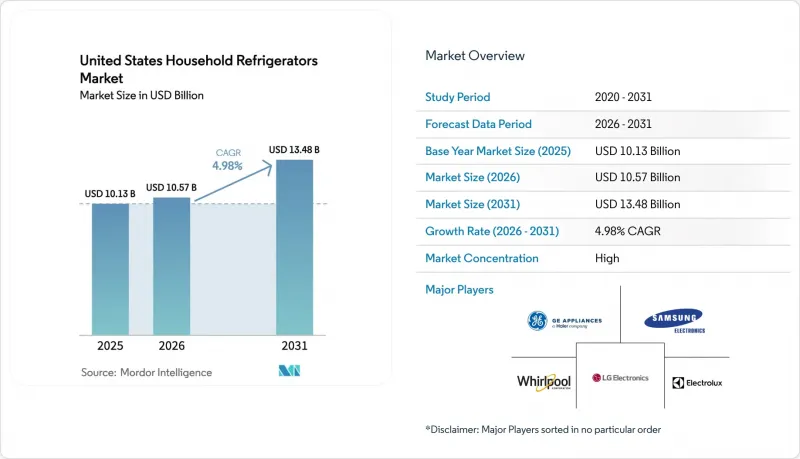
Mordor Intelligence에 의하면, 미국의 가정용 냉장고 시장 규모는 2025년에 101억 3,000만 달러로 평가되었고, 2026년 105억 7,000만 달러에서 2031년까지 134억 8,000만 달러에 이를 것으로 예측되며, 예측 기간(2026-2031년) CAGR은 4.98%를 나타낼 전망입니다.
본 보고서는 제품 유형별(싱글 도어, 상단 냉동실, 하단 냉동실, 사이드 바이 사이드 등), 용량별(15 미만, 15-18, 18 이상), 기술별(기존, 스마트/IoT 지원), 판매 채널별(멀티 브랜드 매장, 전문 매장 등), 지역별(북동부, 남동부 등)로 분류되어 있습니다. 시장 예측은 금액(달러)으로 표시되어 있습니다.
미국의 가정용 냉장고 시장 동향 및 인사이트
대용량 프렌치 도어 모델 수요 급증
프렌치 도어형 냉장고는 연평균 성장률(CAGR) 5.85%로 성장하고 있으며, 이는 미국 가정용 냉장고 시장 전체 성장률보다 87 베이시스 포인트 높은 수치입니다. 2,500제곱피트가 넘는 주택을 짓는 건설업체들은 오픈 플랜 주방에 자연스럽게 어우러지는 카운터 깊이형 23입방피트 이상의 모델을 표준 사양으로 채택하고 있습니다. 맞춤형 패널 마감과 재고 관리 기능을 갖춘 32인치 ‘패밀리 허브+’ 스크린을 탑재한 삼성의 ‘Bespoke’ 시리즈가 프리미엄 부문의 성장을 주도하고 있습니다. LG는 두 번만 두드리면 내부를 비추고 냉기 누출을 41% 줄여주는 ‘인스타뷰(InstaView)’ 도어를 통해 이러한 추세를 더욱 가속화하고 있습니다. 소매업체들은 엔드캡 진열 공간을 프렌치 도어 모델에 할당하고, 기존의 상단 냉동실형 모델의 선반 공간을 줄임으로써 이러한 추세를 활용하고 있습니다. 이 유형의 냉장고는 내부 폭이 넓어 상업용 크기의 조리대나 창고형 회원제 매장에서의 대량 구매에도 대응할 수 있으며, 팬데믹 기간 동안 강화된 소비자의 대량 구매 행동과 맞물려 수요를 뒷받침하고 있습니다.
미국 전력회사의 에너지 절약 리베이트 프로그램
대상 제품 1대당 100-250달러 상당의 주 정부 및 전력사 인센티브 덕분에 에너지스타 인증 냉장고의 교체 수요가 가속화되고 있습니다. 미국 정부의 ‘가정용 에너지 리베이트’ 이니셔티브에서는 저소득 가구에 최대 1만 4,000달러의 지원금이 지급되어, 고효율 모델의 투자 회수 기간을 단축하고 있습니다. 오하이오주와 하와이주에서는 전력사 차원에서 가장 후한 리베이트가 제공되고 있으며, 소매업체들은 연방 기준을 최소 15% 상회하는 19-22.9입방피트 용량의 모델 재고를 늘리고 있습니다. 캘리포니아주의 더 엄격한 ‘타이틀 20’ 기준에서는 듀얼 스펙 설계가 요구되어 물류 복잡성은 증가하고 있지만, 기준을 준수하는 제조업체에게는 얼리 무버로서의 우위가 생기고 있습니다. 멀티 브랜드 매장은 서류 절차를 안내하는 사내 에너지 어드바이저를 활용함으로써, 전자상거래의 급속한 성장에도 불구하고 지배적인 판매 채널 점유율을 유지하고 있습니다.
압축기 및 칩셋 분야 공급망 변동
공급망 문제는 계속해서 미국 가정용 냉장고 시장에 영향을 미치고 있습니다. 압축기 및 반도체의 리드타임은 여전히 운송 비용과 지정학적 요인의 영향을 받기 쉬운 상황입니다. 많은 제조업체가 여러 공급업체에 의존하고 있기 때문에 가전제품의 소음 및 에너지 성능에 변동이 발생할 가능성이 있습니다. 이러한 변동으로 인해 품질 관리 및 전체 제품 라인의 일관성을 확보하기가 어려워지고 있습니다. 자연 냉매로의 규제 전환으로 인해 새로운 압축기 설계의 필요성이 높아지고 있습니다. 이러한 새로운 설계의 개발은 생산 일정을 연장시켜 제조업체들에게 추가적인 압박을 가하고 있습니다.
부문 분석
2025년 미국의 가정용 냉장고 시장에서 상단 냉동실형 모델은 시장 점유율의 31.92%를 차지했습니다. 한편, 프렌치 도어형은 건설업체의 사양과 전체 폭 선반에 대한 소비자 수요에 힘입어 연평균 성장률(CAGR) 5.85%라는 놀라운 성장세를 보이고 있습니다. 삼성의 ‘Bespoke’나 LG의 ‘InstaView’와 같은 프리미엄 제품은 맞춤형 마감과 스마트한 재고 관리 기능을 통해 고급 프렌치 도어형 냉장고의 매력을 높이고 있습니다. 반면, 사이드 바이 사이드형 냉장고는 큰 접시나 조리 도구를 수납하기에 부적합한 좁은 수납 공간 탓에 그 존재감이 점차 희미해지고 있습니다. 하단 냉동실형은 특히 신선식품에 대한 인체공학적 접근성을 중시하는 고령 소비자층을 중심으로 안정적인 수요를 유지하고 있습니다. 소형 냉장고는 고급 주택의 음료 보관소나 보조용 냉장고로서 틈새 제품으로 부상하고 있습니다.
미국 에너지부의 기준 개정을 포함한 규제 변경으로 인해 구형 상단 냉동실형 냉장고의 단계적 폐지가 가속화되고 있습니다. 동시에 인버터 압축기의 채택이 확대되면서, 소비자는 운영 비용을 절감할 수 있을 뿐만 아니라 해당 부문 전체의 에너지 효율도 향상되고 있습니다. 이러한 진보로 인해 제품 구성이 재편되면서, 프렌치 도어형 모델과 에너지 효율이 높은 기술이 시장의 진화를 주도하고 있습니다. 이러한 변화는 소비자의 취향 변화와 규제적 압력을 반영하고 있으며, 고급 모델과 에너지 절약형 모델이 가정용 냉장고 시장의 주요 성장 동력으로서의 입지를 확고히 하고 있습니다.
2025년에는 19-22.9입방피트 용량 부문이 38.91%의 시장 점유율을 차지한 것으로 평가되었으며, 이는 평균적인 가구 규모와 기존의 주방 레이아웃에 부합함을 반영합니다. 한편, 용량 23입방피트 이상의 냉장고는 2031년까지 연평균 성장률(CAGR) 5.46%로 성장할 전망이며, 이는 선벨트(Sunbelt) 주에서 카운터 깊이형 프렌치 도어 방식에 대응한 신축 주택의 보급이 확대되고 있기 때문입니다. 이러한 대형 모델은 에너지 소비량이 많은 편이지만, 많은 기종이 리베이트 대상에 포함되어 있어 이를 통해 운영 비용을 상쇄할 수 있습니다. 또한 대량의 식료품을 수납할 수 있도록 설계된 강화 유리 선반 등의 기능이 기본 사양으로 제공되어 현대 가구의 요구를 충족시키고 있습니다.
건설업체와 제조업체들은 에너지 소비량의 소폭 증가보다 수납 용량과 편의성을 우선시하는 주로 35세에서 50세 사이의 ‘스텝업 구매자’에서의 수요가 지속될 것으로 전망하고 있습니다. 이러한 인구 통계학적 동향은 대용량 냉장고의 장기적인 성장 가능성을 뒷받침하고 있습니다. 소비자들의 선호도가 기능성과 에너지 효율을 겸비한 가전제품으로 이동함에 따라 시장은 계속해서 진화할 것으로 예상되며, 가정용 냉장고 부문에서 초대형 모델의 입지는 더욱 공고해질 것입니다.
기타 혜택 :
- 엑셀 형식 시장 예측(ME) 시트
- 3개월간의 애널리스트 지원
자주 묻는 질문
목차
제1장 서론
제2장 조사 방법
제3장 주요 요약
제4장 시장 구도
제5장 시장 규모 및 성장 예측
제6장 경쟁 구도
제7장 시장 기회 및 향후 전망
AJY 26.08.26According to Mordor Intelligence, the United States household refrigerators market size was valued at USD 10.13 billion in 2025 and is estimated to grow from USD 10.57 billion in 2026 to reach USD 13.48 billion by 2031, at a CAGR of 4.98% during the forecast period (2026-2031).
This report is Segmented by Product Type (Single Door, Top-Freezer, Bottom-Freezer, Side-By-Side, and More), Capacity (Less Than 15, 15-18, and More), Technology (Conventional, Smart/IoT-Enabled), Distribution Channel (Multi-Brand Stores, Exclusive Brand Outlets, and More), and Geography (Northeast, Southeast, and More). The Market Forecasts are Provided in Value (USD).
United States Household Refrigerators Market Trends and Insights
Soaring Demand for Large-Capacity French-Door Models
French-door formats are growing at a 5.85% CAGR, outpacing the United States household refrigerators market by 87 basis points. Builders of homes larger than 2,500 square feet routinely specify counter-depth, 23-plus cubic-foot units that integrate seamlessly with open-plan kitchens. Samsung's Bespoke series, available with customizable panel finishes and a 32-inch Family Hub+ screen that tracks inventory, underpins premium-segment gains. LG reinforces the trend with InstaView doors that illuminate contents on a double-knock and cut cold-air loss by 41%. Retailers capitalize by dedicating end-cap displays to French-door models, shifting shelf space away from legacy top-freezer units. The format's larger interior width also accommodates food-service-style sheet pans and bulk purchases from warehouse clubs, dovetailing with consumer stock-up behavior that intensified during the pandemic.
Energy-Efficiency Rebate Programs by United States Utilities
State and utility incentives worth USD 100-250 per qualifying unit accelerate replacement demand for Energy Star-certified refrigerators. The federal Home Energy Rebates initiative authorizes payments up to USD 14,000 for low-income households, compressing payback periods on high-efficiency models. Ohio and Hawaii offer some of the richest utility-level rebates, prompting retailers to increase inventory of 19-22.9 cubic-foot models that exceed federal baselines by at least 15%. California's more stringent Title 20 standards require dual-spec designs, raising logistics complexity but positioning compliant manufacturers for an early-mover advantage. Multi-brand stores benefit from in-house energy advisers who guide paperwork, helping them defend their dominant channel share despite rapid e-commerce growth.
Supply-Chain Volatility in Compressors and Chipsets
Supply-chain challenges continue to impact the United States household refrigerators market. Lead times for compressors and semiconductors remain sensitive to freight costs and geopolitical factors. Many manufacturers rely on multiple suppliers, which can create variability in appliance noise and energy performance. This variability complicates quality control and consistency across product lines. Regulatory shifts toward natural refrigerants are driving the need for new compressor designs. Developing these new designs extends production timelines and adds pressure on manufacturers.
Other drivers and restraints analyzed in the detailed report include:
- Rising Smart-Home Appliance Adoption (Wi-Fi & Voice)
- Millennial Household Formation Surge in Sunbelt States
- Housing-Market Slowdown Dampening Replacement Cycles
For complete list of drivers and restraints, kindly check the Table Of Contents.
Segment Analysis
In 2025, top-freezer units accounted for 31.92% of the United States household refrigerator market share, while French-door models are witnessing significant growth, with a CAGR of 5.85%, driven by builder specifications and consumer demand for full-width shelving. Premium offerings, such as Samsung's Bespoke and LG's InstaView, enhance the appeal of high-end French-door units through customizable finishes and smart inventory management features. Meanwhile, side-by-side refrigerators are losing relevance due to their narrow compartments, which are unsuitable for larger platters and cookware. Bottom-freezer models continue to experience stable demand, particularly among older consumers who prioritize ergonomic access to fresh food. Compact refrigerators are emerging as niche products, serving as beverage centers and secondary units in premium homes.
Regulatory changes, including updated Department of Energy standards, are accelerating the phase-out of older top-freezer designs. Simultaneously, the adoption of inverter compressors is gaining traction, enabling consumers to reduce operating costs while improving energy efficiency across the segment. These advancements are reshaping the product mix, with French-door models and energy-efficient technologies driving market evolution. The shift reflects changing consumer preferences and regulatory pressures, positioning premium and energy-efficient models as key growth drivers in the household refrigerator market.
The 19-22.9 cubic-foot capacity segment held a 38.91% market share in 2025, reflecting its alignment with average household sizes and traditional kitchen layouts, while refrigerators with capacities of 23 cubic feet or more are growing at a CAGR of 5.46% through 2031, driven by the increasing prevalence of new-build homes in Sunbelt states that accommodate counter-depth French-door formats. While these larger units consume more energy, many qualify for rebates that offset operating costs. Features such as reinforced glass shelving, designed to support bulk grocery purchases, have become standard, catering to the needs of modern households.
Builders and manufacturers anticipate sustained demand from move-up buyers, typically aged 35-50, who prioritize storage capacity and convenience over minor increases in energy consumption. This demographic trend underscores the long-term growth potential of larger-capacity refrigerators. The market is expected to continue evolving as consumer preferences shift toward appliances that combine functionality with energy efficiency, further solidifying the position of super-size units in the household refrigerator segment.
Complete Report Scope:
- By Product Type
- Single Door Refrigerators
- Top-Freezer Refrigerators
- Bottom-Freezer Refrigerators
- Side-by-Side Refrigerators
- French-Door Refrigerators
- Compact & Mini Refrigerators
- By Capacity (cu. ft.)
- Less Than 15
- 15 - 18.9
- 19 - 22.9
- Greater Than Equal To 23
- By Technology
- Conventional
- Smart / IoT-Enabled
- By Distribution Channel
- Multi-brand Stores
- Exclusive Brand Outlets
- Online
- Other Distribution Channels
- By Region
- Northeast
- Southeast
- Midwest
- Southwest
- West
List of Companies Covered in this Report:
- Whirlpool Corporation
- GE Appliances (Haier)
- Samsung Electronics
- LG Electronics
- Electrolux (Frigidaire)
- Bosch Home Appliances (BSH)
- Midea Group
- Sub-Zero Group
- Viking Range (Middleby)
- Panasonic Corporation
- KitchenAid (Whirlpool)
- Danby Appliances
- Hisense USA
- Fisher & Paykel
- SMEG USA
- True Manufacturing
- Dacor (Samsung)
- BlueStar
- Liebherr Appliances
- Avanti Products
Additional Benefits:
- The market estimate (ME) sheet in Excel format
- 3 months of analyst support
TABLE OF CONTENTS
1 Introduction
- 1.1 Study Assumptions & Market Definition
- 1.2 Scope of the Study
2 Research Methodology
3 Executive Summary
4 Market Landscape
- 4.1 Market Overview
- 4.2 Market Drivers
- 4.2.1 Soaring demand for large-capacity French-door models
- 4.2.2 Energy-efficiency rebate programs by United States utilities
- 4.2.3 Rising smart-home appliance adoption (Wi-Fi & voice)
- 4.2.4 Millennial household formation surge in Sunbelt states
- 4.2.5 Shift toward premium finishes (stainless & matte black)
- 4.2.6 Growth of grocery e-commerce requiring backup storage
- 4.3 Market Restraints
- 4.3.1 Supply-chain volatility in compressor and chipsets
- 4.3.2 Housing-market slowdown dampening replacement cycles
- 4.3.3 Rising average selling prices due to inflationary costs
- 4.3.4 Municipal right-to-repair legislation affecting margins
- 4.4 Insights into Value Chain Analysis
- 4.5 Porter's Five Forces
- 4.5.1 Competitive Rivalry
- 4.5.2 Threat of New Entrants
- 4.5.3 Bargaining Power of Suppliers
- 4.5.4 Bargaining Power of Buyers
- 4.5.5 Threat of Substitutes
- 4.6 Insights into the Latest Trends and Innovations in the Market
- 4.7 Insights on Recent Developments (New Product Launches, Strategic Initiatives, Investments, Partnerships, JVs, Expansion, M&As, etc.) in the Market
5 Market Size & Growth Forecasts (Value, USD)
- 5.1 By Product Type
- 5.1.1 Single Door Refrigerators
- 5.1.2 Top-Freezer Refrigerators
- 5.1.3 Bottom-Freezer Refrigerators
- 5.1.4 Side-by-Side Refrigerators
- 5.1.5 French-Door Refrigerators
- 5.1.6 Compact & Mini Refrigerators
- 5.2 By Capacity (cu. ft.)
- 5.2.1 Less Than 15
- 5.2.2 15 - 18.9
- 5.2.3 19 - 22.9
- 5.2.4 Greater Than Equal To 23
- 5.3 By Technology
- 5.3.1 Conventional
- 5.3.2 Smart / IoT-Enabled
- 5.4 By Distribution Channel
- 5.4.1 Multi-brand Stores
- 5.4.2 Exclusive Brand Outlets
- 5.4.3 Online
- 5.4.4 Other Distribution Channels
- 5.5 By Region
- 5.5.1 Northeast
- 5.5.2 Southeast
- 5.5.3 Midwest
- 5.5.4 Southwest
- 5.5.5 West
6 Competitive Landscape
- 6.1 Market Concentration
- 6.2 Strategic Moves
- 6.3 Market Share Analysis
- 6.4 Company Profiles (includes Global-level Overview, Market-level Overview, Core Segments, Financials as available, Strategic Information, Market Rank/Share for key companies, Products & Services, and Recent Developments)
- 6.4.1 Whirlpool Corporation
- 6.4.2 GE Appliances (Haier)
- 6.4.3 Samsung Electronics
- 6.4.4 LG Electronics
- 6.4.5 Electrolux (Frigidaire)
- 6.4.6 Bosch Home Appliances (BSH)
- 6.4.7 Midea Group
- 6.4.8 Sub-Zero Group
- 6.4.9 Viking Range (Middleby)
- 6.4.10 Panasonic Corporation
- 6.4.11 KitchenAid (Whirlpool)
- 6.4.12 Danby Appliances
- 6.4.13 Hisense USA
- 6.4.14 Fisher & Paykel
- 6.4.15 SMEG USA
- 6.4.16 True Manufacturing
- 6.4.17 Dacor (Samsung)
- 6.4.18 BlueStar
- 6.4.19 Liebherr Appliances
- 6.4.20 Avanti Products
7 Market Opportunities & Future Outlook
- 7.1 Appliance-subscription/leasing models for high-mobility renters
- 7.2 Carbon-neutral refrigerants (R-600a / R-290) for ESG-driven consumers