|
시장보고서
상품코드
2115819
지방산 메틸 에스테르 술폰산염 : 시장 점유율 분석, 업계 동향 및 통계, 성장 예측(2026-2031년)Fatty Methyl Ester Sulfonate - Market Share Analysis, Industry Trends & Statistics, Growth Forecasts (2026 - 2031) |
||||||
 Mordor Intelligence
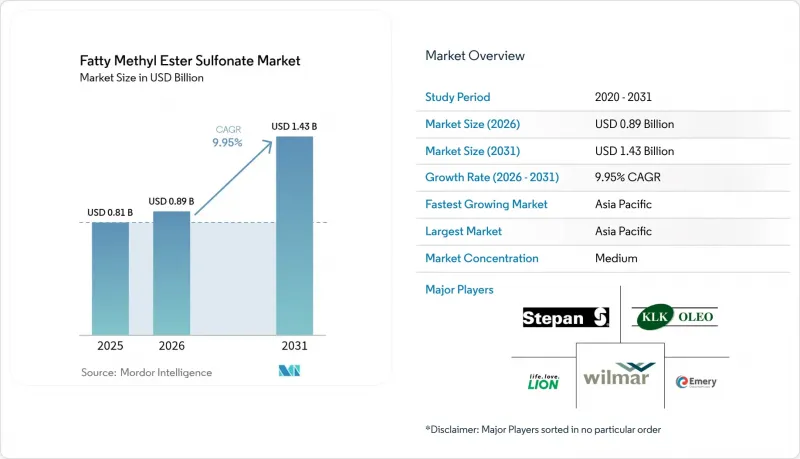
Mordor Intelligence에 의하면, 지방산 메틸 에스테르 술폰산염 시장 규모는 2025년 8억 1,000만 달러로 평가되었습니다. 2026년에는 8억 9,000만 달러로 확대되어 2026년부터 2031년에 걸쳐 CAGR 9.95%로 성장을 지속하여, 2031년에는 14억 3,000만 달러에 이를 것으로 예측됩니다.
본 보고서에서는 형태(분말, 과립/플레이크 등), 원료원(팜 커널 오일, 코코넛 오일 등), 최종 사용자 산업(세제, 퍼스널케어 등) 및 지역(아시아태평양, 북미, 유럽 등)별로 업계를 분류하고 있습니다. 시장 전망은 금액(달러) 기준으로 제시되어 있습니다.
세계의 지방산 메틸 에스테르 술폰산염 시장 동향 및 인사이트
바이오 유래 계면활성제에 대한 수요 급증
규제 당국이 탄소 발자국 감축을 의무화하고, 소비자들이 재생 가능한 원료를 포함한 제품을 선호하게 됨에 따라, 바이오 유래 계면활성제로의 전환은 틈새 시장에서 주류로 이동하고 있습니다. 계면활성제를 포함한 재생 가능 화학제품 부문은 2030년까지 연평균 19.11%의 성장률을 기록하며, 지방산 메틸 에스테르 술폰산염에 대한 하류 시장 수요를 견인할 것으로 전망됩니다. 다국적 기업들은 바이오물질 수지 방식을 확대되고 있습니다. BASF는 지속가능성 프리미엄을 확보하기 위해 코코넛 유래 베타인 제품을 EcoBalanced 시리즈에 추가했습니다. 바이오 함량 95% 이상의 계면활성제를 목표로 하는 EU가 자금을 지원하는 SurfToGreen 프로그램과 같은 제도적 노력으로 인해 수요는 더욱 제도화되고 있습니다. 이러한 상호 보완적인 요인들이 지방산 메틸 에스테르설폰산염 시장의 지속적인 성장을 뒷받침하고 있습니다.
프리미엄 콤팩트 분말 세제의 급속한 보급
농축형 세탁 세제에는 소량만 배합해도 높은 발포성을 유지할 수 있는 계면활성제가 요구되는데, 지방산 메틸 에스테르설포네이트는 이 점에서 뛰어난 성능을 발휘합니다. 각 제조업체는 FMES를 새로운 친환경 효소와 결합함으로써 오염 제거력을 높이는 동시에 세탁 온도 요건을 낮추고, 결과적으로 에너지 사용량을 절감하고 있습니다. 소비자들은 운송 시 배출량을 줄이고 제로 웨이스트 목표에도 부합하는 더 작고 가벼운 포장을 대가로 단가 상승을 점점 더 수용하고 있습니다. 유럽과 북미에서 시작된 이러한 추세는 소매업체들이 진열 공간을 최적화하기 위해 콤팩트한 상품 라인을 추진함에 따라 아시아의 신흥국으로도 확산되고 있습니다. 이러한 광범위한 채택이 지방산 메틸 에스테르 술폰산염 시장의 판매량 성장을 뒷받침하고 있습니다.
원료 가격 변동
팜유와 코코넛유는 FMES 총 제조 비용의 3분의 2 가까이를 차지하기 때문에 가격 상승은 이익률을 압박하고 있습니다. 인도네시아의 B40 바이오디젤 의무화 조치로 인해 2025년에는 원야자유 선물 가격이 톤당 5,000 말레이시아 링깃까지 상승했으며, 이는 계면활성제 제조업체의 조달 부담을 가중시키고 있습니다. 필리핀이 수출 규제를 검토하는 한편, 전 세계적인 공급 부족을 경고하고 있어 코코넛 오일 가격에 상승 압력이 가해지고 있습니다. 엘니뇨로 인한 가뭄 등 기후 요인으로 인해 가격 변동이 심화되어 장기적인 원료 헤지가 어려워지고 있으며, 이는 지방산 메틸 에스테르설포네이트 시장에 큰 부담으로 작용하고 있습니다.
부문별 분석
2025년, 분말 제품은 지방산 메틸 에스테르 술폰산염 시장 규모의 63.36%를 차지했습니다. 이는 안정성, 유통 기한 및 대량 운송의 용이성 덕분에 확고한 입지를 다진 결과입니다. FMES 전용 분무 건조 라인을 통해 세제 제조업체는 효소를 변성시키지 않고 배합할 수 있으며, 고온에서 보관할 때도 성능을 유지할 수 있습니다. 그러나 유변학 제어 분야의 연구 개발 진전에 힘입어 액체 및 페이스트 유형 등급은 연평균 성장률(CAGR) 10.86%를 기록하며 분말 제품의 우위를 위협하고 있습니다. 새로운 중화 방법을 통해 가수분해 내성이 향상되고 투명한 농축액을 얻을 수 있게 됨에 따라, 각 브랜드는 냉수 세탁이 가능한 액체 세제를 판매할 수 있게 되었습니다.
과립이나 플레이크 형태의 제품은 터널식 세탁기에서 용해 속도를 제어해야 하는 업무용 세탁 시장에 공급되고 있으며, 한편 젤 형태의 제품은 높은 거품 유지력이 요구되는 세차용 첨가제로 등장하고 있습니다. 에보닉(Evonik)이 도입한 발효 유래 람노리피드는 대체 바이오 계면활성제 기술이 기존 형태의 경계를 모호하게 만들고 있음을 보여줍니다. 공정에 대한 지식이 확산됨에 따라, 각 제조업체는 틈새 용도의 요구를 충족하기 위해 입자 크기, 수분, 유효 성분 함량을 미세 조정하게 될 것이며, 이는 지방산 메틸 에스테르설포네이트 시장에서 형태에 기반한 경쟁을 공고히할 것입니다.
지역별 분석
아시아태평양은 2025년에 전 세계 매출의 57.26%를 차지했으며, 2031년까지 연평균 성장률(CAGR) 10.82%로 성장을 이어갈 전망입니다. 풍부한 팜 커널 오일 공급, 설폰화 타워의 설치 기반, 그리고 중국의 주요 세제 제조업체들의 현지 수요로 인해 가동률은 높은 수준을 유지하고 있습니다. 말레이시아와 인도네시아는 원료, 에너지, 물류의 이점을 결합한 유지화학 클러스터 구축을 지속하고 있습니다. KLK가 중국 내 처리 능력을 확대하기로 결정한 것은 이 지역이 생산자와 소비자의 역할을 모두 수행하고 있음을 여실히 보여줍니다. 이러한 지리적 근접성으로 인해 운송 비용이 절감되고, 수주에서 납품까지의 주기가 단축되어 지방산 메틸 에스테르 술폰산염 시장에서 아시아의 경쟁 우위가 더욱 강화되고 있습니다.
북미에서는 표면적인 성장률이 둔화되고 있지만, 재생 가능하고 독성이 낮은 원료의 구매를 촉진하는 EPA의 ‘세이퍼 초이스 프로그램(Safer Choice Program)’과 같은 규제 프레임워크의 혜택을 받고 있습니다. Stepan이 텍사스주 패서디나에 신설한 알콕실화 공장은 각 브랜드가 안정적인 국내 공급을 요구하는 가운데, 현지 생산 능력 확보를 위한 노력을 구현하고 있습니다. 클린 라벨 개인 위생 용품에 대한 소비자의 높은 지불 의지로 인해, 아시아에 비해 원료 비용이 비교적 높음에도 불구하고 FMES의 판매량은 증가하고 있습니다.
유럽의 동향은 REACH 등록 서류 갱신이나 생분해성 및 표시 규정을 강화하는 세제 규제 개정 등, 엄격한 화학물질 정책 개혁에 의해 형성되고 있습니다. 각국 정부는 농업 부산물에서 계면활성제를 조달하는 SurfToGreen과 같은 순환형 바이오 경제 이니셔티브에 투자하고 있으며, 이를 통해 FMES가 지역 공급망에 더욱 뿌리내리고 있습니다. 동유럽은 단일 시장으로의 재수출을 위한 신흥 제조 거점으로 부상하며, 서유럽의 높은 인건비와 에너지 비용을 상쇄하고 있습니다. 이러한 동향들이 맞물려 지방산 메틸 에스테르설포네이트 시장에 깊이를 더하는 동시에, 인증을 받고 추적 가능성이 확보된 제품이 지닌 프리미엄 가치를 더욱 공고히 하고 있습니다.
기타 혜택 :
- 엑셀 형식 시장 예측(ME) 시트
- 3개월간의 애널리스트 지원
자주 묻는 질문
목차
제1장 서론
제2장 조사 방법
제3장 개요
제4장 시장 구도
제5장 시장 규모 및 성장 예측
제6장 경쟁 구도
제7장 시장 기회 및 향후 전망
KTH 26.08.31According to Mordor Intelligence, the fatty methyl ester sulfonate market size is expected to grow from USD 0.81 billion in 2025 to USD 0.89 billion in 2026 and is forecast to reach USD 1.43 billion by 2031 at 9.95% CAGR over 2026-2031.
This report Segments the Industry by Form (Powder, Granular/Flakes, and More), Feedstock Source (Palm-Kernel Oil, Coconut Oil, and More), End-User Industry (Detergents, Personal Care, and More), and Geography (Asia-Pacific, North America, Europe, and More). The Market Forecasts are Provided in Terms of Value (USD).
Global Fatty Methyl Ester Sulfonate Market Trends and Insights
Surging Demand for Bio-Based Surfactants
Switching to bio-based surfactants has moved from niche to mainstream as regulators mandate lower carbon footprints and consumers favor products with renewable content. The renewable chemicals sector, encompassing surfactants, will grow 19.11% annually to 2030, reinforcing downstream appetite for fatty methyl ester sulfonates. Multinationals are expanding biomass-balance approaches; BASF added coco-derived betaine grades to its EcoBalanced line to capture the sustainability premium. Institutional efforts such as the EU-funded SurfToGreen program, aiming for surfactants with more than 95% bio-content, further institutionalize demand. These mutually reinforcing forces underpin enduring upside for the fatty methyl ester sulfonate market.
Rapid Penetration of Premium Compact Powders
Concentrated laundry formats demand surfactants that maintain high foam in low-volume formulations, where fatty methyl ester sulfonates excel. Manufacturers are pairing FMES with novel eco-enzymes to lift stain removal while lowering wash temperature requirements, thereby shrinking energy use. Consumers increasingly accept higher unit prices in exchange for smaller, lighter packs, which cut transport emissions and align with zero-waste goals. The trend, originating in Europe and North America, is spreading across emerging Asia as retailers push compact lines to optimize shelf space. This widespread adoption reinforces volume growth in the fatty methyl ester sulfonate market
Feedstock Price Volatility
Palm and coconut oil account for nearly two-thirds of total FMES manufacturing cost, so rising prices pressure margins. Indonesia's B40 biodiesel mandate lifted crude palm oil futures toward MYR 5,000 per tonne in 2025, adding procurement stress for surfactant makers. Coconut oil faces upward pressure as the Philippines warns of tightening global supply while considering export curbs. Climate factors, including El Nino-linked droughts, heighten volatility and complicate long-term feedstock hedging, weighing on the fatty methyl ester sulfonate market.
Other drivers and restraints analyzed in the detailed report include:
- Growing Demand from Personal Care Industry
- Increasing Demand for Mild and Non-Irritating Surfactants
- High Production Costs
For complete list of drivers and restraints, kindly check the Table Of Contents.
Segment Analysis
Powder products accounted for 63.36% of the fatty methyl ester sulfonate market size in 2025, a position secured by stability, shelf life, and ease of bulk transport. Spray-drying lines tailored to FMES allow detergent makers to incorporate enzymes without denaturation, protecting performance at high storage temperatures. Yet R&D breakthroughs in rheology control have propelled liquid paste grades to an 10.86% CAGR, challenging powder dominance. New neutralization methods improve hydrolysis resistance, yielding transparent concentrates that let brands market "cold-wash" liquid detergents.
Granular and flake variants serve commercial laundries that require controlled dissolution in tunnel washers, while gel formats appear in car-wash additives demanding high foam retention. Fermentation-derived rhamnolipids introduced by Evonik illustrate how alternative biosurfactant technologies blur traditional form delineations. As process knowledge spreads, manufacturers will likely fine-tune particle size, moisture, and active-content levels to meet niche application needs, cementing form-based competition within the fatty methyl ester sulfonate market.
Complete Report Scope:
- By Form
- Powder
- Granular / Flakes
- Liquid Paste
- By Feedstock Source
- Palm-kernel Oil
- Coconut Oil
- Other Vegetable Oils (e.g., Tallow, Soy)
- By End-User Industry
- Detergents
- Personal Care
- Other End-User Industries (Industrial and Institutional Cleaners, etc.)
- By Geography
- Asia-Pacific
- China
- India
- Japan
- South Korea
- Rest of Asia-Pacific
- North America
- United States
- Canada
- Mexico
- Europe
- Germany
- United Kingdom
- Italy
- France
- Rest of Europe
- South America
- Brazil
- Argentina
- Rest of South America
- Middle East and Africa
- Saudi Arabia
- South Africa
- Rest of Middle East and Africa
- Asia-Pacific
Geography Analysis
Asia-Pacific held 57.26% of global revenues in 2025 and is advancing at a 10.82% CAGR through 2031. Abundant palm kernel supplies, an installed base of sulfonation towers, and local demand from China's detergent majors keep utilization rates high. Malaysia and Indonesia continue to refine oleochemical clusters that bundle feedstock, energy, and logistics advantages. KLK's decision to expand processing capacity in China underscores the region's dual role as producer and consumer. That proximity reduces freight costs and shortens order-to-delivery cycles, deepening Asia's competitive moat within the fatty methyl ester sulfonate market.
North America exhibits slower headline growth yet benefits from regulatory frameworks such as the EPA Safer Choice Program that direct purchasing toward renewable, low-toxicity inputs. Stepan's new Pasadena, Texas, alkoxylation unit demonstrates a commitment to local capacity as brands seek a secure domestic supply. High consumer willingness to pay for clean-label personal-care products supports added FMES volume despite comparatively higher feedstock costs versus Asia.
Europe's trajectory is shaped by stringent chemical policy reforms, including updated REACH dossiers and the Detergent Regulation revision that tighten biodegradability and labeling rules. Governments invest in circular-bioeconomy initiatives like SurfToGreen to source surfactants from agricultural side-streams, further embedding FMES in regional supply chains. Eastern Europe offers emerging manufacturing bases for export back into the single market, offsetting Western Europe's higher labor and energy expenses. Together these patterns add depth to the fatty methyl ester sulfonate market while reinforcing the premium commanded by certified, traceable products.
- BASF
- Chemithon Corporation
- Emery Oleochemicals
- FENCHEM
- KLK Oleo
- KPL International Ltd
- Lion Corporation
- PT Ecogreen Oleochemicals
- Sinopec Jinling Petrochemical
- Stepan Company
- Surface Chemical Industry Co Ltd
- Wilmar International Ltd
Additional Benefits:
- The market estimate (ME) sheet in Excel format
- 3 months of analyst support
TABLE OF CONTENTS
1 Introduction
- 1.1 Study Assumptions & Market Definition
- 1.2 Scope of the Study
2 Research Methodology
3 Executive Summary
4 Market Landscape
- 4.1 Market Overview
- 4.2 Market Drivers
- 4.2.1 Surging demand for bio-based surfactants
- 4.2.2 Rapid penetration of premium compact powders
- 4.2.3 Growing demand from personal care industry
- 4.2.4 Increasing demand for mild and non-irritating surfactants
- 4.2.5 Expandion of the cleaning products market
- 4.3 Market Restraints
- 4.3.1 Feedstock price volatility
- 4.3.2 Hydrolysis & viscosity issues in high-water liquid detergents
- 4.3.3 High Production Cost
- 4.4 Value Chain Analysis
- 4.5 Porter's Five Forces
- 4.5.1 Bargaining Power of Suppliers
- 4.5.2 Bargaining Power of Buyers
- 4.5.3 Threat of New Entrants
- 4.5.4 Threat of Substitutes
- 4.5.5 Degree of Competition
5 Market Size & Growth Forecasts (Value)
- 5.1 By Form
- 5.1.1 Powder
- 5.1.2 Granular / Flakes
- 5.1.3 Liquid Paste
- 5.2 By Feedstock Source
- 5.2.1 Palm-kernel Oil
- 5.2.2 Coconut Oil
- 5.2.3 Other Vegetable Oils (e.g., Tallow, Soy)
- 5.3 By End-User Industry
- 5.3.1 Detergents
- 5.3.2 Personal Care
- 5.3.3 Other End-User Industries (Industrial and Institutional Cleaners, etc.)
- 5.4 By Geography
- 5.4.1 Asia-Pacific
- 5.4.1.1 China
- 5.4.1.2 India
- 5.4.1.3 Japan
- 5.4.1.4 South Korea
- 5.4.1.5 Rest of Asia-Pacific
- 5.4.2 North America
- 5.4.2.1 United States
- 5.4.2.2 Canada
- 5.4.2.3 Mexico
- 5.4.3 Europe
- 5.4.3.1 Germany
- 5.4.3.2 United Kingdom
- 5.4.3.3 Italy
- 5.4.3.4 France
- 5.4.3.5 Rest of Europe
- 5.4.4 South America
- 5.4.4.1 Brazil
- 5.4.4.2 Argentina
- 5.4.4.3 Rest of South America
- 5.4.5 Middle East and Africa
- 5.4.5.1 Saudi Arabia
- 5.4.5.2 South Africa
- 5.4.5.3 Rest of Middle East and Africa
- 5.4.1 Asia-Pacific
6 Competitive Landscape
- 6.1 Market Concentration
- 6.2 Strategic Moves
- 6.3 Market Share(%)/Ranking Analysis
- 6.4 Company Profiles (includes Global level Overview, Market level overview, Core Segments, Financials as available, Strategic Information, Market Rank/Share for key companies, Products & Services, and Recent Developments)
- 6.4.1 BASF
- 6.4.2 Chemithon Corporation
- 6.4.3 Emery Oleochemicals
- 6.4.4 FENCHEM
- 6.4.5 KLK Oleo
- 6.4.6 KPL International Ltd
- 6.4.7 Lion Corporation
- 6.4.8 PT Ecogreen Oleochemicals
- 6.4.9 Sinopec Jinling Petrochemical
- 6.4.10 Stepan Company
- 6.4.11 Surface Chemical Industry Co Ltd
- 6.4.12 Wilmar International Ltd
7 Market Opportunities & Future Outlook
- 7.1 White-space & Unmet-need Assessment