

|
시장보고서
상품코드
2116120
미국의 와인 포장 : 시장 점유율 분석, 업계 동향과 통계, 성장 예측(2026-2031년)United States Wine Packaging - Market Share Analysis, Industry Trends & Statistics, Growth Forecasts (2026 - 2031) |
||||||
 Mordor Intelligence
Mordor Intelligence에 따르면 미국의 와인 포장 시장 규모는 2025년에 10억 6,000만 달러로 평가되며, 2026년 11억 2,000만 달러에서 2031년까지 14억 6,000만 달러에 달할 것으로 예측되며, 예측 기간(2026-2031년) 동안 CAGR은 5.47%가 될 전망입니다.
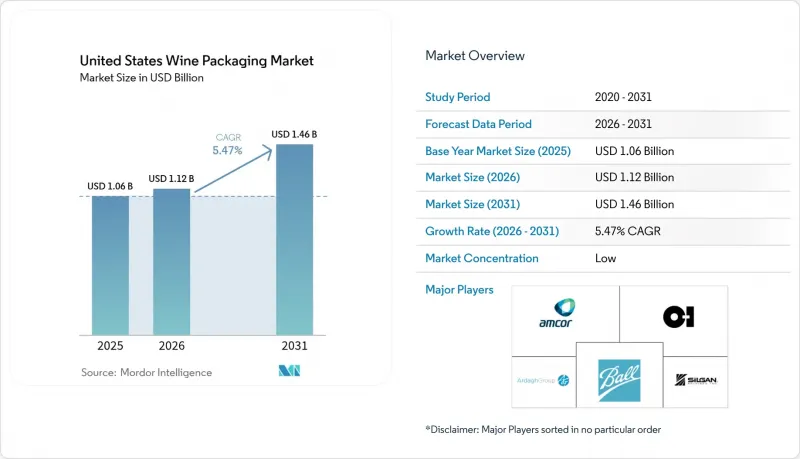
본 보고서는 소재별(유리, 플라스틱, 금속, 종이), 제품 유형별(유리병 등), 마개 종류별(천연 코르크, 산업용/합성 코르크 등), 와인 종류별(스틸 와인, 스파클링 와인 등), 용량(375밀리리터 미만 등), 유통 채널(직접 판매, 간접 판매), 및 지역별로 분류되어 있습니다. 시장 예측은 금액(달러) 기준으로 제시되어 있습니다.
미국 와인 포장 시장의 동향 및 인사이트
경량 친환경 유리 수요 증가
각 유리 공급업체들은 운송에 따른 배출량을 줄이고 치솟는 원자재 비용을 억제하기 위해 병의 경량화를 추진하고 있습니다. O-I사의 ‘Estampe’ 병은 재활용 소재 비율을 82%로 높이는 동시에 무게를 390g으로 줄여, 기존의 500g 설계에 비해 탄소발자국을 25% 감소시켰습니다. 나파와 소노마의 와이너리에서는 2024년에 유리 용기 가격 지수가 16% 상승함에 따라, 경량 제품을 채택할 때의 경제적 이점이 더욱 커지고 있습니다. 베랄리아(Veralia)사의 새로운 전전기식 용해로는 제조 공정에서 CO2 배출량을 60% 감축하여, 탈탄소화된 유리 공급을 위한 장기적인 노력을 보여주고 있습니다. 유리 용기 배송에 따른 배출량의 약 35%가 운송에서 발생하기 때문에 무게를 10% 줄일 때마다 운송 시 배출량을 3% 가까이 줄일 수 있습니다. 이는 스코프 3 탄소발자국 공시가 의무화된 고급 와이너리에게 매우 매력적인 상충 관계입니다.
오프프레미스 채널에서의 캔 와인 판매 급증
알루미늄의 100% 재활용 가능성, 경량성, 그리고 소비 현장에서의 수용성 덕분에 이 형태는 일시적인 유행에서 주류로 자리 잡았습니다. 볼(Ball)사는 2024년에 북미 전역에 480억 개의 알루미늄 음료 용기를 출하하여 시장 침투율이 처음으로 30% 대를 돌파했습니다. 소비자 시음 조사에 따르면, 젊은 음주자들은 전통보다 휴대성을 더 중요하게 여기며, 경기장에서 해변에 이르기까지 각 시설에서는 깨지지 않는 포장이 선호되고 있습니다. 황화수소 발생과 관련된 품질 문제는 제조사별로 개선된 라이너를 통해 점차 완화되고 있습니다. ‘Bogle’s Element[AL]’ 등의 브랜드는 유리 용기 무게의 5분의 1에 불과하면서도 프리미엄 가격대로 판매되는 90g 알루미늄 병을 출시하고 있습니다.
천연가스 가격 변동이 국내 유리 생산 비용을 끌어올리고 있습니다
에너지 비용은 유리 공장의 간접비의 약 20%를 차지하고 있으며, 천연가스 가격의 급등으로 인해 2024년에 직원 220명을 일시 해고한 아다그(Ardag)사의 휴스턴 공장처럼 폐쇄 사례가 잇따르고 있습니다. O-I사는 구매자들이 더 저렴하거나 가벼운 대체품으로 전환함에 따라 2024년 판매량이 4.5% 감소했다고 밝혔습니다. 각사는 용해로를 산소 연료식이나 전기식으로 개조하고 있지만, 설비 투자 수요로 인해 설비 갱신 속도는 둔화되고 있어 당분간 가격 변동이 지속될 전망입니다.
부문별 분석
2025년, 유리는 미국 와인 포장 시장 점유율의 66.65%를 차지했으며, 미국 와인 포장 시장 규모에서 약 7억 650만 달러에 달했습니다. 알루미늄을 필두로 한 금속은 각 브랜드가 경량화 및 폐쇄형 재활용 실적을 중시하는 가운데, 2031년까지 연평균 성장률(CAGR) 8.31%를 기록할 것으로 예측됩니다. 이에 반해, 각 유리 공급업체들은 390g의 친환경 병 출시나, 프리미엄 진열 효과를 유지하면서 용해로의 에너지 사용량을 줄이는 칼렛 비율 향상 등의 대책을 추진하고 있습니다. 종이 복합재나 리필 가능한 유리 시스템은 여전히 틈새 시장이지만, 공급망이 확대되면 유리의 점유율을 잠식할 가능성이 있는 저탄소 포맷의 다음 물결을 시사하고 있습니다.
알루미늄의 부상은 운송 비용 절감, 100% 재활용 가능성, 그리고 파손이 우려되는 장소에서의 수용 여부에 좌우되지만, 유리는 프리미엄 이미지 측면에서 ‘진정성’이라는 우위를 유지하고 있습니다. 볼(Ball)사가 2030년까지 재생 소재 함유율을 85%로 높이겠다는 계획은 소재 대체를 추진하는 적극적인 지속가능성 목표의 좋은 예입니다. 각 유리 제조사들은 천연가스 가격 변동으로부터 이익률을 보호하기 위해 전기로와 산소 연료 버너에 대한 투자를 추진하고 있지만, 자본 집약적 특성상 설비 갱신 속도는 둔화되고 있습니다. 결국 각 와이너리 기업들은 탄소 배출량 공개와 브랜드 전통 간의 균형을 신중하게 검토하고 있으며, 급격한 소재 전환이 아닌 단계적인 소재 구성 전환이 진행되고 있습니다.
2025년에는 유리병이 시장 가치의 56.12%를 차지했으나, 휴대성, 재활용성, 그리고 행사장에서 깨지지 않는 용기를 선호하는 경향으로 인해 캔 시장은 연평균 성장률(CAGR) 7.74%로 확대되고 있습니다. 캔 내벽 코팅 화학제품과 관련된 황화수소 위험은 내부 코팅의 개선을 통해 점차 완화되고 있으며, 이로 인해 더 다양한 품종에 적용될 수 있는 길이 열리고 있습니다. 백인박스(Bag-in-Box)는 벌크 와인 및 가성비 와인 분야에서 여전히 자리 잡고 있습니다. 이는 포도밭의 인력 부족으로 인해 생산자들이 취급을 최소화할 수 있는 용기 형태를 선호하기 때문입니다. PET병과 파우치는 가격에 민감한 소비자나 1회분 소비 상황에 대응하고 있지만, 고급스러운 이미지 측면에서 역풍을 맞고 있습니다.
캔 포장은 전통보다 환경에 대한 책임을 우선시하는 젊은 세대의 요구에 부합하고 있으며, 그 예로 보글(Boggl)사가 소매가 16.99달러에 90g 알루미늄 병을 출시한 것을 들 수 있습니다. 또한, 각 보틀러 기업들은 진열대에서의 가시성을 높이기 위해 재밀봉 가능한 뚜껑이나 2차 포장용 종이 포장 도입도 시도하고 있습니다. 유리 용기의 경우, 경량화와 엠보싱 가공이 없는 실루엣이 품질에 대한 인상을 해치지 않으면서 운송 시 배출량을 줄여, 그 존재감을 유지하는 데 도움이 되고 있습니다. 그 결과, 와이너리는 판매 채널, 가격대, 소비 상황에 맞춰 포장 종류를 선택할 수 있는 다양화된 제품 라인업을 실현하고 있습니다.
기타 혜택:
- 엑셀 형식의 시장 예측(ME) 시트
- 3개월간의 애널리스트 지원
자주 묻는 질문
목차
제1장 소개
제2장 조사 방법
제3장 주요 요약
제4장 시장 구도
제5장 시장 규모와 성장 예측
제6장 경쟁 구도
제7장 시장 기회와 향후 전망
KSM 26.08.26According to Mordor Intelligence, the United States wine packaging market size was valued at USD 1.06 billion in 2025 and estimated to grow from USD 1.12 billion in 2026 to reach USD 1.46 billion by 2031, at a CAGR of 5.47% during the forecast period (2026-2031).
This report is Segmented by Material Type (Glass, Plastic, Metal, Paper), Product Type (Glass Bottles, and More), Closure Type (Natural Cork, Technical/Synthetic Cork, and More), Wine Type (Still Wine, Sparkling Wine, and More), Capacity (Less Than 375 ML, and More), Distribution Channel (Direct Sales, and Indirect Sales), and Geography. The Market Forecasts are Provided in Terms of Value (USD).
United States Wine Packaging Market Trends and Insights
Rising Demand for Lightweight Eco-Glass
Glass suppliers are cutting bottle weight to curb freight emissions and control surging input costs. O-I's Estampe bottle dropped to 390 g while pushing recycled content to 82%, lowering its carbon impact by 25% relative to legacy 500 g designs. Napa and Sonoma wineries saw glass-container price indexes jump 16% in 2024, reinforcing the economic case for lighter stock. Verallia's new all-electric furnace cut process CO2 by 60%, signaling long-term commitment to decarbonized glass supply. As freight makes up roughly 35% of delivered glass-package emissions, each 10% weight reduction can trim shipping emissions by nearly 3%, a compelling trade-off for premium wineries that must now publish Scope 3 footprints.
Booming Canned-Wine Sales in Off-Premise Channels
Aluminum's 100% recyclability, low mass, and venue acceptance have lifted the format from novelty to mainstream. Ball shipped 48 billion aluminum beverage containers across North America in 2024, crossing the 30% penetration mark for the first time. Consumer trials show younger drinkers value portability over tradition, and venues from stadiums to beaches prefer non-breakable packages. Quality hurdles linked to hydrogen-sulfide formation are being mitigated by improved liners that vary by manufacturer. Brands such as Bogle's Element[AL] have launched 90 g aluminum bottles that ship at one-fifth the mass of glass while retailing at premium price points.
Volatile Natural-Gas Costs Inflating Domestic Glass Production
Energy expenses account for roughly 20% of glass plant overhead, and spikes in natural-gas prices have prompted closures such as Ardagh's Houston facility, which idled 220 workers in 2024. O-I disclosed a 4.5% drop in 2024 sales volume as buyers shifted toward cheaper or lighter alternatives. While companies are retrofitting furnaces with oxy-fuel or electric systems, capital requirements slow fleet turnover, keeping price volatility in play for the near term.
Other drivers and restraints analyzed in the detailed report include:
- DtC Shipping Liberalisation Across 47 States
- Bottle-Deposit Laws Increasing Recycled-Content Requirements
- Premium-Segment Scepticism Toward PET Quality Perception
For complete list of drivers and restraints, kindly check the Table Of Contents.
Segment Analysis
Glass accounted for 66.65% of the United States wine packaging market share in 2025, equal to about USD 706.5 million within the United States wine packaging market size. Metal, led by aluminum, is projected to post an 8.31% CAGR through 2031 as brands prioritize lighter weights and closed-loop recycling credentials. Glass suppliers are countering with 390 g eco-bottle launches and higher cullet ratios that lower furnace energy use while preserving premium shelf presence. Paper composites and refillable-glass systems remain niche but signal the next wave of low-carbon formats that could erode glass share if supply chains scale.
Aluminum's ascent hinges on reduced freight cost, 100% recyclability, and venue acceptance where breakage is a concern, while glass retains an authenticity advantage for premium cues. Ball's plan to reach 85% recycled content by 2030 exemplifies the aggressive sustainability targets that drive material substitution. Glass makers are investing in electric furnaces and oxy-fuel burners to shield margins from natural-gas volatility, yet capital intensity slows fleet turnover. Ultimately, wineries are weighing carbon disclosures against brand heritage, prompting a gradual mix shift rather than an abrupt material handoff.
Glass bottles captured 56.12% of the 2025 value, but cans are expanding at a 7.74% CAGR as portability, recyclability, and event-venue policies favor unbreakable formats. Hydrogen-sulfide risks linked to can liner chemistry are being mitigated through improved internal coatings, opening the door for broader varietal adoption. Bag-in-box remains entrenched for bulk and value wines because vineyard labor shortages push producers toward formats that minimize handling. Plastic bottles and pouches serve price-sensitive or single-serve occasions but face premium-image headwinds.
Canned presentations align with younger demographics that prioritize environmental responsibility over tradition, evidenced by Bogle's 90 g aluminum bottle introduction at USD 16.99 retail. Bottlers are also experimenting with resealable ends and secondary paper wraps to upgrade shelf visibility. For glass, lightweighting and emboss-free silhouettes are helping retain relevance by trimming freight emissions without compromising perceived quality. The result is a diversified product mix that lets wineries match pack type to channel, price tier, and consumption occasion.
Complete Report Scope:
- By Material Type
- Glass
- Plastic
- Metal
- Paper
- By Product Type
- Glass Bottles
- Plastic Bottles
- Bag-in-Box
- Cans
- Pouches
- By Closure Type
- Natural Cork
- Technical/Synthetic Cork
- Screw Caps
- Crown Caps
- Other Closure Types (T-stoppers, Vino-Lok)
- By Wine Type
- Still Wine
- Sparkling Wine
- Fortified and Dessert Wine
- Low and No-Alcohol Wine
- By Capacity
- Less than 375 mL
- 375-750 mL
- 750-1,500 mL
- More than 1,500 mL
- By Distribution Channel
- Direct Sales
- Indirect Sales
List of Companies Covered in this Report:
- Owens-Illinois Inc.
- Ardagh Group S.A.
- Gallo Glass Company
- Verallia North America
- Ball Corporation
- Amcor plc
- Crown Holdings Inc.
- Silgan Holdings Inc.
- Scholle IPN
- Tetra Laval International S.A.
- Plastipak Holdings Inc.
- CCL Industries Inc.
- Avery Dennison Corp.
- Berlin Packaging LLC
- TricorBraun Inc.
- Saxco International LLC
- Encore Glass Inc.
- Saverglass
- Guala Closure Group
- Smurfit Westrock
Additional Benefits:
- The market estimate (ME) sheet in Excel format
- 3 months of analyst support
TABLE OF CONTENTS
1 INTRODUCTION
- 1.1 Study Assumptions and Market Definition
- 1.2 Scope of the Study
2 RESEARCH METHODOLOGY
3 EXECUTIVE SUMMARY
4 MARKET LANDSCAPE
- 4.1 Market Overview
- 4.2 Market Drivers
- 4.2.1 Rising demand for lightweight eco-glass
- 4.2.2 Booming canned-wine sales in off-premise channels
- 4.2.3 DtC shipping liberalisation across 47 states spurring e-commerce-ready packs
- 4.2.4 Bottle-deposit laws (OR, MI) increasing recycled-content requirements
- 4.2.5 Vineyard labour shortages shifting bulk formats toward bag-in-box
- 4.2.6 Private-label retailers scaling cost-efficient PET/BIB volumes
- 4.3 Market Restraints
- 4.3.1 Volatile natural-gas costs inflating domestic glass production
- 4.3.2 Community resistance to new glass plants on emissions grounds
- 4.3.3 Premium-segment scepticism toward PET quality perception
- 4.3.4 Plateauing food-grade RPET supply bottlenecks
- 4.4 Supply-Chain Analysis
- 4.5 Regulatory Outlook
- 4.6 Technological Outlook
- 4.7 Porter's Five Forces Analysis
- 4.7.1 Threat of New Entrants
- 4.7.2 Bargaining Power of Suppliers
- 4.7.3 Bargaining Power of Consumers
- 4.7.4 Threat of Substitute Products
- 4.7.5 Intensity of Competitive Rivalry
- 4.8 Major Innovations in Wine Packaging
5 MARKET SIZE AND GROWTH FORECASTS (VALUE)
- 5.1 By Material Type
- 5.1.1 Glass
- 5.1.2 Plastic
- 5.1.3 Metal
- 5.1.4 Paper
- 5.2 By Product Type
- 5.2.1 Glass Bottles
- 5.2.2 Plastic Bottles
- 5.2.3 Bag-in-Box
- 5.2.4 Cans
- 5.2.5 Pouches
- 5.3 By Closure Type
- 5.3.1 Natural Cork
- 5.3.2 Technical/Synthetic Cork
- 5.3.3 Screw Caps
- 5.3.4 Crown Caps
- 5.3.5 Other Closure Types (T-stoppers, Vino-Lok)
- 5.4 By Wine Type
- 5.4.1 Still Wine
- 5.4.2 Sparkling Wine
- 5.4.3 Fortified and Dessert Wine
- 5.4.4 Low and No-Alcohol Wine
- 5.5 By Capacity
- 5.5.1 Less than 375 mL
- 5.5.2 375-750 mL
- 5.5.3 750-1,500 mL
- 5.5.4 More than 1,500 mL
- 5.6 By Distribution Channel
- 5.6.1 Direct Sales
- 5.6.2 Indirect Sales
6 COMPETITIVE LANDSCAPE
- 6.1 Market Concentration
- 6.2 Strategic Moves
- 6.3 Market Share Analysis
- 6.4 Company Profiles (includes Global level Overview, Market level overview, Core Segments, Financials as available, Strategic Information, Market Rank/Share for key companies, Products and Services, and Recent Developments)
- 6.4.1 Owens-Illinois Inc.
- 6.4.2 Ardagh Group S.A.
- 6.4.3 Gallo Glass Company
- 6.4.4 Verallia North America
- 6.4.5 Ball Corporation
- 6.4.6 Amcor plc
- 6.4.7 Crown Holdings Inc.
- 6.4.8 Silgan Holdings Inc.
- 6.4.9 Scholle IPN
- 6.4.10 Tetra Laval International S.A.
- 6.4.11 Plastipak Holdings Inc.
- 6.4.12 CCL Industries Inc.
- 6.4.13 Avery Dennison Corp.
- 6.4.14 Berlin Packaging LLC
- 6.4.15 TricorBraun Inc.
- 6.4.16 Saxco International LLC
- 6.4.17 Encore Glass Inc.
- 6.4.18 Saverglass
- 6.4.19 Guala Closure Group
- 6.4.20 Smurfit Westrock
7 MARKET OPPORTUNITIES AND FUTURE OUTLOOK
- 7.1 White-space and Unmet-need Assessment


