

|
시장보고서
상품코드
2116352
영국의 창고 및 유통 물류 : 시장 점유율 분석, 업계 동향 및 통계, 성장 예측(2026-2031년)United Kingdom Warehousing And Distribution Logistics - Market Share Analysis, Industry Trends & Statistics, Growth Forecasts (2026 - 2031) |
||||||
 Mordor Intelligence
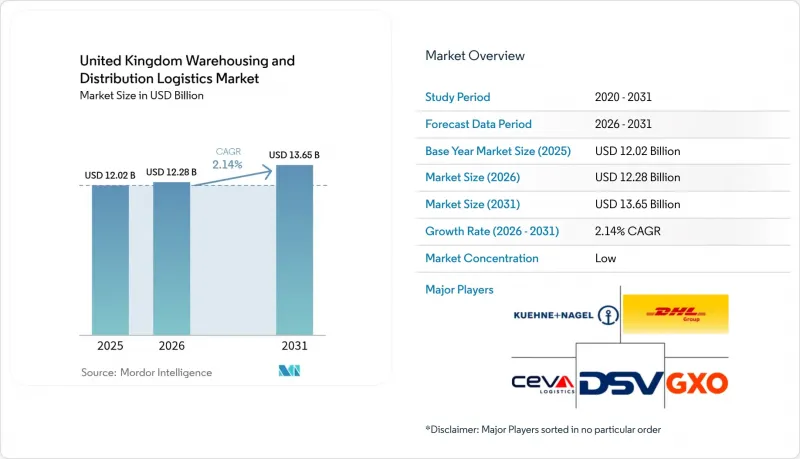
Mordor Intelligence에 의하면, 영국의 창고 및 유통 물류 시장 규모는 2025년에 120억 2,000만 달러로 평가되었습니다. 2026년 122억 8,000만 달러에서 2031년까지 136억 5,000만 달러에 이를 것으로 예상되며, 예측 기간(2026-2031년) CAGR은 2.14%를 나타낼 전망입니다.
본 보고서는 창고 유형(일반 창고·보관, 냉장 창고·보관), 소유 형태(민간 창고, 공공 창고), 최종 사용자 산업(전자상거래·소매, 식품 및 음료, 제약 및 헬스케어, 기타) 및 지역(잉글랜드, 스코틀랜드, 웨일스, 북아일랜드)별로 분류되어 있습니다. 시장 전망은 금액(달러) 기준으로 제시되어 있습니다.
영국의 창고 및 유통 물류 시장 동향 및 인사이트
전자상거래 풀필먼트 공간의 급증
온라인 소매의 보급률이 높아짐에 따라, 네트워크 계획은 주요 대도시권에서 50마일 반경 내에 위치한 시설로 이동하고 있습니다. 사업자들은 라스트 마일 배송 시간을 단축하면서 반품 처리도 지원할 수 있는 다층 허브 및 마이크로 풀필먼트 시설을 우선적으로 선택하고 있습니다. 아마존이 수년에 걸쳐 시행해 온 그린필드 및 브라운필드 개발 프로그램은 그 투자 규모를 여실히 보여주고 있으며, 대형 식료품 체인점들도 현재 매장 상품 보충에 더해 온라인 주문 피킹 전용 공간을 확보하고 있습니다. 2025년에 시행될 포장재에 관한 ‘확대 생산자 책임(EPR)’ 규제는 데이터 규정 준수 요건을 추가하는 한편, 업무 효율화도 촉진하고 있습니다. 그 결과, ‘골든 트라이앵글’ 지역에서 발생하는 용량 제약이 프리미엄 임대료 상승을 부추기며, 영국 전역의 창고 및 유통 물류 시장에서 두 자릿수의 사전 임대율을 유지하고 있습니다.
식료품·의약품 분야의 콜드체인 성장
식료품 택배 물량이 의약품의 완충 재고 전략과 맞물리면서, 온도 관리 시설에 대한 수요는 상온 보관 용량 확대를 능가하는 추세를 보이고 있습니다. +4°C의 냉장부터 -20°C의 냉동까지 대응 가능한 듀얼 유스 사양을 통해 사업자는 부문 간 유연하게 운영하며 자산 활용률을 최적화할 수 있습니다. 런던, 버밍엄 및 동부 항구를 연결하는 전략적 회랑에는 멀티테넌트용 빌트-투-수트(BTS) 프로젝트가 집중되어 있는 반면, 전국적인 유통을 위해서는 소비자와 가까운 곳에 위성형 크로스독 거점이 필요합니다. 천연 냉매 도입을 통해 시설은 향후 지속가능성 관련 규제를 준수할 수 있게 되며, 전력 소비량이 많은 시스템이 부지 내 태양광 발전 설비로 가동된다면 운영 비용 절감 효과도 기대됩니다. 이러한 전문적인 기능 덕분에 임대료에 20-25%의 프리미엄이 붙음에도 불구하고 유명 브랜드 임차인으로부터 장기 계약을 꾸준히 확보하고 있으며, 영국의 창고 및 유통 물류 시장 전체의 수익 전망이 개선되고 있습니다.
도심 지역의 토지 부족과 임대료 상승
주요 물류 서브마켓 전체의 공실률은 2% 미만으로 유지되고 있으며, M25 권내나 M1 회랑을 따라 위치한 희소한 부지를 둘러싼 임차인 간의 경쟁이 치열해지는 가운데, 임대료는 연 8%의 속도로 상승하고 있습니다. 개발업자들은 도심 부지를 활용하기 위해 다층 설계를 도입하거나 노후화된 대형 소매점의 용도 변경을 점점 더 적극적으로 추진하고 있습니다. 그러나 토지 취득 비용의 상승은 손익분기 임대료 수준을 끌어올리고 있으며, 중소 소매업체들은 이를 감당하는 데 어려움을 겪고 있어 대규모 사업자로의 양극화가 진행되고 있습니다. 지방 자치 단체는 고용 기회와 지역사회 우려 간의 균형을 맞추려 하고 있지만, 교통량 및 경관에 미치는 영향을 완화하기 위해 엄격한 설계 기준을 유지하고 있으며, 그 결과 영국의 창고 보관·배송 물류 시장에서 착공부터 준공까지의 주기가 지연되고 있습니다.
부문별 분석
냉장 창고·보관 시장은 2031년까지 연평균 성장률(CAGR) 5.22%를 기록하며, 영국의 창고 보관·배송 물류 시장 전체가 기록한 2.14%의 성장률을 크게 상회했습니다. 일반 창고·보관 시장은 2025년 시점에서 57.35%의 점유율을 유지했으나, 고사양 냉장 유닛의 공실률은 사실상 제로이며, 이는 식료품 배달 서비스 및 의약품 품질 유지에 관한 규제의 구조적 변화를 반영하고 있습니다. 자본 집약도가 높아 냉장 시설의 건설 비용은 상온 시설에 비해 40-60% 더 비싸지만, 사업자들은 수익을 보호하는 다년 계약(지수 연동형)을 통해 비용을 전가하고 있습니다.
에너지 효율이 높은 칠러, IoT를 통한 온도 모니터링, 모듈식 랙은 공간 활용 효율과 규제 준수를 향상시키며, 공급업체가 수요에 따라 냉장 구역과 냉동 구역을 조합할 수 있게 해줍니다. 한편, 일반 창고는 이익률을 유지하기 위해 자동화에 주력하고 있으며, 셔틀 시스템과 고밀도 팔레트를 도입함으로써 단위당 취급 비용을 절감하고 있습니다. 냉장 및 상온 환경을 전환할 수 있는 이중 인증 시설은 부문 간의 경계를 더욱 모호하게 만들며, 영국의 창고 및 유통 물류 시장의 계절적 성수기 이용률을 최적화하고 있습니다.
기타 혜택 :
- 엑셀 형식 시장 예측(ME) 시트
- 3개월간 애널리스트 지원
자주 묻는 질문
목차
제1장 서론
제2장 조사 방법
제3장 개요
제4장 시장 구도
제5장 시장 규모 및 성장 예측
제6장 경쟁 구도
제7장 시장 기회 및 향후 전망
KTH 26.08.31According to Mordor Intelligence, the United Kingdom warehousing and distribution logistics market size was valued at USD 12.02 billion in 2025 and estimated to grow from USD 12.28 billion in 2026 to reach USD 13.65 billion by 2031, at a CAGR of 2.14% during the forecast period (2026-2031).
This report is Segmented by Warehouse Type (General Warehousing and Storage, Refrigerated Warehousing and Storage), Ownership (Private Warehouses, Public Warehouses), End-User Industry (E-Commerce & Retail, Food & Beverage, Pharma & Healthcare, and More), and Geography (England, Scotland, Wales, Northern Ireland). The Market Forecasts are Provided in Terms of Value (USD).
United Kingdom Warehousing And Distribution Logistics Market Trends and Insights
E-commerce Fulfillment Space Surge
Escalating online retail penetration has shifted network planning toward facilities located within 50 miles of the largest urban catchments. Operators prioritize multi-story hubs and micro-fulfillment annexes that compress last-mile delivery times while supporting returns processing. Amazon's multi-year program of green-field and brown-field developments exemplifies the scale of investment, and large grocery chains now dedicate dedicated space to online picking alongside store replenishment. Extended Producer Responsibility rules for packaging, effective in 2025, add data compliance layers but simultaneously drive operational streamlining. Resulting capacity constraints in the Golden Triangle underpin premium rent growth and sustain double-digit pre-leasing rates across the United Kingdom warehousing and distribution logistics market.
Cold-Chain Growth for Grocery and Pharma
Demand for temperature-controlled facilities now outpaces ambient capacity expansion as grocery home-delivery volumes converge with pharmaceutical buffer-stock strategies. Dual-use specifications capable of +4 °C chilled to -20 °C frozen enable operators to flex between sectors and smooth asset utilization. Strategic corridors linking London, Birmingham, and the eastern ports attract multi-tenant build-to-suit projects, while nationwide distribution requires satellite cross-dock nodes closer to consumers. Adoption of natural refrigerants aligns buildings with future sustainability regulation and generates operating-cost benefits once electricity-intensive systems are powered by on-site solar arrays. This specialist capability therefore commands a rental premium of 20-25% but continues to secure long-term commitments from brand-name occupiers, enhancing revenue visibility across the United Kingdom warehousing & distribution logistics market.
Urban Land Scarcity and Rent Inflation
Vacancy across prime logistics sub-markets remains below 2%, propelling rents upward by 8% annually as occupiers compete for scarce plots inside the M25 and along the M1 corridor. Developers increasingly pursue multi-story designs or repurpose obsolete big-box retail to unlock urban footprints. However, higher land outlays translate into elevated breakeven rent thresholds that smaller retailers struggle to absorb, driving polarization toward scale players. Local authorities attempt to balance employment opportunities against community concerns but retain stringent design codes to mitigate traffic and visual impact, slowing start-to-completion cycles within the United Kingdom warehousing and distribution logistics market.
Other drivers and restraints analyzed in the detailed report include:
- Automation and Robotics Efficiency Gains
- Government Freeport and Industrial-Park Incentives
- Warehouse-Labor Shortages and Wage Spikes
For complete list of drivers and restraints, kindly check the Table Of Contents.
Segment Analysis
Refrigerated Warehousing & Storage generated a 5.22% CAGR to 2031, comfortably ahead of the 2.14% overall growth registered by the United Kingdom warehousing & distribution logistics market size. Although General Warehousing & Storage retained 57.35% share in 2025, vacancy for high-spec cold units is virtually nonexistent, reflecting structural shifts in grocery home delivery and pharmaceutical integrity regulations. Capital intensity is higher refrigerated builds cost 40-60% more than ambient equivalents but operators pass through expenses via multi-year indexed contracts that insulate returns.
Energy-efficient chillers, IoT temperature monitoring, and modular racking improve space utilization and compliance, enabling providers to blend chilled and frozen zones on demand. Meanwhile, general warehousing leans on automation to defend margins, integrating shuttle systems and high-density pallets that reduce per-unit handling costs. Dual-certified facilities capable of toggling between cold and ambient regimes further blur segment boundaries, optimizing uptake across seasonal peaks within the United Kingdom warehousing & distribution logistics market.
Complete Report Scope:
- By Warehouse Type (Value)
- General Warehousing and Storage
- Refrigerated Warehousing and Storage
- By Ownership (Value)
- Private Warehouses
- Public Warehouses
- By End-User Industry (Value)
- E-commerce and Retail
- Food and Beverage
- Pharma and Healthcare
- Automotive
- Manufacturing and Engineering Goods
- Others
- By Region
- England
- Scotland
- Wales
- Northern Ireland
List of Companies Covered in this Report:
- DHL Supply Chain
- Kuehne + Nagel
- GXO Logistics
- CEVA Logistics
- DSV
- Rhenus Logistics
- Yusen Logistics
- XPO Logistics
- Segro Logistics
- UPS Supply Chain Solutions
- FedEx Logistics
- Expeditors
- Constellation Cold Logistics
- Magnavale
- Fowler Welch
- DFDS Logistics
- Palletforce
- Fullers Logistics
- Apex Logistics
- CDL Logistics
Additional Benefits:
- The market estimate (ME) sheet in Excel format
- 3 months of analyst support
TABLE OF CONTENTS
1 Introduction
- 1.1 Study Assumptions and Market Definition
- 1.2 Scope of the Study
2 Research Methodology
3 Executive Summary
4 Market Landscape
- 4.1 Market Overview
- 4.2 Market Drivers
- 4.2.1 E-commerce fulfilment space surge
- 4.2.2 Cold-chain growth for grocery and pharma
- 4.2.3 Automation and robotics efficiency gains
- 4.2.4 Government Freeport and industrial-park incentives
- 4.2.5 Re-/near-shoring of inventory post-Brexit
- 4.2.6 ESG-driven brown-field redevelopment
- 4.3 Market Restraints
- 4.3.1 Urban land scarcity and rent inflation
- 4.3.2 Warehouse-labour shortages and wage spikes
- 4.3.3 Grid-capacity limits for EV/automation
- 4.3.4 Planning-permission delays (NIMBY)
- 4.4 Value/Supply-Chain Analysis
- 4.5 Regulatory Landscape
- 4.6 Technological Outlook
- 4.7 Pricing Analysis-Warehouse Rents
- 4.8 Porter's Five Forces
- 4.8.1 Bargaining Power of Buyers
- 4.8.2 Bargaining Power of Suppliers
- 4.8.3 Threat of New Entrants
- 4.8.4 Threat of Substitutes
- 4.8.5 Competitive Rivalry
- 4.9 Impact of COVID-19 and Geo-Political Events
5 Market Size & Growth Forecasts (Value)
- 5.1 By Warehouse Type (Value)
- 5.1.1 General Warehousing and Storage
- 5.1.2 Refrigerated Warehousing and Storage
- 5.2 By Ownership (Value)
- 5.2.1 Private Warehouses
- 5.2.2 Public Warehouses
- 5.3 By End-User Industry (Value)
- 5.3.1 E-commerce and Retail
- 5.3.2 Food and Beverage
- 5.3.3 Pharma and Healthcare
- 5.3.4 Automotive
- 5.3.5 Manufacturing and Engineering Goods
- 5.3.6 Others
- 5.4 By Region
- 5.4.1 England
- 5.4.2 Scotland
- 5.4.3 Wales
- 5.4.4 Northern Ireland
6 Competitive Landscape
- 6.1 Market Concentration
- 6.2 Strategic Moves
- 6.3 Market Share Analysis
- 6.4 Company Profiles (includes Global Level Overview, Market Level Overview, Core Segments, Financials as available, Strategic Information, Market Rank/Share for key companies, Products and Services, and Recent Developments)
- 6.4.1 DHL Supply Chain
- 6.4.2 Kuehne + Nagel
- 6.4.3 GXO Logistics
- 6.4.4 CEVA Logistics
- 6.4.5 DSV
- 6.4.6 Rhenus Logistics
- 6.4.7 Yusen Logistics
- 6.4.8 XPO Logistics
- 6.4.9 Segro Logistics
- 6.4.10 UPS Supply Chain Solutions
- 6.4.11 FedEx Logistics
- 6.4.12 Expeditors
- 6.4.13 Constellation Cold Logistics
- 6.4.14 Magnavale
- 6.4.15 Fowler Welch
- 6.4.16 DFDS Logistics
- 6.4.17 Palletforce
- 6.4.18 Fullers Logistics
- 6.4.19 Apex Logistics
- 6.4.20 CDL Logistics
7 Market Opportunities and Future Outlook
- 7.1 White-space and Unmet-Need Assessment


