

|
시장보고서
상품코드
2116465
의료용 튜브 시장 : 점유율 분석, 업계 동향과 통계, 성장 예측(2026-2031년)Medical Tubing - Market Share Analysis, Industry Trends & Statistics, Growth Forecasts (2026 - 2031) |
||||||
 Mordor Intelligence
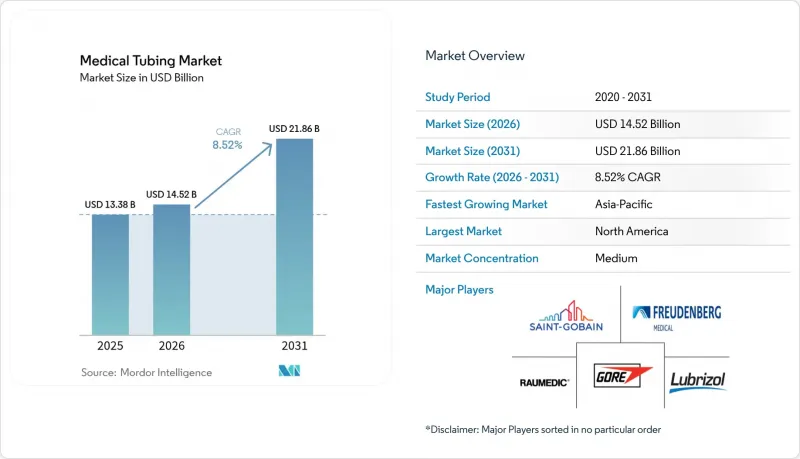
Mordor Intelligence에 의하면, 의료용 튜브 시장 규모는 2025년에 133억 8,000만 달러로 평가되었고 2026년 145억 2,000만 달러에서 2031년까지 218억 6,000만 달러에 이를 것으로 예측되며, 예측 기간(2026-2031년) CAGR은 8.52%를 나타낼 전망입니다.
본 보고서는 소재(플라스틱, 고무, 특수 폴리머), 용도(대용량 일회용 튜브 등), 구조(단일 루멘 등), 최종 사용자(병원 등), 제조 공정(단축 압출 성형 등), 지역(북미, 유럽,아시아태평양, 중동 및 아프리카, 남미)별로 분류되어 있습니다. 시장 예측은 금액(미 달러) 기준으로 제시되어 있습니다.
전 세계 의료용 튜브 시장 동향 및 인사이트
만성 질환 및 노화 관련 질환 유병률 증가
CDC 데이터에 따르면, 미국 성인의 76.4%가 적어도 하나의 만성 질환을 앓고 있습니다. 투석, 심혈관 중재술, 지속적 약물 주입과 같은 장기 치료에서는 체내나 가정에서 장기간 삽입해 둘 수 있는 신뢰성 높은 튜브가 필수적입니다. 인구 고령화에 따라 재택 치료가 증가함에 따라, 소리 알람 기능이나 뒤틀림에 강한 루멘을 갖춘 사용하기 쉬운 세트에 대한 수요가 높아지고 있습니다. 심혈관 질환 증가에 따라 펄스 필드 절제술 및 경카테터 판막 교체술을 위해 설계된 첨단 카테터 튜브의 채택이 확대되고 있습니다. 일회용 라인은 빈번한 수액 투여가 이루어지는 상황에서 감염 위험을 최소화함으로써 면역 기능이 저하된 환자를 보호합니다.
저침습 치료 기법에 대한 수요 증가
중재적 방사선학 분야만 해도 2029년까지 430억 달러를 넘어설 것으로 예측되며, 높은 비틀림 강성을 갖춘 초미세 카테터가 요구되고 있습니다. 열연신 폴리머 섬유의 도입으로 인해 이온화 방사선을 피할 수 있는 MR 유도 하 치료가 가능해졌으며, 설계 목표는 비자성 재료 및 엄격한 공차로 전환되고 있습니다. 메드트로닉(Medtronic)과 같은 주요 의료기기 제조업체들은 경카테터 판막 팽창 시 접근성을 개선하는 개량형 다이아몬드 프레임을 채택하고 있습니다. 선단 형상의 혁신을 통해 흡입 및 스텐트 전달 기술이 더욱 정교해졌으며, 이 모든 것이 정밀 마이크로 압출 성형에 대한 수요를 높이고 있습니다.
엄격한 규제 준수 및 검증 요건
FDA의 개정 규정에 따라, 제조업체는 2026년 2월까지 품질 관리 시스템을 ISO 13485:2016에 부합하도록 해야 합니다. 업데이트된 지침에서는 철저한 화학적 특성 평가가 요구되고 있으며, 추출물 및 용출물 시험은 수개월에 걸친 프로젝트가 되어 연구 개발 주기를 길게 만들고 있습니다. 유럽에서는 MDR, REACH, RoHS 규제가 중첩되어, 특히 안정제가 포함된 PVC 제품 라인에서 문서화 부담이 증가하고 있습니다. PFAS에 대한 새로운 규제 강화는 불소 수지 사용자에게 불확실성을 안겨주며, 개발 중인 제품에 대한 감사나 경우에 따라서는 소재 변경을 강요받고 있습니다. 고액의 사용자 부담금이 간접비를 끌어올리고 있어, 사내에 규제 대응 팀을 갖추지 못한 중소기업은 이익률 압박이나 사업 철수 결정을 강요받고 있습니다.
부문 분석
플라스틱은 성숙한 공급망과 경쟁력 있는 비용 구조 덕분에 2025년 의료용 튜브 시장에서 38.12%의 점유율을 유지했습니다. 그러나 특수 폴리머는 복잡한 심혈관, 신경혈관 및 약물 전달 기기에서 뛰어난 윤활성, 비틀림 저항성 및 생체 불활성성이 요구됨에 따라 연평균 성장률(CAGR) 10.18%로 확대되고 있습니다. 지속가능성에 대한 논의가 배경이 되어, DEHP 가소제를 사용하지 않으면서도 동등한 투명성과 유연성을 구현하는 TPE를 통한 기존 PVC의 대체가 가속화되고 있습니다. 울트라 폴리이미드, PEBAX 및 바이오서큘러 PA11은 현재 고급 카테터 조립 분야에서 주류를 이루고 있습니다. ISO 13485를 준수하는 조건 하에서 이러한 수지의 생산 규모를 확대할 수 있는 공급업체는 가격 결정력을 확보하고 있습니다. PFAS에 대한 규제 당국의 감시로 인해 고압 혈관 조영용 라인에서 불소를 포함하지 않는 대체품으로의 조기 전환이 촉진되고 있습니다.
폴리머 혁신은 재활용 가능성에 대한 요구 사항도 충족하고 있으며, 의료용 PVC의 폐쇄형 회수를 목표로 하는 첨단 탈중합 연구가 진행되고 있습니다. 특수 엘라스토머는 평균 판매 가격(ASP)이 높고 기기 고장이 적어, 전체 수명 주기에서 비용 면에서 이점이 있습니다. 현재 재료 데이터 시트에는 함유된 탄소량의 지표가 포함되어 있으며, 병원의 지속가능성 담당자들은 입찰 시 이를 확인하고 있습니다. 그 결과, 특수 폴리머에 기인한 의료용 튜브 시장 규모는 2031년까지 절대적인 성장을 주도할 것으로 예측됩니다.
2025년 매출액 중 약물 전달 시스템이 29.31%를 차지하고 있으며, 이는 정밀 투여 및 점적의 정확성 측면에서 튜브가 수행하는 핵심적인 역할을 여실히 보여줍니다. 화학요법, 생물학적 제제 및 지속성 주사제는 화합물의 무결성을 유지하기 위해 내경의 엄격한 공차와 낮은 추출물 함량이 요구됩니다. 연평균 성장률(CAGR) 11.45%로 성장하고 있는 배연 및 흡입 라인은 수술실 내 부유 입자 물질의 위험성에 대한 외과 의사의 인식이 높아지고 있음을 반영합니다. 카테터를 이용한 심혈관 치료는 여전히 시장의 주축을 이루고 있지만, 병원들이 형광 투시 검사 시간과 방사선 피폭량을 줄여주는 차세대 기기를 요구함에 따라 제품의 수명 주기는 단축되고 있습니다.
투석 및 장기 점적 요법에서는 밤새 사용해도 안전하고 비틀림에 강한 실리콘 프리 라인에 대한 수요가 증가하고 있습니다. 경장 영양 세트에는 잘못된 연결을 방지하기 위해 항균층과 RFID 태그가 내장되어 있습니다. 검사실 자동화가 진행됨에 따라 페리스탈틱 펌프에 대한 수요는 안정적입니다. 3D 프린팅으로 제작된 환자 맞춤형 기도 스텐트는 적층 가공 튜브가 임상 현장에서 조기에 채택되고 있음을 보여주며, 향후 더 높은 수준의 맞춤화가 가능할 것임을 시사합니다. 이러한 동향들이 맞물려 약물 전달 분야의 선도적 지위를 공고히 하는 한편, 의료용 튜브 시장 전체의 가치를 높이는 고성장 틈새 시장의 확대를 촉진하고 있습니다.
지역별 분석
북미는 1인당 의료비 지출이 높고, 성숙한 의료기기 제조거점, 그리고 첨단 카테터 시스템을 높이 평가하는 보험 환급 환경의 뒷받침을 받아 2025년 매출의 41.02%를 차지했습니다. 미국의 병원들은 전자 의료 기록과 원활하게 연동되는 센서 지원 라인의 도입을 주도하고 있는 반면, 캐나다의 국민건강보험 제도는 안정적인 기초 수요를 뒷받침하고 있습니다. 북미 의료용 튜브 시장 규모는 연구개발(R&D) 클러스터의 집중과 상용화를 가속화하는 산학 협력의 긴밀한 연계로부터도 혜택을 받고 있습니다.
아시아태평양은 2031년까지 연평균 성장률(CAGR)이 9.38%로 가장 빠르게 성장하고 있는 지역입니다. 중국과 인도는 방대한 인구 기반, 만성 질환 유병률, 그리고 다국적 기업의 합작 투자에 힘입은 국내 생산 규모 확대를 통해 시장 성장을 주도하고 있습니다. 첸나이 근교에 루브리졸(Lubrizol)사가 3억 5,000만 달러를 투자한 것은 현지 OEM 제조업체의 리드 타임을 단축하기 위한 지역적 압출 성형 역량 구축을 위한 자본 유입의 한 예입니다. 아세안의 6억 2,000만 인구와 규제 조화에 따른 업무 분담은 기존 유럽 및 미국 시장에 대한 의존에서 벗어나 수요 다각화를 목표로 하는 공급업체들을 더욱 끌어들이고 있습니다.
유럽에서는 MDR(의료기기 규정)에 기반한 규제 조화와 재활용 가능한 의료용 폴리머에 대한 강력한 추진으로 완만한 성장을 유지하고 있습니다. 독일이 제조 거점으로 자리 잡은 반면, 북유럽 국가들의 혁신은 병원의 지속가능성 목표에 부합하는 저탄소 소재에 초점을 맞추었습니다. 2030년 재활용 가능성 목표를 설정한 EU의 ‘포장 및 포장 폐기물 규정’은 바이오 순환형 수지 및 폐쇄형 루프 설계로의 전환을 가속화하고 있습니다. 영국의 인증 절차에 영향을 미치는 브렉시트 관련 복잡한 상황에도 불구하고, 지역 전체의 진전은 꾸준합니다.
기타 혜택:
- 엑셀 형식 시장 예측(ME) 시트
- 3개월간의 애널리스트 지원
자주 묻는 질문
목차
제1장 서론
제2장 조사 방법
제3장 주요 요약
제4장 시장 구도
제5장 시장 규모와 성장 예측
제6장 경쟁 구도
제7장 시장 기회와 향후 전망
JHS 26.08.28According to Mordor Intelligence, the medical tubing market size was valued at USD 13.38 billion in 2025 and estimated to grow from USD 14.52 billion in 2026 to reach USD 21.86 billion by 2031, at a CAGR of 8.52% during the forecast period (2026-2031).
This report is Segmented by Material (Plastics, Rubbers, and Specialty Polymers), Application (Bulk Disposable Tubing, and More), Structure (Single Lumen, and More), End-User (Hospitals, and More), Manufacturing Process (Single-Screw Extrusion, and More), and Geography (North America, Europe, Asia-Pacific, Middle East & Africa, South America). The Market Forecasts are Provided in Terms of Value (USD).
Global Medical Tubing Market Trends and Insights
Rising Prevalence of Chronic and Age-Related Diseases
CDC data show 76.4% of U.S. adults living with at least one chronic condition. Long-term therapies such as dialysis, cardiovascular interventions, and sustained drug infusion depend on reliable tubing able to remain in-body or in-home for extended periods. An aging population magnifies at-home treatment, prompting need for user-friendly sets with audible alarms and kink-resistant lumens. Cardiovascular disease growth boosts adoption of advanced catheter tubing designed for pulsed-field ablation and transcatheter valve replacement. Disposable lines protect immunocompromised patients by minimizing infection risk in frequent infusion scenarios.
Growing Demand for Minimally Invasive Therapeutic Procedures
Interventional radiology alone is projected to exceed USD 43 billion by 2029 and requires ultra-slim catheters with high torsional stability. Thermally drawn polymer fibers now permit MR-guided therapy that avoids ionizing radiation, shifting design goals toward non-ferromagnetic materials and tight tolerances. Device leaders such as Medtronic have incorporated modified diamond frames that improve access during transcatheter valve deployment. Tip geometry innovation further refines aspiration and stent delivery, all increasing demand for precision micro-extrusion.
Stringent Regulatory Compliance and Validation Requirements
Manufacturers must align quality systems with ISO 13485:2016 by February 2026 under the FDA's amended regulation. Updated guidance now demands exhaustive chemical characterization, pushing extractable and leachable studies into multi-month projects that lengthen R&D cycles. In Europe, MDR, REACH, and RoHS layers elevate documentation effort, especially for PVC lines containing stabilizers. The emergent crackdown on PFAS adds uncertainty for fluoropolymer users, forcing pipeline audits and potential material swaps. High user fees amplify overhead, and smaller firms without in-house regulatory teams face margin squeeze or exit decisions.
Other drivers and restraints analyzed in the detailed report include:
- Increased Adoption of Disposable Medical Devices for Infection Prevention
- Continuous Advancements in Medical Polymer and Extrusion Technologies
- High Capital Investment for Medical-Grade Extrusion Facilities
For complete list of drivers and restraints, kindly check the Table Of Contents.
Segment Analysis
Plastics retained 38.12% share of the medical tubing market in 2025 owing to mature supply chains and competitive cost structures. Specialty polymers, however, are advancing at a 10.18% CAGR as complex cardiovascular, neurovascular, and drug delivery devices require superior lubricity, kink resistance, and bio-inertness. The sustainability debate has accelerated substitution of conventional PVC with TPEs that deliver comparable clarity and softness absent DEHP plasticizers. Ultra polyimide, PEBAX, and bio-circular PA11 are now mainstream in premium catheter assemblies. Suppliers that can scale these resins under ISO 13485-compliant conditions gain pricing power. Regulatory scrutiny surrounding PFAS is encouraging early moves toward fluorine-free alternatives in high-pressure angiographic lines.
Polymer innovation also answers recyclability mandates, with advanced depolymerization research aiming at closed-loop medical PVC recovery. Specialty elastomers command higher ASPs yet prove cost-neutral over life cycle due to fewer device failures. Material data sheets now include embodied carbon metrics that hospital sustainability officers review during tenders. As a result the medical tubing market size attributed to specialty polymers is projected to headline absolute gains through 2031.
Drug delivery systems accounted for 29.31% of 2025 revenue, underscoring the central role tubing plays in precision dosing and infusion accuracy. Chemotherapy, biologics, and long-acting injectables depend on tight inner-diameter tolerances and low extractables to maintain compound integrity. Smoke evacuation and suction lines, growing at 11.45% CAGR, reflect heightened surgeon awareness of airborne particulate hazards in operating theatres. Catheter-based cardiovascular therapy remains an anchor, yet product life cycles shorten as hospitals seek next-generation devices that cut fluoroscopy time and radiation dose.
Dialysis and extended IV therapies spur demand for kink-resistant silicone-free lines safe for overnight use. Enteral feeding sets incorporate antimicrobial layers and RFID tags to combat misconnections. Peristaltic pump demand remains stable as lab automation expands. 3D-printed, patient-matched airway stents illustrate early clinical adoption of additive tubing, hinting at wider customization potential. Together these dynamics secure drug delivery's leadership while enabling high-growth niches that elevate overall medical tubing market value.
Complete Report Scope:
- By Material
- Plastics
- Rubbers
- Specialty Polymers
- By Application
- Bulk Disposable Tubing
- Drug Delivery Systems
- Catheters & Cannulas
- Dialysis & IV Infusion
- Peristaltic Pump Tubing
- Gas Supply & Ventilation Tubing
- Smoke Evacuation & Suction Tubing
- Enteral & Feeding Tubes
- By Structure
- Single Lumen
- Co-Extruded / Multilayer
- Multi Lumen
- Braided / Reinforced
- Micro-extruded
- Sensor-integrated (Smart)
- By End-User
- Hospitals
- Ambulatory Surgical Centers
- Diagnostic Laboratories
- Home-care Settings
- By Manufacturing Process
- Single-screw Extrusion
- Twin-screw Extrusion
- Micro-extrusion
- 3-D Printing / Additive Manufacturing
- Geography
- North America
- United States
- Canada
- Mexico
- Europe
- Germany
- United Kingdom
- France
- Italy
- Spain
- Rest of Europe
- Asia-Pacific
- China
- Japan
- India
- Australia
- South Korea
- Rest of Asia-Pacific
- Middle East & Africa
- GCC
- South Africa
- Rest of Middle East & Africa
- South America
- Brazil
- Argentina
- Rest of South America
- North America
Geography Analysis
North America retained 41.02% of 2025 revenue, propelled by high per-capita healthcare spend, a mature device manufacturing base, and a reimbursement climate that rewards advanced catheter systems. U.S. hospitals lead global adoption of sensor-ready lines that link seamlessly to electronic medical records, while Canada's universal coverage sustains steady baseline demand. The medical tubing market size in North America also benefits from concentrated R&D clusters and close industry-faculty collaboration that accelerates commercialization.
Asia-Pacific represents the fastest-growing region at 9.38% CAGR through 2031. China and India spearhead expansion due to broad population bases, chronic disease incidence, and domestic production scale-ups supported by multinational joint ventures. Lubrizol's USD 350 million investment near Chennai exemplifies inbound capital directed at regional extrusion capacity that cuts lead times for local OEMs. ASEAN's 620 million inhabitants and harmonized regulatory work-sharing further entice suppliers eager to diversify beyond legacy Western demand.
Europe maintains moderate growth driven by regulatory harmonization under MDR and a strong push for recyclable medical polymers. Germany anchors manufacturing, while Nordic innovation focuses on low-carbon materials compatible with hospital sustainability goals. The EU Packaging and Packaging Waste Regulation, which sets 2030 recyclability targets, is accelerating shift toward bio-circular resins and closed-loop designs. Overall regional progress remains steady despite Brexit-related complexity affecting United Kingdom certification pathways.
- Saint-Gobain
- Freudenberg
- W. L. Gore & Associates
- Lubrizol (Vesta)
- Raumedic
- Nordson Medical
- MDC Industries
- ZARYS International Group
- NewAge Industries
- TE Connectivity
- Optinova
- Teleflex Medical OEM
- Zeus Industrial Products
- Tekni-Plex
- Putnam Plastics
- Solvay Specialty Polymers
- Avient Corporation
- Qosina Corp.
- Duke Empirical
- Merit Medical (Q-VT)
Additional Benefits:
- The market estimate (ME) sheet in Excel format
- 3 months of analyst support
TABLE OF CONTENTS
1 Introduction
- 1.1 Study Assumptions & Market Definition
- 1.2 Scope of the Study
2 Research Methodology
3 Executive Summary
4 Market Landscape
- 4.1 Market Overview
- 4.2 Market Drivers
- 4.2.1 Expanding Global Healthcare Expenditure
- 4.2.2 Rising Prevalence of Chronic and Age-Related Diseases
- 4.2.3 Growing Demand for Minimally Invasive Therapeutic Procedures
- 4.2.4 Increased Adoption of Disposable Medical Devices for Infection Prevention
- 4.2.5 Continuous Advancements in Medical Polymer and Extrusion Technologies
- 4.2.6 Emerging Home-Based and Point-Of-Care Treatment Modalities
- 4.3 Market Restraints
- 4.3.1 Stringent Regulatory Compliance and Validation Requirements
- 4.3.2 High Capital Investment for Medical-Grade Extrusion Facilities
- 4.3.3 Supply Chain Vulnerabilities in Medical-Grade Polymers
- 4.3.4 Environmental Sustainability Pressures on PVC and Silicone Usage
- 4.4 Regulatory Landscape
- 4.5 Porter's Five Forces Analysis
- 4.5.1 Threat of New Entrants
- 4.5.2 Bargaining Power of Buyers
- 4.5.3 Bargaining Power of Suppliers
- 4.5.4 Threat of Substitutes
- 4.5.5 Competitive Rivalry
5 Market Size & Growth Forecasts (Value, USD)
- 5.1 By Material
- 5.1.1 Plastics
- 5.1.2 Rubbers
- 5.1.3 Specialty Polymers
- 5.2 By Application
- 5.2.1 Bulk Disposable Tubing
- 5.2.2 Drug Delivery Systems
- 5.2.3 Catheters & Cannulas
- 5.2.4 Dialysis & IV Infusion
- 5.2.5 Peristaltic Pump Tubing
- 5.2.6 Gas Supply & Ventilation Tubing
- 5.2.7 Smoke Evacuation & Suction Tubing
- 5.2.8 Enteral & Feeding Tubes
- 5.3 By Structure
- 5.3.1 Single Lumen
- 5.3.2 Co-Extruded / Multilayer
- 5.3.3 Multi Lumen
- 5.3.4 Braided / Reinforced
- 5.3.5 Micro-extruded
- 5.3.6 Sensor-integrated (Smart)
- 5.4 By End-User
- 5.4.1 Hospitals
- 5.4.2 Ambulatory Surgical Centers
- 5.4.3 Diagnostic Laboratories
- 5.4.4 Home-care Settings
- 5.5 By Manufacturing Process
- 5.5.1 Single-screw Extrusion
- 5.5.2 Twin-screw Extrusion
- 5.5.3 Micro-extrusion
- 5.5.4 3-D Printing / Additive Manufacturing
- 5.6 Geography
- 5.6.1 North America
- 5.6.1.1 United States
- 5.6.1.2 Canada
- 5.6.1.3 Mexico
- 5.6.2 Europe
- 5.6.2.1 Germany
- 5.6.2.2 United Kingdom
- 5.6.2.3 France
- 5.6.2.4 Italy
- 5.6.2.5 Spain
- 5.6.2.6 Rest of Europe
- 5.6.3 Asia-Pacific
- 5.6.3.1 China
- 5.6.3.2 Japan
- 5.6.3.3 India
- 5.6.3.4 Australia
- 5.6.3.5 South Korea
- 5.6.3.6 Rest of Asia-Pacific
- 5.6.4 Middle East & Africa
- 5.6.4.1 GCC
- 5.6.4.2 South Africa
- 5.6.4.3 Rest of Middle East & Africa
- 5.6.5 South America
- 5.6.5.1 Brazil
- 5.6.5.2 Argentina
- 5.6.5.3 Rest of South America
- 5.6.1 North America
6 Competitive Landscape
- 6.1 Market Concentration
- 6.2 Market Share Analysis
- 6.3 Company Profiles (Includes Global Level Overview, Market Level Overview, Core Segments, Financials As Available, Strategic Information, Market Rank/Share, Products & Services, Recent Developments)
- 6.3.1 Saint-Gobain
- 6.3.2 Freudenberg Medical
- 6.3.3 W. L. Gore & Associates
- 6.3.4 Lubrizol (Vesta)
- 6.3.5 Raumedic AG
- 6.3.6 Nordson Medical
- 6.3.7 MDC Industries
- 6.3.8 ZARYS International Group
- 6.3.9 NewAge Industries
- 6.3.10 TE Connectivity
- 6.3.11 Optinova
- 6.3.12 Teleflex Medical OEM
- 6.3.13 Zeus Industrial Products
- 6.3.14 Tekni-Plex
- 6.3.15 Putnam Plastics
- 6.3.16 Solvay Specialty Polymers
- 6.3.17 Avient Corporation
- 6.3.18 Qosina Corp.
- 6.3.19 Duke Empirical
- 6.3.20 Merit Medical (Q-VT)
7 Market Opportunities & Future Outlook
- 7.1 White-space & Unmet-need Assessment


